
Top AgriTech Companies in India: Where to Work & How to Get Hired
Table of Contents
Introduction
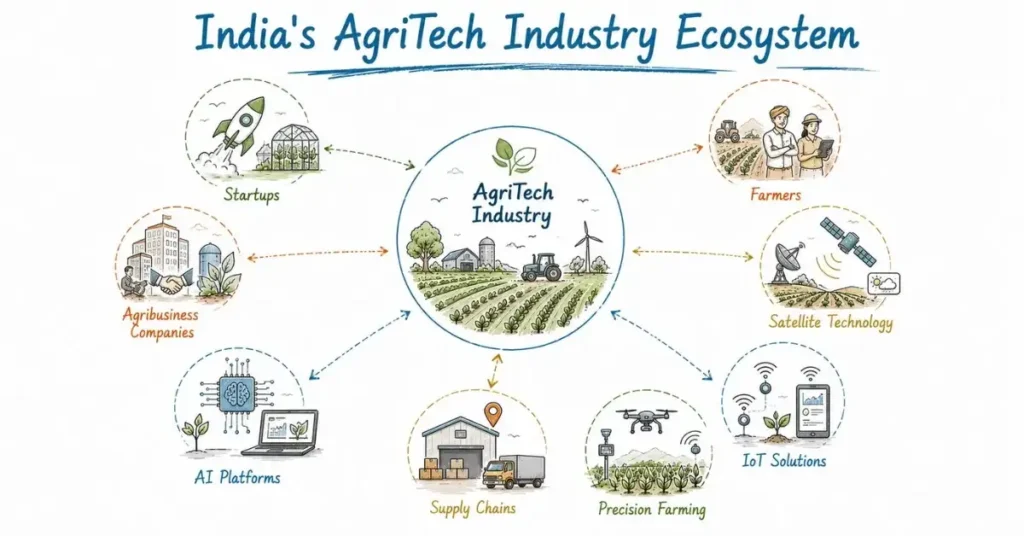
Knowing you want to work in AgriTech is step one. Knowing which company to target and why is step two. Most job-seekers skip step two entirely and mass-apply everywhere. That approach wastes time and signals desperation to recruiters.
This guide gives you an honest, specific profile of the most significant AgriTech employers in India right now what they actually do, what kind of people they hire, what the work culture looks like, and how to position your application so it stands out.
How to Read This Guide
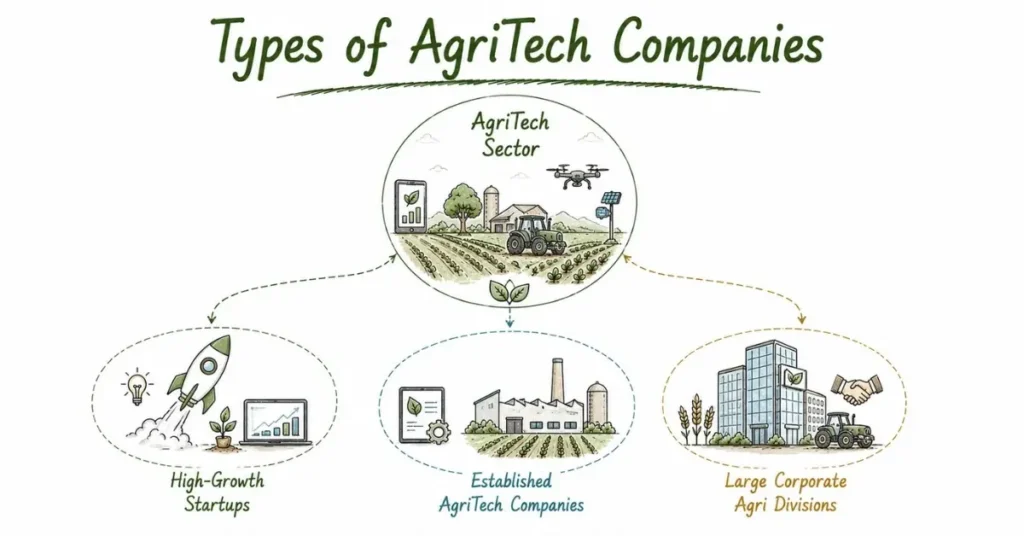
The companies below are grouped into three categories:
- High-growth startups: Fast-moving, often funded, higher risk and higher reward
- Established AgriTech companies: Stable, structured, often with formal training programmes
- Large corporates with major AgriTech divisions: Slower to hire but strong career infrastructure
Each profile tells you what the company actually does, who fits, and one specific tip for getting hired there.
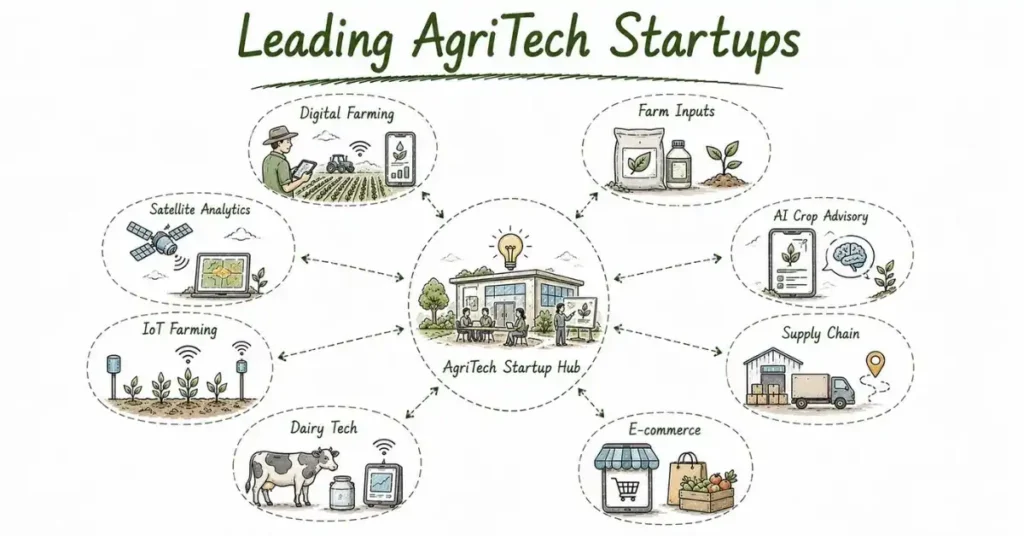
High-Growth Startups
DeHaat
What they do: DeHaat is one of India’s most ambitious full-stack agricultural platforms. They connect farmers to input supplies (seeds, fertilisers, pesticides), provide crop advisory through agronomists and AI, offer output market linkages, and extend financial services all through a single platform. They operate primarily across Bihar, UP, Odisha, Rajasthan, and West Bengal.
Scale: Over 1.2 million farmers served as of 2024. Backed by Sofina, Prosus, and RTP Global.
Who they hire: Agronomists and field extension officers for farmer-facing roles; software engineers and data analysts for their tech platform; supply chain and procurement managers for their input and output business; business development managers for FPO and institutional partnerships.
Work culture: Field-intensive, mission-driven, and genuinely complex. DeHaat operates in some of India’s most challenging agricultural geographies Bihar and eastern UP. The work is meaningful but demanding. Not a fit for people who want to work from a Bengaluru office all week.
Salary range: ₹3.5 – ₹7 LPA (field and junior roles) | ₹10 – ₹20 LPA (product, tech, and senior management)
How to get hired: DeHaat values regional language fluency Hindi for their core markets and genuine comfort with rural field work above almost everything else at the entry level. In your application and interview, be specific about which crops and farming communities you understand and why. Generic “passion for agriculture” statements are common and unmemorable. District-level knowledge of farming practices in Bihar or UP is rare and immediately noticed.
Ninjacart
What they do: Ninjacart is India’s largest B2B fresh produce supply chain company. They source directly from farmers and deliver to retailers, restaurants, and quick-commerce platforms within hours, eliminating multiple layers of the traditional mandi chain. Headquartered in Bengaluru, with operations across 40+ cities.
Scale: Processes thousands of tonnes of fresh produce daily. Backed by Walmart, Tiger Global, and Accel.
Who they hire: Supply chain analysts, procurement executives, warehouse operations managers, data scientists and engineers for their logistics platform, and business development managers for retail and institutional client acquisition.
Work culture: Fast-paced operations company. Ninjacart runs 24-hour supply chains morning farm pickups, overnight sorting and grading, dawn delivery to retailers. The energy is high and the problems are real-time. It rewards people who can make quick decisions with incomplete information.
Salary range: ₹4 – ₹8 LPA (operations and procurement) | ₹10 – ₹22 LPA (tech, product, and senior leadership)
How to get hired: Ninjacart interviews heavily test operational and analytical thinking. Prepare for case-style questions “How would you reduce spoilage in our tomato supply chain?” with specific, structured answers. If you have supply chain coursework or experience, quantify it. Numbers matter at Ninjacart.
Cropin
What they do: Cropin is India’s most data science-intensive AgriTech company. They build a digital intelligence platform for agri-enterprises seed companies, food companies, governments to monitor farm-level activity, manage field operations, and use AI for yield forecasting and risk assessment. They operate across 52 countries.
Scale: Over 7 million farmers on their platform across global operations. Backed by Eight Roads Ventures, Chiratae, and AgDevCo.
Who they hire: Data scientists and ML engineers, software engineers (backend and cloud), product managers, agronomy domain experts, and enterprise sales managers.
Work culture: Product and engineering company with a global outlook. More structured than most Indian AgriTech startups. Strong emphasis on data quality, documentation, and product thinking. Bengaluru-headquartered with a significant remote-working culture for tech roles.
Salary range: ₹7 – ₹14 LPA (junior tech roles) | ₹16 – ₹30 LPA (senior engineers, product managers, data scientists)
How to get hired: Cropin’s hiring bar for technical roles is high. Build a portfolio project involving agricultural data crop yield prediction, disease detection, or supply chain optimisation before applying. In interviews, expect deep technical questions alongside domain questions. Their ideal candidate understands both machine learning and what an agronomist actually does.
SatSure
What they do: SatSure uses satellite imagery and earth observation data to provide intelligence for agricultural insurance, lending, and crop monitoring. Their primary clients are insurance companies, banks, and governments using satellite-based crop assessment at scale. India’s crop insurance verification system increasingly relies on platforms like SatSure.
Scale: Analyses millions of acres annually for insurance and financial sector clients. Backed by Beenext and other investors.
Who they hire: Remote sensing analysts, data scientists, GIS specialists, backend engineers, and enterprise client managers.
Work culture: Research-oriented but commercially driven. The team is technically sophisticated many people have backgrounds in space technology, geoinformatics, or environmental science. A good fit for people who want to do rigorous analytical work with real-world agricultural impact.
Salary range: ₹6 – ₹12 LPA (analysts and junior engineers) | ₹14 – ₹25 LPA (senior technical and leadership roles)
How to get hired: SatSure’s technical interviews focus heavily on remote sensing and geospatial analysis. Demonstrate fluency with Google Earth Engine, QGIS, or satellite data processing before applying. A project analysing NDVI or crop condition data from a public satellite dataset is the most effective portfolio piece for this company specifically.
AgroStar
What they do: AgroStar is a digital agri-input company farmers order seeds, fertilisers, and pesticides through their app and receive them at home, with crop advisory support embedded in the platform. Strong in Maharashtra and Gujarat. Backed by Accel, Bertelsmann, and Aavishkaar.
Who they hire: Field agronomists, app developers, content specialists (vernacular language, especially Marathi and Gujarati), product managers, and category managers for their e-commerce operation.
Work culture: Consumer tech meets agriculture. Strong product and marketing culture. Good fit for people who want to work at the intersection of digital commerce and agriculture without being purely field-based.
Salary range: ₹3.5 – ₹7 LPA (field and content roles) | ₹10 – ₹20 LPA (product, tech, and senior management)
How to get hired: AgroStar values candidates who understand the farmer as a consumer not just as a beneficiary of agricultural advice. If you have a marketing or product background, frame your skills around rural consumer behaviour. If you are an agronomist, demonstrate comfort with digital communication tools.
BharatAgri
What they do: BharatAgri is an AI-powered crop advisory platform. Farmers receive personalised advisory on what to spray, when to irrigate, and how to manage specific crop health issues delivered through a mobile app in local languages. Pune-based, with a strong focus on Maharashtra farming communities.
Who they hire: Agronomists (this is their core hiring need), mobile app developers, content writers with agriculture knowledge, and data scientists for advisory algorithm development.
Work culture: Early-stage startup energy with strong mission alignment. Smaller team than Cropin or Ninjacart which means more responsibility and visibility per person, but less structured onboarding.
Salary range: ₹3.5 – ₹6 LPA (agronomist and content roles) | ₹8 – ₹18 LPA (tech and senior roles)
How to get hired: BharatAgri specifically needs agronomists who can translate complex crop science into farmer-friendly language. If you apply for an agronomy role, come prepared with examples of how you have explained technical agricultural concepts to non-expert audiences. Marathi fluency is a genuine advantage.
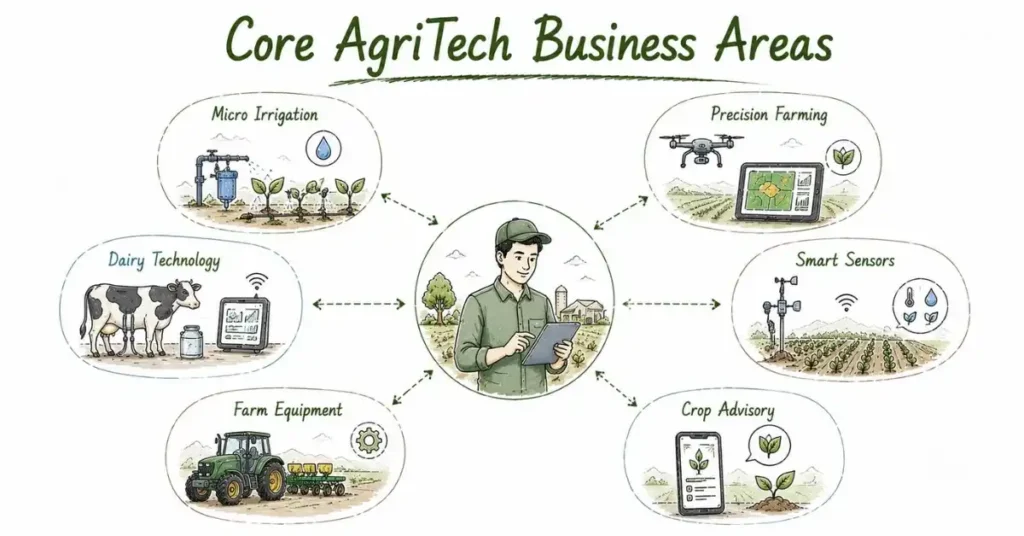
Established AgriTech Companies
Jain Irrigation Systems
What they do: World’s second-largest micro-irrigation company. Manufactures drip and sprinkler systems, solar pumps, tissue culture planting material, and food processing equipment. Headquartered in Jalgaon, Maharashtra a fact that deters many candidates, which is your opportunity.
Who they hire: Irrigation engineers, agricultural engineers, project managers, sales and business development executives, and food processing operations staff.
Salary range: ₹3.5 – ₹7 LPA (junior technical and sales) | ₹9 – ₹18 LPA (project and senior management)
How to get hired: Apply for their Graduate Engineering Trainee or Management Trainee programmes through their website between December and February. Willingness to be based in Jalgaon for the first 1–2 years significantly increases your chances of selection and provides unmatched irrigation engineering exposure.
Fasal
What they do: IoT-based precision crop management company. Their sensor networks and AI platform help farmers of high-value crops grapes, pomegranate, strawberry manage irrigation and disease risk with precision. Strong in Maharashtra, Karnataka, and Himachal Pradesh.
Who they hire: Embedded systems engineers, IoT field implementation executives, agronomists specialising in high-value horticulture crops, and product managers.
Salary range: ₹4 – ₹8 LPA (technical and field roles) | ₹12 – ₹22 LPA (senior tech and product)
How to get hired: Fasal is a tight-knit team. The best entry point is through their field implementation roles proving yourself in the field consistently leads to movement into product or technical roles internally.
Stellapps
What they do: India’s most advanced dairy IoT company. Their platform monitors cow health, milk yield, and supply chain quality across dairy cooperatives and milk procurement companies. Work with Amul, Hatsun, and several state dairy federations.
Who they hire: IoT engineers, data scientists, veterinary science graduates, supply chain analysts, and field implementation officers.
Salary range: ₹4 – ₹9 LPA (field and junior tech) | ₹12 – ₹24 LPA (senior engineers and product)
How to get hired: Stellapps values candidates who understand both technology and livestock management. A veterinary science or animal husbandry background combined with any tech exposure is particularly rare and valued.
Large Corporates With Major AgriTech Divisions
ITC Agri Business Division
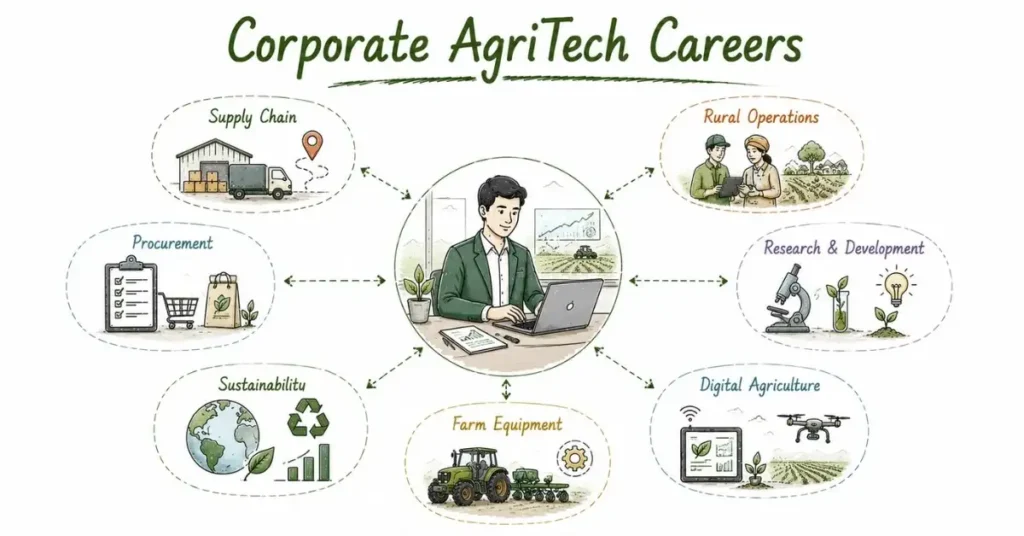
ITC’s agri business division is one of India’s largest agricultural commodity trading and rural sourcing operations. Their e-Choupal network digital procurement kiosks across rural India is one of the most studied rural technology deployments in the country. They hire agribusiness managers, supply chain specialists, sustainability officers, and procurement traders. Their Management Trainee programme, recruited through campus placements at agricultural universities and IIMs, is among the most coveted agribusiness entry points in India.
Mahindra Agri Solutions
Mahindra’s agri division covers farm equipment services, agri-input retail, and digital farm management. They run structured Graduate Engineering Trainee and Management Trainee programmes. Strong hiring at NIT campuses and agricultural universities. Bengaluru and Mumbai are key office locations for business roles.
Rallis India (Tata Group)
India’s largest agrochemical company with a strong seeds business. Hires field agronomists, R&D scientists, and rural sales managers in large numbers. Management trainee recruitment happens between January and March via campus placements at agricultural universities and tier-1 business schools.
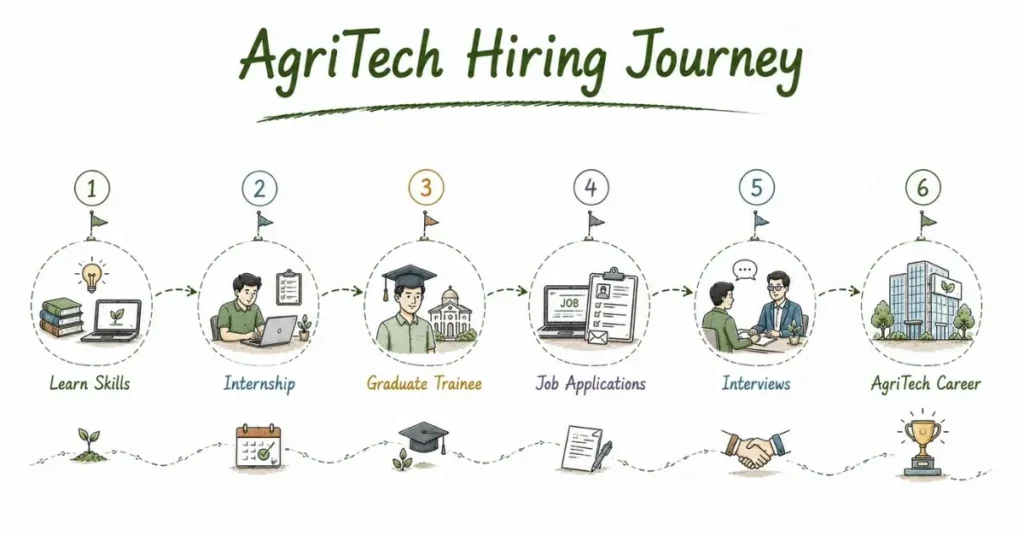
Quick Hiring Calendar: When to Apply
Month | What Happens |
October – December | Campus placement season begins at agricultural universities and IIMs |
January – March | Management Trainee and Graduate Trainee applications open at large corporates |
April – June | Internship season highest volume of internship postings on LinkedIn and Internshala |
July – September | Mid-year lateral hiring picks up at funded startups |
Year-round | LinkedIn direct applications to startups no fixed cycle |
5 Universal Rules for Getting Hired in Indian AgriTech
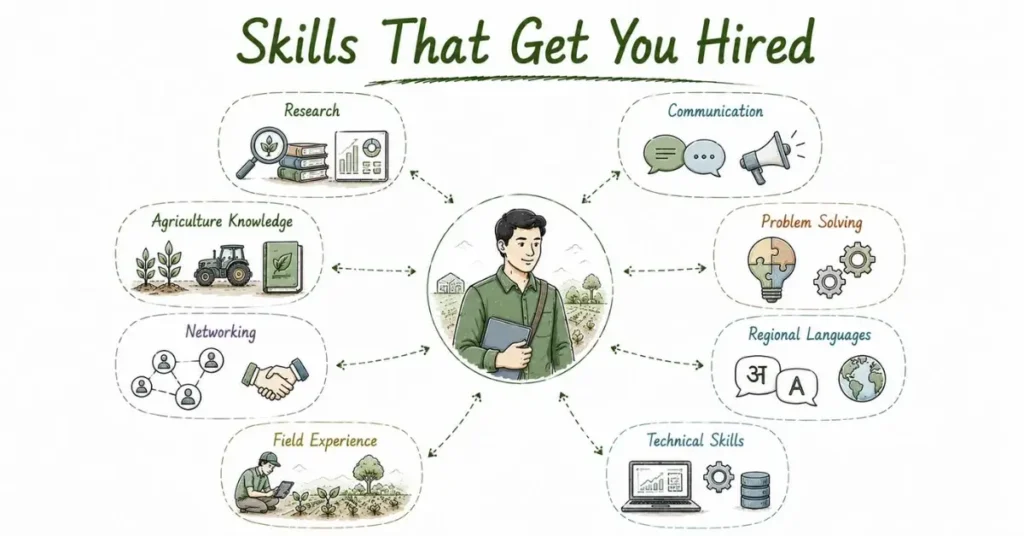
- Research before you apply. Know the company’s primary crop focus, operating states, and recent funding news before you write a single word of your application.
- Be specific about geography. Employers want to know if you are willing to work where they actually operate. Saying you are open to Jalgaon, Patna, or Nashik and meaning it immediately separates you from candidates hedging toward metro cities only.
- Quantify your agricultural experience. “Supervised farm operations” is forgettable. “Managed pest monitoring across 200 acres of cotton in Guntur district during kharif 2024” is not.
- Show you understand the farmer. Every AgriTech company ultimately serves farmers. The candidate who can speak credibly about farmer decision-making how they evaluate new inputs, why they distrust technology initially, what builds their confidence is the candidate who gets offers.
- Follow up once, professionally. After applying or interviewing, a single LinkedIn message or email follow-up specific, brief, and respectful is appropriate and noticed in a sector where hiring processes are often informal.