
How to Get Hired in Finance: Your Complete Action Plan
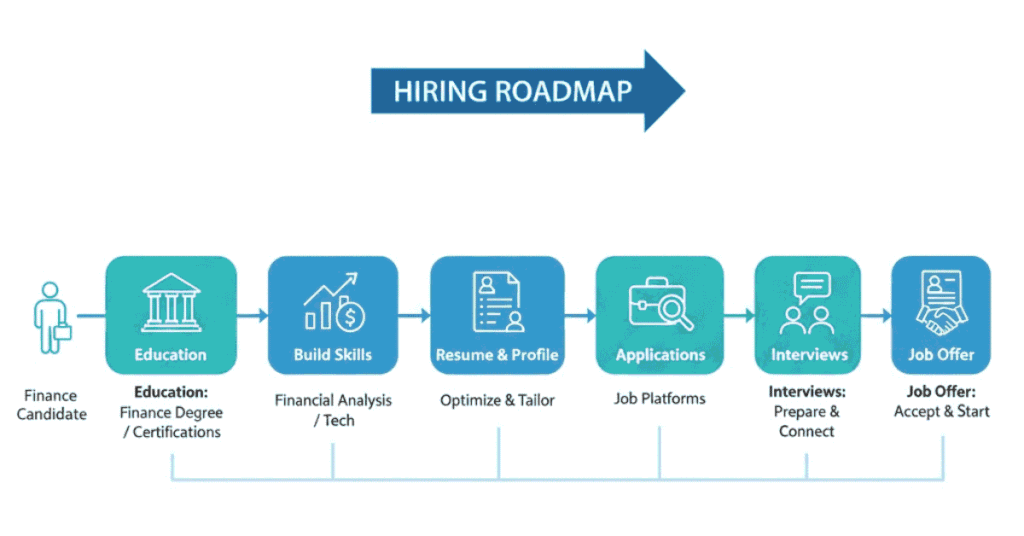
Table of Contents
The Finance Hiring Reality
Let’s be honest: Finance jobs are competitive. For every opening at HDFC Bank or Goldman Sachs, there are 100+ applicants. But here’s the good news—most applicants don’t prepare properly.linkedin
If you follow this guide, you’ll be in the top 10% of candidates.
Phase 1: Build Your Foundation (6-12 Months Before Job Search)
- Get the Right Education
Minimum requirement:
- Bachelor’s degree (any stream, but BCom/BBA preferred for most finance roles)
- Good GPA (3.0+ or 60%+)
Bonus credentials:
- MBA (Finance) – Opens doors to senior roles
- CA/CPA/CMA – Strong advantage for accounting/corporate finance roles
- CFA Level 1 – Shows commitment to finance careercentury-group
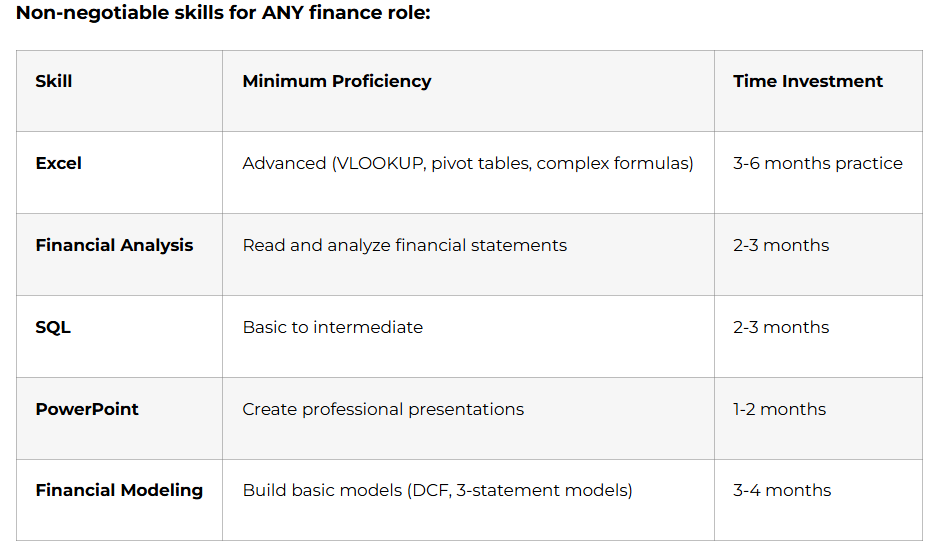
- Build Technical Skills
- Get Real-World Experience
Internships (Critical!):
- Apply to 50+ companies (banks, FinTech, corporate finance departments)
- Even 2-month internship is valuable
- Many companies convert interns to full-time (30-50% conversion rate)
Projects (If you can’t get internship):
- Analyze public company financials
- Build investment portfolio
- Create financial models
- Write investment thesis
- Publish on LinkedIn or personal blog
Phase 2: Create a Winning Resume
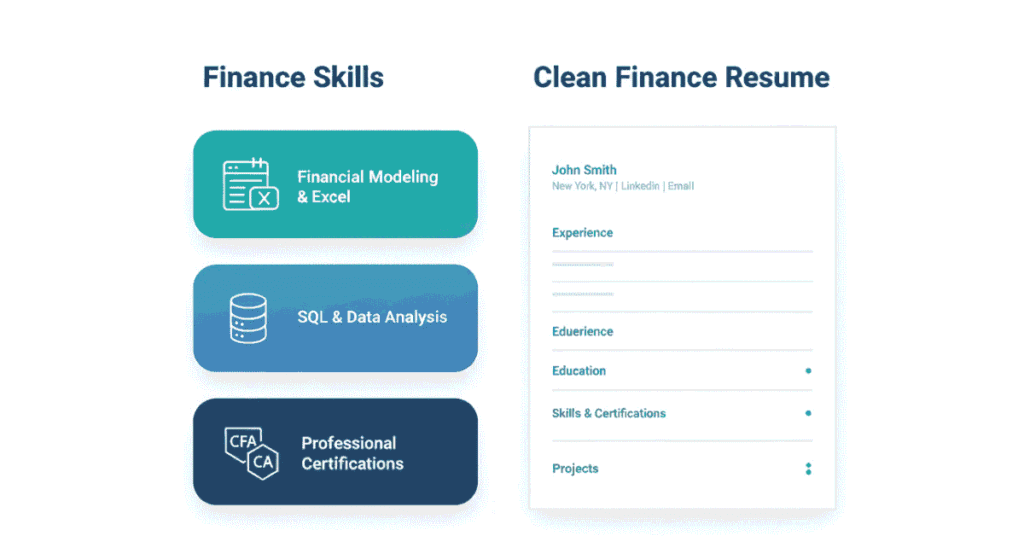
Finance Resume Structure (1 Page)
Header:
- Name, phone, email, LinkedIn, location
- Keep it clean and professional
Summary (2-3 lines):
Example: “Finance graduate with CFA Level 1 certification and 6 months internship experience in financial analysis. Proficient in Excel, SQL, and financial modeling. Seeking Financial Analyst role in banking or corporate finance.”
Education:
- Degree, University, Graduation year, GPA (if 3.0+)
- Relevant coursework (Corporate Finance, Financial Markets, Accounting)
- Certifications (CFA Level 1, NISM, SQL)
Experience:
- List in reverse chronological order
- Use action verbs (Analyzed, Built, Developed, Led)
- Quantify impact (“Analyzed 50+ company financial statements” not just “Analyzed companies”)
Skills:
- Technical: Excel (Advanced), SQL, Python, Financial Modeling, Bloomberg Terminal
- Finance: Financial Analysis, Valuation, Risk Management
- Soft Skills: Communication, Problem-solving, Team Leadership
Pro tips:
- Use numbers and metrics everywhere possible
- Tailor resume for each job (use keywords from job description)
- No spelling/grammar errors (use Grammarly)
- PDF format only
- Clean, readable font (Arial, Calibri, Times New Roman)
Phase 3: Apply Strategically
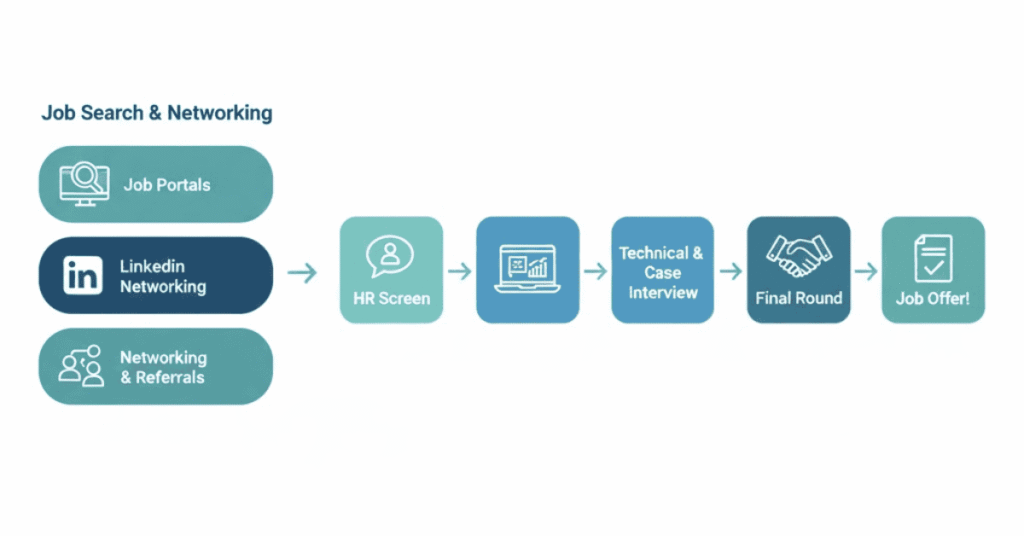
Where to apply:
Job Portals:
- LinkedIn Jobs (best for finance roles)
- Naukri.com
- Indeed
- AngelList (for startups/FinTech)
- Company career pages directly
Application strategy:
- Apply to 5-10 jobs per day (targeted, not spray-and-pray)
- Customize each application
- Follow up after 1 week if no response
- Track applications in spreadsheet
Networking (Most Important!):
- 70% of jobs are filled through referrals, not job boards
- Connect with alumni working in finance
- Reach out to professionals on LinkedIn
- Attend finance events and meetups
- Ask for informational interviews
LinkedIn networking message template:
“Hi [Name],
I’m a finance graduate interested in [specific role] at [Company]. I noticed you work in [their role] and would love to learn about your experience.
Would you be open to a 15-minute call? I’d greatly appreciate any insights you could share.
Thank you!
[Your Name]”
Phase 4: Ace the Interview
Round 1: HR Screen (20-30 minutes)
Common questions:
- “Tell me about yourself” (2-minute professional story)
- “Why finance?” (Show genuine interest)
- “Why this company?” (Research beforehand!)
- “What are your strengths/weaknesses?”
- “Where do you see yourself in 5 years?”
Pro tip: Prepare STAR format stories (Situation, Task, Action, Result) for behavioral questions.
Round 2: Technical Interview (45-60 minutes)
Topics you MUST know:
Accounting basics:
- Three financial statements (Balance Sheet, P&L, Cash Flow)
- How they connect
- Key ratios (P/E, ROE, Debt-to-Equity, Current Ratio)
Valuation:
- DCF (Discounted Cash Flow) basics
- Comparable company analysis
- P/E multiple valuation
Finance concepts:
- Time value of money
- Risk vs. return
- Capital structure
- Working capital
Sample questions:
- “Walk me through a DCF model”
- “How are the three financial statements connected?”
- “What happens to the three statements if inventory increases by ₹10 crore?”
- “How would you value a company?”
- “What’s the difference between EBIT and EBITDA?”
Pro tip: Practice on actual company financials. Download annual reports and analyze them.
Round 3: Case Interview (Investment Banking, Consulting)
What to expect:
- Business problem to solve
- Market sizing (“How many credit cards are there in Mumbai?”)
- Profitability analysis
- Investment decision
Framework to use:
- Clarify the question
- Structure your approach
- Do calculations (show your work)
- Make recommendation
- Discuss implications
Example case:
“A retail company is considering opening 100 new stores. Should they do it?”
Your approach:
- Clarify: What’s their current performance? Which cities? Investment required?
- Structure: Analyze costs vs. revenue potential
- Calculate: Break-even analysis, ROI
- Recommend: Yes/No with reasoning
- Discuss: Risks, alternatives, next steps
Pro tip: Practice with case interview books (Case in Point, Case Interview Secrets)
Round 4: Final Interview (With Senior Management)
What they’re evaluating:
- Cultural fit
- Long-term potential
- Communication skills
- Passion for finance
Questions to expect:
- “Why should we hire you?”
- “What unique value do you bring?”
- “Tell me about a time you failed”
- “What questions do you have for us?” (ALWAYS have 2-3 intelligent questions!)
Good questions to ask:
- “What does success look like in this role in the first year?”
- “What are the biggest challenges the team is facing?”
- “How does this role contribute to company strategy?”
- “What’s the career path for someone in this position?”
Phase 5: Negotiate Your Offer
When you receive an offer:
Step 1: Don’t accept immediately
- Thank them and ask for 2-3 days to review
- This shows you’re thoughtful, not desperate
Step 2: Research market rates
- Check Glassdoor, AmbitionBox, Payscale
- Talk to people in similar roles
- Know your worth
Step 3: Negotiate professionally
Template:
“Thank you for the offer. I’m very excited about this opportunity. Based on my research and the value I bring [mention specific skills/experience], I was expecting compensation in the range of ₹X-Y LPA. Is there flexibility in the offer?”
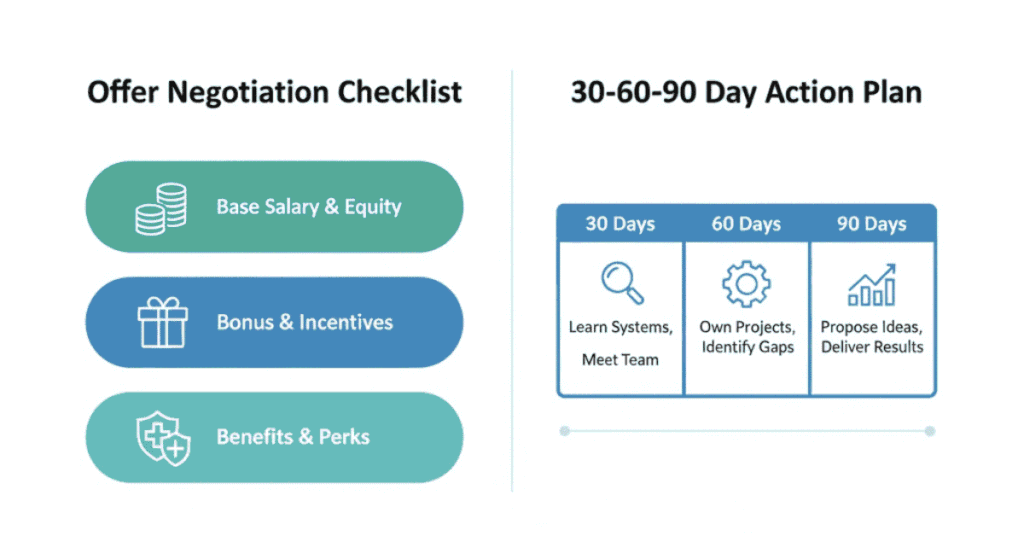
What to negotiate:
- Base salary (most important)
- Signing bonus
- Performance bonus
- Benefits (health insurance, PF)
- Work-from-home days
- Learning budget
Pro tips:
- Always negotiate (companies expect it)
- Be confident but respectful
- Have alternative offer as leverage (if possible)
- Know your minimum acceptable number before negotiating
Finance Interview Questions You MUST Prepare
Technical Questions (Top 20):
- What are the three financial statements?
- How are they connected?
- Walk me through a DCF model
- What’s WACC and why does it matter?
- Explain enterprise value vs. equity value
- What happens if depreciation increases by ₹10?
- What are the main valuation methods?
- How do you value a company with no revenue?
- What’s the difference between EBIT and EBITDA?
- Explain working capital
- What’s a good P/E ratio?
- How would you assess a company’s financial health?
- What’s the difference between equity and debt?
- Explain risk and return
- What are the key financial ratios?
- How do interest rates affect stock prices?
- What’s the time value of money?
- Explain beta and correlation
- What causes stock prices to change?
- How would you value a bank?
Behavioral Questions (Top 10):
- Tell me about yourself
- Why finance?
- Why this company?
- Tell me about a time you failed
- Describe a challenging project
- How do you handle pressure?
- Tell me about a time you led a team
- Describe a conflict and how you resolved it
- What’s your greatest strength/weakness?
- Where do you see yourself in 5 years?
30-Day Finance Job Search Plan
Week 1: Preparation
- Finalize resume
- Set up LinkedIn profile
- Research target companies (20-30)
- Prepare answers to common questions
- Study technical concepts
Week 2: Applications & Networking
- Apply to 5-10 jobs daily
- Reach out to 5 professionals on LinkedIn daily
- Attend 1-2 finance networking events
- Practice interview questions
Week 3: Interviews
- Interview prep (technical + behavioral)
- Mock interviews with friends
- Research companies you’re interviewing with
- Continue applications
Week 4: Follow-ups & More Applications
- Follow up on applications
- Send thank-you emails after interviews
- Continue networking
- Apply to backup options
FAQs: Finance Careers
Q1: Can I get into finance without a finance degree?
A: Yes! Many successful finance professionals have engineering, arts, or science backgrounds. What matters: strong analytical skills, willingness to learn, and relevant certifications (CFA, NISM).imperialbschool
Q2: What’s the fastest path to high salary in finance?
A: Investment banking or FinTech roles offer fastest salary growth. IB analysts can reach ₹50+ LPA in 8-10 years. FinTech offers equity upside.imperialbschool+1
Q3: Is finance a good career in 2025?
A: Yes. Finance offers high salaries (₹6-100+ LPA), job security, diverse paths, and global opportunities. Demand is growing with 72% of employers expanding teams.imperialbschool
Q4: Should I do CA or MBA?
A: Depends on goals. CA for accounting/audit focus, technical depth, independent practice. MBA for leadership roles, networking, broader business knowledge.amityonline
Q5: How long to become CFO?
A: Typically 12-20 years. Path: Analyst (2 yrs) → Senior (3 yrs) → Manager (4 yrs) → Director (5 yrs) → VP (3 yrs) → CFO.300hours
Q6: Can I switch from tech to finance?
A: Absolutely! FinTech needs tech people who understand finance. Learn financial concepts, apply to FinTech companies, or pursue finance certifications.siecindia
Q7: What’s better: Banking or FinTech?
A: Banking: stability, structured growth, prestige. FinTech: innovation, equity upside, faster pace. Choose based on risk appetite and career goals.imperialbschool+1
Q8: Are finance jobs recession-proof?
A: Mostly yes. Accounting, risk management, compliance are always needed. Investment banking and wealth management slow during recessions but don’t disappear.imperialbschool
Q9: How important is networking?
A: Critical! 70% of jobs filled through referrals. Attend events, use LinkedIn actively, conduct informational interviews. Networking often beats qualifications.linkedin
Q10: Best city for finance jobs in India?
A: Mumbai (financial capital), Bangalore (FinTech hub), Delhi-NCR (corporate finance), Hyderabad (growing FinTech). Mumbai offers most opportunities.linkedin
Final Action Plan: Your Next 90 Days
Days 1-30: Foundation
✅ Complete Excel advanced course
✅ Pass NISM/NCFM certification
✅ Build 2-3 finance projects
✅ Update resume and LinkedIn
✅ Start networking on LinkedIn
Days 31-60: Application Blitz
✅ Apply to 100+ positions
✅ Connect with 50+ professionals
✅ Attend 3-5 networking events
✅ Prepare interview answers
✅ Practice technical questions
Days 61-90: Interview & Close
✅ Ace interviews
✅ Follow up professionally
✅ Negotiate offers
✅ Accept your dream finance role
✅ Prepare for Day 1
Resources to Bookmark
Learning Platforms:
- Corporate Finance Institute (CFI)
- Coursera (Finance specializations)
- Udemy (Excel, SQL courses)
- Khan Academy (Finance basics)
News & Insights:
- Economic Times
- Mint
- Bloomberg
- Financial Express
- Moneycontrol
Networking:
- LinkedIn (Finance groups)
- CFA Society events
- FinTech meetups
- College alumni networks
Job Search:
- LinkedIn Jobs
- Naukri.com
- AngelList (startups)
- Company career pages
Closing Thoughts
Finance in 2025 offers incredible opportunities—whether you choose traditional banking, high-octane investment banking, strategic corporate finance, or cutting-edge FinTech. The key is to start with clarity about your goals, build relevant skills, and take consistent action.imperialbschool
Remember:
- Every CFO started as an analyst
- Every successful banker had their first nervous interview
- Every FinTech founder learned finance step by step
Your finance career journey starts with a single step. Take it today. This guide has given you the roadmap—now it’s time to execute.
Good luck!