
Gaming & Esports Career Guide: Game Development & Esports Jobs in India (2025)
Table of Contents
Introduction
Gaming used to be something your parents asked you to put down. Now companies like Rockstar, Ubisoft, and Zynga have offices in Bengaluru. Indian esports players compete for prize pools worth crores. Streamers build audiences of millions from their bedrooms. And studios are hiring engineers, designers, artists, and managers right here in India, with real salaries and real career growth.
This guide covers everything you need to know about building a career in gaming and esports in India whether you are a fresh graduate, a student still deciding, or a working professional thinking about switching lanes. No hype. No vague advice. Just what the jobs look like, what they pay, and how you actually get one.
Is Gaming Really a Career in India Now?
Yes and it is not just for the handful of people who go pro.
The Indian gaming market generated over ₹16,000 crore in revenue in 2024, and the esports segment alone is projected to cross ₹2,000 crore by 2026. International studios have set up full development centers here Rockstar Games, Zynga (now owned by Take-Two Interactive), Ubisoft, and Sony AI all have significant operations in Bengaluru.imarcgroup+1
On the regulatory side, the Indian government passed the Promotion of Online Gaming Lok Sabha Bill 2025, which formally separated skill-based esports from gambling. The Ministry of Youth Affairs and Sports is now the nodal agency for esports. Several states Tamil Nadu, Bihar, and Maharashtra among them have included esports in their official sports calendars. This matters because it means esports organizations can operate with legal clarity, attract sponsors, and pay players as employees.
The result: real employers, real job postings, and salaries paid on time not just tournament prize money.
What Kinds of Jobs Exist in Gaming and Esports?
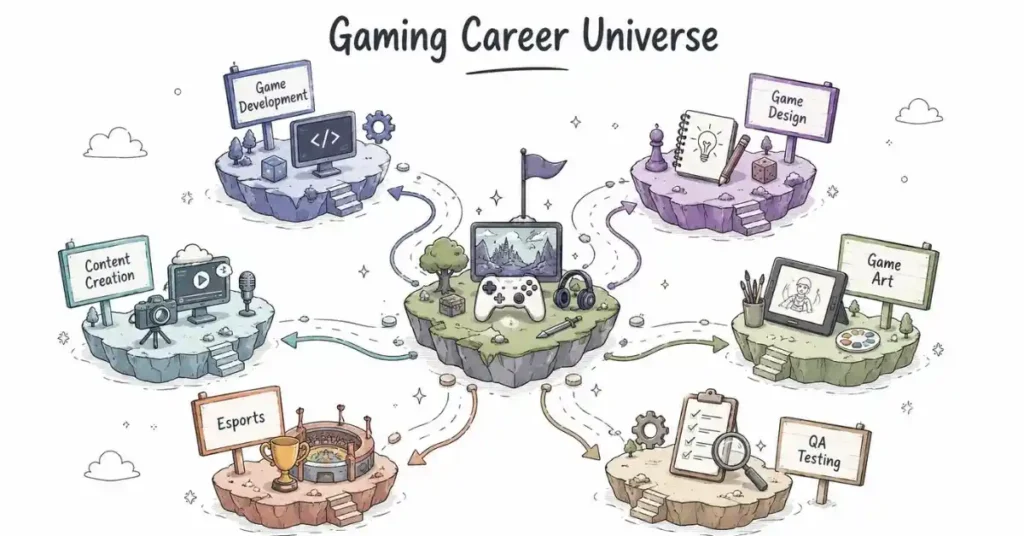
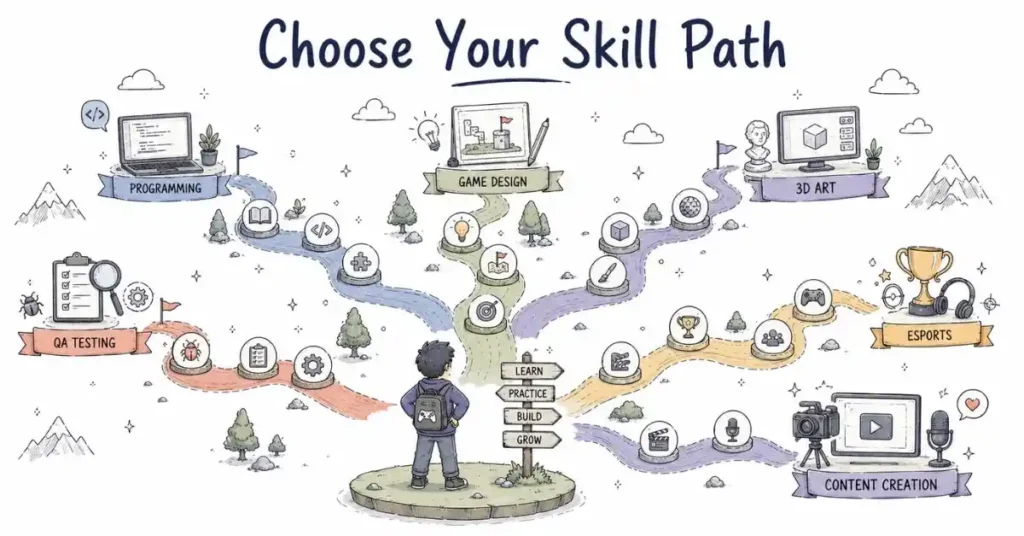
Most people think gaming careers mean two things: making games or playing them professionally. The actual industry is much wider. Here is a clear breakdown of every major career path, who it suits, and what it pays.
Game Developer
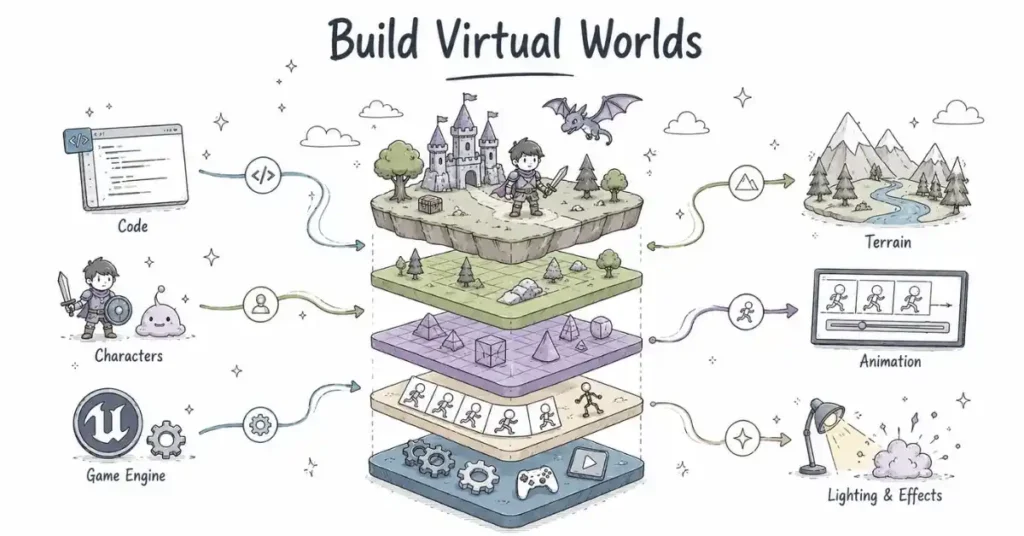
What the job actually is: You write the code that makes a game run. This includes the logic behind how characters move, how the physics work, how multiplayer connects players, and how the game performs on different devices. You work inside engines like Unity or Unreal Engine, and you write code primarily in C#, C++, or Java.
Who it suits: People who enjoy problem-solving, logical thinking, and building things from scratch. A Computer Science background helps, but many working developers are self-taught.
What it pays in India:
City matters too. A junior developer in Bengaluru earns ₹7–8 LPA on average, while the same role in a tier-2 city might offer ₹3–4 LPA. At international studios like Zynga or Electronic Arts, experienced developers can earn ₹21–27 LPA.guvi+1
Career path: Junior Developer → Senior Developer → Lead Developer → Technical Director.
Game Designer
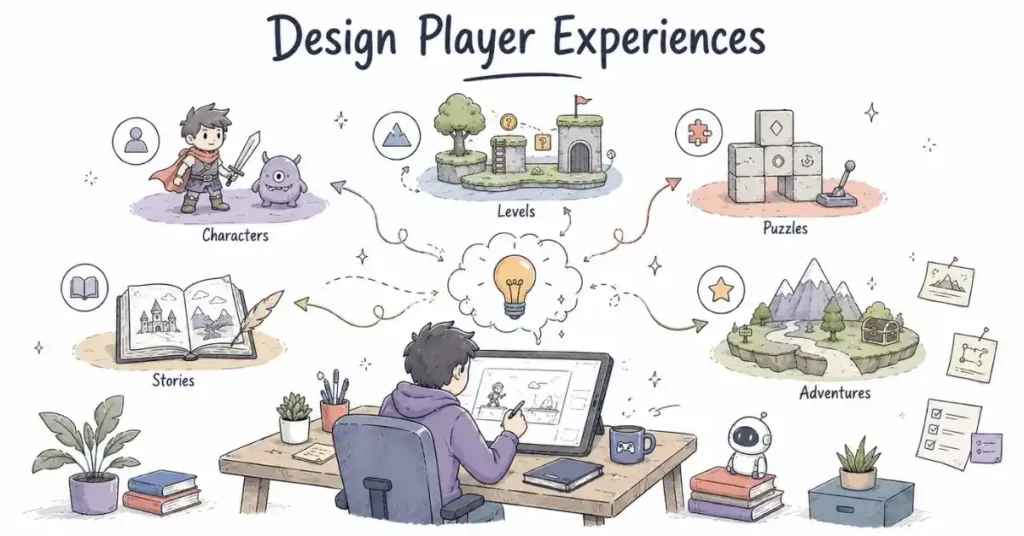
What the job actually is: Game designers decide how a game feels to play the rules, the levels, the difficulty curve, the story, the moment-to-moment player experience. They write design documents that the developers and artists then build from. This role requires less coding and more creativity, psychology, and communication.
Who it suits: People who think deeply about why games are fun, enjoy storytelling, and can clearly explain ideas to a team. Some coding knowledge helps, but it is not mandatory.
What it pays in India:
Experience Level | Annual Salary |
Fresher (0–1 year) | ₹1.9 – 3 LPA |
Junior (1–3 years) | ₹4 – 8 LPA |
Mid-level (4–6 years) | ₹8 – 18 LPA |
Senior (7+ years) | ₹15 – 48 LPA |
The average game designer salary in India in 2025 sits around ₹8 LPA, with senior designers at top studios in Bengaluru earning ₹42–48 LPA. The industry expects around 32,000 new game design jobs by 2029.
Career path: Junior Designer → Game Designer → Senior Designer → Lead Designer → Creative Director.
Game Programmer (Specialisation Within Development)
What the job actually is: Game programmers are a specialised branch of game developers. Where general developers work across the full codebase, programmers often focus on one domain graphics rendering, physics, artificial intelligence, or networking. At larger studios, this level of specialisation is common and commands higher pay.
Who it suits: Developers who want to go deep on one technical area rather than broad across all of them.
What it pays: Follows the same salary band as game developers, with specialists in graphics or AI earning 15–20% more at senior levels.
Game Artist / 3D Artist
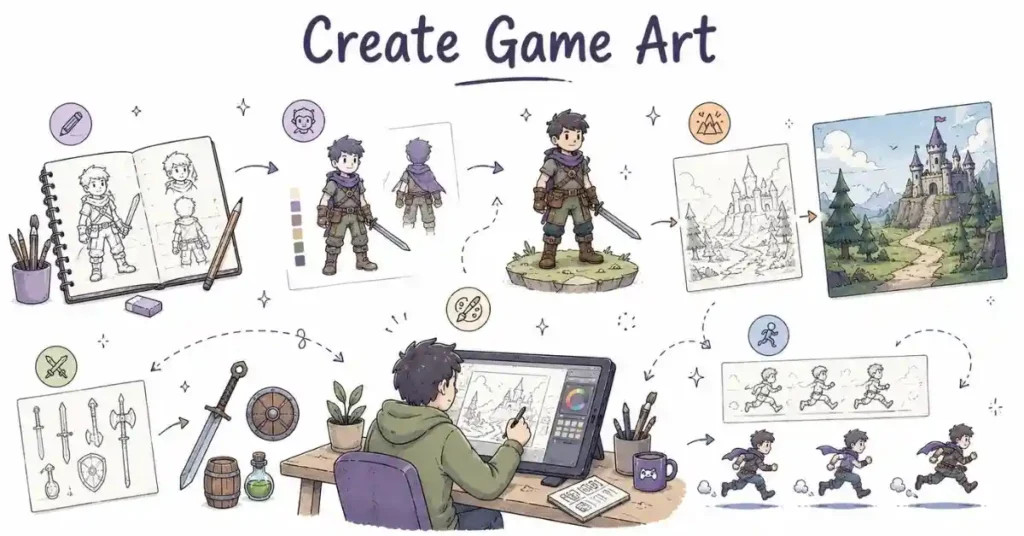
What the job actually is: Artists create everything you see in a game character models, environments, textures, animations, and visual effects. They use tools like Blender, Maya, Substance Painter, and Adobe tools. Some artists focus on 2D concept art; others specialize in 3D modelling or animation.
Who it suits: People with a visual design background, or anyone who enjoys creating 3D art, animation, or digital painting.
What it pays in India:
Experience Level | Annual Salary |
Entry-level | ₹3 – 4 LPA |
Mid-career | ₹5 – 9 LPA |
Senior | ₹9 – 15 LPA |
3D character animators in gaming earn around 30% more than those doing similar work in advertising or film.
Game Tester (QA Analyst)
What the job actually is: QA testers play games repeatedly and systematically to find bugs, crashes, balance problems, and anything else that would ruin the experience for players. They write detailed bug reports and communicate issues to developers.
Who it suits: People who are detail-oriented, patient, and want to enter the gaming industry without needing a degree or programming background. It is commonly used as a stepping stone into development or design roles.
What it pays: ₹2.3 – 5 LPA, with Bengaluru paying the highest at around ₹23,400 per month for testers. Senior QA roles reach ₹7.8 LPA.
Esports Professional Player
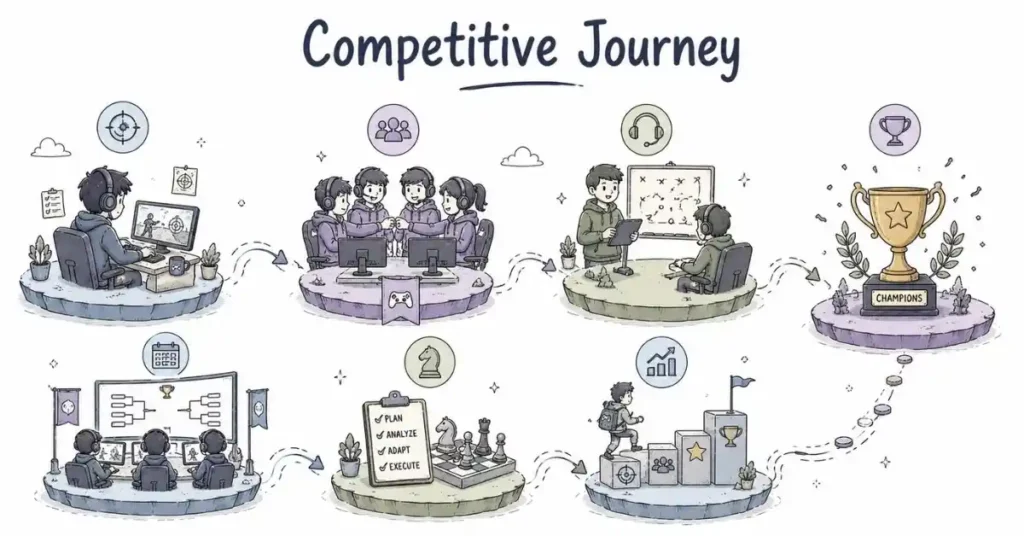
What the job actually is: You compete in tournaments as your primary occupation. You train daily, analyze opponents’ strategies, represent a team, and earn through a combination of salary, prize money, and sponsorships.
Who it suits: This is the narrowest career path in this entire guide it requires top 0.1% skill in your chosen game, typically 6–8 hours of daily practice, a young age (18–25 is peak), and significant mental resilience. The career span is 10–15 years at best.
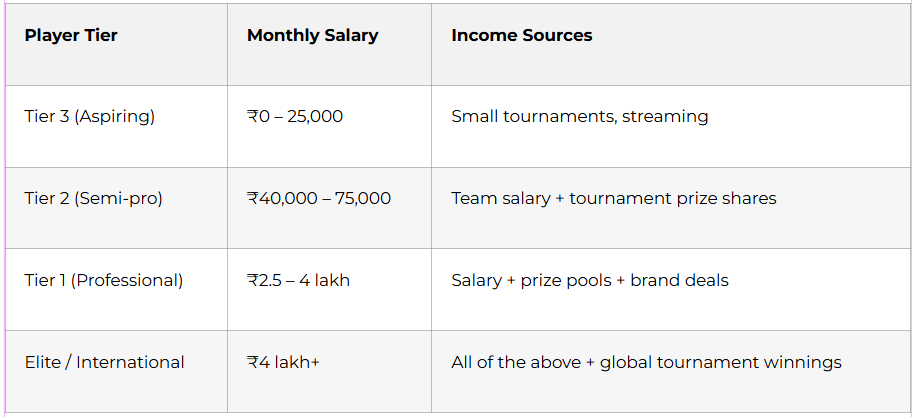
What it pays by tier:
Player Tier | Monthly Salary | Income Sources |
Tier 3 (Aspiring) | ₹0 – 25,000 | Small tournaments, streaming |
Tier 2 (Semi-pro) | ₹40,000 – 75,000 | Team salary + tournament prize shares |
Tier 1 (Professional) | ₹2.5 – 4 lakh | Salary + prize pools + brand deals |
Elite / International | ₹4 lakh+ | All of the above + global tournament winnings |
Top BGMI and Valorant players earn ₹2.5–4 lakh per month. Annual prize pools in Indian esports tournaments now total ₹30–35 crore.
The honest truth: Most people who try this path do not make it past tier-3. If you are not among the best players in the country by age 22–23, professional play is unlikely to become a stable income source. That does not mean gaming is not a career it means you should look at the other eight paths on this list.
Esports Coach and Analyst
What the job actually is: Coaches work with professional esports teams to improve performance reviewing gameplay footage (called VOD review), developing team strategies, running training sessions, and managing player psychology. Analysts focus on data: opponent tendencies, win conditions, and statistical performance patterns.
Who it suits: Retired or semi-retired competitive players who have deep game knowledge but want a longer career than active play allows. Strong communication skills matter as much as game sense.
What it pays: ₹4–8 LPA for coaches and ₹5–10 LPA for analysts at mid-career level. Growing as Indian esports organisations professionalise.
Esports Tournament Manager
What the job actually is: Tournament managers plan and run competitive gaming events from small online cups to large live events with audiences. This involves logistics, scheduling, bracket management, broadcast coordination, and sponsor management.
Who it suits: People with a project management or events background who also understand esports. You do not need to be a top player you need to be organized and detail-driven.
What it pays: ₹4–6 LPA (entry-level) to ₹6–12 LPA (experienced). Companies like NODWIN Gaming and Skyesports are the primary employers.
Game Streamer / Content Creator
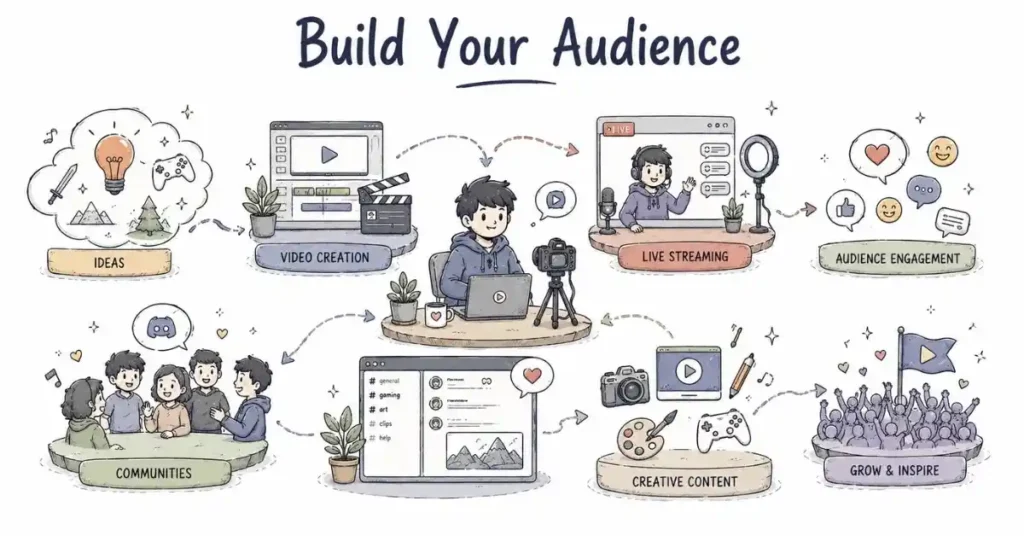
What the job actually is: You broadcast yourself playing games on platforms like YouTube or Twitch, build an audience, and earn money through ads, sponsorships, subscriptions, and donations.
Who it suits: People with genuine entertainment value, not just good gameplay. The viewers are watching you, not just the game. Consistency and audience engagement matter more than skill level.
What it pays by audience size:
Audience Size | Monthly Income |
Under 1,000 viewers | ₹0 – 10,000 |
1,000 – 5,000 viewers | ₹10,000 – 30,000 |
5,000 – 15,000 viewers | ₹40,000 – 1,00,000 |
15,000+ viewers | ₹1,00,000 – 5,00,000+ |
The important India-specific fact: YouTube and Twitch CPMs (cost per 1,000 views) in India are significantly lower than in the US or Europe around $0.40–0.50 per 1,000 views. Top Indian streamers earn the bulk of their income from brand deals, not platform ad revenue. For new streamers, months 1–6 often generate zero income.
The Indian Gaming Industry: Where the Jobs Are
Understanding which cities have which types of jobs saves you from applying blindly.
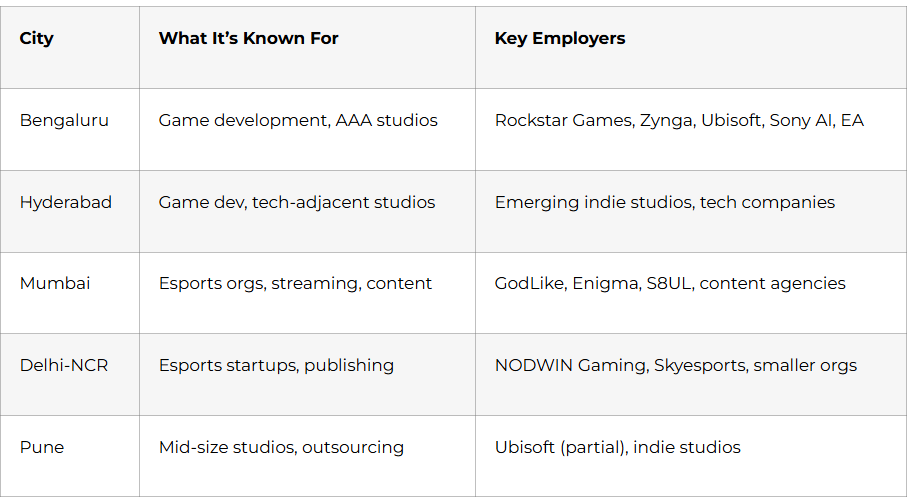
The games creating the most jobs in India right now are BGMI (Battlegrounds Mobile India), Valorant, and Counter-Strike 2 these have the largest competitive scenes, the most tournament infrastructure, and therefore the most coaching, management, and analyst roles attached to them.
Which Path Should You Choose?
Here is a simple way to think about it.
If you enjoy coding and building technical systems Game Developer or Game Programmer. Most stable income. Clearest hiring path. Longest career span. Bengaluru has the most jobs.
If you enjoy storytelling, psychology, and designing experiences Game Designer. Creative role. Slightly harder to break into without a portfolio. High upside at senior levels.
If you are a competitive player but not quite top-tier Esports Coach, Analyst, or Tournament Manager. Uses your game knowledge without requiring you to be among the top 100 players in the country.
If you have entertainment value and can build an audience Streaming. Lowest barrier to start. Longest time before income. Treat it as a side project until it earns ₹50,000+ per month consistently.
If you enjoy art and visual design Game Artist or 3D Artist. Strong demand as studios scale up. Portfolio matters more than degree.
How to Build Your Skills: The Honest Roadmap
No career in gaming starts with a job offer. It starts with a skill built over months, proven through a portfolio, and tested in real projects. Here is what to actually learn for each path, in the order that makes sense.
Roadmap 1: Game Developer
Month 1–3: Learn the fundamentals
- Pick one programming language first. For game development, C# is the most practical starting point it works inside Unity, which has the most entry-level job openings in India.
- Do not try to learn C++ and Unity simultaneously. Learn one language, build small projects, then add tools.
- Free starting resources: CS50 Introduction to Programming (Harvard, free on edX), official Unity Learn platform.
Month 4–6: Learn a game engine
- Unity for mobile and indie games (181 live job listings in India)
- Unreal Engine for console and AAA games (27 live listings, but higher salaries)
- Build three small games a 2D platformer, a simple mobile game, and one multiplayer prototype.
Month 7–12: Build your portfolio
- Host every project on GitHub and itch.io
- Write short dev blogs explaining your decisions this shows hiring managers how you think
- Contribute to one open-source game project
Month 12+: Apply strategically
- Target studios in Bengaluru first Zynga, Ubisoft, Rockstar, EA, nCore Games
- Apply for QA roles at target studios if developer roles reject you QA is a legitimate entry point into development teams
Certifications worth having:
- Unity Certified Associate (Game Developer) ₹8,000–12,000 exam fee, globally recognized
- Unreal Online Learning Certificate (free on Epic’s platform)
- Meta Game Developer Professional Certificate (available on Coursera)
Roadmap 2: Game Designer
Month 1–2: Study games as systems
- Play 10 games from different genres. For each one, write one page answering: What is the core gameplay loop? What makes the player keep playing? What would you change?
- This practice called design analysis is what separates people who love games from people who can design them.
Month 3–5: Learn the tools
- Figma or Miro for wireframing and level layouts
- Twine for narrative design and branching story structures
- Basic Unity enough to prototype a simple game mechanic without needing a programmer
Month 6–9: Build a design portfolio
- Create two original game design documents (GDDs) one for a mobile game, one for a PC game
- Build one small playable prototype in Unity, even if the art looks basic
- Write a postmortem (a document explaining what worked, what failed, and what you learned)
Month 10–12: Apply and network
- Attend Global Game Jam India (free, held annually teams build a game in 48 hours)
- Connect with game designers on LinkedIn who work at Ubisoft India or Zynga Bengaluru
- Apply for junior designer or associate producer roles
Certifications worth having:
- California Institute of the Arts Game Design Specialisation (Coursera)
- Unity Game Design and Prototyping course (Unity Learn, free)
Roadmap 3: Esports Coach or Analyst
Month 1–3: Document your competitive experience
- Compile your rank history, tournament results, and game knowledge in a single document
- Start a YouTube or Twitter account where you post analytical content about your game a 5-minute VOD breakdown video every week builds your public credibility
Month 4–6: Learn coaching tools
- Mobalytics (League of Legends/Valorant performance tracking)
- Tracker.gg (multi-game performance analytics)
- DemoViewer (CS2 demo review software)
- Learn basic Excel or Google Sheets coaches who cannot build a simple stats tracker struggle to communicate with team managers
Month 7–9: Work for free, then for money
- Offer free coaching to semi-pro teams on Discord servers for your game
- Document results “Team improved from X win rate to Y win rate over 8 weeks”
- One documented case study of real improvement is worth more than any certificate
Month 10+: Target organizations
- NODWIN Gaming, Skyesports, Velocity Gaming, GodLike, Orangutan these are the primary esports organizations’ hiring coaching staff in India
- Apply as a performance analyst first it is an easier entry point than head coach
Roadmap 4: Tournament Manager
Month 1–2: Learn event management fundamentals
- Google Project Management Certificate (Coursera, ₹3,000–4,000/month)
- Study how Battlefy, Toornament, and Challenger mode (tournament management software) work sign up for free accounts and run a test bracket
Month 3–6: Run your own small tournament
- Organise a 16-team online tournament for any popular game in your city or college
- Use Discord for communication, Battlefy for brackets, and Google Sheets for tracking
- Document the entire process what went wrong, how you fixed it, how many players participated
Month 7–12: Intern or freelance
- NODWIN Gaming and Skyesports regularly take on event management interns
- College esports clubs are an underrated training ground offer to manage their tournaments
- The goal is three completed events on your resume before applying for full-time roles
Roadmap 5: Game Streamer
Month 1–3: Find your format
- Decide between YouTube (longer videos, search-driven growth, better India CPM for long-form) and Twitch (live-first, community-driven, lower India CPM)
- Most Indian streamers who monetise successfully use YouTube as their primary platform because search traffic compounds over time
- Post three videos per week minimum. Content quality matters more than stream hours.
Month 4–6: Build technical quality
- Microphone quality matters more than camera quality for gaming content invest ₹3,000–5,000 in a basic condenser mic before buying a webcam
- OBS Studio (free) handles streaming and recording for most setups
- Learn basic video editing in DaVinci Resolve (free) self-edited videos retain viewers longer than raw streams
Month 7–12: Monetise smartly
- Do not wait for YouTube monetisation (1,000 subscribers + 4,000 watch hours) before reaching out to brands
- Gaming peripheral brands Cosmic Byte, Zebronics, HP Gaming, Redgear regularly sponsor Indian creators with 5,000–10,000 subscribers
- Join MCNs (Multi-Channel Networks) like Qyuki or Collective Artists when you cross 10,000 subscribers for better brand deal access
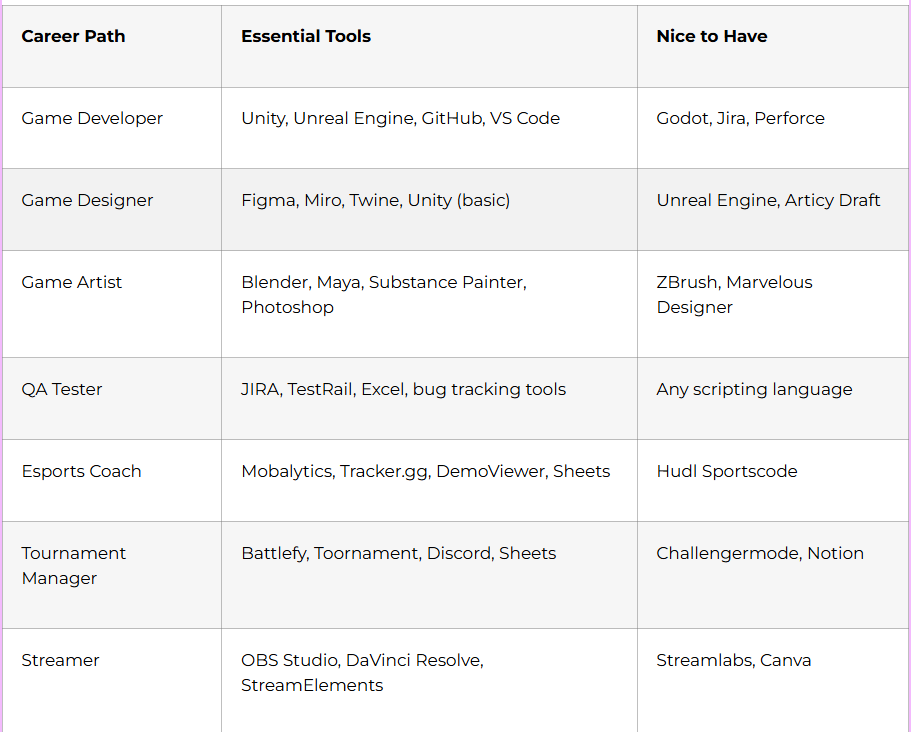
Tools Every Gaming Professional Needs to Know
Knowing which tools hiring managers look for saves you from learning the wrong ones first.
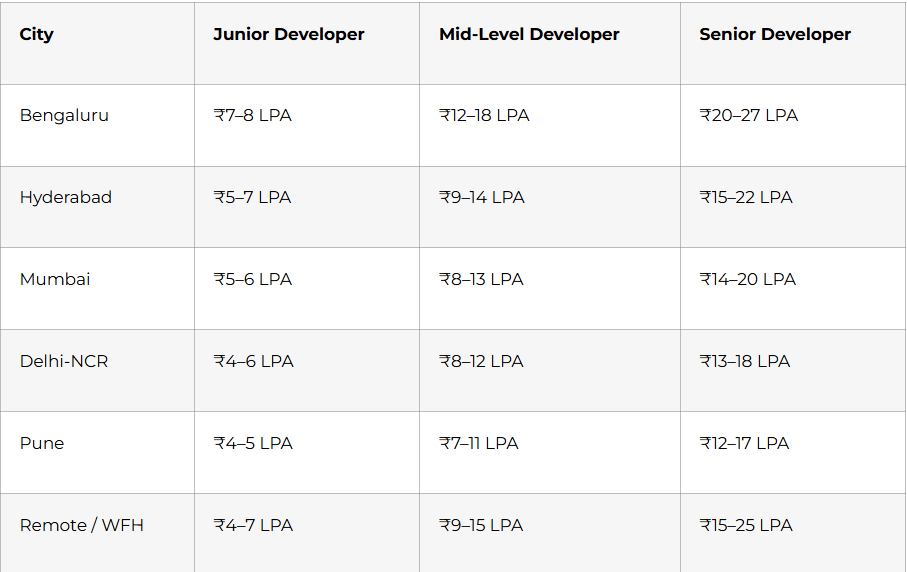
Salary Benchmarks by City (2025–2026)
These figures apply to game development roles specifically. Esports salaries vary more by organisation size than by city.
Where to Apply for Gaming Jobs in India
Job boards:
- LinkedIn largest volume of game development listings; filter by “Game Developer,” “Unity,” or “Unreal” and set location to Bengaluru
- Naukri.com use search terms like “game developer,” “game designer India”
- Cutshort.io curated tech hiring, good for game dev roles at startups
- itch.io indie studios often post openings here or in their game pages’ community section
Company career pages to bookmark:
- Zynga India: zynga.com/careers
- Ubisoft India: careers.ubisoft.com (filter by India)
- nCore Games: ncoregames.com/careers
- Nazara Technologies: nazara.com/careers
- NODWIN Gaming: nodwingaming.com/careers
Discord communities:
- Indian Game Developers (IGD) Discord active community where studios post openings informally before they go on job boards
- Esports India Discord tournament postings, team recruitments, coaching openings
Red Flags and Scams to Avoid
The gaming industry in India has a real problem with fake opportunities. Here is what to watch for:
“Pay to play” professional team contracts. No legitimate esports organisation charges players a fee to join the team. If someone asks you to pay ₹5,000–20,000 for a “trial” or “contract processing,” it is a scam.
Online gaming academies with no verifiable alumni. Several “esports coaching academies” take ₹50,000–2,00,000 in fees and provide certificates with no industry value. Before paying for any programme, ask: can you show me three alumni who got jobs after this? If they cannot, do not pay.
Unpaid “internship” game projects that last more than 4 months. Working on a real team project for 2–3 months as a portfolio builder is legitimate. Twelve months of unpaid development work with vague promises of equity is exploitation.
Streaming get-rich-quick programmes. Anyone selling a ₹10,000 course claiming you will reach 10,000 subscribers in 30 days is lying. Building a streaming audience takes 12–24 months of consistent work. There are no shortcuts.
Future Outlook: Which Skills Will Be in Demand by 2030?
The Indian gaming industry is not static. Three shifts are happening right now that will reshape which skills matter most by the end of this decade.
AI-assisted game development is arriving. Tools like GitHub Copilot, Inworld AI (for NPC behavior), and Unity Santi’s (on-device AI) are already in use at mid-size studios. Developers who know how to use AI tools not just write code manually will be faster and more hirable than those who do not. Learning prompt engineering for game development is not optional by 2027.
Mobile gaming will keep dominating India. Over 85% of Indian gamers play on mobile devices. This means Unity developers who understand mobile optimisation, low-poly art pipelines, and Android build processes will stay in demand even as PC and console gaming grows.
Esports regulation means more professional roles. With the government formally recognizing esports under the Ministry of Youth Affairs and Sports, organizations need compliance officers, licensed coaches, and certified event managers not just people who love games. Formal qualifications will matter more in esports by 2027–2028 than they do today.
VR and AR development is early but real. Companies like Reliance Jio, Meta India, and several Bengaluru-based startups are hiring Unity developers with VR experience. The job market is small now, but developers who start learning VR development in 2025–2026 will be well-positioned when the hardware adoption curve picks up.
Frequently Asked Questions
Do I need a degree to work in game development in India?
No but you need a portfolio. Zynga, Ubisoft, and most studios list a degree as “preferred,” not “required.” Developers hired without degrees consistently cite their GitHub portfolio and shipped projects as what got them hired.
Is B.Sc. in Game Design worth doing in India?
A few institutions offer it MIT-ADT University (Pune), Backstage Pass (Hyderabad), and Arena Animation affiliated programmers. Check carefully: look at their placement records, not their brochures. A good self-built portfolio often outperforms a degree from a low-placement programmer.
Can I get a job in gaming from a tier-2 or tier-3 city?
Remote roles exist, particularly post-2020. Unity and Unreal developer roles at Indian startups and global studios increasingly accept remote work. You will not have access to in-person networking, but your technical portfolio travels.
How long before a game streaming channel earns money?
Most honest creators in India report 14–20 months before earning ₹20,000 per month consistently. A few grow faster with viral content. Most grow slower. Plan your finances accordingly.
What is the one thing that separates people who get hired from those who do not?
Across game development, design, and QA a shipped project. Not a course certificate. Not a degree. A game that runs, that someone else has actually played. Build one. Then build another.