
E-commerce Manager: Complete Role Guide
Table of Contents
Introduction: What an E-commerce Manager Actually Does (Beyond the Job Description)
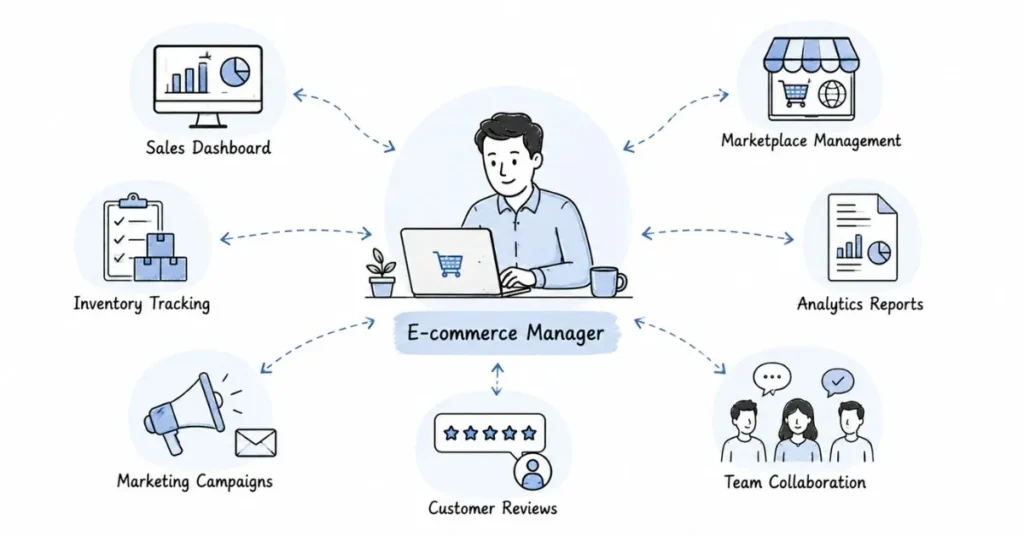
When I tell people I’m an e-commerce manager, they usually say, “Oh, so you sell things online?” Yes, but that’s like saying a pilot “makes planes go up and down.”
The reality is far more complex and interesting.
Let me walk you through a real Wednesday in my life as an E-commerce Manager at a mid sized fashion D2C brand in Pune:
First Half
7:30 AM (Before reaching office): Check overnight sales on phone. ₹1.85 lakhs (target was ₹2 lakhs slightly under, need to investigate). Check top selling products ethnic wear doing well, western wear lagging.
9:00 AM: Office. First thing dashboard review across 15 tabs. Website analytics, marketplace performance (Myntra, Ajio), social media metrics, email campaign results, inventory levels, customer complaints from yesterday.
9:30 AM: Daily standup with team (4 people 1 content person, 1 operations coordinator, 2 marketplace specialists). Each shares yesterday’s wins and today’s priorities. Operations coordinator mentions stockout in bestseller urgent escalation needed.
10:00 AM: Crisis mode. Bestselling kurti out of stock, but we’re running ads driving traffic to it. Action plan: Pause ads immediately (₹8,000 daily budget being wasted), find similar products to promote instead, coordinate with procurement on restock timeline, update product page with “back in stock” date.
11:30 AM: Weekly meeting with marketing team. Planning content for upcoming festival (Holi in 3 weeks). Discussing: Color themes, influencer collaborations, email campaign strategy, discount structure, ad budgets across channels.
Second Half
1:00 PM: Lunch while responding to emails. Vendor wants to increase prices by 15%, negotiate down to 8%. Designer asking about product photoshoot priority which 50 products to shoot this week? Prioritize based on sales velocity and inventory availability.
2:00 PM: Data deep dive. Why are sales down 8% vs. last week? Breaking down: Traffic down 3% (marketing to investigate), conversion rate down 5% (website issue? Let me check). Checkout analysis shows 12% drop at payment page. Call with tech team payment gateway has higher failure rate this week. They’re investigating.
3:30 PM: Marketplace optimization. Logging into Myntra dashboard our products ranking low in search. Competitor analysis they have better ratings, more reviews, slightly lower prices. Action items: Launch review collection campaign, optimize product titles with keywords, consider limited time pricing strategy.
5:00 PM: Planning session for month end sale. Creating promotional calendar, discount structure (flat vs. tiered discounts?), inventory planning (which slow moving stock to push), marketing asset brief, email schedule, website banner requirements.
6:30 PM: Team member wants to discuss career growth. One-on-one conversation, understanding aspirations, creating development plan, discussing potential projects.
7:30 PM: Wrapping up. Prepare tomorrow’s priorities, update project tracking sheet, send end-of-day update to boss.
9:00 PM (At home): Quick check sales for day closed at ₹2.12 lakhs (made up for morning deficit!). Sleep peacefully.
This is one day. Multiply by 365. That’s what e-commerce management looks like.
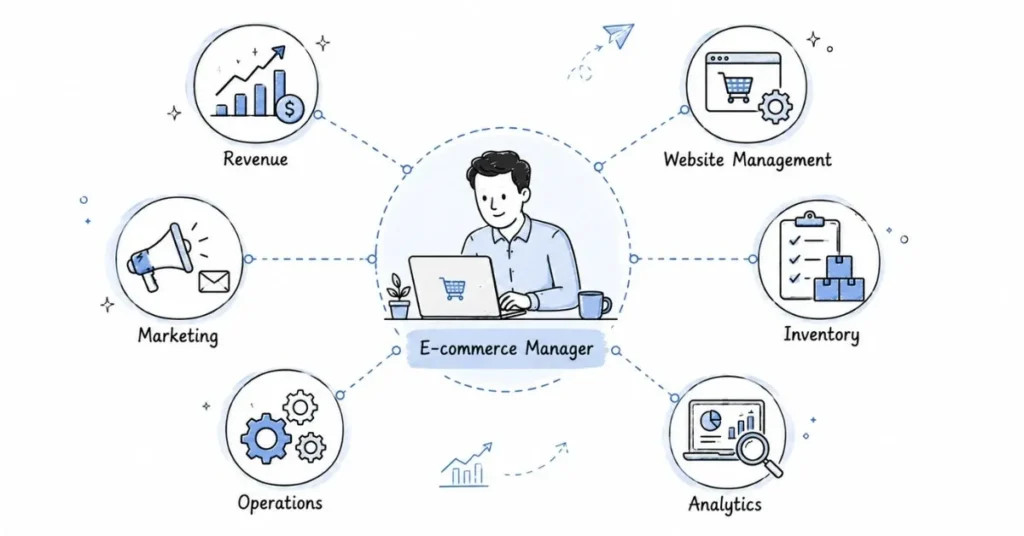
Core Responsibilities: What You're Actually Accountable For
1. Revenue & P&L (Profit and Loss) Ownership
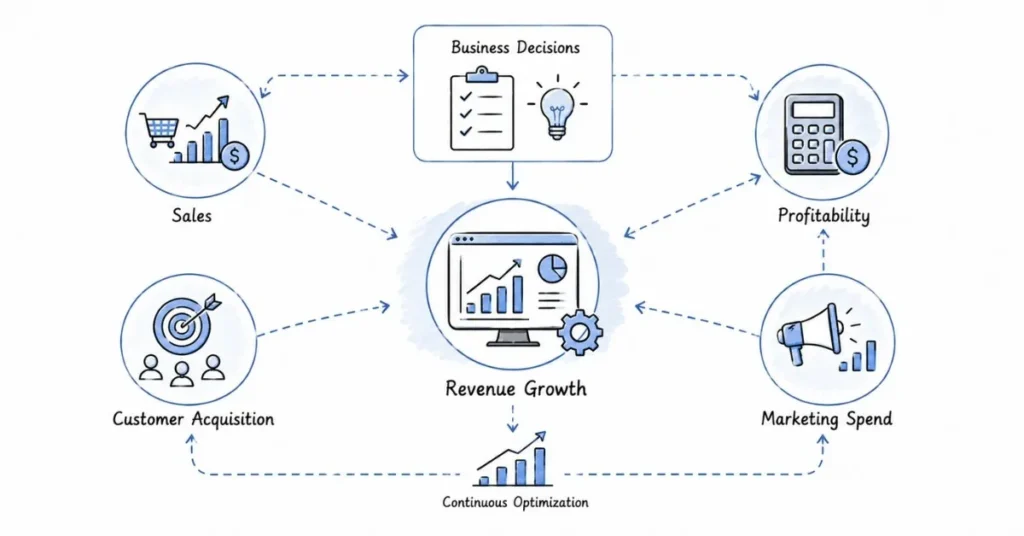
You’re given targets:
- Monthly revenue target: ₹60 lakhs
- Target AOV (Average Order Value): ₹2,500
- Target conversion rate: 2.5%
- Operating margin: 25%
Your job is hitting these numbers while managing costs.
Creator Research and Identification:
What this involves daily:
Revenue tracking: Not just total revenue, but breaking it down:
- Which products driving sales?
- Which channels (website vs. marketplaces)?
- Which customer segments?
- Which marketing campaigns?
Cost management: Every rupee spent needs justification:
- Marketing costs (CAC should be less than 25% of LTV)
- Technology costs (platform fees, payment gateway charges)
- Operational costs (packaging, shipping, returns processing)
Profitability analysis: High revenue means nothing if you’re losing money:
- Product level profitability (some products might be loss leaders)
- Channel profitability (marketplace fees eat margins is it still worth it?)
- Campaign profitability (that Instagram campaign brought sales, but at what cost?)
Real example:
I once managed a product that did ₹15 lakhs monthly revenue – looked great. But analysis showed:
- Cost price: ₹800
- Selling price: ₹1,200
- Gross margin: ₹400 (33%)
- But: Marketing cost per sale: ₹280, shipping: ₹80, packaging: ₹30, returns (20% return rate): ₹160
- Net margin: ₹400 – ₹550 = -₹150 per piece (losing money!)
Action: Either increase price, reduce marketing costs, or discontinue product. Chose to discontinue despite high sales volume.
This is why P&L understanding is crucial for e-commerce managers.
2. Website/Platform Management
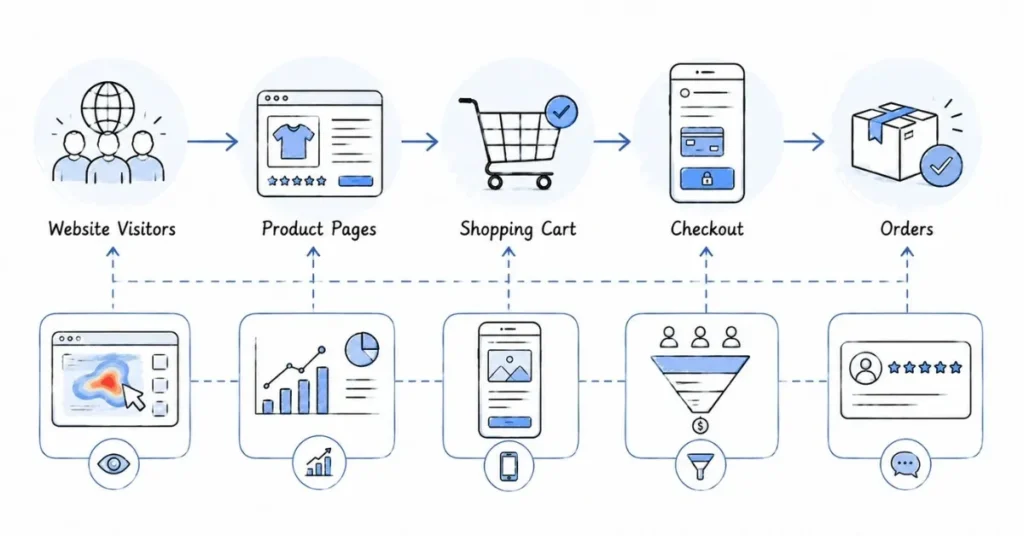
You’re responsible for the online store looking good, working smoothly, and converting visitors to customers.
What this involves:
Content management:
- Uploading new products with compelling descriptions
- Ensuring high quality product photography
- Creating engaging banners and promotions
- Maintaining category pages and navigation
User experience optimization:
- Is checkout flow smooth? (Every extra step loses 10-20% customers)
- Are product pages informative? (Answers all customer questions)
- Is search working well? (Customers find what they need)
- Is site fast? (Every second delay reduces conversions)
Testing and optimization:
- A/B testing different elements (button colors, copy, layouts)
- Heatmap analysis (where do users click? What do they ignore?)
- Funnel analysis (where are users dropping off?)
- Mobile optimization (70-80% traffic from mobile in India)
Conversion rate optimization (CRO):
Your website gets 10,000 visitors monthly. Current conversion: 2% = 200 orders.
If you improve conversion to 2.5% = 250 orders = 25% more revenue with same traffic.
CRO is one of highest ROI activities for e-commerce managers.
Common CRO wins I’ve implemented:
- Added “Cash on Delivery” badge prominently → 12% conversion increase in tier-2 cities
- Simplified checkout from 5 steps to 3 → 8% conversion increase
- Added customer reviews with photos → 15% conversion increase for reviewed products
- Improved product images (lifestyle shots vs. white background) → 20% conversion increase
3. Marketing Coordination & Execution
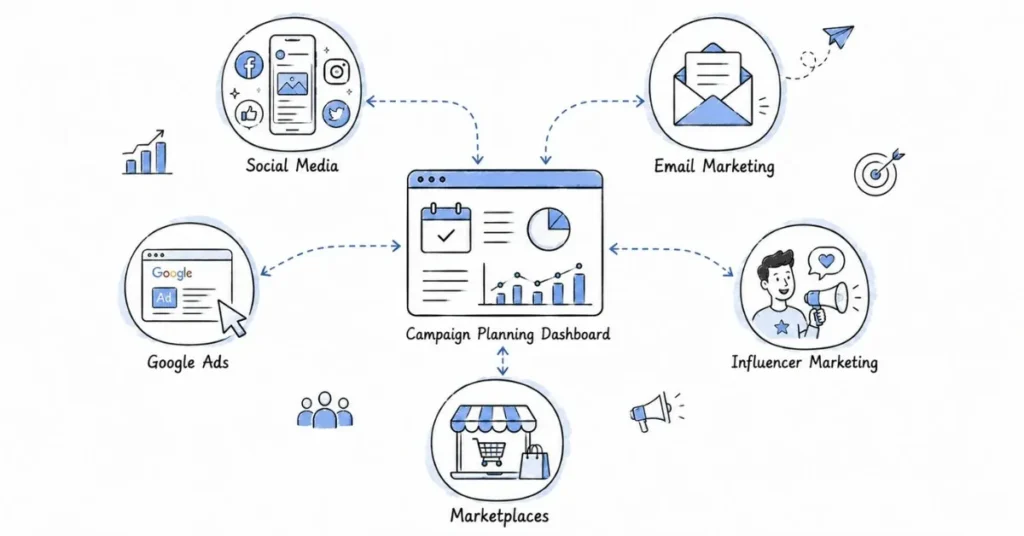
You’re not just executing marketing; you’re strategizing, budgeting, and measuring ROI.
Channel management:
Organic channels (free traffic):
- SEO: Working with content team on keyword optimization
- Social media: Organic posts, community engagement
- Email marketing: Newsletters, promotional campaigns, abandoned cart recovery
- WhatsApp marketing: Order updates, promotional broadcasts (huge in India)
Paid channels (buying traffic):
- Google Ads: Search, Shopping, Display
- Facebook & Instagram Ads: Feed, Stories, Reels
- Marketplace ads: Sponsored products on Amazon, Myntra, Flipkart
- Influencer collaborations: Finding right influencers, negotiating rates, measuring ROI
Budget allocation: You have ₹5 lakhs monthly marketing budget. How do you split it?
My typical allocation:
- 35% Facebook/Instagram (₹1.75 lakhs) – Good for brand awareness and acquisition
- 25% Google (₹1.25 lakhs) – High intent, strong conversion
- 20% Marketplace ads (₹1 lakh) – Competitive necessity
- 10% Influencer marketing (₹50,000) – Building brand credibility
- 10% Experiments (₹50,000) – Testing new channels (Pinterest, YouTube, vernacular platforms)
Every month, analyze what worked, what didn’t, adjust allocation.
Campaign planning:
Indian e-commerce thrives on campaigns:
- Festival campaigns (Diwali, Eid, Onam, Durga Puja, etc.)
- Seasonal campaigns (Summer, Winter, Monsoon collections)
- Category specific (Wedding season for ethnic wear)
- Flash sales (Weekend surprises, midnight sales)
Planning a campaign involves:
- Creative conceptualization (theme, visuals, messaging)
- Discount structure (flat 30% off vs. tiered discounts vs. Buy 2 Get 1)
- Inventory planning (ensuring stock availability)
- Marketing asset creation (banners, videos, email templates)
- Channel strategy (which platforms to prioritize)
- Budget planning
- Success metrics definition
4. Inventory & Merchandising
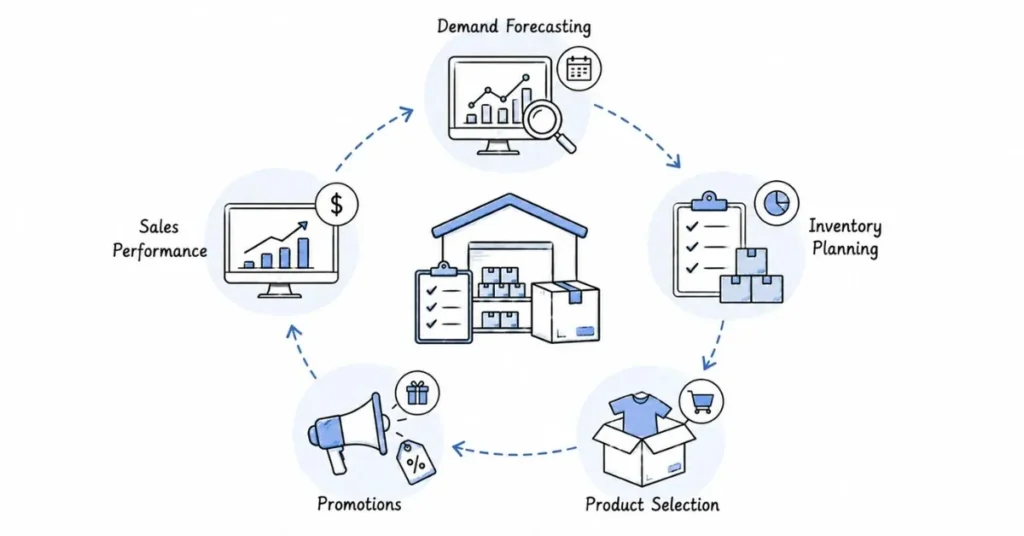
You ensure right products are available in right quantities at right time.
Stock planning:
- Analyzing past sales data to forecast demand
- Seasonal inventory planning (stocking ACs before summer, heaters before winter)
- Coordinating with procurement/vendors on purchase orders
- Managing lead times (if vendor needs 45 days to deliver, you order 60 days before needed)
Merchandising strategy:
- Which products to feature on homepage?
- Which products to push in campaigns?
- How to display products for maximum appeal?
- Cross selling and upselling strategies (customers buying X often need Y)
Inventory health management:
- Fast moving products: Never let them go out of stock
- Slow moving products: Liquidate through sales, bundles, or markdowns
- Dead stock: Decide deep discount liquidation or write off
Negotiation and Communication:
Influencer marketing involves constant negotiation campaign terms, deliverables, timelines, and compensation. You must communicate value propositions persuasively to creators considering partnerships, negotiate firmly but fairly protecting brand interests while respecting creator worth, handle difficult conversations like requesting content revisions or addressing missed deadlines, mediate between brand expectations and creator capabilities when misalignment occurs, and document agreements clearly preventing future misunderstandings.
Strong communicators build win-win partnerships where both brands and creators feel valued.
Real challenge I faced:
Ordered 5,000 units of trendy product based on initial demand signals. First 1,000 units sold in 2 weeks – great! Ordered more. But trend died. Stuck with 4,500 units of inventory worth ₹18 lakhs.
Actions taken:
- Bundle deals (buy this + another product at discount)
- Influencer gifting (create buzz)
- Deep discount sale (sold at loss, but freed up cash and warehouse space)
- Learned lesson: Test small, scale only when proven
5. Operations Coordination
You ensure orders are processed and delivered smoothly.
Order fulfillment:
- Monitoring order processing speed (target: Dispatch within 24 hours)
- Coordinating with warehouse on stockouts, damages, quality issues
- Managing peak season operations (5x volume during Diwali – how to handle?)
Logistics management:
- Coordinating with delivery partners
- Monitoring delivery performance (on time delivery %, customer feedback)
- Managing delivery exceptions (address not found, customer not available)
- Returns and exchange processing
Customer service oversight:
- Ensuring timely response to customer queries
- Resolving escalations
- Analyzing complaint patterns (if 20% complaints about product quality, that’s systemic issue)
6. Analytics & Reporting
You’re constantly tracking, analyzing, reporting.
Daily dashboards:
- Sales vs. target
- Traffic and conversion
- Top performing products/categories
- Marketing channel performance
- Operational metrics (dispatch rate, delivery TAT)
Weekly analysis:
- Deeper dives into trends
- Cohort analysis (customers acquired in January how many are still buying in March?)
- Campaign performance reviews
- Inventory health
Monthly business reviews:
- Presentation to leadership
- What went well, what didn’t
- Learnings and action items
- Next month’s strategy
Quarterly planning:
- Strategic initiatives
- Budget planning
- Team goals and targets
Skills That Make Great E-commerce Managers
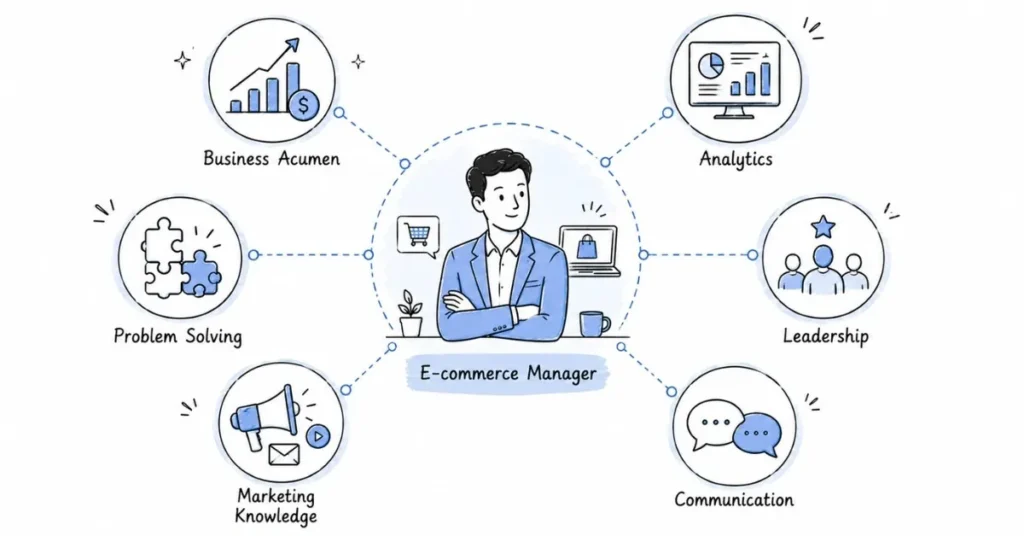
1. Business Acumen
Understanding how businesses make money. Not just revenue, but profitability.
Can you answer:
- What’s our gross margin vs. net margin?
- What’s customer acquisition cost vs. lifetime value?
- Which products/channels are most profitable?
- Where should we invest more vs. cut back?
2. Data Driven Decision Making
Decisions based on data, not gut feeling. But also knowing when data doesn’t tell full story and intuition matters.
3. Juggling Multiple Priorities
On any given day, you’re handling:
- Urgent crisis (website down)
- Important strategic projects (planning next quarter)
- Routine tasks (approving content, answering emails)
- People management (team members need guidance)
Prioritization is key skill.
4. Cross Functional Collaboration
You’re working with:
- Tech team (website features, bug fixes)
- Creative team (designs, content)
- Operations team (warehouse, logistics)
- Finance team (budgets, payments)
- Leadership (strategy, approvals)
Each speaks different language. You translate and coordinate.
5. Adaptability
What worked yesterday might not work today. Algorithm changed. Competitor launched aggressive campaign. Platform policy updated. Trend shifted.
Rigid managers struggle. Adaptable ones thrive.
Career Path to E-commerce Manager
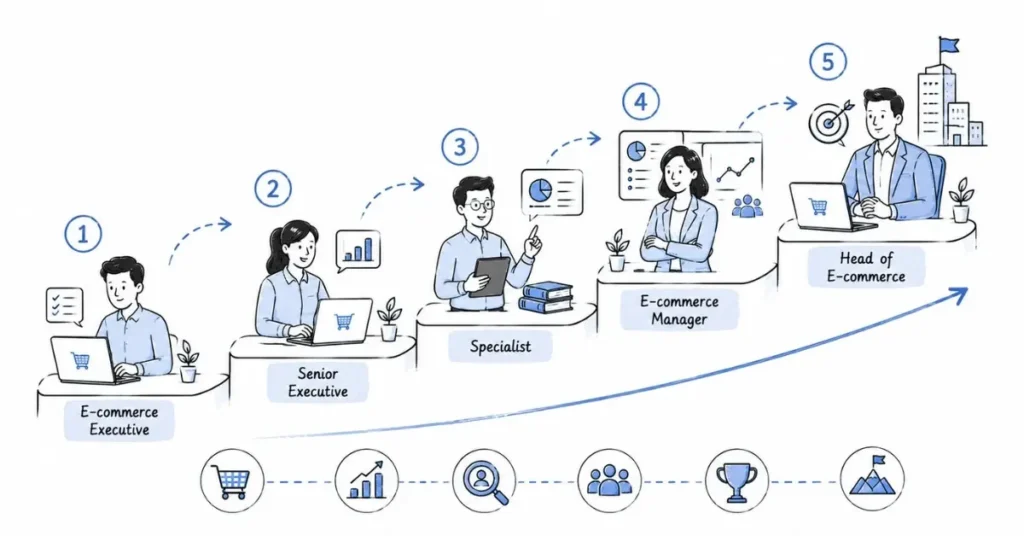
Typical progression:
Entry (1-2 years): E-commerce Executive/Assistant
- Supporting senior manager
- Handling tactical tasks (product uploads, basic reporting)
- Learning ropes
- Salary: ₹3-5 LPA
Mid (3-4 years): Senior Executive/Specialist
- Managing specific area (marketplaces, website, marketing)
- More autonomy
- Starting to strategize
- Salary: ₹6-10 LPA
Manager (5-7 years): E-commerce Manager
- Complete ownership of online business or significant portion
- Team management (2-5 people)
- P&L responsibility
- Salary: ₹9-16 LPA
Senior (8+ years): Senior Manager/Head/Director
- Larger teams, bigger budgets, strategic role
- Salary: ₹18-35 LPA
Salary Deep Dive: What Determines Your Pay
Factors affecting salary:
Company stage:
- Early stage startup: ₹8-11 LPA (lower cash, possible equity)
- Growth stage startup: ₹10-14 LPA
- Established company: ₹12-18 LPA
City:
- Bangalore/Mumbai/Delhi: ₹12-16 LPA
- Pune/Hyderabad/Chennai: ₹10-14 LPA
- Tier-2 cities: ₹8-12 LPA
Industry:
- Fashion/beauty D2C: ₹10-15 LPA
- Electronics/gadgets: ₹11-16 LPA
- Grocery/FMCG: ₹9-14 LPA
- Marketplaces: ₹12-18 LPA
Your background:
- MBA from tier-1: 20-30% premiumStrong track record: Negotiating power
- Specialized skills (data analytics, growth hacking): Premium
Day in Life: Three Scenarios
Scenario 1: Normal Day (60% of days)
Manageable workload, things running smoothly, strategic work possible. Leave office by 7 PM.
Scenario 2: High Pressure Day (30% of days)
Campaign launch, website issues, inventory crisis, multiple fires. Work till 9-10 PM.
Scenario 3: Peak Season (10% of days, but intensely clustered)
Diwali, Big Billion Day, End of Season Sale. Work 12-14 hour days for 1-2 weeks. Stressful but exciting.
Real Talk: Challenges of the Role
Challenge 1: Always On
E-commerce doesn’t sleep. Weekend sale starts Saturday 12 AM, you’re monitoring. Customer complaint escalates Sunday evening, you’re responding.
Challenge 2: Pressure of Numbers
Revenue target is ₹60 lakhs. By 20th of month, you’re at ₹35 lakhs. You need ₹25 lakhs in 10 days. That pressure is real.
Challenge 3: Rapid Change
What you planned in January might be irrelevant by March. Constant adaptation exhausting for some.
Challenge 4: Cross Functional Frustrations
Marketing wants feature X, Tech says 3 months. Operations says packaging costs too much, Finance says can’t increase budget. You’re in middle navigating.
Challenge 5: Attribution Ambiguity
Sales went up. Was it your campaign or just seasonal trend? Sales went down. Was it your fault or market slowdown? Not always clear.
Why People Love This Role
Reason 1: Direct Impact
You launched campaign, sales jumped 40%. Immediate, visible impact. Very satisfying.
Reason 2: Variety
No two days same. Strategy, execution, problem solving, people management, data analysis everything mixed.
Reason 3: Learning Curve
You learn incredibly fast. Marketing, operations, tech, finance, product exposure to everything.
Reason 4: Career Trajectory
Clear growth path. Strong foundation for moving into Product Management, Growth, General Management, or even entrepreneurship.
Reason 5: Market Demand
Every e-commerce company needs good managers. Job security high, switching opportunities plenty.
Is E-commerce Manager Role Right for You?
You’ll thrive if:
- You enjoy variety over monotony
- You’re comfortable with pressure and targets
- You like seeing direct impact of your work
- You enjoy problem solving and juggling priorities
- You’re data oriented but also creative
- You like fast paced environments
You might struggle if:
- You prefer predictable 9-5
- You dislike pressure and targets
- You want deep specialization over breadth
- You prefer independent work over collaboration
- You need complete control (you influence many things but directly control few)
Your Roadmap to Becoming E-commerce Manager
If you’re fresh graduate:
- Start as E-commerce Executive (any company)
- Learn platforms, tools, processes (2-3 years)
- Take on more responsibility proactively
- Build T-shaped skills (depth in one area, breadth in others)
- Target Manager role by year 5-6
If you’re career switcher:
- Leverage transferable skills (marketing, operations, analytics)
- Take lateral entry at Executive/Senior Executive level
- Prove yourself quickly (6-12 months)
- Target Manager role by year 3-4 in e-commerce
Final Thoughts
E-commerce Manager is challenging, demanding, sometimes stressful. It’s also exciting, impactful, fast growing, and well compensated.
You’re essentially running a business within a business. The P&L is your scorecard. The team is your resource. The market is your playground.
If that excites you, this role is for you.
If that terrifies you, this role might not be ideal (and that’s okay – there are many other wonderful e-commerce roles).
The beautiful part? You can test the waters. Start as Executive, see if you enjoy it, decide if you want to grow into Manager role.
Your e-commerce management career could start with one application today.