
E-commerce Career Guide: Retail Technology & Management Jobs
Table of Contents
Introduction: Why E-commerce is India's Fastest Growing Career Field
Remember when your parents told you to get a “stable job” in engineering or medicine? Well, times have changed. Today, if you’re scrolling through Myntra at midnight, ordering groceries on Blinkit, or checking out the latest deals on Flipkart, you’re participating in India’s e-commerce revolution. And guess what? Someone needs to manage all of this and that someone could be you.
India’s e-commerce market is expected to reach $350 billion by 2030, and we’re not just talking about big cities anymore. From Tier 2 towns like Coimbatore to small cities like Bhubaneswar, online shopping has become a way of life. This explosive growth means one thing: massive career opportunities for people who understand both technology and retail.
But here’s the catch most college students and career switchers don’t know where to start. Should you learn Shopify? Is coding necessary? Can you break into e-commerce career without an MBA? This guide answers all these questions and more, giving you a complete roadmap to build a successful career in e-commerce and retail technology.
Whether you’re a fresh graduate from a tier-3 college in Jaipur, a working professional in Bangalore looking to switch careers, or someone running a small online store and wanting to scale up, this guide is your starting point.
Understanding the E-commerce Ecosystem in India
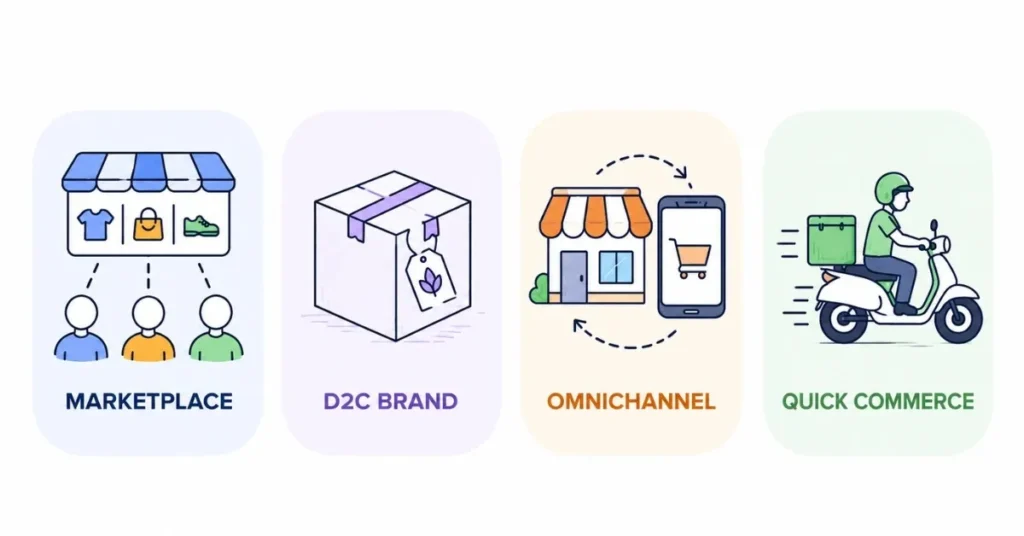
Before we dive into specific careers, let’s understand what e-commerce really means in the Indian context. It’s not just about selling products online anymore.
The Four Pillars of Indian E-commerce:
- Marketplaces: Think Amazon, Flipkart, Meesho platforms where multiple sellers list products
- Direct-to-Consumer (D2C) Brands: Like Boat, Mamaearth, The Souled Store brands selling directly to customers
- Omnichannel Retail: Traditional stores like Reliance Retail, Shoppers Stop going digital
- Quick Commerce: Swiggy Instamart, Zepto, Blinkit delivering in 10-30 minutes
Each of these models needs different types of professionals. A marketplace needs category managers, a D2C brand needs growth hackers, omnichannel retail needs technology integrators, and quick commerce needs operations wizards.
What Makes Indian E-commerce Unique:
Unlike the West where e-commerce is mature, India presents unique challenges and opportunities:
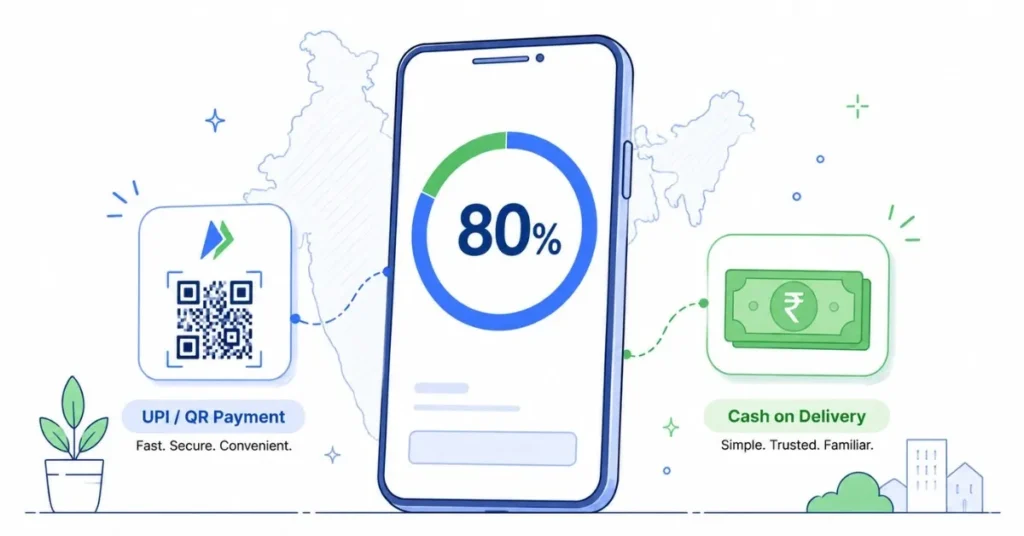
- Payment diversity: From UPI to Cash on Delivery, we handle it all
- Multilingual needs: Content in Hindi, Tamil, Telugu, Bengali, and 10+ other languages
- Logistics complexity: Delivering to a metro flat vs. a village in Jharkhand requires different strategies
- Price sensitivity: Indians love a good deal, making pricing strategy crucial
- Mobile-first: Over 80% of Indian e-commerce happens on smartphones
These unique factors mean Indian e-commerce professionals need skills you won’t find in Western textbooks. You need to understand local consumer behavior, regional festivals (Onam in Kerala, Durga Puja in Bengal), and cultural nuances that affect buying decisions.
The E-commerce Career Landscape: Roles That Actually Exist
Let’s break down the reality of e-commerce jobs in India. I’m not going to give you textbook definitions I’ll tell you what these people actually do on a daily basis.
Category 1: Business & Strategy Roles
These are for people who love numbers, strategy, and decision making but might not want to code.
E-commerce Manager (₹6-15 LPA):
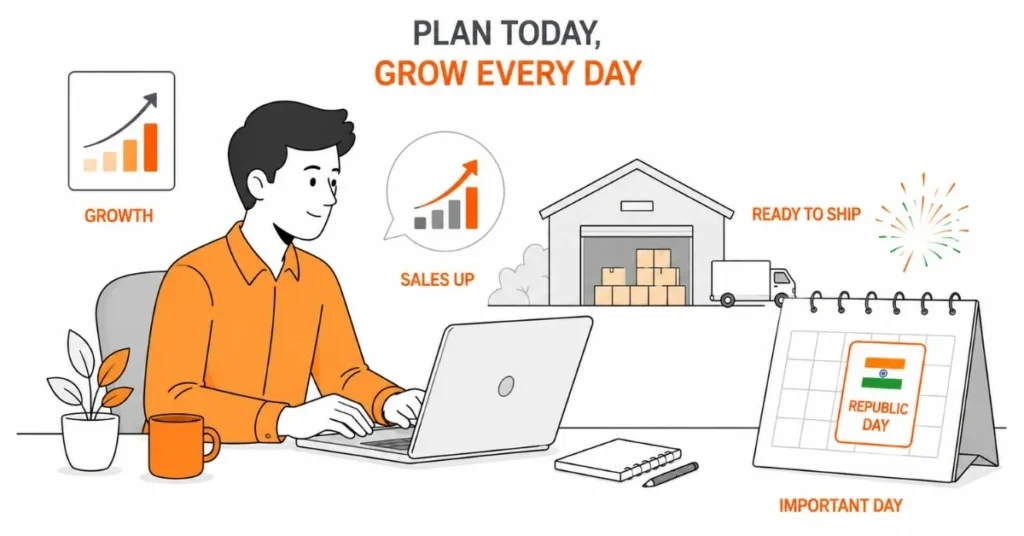
You’re essentially running the online business. On a typical day, you’re checking yesterday’s sales on Google Analytics, planning a flash sale for Republic Day, coordinating with the warehouse about inventory, and arguing with the tech team about why the checkout page is too slow. You don’t need to be a coder, but you must understand how websites work.
Real example: At a mid-sized fashion brand, an e-commerce manager noticed that customers from Tamil Nadu abandoned carts more often. After investigation, they realized the size chart wasn’t in centimeters (which TN customers prefer). One simple change increased conversions by 12%.
Category Manager (₹7-18 LPA):
You own an entire product category like “Men’s Footwear” or “Kitchen Appliances.” Your job is to decide which products to add, what prices to set, which brands to partner with, and how to showcase them. You’re constantly analyzing competitor prices, talking to brands, and experimenting with product displays.
Real example: A category manager at a marketplace noticed that pressure cookers sell like rapidly in July-August (wedding season in many Indian communities). By stocking up early and running targeted campaigns, they increased category revenue by 40%.
Category 2: Technology & Development Roles
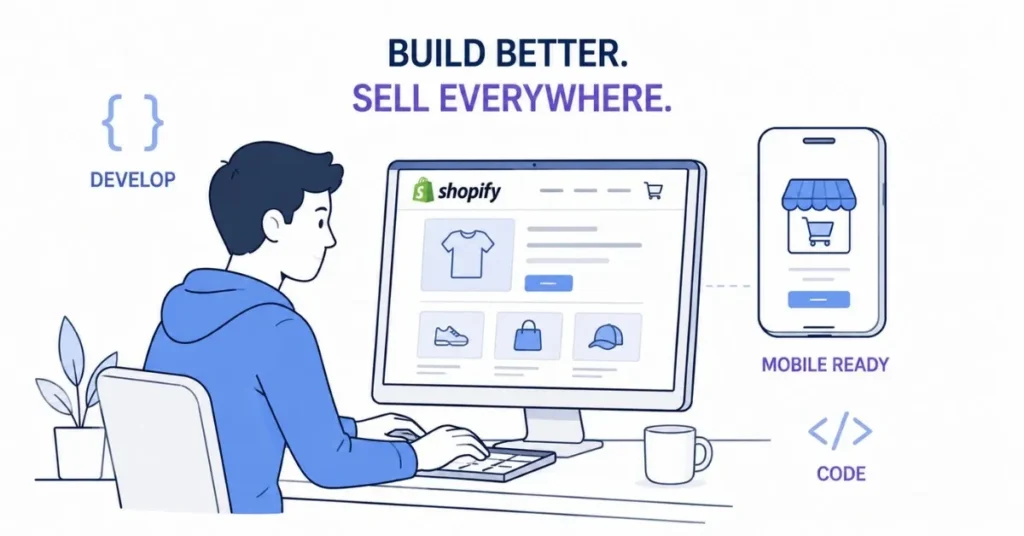
These roles require coding skills, but don’t worry you don’t need to be a genius. Basic programming knowledge combined with commerce understanding goes a long way.
E-commerce Developer (₹4-12 LPA for freshers, ₹15-35 LPA for experienced):
You build and maintain online stores. This could mean creating a Shopify store for a small business, customizing WooCommerce for a WordPress site, or developing custom solutions for large enterprises. You work with HTML, CSS, JavaScript for the front-end (what customers see) and PHP, Python, or Node.js for the back-end (the behind-the-scenes magic).
Real example: A fresher from a tier-3 college learned Shopify development through YouTube and Udemy. Within 6 months, they were freelancing, building stores for local businesses at ₹25,000-50,000 per project. After a year, they joined a Shopify agency in Pune at ₹6.5 LPA.
Mobile App Developer (₹5-20 LPA):
Since most Indian e-commerce happens on mobile, app developers are in huge demand. You’re building features like “quick view,” “save for later,” push notifications about sales, and ensuring the app doesn’t crash when millions of people access it during Big Billion Day.
Category 3: Marketing & Growth Roles
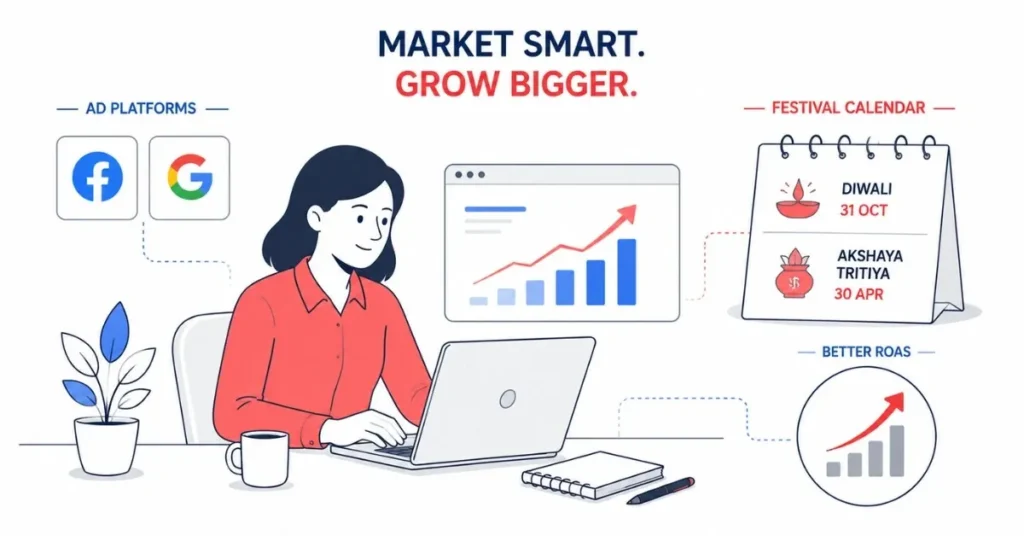
Perfect for creative people who love psychology, writing, and understanding what makes people click “Buy Now.”
Digital Marketing Specialist (₹3-10 LPA):
You’re running ads on Facebook, Instagram, and Google. You’re creating campaigns for Diwali, Valentine’s Day, and random Tuesday sales. You’re writing product descriptions that convert, A/B testing everything, and constantly checking ROAS (Return on Ad Spend).
Real story: A digital marketer at a jewelry e-commerce site created separate campaigns for Akshaya Tritiya (North India), Ugadi (South India), and Pohela Boishakh (Bengal). By respecting regional festivals instead of running generic campaigns, they reduced customer acquisition cost by 30%.
SEO Specialist (₹3-12 LPA):
You make sure when someone Googles “best running shoes under 3000,” your website appears on the first page. You’re researching keywords, optimizing product pages, building backlinks, and staying updated with Google’s ever-changing algorithms.
Category 4: Data & Analytics Roles
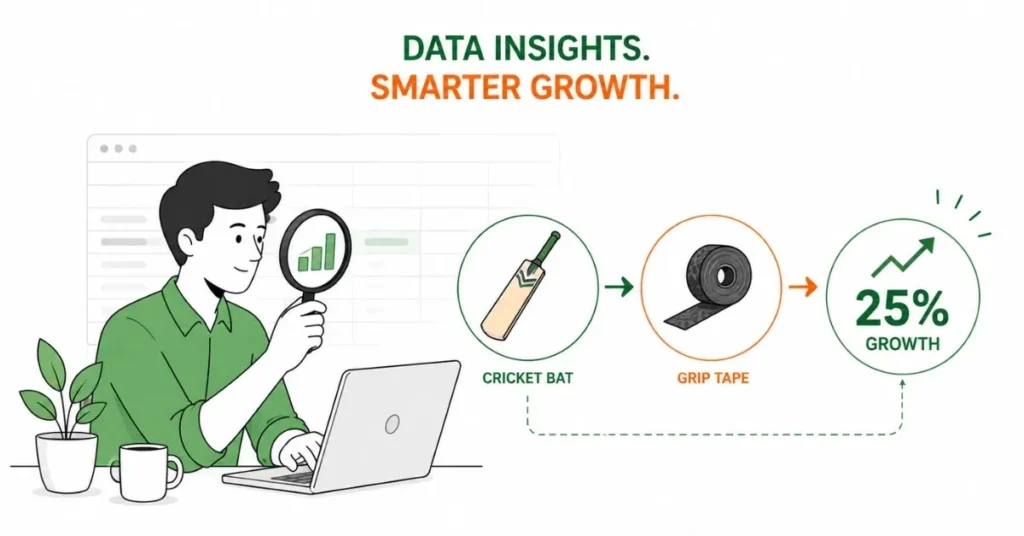
For people who see patterns in chaos and love spreadsheets (yes, such people exist).
Data Analyst (₹4-15 LPA):
You’re the detective of e-commerce. Why did sales drop last Tuesday? Which products are frequently bought together? What’s causing cart abandonment? You use tools like Google Analytics, Power BI, and SQL to answer these questions and help the business make data-driven decisions.
Real insight: An analyst discovered that customers buying cricket bats also frequently searched for “bat grip tape” but didn’t find it easily. By creating a “frequently bought together” section, they increased accessory sales by 25%.
Category 5: Operations & Logistics Roles
For organized people who love solving puzzles and ensuring things run smoothly.
Operations Manager (₹6-18 LPA):
You ensure orders are processed correctly, inventory is maintained, returns are handled smoothly, and customers receive their products on time. You’re coordinating between warehouses, delivery partners, and customer service teams.
Real challenge: During festive seasons, operations managers handle 5x normal order volume. One manager implemented a “regional hub” strategy, storing popular items in smaller warehouses across India, reducing delivery time from 4 days to 2 days.
Supply Chain Coordinator (₹4-12 LPA):
You manage the journey of products from factories/brands to warehouses to customers. You’re negotiating with logistics partners, optimizing delivery routes, and ensuring cost efficiency.
Essential Skills for 2026: What Actually Matters
Forget the fancy job descriptions. Here’s what actually helps you succeed in Indian e-commerce:
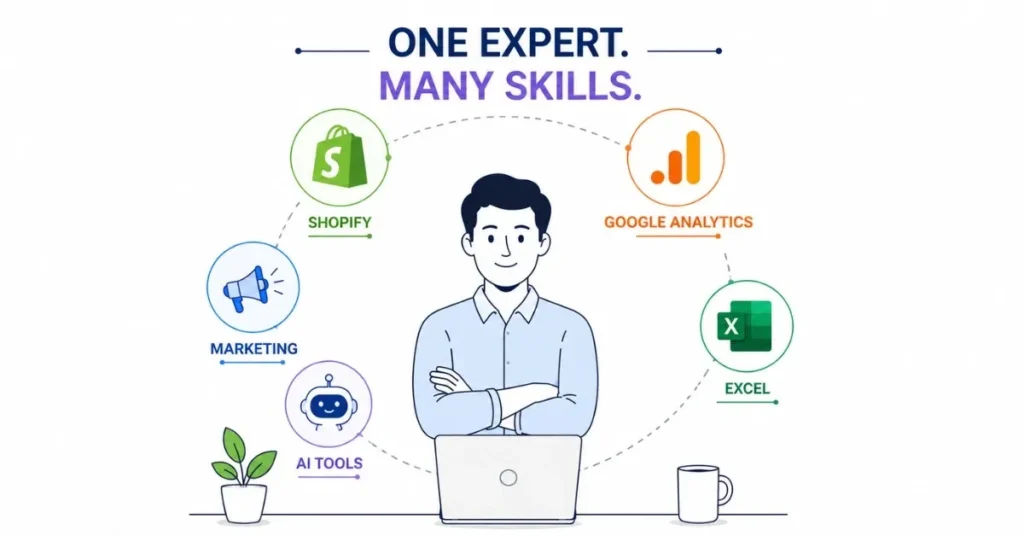
Technical Skills (But Not as Scary as They Sound):
- Basic coding understanding: You don’t need to build Facebook, but understanding how APIs work, what “front-end” and “back-end” mean, and basic HTML/CSS helps tremendously. Even non-technical roles benefit from this.
- Platform knowledge: Hands-on experience with Shopify, WooCommerce, Magento, or custom platforms. The best way to learn? Build a practice store. Seriously create a dummy Shopify store selling imaginary products. You’ll learn more in 2 days than reading 10 articles.
- Analytics tools: Google Analytics is non-negotiable. Learn to navigate it, understand basic metrics (bounce rate, conversion rate, sessions), and create simple reports. Free Google courses are available.
- Excel/Google Sheets mastery: I mean really learn it. VLOOKUPs, Pivot Tables, conditional formatting, basic formulas. 70% of e-commerce analysis happens here before fancy tools come into play.
- AI & Automation basics: Understanding how chatbots work, how product recommendations are generated, and what marketing automation means. You don’t need to code these, but understanding them is crucial.
Soft Skills (Often More Important Than Technical Ones):
- Customer empathy: Can you think like a 45-year-old homemaker in Lucknow shopping online for the first time? Or a 22-year-old student in Kochi wanting next-day delivery? Understanding diverse customer mindsets is your superpower.
- Problem-solving under pressure: Imagine it’s Diwali eve, your website crashes, and you have 50,000 people trying to order. Panic or solve? E-commerce rewards the latter.
- Communication across teams: You’ll work with tech people (who speak in code), marketing people (who speak in creativity), and operations people (who speak in logistics). Being a translator between these worlds is invaluable.
- Adaptability: Algorithms change, platforms update, consumer behavior shifts. What worked in 2024 might be outdated in 2026. Your ability to learn and adapt matters more than what you know today.
Indian Market Specific Skills:
- Multilingual content: Basic understanding of India’s linguistic diversity helps. Even knowing common Hindi words if you’re from the South (or vice versa) helps you create better campaigns.
- Regional festival knowledge: Knowing when Onam, Pongal, Baisakhi, Ganesh Chaturthi happen and their cultural significance helps plan campaigns that actually resonate.
- Tier 2/3 city mindset: Understanding that a customer in Rourkela or Siliguri might have different concerns (delivery reliability, product authenticity) than someone in Mumbai.
Your Career Roadmap: From Zero to E-commerce Pro
Let me give you realistic paths based on different starting points:
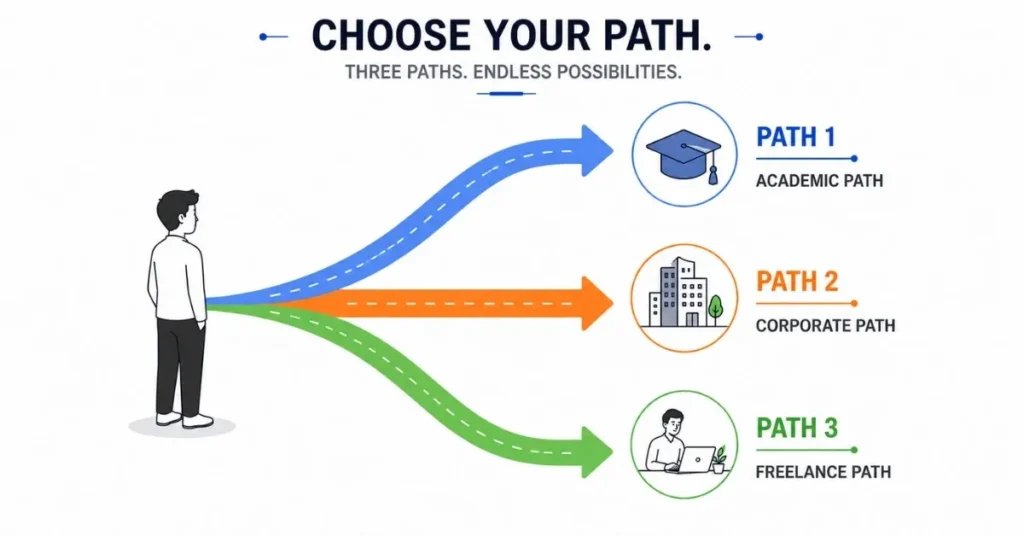
Path 1: Fresh Graduate (Any Stream)
Months 1-3:
- Take a free Google Digital Garage course (online marketing basics)
- Create a dummy Shopify store (14-day free trial) sell anything imaginary
- Learn Google Analytics basics (free certification available)
- Follow 5-10 e-commerce brands on LinkedIn, observe their strategies
- Start documenting your learnings on LinkedIn (build personal brand early)
Months 4-6:
- Apply for internships at D2C brands, small e-commerce companies (₹10,000-15,000/month stipend)
- Freelance: Offer to build Shopify stores for local businesses (₹15,000-30,000 per project)
- Learn one paid ads platform deeply (Facebook Ads or Google Ads)
- Create a portfolio showcasing your dummy projects
Months 7-12:
- Target entry-level roles: E-commerce Executive, Digital Marketing Executive, Operations Coordinator (₹3-5 LPA)
- Keep learning: Add one new skill each quarter
- Network aggressively on LinkedIn (comment on posts, share learnings)
Year 2-3:
- Move to E-commerce Specialist or Manager roles (₹6-10 LPA)
- Specialize in one area: Ads, SEO, Analytics, Operations, or stay generalist
- Consider certifications: Google Ads, HubSpot, Shopify Partner
Path 2: Working Professional (Career Switch)
Months 1-2:
- Leverage your existing skills: Finance background? Focus on e-commerce analytics. Sales background? Category management fits perfectly.
- Take evening courses on Udemy/Coursera on e-commerce fundamentals
- Identify 10 companies in your city with e-commerce operations
Months 3-6:
- Internal switch if possible: Move to e-commerce division in your current company
- Or take a lateral move: Accept similar salary initially in an e-commerce role
- Build projects in your spare time to show competency
Months 7-12:
- Target mid-level roles using your experience: E-commerce Manager, Operations Manager, Category Manager (₹8-15 LPA)
Your past experience + new e-commerce skills = valuable combination
Path 3: Entrepreneur/Freelancer Route
Months 1-3:
- Choose a niche: Shopify stores for specific industries, e-commerce SEO, Amazon account management, etc.
- Build 2-3 portfolio projects (even for free initially)
- Create service packages with clear pricing
Months 4-12:
- Find clients through LinkedIn, cold emails, local business networks
- Typical freelance rates: ₹500-2,000/hour depending on service and experience
- Scale from 1-2 clients to 5-10 clients
Year 2+:
- Either build an agency (hire others, scale)
- Or specialize deeply and charge premium rates
Potential: ₹10-50 lakhs/year depending on niche and client base
Platform Mastery: What You Should Learn
Shopify (Start Here for Beginners):
Why it’s great for Indians: Easy to set up, no coding required for basics, integrated payment gateways including Indian options, 14-day free trial.
Learning path:
- Week 1: Set up a demo store, add products, configure payments
- Week 2: Learn themes, basic customization, app integration
- Week 3: Understand order management, shipping, taxes (GST)
- Week 4: Marketing features, discount codes, abandoned cart recovery
Career potential: Shopify developers and experts can earn ₹50,000-2 lakhs per project. Many work remotely for international clients.
WooCommerce (Best for WordPress Users):
Why Indians use it: It’s free (open-source), highly customizable, good for small to medium businesses.
Learning path:
- Already know WordPress? You’re halfway there
- Learn WooCommerce installation, product setup, payment gateways
- Understand plugins for Indian market (GST, COD, regional shipping)
- Advanced: Customization with PHP
Career potential: WooCommerce developers are in demand for custom solutions. Freelancers charge ₹30,000-1.5 lakhs per project.
Magento (For Advanced Users):
Big enterprises use Magento. It’s complex but powerful. Learn this after mastering Shopify or WooCommerce. Career potential is high (₹8-25 LPA) but entry barrier is also high.
Amazon Seller Central & Flipkart Seller Hub:
If you want to help brands sell on marketplaces, learn these platforms inside out. Many consultants charge ₹25,000-1 lakh per month to manage brand accounts on these platforms.
Salary Reality Check: What Can You Actually Earn?
Let’s be brutally honest about salaries in India’s e-commerce sector:
Entry Level (0-2 years):
- Tier 3 cities: ₹2.5-4 LPA
- Tier 2 cities: ₹3-5 LPA
- Tier 1 cities: ₹4-6 LPA
- Metro cities (Bangalore, Mumbai, Delhi): ₹5-8 LPA
Mid Level (3-5 years):
- E-commerce Manager: ₹8-15 LPA
- Senior Developer: ₹10-18 LPA
- Marketing Manager: ₹10-20 LPA
- Operations Manager: ₹9-16 LPA
Senior Level (6-10 years):
- Head of E-commerce: ₹20-40 LPA
- Technical Lead: ₹25-50 LPA
- Growth Head: ₹25-45 LPA
Freelance/Consulting:
- Beginner: ₹25,000-75,000/month
- Intermediate: ₹1-3 lakhs/month
- Expert: ₹3-10 lakhs/month
Factors affecting salary:
- City (Bangalore pays 20-30% more than tier 2 cities)
- Company stage (Startups might offer lower cash but equity)
- Your specialization (AI/ML in e-commerce commands premium)
Negotiation skills (seriously, learn to negotiate)
Building Your E-commerce Portfolio (Before You Have a Job)
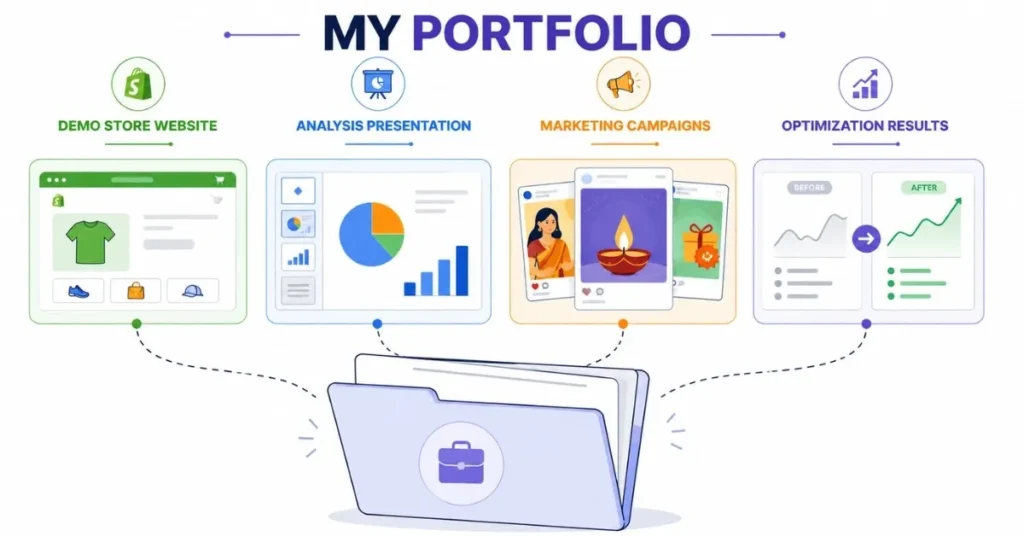
Here’s a secret: You don’t need a job to gain experience. Create your own.
Project 1: The Demo Store
Build a complete online store selling something you’re passionate about (books, plants, handicrafts anything). Use Shopify’s 14-day trial. Don’t just create it market it. Run a small Facebook ad campaign (₹500-1000 budget). Even if you don’t sell anything, you’ll learn the entire process.
Document everything: screenshots, learnings, challenges, metrics. This becomes your portfolio.
Project 2: The Analysis Report
Choose any e-commerce website (Nykaa, Boat, Mamaearth). Do a complete analysis:
- Website user experience
- Marketing strategies (observe their ads, emails)
- SEO analysis (use free tools like Uber suggest)
- Social media strategy
- Strengths and improvement areas
Create a 10-15 slide presentation or a detailed blog post. This shows analytical thinking.
Project 3: The Campaign
Create a complete marketing campaign for a real or imaginary product:
- Target audience definition
- Ad copy and creatives
- Landing page design (use free tools like Canva + Google Sites)
- Email sequence
- Budget and expected ROI
Project 4: The Optimization Story
Take any e-commerce checkout page. Identify 5-10 issues (too many steps, no trust signals, confusing navigation). Create a before-after comparison with your improvements. Use tools like Figma (free) for redesigning.
When you go for interviews, don’t just say “I know e-commerce.” Show these projects. It demonstrates initiative, practical knowledge, and problem-solving ability.
Common Mistakes to Avoid
Mistake 1: Only Focusing on Big Companies
Everyone wants to work for Amazon or Flipkart. But there are 50,000+ small and medium e-commerce companies in India where you’ll learn more, get more responsibility earlier, and grow faster. A friend started at a 15-person D2C brand at ₹4.5 LPA. Within 2 years, they were heading marketing at ₹12 LPA. At a big company, they’d still be a “junior executive.”
Mistake 2: Ignoring the Business Side
Many technical people focus only on coding. But understanding business metrics (CAC, LTV, margins, conversion rates) makes you 10x more valuable. Conversely, business folks who ignore technology struggle to have meaningful conversations with tech teams.
Mistake 3: Not Specializing Early Enough
Initially, being a generalist is fine. But by year 2-3, you should develop a specialty. “I do e-commerce” is vague. “I help fashion brands reduce their customer acquisition cost through targeted Facebook campaigns” is specific and valuable.
Mistake 4: Underestimating Soft Skills
You can be a brilliant analyst, but if you can’t explain your insights to non-technical stakeholders, your impact is limited. Communication, presentation, and storytelling skills are crucial.
Mistake 5: Not Building a Personal Brand
Your LinkedIn profile shouldn’t be a static resume. Share learnings, comment on industry news, write short posts about e-commerce trends. HR managers do check social profiles. An active, thoughtful presence helps.
The Future: What's Coming in E-commerce Careers
AI-Powered Everything:
By 2027-28, expect AI to handle:
- Basic customer service (chatbots handling 80% of queries)
- Product descriptions (AI generates them)
- Ad copy creation
- Basic data analysis
But here’s the opportunity: AI needs human oversight, training, and strategic direction. Roles like “AI Training Specialist for E-commerce” and “AI Implementation Manager” will emerge.
Voice Commerce:
“Alexa, order my usual groceries” is becoming common. Voice search optimization and voice commerce strategy will be new skill areas.
Social Commerce Explosion:
Instagram Shopping, Facebook Marketplace, WhatsApp Commerce are growing fast in India. New roles: “Social Commerce Specialist,” “Influencer Partnership Manager.”
Sustainability Focus:
Consumers increasingly care about sustainable packaging, carbon-neutral delivery, ethical sourcing. “Sustainability Manager” in e-commerce is an emerging role.
Quick Commerce Scaling:
10-minute delivery needs hyperlocal strategies. “Dark Store Manager,” “Hyperlocal Logistics Coordinator” are new roles.
AR/VR Integration:
Virtual try-ons, 3D product views. “AR Experience Designer for E-commerce” is an emerging tech role.
The key is adaptability. The specific tools will change, but core principles (understanding customers, optimizing conversions, ensuring smooth operations) remain constant.
Resource Section: Where to Learn
Free Learning Resources:
- Google Digital Garage: Complete digital marketing basics
- Google Analytics Academy: Master analytics
- Shopify Learn: Even if you don’t use Shopify, excellent e-commerce fundamentals
- HubSpot Academy: Inbound marketing, content strategy
- YouTube Channels: Think Media, Neil Patel, Shopify’s official channel
Paid Courses (Worth It):
- Udemy: E-commerce courses (₹500-1,500 during sales)
- Coursera: University-backed courses with certifications
- LinkedIn Learning: Monthly subscription (₹1,300/month), good for structured learning
Books Every E-commerce Professional Should Read:
- “Dotcom Secrets” by Russell Brunson (sales funnels)
- “Hooked” by Nir Eyal (customer psychology)
- “The Lean Startup” by Eric Ries (building products customers want)
- “Traction” by Gabriel Weinberg (customer acquisition)
Communities to Join:
- Reddit: r/ecommerce, r/shopify
- LinkedIn Groups: E-commerce India, D2C Brands India
- Telegram Groups: Search “e-commerce India” (many active groups)
Offline: Attend local meetups in your city
Your 30-60-90 Day Action Plan
Days 1-30: Foundation Building
- Complete 1 free course (Google Digital Garage or Shopify Learn)
- Create dummy Shopify store
- Follow 20 e-commerce professionals on LinkedIn
- Read 2 blog posts daily about e-commerce
- Start documenting learnings (personal notes or public posts)
Days 31-60: Skill Building
- Learn one platform deeply (Shopify or WooCommerce)
- Complete one portfolio project
- Reach out to 5 small businesses offering free help (to learn)
- Take a paid course if budget allows
- Start applying for internships or entry-level roles
Days 61-90: Launch Phase
- Have 2-3 portfolio projects ready
- Resume polished with projects highlighted
- Apply to 5 jobs daily
- Network actively (10 LinkedIn connections weekly)
- Consider freelancing on Fiverr/Upwork as backup
Even if you don’t land a job by day 90, you’ll have real skills, a portfolio, and a clear direction. That’s more than 90% of people starting out.
Final Words: Your E-commerce Journey Starts Now
E-commerce isn’t just a career it’s a front-row seat to how India shops, lives, and evolves. You’ll be part of enabling a farmer in Punjab to sell organic honey nationwide, helping a craftsperson in Odisha reach global markets, or making it easier for a busy professional in Chennai to get groceries delivered in 10 minutes.
The barrier to entry is lower than traditional careers no one cares if you’re from IIT or a small-town college. They care about what you can do. And unlike many fields, you can start demonstrating your abilities even before getting a job.
Will it be easy? No. Will there be setbacks? Absolutely. But if you’re reading this, you’re already ahead because you’re seeking knowledge and taking initiative.
The Indian e-commerce story is still being written, and there’s space for you to be a significant author of it.
Now, explore the detailed subtopic guides linked throughout this article to deep-dive into specific career paths, skills, and strategies.
Welcome to e-commerce. Your journey begins now.