
E-commerce Certifications & Training Programs
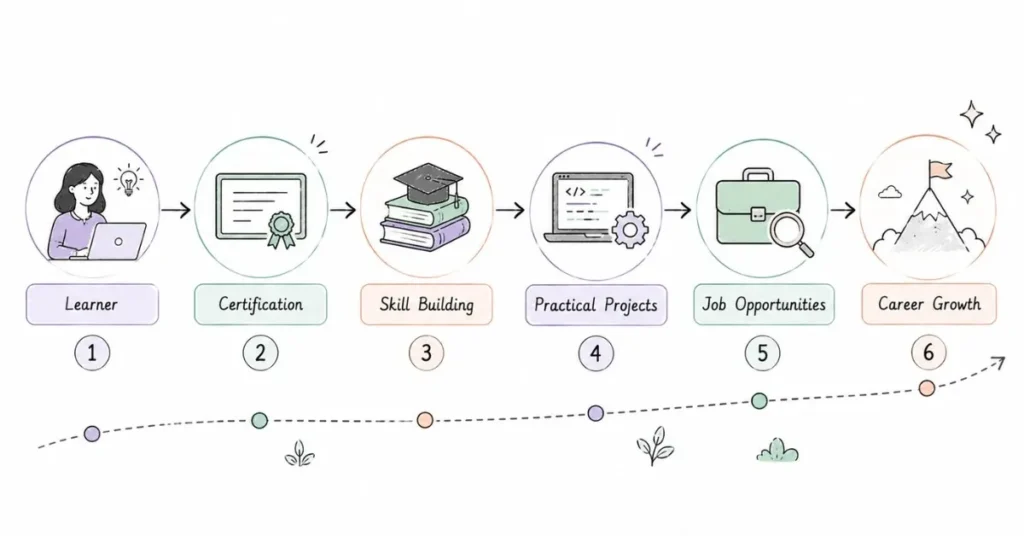
Table of Contents
Introduction: The Truth About E-commerce Certifications
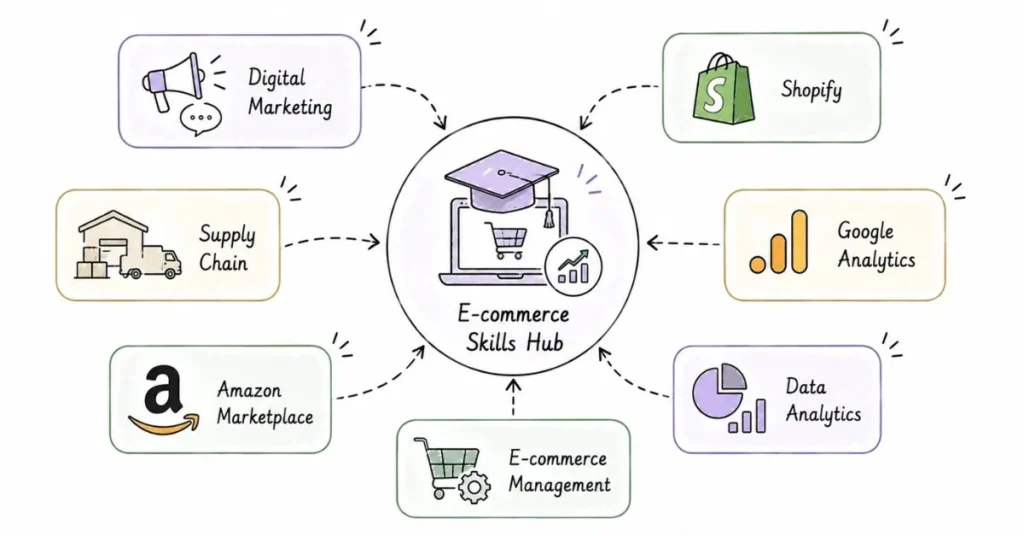
Let me start with brutal honesty that career advisors won’t tell you:
Certifications alone won’t get you a job.
I’ve interviewed 50+ candidates for e-commerce roles over the past 3 years. Here’s what I’ve seen:
Candidate A:
- 5 certificates (Google Analytics, Digital Marketing, Shopify, Facebook Blueprint, HubSpot)
- ₹1 lakh+ spent on courses
- Zero real projects
- Couldn’t answer basic practical questions
- Result: Not hired
Candidate B:
- Zero certificates
- Built and ran small Shopify store for cousin’s business (₹2 lakh monthly revenue)
- Created content calendar and executed for 6 months
- Could explain every decision, what worked, what didn’t
- Result: Hired at ₹6.5 LPA
The lesson?
Certifications are helpful, but they’re support characters, not the hero. Your hero is practical experience, demonstrated skills, and ability to deliver results.
That said, certifications serve purposes:
- Structure learning (if you’re overwhelmed, not sure where to start)
- Fill knowledge gaps (you’re good at marketing but weak at analytics)
- Signal commitment (showing you’re serious about learning)
- Resume boost (helps get past HR filters, especially for big companies)
This guide tells you exactly which certifications are worth your time and money in 2026, which are overhyped, and how to actually benefit from them.
The Certification Framework: Understanding What Actually Matters
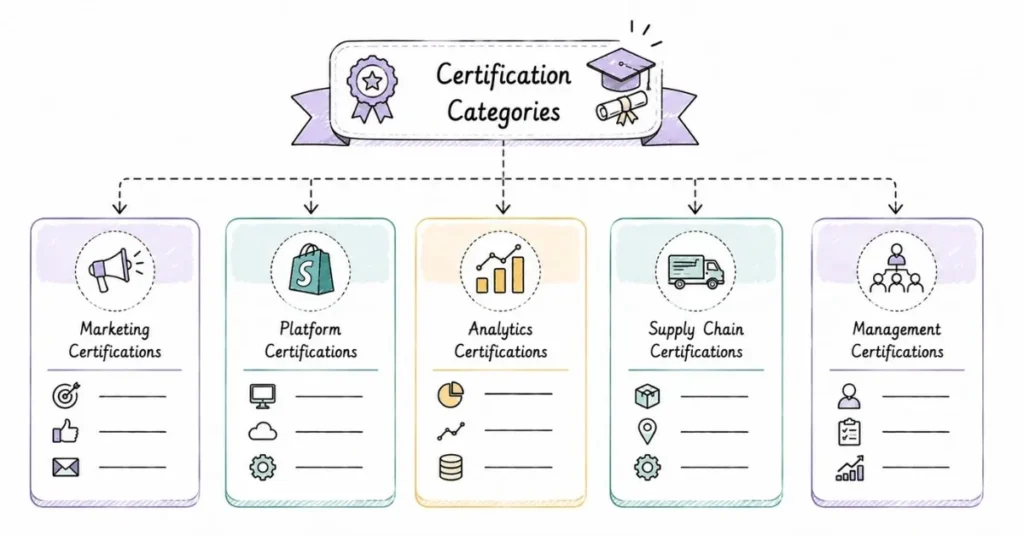
Tier 1: Essential Certifications (High ROI, Industry Recognized)
These are worth getting. They’re free or affordable, recognized by employers, and teach practical skills.
1. Google Analytics Individual Qualification (GAIQ)
What it is:
Free certification from Google on web analytics fundamentals.
What you learn:
- Google Analytics interface and reports
- Setting up GA correctly
- Understanding metrics (sessions, bounce rate, conversion rate)
- Creating custom reports
- E-commerce tracking
- Goal setting and conversion tracking
Why it’s valuable:
- Free (zero cost)
- Recognized globally (Google’s certification carries weight)
- Practical (you’ll actually use GA in any digital role)
- Entry-level friendly (no prerequisites)
Time investment: 15-20 hours of study + 90-minute exam
Exam: Multiple choice, 70% passing score, can retake after 7 days if you fail
Career impact: Mandatory for digital marketing, e-commerce management, analytics roles. Not having this is a disadvantage.
My take: Absolute must have. No excuses. It’s free and valuable.
How to prepare:
- Google Analytics Academy (free courses)
- Practice on real website (create free blog, install GA, explore data)
- Take practice quizzes
- Give exam (if you fail, you learn what to study more)
2. Google Digital Garage / Google Digital Unlocked
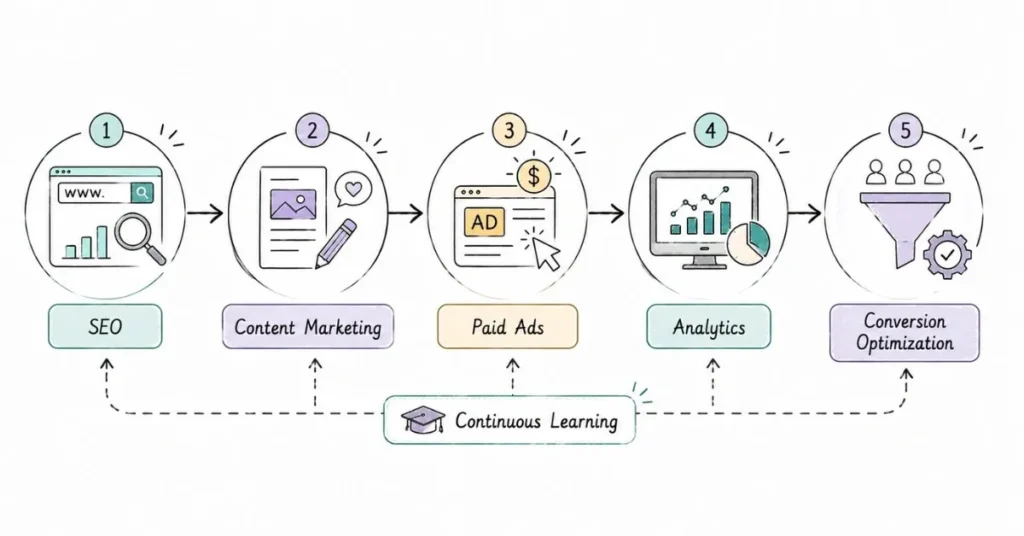
What it is:
Free course covering digital marketing fundamentals.
What you learn:
- Search Engine Marketing (SEM)
- Search Engine Optimization (SEO)
- Social Media Marketing
- Email Marketing
- Analytics basics
- E-commerce essentials
- Content marketing
Why it’s valuable:
- Free
- Comprehensive overview (breadth across digital marketing)
- Beginner friendly
- Google certification (adds credibility)
Time investment: 40 hours of learning (can complete in 2-3 weeks)
Career impact: Good for absolute beginners, helpful for resume, but won’t significantly boost mid level careers
My take: Excellent starting point if you’re new to digital marketing. If you’re already working in digital/e-commerce, skip this (too basic).
3. Facebook Blueprint Certification
What it is:
Free training and paid certification from Meta (Facebook) on advertising.
Options:
- Facebook Certified Digital Marketing Associate (Entry level, $99 = ₹8,000)
- Facebook Certified Marketing Science Professional (Advanced, $150 = ₹12,000)
What you learn:
- Facebook & Instagram advertising
- Campaign creation and optimization
- Targeting strategies
- Creative best practices
- Measurement and analytics
Why it’s valuable:
- Facebook/Instagram is largest ad platform for Indian e-commerce
- Hands-on, practical knowledge
- Recognized by employers hiring for paid ads roles
Time investment: 20-30 hours preparation
Career impact: Valuable for performance marketing roles. Many job postings specifically ask for Facebook Blueprint certification.
My take: Worth it if you’re specializing in paid social media marketing. Training is free; only pay for exam if you want certificate.
4. HubSpot Certifications (Multiple)
What they are:
Free certifications from HubSpot (marketing automation company) across various topics.
Relevant ones for e-commerce:
- Inbound Marketing Certification (most popular)
- Content Marketing Certification
- Email Marketing Certification
- Digital Marketing Certification
- Social Media Marketing Certification
Why they’re valuable:
- Completely free (including certificate)
- Quality content (well designed courses)
- Practical (HubSpot is used by many companies)
- Quick (3-4 hours per certification)
Career impact: Good for resume, shows initiative. Not as powerful as Google certifications but worth having.
My take: Pick 2-3 most relevant to your path. Don’t collect all 15+ certifications they offer (looks desperate). Quality over quantity.
5. Shopify Partner Academy Courses
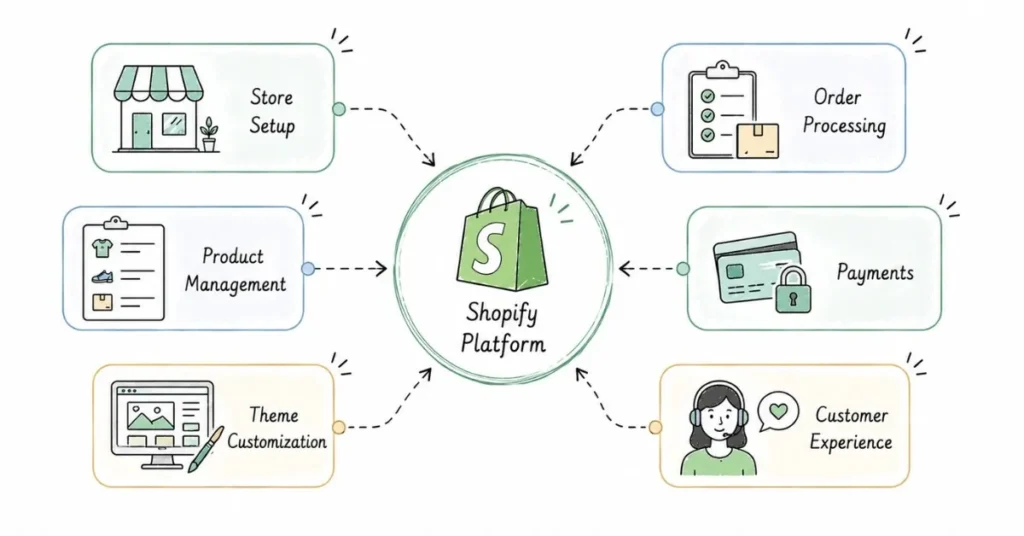
What it is:
Free training from Shopify for developers, designers, and marketers.
What you learn:
- Shopify platform deeply
- Theme customization
- App development
- Shopify Plus features
- Marketing through Shopify
Why it’s valuable:
- Shopify is huge in Indian e-commerce
- Free
- Practical (building actual stores)
Time investment: 10-15 hours for foundational courses
Career impact: Valuable if you’re building Shopify stores (developer, freelancer, e-commerce specialist). Less relevant if you’re not working directly with Shopify.
My take: Must do if you’re in Shopify ecosystem. Otherwise, optional.
Tier 2: Specialized Certifications (Situational Value)
These add value in specific situations. Not for everyone.
6. AWS/Azure/Google Cloud Certifications
Options:
- AWS Certified Solutions Architect – Associate (₹10,000 exam fee)
- Google Cloud Associate Cloud Engineer (₹8,000 exam fee)
- Microsoft Azure Fundamentals (₹5,000 exam fee)
Why they’re valuable:
- Cloud infrastructure powers e-commerce
- High demand for cloud skills
- Significant salary boost (20-30%)
Who should get these:
Technical roles (infrastructure, DevOps, backend development). Not for non-technical roles.
Time investment: 50-100 hours preparation (depending on prior knowledge)
Career impact: High for technical roles. AWS certification especially valuable.
My take: If you’re in technical infrastructure/DevOps track, AWS Solutions Architect is worth the investment. Otherwise, skip.
7. Project Management Certifications
Options:
- Certified Scrum Master (CSM) (₹30,000-45,000 including training)
- CAPM (Certified Associate in Project Management) by PMI (₹12,000 exam)
- PMP (Project Management Professional) by PMI (₹20,000 exam + 3 years experience needed)
Why they’re valuable:
Project management is crucial in e-commerce. Certifications teach frameworks and boost credibility.
Career impact:
- CSM: Valuable for agile environments (most tech companies)
- PMP: Gold standard, significant salary boost (₹3-5 LPA increase typical)
Time investment:
- CSM: 2 days training + exam
- PMP: 35 hours training + 100+ hours self study
My take:
- CSM: Worth it if employer pays or if you’re serious about PM career
- PMP: Definitely worth it after 3-5 years experience in project management
8. SEO Certifications
Options:
- SEMrush Academy Certifications (Free)
- Moz SEO Fundamentals (Free)
- Ahrefs Academy (Free)
- HubSpot SEO Certification (Free)
Why they’re valuable:
SEO is critical for e-commerce. These teach practical SEO skills.
Career impact: Moderate. SEO hiring is more about demonstrable results (show me sites you’ve ranked) than certificates.
My take: Take free ones for learning. Don’t pay for expensive SEO certifications (many are scams). Your portfolio (sites you’ve optimized) matters more.
Tier 3: Questionable Value (Be Skeptical)
9. Expensive "E-commerce Expert" Courses
What they are:
Courses costing ₹50,000 to ₹3 lakhs promising “complete e-commerce mastery” or “guaranteed job placement.”
Red flags to watch:
- Promises like “guaranteed ₹15 LPA job”
- No free preview content
- Aggressive sales tactics (limited seats! Offer expires tonight!)
- No verifiable student testimonials
- Instagram/YouTube ad based courses with celebrity influencer endorsements
My honest take:
99% of expensive courses teach information available free online. You’re paying for “structure” and “community,” but that’s not worth ₹2 lakhs.
Better alternative:
- Combine free certifications (Google, HubSpot)
- Use that ₹2 lakhs to build actual e-commerce business
- You’ll learn 10x more running real business than taking expensive course
Exception:
If course offers genuine placement assistance at top companies (verify claims), it might be worth it.
10. Unrecognized Platform Certifications
Examples: Certifications from platforms nobody uses, or very niche tools.
Problem: You get certified in something that 2 companies in India use. Waste of time.
How to evaluate:
Before getting certified in any platform/tool, check LinkedIn:
- How many job postings mention this tool?
- How many professionals list this skill?
- If fewer than 100 people have this certification, it’s too niche
Certification Strategy by Career Stage
Fresh Graduate (0-1 year experience):
Must haves:
- Google Analytics IQ
- Google Digital Garage
- HubSpot Inbound Marketing
Optional:
- Facebook Blueprint (if interested in paid ads)
- Shopify courses (if interested in store building)
Budget: ₹0-10,000 (most is free, only pay for Facebook Blueprint if needed)
Time: 60-80 hours over 2-3 months
Early Career (1-3 years experience):
Must haves:
- Google Analytics IQ (if not already done)
- Specialization certification based on your path:
- Marketing: Facebook Blueprint + HubSpot Email Marketing
- Technical: Shopify Partner or basic AWS
- Operations: Basic project management course
- Marketing: Facebook Blueprint + HubSpot Email Marketing
Optional:
- CSM if moving into project management
Budget: ₹8,000-40,000
Time: 40-60 hours
Mid Career (4-7 years experience):
At this stage, certifications matter less. Focus on advanced specialized ones:
If in project management: PMP (₹25,000-40,000 total)
If in technical: AWS Solutions Architect or Advanced cloud certifications (₹15,000-25,000)
If in leadership: Consider executive education programs from IIMs (₹1.5-3 lakhs) these are networking and credential building more than skill building
Budget: ₹25,000 to ₹3 lakhs depending on path
My take: At this level, ROI of certifications decreases. Your track record matters more. Only get certifications that are industry standard requirements.
The India-Specific Consideration
Indian employers’ view of certifications:
Startups: Care less about certificates, more about skills demonstrated through projects.
MNCs (Amazon, Flipkart): Value recognized certifications (Google, AWS, PMP) as screening criteria.
Traditional companies: Sometimes overvalue certificates because they’re measurable. Might prefer certified candidate over more skilled but non certified one.
Conclusion: Certifications help most when applying to established companies or as resume filter bypass. For startups, portfolio > certificates.
Alternative to Certifications: Building Portfolio
Instead of ₹1 lakh on courses, invest in building portfolio:
₹30,000: Create and run actual e-commerce store (Shopify subscription, ads, inventory)
- Learn platform management
- Learn marketing (what works, what doesn’t)
- Learn operations (fulfillment, customer service)
- Get real results to talk about
₹20,000: Freelance projects (offer services at low cost initially to build experience)
- Build Shopify stores for 3-4 clients
- Run ad campaigns for small businesses
- Create content for brands
₹10,000: Tools and learning
- Paid courses for specific skills
- Tools subscriptions (Ahrefs trial, SEMrush, etc.)
₹40,000: Buffer for experiments and failures
After 6 months: You have working e-commerce store, client testimonials, measurable results. This is more impressive than 10 certificates.
Free Learning Resources Better Than Paid Courses
For Digital Marketing:
- HubSpot Academy (free, comprehensive)
- Google Digital Garage (free)
- Neil Patel’s blog and YouTube (free, practical)
- Moz Beginner’s Guide to SEO (free)
For E-commerce Platforms:
- Shopify Learn (free, official)
- WooCommerce documentation (free)
- YouTube tutorials (free)
For Analytics:
- Google Analytics Academy (free, official)
- CXL blog (free, advanced content)
For Development:
- FreeCodeCamp (free, comprehensive)
- Codecademy free tier
- YouTube channels (TraversyMedia, The Net Ninja)
Total cost: ₹0
Quality: Excellent
Catch: Requires self-discipline
How to Actually Benefit from Certifications
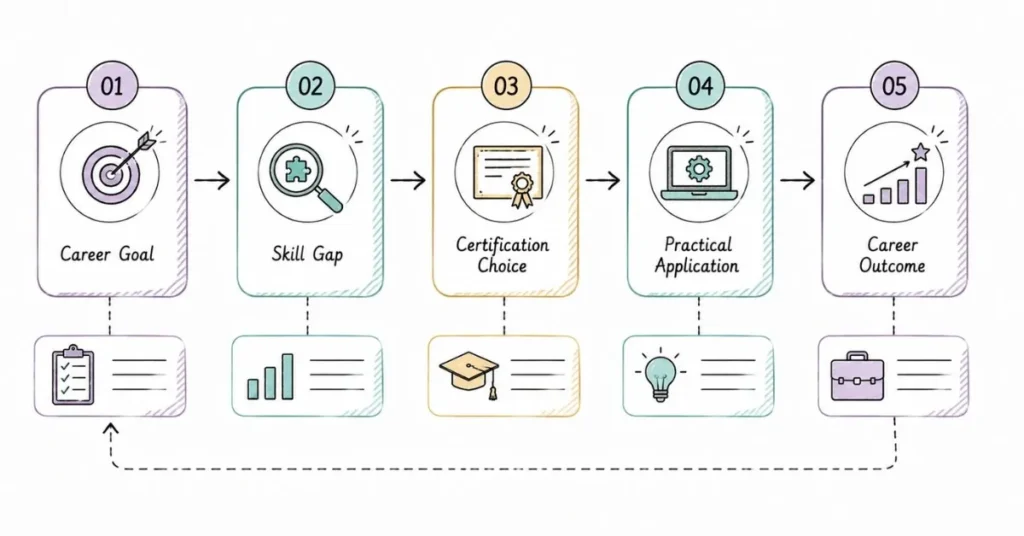
Don’t just collect certificates:
Bad approach:
- Take course
- Pass exam
- Add to LinkedIn
- Never apply knowledge
Good approach:
- Take course (learn concepts)
- Apply immediately to real project (even practice project)
- Document what you learned and results
- Add to LinkedIn with context: “Completed Google Analytics IQ. Applied learnings to analyze traffic for [website], identified 3 issues causing 25% bounce rate, implemented fixes, reduced bounce to 18%.”
The story around certification matters more than certificate itself.
The ROI Analysis: Are Certifications Worth It?
Scenario 1: Free certifications
Investment: 60 hours of time
Cost: ₹0
ROI: Positive. Learning + resume boost at zero cost.
Verdict: Always worth it.
Scenario 2: Affordable paid certifications (₹5,000-15,000)
Investment: 40 hours + ₹10,000
Potential salary boost: ₹1-2 LPA (if it helps land job or promotion)
ROI: Positive in first year itself
Verdict: Usually worth it for in demand skills (AWS, PMP, etc.)
Scenario 3: Expensive courses (₹50,000-3,00,000)
Investment: 100+ hours + ₹1.5 lakhs
Potential salary boost: ₹2-4 LPA IF course delivers on promises
ROI: Questionable. Depends heavily on course quality and your application.
Better alternatives:
- Multiple smaller certifications + portfolio building (₹40,000 total)
- Invest in real business/freelancing
Verdict: Rarely worth it unless:
- Course has verified placement record
- You’ve exhausted free/cheap learning options
- You specifically need structured accountability
Common Mistakes to Avoid
Mistake 1: Certificate hoarding
Having 20 certificates but no practical experience makes you look desperate, not qualified.
Mistake 2: Paying for information available free
90% of paid courses teach what’s available free. Do research before paying.
Mistake 3: Getting certified in dying/niche technologies
Certify in in demand skills. Check job postings first.
Mistake 4: Certification without application
Learning without doing is wasted. Apply immediately.
Mistake 5: Expecting certificates to do the work
Certificates open doors slightly. You still need to prove you can do the work.
My Personal Certification Recommendations (2026)
If you can only do 3 certifications:
- Google Analytics IQ (free, essential)
- Facebook Blueprint OR HubSpot Inbound (depending on interest – paid ads vs. content marketing)
- Shopify Partner courses OR basic coding course (depending on technical interest)
Total cost: ₹0-8,000
Total time: 50-70 hours
Career impact: Significant for entry-level roles
If you have budget and time for more:
Add based on career path:
Marketing track: Google Ads certification, Email marketing
Technical track: AWS Cloud Practitioner, then Solutions Architect
Management track: CSM now, PMP after 3 years
Analytics track: Advanced Google Analytics, SQL courses
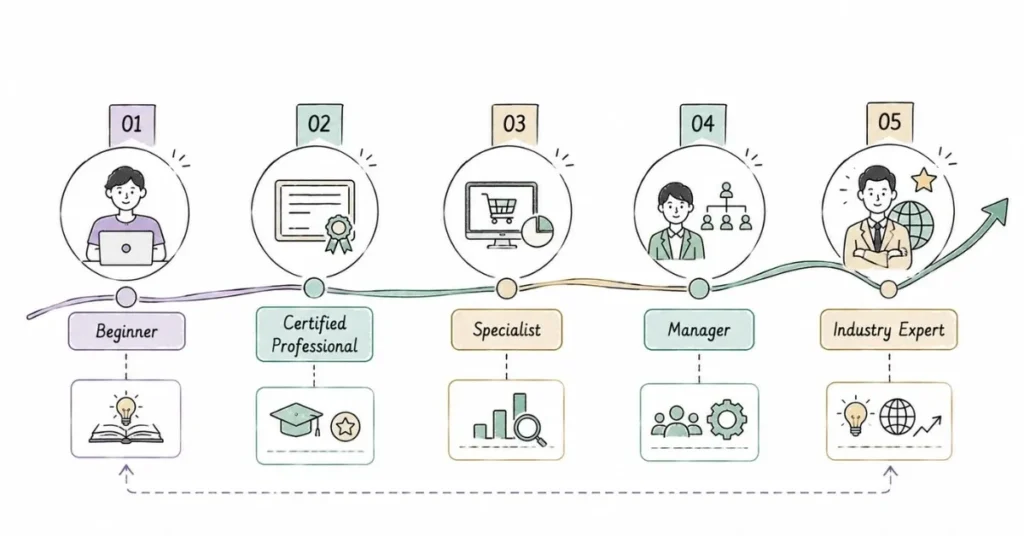
Final Verdict: Certifications as Part of Larger Strategy
The ideal combination:
30% certifications: Structured learning, filling knowledge gaps, resume credentials
40% projects: Building things, hands on application
20% networking: Connecting with people in industry, learning from their experiences
10% content creation: Sharing what you’re learning (builds personal brand, solidifies knowledge)
This balanced approach creates most career value.
Conclusion: Smart Certification Strategy
Certifications are tools, not magic wands.
They’re worth getting when:
- They’re free or affordable
- They teach practical, in-demand skills
- You apply what you learn immediately
- They’re recognized by employers
They’re NOT worth getting when:
- They’re expensive courses with no verifiable track record
- They teach outdated or niche information
- You’re getting them just to have certificates
- You could learn same content free
The best certification is real-world results:
“I built this, I achieved this, here’s the data” beats any certificate.
But combine real-world results WITH strategic certifications? That’s the winning formula.
Your certification journey starts with one free course today. Then apply it. Then get another. Then apply it.
Build knowledge. Build skills. Build results.
The certificates are just evidence along the way.