
15 Essential Customer Success Skills Every Professional Needs in 2026
Table of Contents
Introduction
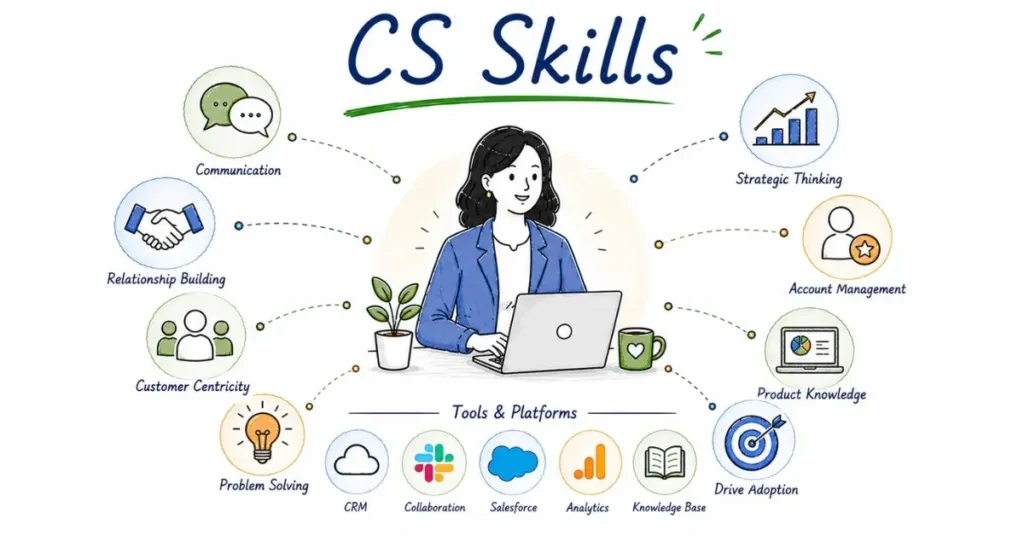
Last month, I spoke with Ravi, a hiring manager at a Bangalore SaaS company. He told me something fascinating: “We interviewed 40 candidates for our Customer Success Manager role. Most had impressive resumes good colleges, relevant experience, certifications. But only 3 could actually demonstrate the skills the job requires.”
This gap between what resumes claim and what jobs demand is massive in Customer Success. Job descriptions list 15-20 requirements, leaving candidates confused about what actually matters. Meanwhile, hiring managers struggle to find people with the right combination of skills.
Here’s the truth: Customer Success requires a unique blend of soft skills, technical abilities, and strategic thinking that you won’t learn in any college curriculum. Some skills you can develop before landing your first job; others you’ll build on the job. Understanding which is which and how to demonstrate them dramatically increases your chances of getting hired and succeeding in CS roles.
This guide breaks down the 15 essential Customer Success skills, explains why each matters, shows how to develop them, and teaches you how to prove you have them (even without formal CS experience).
The Three Skill Categories in Customer Success
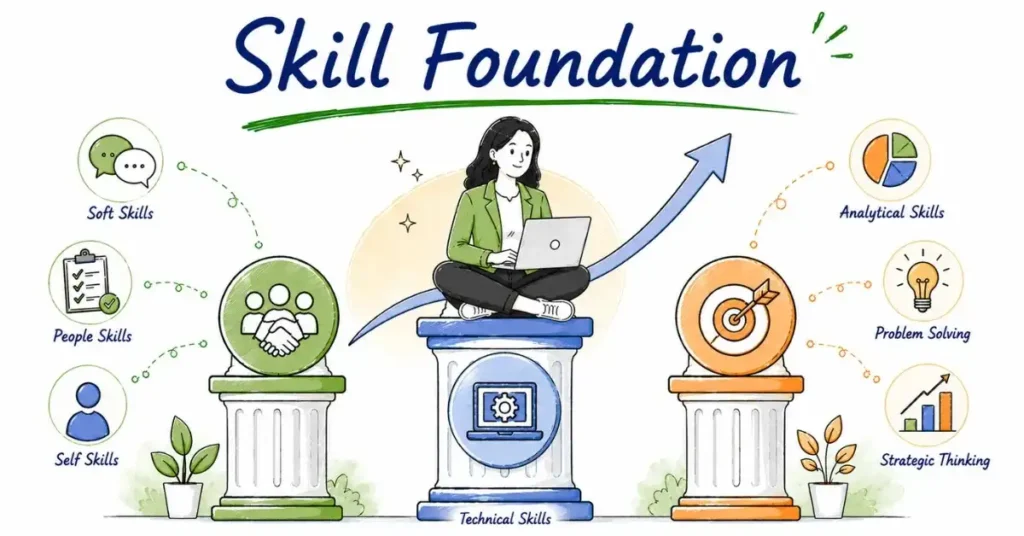
Before diving into specific skills, understand that Customer Success demands three distinct skill types:
Soft Skills (Human Skills): Communication, empathy, problem-solving fundamentally about working with people effectively.
Technical Skills (Tool Skills): CRM platforms, data analysis, product knowledge about using technology and systems efficiently.
Strategic Skills (Business Skills): Commercial awareness, negotiation, account planning understanding business context and driving outcomes.
Top CS professionals excel in all three categories. Entry-level roles emphasize soft skills; senior roles demand stronger strategic skills. Technical skills matter throughout.
Core Soft Skills: The Foundation
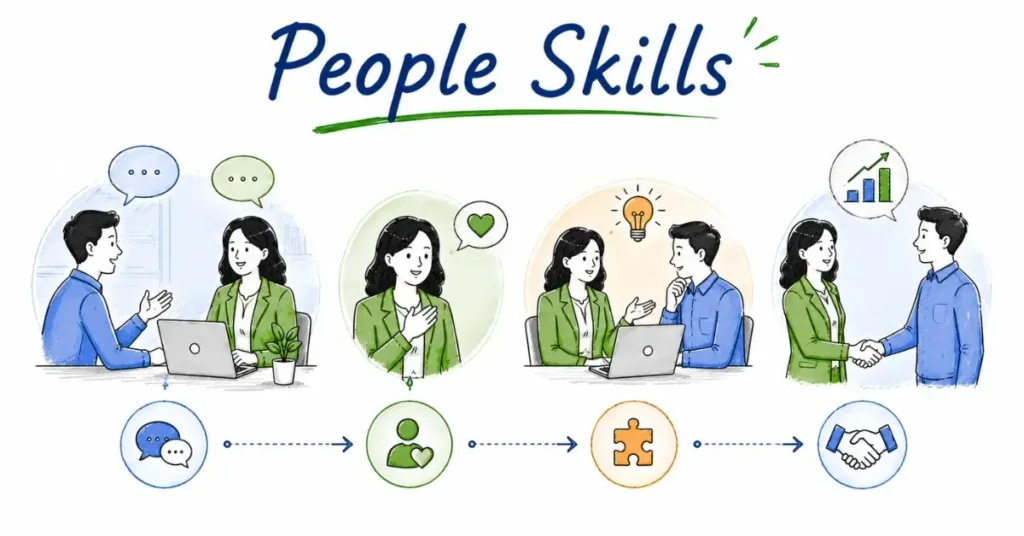
1. Communication (The Non-Negotiable Skill)
When hiring managers say “communication skills,” they don’t mean speaking fluent English. They mean something much deeper.
What Great Communication Actually Means:
- Explaining complexity simply: Can you explain how your company’s API authentication works to someone with zero technical background? Can you break down complicated product features into understandable benefits?
- Adapting style by audience: You’ll communicate with frustrated customers, technical IT admins, busy executives, and your own team each requires different tone, detail level, and approach.
- Written clarity: Customer Success involves writing dozens of emails daily. Can you write clearly, concisely, and in a way that actually gets responses? Can you document processes that others can follow?
- Active listening: This isn’t just staying quiet while others talk. It’s fully focusing, asking clarifying questions, and truly understanding before responding.
Real Example:
When a customer emails saying “Your software doesn’t work,” weak communication responds: “What exactly isn’t working?” Strong communication responds: “I’m sorry you’re experiencing issues. To help resolve this quickly, could you share: (1) which specific feature you’re trying to use, (2) what happens when you try, and (3) any error messages you’re seeing? I’ll personally ensure this gets fixed today.”
See the difference? Empathy, clear guidance, specific questions, and commitment.
How to Develop This:
- Write daily maintain a blog, answer questions on Reddit/Quora, contribute to online communities
- Record yourself explaining complex topics, then watch and improve
- Practice the “ELI5” (Explain Like I’m 5) technique for everything you learn
- Get feedback on your communication from friends, mentors, or online communities
- Read well-written customer emails from successful companies (look at how Stripe, Intercom, or Notion communicates)
How to Demonstrate This:
In interviews, tell stories with clear structure (Situation-Action-Result). Send a well-written thank-you email after interviews. If given a case study, present your solution clearly with visual aids. Your communication during the interview IS the demonstration.
2. Empathy and Emotional Intelligence
This is what separates good Customer Success Managers from great ones.
What Empathy Means in CS:
Empathy isn’t just feeling bad when customers are upset. It’s:
- Understanding the customer’s context: Why are they frustrated? What pressure are they under? What does success look like for them personally?
- Sensing unspoken concerns: Reading between the lines when a customer says “everything’s fine” but their usage data shows otherwise
- Responding to emotions appropriately: Knowing when to apologize, when to problem-solve, when to just listen
- Maintaining composure: Staying calm and helpful when customers are angry or unreasonable
Real Example:
A customer calls upset about a bug affecting their workflow. Low-empathy response: “Yes, our engineers are working on it. Should be fixed next week.” High-empathy response: “I completely understand how frustrating this is, especially since you mentioned your team’s quarterly reporting deadline is this week. While the permanent fix is coming next week, let me share a workaround you can use immediately so your reporting isn’t delayed. I’ll also personally monitor the fix and update you by Wednesday.”
The second response acknowledges the emotion, shows understanding of their specific situation, and provides immediate value.
How to Develop This:
- Practice perspective-taking: When someone is frustrated, ask yourself “What’s really bothering them beneath the surface?”
- Develop self-awareness about your own emotional triggers (What customer behaviors frustrate you? Why?)
- Learn to separate emotional reactions from logical responses
- Read books like “Never Split the Difference” by Chris Voss or “Emotional Intelligence 2.0” by Travis Bradberry
- Volunteer in roles requiring patience with diverse people
How to Demonstrate This:
In interviews, when describing past customer interactions, focus on how you understood the customer’s emotions and adapted your approach. Use phrases like “I realized they were actually concerned about…” or “I sensed there was more going on, so I…” This shows emotional intelligence.
3. Problem-Solving and Critical Thinking
Customer Success is fundamentally about solving problems some straightforward, most complex and ambiguous.
What Problem-Solving Means in CS:
- Diagnosing root causes: Customers rarely describe their actual problem. They describe symptoms. Your job is figuring out what’s really wrong.
- Creative solutions: Sometimes the obvious solution isn’t available. Can you think laterally?
- Balancing constraints: The customer wants X, your company can offer Y, and you need to find Z that satisfies both.
- Preventing future problems: Solving today’s issue while preventing it from recurring
Real Example:
Customer complains: “Your reporting feature is terrible. I need better reports.”
Weak problem-solving: “I’ll send your feedback to Product team.”
Strong problem-solving: “Can you walk me through what specific reports you’re trying to create and how you’re currently doing it? I want to understand your exact workflow… (After listening)… Ah, I see. You’re actually trying to combine data from two different modules. We have a data export feature that lets you pull both datasets and combine them in Excel. It’s not perfect, but would that solve your immediate need while I submit a feature request for integrated reporting?”
Notice the questioning, understanding, creative workaround, and follow-up action.
How to Develop This:
- Practice the “5 Whys” technique: For any problem, ask “why” five times to reach the root cause
- Solve logic puzzles and case studies online
- When you encounter problems in daily life, consciously practice systematic problem-solving
- Learn basic troubleshooting frameworks (isolate variables, test hypotheses, eliminate possibilities)
- Study how great companies handle customer problems (read Intercom, Zendesk, and HubSpot blogs)
How to Demonstrate This:
In interviews, when given a case study (common in CS interviews), demonstrate your thinking process aloud. “First, I’d want to understand… then I’d analyze… my hypothesis would be… to test this, I’d…” Showing your methodology matters more than getting the “right” answer.
4. Patience and Resilience
This skill rarely appears in job descriptions but determines whether you’ll survive in Customer Success.
Why Patience Matters:
- Customers will ask the same questions repeatedly
- They’ll ignore documentation you send and ask you to explain verbally
- They’ll blame you for issues outside your control
- Some days, nothing will go right multiple customers escalating simultaneously
- You’ll explain features 50 times and still encounter someone who doesn’t understand
- Contract negotiations will drag on for weeks
Real Example:
Sneha, a CSM in Mumbai, spent three months working with a client to drive product adoption. Just when everything seemed on track, the client’s leadership changed, and the new executive questioned the entire investment. Sneha had to restart relationship-building from scratch, re-prove value, and re-negotiate the contract. It took another two months, but she retained the account. That required resilience.
How to Develop This:
- Practice delayed gratification in personal life (don’t react immediately to frustrations)
- Develop stress management techniques (exercise, meditation, hobbies)
- Learn to depersonalize criticism it’s about the situation, not about you
- Build a support network of fellow CS professionals who understand the challenges
- Set realistic expectations (not every customer will be delightful)
How to Demonstrate This:
In interviews, share stories about long, difficult situations you navigated successfully. Emphasize the challenges, your emotional management, and the ultimate positive outcome. Hiring managers value candidates who acknowledge difficulty but persist anyway.
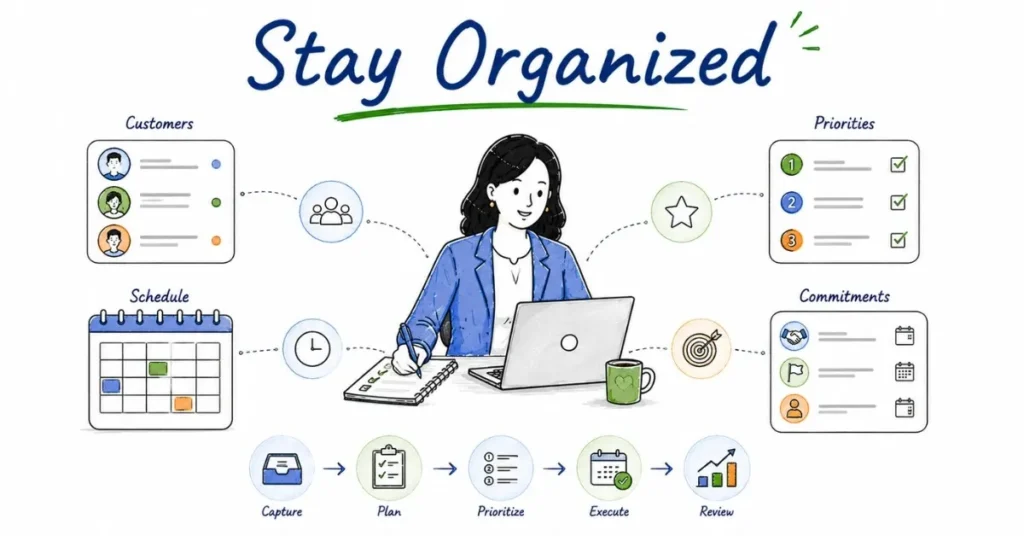
5. Time Management and Organization
When you’re managing 20-30 accounts, multiple projects, unexpected escalations, and internal meetings, staying organized isn’t optional it’s survival.
What Organization Means in CS:
- Prioritization: Knowing which customer issue needs immediate attention and which can wait
- Task management: Tracking dozens of commitments without dropping anything
- Calendar management: Balancing scheduled calls, internal meetings, and focus time
- Follow-through: Doing what you said you’d do when you said you’d do it (this builds trust more than anything)
Real Example:
A typical CSM juggles:
- 5 scheduled customer calls this week
- 3 contracts renewing in 30 days (requiring preparation)
- 2 customers with “red” health scores needing intervention
- 1 onboarding project for a new customer
- Daily email management (30-50 emails)
- Internal meetings (team sync, product meeting, training session)
- Unexpected escalations
Without strong organization, things fall through cracks. Forgotten commitments destroy customer trust.
How to Develop This:
- Use task management tools religiously (Todoist, Notion, Asana pick one and master it)
- Practice time-blocking: assign specific time slots for different work types
- Develop a personal system for tracking commitments (CRM for work, personal system for learning what works)
- Learn to say “no” or “not now” to protect your focus time
- Weekly reviews: every Friday, review what happened and plan next week
How to Demonstrate This:
In interviews, when asked “How do you manage multiple priorities?”, don’t just say “I’m organized.” Describe your actual system: “I use [tool] to track all commitments, prioritize using [framework], and block my calendar for [specific activities]. For example, I reserve mornings for customer calls since that’s when I’m most energetic, and afternoons for administrative work and analysis.
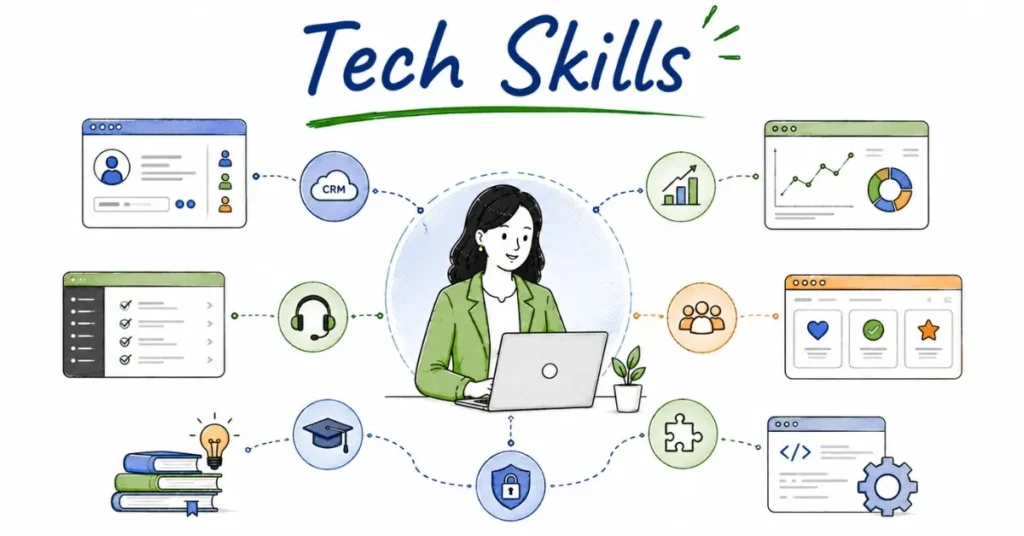
Technical Skills: The Tools of the Trade
6. CRM Platform Proficiency
You’ll spend 3-4 hours daily in your CRM (Customer Relationship Management) system. Knowing your way around these tools dramatically increases your efficiency.
Common CRMs in Indian Companies:
- Salesforce (enterprise standard)
- HubSpot (popular with startups and SMBs)
- Zoho CRM (popular with Indian companies)
- Freshworks CRM (Indian-built, increasingly popular)
What CRM Proficiency Means:
- Creating and updating customer records
- Logging interactions and notes efficiently
- Running reports and extracting data
- Setting up automated workflows and reminders
- Creating custom fields and views
- Understanding data hygiene and maintenance
How to Develop This:
- Most CRMs offer free trials sign up and explore (HubSpot and Zoho have very generous free tiers)
- Complete free training offered by CRM companies (HubSpot Academy, Salesforce Trailhead)
- Set up a dummy CRM for personal use (track job applications, networking contacts)
- Watch YouTube tutorials showing real-world CRM usage
How to Demonstrate This:
On your resume, list specific CRM platforms you’ve used (even in free trials). In interviews, mention: “I’m familiar with [CRM], where I regularly [specific tasks]. I’m confident I can quickly learn [your company’s CRM] since the core concepts are similar.”
7. Customer Success Platform Knowledge
Beyond CRM, CS teams use specialized platforms for health scoring, analytics, and automation.
Common CS Platforms:
- Gainsight (industry leader)
- Totango
- ChurnZero
- Catalyst
- ClientSuccess
- SmartKarrot (Indian platform)
What CS Platform Knowledge Means:
- Understanding health scoring models
- Creating customer journey maps
- Setting up automated playbooks (if customer does X, trigger Y)
- Building dashboards tracking key metrics
- Analyzing customer segments and cohorts
How to Develop This:
You likely won’t get hands-on access before employment, but you can:
- Watch platform demo videos and webinars
- Read case studies about how companies use these platforms
- Understand the concepts (health scoring, playbooks, journey mapping) even if you can’t practice the specific tool
- Follow these companies on LinkedIn and read their content
How to Demonstrate This:
In interviews: “While I haven’t directly used Gainsight yet, I understand it’s used for customer health scoring and automation. I’ve studied how health scores work and am excited to learn your specific platform. I’m a quick learner with tools for example, I taught myself [other tool] in two weeks.”
8. Data Analysis and Excel/Sheets Proficiency
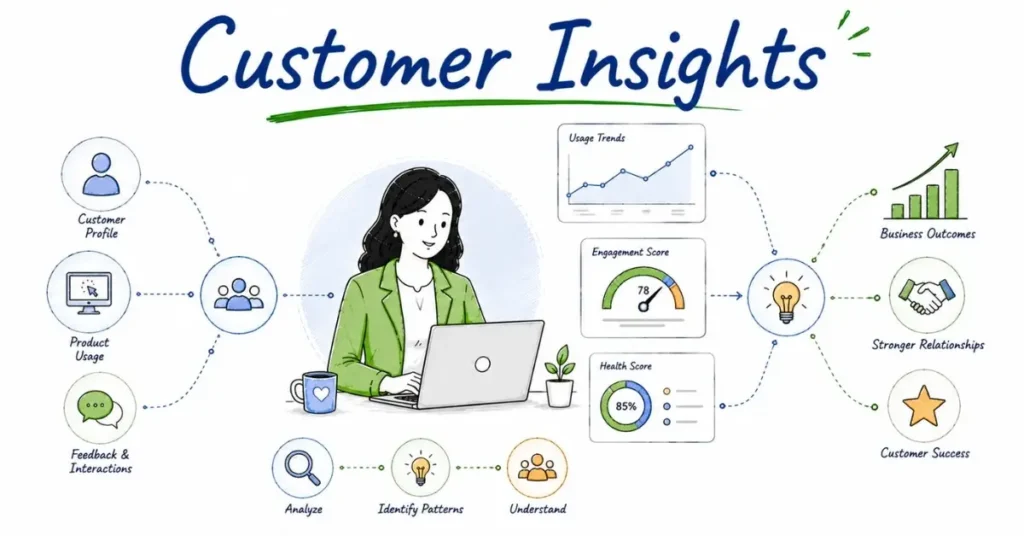
Modern Customer Success is data-driven. You’ll constantly analyze usage data, calculate metrics, and present insights.
What Data Analysis Means:
- Creating pivot tables and charts in Excel/Google Sheets
- Calculating key metrics (churn rate, NRR, CAC, LTV)
- Identifying trends and patterns
- Presenting data visually (charts, graphs)
- Basic understanding of statistics (averages, percentages, correlations)
- Comfort with numbers and willingness to dig into data
Real Example:
A CSM notices that customers who complete onboarding within 14 days have a 90% retention rate, while those taking 30+ days have only 60% retention. This insight leads to changing the onboarding process to be faster and more focused directly impacting business outcomes.
How to Develop This:
- Take free Excel courses (YouTube has thousands)
- Practice analyzing any data you encounter (your expenses, workout stats, anything)
- Learn to create pivot tables they’re crucial for CS work
- Study common CS metrics and how they’re calculated
- Learn basic data visualization principles (which chart types for which data)
How to Demonstrate This:
Include specific examples in your resume: “Analyzed customer usage data identifying patterns that increased retention by X%” or “Created weekly reports using pivot tables and charts for team leadership.” Bring a sample analysis to interviews if appropriate.
9. Product Knowledge (Continuous Learning)
You cannot help customers succeed with a product you don’t understand deeply.
What Product Knowledge Means:
- Understanding every feature and its use cases
- Knowing common workflows and best practices
- Recognizing limitations and workarounds
- Staying updated on new releases and roadmap
- Using the product yourself like a customer would
- Understanding technical concepts even if you’re not technical
Real Example:
Customer asks: “Can your software integrate with our existing CRM?” Weak response: “I’ll check with our tech team.” Strong response: “Yes, we have native integrations with Salesforce, HubSpot, and Zoho via API. We also support custom integrations using webhooks. Which CRM are you using? I can walk you through the setup process or connect you with our technical team if you need custom integration.”
How to Develop This:
- For interview prep, deeply explore the company’s product (sign up for free trials)
- Read all product documentation and help articles
- Watch product demo videos
- Imagine different customer scenarios and how you’d use the product
- Research competitors to understand the landscape
- Join product webinars and release note updates once employed
How to Demonstrate This:
During interviews with a company, demonstrate you’ve actually used their product: “I signed up for your trial and noticed the onboarding flow is very smooth. I particularly liked [specific feature]. I’m curious how customers typically use [feature] in real-world scenarios?”
10. Basic Technical Troubleshooting
While you’re not technical support, understanding basic technical concepts helps you serve customers better.
What Technical Knowledge Means:
- Understanding how integrations and APIs work conceptually
- Knowing common technical issues and their causes
- Guiding customers through basic troubleshooting steps
- Communicating technical issues clearly to support or engineering teams
- Understanding data security and privacy concepts (increasingly important)
How to Develop This:
- Take free courses on basic tech concepts (APIs, databases, cloud computing)
- Learn about common web technologies (browsers, cookies, caching)
- Understand basic networking (what’s an IP address, why does internet speed matter)
- Study your company’s technical documentation
- Shadow technical support teams when possible
How to Demonstrate This:
In interviews, when discussing customer issues, mention technical context: “I helped a customer troubleshoot a login issue by checking browser cache and cookies first, then escalated to Support when it appeared to be a server-side authentication problem.”
Strategic Business Skills: Driving Outcomes

11. Business Acumen and Commercial Awareness
Understanding how businesses make money and how Customer Success impacts the bottom line separates average CSMs from top performers.
What Business Acumen Means:
- Understanding your company’s business model (pricing, margins, revenue streams)
- Knowing how CS metrics impact company valuation
- Recognizing customer business challenges beyond your product
- Speaking the language of ROI, efficiency, and business outcomes
- Understanding competitive landscape
- Thinking like a business owner, not just a service provider
Real Example:
During a renewal conversation, a customer says pricing is too high.
Low business acumen: “I can check if we have any discounts available.”
High business acumen: “I understand budget is a concern. Let’s look at the value you’ve received. According to your usage data, your team has processed 5,000 transactions through our platform this year. Your previous manual process took approximately 10 minutes per transaction. That’s 833 hours saved, which at your team’s average cost of ₹500/hour equals ₹4.16 lakhs in labor cost savings versus your annual subscription of ₹2.5 lakhs. The ROI is quite strong. Does that align with what you’re seeing internally?”
How to Develop This:
- Read business news regularly (Economic Times, Business Standard)
- Study how SaaS businesses work (read SaaS blogs, understand metrics like MRR, ARR, CAC, LTV)
- Learn basic accounting and finance concepts
- Understand pricing psychology
- Follow your company’s business performance and competitive position
- Ask your managers to explain business decisions and the reasoning
How to Demonstrate This:
In interviews, ask intelligent business questions: “How does Customer Success contribute to your revenue model?” or “What’s your customer acquisition cost versus lifetime value ratio?” This shows you think strategically.
12. Negotiation and Influence
CS involves constant negotiation with customers about renewals, with product teams about prioritization, with sales about realistic commitments.
What Negotiation Means:
- Finding win-win solutions when interests seem opposed
- Influencing without authority (you don’t control product roadmap, but need to advocate for customers)
- Handling pricing objections during renewals
- Negotiating contract terms and commitments
- De-escalating tense situations
- Managing expectations on both sides
Real Example:
Customer wants a feature that won’t be built for 6 months but threatens to cancel if it’s not available. Weak negotiation: “Sorry, it’s not on the roadmap.” Strong negotiation: “I completely understand why that feature matters for your workflow. While it won’t be available for about 6 months, let me explore alternatives. Could we set up a workaround using our export feature combined with [other tool]? Additionally, I’ll ensure you’re in our early access beta when the feature launches. You’d get it before general availability and have input on the design. Would that work as a bridge solution?”
How to Develop This:
- Read “Never Split the Difference” by Chris Voss and “Getting to Yes” by Fisher and Ury
- Practice negotiation in daily life (bargaining at markets, negotiating with friends)
- Learn to identify underlying interests beyond stated positions
- Practice active listening during disagreements
- Study successful negotiations (watch sales and CS training videos)
How to Demonstrate This:
Share specific stories in interviews: “A customer wanted to cancel due to pricing. I negotiated a six-month extension at their current rate in exchange for a case study and referral, which provided value to both sides.”
13. Stakeholder Management
In CS, you’re constantly coordinating between customers (external stakeholders) and internal teams (Sales, Product, Support, Engineering).
What Stakeholder Management Means:
- Building relationships with multiple people in customer organizations (users, managers, executives)
- Coordinating internal teams to solve customer problems
- Managing conflicting priorities and expectations
- Communicating appropriately with different organizational levels
- Building trust and credibility across diverse groups
Real Example:
A customer reports a bug. This requires:
- Escalating to Support team (who needs detailed bug reproduction steps)
- Updating Product team (who needs to prioritize the fix)
- Communicating timeline to customer (managing their expectations)
- Following up with Engineering (ensuring priority)
- Keeping your manager informed (especially if customer threatens to cancel)
Each stakeholder needs different information, at different levels of detail, with different urgency. Managing this effectively is stakeholder management.
How to Develop This:
- Map stakeholders in any group project (who needs what, when, and how)
- Practice adapting communication by audience
- Learn organizational dynamics (how decisions get made, who influences whom)
- Build relationships proactively before you need something
- Follow up consistently this builds trust
How to Demonstrate This:
In interviews, describe complex situations involving multiple parties: “I coordinated between our engineering team, the customer’s IT department, and their business users to implement a custom integration, ensuring everyone’s requirements were addressed.”
14. Strategic Account Planning
As you progress in CS, you’ll need to think beyond individual interactions and develop long-term account strategies.
What Strategic Planning Means:
- Understanding customer’s business goals (not just product usage)
- Creating multi-year success plans aligned with their objectives
- Identifying expansion opportunities based on customer growth
- Anticipating risks and proactively mitigating them
- Mapping decision-makers and influencers within customer organization
- Aligning your company’s roadmap with customer needs
Real Example:
Rather than reactively responding to customer requests, strategic CSMs create annual success plans: “Based on your goal to expand into three new markets this year, here’s how our platform can support that: Quarter 1 – implement multi-language support; Quarter 2 – train regional teams; Quarter 3 – analyze regional performance data; Quarter 4 – review ROI and plan for expanded license count. Let’s schedule quarterly reviews to track progress.”
How to Develop This:
- Study strategic planning frameworks (SWOT, OKRs, balanced scorecard)
- Think long-term about your own goals and create plans
- When interacting with customers, ask about their 1-3 year goals, not just immediate needs
- Read case studies about strategic account management
- Practice systems thinking how do different factors interconnect?
How to Demonstrate This:
More relevant for mid-senior roles, but even early in career, showing strategic thinking helps: “I noticed this customer’s usage patterns suggest they’ll need additional licenses within 6 months, so I’ve started discussing expansion proactively.”
15. Adaptability and Continuous Learning
The CS field evolves rapidly new tools, best practices, metrics, and methodologies emerge constantly.
What Adaptability Means:
- Willingness to learn new tools and platforms regularly
- Adjusting communication styles based on different customer personalities
- Pivoting strategies when your approach isn’t working
- Staying current with industry trends and developments
- Being comfortable with ambiguity and change
- Taking feedback and implementing improvements[
Real Example:
When COVID hit in 2020, CS professionals had to rapidly adapt from in-person customer meetings to fully virtual relationships, learn new video conferencing best practices, and adjust their engagement strategies. Those who adapted thrived; those who resisted struggled.
How to Develop This:
- Regularly step outside your comfort zone (learn new skills, try new approaches)
- Follow CS thought leaders and industry publications
- Attend webinars and virtual conferences
- Join CS communities where best practices are shared
- When something doesn’t work, analyze why and adjust rather than repeating
- Cultivate a growth mindset view challenges as learning opportunities
How to Demonstrate This:
Share examples of adapting to change: “When our company changed CRM systems, I proactively completed training ahead of schedule and helped train team members” or “I regularly experiment with different customer engagement approaches and track what works best.”
Skill Development Priority Matrix
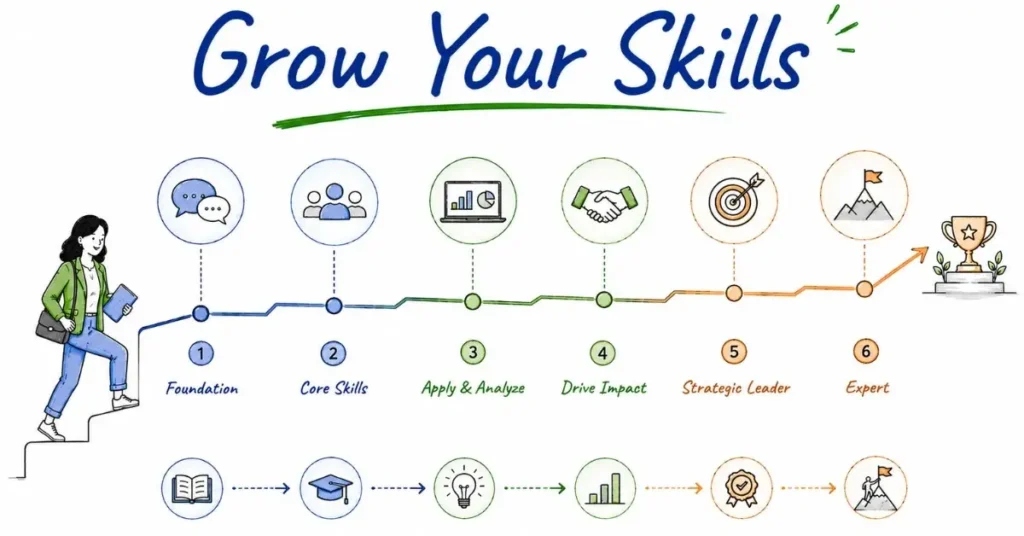
If you’re starting your CS career, prioritize these:
- Communication (start immediately)
- Empathy (practice daily)
- Basic CRM knowledge (take free courses)
- Product knowledge of target companies (before interviews)
- Problem-solving (practice with case studies)
Once you land your first role, focus on developing:
- Data analysis skills (immediate workplace value)
- Business acumen (ask questions, learn from senior colleagues)
- Your company’s specific tools and processes
- Negotiation (observe senior CSMs, then practice)
For mid-career advancement, master:
- Strategic account planning
- Stakeholder management
- Advanced negotiation
- Business strategy understanding
- People leadership (if pursuing management track)
The Myth of "All Skills Required"
Here’s something hiring managers won’t tell you: you don’t need to be excellent at everything to get hired.
Most job descriptions are wish lists, not requirements. If you have:
- Strong communication and empathy (absolutely essential)
- Willingness to learn technical tools quickly
- Basic problem-solving ability
- Customer-focused mindset
…you’re hirable for entry-level roles. The rest you’ll develop on the job.
Conversely, you can have perfect technical skills but struggle in CS if you lack empathy and communication ability. The soft skills are harder to teach, so companies prioritize them in hiring.
Conclusion: Skills Are Developed, Not Discovered
Nobody is born a great Customer Success Manager. Every skill in this guide can be developed through conscious practice, learning, and experience.
The question isn’t “Do I have all these skills?” It’s “Am I willing to develop these skills systematically?”
Start with the fundamentals communication and empathy. Add technical proficiency through free courses and practice. Build business acumen by reading and asking questions. Develop strategic thinking by solving real problems.
Six months of focused skill development can transform you from “not qualified” to “strong candidate.” One year in a CS role with intentional learning can make you genuinely skilled.
The opportunities are there. The roadmap is clear. The only question remaining is: will you put in the work?