
What is a Customer Success Career? Complete Introduction for 2026
Table of Contents
Introduction
“So, what do you actually do?”
If you’re exploring Customer Success as a career, get ready to hear this question a lot even from your own family. When Ramesh from Mumbai told his parents he got a job as a Customer Success Associate at a SaaS company, his father asked, “Beta, is this like a call center job?”
Not quite, Uncle.
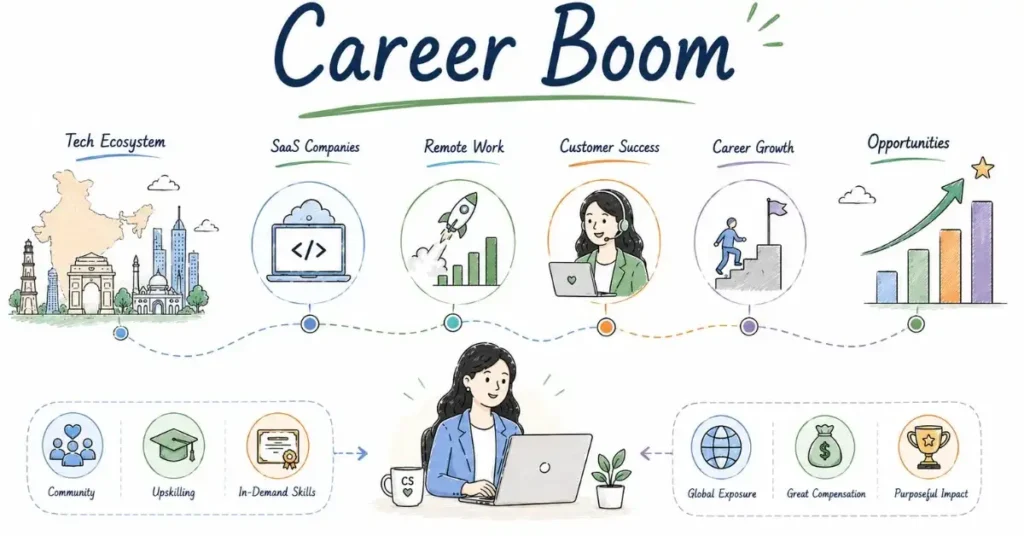
Customer Success is one of those modern career paths that didn’t exist 15 years ago but has now become absolutely critical to how businesses operate in 2026. With India’s tech sector exploding and SaaS companies multiplying like rabbits during monsoon season, Customer Success roles are among the hottest opportunities for young professionals right now.
In this guide, I’ll break down everything you need to know about Customer Success careers what the job actually involves, why companies are hiring like crazy, how much you can earn, and whether this path makes sense for you. No corporate jargon, no fluffy definitions just straight talk about a career that could change your life.
What is Customer Success? (The Simple Version)
Let me explain this with a story you’ll relate to.
Remember when you bought that expensive fitness app subscription? You were excited for the first week, tried a couple of workouts, then forgot about it. Three months later, you noticed the charge on your credit card and immediately canceled. The app lost you as a customer because they never checked in, never motivated you, never helped you achieve your fitness goals.
Now imagine if someone from that app had called you after week one, saying: “Hey! I noticed you tried the beginner yoga class. That’s great! Can I help you set up a workout routine based on your goals? Let me show you features you might have missed.” Then they check in every two weeks, celebrate your progress, suggest new challenges, and genuinely care about your fitness journey.
Would you have canceled? Probably not.
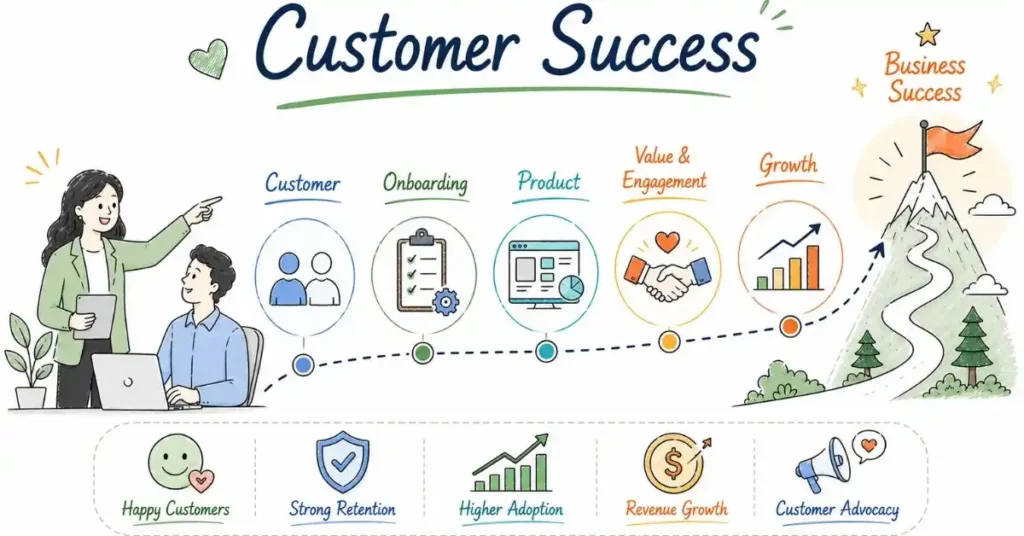
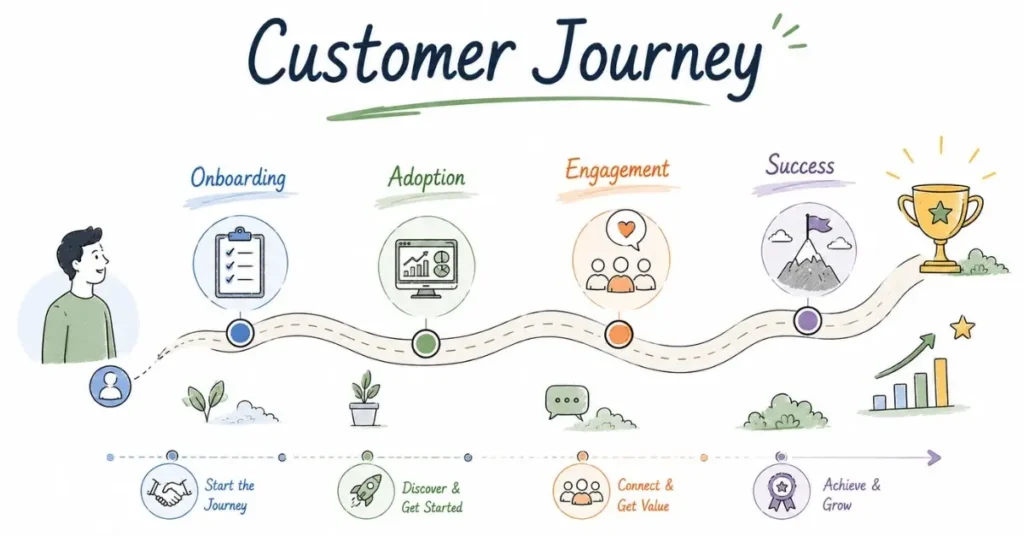
That’s Customer Success in a nutshell. It’s a business approach where companies proactively help customers achieve their goals using the product or service they purchased. The philosophy is beautifully simple: when your customers succeed, your business succeeds.
In technical terms, Customer Success is a relationship-focused business method that ensures customers achieve their desired outcomes while using your product, leading to increased customer retention, reduced churn, and opportunities for account expansion.
But honestly? It’s just about genuinely helping people get value from what they bought. Everything else the metrics, the tools, the strategies flows from that core purpose.
The Evolution of Customer Success (And Why It Matters to You)
Here’s something fascinating: Customer Success as a formal business function barely existed before 2010. So how did we get here?
The Shift from One-Time Sales to Subscriptions
Think about Microsoft Office in 2005. You paid ₹15,000 once, got a CD, installed it, and Microsoft never heard from you again. They got their money upfront.
Now think about Microsoft 365 in 2026. You pay ₹500 every month. Microsoft needs to keep you happy month after month, or you’ll cancel and they lose money. Multiply this by millions of customers, and suddenly, keeping existing customers happy becomes more important than acquiring new ones.
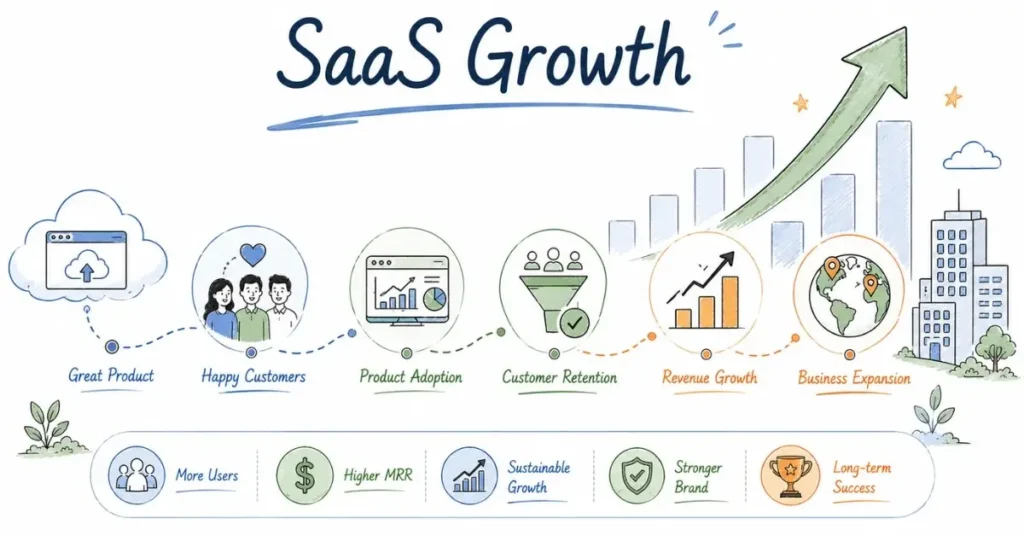
This subscription economy created Customer Success. Companies realized they couldn’t just sell and disappear they needed dedicated teams ensuring customers stayed happy and renewed subscriptions.
India's SaaS Revolution
India’s SaaS industry has exploded over the past five years. Companies like Freshworks, Zoho, Postman, Chargebee, and hundreds of others are building products used by millions globally. Every single one needs Customer Success teams.
According to recent data, India now has over 1,000 SaaS companies generating more than $12 billion in annual revenue. This creates thousands of Customer Success jobs across cities like Bangalore, Hyderabad, Pune, Chennai, and increasingly in remote locations.
The Data-Driven Transformation
Early Customer Success was mostly relationship management being nice to customers and hoping they stayed. By 2026, it’s become a sophisticated, data-driven function. Companies now use AI-powered platforms to predict which customers might cancel, calculate health scores, and optimize every interaction.
This evolution is good news for you. It means Customer Success is no longer just “being good with people.” It’s a strategic career requiring diverse skills communication, analytics, technology, business acumen making you valuable across industries
A Day in the Life of a Customer Success Professional
Let’s get practical. What does a typical workday actually look like?
Meet Priya, a Customer Success Manager at a mid-sized SaaS company in Hyderabad. Her company sells HR management software to businesses across India. Here’s her actual Tuesday:
Morning Shift
9:00 AM – Morning Review
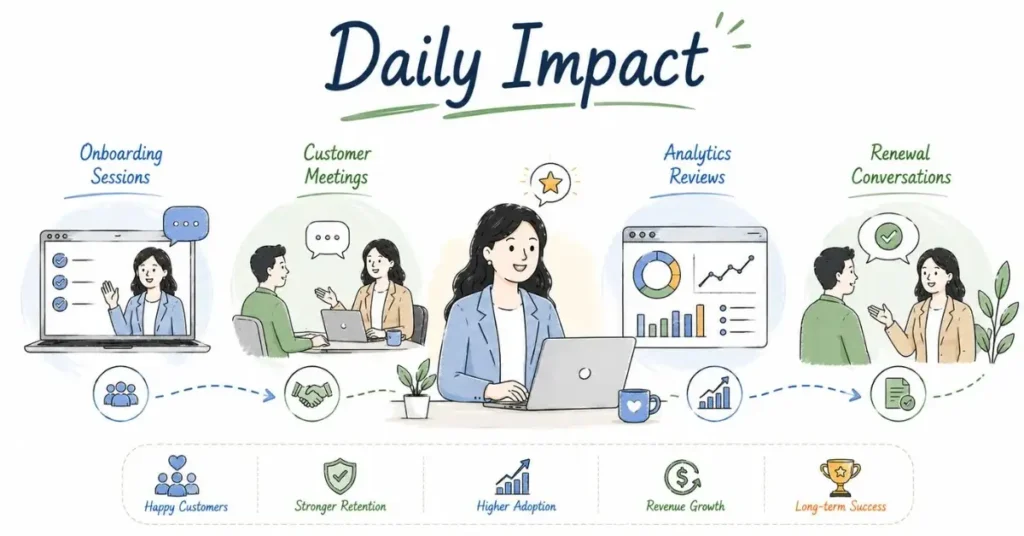
Priya logs into her Customer Success platform (Gainsight) and checks her dashboard. Three customers have “yellow” health scores, meaning they’re at risk. One client hasn’t logged in for 10 days. Another opened a support ticket about data export issues. She prioritizes her day accordingly.
9:30 AM – Team Sync
Quick 30-minute call with her team of four CSMs and their manager. Each person shares wins, challenges, and customers needing attention. The manager mentions a new feature launching next week that customers are requesting.
10:00 AM – Customer Call: Onboarding
A new client, a 50-person company from Jaipur, signed up last week. Priya conducts a 45-minute onboarding call, understanding their HR processes, their pain points, and their goals for using the software. She records their success criteria: “Reduce payroll processing time from 8 hours to 2 hours within 60 days.”
11:00 AM – Problem Solving
The client who hasn’t logged in for 10 days? Priya calls them. Turns out their HR manager who was the main user left the company, and no one else knows how to use the software. Priya schedules a fresh training session for the new HR manager next Thursday. Crisis averted.
Afternoon Shift
12:00 PM – Lunch & Learning
While eating, Priya watches a 15-minute webinar about a new feature in their Customer Success platform. Continuous learning is part of the job.
1:00 PM – Data Analysis
Priya pulls usage data for her 25 accounts. She creates a spreadsheet showing which features are most adopted, which are ignored, and correlates this with customer satisfaction scores. She’ll share insights with the Product team tomorrow.
2:30 PM – Quarterly Business Review Prep
Next week, she’s presenting to her largest client a 200-person company paying ₹15 lakhs annually. She’s preparing a presentation showing how their software saved them 1,200 work hours last quarter, reduced payroll errors by 80%, and generated ₹8 lakhs in cost savings. The goal? Show value so they renew and potentially upgrade their plan.
4:00 PM – Cross-Functional Meeting
Priya joins a meeting with Sales, Product, and Customer Success teams. Sales wants to understand why some customers upgrade while others don’t. Priya shares patterns she’s noticed: customers who use the mobile app within the first week are 3x more likely to expand their accounts.
5:00 PM – Renewal Conversation
A customer’s annual contract is up for renewal in 30 days. Priya calls to discuss renewal, addresses any concerns, and negotiates a two-year commitment with a slight price increase. Customer agrees. That’s ₹10 lakhs in revenue retained.
5:45 PM – EOD Wrap-up
Priya updates CRM notes, schedules tomorrow’s calls, and sends a summary email to her manager about the renewal she closed.
6:00 PM – Log Off
This is realistic not every day has dramatic saves or big wins. Many days involve email management, documentation, data entry, and internal coordination. But there’s variety, human interaction, problem-solving, and tangible impact.
Customer Success vs Customer Support vs Account Management
This confusion trips up almost everyone, so let’s settle it once and for all with real examples.
Scenario: Rahul's Software Isn't Working
Customer Support Response:
Rahul raises a ticket: “I can’t export my reports.” The support team responds within 2 hours, troubleshoots the issue, discovers it’s a browser compatibility problem, provides a workaround, and closes the ticket. Total interaction: 3 emails, problem solved. Support metrics: ticket resolution time, customer satisfaction with the solution.
Customer Success Response:
The Customer Success Manager sees Rahul raised that ticket. Even though support fixed it, she calls Rahul: “Hey, I saw you had an export issue. It’s resolved now, but I’m curious why do you need to export reports frequently? Are you sharing them with your team?” Rahul explains he emails reports to his boss weekly. The CSM says, “Actually, we have a feature that automatically sends scheduled reports. Let me set that up for you. It’ll save you 30 minutes every week.” She implements it, follows up to ensure it’s working, and Rahul is delighted. CS metrics: product adoption, customer health score, renewal likelihood.
Account Management Response:
The Account Manager, reviewing Rahul’s account, notices his company has 50 employees but only 10 user licenses. He calls Rahul: “I noticed only 10 people have access, but your company has 50 employees. Would it make sense to add licenses so everyone can access reports directly instead of you emailing them?” He presents a business case showing ROI, and Rahul agrees to purchase 20 more licenses. AM metrics: upsell revenue, account expansion rate.
See the difference?
- Support fixes immediate problems reactively
- Success proactively ensures customers achieve their goals
- Account Management focuses on growing revenue from existing accounts
In many Indian startups and smaller companies, these roles overlap significantly. A Customer Success Manager might handle support tickets, conduct strategic reviews, and identify upsell opportunities. As companies grow and mature, these functions separate into specialized teams.
Here’s the honest truth: if you’re starting your career, don’t obsess over these distinctions. Get your foot in the door with any customer-facing role, learn the ropes, and specialize later based on what you enjoy.
Why Customer Success is Booming in India Right Now
Let’s talk numbers and opportunities.
Job Market Reality:
LinkedIn currently lists over 12,000 active Customer Success job openings across India. Cities like Bangalore have hundreds of openings at any given time, but increasingly, companies in Pune, Hyderabad, Chennai, and even remote locations are hiring.
Compare this to 2020, when there were maybe 3,000-4,000 such roles. The growth is explosive.
Why the Boom?
- SaaS Companies Need Customer Success to Survive
Every SaaS company runs on monthly or annual subscriptions. Losing customers means losing predictable revenue. Studies show acquiring a new customer costs 5-7 times more than retaining an existing one. This makes Customer Success teams essential they’re literally responsible for keeping revenue flowing. - Remote Work Opened Opportunities
Pre-pandemic, most CS jobs were in Bangalore or Pune. Now, companies hire remotely from anywhere in India. If you’re in Bhopal, Kochi, or Dehradun, you can work for a Bangalore company without relocating. - Indian Talent Serving Global Clients
Many Indian CS professionals now manage US, European, and Southeast Asian clients. This creates opportunities for higher compensation and international exposure without leaving India. - Lower Entry Barriers
Unlike software engineering (needs coding skills) or data science (needs math/stats background), Customer Success has relatively low entry barriers. Good communication, willingness to learn, and customer empathy matter more than your specific degree. - Clear Career Growth
Companies have established career ladders for Customer Success. You can progress from Associate to Manager to Director to VP within 7-10 years, with compensation increasing significantly at each step.
Who Should Consider Customer Success as a Career?
Based on conversations with dozens of CS professionals across India, here are profiles of people who thrive in this field:
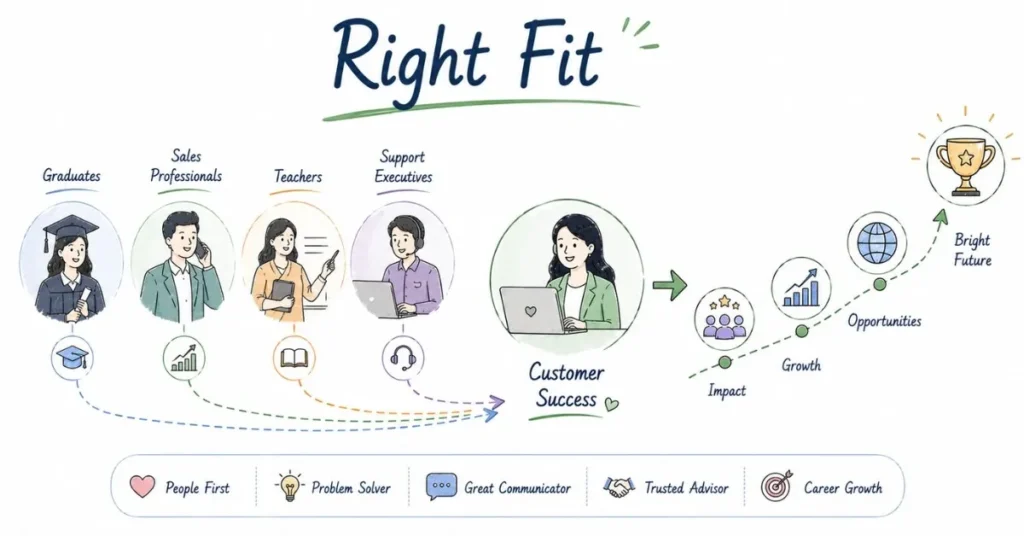
The People Person:
If you genuinely enjoy conversations, building relationships, and helping others succeed, Customer Success is natural for you. Aditi from Pune was always the friend everyone called when they needed advice. She channeled that into a CS career and loves it.
The Problem Solver:
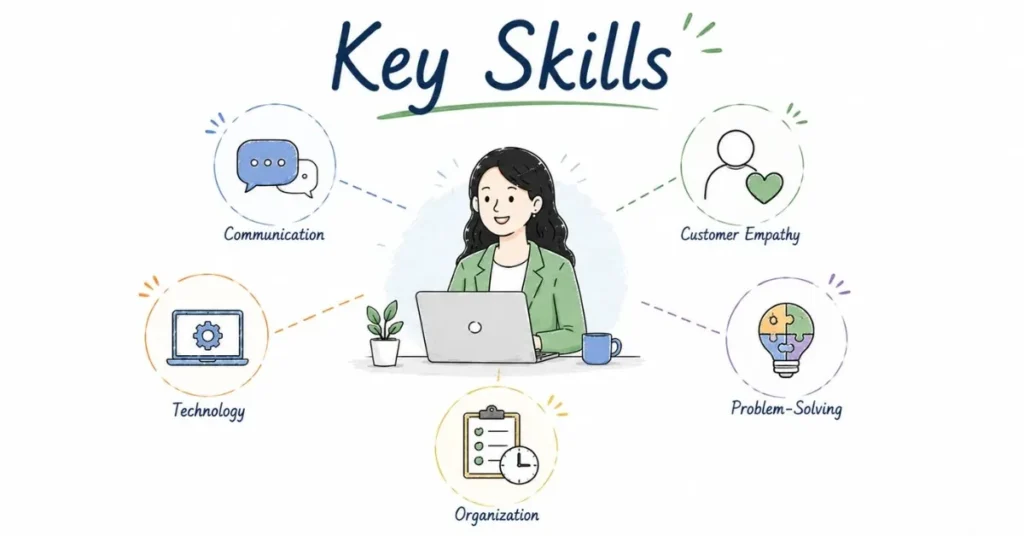
Enjoy figuring out why things aren’t working and finding creative solutions? CS involves constant troubleshooting not just technical issues, but business challenges, adoption barriers, and organizational problems.
The Career Switcher:
Many successful CS professionals come from non-tech backgrounds. Teachers transition because of their communication skills. Sales professionals move to CS for better work-life balance. Support teams members advance to strategic CS roles. Your previous experience isn’t wasted it’s repositioned.
The Tech-Curious (Not Tech-Expert):
You don’t need to code, but you should be comfortable with technology. If learning new software excites rather than intimidates you, that’s enough. You’ll pick up CRM platforms, analytics tools, and product knowledge on the job.
The Recent Graduate:
Fresh out of college with a commerce, arts, or engineering degree? Customer Success offers a solid entry point into the corporate world with decent starting salaries and faster growth than many traditional fields.
Who Might Struggle?
To be fair, Customer Success isn’t for everyone:
- If you hate talking to people or get drained by human interaction, this isn’t ideal
- If you need complete predictability and structure (every day is different in CS), you might find it chaotic
- If you take criticism personally (customers will sometimes be frustrated), it’ll be emotionally taxing
- If you have zero interest in business/tech, you’ll struggle to stay engaged
Skills That Matter (What You Actually Need)
Forget the impossible job descriptions asking for “5+ years of experience in a role that’s existed for 3 years.” Here’s what actually matters when starting out:
Must-Have Skills:
Clear Communication: Can you explain complex things simply? Can you write emails people understand? Can you present information clearly on calls? This matters more than anything else.
Active Listening: Do you actually hear what customers say, or are you just waiting for your turn to talk? Great CSMs listen first, speak second.
Basic Tech Comfort: Are you comfortable learning new software? Can you navigate dashboards, run reports, and troubleshoot basic issues? You don’t need to be a tech wizard, but you can’t be technophobic.
Empathy: When a customer is frustrated, can you understand their perspective genuinely? Fake empathy is obvious; real empathy builds trust.
Organization: Can you manage multiple tasks, prioritize effectively, and meet deadlines without constant supervision?
Nice-to-Have Skills (You'll Learn These):
- CRM platforms (Salesforce, HubSpot, Zoho)
- Data analysis and Excel
- Presentation skills
- Negotiation
- Business acumen
- Project management
The Bottom Line: Companies hire for potential and attitude, then train for skills. Show you’re coachable, customer-focused, and willing to learn that’s 80% of what matters in entry-level roles.
Salary Expectations (The Real Numbers)
Let’s talk money, because that matters.
Entry-Level: Customer Success Associate (0-2 years)
Salary Range: ₹3-6 lakhs per annum
This varies significantly by company size and location. A startup in Bangalore might offer ₹4.5 lakhs, while a mid-sized company in Pune offers ₹5.5 lakhs. Remote roles sometimes pay slightly less.
Mid-Level: Customer Success Manager (2-5 years)
Salary Range: ₹8-16 lakhs per annum
At this level, your performance directly impacts compensation. Top performers with strong renewal rates and upsell numbers can command the higher end.
Senior Level: Senior CSM / Team Lead (5-8 years)
Salary Range: ₹18-30 lakhs per annum
Managing high-value enterprise accounts or leading small teams puts you in this bracket.
Leadership: Director and Above (8+ years)
Salary Range: ₹30 lakhs – ₹1 crore+ per annum
At this level, you’re driving strategy and managing large teams. Compensation includes significant variable pay and potentially equity.
Additional Compensation:
Many CS roles include:
- Quarterly or annual bonuses based on retention metrics (5-15% of base salary)
- Health insurance
- Work-from-home allowances
- Learning and development budgets
- Performance-based incentives
Geographic Variations:
Bangalore and Pune typically offer 10-15% higher salaries than other cities for the same role. However, remote positions are equalizing this somewhat.
The Pros and Cons (Being Realistic)
Let me give you the unfiltered truth.
Advantages:
- Job Security and Demand: With 12,000+ openings and growing, finding jobs is relatively easier than many fields.
- Respectable Compensation: Starting at ₹3-6 lakhs and reaching ₹15-20 lakhs within 5-6 years is solid middle-class progression.
- Work-Life Balance: Most CS roles have structured hours (9-6 or 10-7). Unlike sales, you’re not chasing monthly quotas. Unlike support, you’re not doing night shifts.
- Continuous Learning: You’re constantly learning new products, industries, business models, and technologies. It’s intellectually stimulating.
- Tangible Impact: You directly see the results of your work. Customers thank you, accounts grow, and your contributions are visible.
- Career Flexibility: The skills you build (communication, problem-solving, data analysis, relationship management) transfer to virtually any career.
Disadvantages:
- Emotionally Demanding: Dealing with frustrated customers, handling cancellations, and managing multiple demanding accounts can be draining.
- Pressure on Metrics: You’ll be measured on churn rate, renewal rate, NPS scores. If your numbers are bad, you’ll feel the pressure.
- Caught in the Middle: You’re between customers (who want more features, lower prices, special treatment) and your company (which has constraints, policies, and profit targets). Navigating this requires diplomacy.
- Repetitive Tasks: Significant time goes into administrative work updating CRM, writing reports, internal meetings. It’s not all strategic conversations.
- Career Ceiling Uncertainty: While the field is growing, it’s relatively new. Long-term career paths beyond Director level are still evolving compared to established fields like finance or marketing.
- Always Learning: This is both pro and con. Technology, tools, and best practices change constantly. If you prefer mastering one thing and sticking with it, CS might feel unstable.
Your First Steps Into Customer Success
Convinced this might be for you? Here’s your action plan:
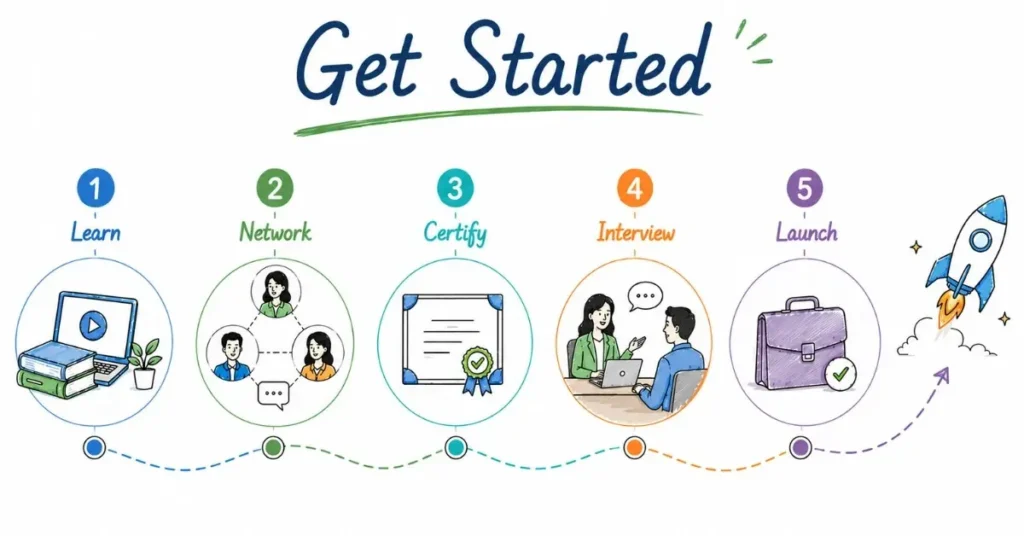
This Week:
- Optimize Your LinkedIn: Update your headline to include “Customer Success” even if you’re aspiring. Write an About section explaining your interest in helping customers succeed.
- Join CS Communities: Search for “Customer Success India” groups on LinkedIn and Facebook. Join Gain Grow Retain Slack community (it’s free and global).
- Follow CS Leaders: Follow people like Nick Mehta, Lincoln Murphy, and Indian CS leaders on LinkedIn. Read what they share.
- Research Companies: Make a list of 20 Indian SaaS companies. Research what they do, who their customers are, and check their career pages.
This Month:
- Take Free Courses: Complete HubSpot Academy’s free Customer Success courses. It takes 3-4 hours and gives you a certificate.
- Update Your Resume: Reframe your experience highlighting customer-facing work, problem-solving, communication, and tech usage. Quantify achievements wherever possible.
- Start Applying: Apply to 15-20 entry-level positions. Don’t worry if you don’t meet 100% of requirements apply anyway.
- Practice Interviewing: Research common CS interview questions. Practice answers using specific examples from your life
Within 3 Months:
- Network: Connect with 10 CS professionals. Send personalized messages asking if they’d spare 15 minutes to share their journey.
- Keep Learning: Watch CS webinars, read case studies, understand the terminology and metrics.
- Stay Persistent: Rejections are normal. Every “no” brings you closer to a “yes.”
Conclusion: Is Customer Success Right for You?
Here’s the simple test: Do you get satisfaction from helping others succeed? Do you enjoy understanding problems and finding solutions? Are you comfortable with technology? Do you want a career with growth potential and respectable income?
If you answered yes to most of these, Customer Success deserves serious consideration.
This isn’t a “get rich quick” path, nor is it glamorous. But it’s real, it’s growing, and it offers genuine opportunities for young Indians to build stable, satisfying careers in India’s booming tech economy.
The timing is perfect. The demand is real. The question is: are you ready to take the first step?