
Corporate Finance & FP&A Careers
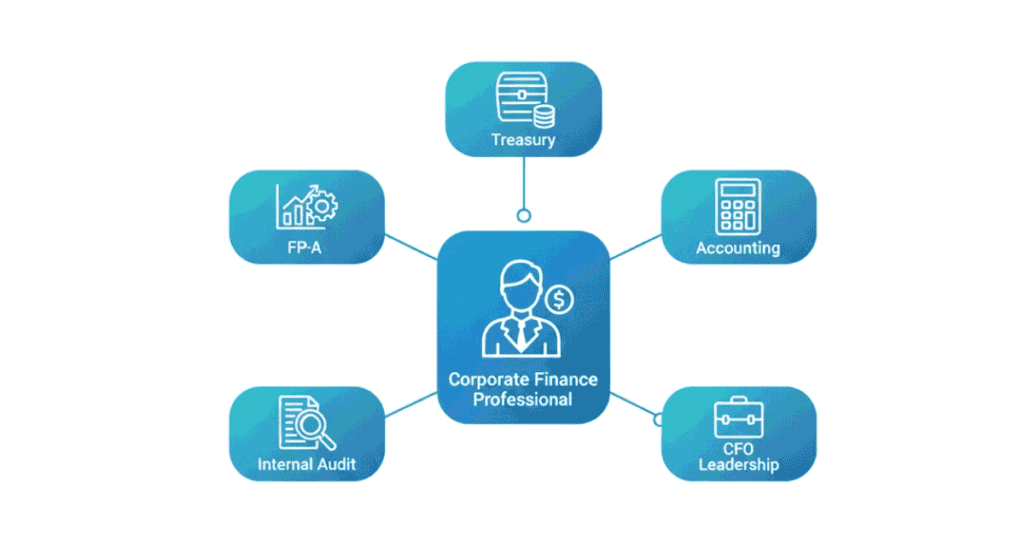
Table of Contents
What Is Corporate Finance? (The CEO's Money Team)
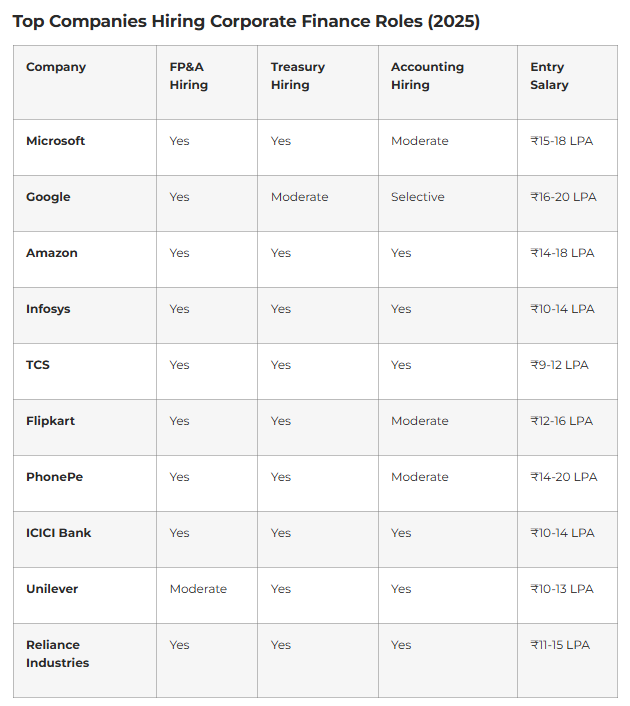
Every company—whether it’s Infosys, Reliance, or a mid-size startup—has a corporate finance team. Their job? Make sure the company makes money and spends it wisely.
Simple example:
- Your company earns ₹100 crore annually
- Expenses: ₹60 crore
- Profit: ₹40 crore
- Question: Should we spend ₹30 crore to expand? Will it generate ₹50+ crore revenue? Corporate finance team analyzes and recommends.
Key difference from investment banking:
- Investment Banking: Advises OTHER companies (external)
- Corporate Finance: Manages company’s OWN money (internal)
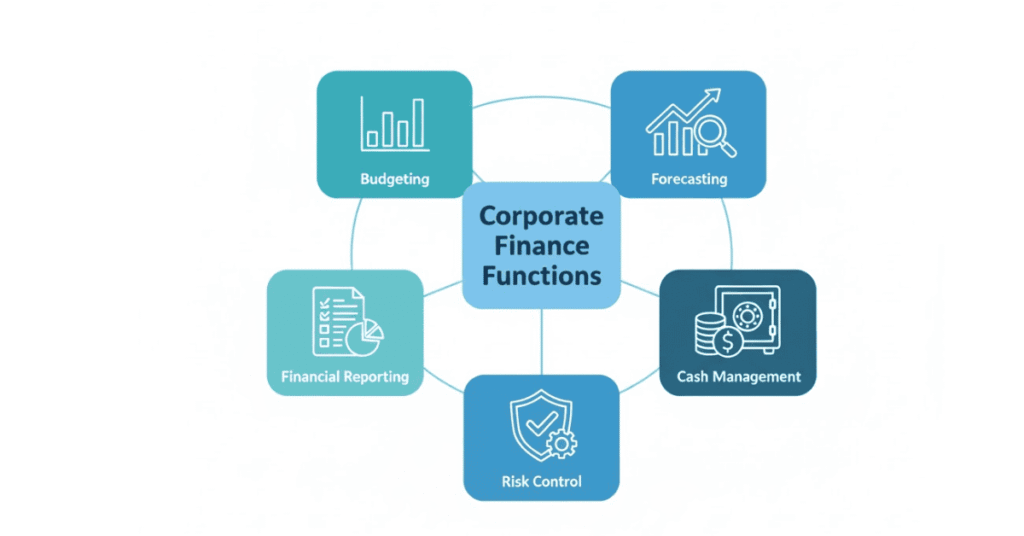
Core Functions of Corporate Finance
- Financial Planning & Analysis (FP&A)
What they do:
- Create annual budgets (what you’ll spend this year)
- Forecast revenue and expenses
- Analyze performance vs. budget
- Recommend strategies to improve profitability
Real example:
An e-commerce company’s sales are down 20% in Q3. FP&A team analyzes:
- What’s the root cause? (Competition? Marketing issues? Product problems?)
- What’ll the full year look like if this continues?
- What actions can turn this around?
- What’ll be the financial impact?
Salary: ₹10-15 LPA (FP&A Analyst) → ₹35-60 LPA (FP&A Director)
- Treasury Management
What they do:
- Manage company’s cash (where to put it, how much liquidity needed)
- Manage debt (loans, bonds)
- Handle forex (if company operates globally)
- Manage investments and working capital
Real example:
A tech company has ₹200 crore cash. Treasury team decides:
- Keep ₹50 crore for operations (working capital)
- Invest ₹100 crore in government bonds (safe, returns 6%)
- Invest ₹50 crore in mutual funds (higher risk, higher returns)
Salary: ₹12-18 LPA (Treasurer) → ₹30-50 LPA (Senior roles)
- Accounting & Financial Reporting
What they do:
- Record all financial transactions
- Prepare financial statements (P&L, Balance Sheet, Cash Flow)
- Ensure compliance with accounting standards (Ind AS, IFRS)
- Prepare tax filings
Why it matters:
Investors, banks, and regulators need accurate financial statements to trust your company.
Salary: ₹4-8 LPA (Accountant) → ₹15-30 LPA (Controller)
- Internal Audit & Risk Management
What they do:
- Verify all financial processes are correct and compliant
- Identify risks and weaknesses
- Recommend improvements
- Ensure company follows regulations
Salary: ₹10-15 LPA (Auditor) → ₹25-40 LPA (Head of Audit)
FP&A: The High-Growth Career Path
FP&A (Financial Planning & Analysis) is the fastest-growing corporate finance role. Here’s why:
- Direct impact on company strategy: Your analysis directly influences CEO decisions
2. Visibility: Present to senior leadership, board of directors
3. Career growth: Clear path to CFO
4. Salary: Competitive and growing
5. Transferable skills: Valuable everywhere
FP&A Analyst: Your Entry Point
What an FP&A analyst does daily:
Morning (9 AM – 1 PM):
- Review overnight reports and emails
- Check previous day’s market performance
- Pull data from ERP systems (SAP, Oracle)
- Build initial analysis and dashboards
- Attend team standup meeting
Afternoon (1 PM – 5 PM):
- Build financial models (forecast revenue, analyze profitability)
- Investigate variances (why is sales ₹2 crore under budget?)
- Prepare presentation slides
- Help senior analyst on larger projects
- Attend meetings with business units
Late afternoon (5 PM – 6:30 PM):
- Finalize reports and send to manager
- Follow up on pending data requests
- Plan tomorrow’s priorities
Work environment:
- Collaborative (work with sales, operations, marketing teams)
- Data-driven (90% of time in Excel, Power BI, or SQL)
- Fast-paced (quarterly close is hectic, other times moderate)
- Results-oriented (your analysis influences decisions)
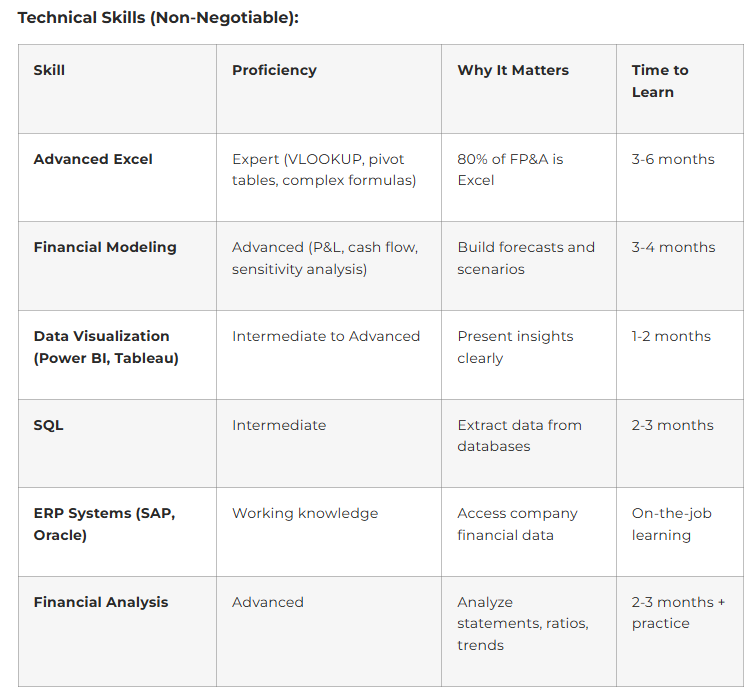
Business Skills (Critical):
- Business acumen: Understand how the company makes money
- Communication: Explain complex analysis to non-finance people
- Problem-solving: Find root causes and recommend solutions
- Time management: Balance multiple projects
- Attention to detail: Errors in forecasts can cost millions
- Stakeholder management: Work effectively with sales, marketing, operations
How to Break Into FP&A
Step 1: Educational Foundation
During College:
- Major in Finance, Accounting, Commerce, or Business
- Take courses: Corporate Finance, Financial Analysis, Accounting
- Excel proficiency: Start learning now
- Certifications: CFA Level 1, CA/CPA helps but not essential
GPA & Internships:
- GPA matters initially (3.0+); experience matters more later
- Internship in corporate finance, accounting, or analysis
Step 2: Internship Strategy
Target: Companies with robust FP&A functions
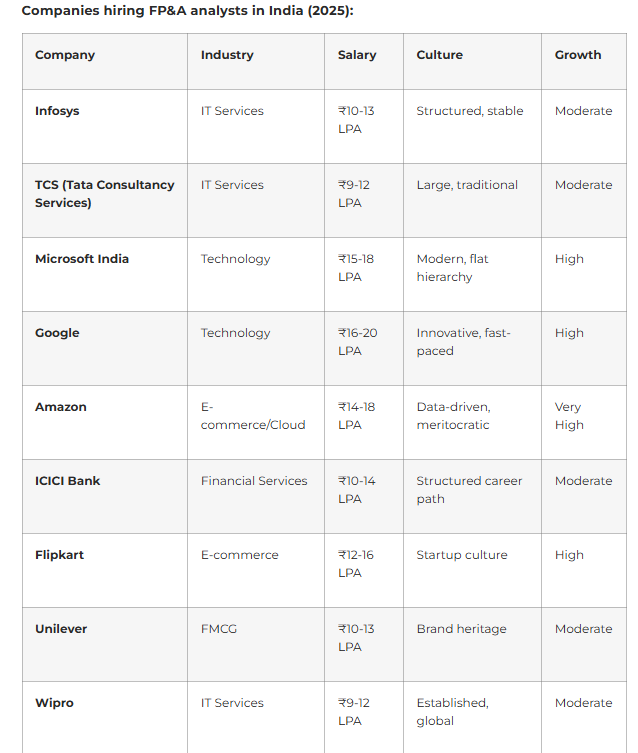
- Large MNCs: Infosys, TCS, Accenture, Microsoft, Google
- Financial institutions: ICICI, HDFC, Kotak
- Startups: Growing tech companies hiring FP&A support
During internship:
- Learn company’s business model deeply
- Master Excel and financial reporting systems
- Build relationships with FP&A team members
- Deliver high-quality work
Internship to full-time: Most companies hire 30-40% of interns, so perform well
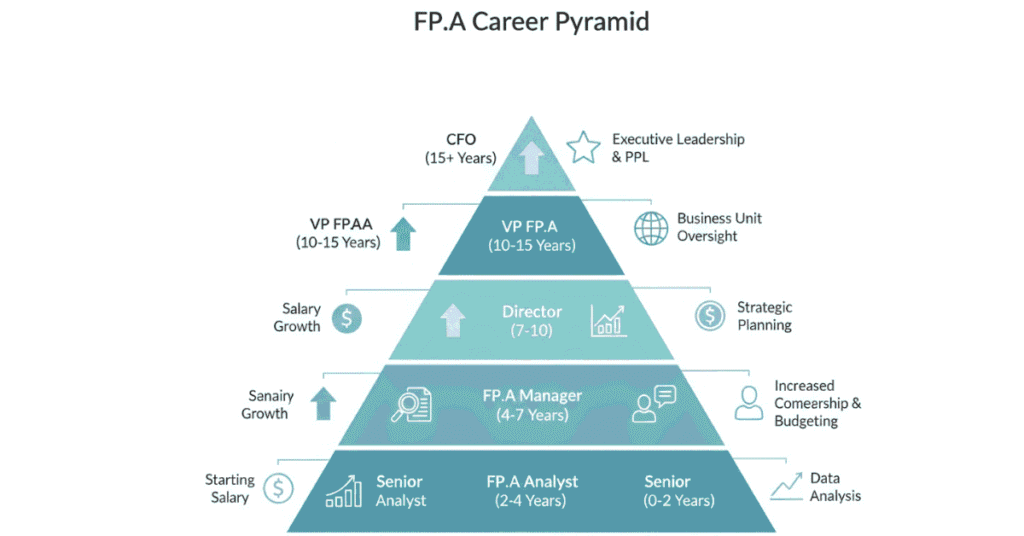
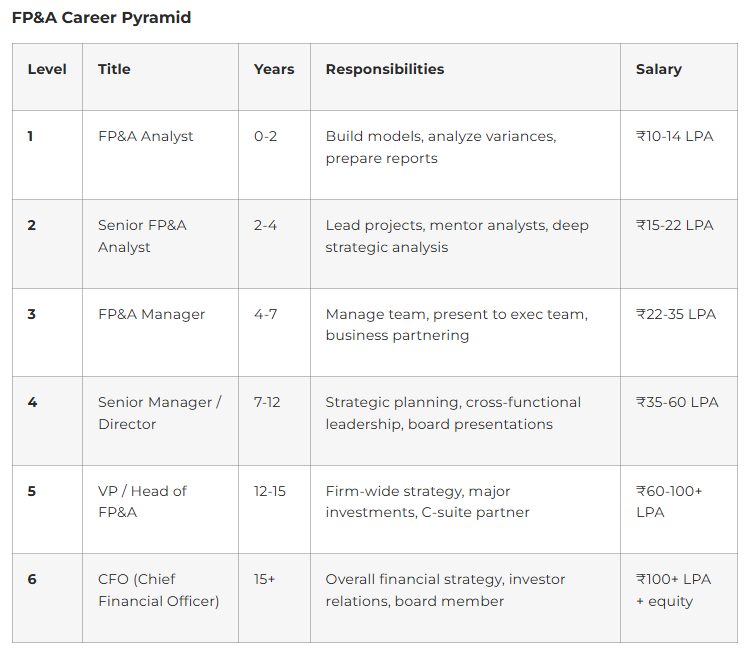
FP&A Career Progression: Your 10-Year Journey
Years 1-2: FP&A Analyst (Learning Phase)
- Responsibilities:
- Build financial models under supervision
- Analyze monthly variances (why did sales miss target?)
- Prepare budget packages
- Support quarterly/annual close
- Salary: ₹10-14 LPA
- Work hours: 45-50 hours/week (manageable)
- Challenges: Learning company’s business, mastering tools
- Success metrics: Accuracy, timeliness, quality of analysis
- Key question to ask senior: “What skills do I need to move to Senior Analyst?”
Years 2-4: Senior FP&A Analyst (Building Expertise)
- Responsibilities:
- Lead forecasting projects
- Mentor junior analysts
- Present to business unit leaders
- Deep analysis of business drivers
- Start thinking strategically
- Salary: ₹15-22 LPA
- Work hours: 50-55 hours/week (busier during close)
- Key milestone: First presentation to senior management
- Next step consideration: Move to Manager or pivot to another finance role?
Years 4-7: FP&A Manager (Leadership Starts)
- Responsibilities:
- Manage team of 2-4 analysts
- Partner with business units (sales, product, operations)
- Lead annual planning and budgeting
- Present strategy to C-suite
- Drive process improvements and automation
- Salary: ₹22-35 LPA
- Work hours: 50-60 hours/week
- New challenge: Managing people (different from analysis)
- High-visibility work: Your analysis influences company strategy
- Bonus consideration: May receive 15-25% of base salary
Years 7-12: Senior Manager / Director (Strategic Role)
- Responsibilities:
- Lead multiple FP&A projects across business units
- Present to board of directors
- Drive company-wide financial strategies
- Hire and develop managers
- 3-5 year strategic planning
- Salary: ₹35-60 LPA
- Work hours: 50-60 hours/week (event-driven)
- Bonus/ESOP: 20-40% of base + stock options
- Visibility: Board-level exposure, investor calls
Year 12+: VP / Head of FP&A (Executive Level)
- Responsibilities:
- Lead entire FP&A function
- Report directly to CFO
- Company-wide financial strategy
- C-suite partner on major decisions
- M&A analysis, fundraising support
- Salary: ₹60-100+ LPA + equity
- Work hours: Variable (55-70 during busy periods)
- Bonus: 30-50% of base + significant equity
The Path to CFO (Chief Financial Officer)
Not all CFOs come from FP&A, but FP&A is a strong foundation.
Typical CFO journey:
Example 1: Direct FP&A Path
- FP&A Analyst (2 yrs) → Senior Analyst (2 yrs) → Manager (3 yrs) → Director (4 yrs) → VP FP&A (3 yrs) → CFO (10+ yrs experience)
Example 2: Mixed Path (More Common)
- FP&A (4 yrs) → Controller/Accounting (3 yrs) → Treasury Head (2 yrs) → Finance Director (3 yrs) → CFO
Example 3: External Path
- Investment Banking (5 yrs) → Corporate Finance (4 yrs) → CFO
CFO Salary in India (2025):
- Small companies (₹100-500 crore revenue): ₹60-100 LPA
- Mid-sized companies (₹500-2000 crore): ₹100-200 LPA
- Large companies (₹2000+ crore): ₹200-400+ LPA (+ equity)
- Top startups: ₹150-300+ LPA (+ significant equity)
Corporate Finance Roles Beyond FP&A
Treasury Manager
What they do:
- Manage company’s liquid assets (cash)
- Optimize investments and borrowing
- Handle foreign exchange
- Ensure sufficient liquidity
Salary: ₹15-25 LPA (manager) → ₹40-60 LPA (senior)
Similar to: Investment management but internal focus
Best for: People who love financial instruments and markets
Financial Controller
What they do:
- Oversee all accounting and financial reporting
- Ensure compliance and accuracy
- Manage accounting team
- Prepare financial statements for stakeholders
Salary: ₹12-20 LPA (controller) → ₹35-60+ LPA (senior controller)
Best for: Detail-oriented people who love processes and compliance
Head of Audit / Internal Audit Manager
What they do:
- Verify financial accuracy
- Identify risks and control weaknesses
- Ensure compliance with regulations
- Recommend improvements
Salary: ₹12-18 LPA (manager) → ₹30-50 LPA (head)
Best for: Process-oriented people who care about accuracy and compliance
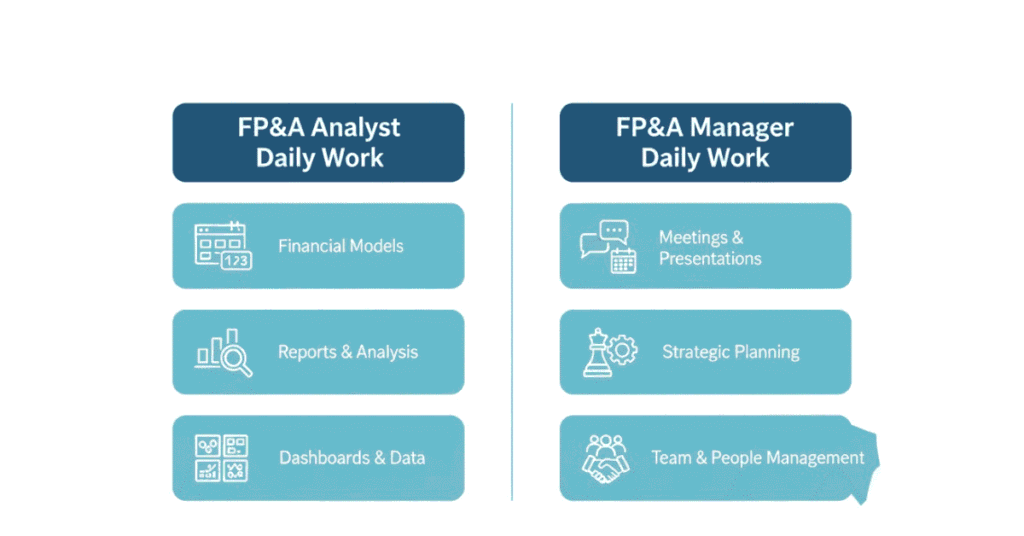
Day in the Life: FP&A Manager (vs. FP&A Analyst)
FP&A Analyst Day:
text
8:45 AM – Arrive, review emails and overnight reports
9:00 AM – Team standup: What are we working on?
9:30 AM – Build revenue forecast model for Q4
11:00 AM – Revise model based on sales team input
1:00 PM – Lunch
2:00 PM – Analyze YTD variances (why are we ₹5 crore over budget?)
3:30 PM – Present findings to senior analyst
4:00 PM – Create slides for manager’s presentation to exec team
5:30 PM – Final checks, send to manager
6:00 PM – Go home
FP&A Manager Day:
text
8:30 AM – Arrive, check overnight reports and forecasts
9:00 AM – Team meeting: Project updates, prioritize work
9:30 AM – One-on-ones with 2-3 analysts (check in, development)
10:30 AM – Meeting with Sales VP: Understand pipeline, refine forecast
11:30 AM – Strategy meeting with CFO: Discuss quarterly close insights
12:30 PM – Lunch (with client or team bonding)
1:30 PM – Work on annual budget presentation for board
3:00 PM – Review analyst work, provide feedback
4:00 PM – Email catch-up, follow-ups
4:30 PM – Prep for tomorrow’s exec presentation
5:30 PM – Final review, send deliverables
6:30 PM – Leave (or stay if big project)
Key difference: Manager’s day is more people-focused, strategic, and visible.
Day in the Life: FP&A Manager (vs. FP&A Analyst)
How to Get Promoted Faster in Corporate Finance
Secret 1: Master the Company’s Business
- Understand revenue drivers (what makes the company money?)
- Know the competitive landscape
- Follow industry trends
- Ask smart questions about strategy
Secret 2: Build Cross-Functional Relationships
- Work closely with sales, product, operations
- Understand their challenges
- Become their trusted finance advisor
- They’ll advocate for your promotion
Secret 3: Automate & Innovate
- Find repetitive tasks and automate (Excel macros, scripts)
- Propose process improvements
- Implement new tools (Power BI, new forecasting models)
- Managers notice efficiency drivers
Secret 4: Develop Others
- Mentor junior analysts
- Share knowledge freely
- Help colleagues succeed
- Promotions go to people who can develop talent
Secret 5: Think Like the CFO
- Don’t just answer questions; anticipate needs
- Provide strategic insights, not just data
- Think about business impact, not just numbers
- Present solutions, not just problems
3 Reasons to Choose Corporate Finance
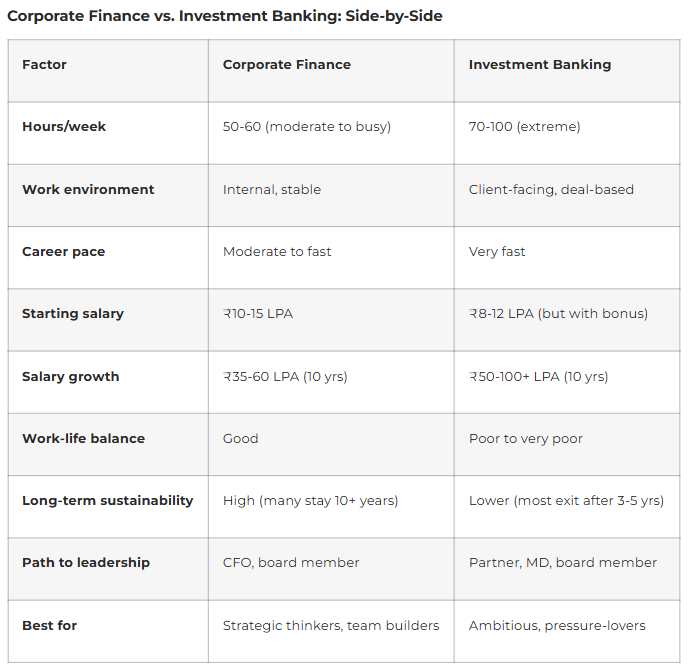
- Better Work-Life Balance Than Banking
- 50-60 hour weeks vs. 70-100 in investment banking
- You can have a life, relationships, hobbies
- No 2 AM calls from clients
- Weekends mostly yours
- Sustainable Long-Term Career
- People stay in corporate finance 10-20+ years
- Clear path to executive leadership (CFO, board)
- Skills appreciated across industries
- Can transition to startups, PE, consulting
- Strategic Visibility Without the Grind
- Present to C-suite and board (investment banker do this too, but later)
- Influence company strategy directly
- See impact of your recommendations
- Build deep business understanding
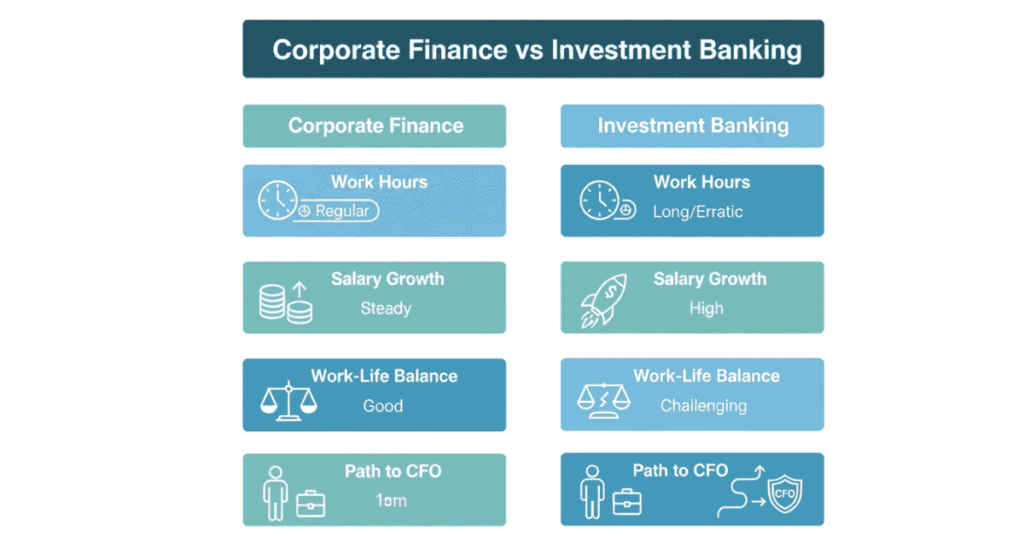
Investment Banking vs. Corporate Finance: Make Your Choice
Choose Investment Banking IF:
- You want fastest salary growth
- You thrive under extreme pressure
- You’re willing to sacrifice years 1-5 for long-term gain
- You value prestige and network
- You want exit options (PE, VC, hedge funds)
Choose Corporate Finance IF:
- You want sustainable career
- You value work-life balance
- You want to lead organizations (CFO path)
- You prefer strategic thinking to deal execution
- You want to stay with one company long-term
Hybrid Approach: Many successful finance leaders do investment banking (3-5 years for skills + prestige) then move to corporate finance (better lifestyle + leadership path).