
Project Management in Retail Technology
Table of Contents
Introduction: Why Retail Tech Projects Need Special Project Managers
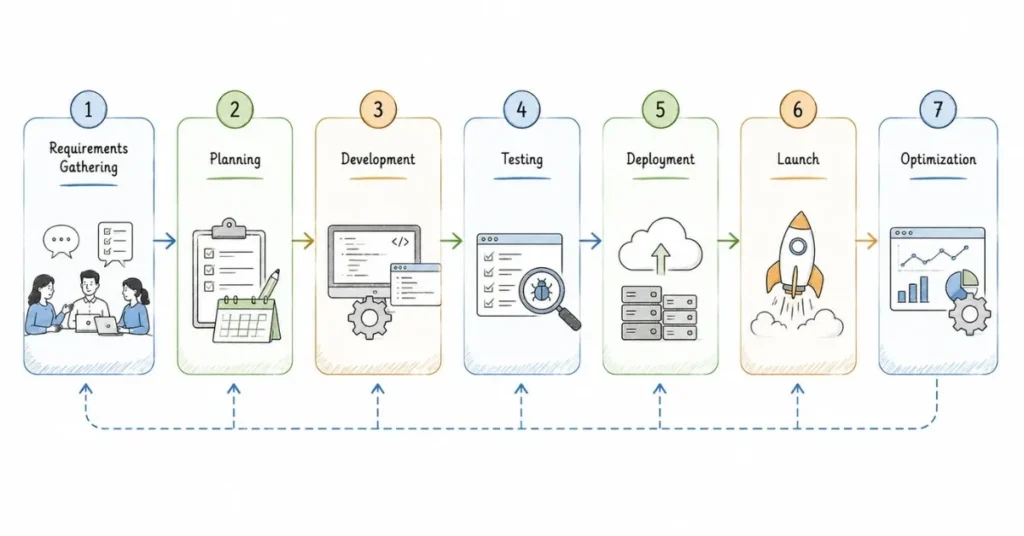
Imagine this scenario:
A mid-sized fashion e-commerce company decides to launch a mobile app. Sounds simple? Let’s see what’s actually involved:
Week 1: Meeting with stakeholders
- CEO wants it done in 2 months
- Marketing wants 50+ features
- Tech team says minimum 6 months needed
- Finance wants to minimize costs
- You (the project manager) need to balance all this
Week 4: Development started
- iOS developer quits mid-project
- Android app is 30% complete but iOS is 10%
- Marketing changed their mind on 15 features
- Need to re-plan without derailing project
Week 12: Testing phase
- Found 200 bugs
- Payment gateway integration not working
- App crashes on older Android phones (40% of Indian users)
- Launch date is 2 weeks away
Week 14: Launch delayed
- Renegotiating timelines with CEO
- Managing disappointed marketing team
- Motivating exhausted tech team
- Planning phased launch instead of big bang
This chaos? That’s what retail technology project managers navigate daily. You’re the conductor of an orchestra where every musician plays a different instrument, has a different skill level, and sometimes doesn’t want to follow your music.
This guide shows you how to become that conductor the project manager who delivers successful retail technology projects on time, within budget, and with stakeholders (mostly) happy.
What is Retail Technology Project Management?
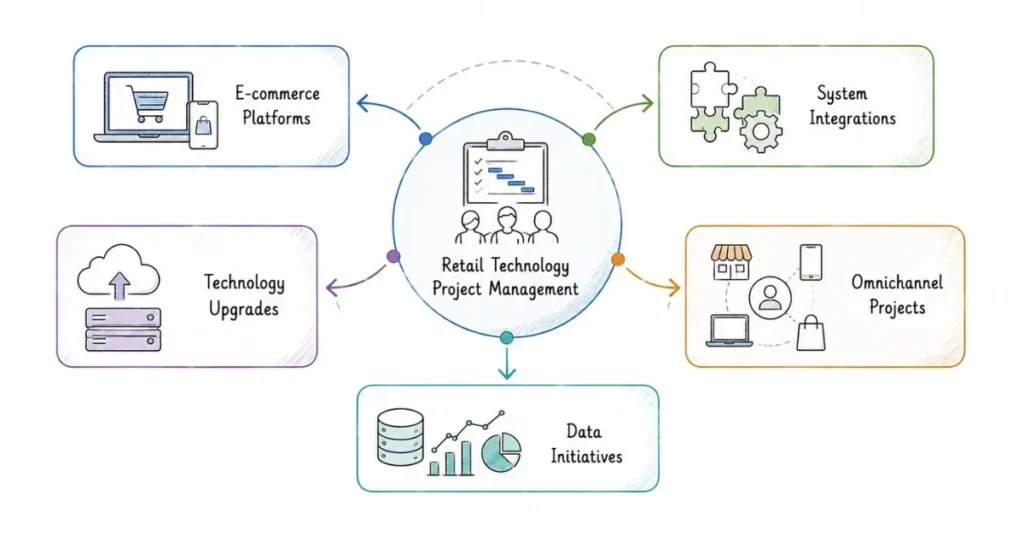
Project management in retail technology specifically involves:
E-commerce platform implementations:
- Launching new website or app
- Platform migration (moving from Magento to Shopify, for example)
- Major feature additions
System integrations:
- Connecting e-commerce platform with ERP system
- CRM integration
- Payment gateway integration
- Logistics partner API integration
- Inventory management system sync
Technology upgrades:
- Migrating to cloud infrastructure
- Upgrading to newer technology stack
- Performance optimization projects
- Security enhancements
Omnichannel initiatives:
- Connecting online and offline systems
- Implementing BOPIS (Buy Online Pick In Store)
- Unified inventory management across channels
Data projects:
- Analytics implementation
- Building data warehouses
- BI dashboard development
- AI/ML feature integration (recommendation engines, chatbots)
Why it's different from regular project management:
Speed matters: Unlike traditional projects where 6-month delay might be acceptable, in e-commerce, 6 weeks delay means millions in lost revenue or competitive disadvantage.
Customer impact: Your project directly affects customer experience. A bug in checkout means lost sales immediately.
Cross-functional complexity: You’re coordinating between tech (developers), business (category managers, marketing), operations (warehouse, logistics), and leadership.
Evolving requirements: E-commerce moves fast. Requirements from week 1 might change by week 4 because competitor launched something new.
The Retail Technology Project Manager: A Day in the Life
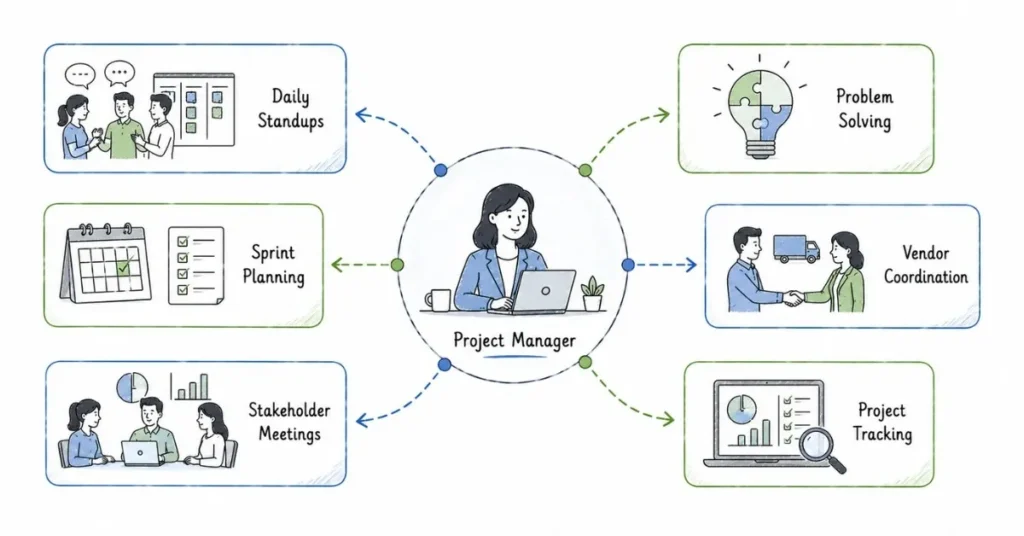
Meet Rahul, Project Manager at a D2C electronics brand in Bangalore:
9:00 AM: Daily standup meeting
- 15-minute meeting with development team (8 developers, 2 QA engineers, 1 designer)
- Each person shares: What they did yesterday, what they’ll do today, any blockers
- Developer A: “Payment gateway testing complete, working fine”
- Developer B: “Stuck on cart page bug, need help”
- Action: Assign another developer to pair program with B
9:30 AM: Sprint planning
- Current sprint (2-week development cycle) ending in 3 days
- Planning next sprint
- Prioritizing features from product backlog
- Marketing wants “share on WhatsApp” feature urgently
- Tech team wants to do technical debt cleanup
- Negotiating priorities with product owner
11:00 AM: Stakeholder meeting
- Weekly update to senior management
- Project status: 65% complete (on track)
- Risk highlight: Designer on sick leave, design tasks delayed by 2 days
- Mitigation: Hired freelance designer temporarily
- Budget update: ₹2.5 lakhs spent out of ₹4 lakh budget (on track)
12:30 PM: Problem-solving
- QA team found critical bug: checkout fails for users with old Android versions
- Affects 25% of potential users (significant!)
- Emergency meeting with tech lead
- Decision: Hotfix needed, prioritizing above other tasks
- Communicating revised timelines to stakeholders
2:00 PM: Vendor coordination
- Call with payment gateway provider
- Integration testing revealed issues
- Technical discussion with their team and our developers
- Resolving authentication errors
3:30 PM: Documentation and tracking
- Updating project management tool (Jira)
- Updating project plan in Excel/Google Sheets
- Risk register maintenance
- Preparing weekly status report
5:00 PM: Team morale check
- Informal conversation with team members
- Sensing stress levels (approaching deadline)
- Team member mentions feeling overworked
- Discussing work distribution, considering bringing in additional resource
6:00 PM: Planning for tomorrow
Key Methodologies in Retail Technology PM
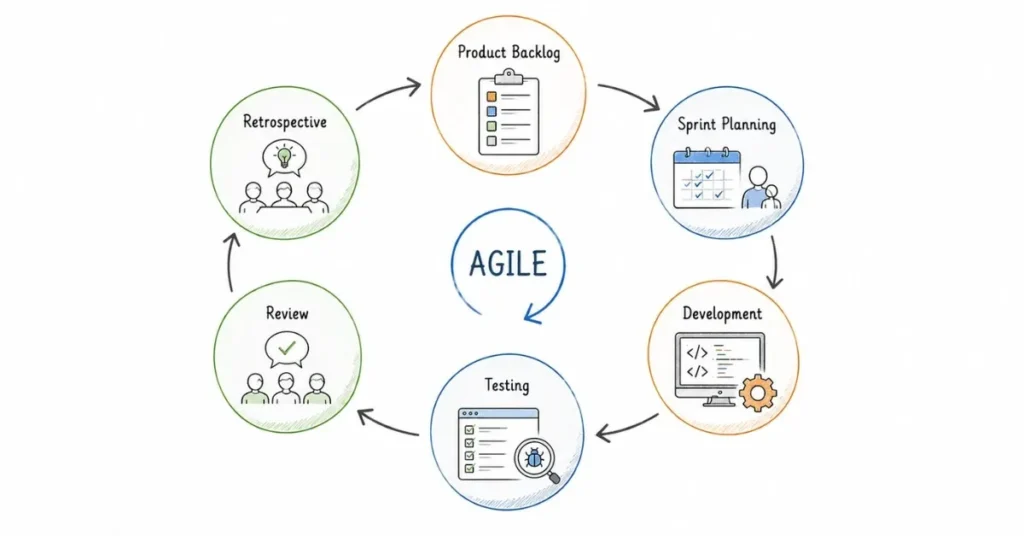
Agile Methodology:
Most e-commerce projects use Agile because it allows flexibility and fast iterations.
Core principles:
- Work in short cycles (sprints) of 1-2 weeks
- Deliver working features frequently
- Welcome changing requirements (unlike traditional waterfall where changes are discouraged)
- Close collaboration between business and tech teams
- Self-organizing teams
How it works:
- Sprint planning: Decide what to build in next 2 weeks
- Daily standups: 15-minute sync every morning
- Sprint review: Demo completed features to stakeholders
- Sprint retrospective: Team discusses what went well, what didn’t, how to improve
Scrum Framework:
A specific implementation of Agile, very popular in Indian e-commerce companies.
Key roles:
- Product Owner: Represents business, prioritizes features (often category manager or product manager)
- Scrum Master: Facilitates the process, removes blockers (this might be you, or separate role)
- Development Team: Developers, designers, QA engineers who build the product
Key ceremonies:
- Sprint planning, daily standups, sprint review, retrospective
Scrum artifacts:
- Product Backlog: List of all features/tasks needed
- Sprint Backlog: Subset of product backlog selected for current sprint
- Increment: Working product at end of sprint
Kanban:
Another Agile approach, simpler than Scrum.
How it works:
- Visual board with columns: To Do, In Progress, In Review, Done
- Tasks move through columns
- Limit work-in-progress (WIP) don’t start new task until current task is done
- Continuous flow rather than fixed sprints
When to use what:
Scrum: Complex projects with clear goals, team experienced with Agile
Kanban: Support/maintenance work, continuous delivery, teams new to Agile
Hybrid: Many teams use Scrum + Kanban elements (common in Indian startups)
Essential Skills for Retail Technology PM
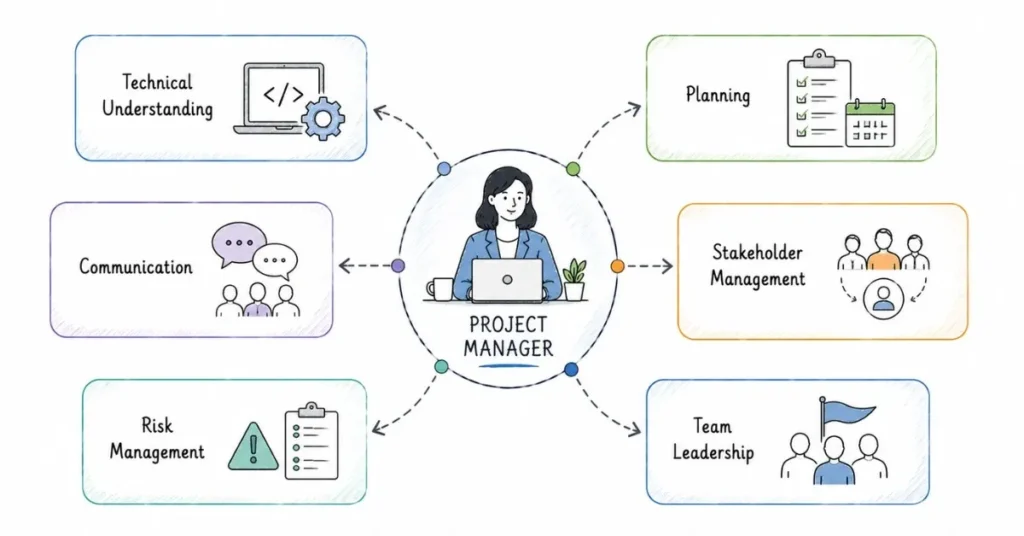
Technical understanding (You don't code, but you understand tech):
Website/app architecture basics:
- Frontend, backend, database what are these?
- API what is it, why does integration take time?
- Cloud vs. on-premise hosting
- Mobile (iOS vs Android differences)
Why this matters: When developer says “This needs 3 days because we need to refactor the backend API,” you understand what that means and can explain to non-technical stakeholders.
E-commerce platform knowledge:
- Understanding Shopify, WooCommerce, Magento capabilities
- What’s possible out-of-box vs. needs custom development
- Plugin/app ecosystem
Integration understanding:
- Payment gateways, logistics APIs, CRM systems
- Why integrations are complex (different data formats, authentication, error handling)
Don’t worry: You learn most of this on the job. Initial 20-30% understanding is enough to start.
Project management skills:
Planning:
- Breaking large projects into smaller tasks (Work Breakdown Structure)
- Estimating time and effort for tasks
- Creating realistic project timelines
- Resource allocation
Tracking and monitoring:
- Using PM tools (Jira, Asana, Trello, Monday.com)
- Tracking progress against plan
- Identifying delays early
- Managing dependencies (Task B can’t start until Task A is done)
Risk management:
- Identifying potential risks early (“Key developer might leave,” “Vendor might delay”)
- Creating mitigation plans
- Monitoring risks throughout project
Budget management:
- Tracking project costs
- Staying within budget
- Making trade-off decisions (we can have feature X or Y, not both with current budget)
Communication skills:
Upward communication (to leadership):
- Presenting project status clearly
- Highlighting risks without causing panic
- Asking for resources/budget when needed
- Managing expectations
Downward communication (to team):
- Clear task assignment
- Providing context (why we’re building this)
- Motivating during tough times
- Giving feedback
Horizontal communication (with other teams):
- Coordinating with marketing, operations, business teams
- Negotiating priorities
- Managing conflicts
Stakeholder management:
Understanding different stakeholder needs:
- CEO cares about: ROI, timelines, competitive advantage
- CTO cares about: Technical quality, maintainability, security
- Marketing cares about: Features that drive sales, quick launches
- Finance cares about: Budget, cost-benefit analysis
Your job: Balancing these sometimes conflicting needs.
Problem-solving & decision-making:
E-commerce projects are full of unexpected issues:
- Developer unexpectedly quits
- Technology doesn’t work as expected
- Requirements change mid-project
- External vendor delays
- Budget cuts
Your ability to quickly analyze, decide, and act determines project success.
People & team management:
Motivating teams:
- Recognizing good work
- Keeping morale high during stressful periods (launch deadlines)
- Resolving conflicts
- Building team cohesion
Managing diverse teams:
- Developers think differently from marketers
- Remote team members vs. office team
- Vendor teams vs. internal teams
- Bridging communication gaps
Tools You'll Use Daily
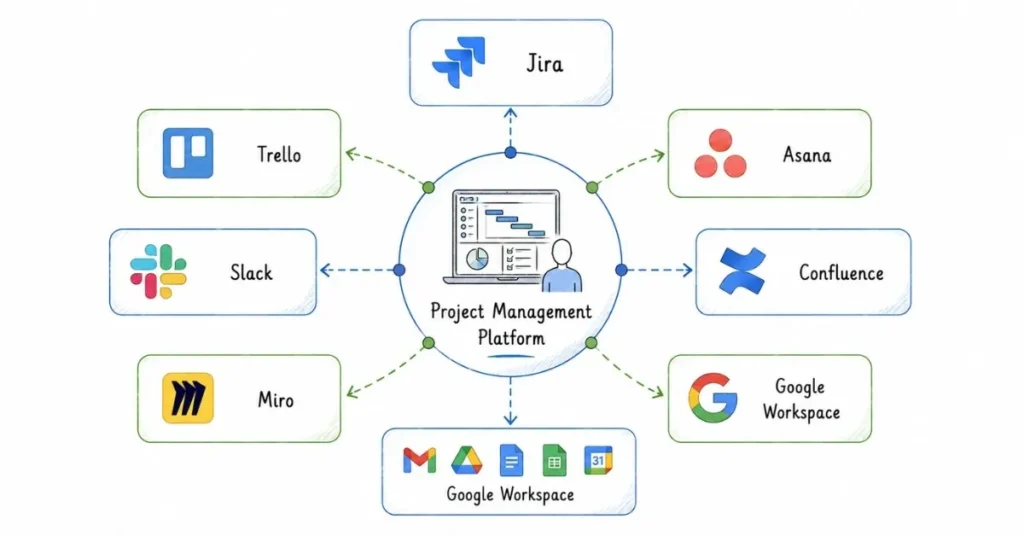
Project Management Tools:
Jira (Most popular in Indian tech companies):
- Issue tracking, sprint planning, agile boards
- Used by 70% of tech companies in India
- Free tier available for learning
Asana:
- Task management, project timelines
- User-friendly interface
- Good for smaller teams
Trello:
- Kanban-style boards
- Very visual, simple
- Good for smaller projects
Monday.com:
- Flexible, customizable
- Growing popularity in India
Communication Tools:
Slack: Team communication, channel-based messaging
Microsoft Teams: Similar to Slack, popular in enterprises
Zoom/Google Meet: Video calls
Email: Still important for formal communication
Documentation Tools:
Confluence: Documentation wiki (often used alongside Jira)
Google Docs/Sheets: Documentation, planning, tracking
Notion: All-in-one workspace (gaining popularity)
Diagram/Planning Tools:
Miro: Collaborative whiteboarding
Lucidchart: Flowcharts, diagrams
Microsoft Project: Traditional project planning (less common in Agile environments)
My recommendation for learning: Start with Trello (simplest), then learn Jira (most in-demand skill).
Indian Retail Technology: Unique PM Challenges
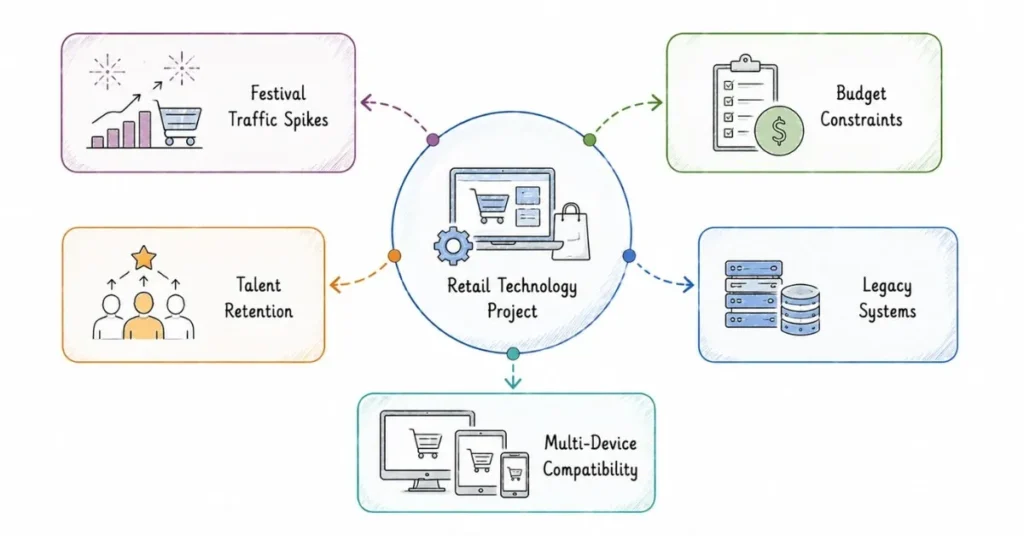
Challenge 1: Festival season crunch
Unlike Western markets with gradual sales throughout year, India has massive festival spikes:
- Diwali: 3-5x normal traffic
- Big Billion Day, Great Indian Festival: Platform needs to handle 10x load
As PM: Your projects must consider these timelines. Code freeze 2 weeks before major sale (no new deployments to avoid breaking things during crucial period).
Challenge 2: Diverse technology landscape
Indian e-commerce companies use diverse tech:
- Mix of modern frameworks and legacy systems
- Multiple vendors and SaaS tools integrated
- Often built rapidly with technical debt
As PM: Managing complexity, coordinating between multiple systems.
Challenge 3: Cost consciousness
Indian companies (except well-funded unicorns) are cost-conscious. Unlike Silicon Valley where “move fast, spend money” is norm, here it’s “deliver with limited resources.”
As PM: Balancing feature quality with budget constraints, making trade-offs.
Challenge 4: Talent retention
Tech talent in India switches jobs frequently (average tenure 2-3 years). Mid-project team changes are common.
As PM: Documentation becomes crucial, knowledge transfer processes, building resilient teams.
Challenge 5: Regional considerations
India isn’t one market:
- Apps need to work on cheap Android phones
- Apps need to work on slow 3G internet
- Multi-language requirements
- Different payment preferences across regions
As PM: Ensuring requirements capture this diversity, testing covers these scenarios.
Certifications for Retail Technology PM
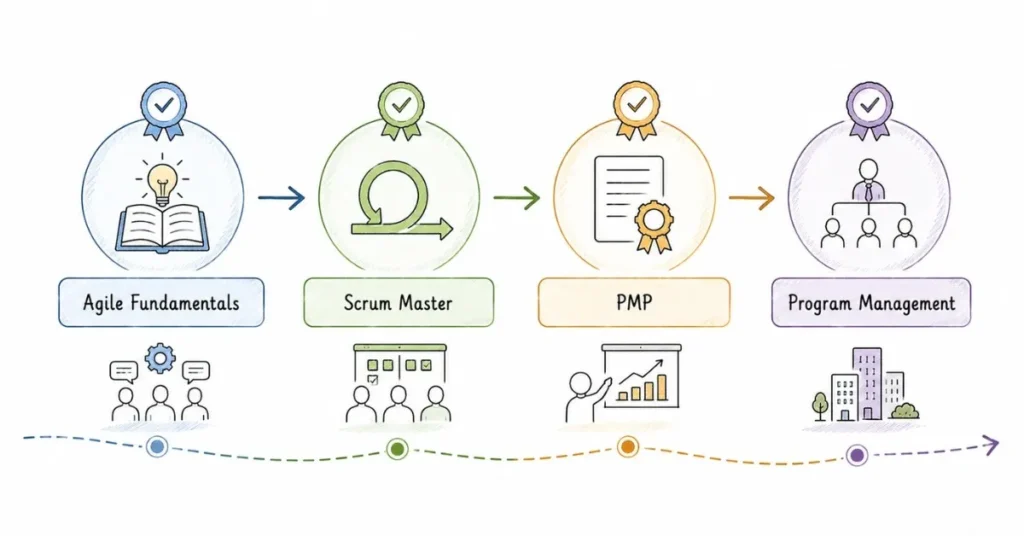
Entry-Level Certifications:
Certified Scrum Master (CSM):
- Most recognized Agile certification
- 2-day training + exam
- Cost: ₹25,000-40,000
- Worth it? Yes, if you’re serious about Agile PM career
Certified Associate in Project Management (CAPM) by PMI:
- Entry-level PM certification
- Good for people with no PM experience
- Cost: ₹10,000-15,000 (exam fee)
- Worth it? Decent, but Agile certifications more relevant for e-commerce
Professional Certifications:
Project Management Professional (PMP) by PMI:
- Gold standard in project management
- Requires 3 years PM experience
- Cost: ₹20,000-25,000 (exam fee)
- Worth it? Yes, for senior PM roles and consulting
Certified Scrum Product Owner (CSPO):
- Complements CSM, focuses on product ownership side
- Useful if you want to move toward product management
- Cost: ₹30,000-45,000
SAFe Certifications:
- For large enterprise Agile implementations
- Less relevant for startups/mid-size companies
- Worth it only if targeting large enterprises
My honest take on certifications:
For getting first PM job: Portfolio of projects (even personal/college projects managed well) matters more than certification.
For advancing career: CSM and PMP add credibility, help with salary negotiations.
Don’t need immediately: You can learn on job, get certified later when company sponsors it.
Salary Expectations
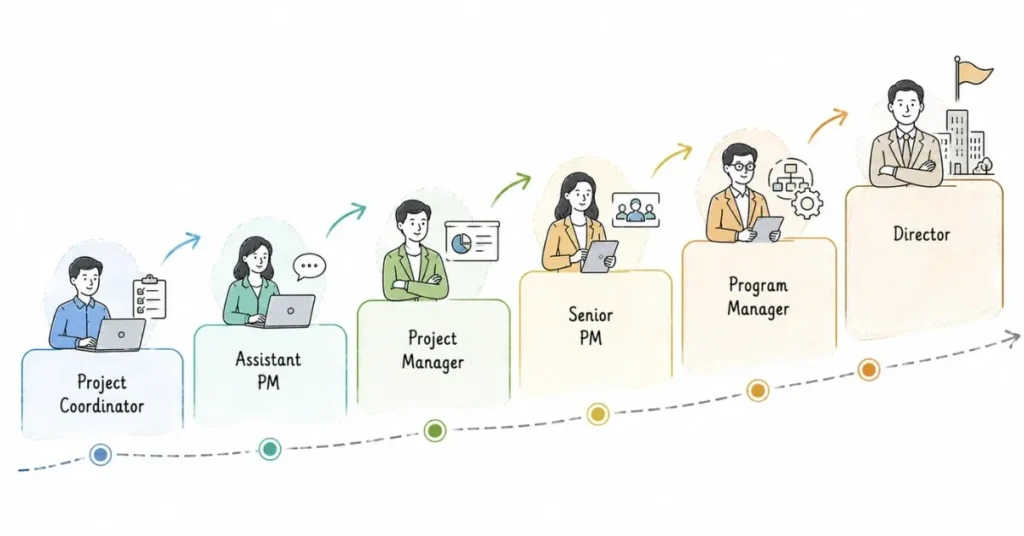
Entry Level – Project Coordinator (0-2 years): ₹4-7 LPA
- Supporting senior PMs
- Learning tools and processes
- Managing smaller tasks/projects
Mid Level – Project Manager (3-5 years): ₹9-18 LPA
- Managing complete projects independently
- Team of 5-15 people typically
- Multiple small projects or one large project
Senior – Senior PM/Delivery Manager (6-9 years): ₹18-32 LPA
- Managing multiple projects/programs
- Leading other PMs
- Strategic planning involvement
Leadership – Program Manager/Director (10+ years): ₹32-60 LPA
- Managing portfolio of projects
- Setting PM practices for organization
- High-level stakeholder management
Industry variations:
- Startups: Lower cash, possible equity
- Established e-commerce (Flipkart, Amazon): Competitive salaries
- Consulting firms: Higher salaries for experienced PMs
Freelance/Contract PM: ₹80,000-3 lakhs per month (for experienced PMs)
Career Path in Retail Technology PM
Entry points:
Path 1: From development/QA:
Many PMs started as developers or QA engineers, moved to PM role. Advantage: Deep technical understanding.
Path 2: From business analyst:
Understanding requirements, working with stakeholders prepares you for PM.
Path 3: MBA to PM:
Many MBAs join as management trainees, move into PM roles.
Path 4: From domain roles:
E-commerce manager, operations manager transitioning to technology PM roles. Advantage: Deep domain knowledge
Growth trajectory:
Years 0-2: Project Coordinator → Assistant PM
Learning tools, processes, supporting senior PMs
Years 3-5: Project Manager
Managing projects independently
Years 6-9: Senior PM / Delivery Manager
Managing complex projects, mentoring junior PMs
Years 10+: Multiple paths:
- Program Manager: Managing multiple projects as a program
- Head of PMO: Building and leading project management function
- Product Manager: Pivoting to product management (related field)
- Consulting: Becoming independent PM consultant or joining consulting firms
- CTO/VP Engineering: Some PMs move to pure tech leadership
Real Success Stories
Priya's journey:
- Background: B.Tech Computer Science, worked as developer for 2 years (₹5 LPA)
- Realized she enjoyed coordination more than coding
- Moved to PM role internally (₹7 LPA)
- Got Scrum Master certification
- Year 5: Senior PM at unicorn startup (₹16 LPA)
- Year 8: Program Manager (₹28 LPA)
- Her advantage: Technical background made her highly effective PM
Arun's transition:
- Background: MBA, started as Business Analyst in e-commerce company (₹6 LPA)
- Worked closely with tech team on multiple projects
- Transitioned to Project Manager role (₹9 LPA)
- Got PMP certification
- Year 6: Delivery Manager managing 3 PMs (₹21 LPA)
- His advantage: Strong stakeholder management and business understanding
Is Project Management Right for You?
You’ll thrive if:
- You enjoy organizing chaos
- You’re comfortable with ambiguity
- You like working with diverse people
- You don’t need to be in spotlight (PMs enable others, don’t always get direct credit)
- You’re resilient under pressure
- You enjoy problem-solving
You might struggle if:
- You prefer deep specialized work over breadth
- You dislike meetings (PMs spend 50% time in meetings)
- You need complete control (you influence but don’t have authority over all team members)
- You dislike documentation and tracking
Your Starting Point: 90-Day Action Plan
Month 1: Learn fundamentals
- Read “Scrum: The Art of Doing Twice the Work in Half the Time” by Jeff Sutherland
- Take free Agile course on Coursera or edX
- Install Trello, create personal kanban board for your tasks
- Follow Agile/PM content creators on LinkedIn
Month 2: Hands-on practice
- Volunteer to coordinate a project (college project, community initiative, anything)
- Practice using PM tools
- Join PM communities on Reddit, LinkedIn
- Start documenting your learnings
Month 3: Build credentials
- Consider CSM or similar certification if budget allows
- Create portfolio showcasing any projects you’ve coordinated (even small ones)
- Update resume highlighting coordination, organization, communication skills
- Start applying for entry-level PM roles
Common Interview Questions
Scenario-based:
- “Developer says feature needs 5 days, stakeholder needs it in 2 days. What do you do?”
- “Two weeks before launch, major bug found that needs 1 week to fix. How do you handle?”
- “Team member consistently misses deadlines. How do you address?”
Methodology questions:
- “Explain Agile vs Waterfall”
- “What is a sprint retrospective and why is it important?”
- “How do you handle scope creep?”
Technical understanding:
- “What is an API and why do integrations take time?”
- “Explain difference between frontend and backend development”
Preparation tip: Think of real situations (work, college, personal projects) where you demonstrated PM skills. Use STAR method (Situation, Task, Action, Result) to structure answers.
Final Thoughts
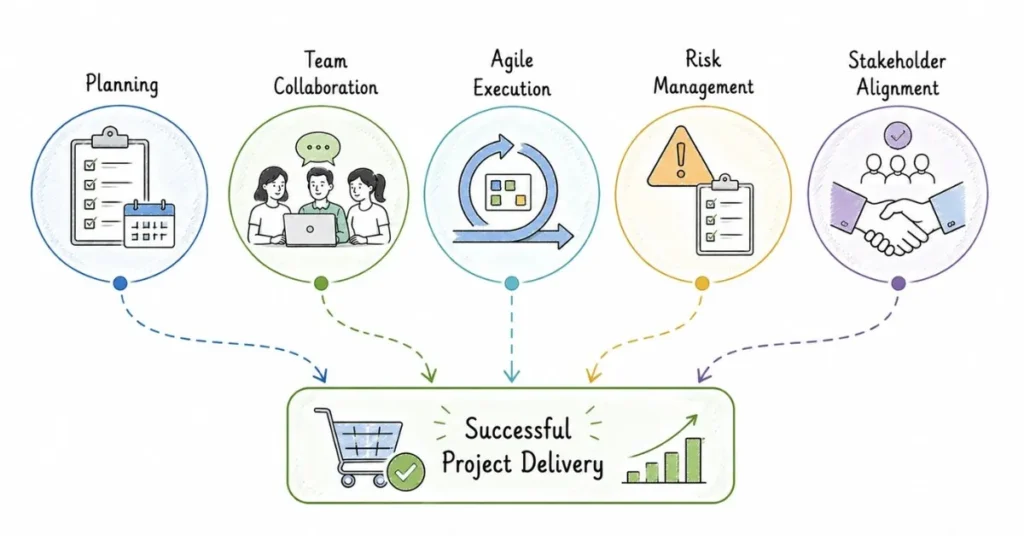
Project Management in retail technology is challenging, sometimes stressful, but incredibly rewarding. You’re the person making things happen, turning ideas into reality, enabling teams to do their best work.
It’s perfect for people who love variety (no two days are same), enjoy people more than code, and get satisfaction from delivering projects successfully.
The demand is high. Every e-commerce company, every retail tech startup, every digital transformation initiative needs good PMs. The career growth is clear, salaries are competitive, and skills are transferable across industries.
Your PM career starts with one simple act: Taking responsibility for getting something done, coordinating people, and delivering results.
Start small. Coordinate a project in your current job or college. Document how you did it. Apply for your first PM role.
Welcome to project management where you’re the conductor creating harmony from chaos.