
Self-Introduction Guide - Master Interview Introductions
Table of Contents
Introduction
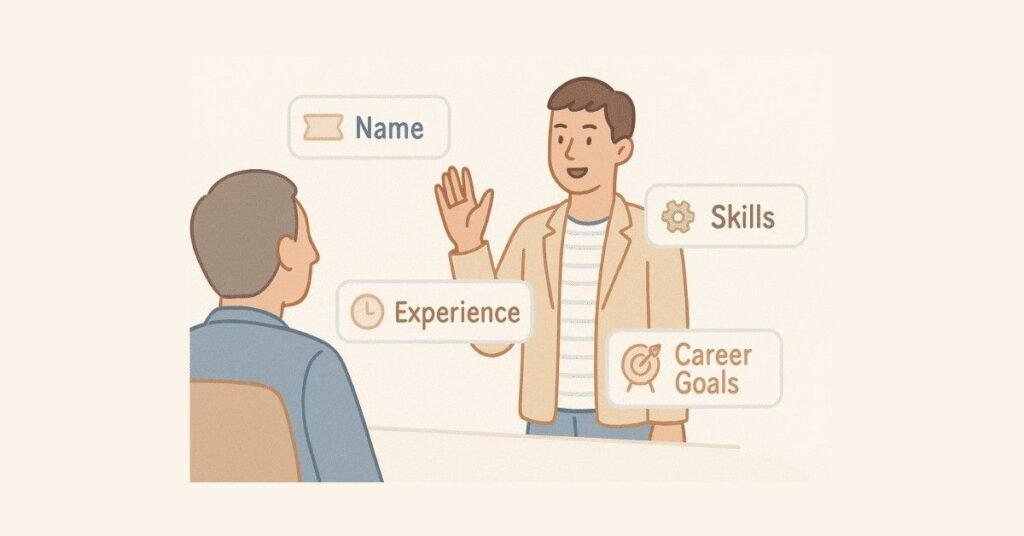
A powerful self-introduction is your gateway to interview success. Within the first 30-60 seconds of meeting an interviewer, you create an impression that can make or break your chances of landing the job. This comprehensive guide will transform you from nervous candidate to confident communicator, equipping you with proven frameworks, real-world examples, and actionable strategies to nail every self-introduction scenario.
Why Your Self-Introduction Matters More Than Ever
Your self-introduction serves multiple critical functions in the modern hiring landscape. First, it establishes your professional credibility and sets the tone for the entire interview conversation. Second, it demonstrates your communication skills in real-time, showing employers how you’ll represent their company to clients and stakeholders. Third, with AI-driven hiring tools analyzing interview responses for keyword relevance and clarity, a well-structured introduction increases your chances of advancing through automated screening processes.
Research shows that interviewers form initial judgments within seconds of meeting candidates, and these first impressions significantly influence hiring decisions. Your introduction is your opportunity to control the narrative, highlight your unique value proposition, and differentiate yourself from other qualified candidates competing for the same role.
The Anatomy of a Winning Self-Introduction
Essential Components Every Introduction Must Include
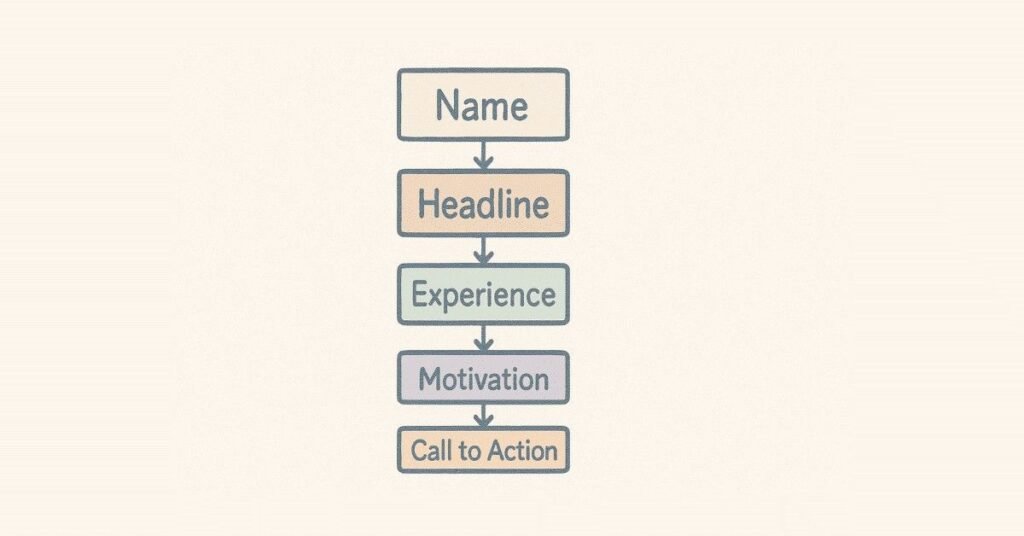
A compelling self-introduction follows a clear structure that addresses key questions interviewers have about you. Your introduction should include:
Name and greeting: Start with a warm, confident greeting followed by your full name to establish rapport and professionalism. This simple opening sets a positive tone and helps interviewers remember you throughout the hiring process.
Professional headline: Provide a concise statement that captures your current role, field of expertise, or professional identity in 5-10 seconds. This acts as your personal brand statement and immediately communicates your professional value.
Experience summary: Share your years of experience and key areas of specialization relevant to the position. For experienced professionals, focus on career progression and major accomplishments; for recent graduates, emphasize education, internships, and relevant projects.youtube
Key skills and achievements: Highlight 2-3 core competencies that directly align with the job requirements, using specific examples when possible. This demonstrates your understanding of the role and proves you have the capabilities needed to succeed.
Motivation and passion: Express genuine enthusiasm for the opportunity and explain why this role aligns with your career goals. This shows interviewers you’re not just qualified but genuinely invested in contributing to their organization.
Call to action: End with a forward-looking statement or question that invites further conversation and demonstrates your engagement. This creates a natural transition to the rest of the interview.
The 30-Second Elevator Pitch Formula

An elevator pitch is a condensed version of your self-introduction, typically lasting 30 seconds or approximately 75 words. This format is essential for networking events, chance encounters with hiring managers, and opening moments of formal interviews. The structure follows four key questions: Who are you? What do you do? What do you want? What’s the next step?
To craft your 30-second pitch, start by writing down all relevant information about your background, then ruthlessly edit to include only the essentials that align with your target audience’s needs. Practice timing yourself to ensure you stay within the 30-second window while maintaining a natural, conversational pace.
Example for a Project Manager: “Hi, I’m Jamie Lee, a project manager with five years of experience in tech startups. I’ve led teams to deliver products on time and under budget, and I’m passionate about streamlining processes. I’d love to bring my skills to your company—could we set up a quick chat next week?
This pitch is concise, highlights measurable value, and ends with a clear call to action that makes it easy for the listener to respond.
The STAR Framework for Self-Introductions
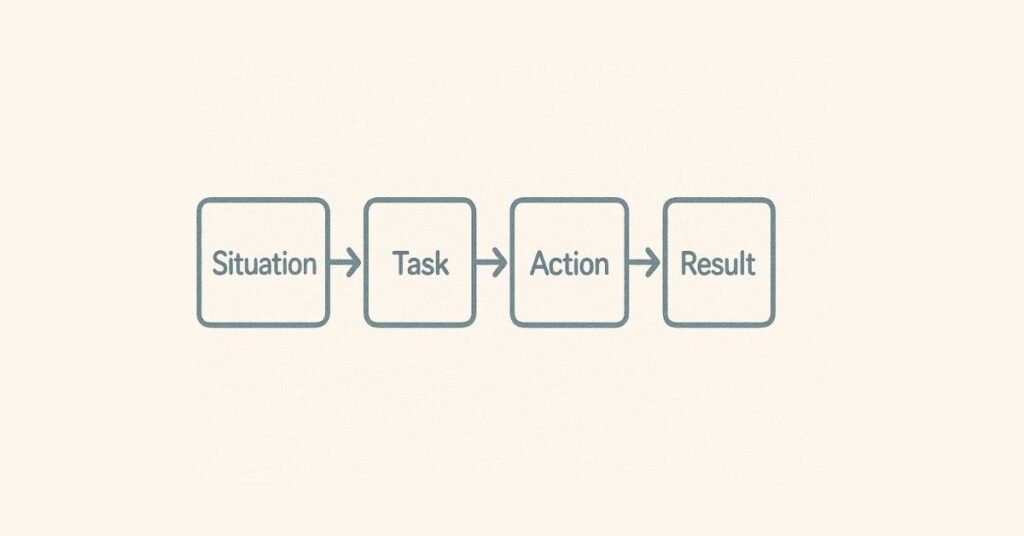
While traditionally used for answering behavioral interview questions, the STAR method (Situation, Task, Action, Result) can be adapted to create powerful self-introductions that tell your professional story. This approach is particularly effective for experienced candidates who want to showcase specific achievements.
Situation: Briefly describe your professional context or background. “I’m a marketing professional with seven years of experience in the SaaS industry.”
Task: Explain your key responsibilities or challenges you’ve faced. “I specialize in developing go-to-market strategies for B2B software products.”
Action: Highlight the specific actions you’ve taken or skills you’ve developed. “I’ve led cross-functional teams to launch five successful product campaigns.”
Result: Share measurable outcomes that demonstrate your impact. “These campaigns generated over $3 million in new revenue and increased customer acquisition by 45%.”
This framework naturally positions you as a results-oriented professional who understands business impact.
Tailoring Your Introduction for Different Interview Types

For Phone and Virtual Interviews
Virtual interviews require specific adaptations to your self-introduction. Since you’re communicating through a camera, maintain eye contact by looking directly at the camera lens rather than at the screen. Ensure your audio is clear by speaking slightly slower than you would in person and enunciating carefully.
Begin by acknowledging the virtual format with a friendly opener: “Good morning! It’s great to connect with you today, even if it’s through a screen.” This shows you’re comfortable with remote communication, an increasingly valuable skill in 2025’s hybrid work environment.
Test your technology beforehand and have a backup plan ready. Position yourself in a well-lit space with a professional, uncluttered background that won’t distract from your message.
For Panel Interviews
When introducing yourself to multiple interviewers simultaneously, make eye contact with each panel member as you speak, distributing your attention evenly. Begin by thanking the entire group for their time: “Thank you all for taking the time to meet with me today.”
Structure your introduction to address the diverse interests likely represented on the panel. A hiring manager may care most about your leadership abilities, while a technical team member wants to hear about your specific skills. Craft an introduction broad enough to resonate with everyone: “I’m excited to discuss how my combination of technical expertise and project management experience can contribute to your team’s success.
For Behavioral Interviews
Behavioral interviews focus on past experiences as predictors of future performance. Your introduction should emphasize your track record of solving problems and delivering results. Use concrete examples and quantifiable achievements: “I’m a sales professional who has consistently exceeded quotas by at least 20% for the past three years by building strong client relationships and identifying upsell opportunities.”
This approach immediately demonstrates you understand the behavioral interview format and can provide the specific evidence interviewers are seeking.
Common Mistakes to Avoid

Mistake #1: Making It Too Long
One of the most common errors is delivering an introduction that resembles a complete career history rather than a focused summary. Interviewers don’t need to know about every job you’ve held or every skill you’ve acquired. Respect their time by keeping your introduction to 60-90 seconds maximum.
How to fix it: Write out your introduction, time yourself delivering it, and ruthlessly edit anything that doesn’t directly support your candidacy for this specific role. Practice until you can deliver it naturally within the time limit.
Mistake #2: Being Too Generic
Saying “I’m a hard worker who’s passionate about my field” tells the interviewer nothing distinctive about you. Generic statements fail to differentiate you from other candidates and suggest you haven’t prepared thoughtfully for the interview.
How to fix it: Replace generic qualities with specific examples. Instead of “I’m detail-oriented,” say “I implemented a quality control system that reduced errors by 30%”. Specificity makes your claims credible and memorable.
Mistake #3: Failing to Connect to the Company
An introduction that could apply to any company in your industry misses a crucial opportunity to demonstrate genuine interest. Interviewers want to know why you’re excited about working for their specific organization
How to fix it: Research the company’s values, recent achievements, and challenges. Incorporate this knowledge into your introduction: “I’ve been following your company’s expansion into sustainable manufacturing, and I’m excited about the opportunity to contribute my supply chain expertise to these initiatives”.

Mistake #4: Neglecting Body Language
Your nonverbal communication is as important as your words. Avoiding eye contact, slouching, or fidgeting can undermine even the most well-crafted introduction.
How to fix it: Practice your introduction in front of a mirror or record yourself on video. Maintain good posture, make consistent eye contact, smile genuinely, and use natural hand gestures to emphasize key points. Your body language should convey confidence and enthusiasm.
Mistake #5: Speaking Too Fast
Nervousness often causes candidates to rush through their introduction, making it difficult for interviewers to process the information.
How to fix it: Consciously slow down your speaking pace. Pause briefly between key points to allow interviewers to absorb what you’re saying. Remember that silence is not your enemy—strategic pauses actually make you appear more thoughtful and confident.
Real-World Examples for Different Experience Levels

Fresh Graduate Self-Introduction Examples
As a recent graduate, your introduction should emphasize education, academic achievements, internships, projects, and transferable skills that demonstrate your readiness for professional work.
Example 1: Computer Science Graduate (30-Second Version)
“Hello, I’m Priya Sharma. I recently graduated with a B.Tech in Computer Science from XYZ University. During college, I focused on building full-stack web apps using React and Node.js. For my final project, I led a team that built a campus event platform which handled over 2,000 users and reduced event coordination time by 40%. I interned at a startup where I worked on API optimization, which improved response time by 25%. I’m excited about this role because your company values rapid iteration and scalable systems, which is where I want to grow.
Example 2: Business Graduate (60-Second Version)
“Good morning, I’m Ahmed Khan. I graduated with a Bachelor’s in Business Administration from ABC College with a CGPA of 8.7. During my final year, I served as the president of our college’s entrepreneurship club, where I organized a startup competition that attracted 150 participants and generated partnerships with three local incubators. I completed a six-month marketing internship at a digital agency where I helped run social campaigns that increased engagement by 30%. I also developed strong analytical skills through coursework in data analytics and market research. I’m particularly drawn to your company’s focus on community-driven marketing and would love to bring my analytics-first approach to your team.
Example 3: Engineering Graduate with Limited Experience
“Hello, I’m Rajesh Kumar, a recent mechanical engineering graduate from DEF Institute of Technology. While I don’t have extensive professional experience yet, I’ve invested significant time in hands-on projects. My capstone project involved designing an energy-efficient cooling system that reduced power consumption by 18% compared to conventional models. I’m proficient in AutoCAD, SolidWorks, and MATLAB. I’m eager to apply my technical foundation and problem-solving abilities to real-world engineering challenges at your organization.
Key Tip for Freshers: When you lack professional experience, compensate by highlighting academic projects with measurable outcomes, leadership roles in college activities, relevant coursework, technical skills, and genuine enthusiasm for the industry.
Mid-Career Professional Self-Introduction Examples

Mid-career professionals should focus on career progression, specialized expertise, and significant accomplishments that demonstrate growing responsibility.
Example 1: Marketing Manager (5-7 Years Experience)
“Good afternoon, I’m Sarah Chen, a digital marketing manager with seven years of experience in the SaaS industry. I currently lead a team of six marketing specialists at TechCorp, where I’ve developed and executed go-to-market strategies for three successful product launches. Most recently, I spearheaded a multi-channel campaign that generated $3 million in new revenue and increased customer acquisition by 45% year-over-year. I specialize in data-driven marketing strategies, marketing automation, and team leadership. I’m excited about the opportunity to bring my expertise in B2B marketing to your company, especially given your expansion into new international markets.
Example 2: Software Developer (4 Years Experience)
“Hi, I’m Michael Torres. I’m a full-stack developer with four years of experience building scalable web applications. At my current company, I’ve worked primarily with Python, Django, and React, developing features used by over 500,000 active users. One of my proudest achievements was architecting a microservices migration that reduced system downtime by 60% and improved API response times by 35%. I’m particularly interested in your company’s focus on cloud-native applications and would welcome the opportunity to contribute to your platform modernization initiatives.
Example 3: HR Professional (6 Years Experience)
“Hello, I’m Jennifer Williams, an HR business partner with six years of experience in talent management and organizational development. I’ve worked primarily in the technology sector, supporting teams ranging from 50 to 300 employees. At my current organization, I redesigned our onboarding program, which increased new hire retention by 28% and reduced time-to-productivity by three weeks. I also led diversity and inclusion initiatives that improved our representation of underrepresented groups by 35%. I’m drawn to your company’s commitment to building inclusive workplace cultures and would love to contribute my experience in strategic HR initiatives.
Key Tip for Mid-Career Professionals: Demonstrate career progression by showing increasing responsibility, team leadership, and business impact with specific metrics and outcomes.
Senior Professional and Leadership Self-Introduction Examples

Senior professionals should emphasize strategic thinking, leadership accomplishments, industry expertise, and organizational impact.
Example 1: Senior Operations Manager
“Good morning, I’m David Patterson, a senior operations manager with 12 years of experience optimizing supply chain and manufacturing processes in the automotive industry. Throughout my career, I’ve led cross-functional teams of up to 80 people and managed budgets exceeding $15 million. At my current organization, I implemented a lean manufacturing initiative that reduced production costs by 22% while improving quality metrics by 18%. I also spearheaded our digital transformation project, integrating IoT sensors and predictive analytics that decreased equipment downtime by 40%. I’m particularly interested in your company’s commitment to sustainable manufacturing and believe my experience in process optimization and strategic planning would be valuable as you scale your operations.
Example 2: Director of Product Management
“Hello, I’m Lisa Anderson, a director of product management with 15 years of experience leading product strategy for B2B enterprise software companies. I’ve successfully brought eight products to market, collectively generating over $50 million in annual recurring revenue. My approach combines deep customer insight with data-driven decision-making and cross-functional collaboration. At my current company, I built and now lead a product team of 15 people, and I’ve established processes for continuous discovery and agile delivery that have reduced our time-to-market by 35%. I’m excited about the opportunity to bring my strategic vision and leadership experience to your organization as you expand into new market segments.
Key Tip for Senior Professionals: Focus on strategic contributions, leadership philosophy, and measurable business outcomes rather than technical tasks or day-to-day responsibilities.
Industry-Specific Introduction Templates
Technology and Software Development
“Hi, I’m [Name], a [specific role] with [X] years of experience in [technology stack/domain]. I specialize in [2-3 core technical competencies]. At [current/previous company], I [specific achievement with metrics related to performance, scalability, or user impact]. I’m particularly skilled in [relevant technologies for this role] and excited about [specific aspect of the company’s technical challenges or products].”
Healthcare and Medical Fields
“Good morning, I’m [Name], a [certification/role] with [X] years of experience in [specific healthcare setting]. My background includes [relevant specializations or patient populations]. I’m passionate about [aspect of patient care or healthcare delivery], and at [current/previous organization], I [achievement related to patient outcomes, efficiency, or quality of care]. I’m drawn to your organization’s commitment to [specific value or initiative] and would welcome the opportunity to contribute my expertise.”
Finance and Accounting
“Hello, I’m [Name], a [specific role/certification] with [X] years of experience in [finance domain]. I specialize in [specific areas like financial analysis, auditing, risk management]. At [current company], I [achievement with financial metrics or process improvements]. I’m proficient in [relevant tools and methodologies] and am particularly interested in your company’s [specific financial initiative or growth opportunity].”
Sales and Business Development
“Hi, I’m [Name], a [sales role] with [X] years of experience in [industry or product type]. I’ve consistently [achievement related to quota attainment, revenue growth, or client acquisition] by [approach or methodology]. My track record includes [specific numbers: deals closed, revenue generated, territory expansion]. I’m excited about [company’s product/market] and believe my experience in [relevant area] aligns perfectly with your growth objectives.”
Education and Training
“Good morning, I’m [Name], an educator with [X] years of experience teaching [subject/grade level]. I’m passionate about [teaching philosophy or educational approach]. At [current institution], I [achievement related to student outcomes, curriculum development, or program implementation]. I hold [relevant certifications] and am committed to [aspect of educational excellence]. I’m drawn to your institution’s focus on [specific educational value or methodology].”
Special Scenarios: Handling Challenging Situations
Career Transition Self-Introduction
When changing careers, your introduction should acknowledge your transition while emphasizing transferable skills and genuine motivation for the new field.
Example: Journalist to Public Relations
“Hi, I’m Alex Morrison. I’ve spent the past five years as a business journalist covering the technology sector for TechNews Daily. Throughout my career, I’ve worked closely with PR professionals and communications teams, which sparked my interest in moving to the other side of the pitch. My journalism background has given me deep insight into what makes compelling stories, how to craft messages that resonate with different audiences, and how to build relationships with media contacts. I’ve also developed strong writing skills and the ability to work under tight deadlines. I’m excited about transitioning into corporate communications where I can apply these skills to help companies tell their stories effectively.
Key Strategy: Lead with your transferable skills, explain the logical connection between your previous career and your new direction, and demonstrate genuine interest backed by specific reasons.
Explaining Employment Gaps
Address employment gaps honestly but briefly, focus on what you did during the gap to stay professionally relevant, then redirect to your qualifications for the current opportunity.
Example 1: Family Caretaking
“I’m Maria Garcia, a project manager with eight years of experience in construction management. Between 2022 and 2024, I took time off to care for an elderly parent. During that period, I maintained my project management certification through continuing education courses and stayed connected with industry developments through professional associations. I also volunteered to manage a community center renovation project, which kept my skills sharp. I’m now ready to return to full-time work and eager to bring my expertise in complex project coordination to your organization.
Example 2: Layoff and Job Search
“I’m Thomas Anderson, a data analyst with six years of experience in retail analytics. My previous employer underwent a restructuring in early 2024 that resulted in my position being eliminated. Since then, I’ve been focused on finding the right opportunity while also upgrading my skills. I completed certifications in Python and machine learning, worked on several freelance analytics projects for small businesses, and contributed to an open-source data visualization project. These experiences have actually strengthened my analytical capabilities, and I’m excited to bring this expanded skillset to your team.
Key Strategy: Be honest and direct about the reason for the gap, emphasize productive activities during that time, demonstrate continued professional engagement, and transition quickly to your qualifications and enthusiasm for the current role.
Explaining Termination or Job Misfit
If you were fired or left a position due to poor fit, acknowledge the situation briefly without placing blame, demonstrate what you learned, and emphasize your readiness to move forward.
Example:
“I’m Robert Chen, a marketing specialist with five years of experience in digital campaigns. My last role wasn’t the right fit—the company and I had different expectations about the position’s scope and approach to marketing strategy. That experience taught me the importance of understanding organizational culture and communication styles upfront. It also helped me clarify what I’m looking for in my next opportunity: a collaborative environment where data-driven marketing and creative experimentation are valued. I’m excited about this position because your company’s approach to integrated marketing aligns perfectly with my strengths and career goals.
Advanced Techniques for Standing Out
The Story Arc Method
Instead of listing facts about your background, structure your introduction as a brief narrative with a beginning, middle, and end that shows career progression and purpose.
Example:
“I’m Samantha Lee. I started my career as a graphic designer because I’ve always been fascinated by how visual communication influences human behavior. Over seven years, I evolved from designing individual marketing materials to leading comprehensive brand strategy projects. This progression taught me that effective design isn’t just about aesthetics—it’s about solving business problems. At my current agency, I led a rebranding project for a struggling retail client that contributed to a 40% increase in customer engagement. Now I’m looking to take the next step by joining a company like yours where brand strategy and user experience are central to the business model.
This approach creates memorability and demonstrates self-awareness about your career trajectory.
The Problem-Solution-Impact Framework
Position yourself as the solution to problems the employer likely faces.
Example:
“I’m Kevin Patel, and I understand that scaling customer support while maintaining quality is a major challenge for fast-growing SaaS companies. I’ve spent the past six years building and optimizing support operations for technology startups. At my current company, I implemented a tiered support system and knowledge base that enabled us to scale from 100 to 5,000 customers while actually improving our customer satisfaction score from 4.2 to 4.7 stars. I accomplished this while reducing average response time by 45%. I’m excited about the opportunity to bring this same systematic approach to optimizing your customer success operations.
This approach immediately demonstrates value and positions you as someone who understands the business context.
The Unique Value Proposition (UVP) Opening
Lead with what makes you distinctively qualified for this specific role.
Example:
“I’m the only cloud architect you’ll interview today who has both enterprise-level experience and startup agility. I spent five years at IBM implementing cloud infrastructure for Fortune 500 clients, then the past three years as the founding cloud architect for a fintech startup that scaled from zero to 2 million users. This combination means I can design robust, secure systems that also move fast and adapt to changing requirements. I’m excited about your company’s position—established enough to require enterprise-grade reliability, but innovative enough to need startup-style agility.
This approach is bold and immediately differentiates you from other candidates with more conventional backgrounds.
Practice Exercises and Self-Assessment Tools
Exercise 1: The 30-60-90 Second Drill
Lead with what makes you distinctively qualified for this specific role.
Example:
“I’m the only cloud architect you’ll interview today who has both enterprise-level experience and startup agility. I spent five years at IBM implementing cloud infrastructure for Fortune 500 clients, then the past three years as the founding cloud architect for a fintech startup that scaled from zero to 2 million users. This combination means I can design robust, secure systems that also move fast and adapt to changing requirements. I’m excited about your company’s position—established enough to require enterprise-grade reliability, but innovative enough to need startup-style agility.
This approach is bold and immediately differentiates you from other candidates with more conventional backgrounds.
Exercise 2: The Role-Specific Customization Exercise
Take your base introduction and create five customized versions for five different companies or roles. This practice forces you to research each organization and identify which aspects of your background are most relevant to each specific opportunity.
Exercise 3: The Question Anticipation Method
After delivering your introduction, list five questions an interviewer might reasonably ask based on what you’ve shared. This helps ensure your introduction sets up productive follow-up conversation rather than raising concerns or confusion.
Exercise 4: The Recording and Review Process
Record yourself delivering your introduction on video, then evaluate your performance across these dimensions:
- Content clarity: Is your message clear and well-structured?
- Appropriate length: Does it stay within time limits?
- Relevance: Does it align with the role requirements?
- Confidence: Do you sound assured without being arrogant?
- Authenticity: Does it sound natural or rehearsed?
- Body language: Are you maintaining good posture and eye contact?
- Vocal quality: Is your pace appropriate and voice energetic?
Review the recording, identify areas for improvement, make adjustments, and record again until you’re satisfied with the result.
Self-Assessment Checklist
Before finalizing your introduction, ensure it meets these criteria:
✓ Opens with a confident greeting and your name
✓ Includes a clear professional headline or current status
✓ Mentions relevant experience or education level
✓ Highlights 2-3 specific achievements with metrics when possible
✓ Demonstrates knowledge of the company or role
✓ Expresses genuine enthusiasm and motivation
✓ Stays within 60-90 seconds when fully delivered
✓ Uses language that’s professional but conversational
✓ Avoids generic statements and clichés
✓ Sets up natural follow-up questions
✓ Ends with forward momentum
The Final 48 Hours: Interview Preparation Strategy

Day Before the Interview
Research Review: Revisit your research about the company, including recent news, company values, and the interviewer’s background if available. Identify 2-3 specific details you can reference in your introduction to demonstrate genuine interest.
Practice Session: Deliver your introduction 3-5 times aloud, ideally to a friend or family member who can provide feedback. Focus on sounding natural rather than memorized.
Prepare Your Environment: If it’s a virtual interview, test your technology, check your background and lighting, and have a backup device ready.
Mental Preparation: Visualize yourself delivering a confident, engaging introduction. Research shows that mental rehearsal improves actual performance.
Day of the Interview
Morning Review: Read through your introduction one final time, but avoid over-practicing immediately before the interview, which can make you sound robotic.
Arrival Strategy: Plan to arrive (or log in) 10-15 minutes early. Use those final minutes for deep breathing exercises to manage nervousness rather than cramming additional practice.
First Moments: When you meet the interviewer, smile genuinely, offer a firm handshake (if in person), and maintain eye contact. These nonverbal cues set a positive tone before you even begin speaking
Common Questions After Your Introduction
Be prepared for these typical follow-up questions that often come after your initial self-introduction:
“Tell me more about [specific achievement you mentioned]”
Have details ready about any accomplishments you reference, including the context, your specific role, challenges faced, and measurable outcomes.
“Why are you interested in leaving your current position?”
Frame your answer positively, focusing on growth opportunities and what attracts you to the new role rather than complaints about your current situation.
“What do you know about our company?”
This tests whether your expressed interest is genuine. Be prepared to discuss the company’s products, values, recent developments, and industry position.
“Where do you see yourself in five years?”
Show ambition while demonstrating commitment to growing within the organization. Connect your answer to the natural career progression from the role you’re interviewing for.
Key Takeaways for Self-Introduction Mastery

Your self-introduction is a strategic tool that sets the foundation for interview success. Master these core principles:
Preparation is essential: Great introductions sound natural because they’re well-prepared, not because they’re improvised
Customization matters: Generic introductions fail to create impact. Tailor your message to each specific opportunity.
Metrics create credibility: Quantifiable achievements are more memorable and believable than general claims.
Authenticity wins: Be genuinely yourself while presenting your professional best. Authenticity builds connection and trust.
Practice creates confidence: The more you practice, the more natural and confident you’ll appear.
Story beats list: Frame your background as a narrative arc rather than a list of facts.
Remember, your introduction is the beginning of a conversation, not a monologue. The goal is to spark interest and create opportunities for deeper discussion about your qualifications and fit for the role.