
Among the most prominent multilateral forums today that frame the world’s current economic, political, and environmental spectrums, G20 Countries is one of them. It is a platform for global economic cooperation across the world, G20 is today a discussion platform for all challenges posed by globalization-including economic instability, climate change, and more.
G20 Countries is an international governmental organization constituted by 19 countries plus the European Union. These countries are said to possess the world’s biggest economies, accounting nearly for 85 percent of the world, 75 percent of the whole international trade and two-thirds of the world population.
Here are the G20 Countries List:
| No. | Country | Capital | Continent |
|---|---|---|---|
| 1 | Argentina | Buenos Aires | South America |
| 2 | Australia | Canberra | Oceania |
| 3 | Brazil | Brasília | South America |
| 4 | Canada | Ottawa | North America |
| 5 | China | Beijing | Asia |
| 6 | France | Paris | Europe |
| 7 | Germany | Berlin | Europe |
| 8 | India | New Delhi | Asia |
| 9 | Indonesia | Jakarta | Asia |
| 10 | Italy | Rome | Europe |
| 11 | Japan | Tokyo | Asia |
| 12 | Mexico | Mexico City | North America |
| 13 | Russia | Moscow | Europe/Asia |
| 14 | Saudi Arabia | Riyadh | Asia |
| 15 | South Africa | Pretoria, Cape Town | Africa |
| 16 | South Korea | Seoul | Asia |
| 17 | Turkey | Ankara | Asia/Europe |
| 18 | United Kingdom | London | Europe |
| 19 | United States | Washington, D.C. | North America |
| 20 | European Union (EU) | Brussels | Europe |
European Union Countries List
| No. | Country | Capital |
|---|---|---|
| 1 | Austria | Vienna |
| 2 | Belgium | Brussels |
| 3 | Bulgaria | Sofia |
| 4 | Croatia | Zagreb |
| 5 | Cyprus | Nicosia |
| 6 | Czech Republic | Prague |
| 7 | Denmark | Copenhagen |
| 8 | Estonia | Tallinn |
| 9 | Finland | Helsinki |
| 10 | France | Paris |
| 11 | Germany | Berlin |
| 12 | Greece | Athens |
| 13 | Hungary | Budapest |
| 14 | Ireland | Dublin |
| 15 | Italy | Rome |
| 16 | Latvia | Riga |
| 17 | Lithuania | Vilnius |
| 18 | Luxembourg | Luxembourg City |
| 19 | Malta | Valletta |
| 20 | Netherlands | Amsterdam |
| 21 | Poland | Warsaw |
| 22 | Portugal | Lisbon |
| 23 | Romania | Bucharest |
| 24 | Slovakia | Bratislava |
| 25 | Slovenia | Ljubljana |
| 26 | Spain | Madrid |
| 27 | Sweden | Stockholm |
BRICS States: Brazil, Russia, India, China and South Africa represents a sub-group where each of them is focusing on the innovation of new markets .
Origin and History of G20 Countries
The G20, therefore was established in 1999 after a financial break out at the end of the 1990’s thus occasioned by the necessity to increase international co-operation & economic stability. The G20 started as a conference of finance ministers and central banks governors. In 2008 immediately after the global financial crisis, however, it transformed into leaders meeting. In this context, growth has made G20 a vehicle that speaks of not only financial stability but other things too.
G7 to G20 Countries
G20 is an extension of G7 which comprises Canada, France, Germany, Italy, Japan, the United Kingdom and the United States. G20 is more representative of the world economy as they bring onboard emerging economies like India, China and Brazil.
The G20: Recasting the Global Economy
The G20 has surprisingly moulded most of the policies around the world on the economic front, especially when things get tough:
Global Financial Crisis of 2008: The G20 provided the world with extremely effective stimulus and reforms in financial regulations which brought stabilization to the global economy.
Agreements on Trade: It framed agreements that would bring an end to protectionist tendencies by spreading free and fair trade.
Debt Relief: It has brought much relief in debt repayment to the developing countries.
Major and Minor Economies
Major Economies: The major economies are the United States, China, the European Union, and India that together constitute most of the vibrant forums of G20 Countries.
Minor Economies: South Africa, Argentina, and Saudi Arabia are developing countries, and all have relatively minor global economic footprints compared with the first five.
Role of India in G20 Countries
In that regard, India settled itself very well as an emergent new economic big power with improved political stature as a very vital member of the G20 .
India Hosted the 2023 G20 Countries Summit
India has hosted the very first G20 Countries presidency in 2023. The issues given were digital public infrastructure, climate action, and inclusive growth under different head themes.
India in G20
India is believed to be the world’s fifth largest economy and contributes toward the gross overall domestic product of the world and trade. New energy leadership, demographic dividend, and technological advancement are some of the factors due to which emphases are given on India.
Indian Initiatives
Digital Public Goods: facilitation of digital inclusion through Aadhaar and UPI.
Green Energy Transition: supportive solutions are integrated with renewable energy-based solutions and already launched activities, for instance, International Solar Alliance.
Global Health: Strengthened Vaccine Supply Chain Infection Response in the COVID-19 Pandemic
Countries Aspiring for Membership in the G20
Some Countries have developed an interest to join G20. the countries that want to become members are
African Union (AU): A collective body of 55 member states of Africa
Bangladesh: One of the fastest growing economy in South Asia
It foreseen opening membership with its effectiveness and scope for even broader regional inclusion.
Major Initiatives of G20 Countries
Climate Action: Commitment to the Paris Deal and Climate Reduction
Sustainable Development Goals SDGs: Support for UN initiatives to eradicate poverty and promote equality.
Global Tax Reform: The Minimum Global Corporate Tax Rate that will finally put an end to tax avoidance
Major Initiatives taken by Member Countries Every Year
| Year | Host Country | Location | Major Initiatives/Resolutions | Leaders | ||
|---|---|---|---|---|---|---|
| 2008 | USA | Washington, D.C. | Addressed the global financial crisis; coordinated fiscal policies to stabilize the economy. | President George W. Bush | ||
| 2009 | UK | London | Focused on financial regulations; pledged $1.1 trillion for global recovery. | Prime Minister Gordon Brown | ||
| 2009 | USA | Pittsburgh | Declared G20 as the premier forum for international economic cooperation. | President Barack Obama | ||
| 2010 | Canada | Toronto | Fiscal consolidation plans; discussed strategies for sustainable growth. | Prime Minister Stephen Harper | ||
| 2010 | South Korea | Seoul | Adopted the Seoul Development Consensus for Shared Growth. | President Lee Myung-bak | ||
| 2011 | France | Cannes | Strengthened financial regulations; addressed the Eurozone debt crisis. | President Nicolas Sarkozy | ||
| 2012 | Mexico | Los Cabos | Focused on job creation, trade growth, and financial stability. | President Felipe Calderón | ||
| 2013 | Russia | St. Petersburg | Tax reforms and global energy sustainability discussed. | President Vladimir Putin | ||
| 2014 | Australia | Brisbane | Committed to boost global GDP by $2 trillion over five years. | Prime Minister Tony Abbott | ||
| 2015 | Turkey | Antalya | Tackled terrorism financing; addressed global refugee crises. | President Recep Tayyip Erdoğan | ||
| 2016 | China | Hangzhou | Advocated for innovation-driven growth and global trade liberalization. | President Xi Jinping | ||
| 2017 | Germany | Hamburg | Climate change agreements; women's empowerment in business. | Chancellor Angela Merkel | ||
| 2018 | Argentina | Buenos Aires | Focused on digital economy, education, and jobs for the future. | President Mauricio Macri | ||
| 2019 | Japan | Osaka | Discussed fair trade practices and data flow governance. | Prime Minister Shinzo Abe | ||
| 2020 | Saudi Arabia | Virtual (Riyadh) | Focused on pandemic response and global economic recovery. | King Salman bin Abdulaziz Al Saud | ||
| 2021 | Italy | Rome | Addressed climate change, vaccination equity, and debt relief for developing nations. | Prime Minister Mario Draghi | ||
| 2022 | Indonesia | Bali | Strengthened pandemic prevention and economic resilience. | President Joko Widodo | ||
| 2023 | India | New Delhi | Digital transformation, inclusive growth, and sustainable development. | Prime Minister Narendra Modi | ||
How G20 Shapes Global Policies and Frameworks
One thing in the G20 Economies is it opens and involves social, political as well as environmental issues. This has resulted in the G20 in uniting the world’s largest economies into finding a way of dealing with the global issues; let’s take a step deeper to explore the differences impact:
Economic Growth and Financial Stability
It focuses on high-class quality balanced economic growth in the world at the same level for short and long term issues that would be discussed simultaneously,
Recovery from the COVID 19 pandemic: Collaborative effort by G 20 countries with each other in International cooperation coordinated recovery plan along with relief, debt forgiveness to poor countries and equal terms vaccine allocation during COVID-19 Pandemic.
Financial and Banking Stream Reforms: Reform in G20 talks about improvement in the security of financial institutions and openness of markets that would avoid another crisis like 2008 global banking.
Trade Facilitation: It has been associated with the challenges in the trades and multilateral agreements that have been making the global economy more inclusive.
Climate
G20 has pushed the signature countries towards reaching the goal that is associated with net-zero carbon footprint.
1.Commitments to Net-Zero Goals
Countries like Japan, Germany, Canada, etc, which have promised to achieve their net-zero by mid-century. India has pursued its agenda for reaching net-zero till 2070 in a seamless balance between the wanted development and sustainability.
2. Green Finance
There are three priorities of the G20. One of them is “investment mobilization in green technology and renewable energy”.
Climate finance agreements provide a starving help to the developing countries on transition to greener economies
3. International Cooperation on Renewable Resources
ISA– The International Solar Alliance from India, is an international cooperation on clean energy
Resources such as solar, wind, and hydropower, have been researched and developed
4. Climate Adaptation and Mitigation
Countries vulnerable to climate change, like island nations, benefit from G20 frameworks that focus on disaster preparedness and adaptation strategies
India’s G20 Presidency: Milestones and Highlights
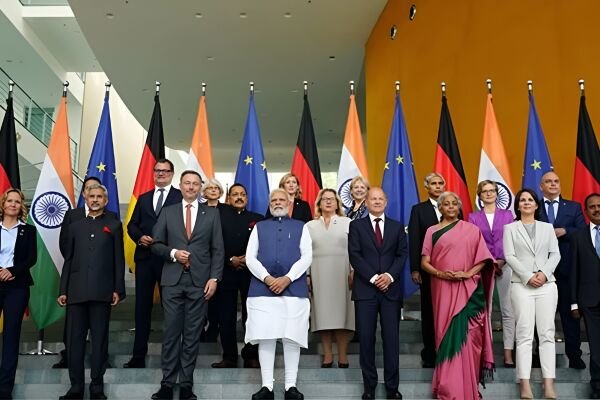
Three words – one statement, that best sums up India’s G20 presidency in 2023: inclusiveness, sustainability, and innovation. Some of the important highlights that feature as a precursor:
1. Vasudhaika Kutumbakam – One Earth, One Family, One Future
The doctrine of India as presidency is interdependence and collective action in all directions of the world.
2. Digital Revolution
This milestone has integrated the countrywide digitalization of public infrastructure development through Aadhaar-unique identity system and UPI-Unified Payments Interface;
It also brings best practices and technologies sharing across the globe through digitally inclusive global participation.
3. Women Empowerment
Indian concentration was on the gender equality characteristic by inducting all the economic and social policies which have ensured that the issue of women empowerment is brought under one account. Investments in start-ups led by women will also be included with skill development.
4. Sustainable Agriculture
India asked for leadership on sustainable agriculture, water conservation for irrigation, availability of agricultural technology etc for food security.
5. Global South Advocacy
India has finally found a voice for Global South by bringing focus onto thrust of developing and underdeveloped countries in G20.
G20 Events in India 2023
| No. | Place | State | Date | Theme/Resolution/Initiative | ||
|---|---|---|---|---|---|---|
| 1 | Mumbai | Maharashtra | Feb 20–21, 2023 | Finance track meeting on global economic recovery. | ||
| 2 | Bengaluru | Karnataka | Feb 24–25, 2023 | Digital economy working group discussions. | ||
| 3 | Hyderabad | Telangana | March 6–7, 2023 | Climate change and renewable energy initiatives. | ||
| 4 | Chennai | Tamil Nadu | March 20–21, 2023 | Education and skill development reforms. | ||
| 5 | Varanasi | Uttar Pradesh | April 18–19, 2023 | Culture and heritage preservation initiatives. | ||
| 6 | Guwahati | Assam | May 4–5, 2023 | Environmental sustainability and biodiversity conservation. | ||
| 7 | Jaipur | Rajasthan | June 12–13, 2023 | Tourism development and rural economy enhancement. | ||
| 8 | Srinagar | Jammu and Kashmir | June 22–23, 2023 | Promoting global peace and regional cooperation. | ||
| 9 | Ahmedabad | Gujarat | July 15–16, 2023 | Infrastructure and urbanization discussions. | ||
| 10 | Pune | Maharashtra | Aug 3–4, 2023 | Future of work, start-ups, and entrepreneurship initiatives. | ||
| 11 | Bhubaneswar | Odisha | Aug 10–11, 2023 | Sustainable agriculture and food security strategies. | ||
| 12 | Amritsar | Punjab | Aug 25–26, 2023 | Women’s empowerment and gender equality programs. | ||
| 13 | Kochi | Kerala | Sept 2–3, 2023 | Marine economy and sustainable fisheries practices. | ||
| 14 | Lucknow | Uttar Pradesh | Sept 6–7, 2023 | Smart cities and urban development themes. | ||
| 15 | New Delhi | Delhi | Sept 9–10, 2023 | Inclusive growth, digital transformation, and sustainable development. |
Activities of G20 that considerably touched the world economy
G20 has undertaken a lot of activities which have led to long-term stability and prosperity of the globe:
1. Base Erosion and Profit Shifting (BEPS) Project:
Objective: International cooperation to tackle base erosion and profit-shifting tax avoidance by multinational enterprises.
Outcome: The minimum corporate tax rate post covid has been set to be 15 percent which cannot be avoided.
2. Debt Service Suspension Initiative (DSSI)
It was initiated during the pandemic when the poor countries were given temporary relief concerning debt.
It released the monetary resources to be put to a use in a direction towards health and economic revival
3. Financial Inclusion Initiative
It serves the purpose for the down-trodden sections to avail easy access to financial services and products.
It is an initiative toward digital payment from India and also a part of Bilateral, Trilateral, and Multilateral Agreement of India under G20.
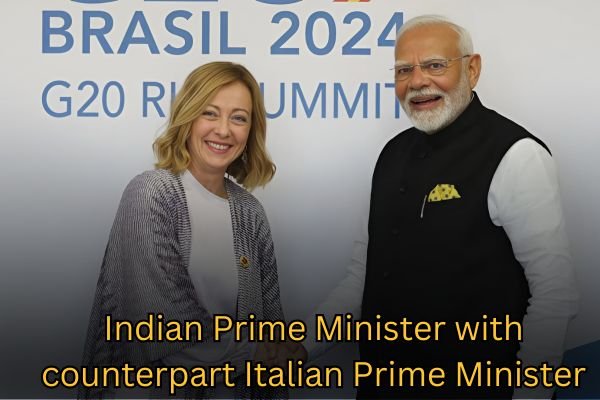
India does its G20 platform quite aggressively to strengthen its relation and strategic partnerships.
1. Bilateral Agreements
India-U.S Relations: Clean Energy, Defence, and Technology Transfer.
India-Russia Energy Ties: Energy Security on oil and natural gas.
2. Trilateral Partnerships
India-U.S.-Japan: Areas of work on maritime security, infrastructure, and capacity building of supply chains.
India-Australia-Indonesia: more economic cooperation with regional issues
3. International Agreements
International Solar Alliance: initiative co-launched by India supported by G20, facilitation for the growth of solar energy around the world
Coalition for Disaster Resilient Infrastructure (CDRI): Conceived in India-the focus provided in resilient infrastructure from climate
Challenges of Enlargement
Though the enlargement of G20 will certainly benefit more representation, it is most likely that the decision-making power will get diluted. Striking a balance between representation and functionality is key
Indian Efforts to Influence the Decisions of G20 Countries
India has evolved and appropriately attempted to influence the decisions of G20 and ensured the issues of developing countries:
Climate Action for All: India advocates for the concept of “common but differentiated responsibilities,” combining developmental needs with climate goals.
Alternate Source of Energy: India is investing huge investment into solar and wind energy and becoming a example to the world.
International Agreement: India is once again showcasing its diplomatic ability in achieving multiple conflicted interests.
How G20 Countries Affects the World Economy and Climate
The G20 has become the platform that cannot be stopped in the international pursuit to address climate change and greener economic growth:
1. Covid-19 Recovery
Global Fiscal Stimulus through coordinated fiscal actions of the member countries of the world.
Cluster of global demand and supply chains
Diversification measures avoiding vulnerability from single sectors or markets
2. Climate Policies
Aggregation of national climate target goals with suggestions from G20 and a shock ripples through the global markets
Increased innovation in green technology, investments in renewable energy, job creation, and much more innovation
3. Global Divide Bridge
The G20 bridges the developed and developing countries while meeting joint economic growth and innovative efficiencies
Down at the Impact of G20 in the International Arena
It’s more than an organization of economic leaders; the G20 is a powerhouse guiding and molding policies to change lives for millions. And the agenda decision made in terms of the global or climate change issues has only grown into becoming the global center of the rules and traditions governing the relations amongst nations. Let’s have a deeper look at its critical area of impact below:
Conclusion:
In a small way, the G20 Countries can be termed the miniature of the global systems wherein balance is attempted between the interests of developed and developing countries. Its role has been much more significant in reforming international policy than that depicted under the conditions portrayed hereinabove.
For India, its presidency allows it to retell the story of that nation on the world stage while placing at the very heart of that stage values that underpin inclusion and innovation. And indeed, what collective action contributes toward easing global challenges will increasingly be part of what the G20 is supposed to do.