
Agile functioning has revolutionized software development by emphasizing flexibility, cooperation and customer-centric solutions. This enables teams to adapt quickly to changing requirements, ensuring rapid and more efficient distribution. For Java developers, understanding of Agile Methodology in Java development is important for scalable, manufacture of high quality applications that align with the developed business requirements.
In this blog, we describe agile functioning, its basic principles, major benefits and how it enhances the Java development process. We will also discuss the best practices in Agile Framework, software projects such as Scrum and Kanban, and the best practices to implement Agile in Java Development.
What is Agile Methodology?
Agile is a recurrence approach to functioning software development that emphasizes collaboration, customer response and rapid delivery. Instead of following a rigid, linear process, the agile allows for continuous improvement and adaptation in the development cycle.
Key Characteristics of Agile:
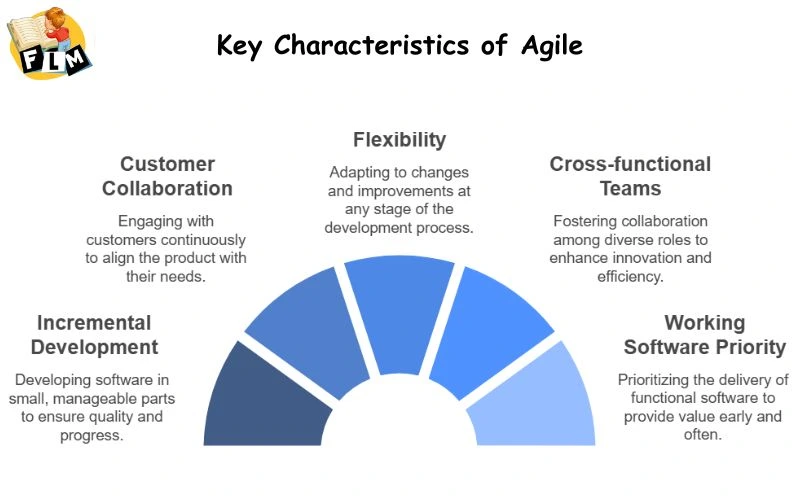
- Incremental Development: Software is developed in small, managed parts.
- Customer Collaboration: Continuous response ensures that the product meets the user’s needs.
- Flexibility: Age allows for changes and improvement at any level.
- Cross-functional teams: Developers, testers and business stakeholders work together.
- Pay Attention to Working Software: Distributing functional software is a priority.
The Agile Manifesto and Its Principles
The agile functioning is based on the Agile Manifesto, which underlines four major values:
- Individuals and conversations on procedures and tools
- Software working on extensive documentation
- Customer cooperation on contract talks
- Responding to change over follow a plan
Additionally, the agile is built on 12 guiding principles, including continuous distribution, continuous cooperation and sustainable development.
Popular Agile Frameworks in Software Development
Scrum:
Scrum is one of the most widely used Agile frameworks. It follows a structured approach with defined roles, events and artifacts.
Major components of scums:
- Scrum Team: Product owners, Scrum Master and Development Team.
- Sprints: The short growth cycle (usually 2-4 weeks) where the work is completed.
- Daily Stand-Up: Quick meetings to discuss progress and obstacles.
- Sprint Review and Retrospective: sessions to evaluate complete tasks and identify reforms.
Kanban:
Kanban focuses on imagining work and optimizing workflow efficiency.
Major components of Kanban:
- Visual Board: Work is displayed in columns (two-do, in progress).
- Work-in-Promotion Boundaries: Restricting the number of active functions improves focus.
- Continuous Delivery: Unlike scrum, Kanban does not use certain sprints.
Extreme Programming (XP)
The XP emphasizes engineering practices to improve the quality and accountability of the code.
Main practices:
- Pair Programming: Two developers work together to write and review the code.
- Testing-Driven Development (TDD): writing test before coding.
- Continuous integration: Constant code integration for early detection of issues.
Lean Development
Lean focuses on reducing waste and maximizing the price.
Major principles:
- Remove the waste: Remove unnecessary steps in the development process.
- Distribute fast: Reduce the cycle time and distribute incremental updates.
- Empower Team: Developers have autonomy and responsibility.
Benefits of Agile Methodology in Java Development
- Fast time for Market
- The agile promotes quick release and frequent updates, ensuring early delivery of functional software.
- Increased Cooperation
- Cross-functional teams and regular communication teams improve work and efficiency.
- Better Product Quality
- Continuous testing, reaction loops, and recurring growth software increase quality.
- Customers’ Satisfaction Increased
- By incorporating customers’ response, agile ensures that the final product meets the expectations of the user.
- Reform Risk Management
- Repeated recurrences helped identify and reduce quick risks in the development process.

How Agile Methodology in Java Development Works
Agile is widely used in Java Development due to its flexibility, adaptability and compatibility with modern development devices.
- Sprint-Based Development
- In Agile Development, Java applications are made in small sprints, which ensure continuous progress.
- Test Driven Development
- The test before development ensures that the Java applications are reliable and bug-free.
- Continuous Integration and Deployment (CI/CD)
- Automatic CI/CD pipeline developers often allow Java applications to integrate and deploy.
- Microservices Architecture
- Agile and microservices complement each other, enabling Java applications to score efficiently.
- Code Review and Pair Programming
- The collaborative coding increases quality and knowledge sharing within the tight teams.
Best Practices for Implementing Agile Methodology in Java Projects
- Break Down work in Small, Manageable works
- Dividing development into small tasks makes tracking progress easier.
- Use Agile Project Management Tool
- Popular devices include Jira, Trello and Azure DevOps for managing Agile Workflows.
- Automated Testing and perfection
- Automation ensures fast release and high reliability.
- Encourage Team Cooperation
- Regular communication between developers, examiners and stakeholders is important for tight success.
- Collect and Apply Persistent Reactions
- Constant user feedback helps to align the project with customer needs.
Future of Agile Methodology in Java Development
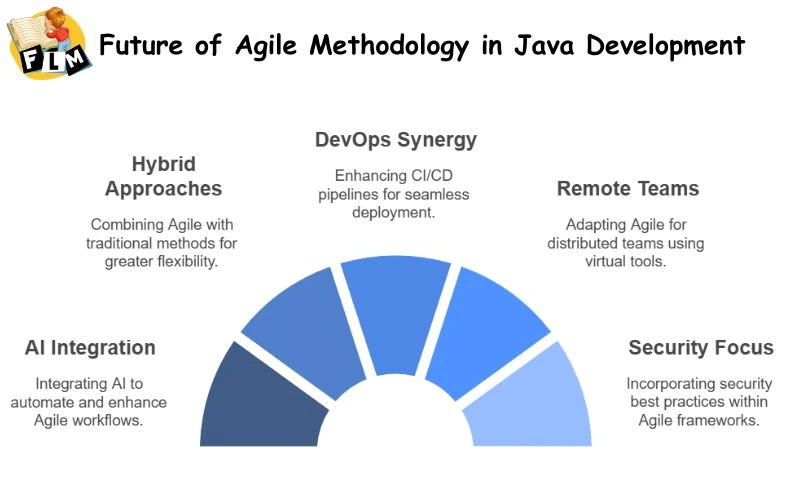
Continues agile, with emerging trends that shape your future:
- AI and Machine Learning Integration: Automating the Agile workflows with AI-Powered insights.
- Hybrid Agile Approach: Combination of Agile with traditional functioning for flexibility.
- DevOps and Agile Synergy: Increasing CI/CD pipelines for seamless deployment.
- Remote Agile Teams: Agile adapting for teams distributed with virtual cooperation tools.
- Focus on Security: Including security best practices within the Agile frameworks.
Conclusion
Understanding the Agile Methodology in Java development is important for modern software teams. The recurrence of Agile’s approach improves the efficiency, cooperation and software quality. By adopting agile frameworks such as scams, kanban and XP, Java developers can create scalable and maintainable applications.
Despite its challenges, the agile remains a preferred functioning for giving high quality software in the dynamic environment. By taking advantage of best practices, benefits of automation and prioritizing continuous response, teams can maximize the benefits of Agile Methodology in Java development.
Start applying Agile Principles today to increase the speed of development, product quality and customer satisfaction!
Suggested Articles:
-
What’s Next After Completing Your Java Full Stack Course
-
Why Learning Java in Telugu Enhances Understanding
-
How to Network Effectively as a Java Developer
Future-Proof Your Career with FLM’s AI-Powered Java Full Stack Development!
Java Full Stack Developer Training
Learn Java, Spring Boot, React.js, SQL, and AI automation to build powerful web applications. AI is transforming software development, and companies need skilled Java full stack developers who can integrate AI-driven solutions. This 5+ month live, interactive training will help you master real-world projects, automation tools, and industry best practices.
What You’ll Gain?
- High Demand – AI Skills Give You a Competitive Edge
- Earn ₹12 LPA+ with Java Full Stack & AI Expertise
- 100% Live, Expert-Led Training
- AI-Powered Development – Automate Coding & Debugging
- 7 Major & 7 Mini Real-World Projects for Hands-On Experience
- Mock Interviews, Resume Building & Career Guidance
- Exclusive: 2-Year Recording Access for the First 100 Enrollees
- Job-Ready Curriculum with Real-World Applications
Unlock your future with FLM’s AI-Powered Java Full Stack Development
Limited Seats Only – Enroll Now!
Visit: frontlinesedutech.com | Click Here to Enroll
WhatsApp: 8333077727