
Top Skills for Environmental Careers: Technical & Soft Skills Roadmap
Table of Contents
Introduction
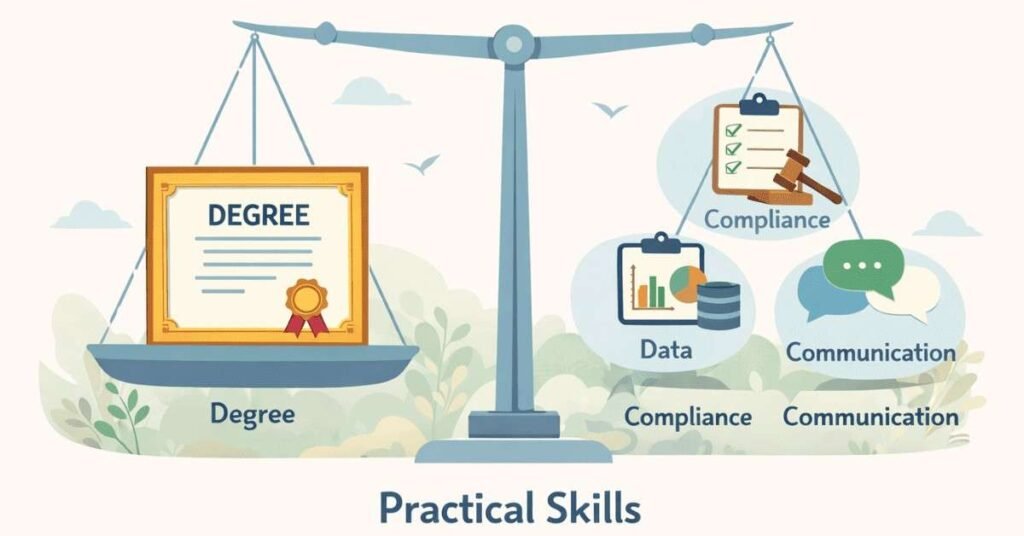
Degrees alone are no longer enough to stand out in environmental and sustainability careers. Recruiters look for people who can handle real-world data, understand regulations, communicate clearly, and work with different teams. Building the right mix of technical and soft skills can move you from a basic entry-level role to leading projects and earning more over time.
This guide explains the most important skills for environmental, conservation, ESG, and climate careers in simple language, along with how students and freshers can start building them.
1. Environmental Regulations and Compliance Knowledge
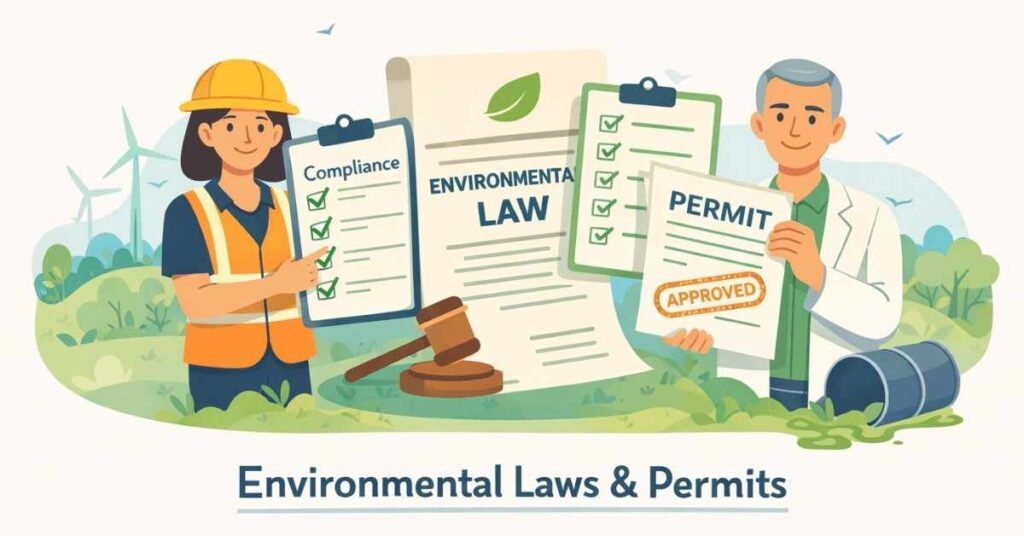
Almost every serious environmental role touches regulation in some way. Understanding the rules is like knowing the “grammar” of this field.
Why This Skill Matters
- Industries must follow environmental laws for air, water, waste, and noise, or they risk fines, shutdowns, and legal trouble.
- Environmental officers, consultants, and EHS professionals are expected to know what limits apply and how to stay compliant.
What You Should Know (Basics)
- Key national environmental laws and rules commonly applied in India (for example, laws related to air, water, and environmental protection).
- How industries get environmental clearances and consents for pollution control.
- What an Environmental Impact Assessment (EIA) is and when it is needed.
- Basic understanding of environmental standards for emissions and effluents (you don’t need to memorize every number, but know the concepts).
How Students Can Start
- Read simple summaries of major environmental laws from trusted educational or government sources.
- During internships, pay attention to how senior staff handle compliance documents, consents, and communication with regulators.
2. Data Collection and Environmental Monitoring
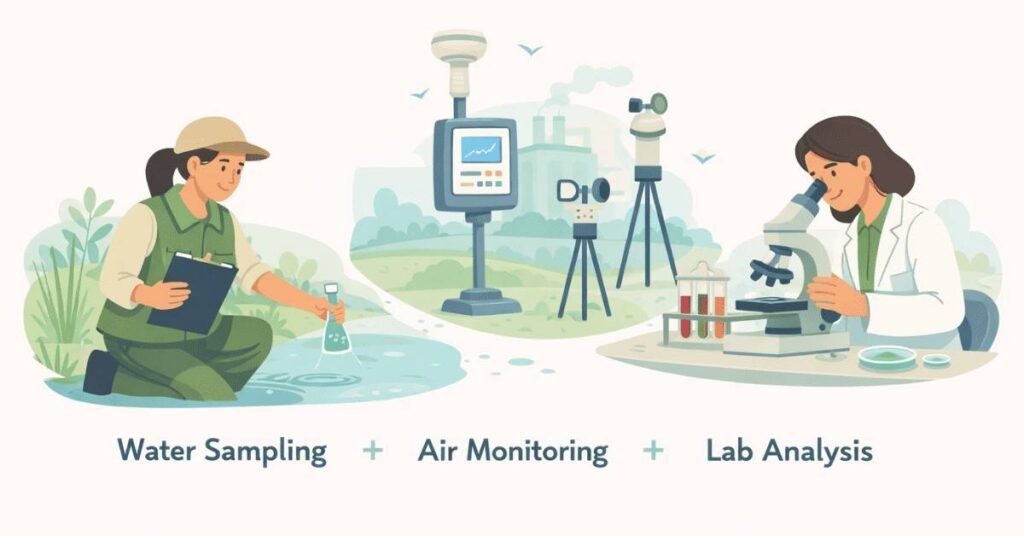
Environmental work is heavily data-based. Whether you’re measuring water quality, counting birds, or tracking emissions, you must know how to collect and handle data properly.
Why This Skill Matters
- Poor data = weak decisions. If sampling or monitoring is done wrong, every decision based on it can go wrong too.
- Environmental scientists, technicians, and compliance staff all rely on accurate measurements.
What You Should Know (Basics)
- How to collect water, air, and soil samples correctly (proper containers, labels, storage).
- Basic use of environmental monitoring instruments (like pH meters, turbidity meters, flow meters, or stack monitoring tools).
- Difference between grab samples and composite samples.
- How to note down field data neatly and clearly, with time, location, and conditions.
How Students Can Start
- Take practical work in college seriously; don’t treat field visits as mere “outings.”
- Ask teachers or mentors to show you actual sampling procedures where possible.
- During internships, volunteer to help with field and lab work to get hands-on learning.
3. Laboratory Skills and Standard Methods
Many environmental roles still depend on lab analysis, especially in water, wastewater, and soil testing. Even if you don’t become a full-time lab analyst, knowing how lab tests work boosts your credibility.
Why This Skill Matters
- Lab results form the backbone of environmental reports, EIAs, and compliance documents.
- Understanding lab basics helps you interpret data correctly and spot inconsistencies.
What You Should Know (Basics)
- Common water quality parameters (pH, BOD, COD, hardness, TDS, etc.) and what they tell us.
- Basics of air quality parameters (PM10, PM2.5, NOx, SO2, etc.).
- How to follow a standard test method and why it’s important to be consistent.
- Safe handling of chemicals and lab safety rules.
How Students Can Start
- Focus on learning at least a few standard tests well instead of rushing through all of them.
- Ask lab instructors to explain not just “how” but “why” each step is done.
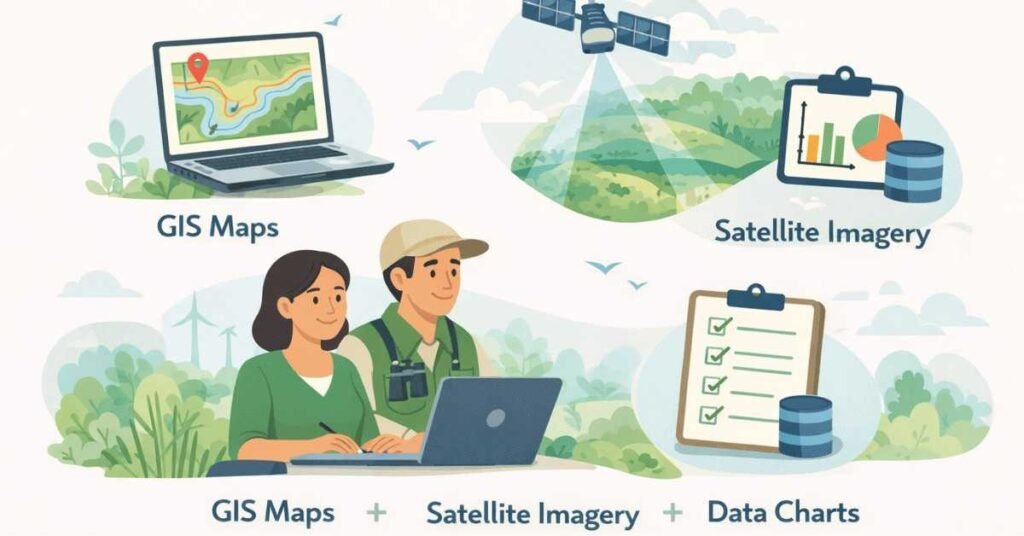
4. GIS and Remote Sensing (Mapping Skills)
GIS (Geographic Information Systems) and remote sensing are powerful tools for mapping and analyzing environmental changes such as land use, forest cover, wetlands, or urban expansion.
Why This Skill Matters
- Employers increasingly expect environmental professionals to understand basic mapping and spatial analysis.
- GIS skills can open doors in consulting, conservation, urban planning, and research.
What You Should Know (Basics)
- How to read and interpret basic maps and satellite images.
- Fundamentals of GIS concepts: layers, coordinates, and projections.
- Simple tasks in tools like QGIS or ArcGIS, such as plotting points, drawing polygons, and measuring distances or areas.
How Students Can Start
- Take beginner-friendly online courses in QGIS or ArcGIS that focus on hands-on exercises.
Work on a simple project—for example, mapping green spaces or lakes in your city—to create a small portfolio piece.
5. Carbon Accounting and Climate Basics
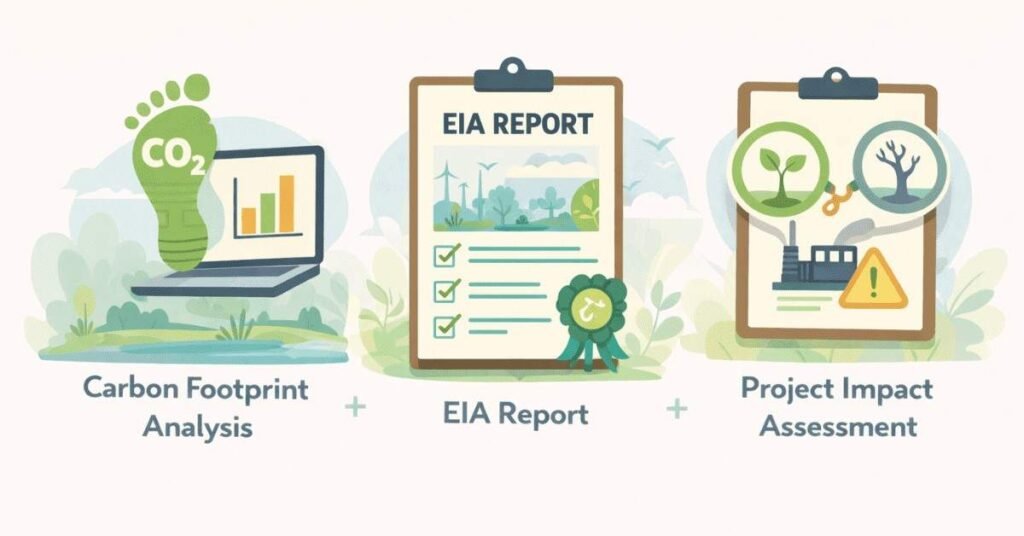
Even general environmental roles are now touching climate topics because organizations want to reduce emissions and set climate targets.
Why This Skill Matters
- Climate-related roles (climate analyst, net-zero consultant, ESG analyst) are among the faster-growing and better-paying niches in environmental careers.
- Even in regular roles, knowing how emissions work helps you add more value.
What You Should Know (Basics)
- What greenhouse gases are and how they contribute to warming.
- The idea of Scope 1, Scope 2, and Scope 3 emissions.
- How to roughly estimate emissions from fuel consumption or electricity use.
- Basic understanding of “net-zero” and why companies are setting such targets.
How Students Can Start
- Use publicly available examples or guides to do a simple carbon footprint calculation for a home, college, or small office scenario.
- Read beginner-level resources on climate change, emission factors, and carbon accounting.
6. Environmental Impact Assessment (EIA) Basics
EIA is a central concept in infrastructure and industrial projects. Many environmental consultants and engineers deal with EIAs regularly.
Why This Skill Matters
- EIAs are mandatory for many large projects like highways, power plants, big factories, or townships.
- Understanding EIA allows you to participate in major projects and consulting assignments.
What You Should Know (Basics)
- The purpose of EIA: predicting environmental effects of a project before it is built.
- Components of an EIA: baseline studies, impact prediction, mitigation measures, and monitoring plans.
- The idea of public hearings and stakeholder consultation in EIA.
How Students Can Start
- Read one or two EIA summaries (executive summaries) available in the public domain to see structure and language.
- During internships, ask to observe or assist in any EIA-related tasks if the organization handles them.
7. Report Writing and Documentation
Good reporting separates a strong professional from someone who only “did the work but can’t show it.”
Why This Skill Matters
- Almost every environmental role requires writing: lab reports, monitoring summaries, project notes, or regulatory documents.
- Clear written communication helps clients, regulators, and managers trust your work.
What You Should Know (Basics)
- How to structure a report: introduction, method, results, discussion, conclusion.
- Writing in simple, clear sentences instead of heavy jargon.
- Using tables, graphs, and bullet points to present data clearly.
- Keeping records organized: dates, locations, sample IDs, approvals.
How Students Can Start
- Treat college assignments and project reports as practice for professional reporting, not just for marks.
Ask for feedback on clarity, not just on technical correctness.
8. Data Handling and Basic Statistics
Environmental professionals increasingly work with datasets from sensors, labs, surveys, or remote sensing.
Why This Skill Matters
- Employers want people who can convert raw environmental data into useful insights, not just collect it.
- Data literacy is essential for roles in ESG, climate, and environmental research.
What You Should Know (Basics)
- Cleaning data: removing obvious errors, handling missing values.
- Simple statistical measures: mean, median, standard deviation, simple correlations.
- Creating basic charts and graphs in Excel to visualize trends.
How Students Can Start
- Use Excel for all college projects instead of managing data in random notebooks.
Try small analysis exercises on real or sample datasets (for example, air quality or weather data downloaded from public sources).
9. Environmental Management Systems (EMS) and Standards
Many companies follow structured systems like ISO 14001 to manage their environmental responsibilities.
Why This Skill Matters
- EMS knowledge is especially important for EHS roles, corporate sustainability, and audits.
- It shows employers that you understand how environmental performance is managed systematically and not just through random actions.
What You Should Know (Basics)
- Concept of a management system: policy, planning, implementation, checking, and continuous improvement.
- Key idea behind ISO 14001 (even if you don’t know every clause).
- How companies set objectives and track performance indicators.
How Students Can Start
- Read introductory materials on ISO 14001 from recognized sources.
During internships, observe how organizations document their environmental procedures and audits.
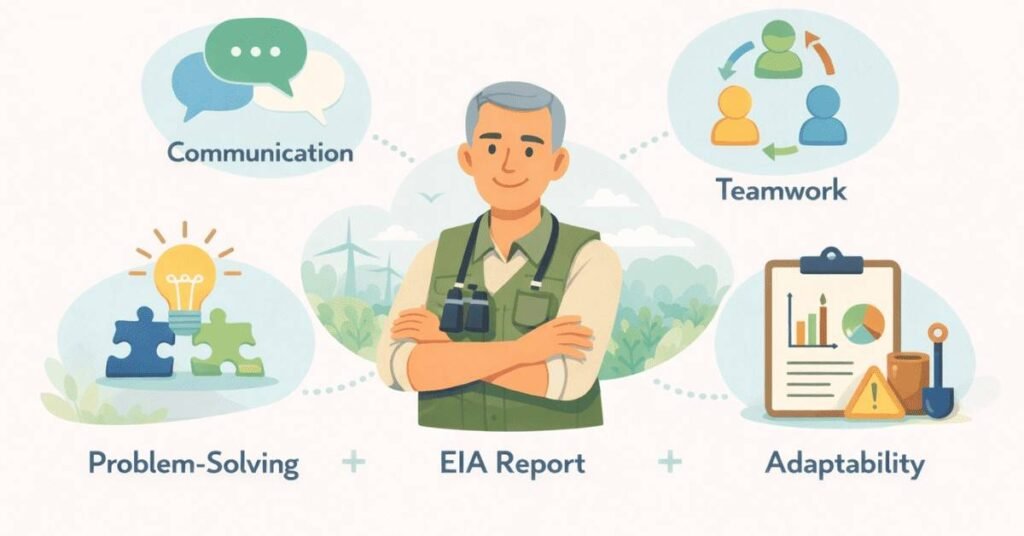
10. Core Soft Skills for Environmental Careers
Technical skills open the door; soft skills help you move up faster. Many employers highlight soft skills as a deciding factor between two candidates with similar degrees.
a) Communication Skills
- Explaining technical findings in simple language to non-technical people.
- Listening carefully to clients, community members, or regulators.
- Presenting information clearly using slides or simple visuals.
b) Teamwork and Collaboration
- Working with engineers, scientists, social workers, finance teams, and communities.
- Managing conflict calmly when different stakeholders have different priorities.
c) Problem-Solving and Critical Thinking
- Breaking down complex environmental issues into smaller pieces.
- Coming up with practical solutions that balance cost, compliance, and impact.
d) Adaptability and Resilience
- Field conditions can be harsh, and projects may change direction quickly.
- Being open to new tools, new regulations, and new expectations helps you stay relevant.
How Students Can Build Soft Skills
- Participate in group projects and actually contribute instead of letting others do all the work.
- Join student clubs, fests, or environmental campaigns to practice leadership and communication.
- Take opportunities to present in class or speak in small events to become more confident.
11. Digital Literacy for Environmental Professionals
Digital skills are now part of basic professional hygiene, even in environment-focused roles.
Why This Skill Matters
- Most data, communication, and reporting now happen via digital tools.
- Employers expect you to be comfortable with common software and online collaboration.
What You Should Know (Basics)
- Office tools: Word processing, spreadsheets, and presentations.
- Email etiquette and professional communication.
- Using online platforms for meetings, file sharing, and project coordination.
Optional but valuable:
- Basic familiarity with data visualization tools (simple BI dashboards).
Cloud-based document management habits (clear folder structures, version control).
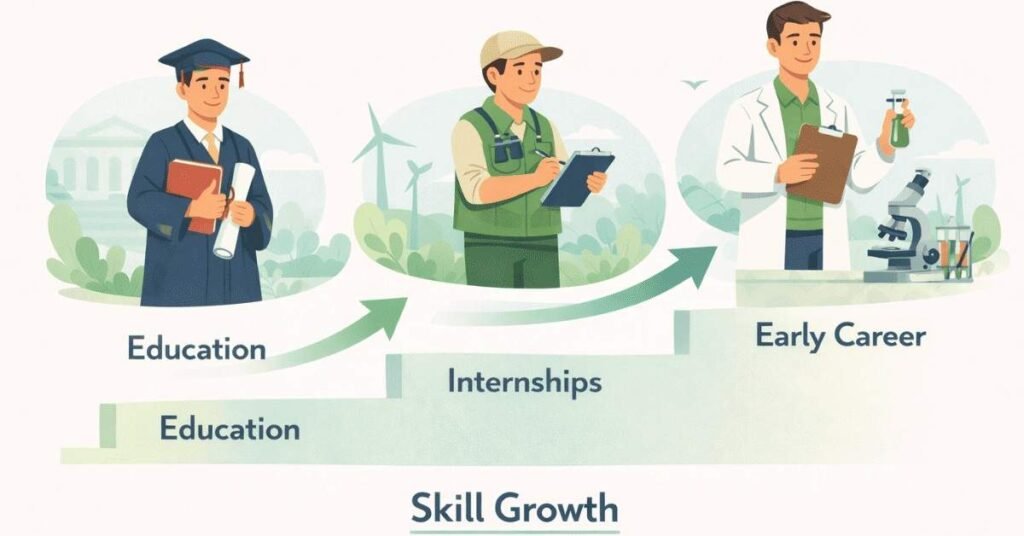
12. How to Build These Skills Stage-by-Stage
During School (8th–12th)
- Focus on science basics if you aim for environmental degrees later.
- Join or start an eco-club, participate in environment-related competitions, and practice speaking about environmental topics.
During Graduation (BSc/BTech/BA)
- Treat practicals, fieldwork, and projects as skill-building opportunities, not just college requirements.
- Do at least one internship where you can see real environmental work.
- Start learning Excel, basic GIS, and report writing.
During Postgraduation or Early Career
- Pick 1–2 technical skills to go deeper into (e.g., GIS, carbon accounting, EIA, or lab analytics).
- Take one credible certification that aligns with your chosen niche.
- Keep a portfolio of your projects, reports, and maps to show during interviews.
13. Matching Skills to Career Paths
You don’t need to master everything at once. Choose your focus based on the career direction you are leaning towards:
- Environmental Scientist / Lab Roles:
- Strong lab skills, sampling, statistics, and report writing.
- Strong lab skills, sampling, statistics, and report writing.
- Environmental Engineer / EHS:
- Technical process understanding, EMS, compliance knowledge, and project management.
- Technical process understanding, EMS, compliance knowledge, and project management.
- ESG / Sustainability Analyst:
- Data analysis, reporting frameworks, basic finance concepts, and communication.
- Data analysis, reporting frameworks, basic finance concepts, and communication.
- Climate Specialist:
- Carbon accounting, climate basics, data handling, and scenario thinking.
- Carbon accounting, climate basics, data handling, and scenario thinking.
- Conservation / Wildlife:
- Field survey techniques, species ID, GIS basics, community engagement skills.