
TELEVISION BROADCASTING & PRODUCTION CAREERS
Table of Contents
Introduction
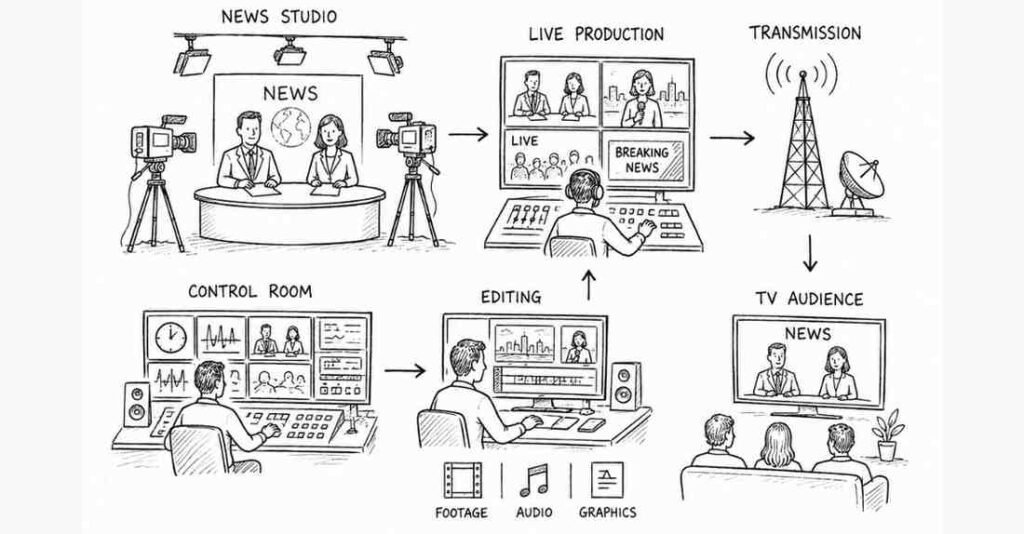
Every morning, millions of Indians wake up to news anchors delivering the day’s headlines. Every evening, families gather around television sets watching reality shows, daily soaps, cricket matches, and entertainment programs. Behind every broadcast—whether it’s breaking news coverage, a cooking show, or a live cricket match—stands an entire ecosystem of professionals making it happen in real-time.
Television broadcasting remains one of India’s most stable and structured sectors within media and entertainment. Despite digital disruption, television still reaches over 197 million households across India, with news and entertainment channels generating consistent viewership and advertising revenue. The industry offers more predictable employment compared to project-based film work, with regular salaries, defined roles, and clear career progression paths.
Television professionals in India earn between ₹2-17 lakhs annually depending on role and experience, with news anchors commanding ₹10-11 lakhs and editors earning up to ₹17.3 lakhs. Video production professionals earn an average of ₹21.4 lakhs annually. Beyond salaries, television careers offer the satisfaction of immediate impact—your work reaches audiences the same day or week rather than months or years later as in film production.
This comprehensive guide explores television broadcasting and production careers across news, entertainment, sports, and regional channels. You’ll learn about on-screen roles like anchoring and reporting, behind-the-scenes production positions, technical jobs operating equipment and managing broadcasts, and the skills, education, and strategies needed to break into this competitive but rewarding field.
Understanding the Television Landscape in India
Types of Television Content
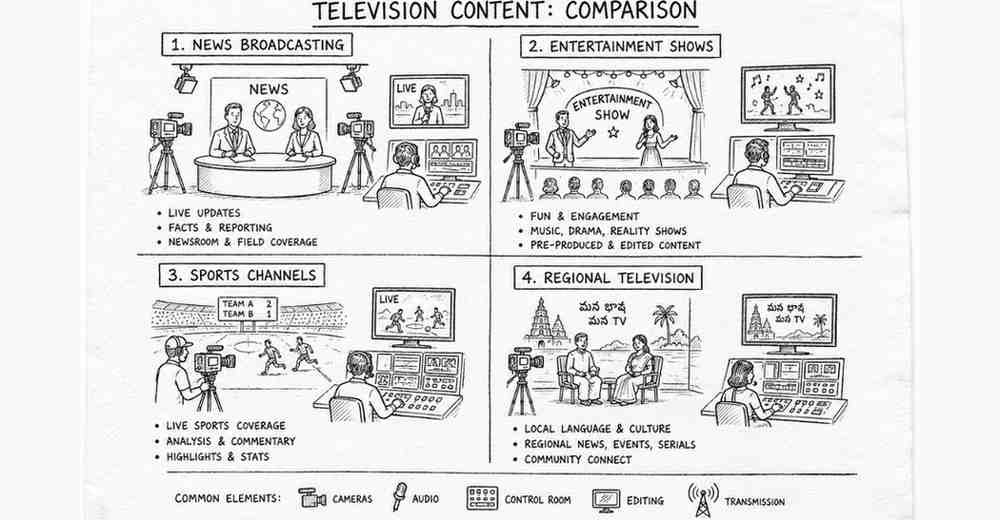
Indian television broadly divides into several content categories, each offering distinct career opportunities.
News channels operate 24/7 covering national news, politics, business, sports, and entertainment. Major players include NDTV, Times Now, Republic TV, India Today, News18, ABP News, and Zee News in English and Hindi, plus numerous regional language news channels. News broadcasting requires speed, accuracy, and constant content production, creating steady employment for reporters, anchors, producers, camera operators, editors, and graphics specialists. The pressure is intense but the work is consistently meaningful.
Entertainment channels produce daily soaps, reality shows, game shows, comedy programs, and award ceremonies. Major broadcasters like Star Plus, Sony Entertainment, Colors, Zee TV, and regional entertainment channels (Sun TV, Asianet, Gemini TV, Zee Marathi) employ large production teams creating hundreds of hours of content monthly. These roles offer more creative variety than news but operate on demanding schedules—daily soaps produce 5-6 episodes weekly, requiring efficient workflows and reliable professionals.
Sports broadcasting covers cricket, football, kabaddi, badminton, and other sports through dedicated channels like Star Sports, Sony Sports Network, and Eurosport India. Sports broadcasting combines live production’s technical complexity with passionate fan engagement. Roles include commentators, sports producers, graphics specialists, and technical directors managing multiple cameras and replay systems during live events.
Regional television in Tamil, Telugu, Malayalam, Marathi, Bengali, Kannada, Gujarati, and other languages often dominates viewership in their respective states. Regional channels offer opportunities outside Mumbai and Delhi, allowing professionals to work in their home states and mother tongues. Content ranges from news and current affairs to entertainment programs and local reality shows.
Specialty channels focus on specific interests—music channels (MTV, 9XM), kids’ programming (Pogo, Nickelodeon), lifestyle and food channels, documentary channels (Discovery, National Geographic), and religious channels. Each creates niches requiring specialized production knowledge.
How Television Differs from Film Production
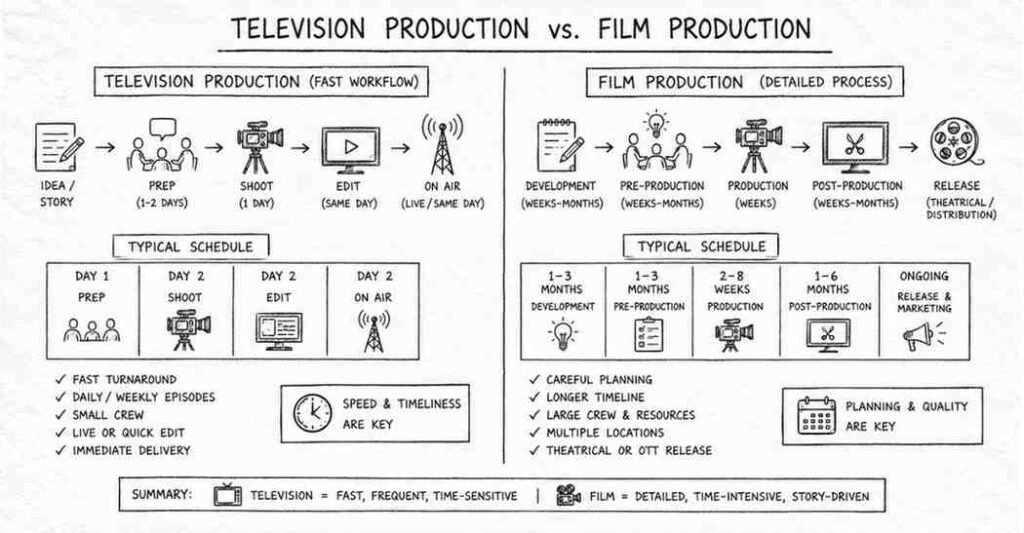
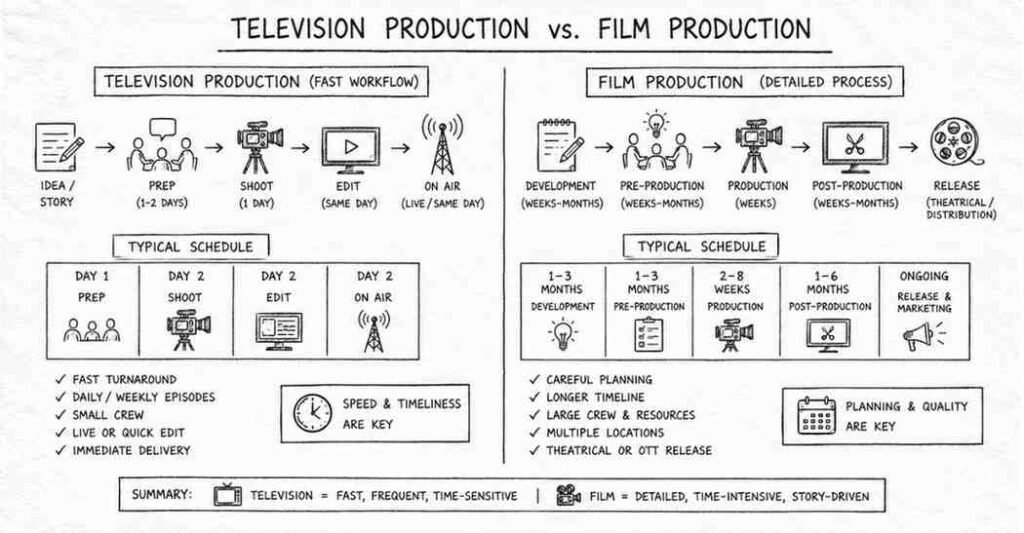
Television production operates under different constraints and workflows than film production, creating distinct career experiences.
Speed and volume: Television produces content at breakneck pace. Daily soaps shoot multiple episodes per week, news runs 24/7, and reality shows produce weekly episodes on tight turnarounds. This pace demands efficiency, reliability, and ability to deliver consistently good work quickly rather than pursuing perfection. You learn to make good decisions fast rather than agonizing over ideal choices.
Teams and stability: Television employs permanent staff rather than project-based crews. You work with the same colleagues daily, developing strong team dynamics. This creates stable employment—regular salaries, defined schedules (though often demanding), and career progression within organizations. The trade-off is less variety than film work where each project brings new teams and challenges.
Live broadcasting challenges: Much television happens live—news coverage, sports events, talk shows, and reality show episodes. Live production eliminates do-overs; mistakes go directly to audiences. This creates unique pressure but also exhilaration. Technical crews managing live broadcasts develop exceptional problem-solving skills and grace under pressure.
Lower budgets per minute: Television budgets per minute of content are typically much lower than film budgets. This requires creative efficiency—achieving production value within tight constraints. You learn to work smart, reuse setups, and maximize every resource.
On-Screen Careers: Facing the Camera

News Anchor: The Face of Information
News anchors are the public face of news channels, presenting stories, conducting interviews, and guiding viewers through complex events.
What news anchors do: They present news stories to camera with clarity and authority, conduct live interviews with newsmakers, political figures, and experts, ad-lib during breaking news when scripts aren’t available, transition smoothly between segments and correspondents, maintain composure during technical difficulties or unexpected developments, and often write or edit their own copy. Senior anchors shape editorial direction and become trusted voices audiences turn to during major events.
Skills required: Exceptional verbal communication and diction ensure clarity and professionalism on air. Strong reading skills let you deliver teleprompter copy naturally without sounding robotic. Quick thinking helps you handle live interviews where responses are unpredictable. Subject matter knowledge—politics, economics, current affairs—lets you ask intelligent questions and understand complex stories. Screen presence and confidence help you connect with audiences through the camera. Emotional control helps you deliver tragic news professionally while maintaining humanity.
Educational background: Most news anchors have degrees in journalism, mass communication, or related fields from institutions like Asian College of Journalism, Indian Institute of Journalism & New Media, Symbiosis Institute of Media & Communication, or Xavier Institute of Communications. However, some successful anchors come from diverse educational backgrounds but develop journalism skills through practice and mentorship.
Career progression: Few people start as prime-time news anchors. Typical paths begin as reporters covering beats, building on-camera confidence and journalism skills. After proving yourself as a reporter, you might anchor smaller time slots—morning shows, weekend news, or specialized segments. Strong performance leads to better time slots and eventually flagship programs. Some anchors become specialized experts in politics, business, or international affairs.
Salary expectations: News anchors in India earn an average of ₹19.7 lakhs annually according to recent data. General anchors earn around ₹8.6 lakhs annually while experienced news anchors can command significantly higher salaries. Earlier data showed news anchors earning ₹10-11 lakhs annually. Prime-time anchors at major networks earn substantially more, potentially ₹16-20+ lakhs annually. Celebrity anchors with major personal brands can negotiate even higher compensation plus brand endorsements.
Reporter/Correspondent: Chasing Stories

Reporters are the information gatherers, investigating stories, conducting interviews, and reporting from the field.
What reporters do: They identify newsworthy stories through research, sources, and observation, conduct interviews with relevant people—officials, witnesses, experts, or ordinary citizens, gather facts, verify information, and ensure accuracy, write news packages or live reports for broadcast, report live from locations during breaking news, develop specialized expertise in beats like politics, crime, business, or entertainment, and build networks of sources providing tips and information.
Skills required: Curiosity and nose for news help you identify interesting stories others miss. Interview skills help you extract information from reluctant or media-savvy subjects. Writing ability lets you craft clear, compelling news copy quickly. Research skills help you verify information and understand complex topics. Persistence helps you pursue difficult stories despite obstacles. Courage helps you report from dangerous situations—protests, disasters, or conflict zones. Ethical judgment helps you balance public interest against privacy concerns.
Career path: Most reporters start covering less prestigious beats—local government, community events, or general assignments. Proving yourself through solid reporting earns better beats and higher-profile assignments. Some reporters transition to anchoring, while others remain field reporters who prefer investigating to studio work. Senior correspondents become subject-matter experts whom networks deploy for specialized coverage.
Salary expectations: Reporters in India earn an average of ₹18.7 lakhs annually, with salaries mostly ranging from ₹15-46.7 lakhs based on experience and organization. Entry-level reporters start at ₹20,000-25,000 monthly (₹2.4-3 lakhs annually). With 2-4 years of experience, salaries rise to ₹4.5-6 lakhs annually. News reporters at news channels earn approximately ₹20,898 monthly (₹2.5 lakhs annually) on average. Senior reporters and correspondents at prestigious networks earn substantially more, particularly those with specialized expertise or name recognition.
TV Host: Entertainment Personalities

TV hosts front entertainment programs—talk shows, reality shows, game shows, lifestyle programs, and award ceremonies.
What hosts do: They engage audiences through personality and energy, conduct interviews with celebrities and guests in entertaining ways, improvise and ad-lib keeping shows lively when scripts run short, maintain pacing ensuring shows don’t drag, build rapport with contestants, guests, or audiences creating comfortable atmospheres, and become the recognizable face of programs building personal brands.
Skills required: Charisma and screen presence make audiences want to watch you. Quick wit and humor keep content entertaining. Empathy helps you connect with diverse guests and audiences. Strong communication skills let you articulate thoughts clearly and engagingly. Improvisation skills help you handle unexpected moments gracefully. Resilience helps you handle criticism that comes with public visibility.
Breaking in: Many hosts start in related fields—stand-up comedy, acting, radio, or journalism—before transitioning to hosting. Creating content online (YouTube channels, podcasts) where you develop hosting skills provides portfolio material. Hosting smaller events, corporate functions, or regional programs builds experience. Auditioning persistently for hosting opportunities eventually creates breakthroughs. Building a unique hosting style rather than imitating existing hosts helps you stand out.
Earnings: TV host salaries vary enormously based on show popularity and personal brand value. Entry-level hosts on smaller shows might earn ₹1-3 lakhs per show or season. Established hosts on popular programs earn ₹5-20 lakhs per season. Celebrity hosts with major followings command crores per season plus endorsement opportunities.
Behind-the-Scenes Production Roles
Television Producer: The Show's Architect
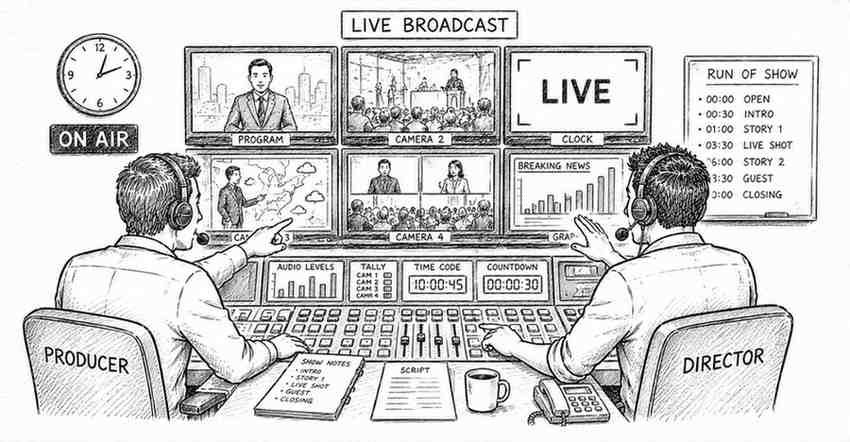
Television producers conceptualize shows, manage production logistics, oversee creative direction, and ensure programs are completed on time and within budget.
Types of producers: Executive producers oversee entire shows or multiple shows, making high-level creative and business decisions. Producers manage day-to-day production of specific episodes or segments. Associate producers handle specific aspects like booking guests, coordinating shoots, or managing research. Segment producers create individual segments within larger shows.
Responsibilities: They develop show concepts and formats, hire directors and key crew members, manage budgets ensuring productions remain financially viable, oversee content ensuring quality and consistency, solve problems that arise during production, coordinate with network executives and advertisers, and shape editorial direction of programs.
Skills required: Creative vision helps you conceptualize compelling programs audiences want to watch. Project management abilities help you coordinate complex productions with multiple moving parts. Budget management skills ensure financial responsibility. Leadership qualities help you manage teams and make final decisions. Understanding audiences helps you create content that resonates. Relationship management helps you work with network executives, advertisers, talent, and crew.
Career progression: Most television producers start as production assistants or researchers, learning production workflows and industry standards. Progressing to associate producer and then producer roles happens through demonstrating reliability, creativity, and leadership. Some specialize in particular formats—news, reality, talk shows, or scripted content. Building track records of successful shows increases your value and compensation.
Salary expectations: Film/TV producers in India earn an average of ₹7 lakhs annually, with early career producers (1-4 years experience) earning ₹5.2 lakhs and mid-career producers (5-9 years) earning ₹12.2 lakhs. TV production professionals earn an average of ₹19 lakhs annually, ranging from ₹17-33.8 lakhs, with the top 10% earning over ₹24.3 lakhs. Producers on successful shows or working for premium networks command higher salaries, potentially ₹25-40 lakhs annually.
Television Director: Executing the Vision
Television directors oversee the creative and technical aspects of producing television programs, translating scripts and concepts into finished content.
What directors do: They interpret scripts determining how scenes will be shot, work with camera operators planning shot compositions and movements, direct talent guiding performances and delivery, coordinate technical crews ensuring all departments work together, make real-time decisions during live broadcasts, oversee editing and post-production on taped programs, and maintain creative consistency across episodes.
Multi-camera vs. single-camera directing: Much television uses multi-camera setups where three or more cameras capture scenes simultaneously, particularly for live shows, news, talk shows, and sitcoms. Multi-camera directors call shots in real-time, switching between camera angles during recording or broadcast. Single-camera directing (common in scripted dramas and some reality shows) more closely resembles film directing, shooting scenes from different angles sequentially.
Skills required: Technical understanding of cameras, lenses, lighting, and editing helps you make informed creative decisions. Visual storytelling ability helps you translate scripts into compelling visual sequences. Leadership skills help you manage crews and talent under time pressure. Quick decision-making abilities help you work at television’s fast pace. Communication skills help you articulate your vision to departments efficiently. Flexibility helps you adapt when plans change, equipment fails, or talent struggles.
Salary expectations: Producer & Director positions in India earn an average of ₹20.7 lakhs annually, ranging from ₹17.4-35.5 lakhs. Television directors typically earn within the broader TV production range of ₹19-35 lakhs annually depending on experience and show type. Directors on major programs at premium networks earn at the higher end, while those working on smaller regional or cable shows earn less.
Video Editor: Crafting the Final Product
Video editors for television assemble raw footage into finished programs, shaping pacing, storytelling, and emotional impact.
What editors do: They review footage selecting the best takes, cut footage together creating coherent sequences, add graphics, lower thirds, and text overlays, incorporate b-roll footage enhancing stories, sync and mix audio elements, apply color correction ensuring visual consistency, meet tight deadlines often editing same-day broadcasts, and work with producers or directors refining cuts based on feedback.
Technical requirements: Television editors typically work with software like Adobe Premiere Pro, Avid Media Composer (industry standard for broadcast), or Final Cut Pro. Understanding codecs, frame rates, and broadcast specifications ensures technical compliance. Familiarity with graphics software like After Effects helps create motion graphics and visual effects. Knowledge of audio mixing ensures broadcast-quality sound.
Work environment: News editors often work in fast-paced newsroom environments, editing packages within hours of footage being shot. Entertainment editors might have more time but face equally demanding schedules when working on daily shows. The work is often deadline-driven and requires focus amid the chaos of production environments.
Skills required: Technical proficiency with editing software is fundamental. Storytelling sense helps you structure narratives engagingly. Attention to detail catches continuity errors, audio problems, or technical issues. Time management helps you meet constant deadlines. Ability to take direction helps you incorporate feedback while contributing creative ideas. Patience and concentration help you work through lengthy footage finding the story within.
Breaking in: Many television editors start as assistant editors, organizing footage, syncing audio, creating rough cuts, and learning workflows. Building a showreel demonstrating editing skill helps you advance. Freelancing for smaller productions or online content creators builds experience. Persistence in applying to production companies and networks eventually creates opportunities.
Salary expectations: Video editors fall within the broader video production category earning ₹21.4 lakhs annually on average. Entry-level assistant editors might earn ₹2-4 lakhs annually, while experienced television editors earn ₹8-15 lakhs annually depending on organization and show type. Senior editors working on prime shows or with specialized skills can earn ₹18-25 lakhs annually.
Technical Roles: The Invisible Backbone
Camera Operator: Capturing the Action

Television camera operators capture footage during news broadcasts, live shows, entertainment programs, and sports events using studio cameras, field cameras, or specialized equipment.
Studio camera operation: Multi-camera studio environments require operators who can frame shots quickly, follow talent movements smoothly, and respond instantly to director cues. Studio cameras are typically large, mounted on pedestals or tracks, and connected to control rooms. Operators wear headsets receiving real-time direction.
Field camera operation: News camera operators or electronic news gathering (ENG) camera operators work in the field shooting news packages, interviews, and live reports. They must work independently, making exposure and composition decisions quickly while coordinating with reporters. ENG work requires versatility handling various shooting conditions—protests, crime scenes, weather events, or formal interviews.
Skills required: Technical proficiency with cameras, lenses, and exposure is fundamental. Steady hands and smooth operation create professional-looking footage. Understanding composition and lighting helps you capture visually appealing shots. Ability to follow direction helps you execute producers’ or directors’ visions. Physical stamina helps you carry equipment and work long shifts. Quick thinking helps you capture unexpected moments.
Career path: Many camera operators start as camera assistants, handling equipment maintenance, setup, cable management, and supporting primary operators. Demonstrating competence and reliability leads to operating opportunities, first on smaller shows or shifts, then advancing to better programs.
Salary expectations: Camera operators in India earn approximately ₹16,000-16,300 monthly on average (₹1.9-2 lakhs annually) for employed positions. However, experienced operators, particularly those working for major networks or on premium shows, earn significantly more through day rates or project-based compensation, potentially reaching ₹5-10 lakhs annually with consistent work.
Lighting Technician: Setting the Mood
Lighting technicians design and implement lighting for television productions, working in studios or on location creating appropriate illumination for various programs.
Responsibilities: They interpret lighting requirements from directors or DOPs, position and adjust studio lights achieving desired looks, manage lighting during live broadcasts adjusting as needed, maintain lighting equipment ensuring operational readiness, and ensure safety handling powerful electrical equipment properly.
Technical knowledge: Understanding three-point lighting (key, fill, back light), color temperature, light quality (hard vs. soft), and how lighting affects mood is essential. Familiarity with lighting instruments—fresnels, LED panels, softboxes—and control systems used in broadcast studios helps you work efficiently.
Salary expectations: Lighting technicians earn salaries comparable to other technical crew roles, typically ₹2-5 lakhs annually for entry to mid-level positions. Experienced lighting directors working on major programs can earn ₹8-15 lakhs annually.
Broadcast Engineer: Keeping Signals Live
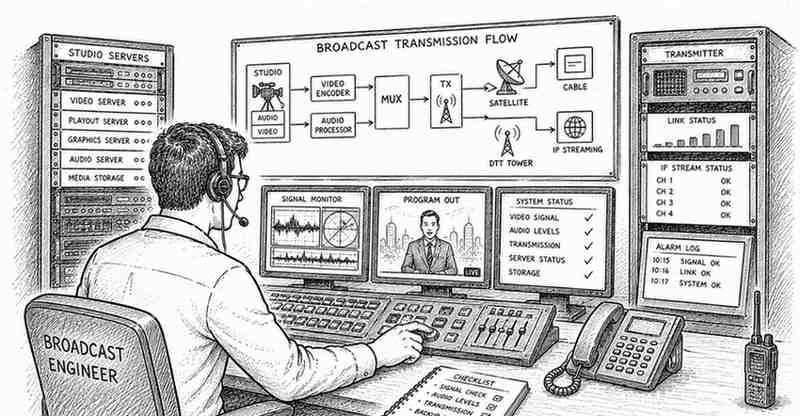
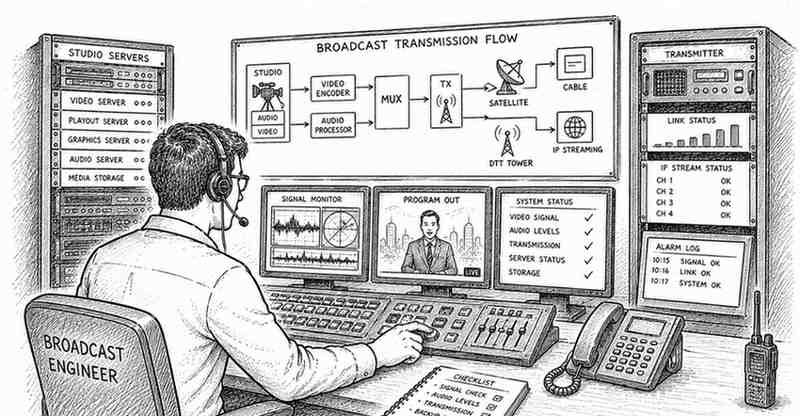
Broadcast engineers maintain and operate technical equipment ensuring television signals reach audiences reliably.
What broadcast engineers do: They maintain broadcast transmission equipment ensuring uninterrupted signals, troubleshoot technical problems quickly (downtime costs networks heavily), monitor signal quality ensuring broadcasts meet technical standards, operate master control rooms switching between program feeds, manage server infrastructure storing and playing out content, and implement new broadcast technologies as the industry evolves.
Types of broadcast engineering: Transmission engineers focus on sending signals from studios to transmitters to homes. Maintenance engineers keep equipment operational. Master control operators manage real-time broadcast feeds. IT/network engineers handle digital infrastructure as broadcasting becomes increasingly IP-based.
Skills required: Strong technical aptitude and understanding electronics, signal processing, and broadcast systems is fundamental. Problem-solving abilities help you diagnose and fix issues quickly under pressure. Attention to detail catches potential problems before they become outages. Calm demeanor under pressure helps you handle crises professionally. Willingness to learn constantly helps you keep pace with evolving technology.
Education: Broadcast engineering typically requires electrical engineering, electronics, or telecommunications degrees. Some broadcast engineers start as technicians with diplomas or certifications in broadcast technology, gaining experience before advancing to engineering roles.
Salary expectations: Broadcast engineers in India earn an average of ₹4.85 lakhs annually, with entry-level positions (1-4 years experience) earning ₹3.05 lakhs and mid-career engineers (5-9 years) earning ₹6 lakhs. More recent data shows broadcast engineers earning an average of ₹25 lakhs annually, ranging from ₹23.5-29.9 lakhs. Senior broadcast engineers or those working for major networks earn at the higher end of these ranges.
Graphics Designer: Visual Storytelling
Graphics designers create on-screen visuals—lower thirds identifying speakers, animated backgrounds, charts and infographics explaining data, and branded graphics maintaining channel identity.
Responsibilities: They design graphics templates used across programs, create custom graphics for specific stories or segments, animate graphics bringing visual interest, ensure brand consistency across all visual elements, work under tight deadlines creating graphics for breaking news or same-day broadcasts, and collaborate with producers and directors meeting visual storytelling needs.
Software skills: Proficiency with Adobe After Effects, Photoshop, Illustrator, and specialized broadcast graphics software is essential. Understanding motion graphics principles creates professional-looking animations. Knowledge of broadcast-safe colors and design specifications ensures graphics display properly on television.
Salary expectations: Graphics designers in television typically earn ₹3-8 lakhs annually for entry to mid-level positions. Experienced broadcast graphics designers or motion graphics specialists can earn ₹10-18 lakhs annually, particularly at major networks or production houses.
Specialized Roles in Television
Sports Commentator/Analyst
Sports commentators provide play-by-play descriptions and analysis during live sports broadcasts, combining deep sports knowledge with broadcast skills.
What they do: They describe action clearly and energetically for audiences, provide expert analysis explaining strategies and tactics, share anecdotes and statistics enriching broadcasts, maintain energy and engagement throughout long events, and build personal brands becoming recognizable voices fans tune in for.
Skills required: Deep knowledge of the sport you’re covering is non-negotiable. Strong verbal communication and distinctive voice help you stand out. Quick thinking helps you narrate fast-paced action accurately. Research skills help you prepare statistics, player backgrounds, and talking points. Chemistry with co-commentators creates entertaining broadcasts.
Breaking in: Most sports commentators have playing or coaching backgrounds in their sports, establishing credibility. Others work as sports journalists building expertise. Creating commentary content online—podcasting, YouTube—demonstrates your capability. Networking within sports broadcasting circles and auditioning persistently eventually creates opportunities.
Earnings: Sports commentators’ salaries vary dramatically based on sport popularity and personal brand. Entry-level commentators might earn ₹2-5 lakhs annually. Established commentators for major sports like cricket earn ₹10-50 lakhs annually. Celebrity commentators with major personal brands command crores per season.
Floor Manager/Stage Manager
Floor managers coordinate activity on studio floors during live productions, serving as the communication link between control rooms and studio floors.
Responsibilities: They relay director’s instructions to on-air talent and floor crew, manage studio floor logistics keeping productions on schedule, cue talent for camera and segment transitions, coordinate with technical crews, supervise studio audiences during live shows, and solve problems arising on the floor during broadcasts.
Skills required: Organizational abilities help you manage multiple simultaneous tasks. Communication skills help you relay instructions clearly and calmly. Presence and authority help you manage talent and crew. Quick thinking helps you solve problems in real-time. Calm demeanor under pressure helps you maintain professionalism during live broadcasts.
Salary expectations: Floor managers typically earn ₹3-7 lakhs annually depending on experience and network size.
Breaking Into Television Broadcasting
Educational Pathways
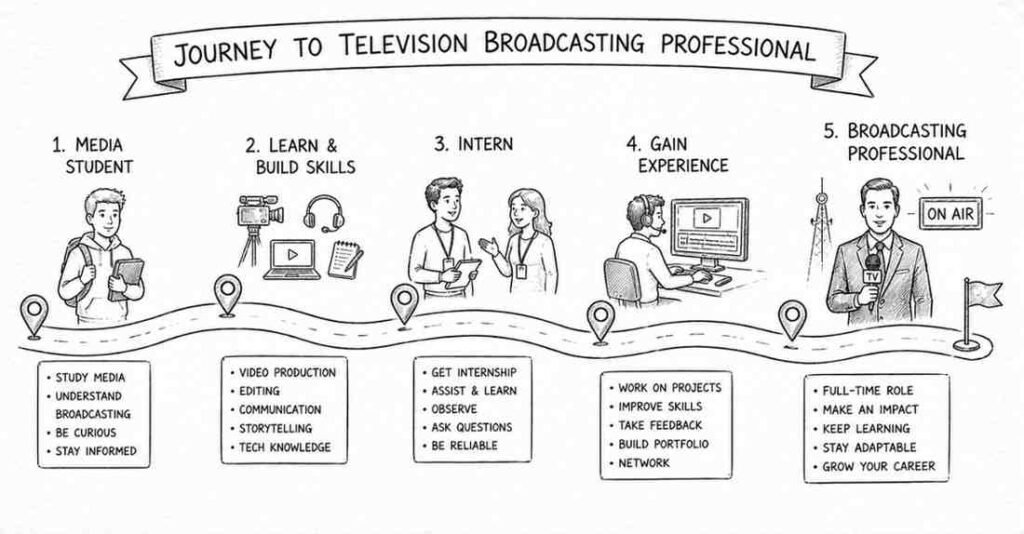
Journalism and mass communication degrees: Three-year BA or four-year professional degree programs from institutions like Indian Institute of Journalism & New Media, Asian College of Journalism, Symbiosis Institute of Media & Communication, Xavier Institute of Communications, or Delhi College of Arts & Commerce provide comprehensive foundations. These programs teach journalism principles, media law, ethics, production techniques, and provide internship opportunities.
Specialized courses: Diplomas or certificates in specific areas—broadcast journalism, television production, video editing, or camera operation—offer focused training without committing to full degrees. Many working professionals pursue these while employed, upgrading their skills.
Technical training: For technical roles like camera operation, lighting, or broadcast engineering, technical institutes offering electronics, broadcast technology, or audio-video production courses provide necessary foundations.
Apprenticeship learning: Many successful television professionals learned on the job, starting in entry-level positions and learning from experienced colleagues. Television production is hands-on; practical experience often teaches more than classroom theory.
Building Your Portfolio and Showreel
For aspiring on-screen talent: Record yourself presenting news stories or hosting segments using smartphones or basic cameras. Upload practice broadcasts to YouTube building an online portfolio. Volunteer to anchor for college radio stations, campus TV, or community channels gaining experience. Create consistent content demonstrating improvement over time.
For production roles: Work on college productions, volunteer for community television stations, or offer services for independent content creators building production credits. Document your work with behind-the-scenes photos and finished pieces demonstrating your contributions.
For technical roles: Learn equipment through rental, college facilities, or volunteering. Create technical demo reels showing your camera work, lighting setups, or graphics—visual proof of your capabilities.
Gaining Practical Experience
Internships: Major news networks, entertainment channels, and production companies offer internships, often unpublished and filled through networking. Apply directly through company websites or LinkedIn. Many internship programs serve as recruitment pipelines; proving yourself as an intern can lead to employment offers.
Regional and local television: Smaller regional news channels, local cable stations, or district-level television operations offer more accessible entry points than major national networks. Standards might be less stringent, making these excellent places to learn and build experience before moving to larger organizations.
Corporate video and content production: Many companies produce internal communications, training videos, or marketing content requiring television production skills. Corporate video work pays reasonably and builds transferable skills.
Online content creation: Creating consistent content for YouTube channels or social media platforms builds production skills, demonstrates initiative, and sometimes generates income while you pursue traditional television opportunities.
Networking in the Industry
Industry events: Attend media conferences, journalism workshops, or broadcast equipment expos. Events like Broadcast India Expo, Mumbai Film Festival’s media sections, or journalism conferences offer networking opportunities with professionals, recruiters, and educators.
Alumni networks: Journalism school alumni often help fellow graduates. Reach out to alumni working in television seeking informational interviews or advice. Most people remember being newcomers and willingly help when they can.
Social media engagement: Follow channels, shows, and professionals you admire on LinkedIn and Twitter. Engage thoughtfully with their content—insightful comments rather than spam. Building visibility and demonstrating genuine interest sometimes leads to connections.
Professional associations: Organizations like the News Broadcasters Association, Indian Broadcasting Foundation, or regional journalist associations offer networking events, training programs, and job listings.
First Jobs and Career Progression
Entry-level positions: Production assistant (PA) roles are common entry points, handling logistics, coordinating departments, and supporting productions. News desk assistants research stories, update rundowns, and support editorial teams. Camera assistants support camera operations learning equipment and protocols. Graphic assistant roles support graphics departments.
Realistic expectations: Entry-level television work is demanding—long hours, modest pay (₹15,000-30,000 monthly), and sometimes unglamorous tasks. However, these positions provide invaluable learning, industry connections, and pathways to better opportunities.
Proving yourself: Reliability, positive attitude, willingness to learn, and initiative distinguish you. Volunteer for additional responsibilities, meet deadlines consistently, and maintain professionalism even during stress. Supervisors remember dependable, enthusiastic team members and promote or recommend them.
Career advancement: After 1-2 years proving yourself, opportunities arise—moving from PA to associate producer, camera assistant to operator, junior editor to lead editor, or field reporter to anchor. Building skills, delivering consistently, and expressing ambitions to supervisors accelerates progression.
Challenges and Rewards of Television Careers
Challenges
Demanding schedules: Television operates around content cycles—news never stops, daily shows require constant production, and live broadcasts demand punctuality. Expect irregular hours, weekend work, and occasional overnight shifts, particularly in news.
High pressure: Live broadcasting leaves no room for mistakes—errors go directly to audiences. Deadline pressure is constant. The pace is relentless. This environment excites some people and overwhelms others.
Competitive environment: Many talented people pursue limited prime positions. Getting noticed, securing promotions, or landing anchor roles requires persistence, excellence, and sometimes fortunate timing.
Emotional toll: News reporters witness tragedy, suffering, and injustice regularly. Maintaining objectivity while covering disturbing events challenges mental health. Journalists face criticism, trolling, and sometimes threats.
Rewards
Immediate impact: Unlike film where you wait months or years to see your work released, television provides immediate satisfaction. Your story airs tonight; your show broadcasts tomorrow. Audiences react immediately.
Serving the public: Journalism plays vital democratic roles—informing citizens, holding power accountable, and giving voices to the marginalized. This purpose gives work meaning beyond entertainment.
Variety and learning: Television exposes you to diverse topics, people, and situations. One week you’re covering elections, the next interviewing celebrities, then reporting on scientific breakthroughs. The learning never stops.
Building recognition: On-screen talent and producers behind successful shows build public recognition and personal brands. This visibility creates additional opportunities—speaking engagements, book deals, or transitions to other platforms.
Stable employment: Compared to film’s project-based instability, television offers more predictable employment with regular salaries, benefits, and career progression paths.
Future Trends in Television
Convergence with Digital Platforms
Television and digital platforms increasingly overlap. News channels maintain active social media presences and YouTube channels. Entertainment shows engage audiences through Instagram and Twitter. Understanding digital platforms alongside traditional broadcasting becomes essential for modern television professionals.
Streaming and OTT Competition
Streaming platforms challenge traditional television for viewership and advertising. However, live content—news, sports, reality show finales—remains television’s strength. Television professionals increasingly work across both traditional broadcasts and streaming platforms, requiring flexible skills.
Regional Content Growth
Regional language television continues growing as regional audiences demand locally relevant content. This creates opportunities across India, not just Mumbai and Delhi, for professionals comfortable working in mother tongues.
Technology Evolution
IP-based broadcasting, cloud production, virtual sets, and AI-assisted editing are transforming television production. Professionals who embrace new technologies rather than resisting change position themselves for long-term success.
Conclusion
Television broadcasting offers diverse, stable, and impactful careers across on-screen roles like anchoring and reporting, production positions like producing and directing, and technical jobs operating cameras, managing broadcasts, and designing graphics. With average salaries of ₹18-21 lakhs for reporters and video production professionals, and opportunities at national news networks, entertainment channels, regional television, and production houses across India, television remains a strong career choice.
Success requires combining relevant education with practical skills, building strong portfolios demonstrating your capabilities, gaining experience through internships or entry-level positions, networking persistently within the industry, and maintaining resilience through demanding schedules and competitive environments. Start wherever you can—volunteering, interning, or creating your own content—building experience and connections that eventually lead to opportunities.
Television’s immediacy, public service potential, variety, and relative stability make it uniquely rewarding for those passionate about storytelling, information dissemination, and connecting with audiences. Whether you dream of anchoring prime-time news, producing hit reality shows, capturing important moments through cameras, or ensuring broadcasts reach millions without technical failure, television offers fulfilling paths.
The Indian television landscape—reaching nearly 200 million households and continuing to evolve—needs talented, dedicated professionals. Your unique perspective, skills, and commitment can contribute to this vital industry. The question isn’t whether opportunities exist in television—they clearly do. The question is whether you’re ready to pursue them with the dedication, skill development, and persistence required to succeed in this competitive but rewarding field.