
Supply Chain Specializations: Expert Career Paths Guide
Table of Contents
Introduction: The Power of Specialization
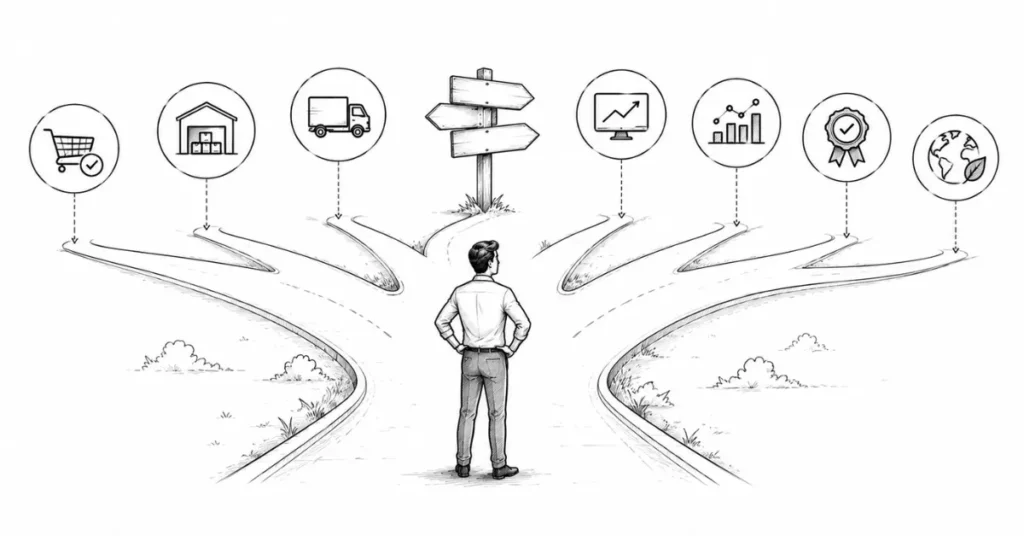
Here’s a secret many early-career professionals miss: while broad supply chain knowledge is valuable, specialists often advance faster and earn more than generalists. A demand planning expert commands higher compensation than a general supply chain coordinator. A procurement specialist with category expertise in pharmaceuticals earns premium salaries. A transportation optimization expert is sought after by logistics companies willing to pay top rupee.
Why? Because specialists solve specific, high-value problems that generalists cannot. They bring deep expertise that directly impacts bottom-line results. And in India’s rapidly growing supply chain sector expected to reach $5.55 billion by 2032 companies increasingly seek specialists who can drive excellence in critical areas.
This guide explores the major supply chain specializations, helping you identify which path aligns with your interests, strengths, and career goals. Whether you’re just starting out or looking to pivot your focus, understanding these specializations helps you make strategic career choices.
Why Specialize? The Case for Deep Expertise
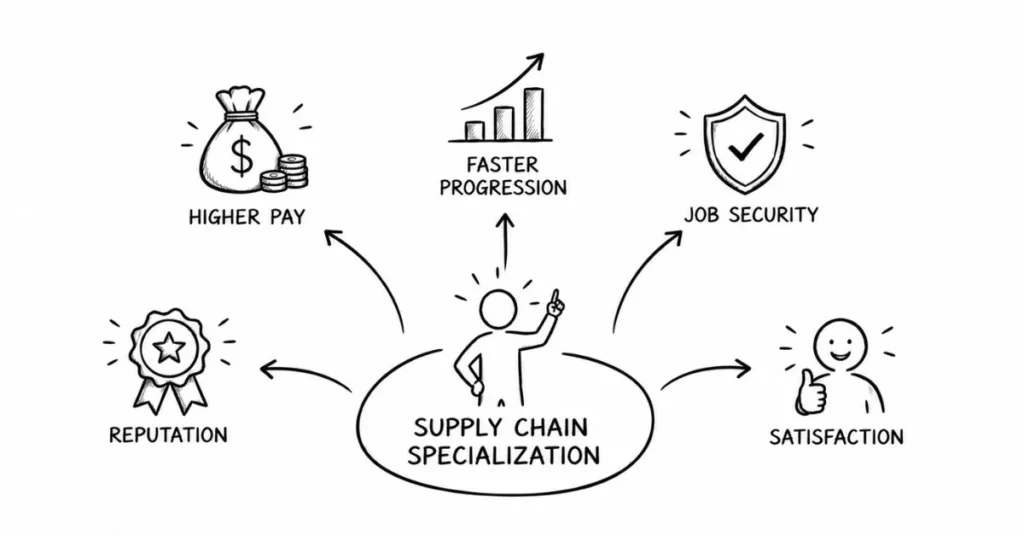
Before diving into specific specializations, let’s understand why focusing your career makes strategic sense:
Higher Earning Potential:
Specialists typically earn 15-25% more than generalists at equivalent experience levels. A procurement specialist at 5 years earns more than a general supply chain coordinator at 5 years.
Faster Career Progression:
Companies promote specialists to lead their functional areas faster because deep expertise is harder to find and more valuable.
Clearer Career Path:
Specialization provides focused trajectory: Procurement Analyst → Procurement Manager → Head of Procurement. Generalists often struggle with less clear advancement.
Job Security:
Deep expertise in critical areas makes you harder to replace and more valuable during organizational changes.
Professional Reputation:
Becoming known as “the procurement expert” or “the demand planning specialist” builds your brand and attracts opportunities.
Personal Satisfaction:
Mastering a specific domain provides sense of expertise and accomplishment that superficial knowledge across many areas doesn’t.
The Trade-off:
Specialization does limit flexibility. Moving from procurement to warehouse operations is harder than moving between general supply chain roles. However, the benefits typically outweigh this limitation, especially in growing markets.
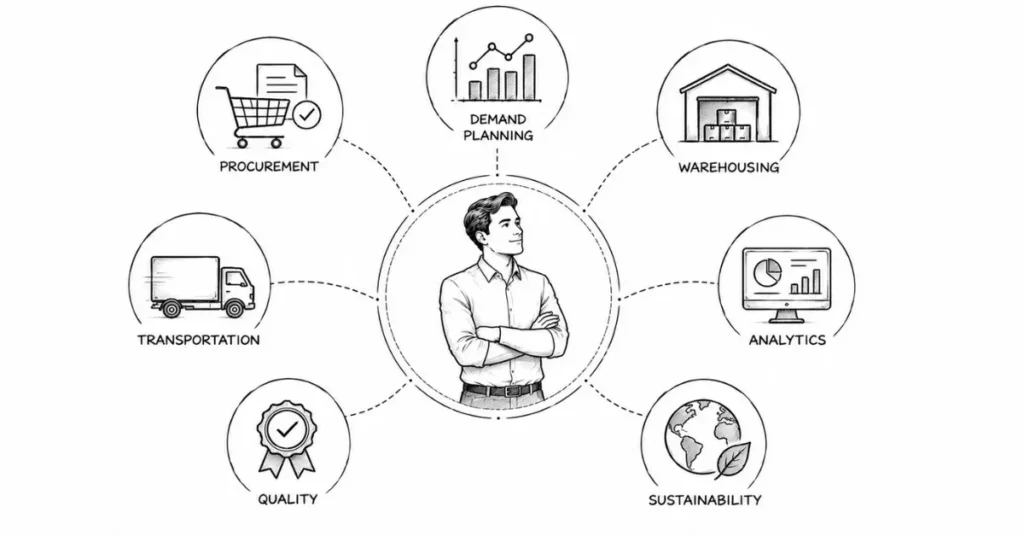
Major Supply Chain Specializations
Let me break down the primary specialization tracks, what they involve, and who they suit best.
1. Procurement and Strategic Sourcing
What It Involves:
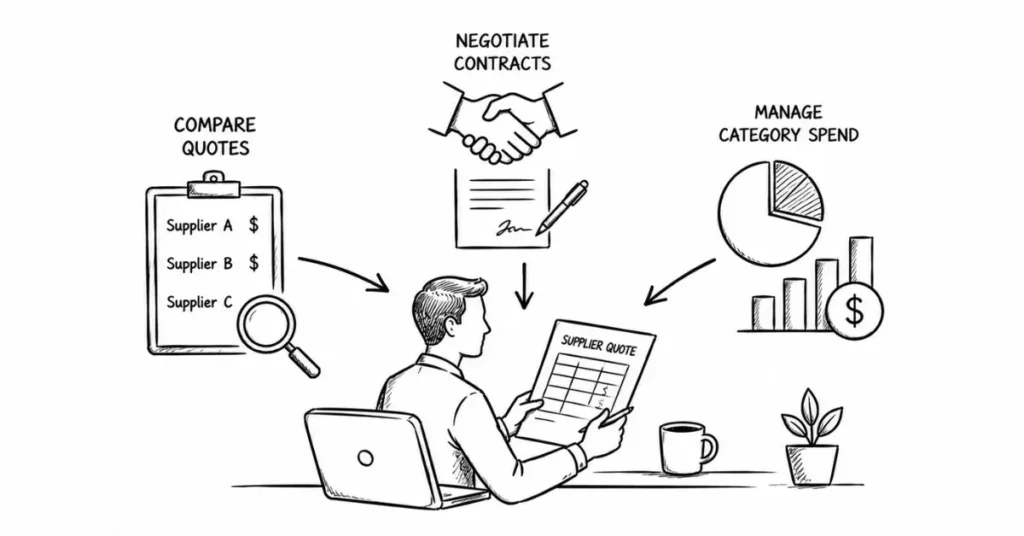
Procurement specialists find suppliers, negotiate contracts, manage vendor relationships, and drive cost savings through strategic buying.
Career Progression:
Procurement Executive (₹2-3 lakhs) → Procurement Analyst (₹4-5 lakhs) → Category Manager (₹7-10 lakhs) → Procurement Manager (₹12-16 lakhs) → Head of Procurement (₹20-30 lakhs) → CPO (Chief Procurement Officer)
Core Responsibilities Across Career Stages:
Early Career:
- Identifying and evaluating suppliers
- Processing purchase orders and tracking deliveries
- Maintaining supplier databases
- Supporting contract negotiations
- Handling invoice reconciliation
Mid-Career:
- Managing specific categories (packaging, raw materials, services, etc.)
- Leading sourcing initiatives and RFP processes
- Negotiating major contracts independently
- Conducting supplier audits and performance reviews
- Driving cost reduction targets
Senior Career:
- Developing procurement strategy aligned with business goals
- Managing global supplier networks
- Leading procurement transformation initiatives
- Building high-performing procurement teams
- Partnering with business leaders on growth strategies
Subspecializations Within Procurement:
Category Management:
Deep expertise in specific spend categories IT procurement, marketing services, raw materials, packaging, logistics services. Category managers become experts in their domains, understanding market dynamics, key suppliers, pricing trends, and best practices.
Strategic Sourcing:
Focus on finding optimal suppliers through rigorous analysis—should-cost modeling, total cost of ownership analysis, supplier financial health assessment, risk evaluation, and negotiation strategy development.
Supplier Relationship Management (SRM):
Building strategic partnerships with key suppliers, conducting quarterly business reviews, driving collaborative innovation, managing escalations, and ensuring mutual value creation.
Indirect Procurement:
Specializing in non-production purchases—IT, facilities, professional services, travel, marketing. Often overlooked but represents 20-40% of company spend.
Global Sourcing:
Managing international suppliers, navigating trade compliance, understanding Incoterms, managing currency risks, and optimizing global supply base.
Key Skills for Success:
Technical Skills:
- Negotiation techniques and strategies
- Contract law basics
- Financial analysis (should-cost modeling, TCO)
- Category market intelligence
- Procurement systems (SAP MM, Ariba, Coupa)
- Data analysis and spend analytics
Soft Skills:
- Relationship building with suppliers and internal stakeholders
- Influencing without authority (procurement often has to convince business units)
- Commercial acumen and business sense
- Risk assessment and mitigation thinking
- Ethical judgment (procurement faces corruption risks)
Best For:
People who enjoy business conversations, negotiation, building relationships, and seeing how good deals impact profitability. If you like combining analytical thinking with people skills, and you’re comfortable with commercial discussions, procurement is excellent.
Industry Variations:
- Manufacturing: Focus on raw materials, components, contract manufacturing
- Services/IT: Emphasis on professional services, software licenses, outsourcing
- Retail: Merchandise procurement, private label development
- Pharma: Regulatory compliance, quality standards, API sourcing
Current Trends:
- Sustainable procurement: ESG considerations in supplier selection
- Digital procurement: E-sourcing, e-auctions, AI-powered spend analytics
- Supply risk management: Diversification, nearshoring, resilience focus
- Supplier innovation: Collaborating with suppliers on new product development
Salary Premium Factors (continued):
- Category expertise (pharmaceutical, IT, aerospace command premiums)
- International exposure and global supplier management
- Proven track record of significant cost savings (document everything!)
- CPSM (Certified Professional in Supply Management) or APICS certifications
- Negotiation training and advanced commercial skills
Real Success Story:
A procurement specialist in the automobile industry with 8 years of experience, specializing in electronic components, leveraged deep category knowledge and supplier relationships to negotiate a 3-year contract saving ₹15 crores annually. This achievement led to promotion to Category Manager with 40% salary increase and offers from competitor companies.
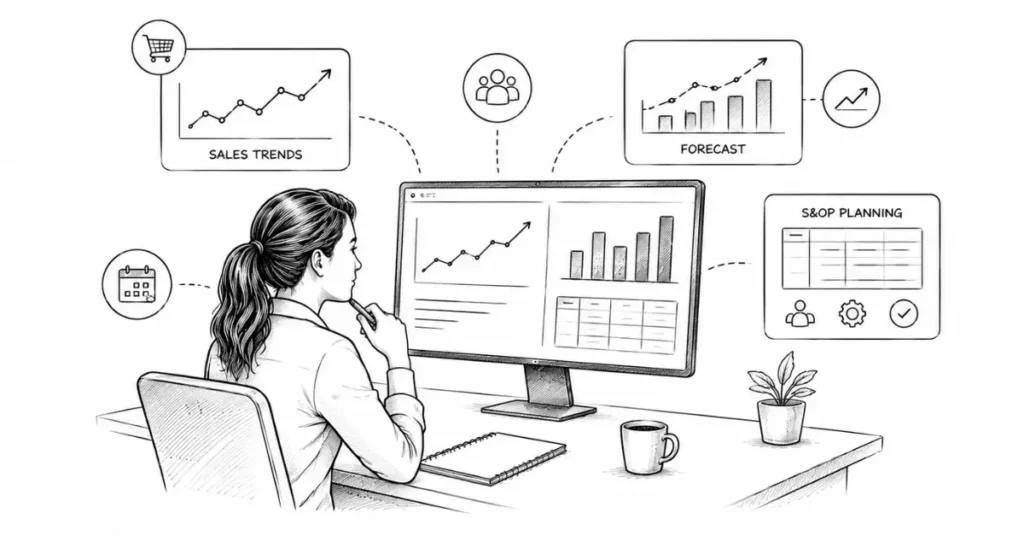
2. Demand Planning and Forecasting
What It Involves:
Demand planners predict future customer demand using data analysis, statistical models, and business intelligence then align supply plans accordingly.
Career Progression:
Demand Analyst (₹4-6 lakhs) → Demand Planner (₹7-11 lakhs) → Senior Demand Planner (₹11-14 lakhs) → Demand Planning Manager (₹15-20 lakhs) → Head of Integrated Business Planning (₹22-30 lakhs)
Why This Specialization is Hot:
Demand planning is among the top 5 most sought-after supply chain profiles in India. As companies become more data-driven, the ability to forecast accurately directly impacts inventory costs, customer service, and profitability.
Core Responsibilities:
Early Career:
- Maintain demand forecasts in planning systems
- Analyze historical sales data and identify trends
- Calculate forecast accuracy metrics
- Support S&OP (Sales & Operations Planning) meetings
- Coordinate with sales on pipeline visibility
Mid-Career:
- Own demand forecasts for product portfolios or business units
- Facilitate monthly S&OP processes
- Incorporate promotional impacts into forecasts
- Collaborate across functions (sales, marketing, finance, operations)
- Drive forecast accuracy improvements
- Identify and address forecast bias
Senior Career:
- Design and implement advanced forecasting methodologies
- Lead Integrated Business Planning (IBP) transformation
- Develop scenario planning capabilities
- Build analytics capabilities and teams
- Partner with executive leadership on business planning
- Drive consensus forecasting processes
Technical Skills Required:
Statistical Methods:
- Time series analysis and forecasting
- Seasonality and trend identification
- Moving averages and exponential smoothing
- Regression analysis
- Understanding forecast error metrics (MAPE, bias, etc.)
Software and Tools:
- Advanced Excel (essential—pivot tables, statistical functions, scenario modeling)
- Demand planning software (SAP IBP, Kinaxis, o9 Solutions, Blue Yonder)
- Statistical software (R, Python for advanced practitioners)
- Data visualization (Tableau, Power BI)
- ERP systems for data extraction
Business Skills:
- Understanding sales and marketing strategies
- Financial acumen (how demand impacts working capital)
- Cross-functional collaboration and influence
- Scenario planning and risk assessment
- Communication—explaining forecasts to non-technical audiences
Best For:
Analytical minds who enjoy solving puzzles with numbers, who can balance statistical rigor with business judgment, and who are comfortable with ambiguity. If you like Excel, appreciate patterns in data, and want to see how accurate predictions drive business success, demand planning is ideal.
Subspecializations:
Statistical Forecasting:
Deep expertise in advanced algorithms, machine learning models, and quantitative methods. Often requires statistics or data science background.
Promotional Planning:
Specializing in forecasting promotional events—particularly valuable in retail and consumer goods where promotions significantly impact demand.
New Product Forecasting:
Expertise in forecasting products without historical data—using analogous products, market research, and test market data.
Supply Planning:
The flip side of demand planning—translating demand forecasts into supply plans (production schedules, procurement plans, inventory targets).
S&OP/IBP Facilitation:
Process expertise in running effective planning meetings, driving consensus, and balancing competing objectives across functions.
Current Trends:
- AI and machine learning: Automated forecasting improving accuracy
- Real-time planning: Moving from monthly to weekly or daily planning cycles
- Demand sensing: Using near-term signals (POS data, weather, social media) for short-term accuracy
- Probabilistic forecasting: Understanding demand ranges and probabilities, not just point forecasts
- Integrated planning platforms: Cloud-based systems connecting demand, supply, and financial planning
Career Advantage:
Demand planning provides excellent foundation for broader supply chain leadership. Understanding demand-supply dynamics prepares you for senior roles. Many VPs and CSCOs have demand planning backgrounds.
Salary Reality:
Entry-level demand planners start modestly (₹4-6 lakhs), but experienced professionals with proven accuracy improvements command strong compensation. Demonstrating you improved forecast accuracy from 70% to 85%, resulting in ₹5 crore inventory reduction, creates significant market value.
3. Warehouse and Distribution Management
What It Involves:
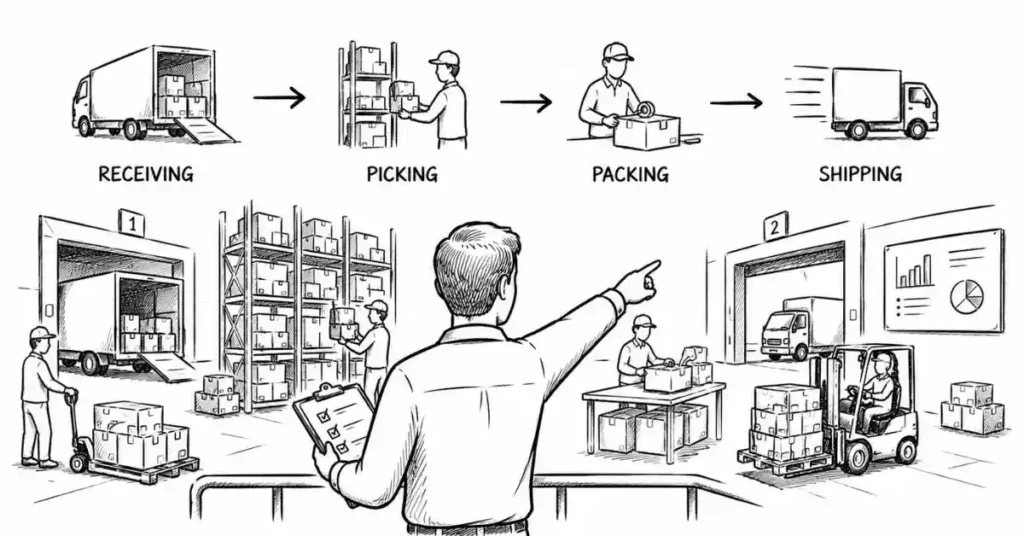
Managing physical storage facilities, optimizing layouts, ensuring inventory accuracy, coordinating inbound/outbound operations, and leading warehouse teams.
Career Progression:
Warehouse Coordinator (₹2.5-3.5 lakhs) → Warehouse Supervisor (₹4-6 lakhs) → Warehouse Manager (₹6-10 lakhs) → Regional Warehouse Manager (₹12-16 lakhs) → Distribution Center Head (₹16-22 lakhs) → VP Distribution Operations (₹25-35 lakhs)
Core Responsibilities:
Early Career:
- Coordinate daily warehouse activities (receiving, putaway, picking, packing, shipping)
- Monitor inventory accuracy through cycle counts
- Track warehouse KPIs (orders processed, accuracy rates, productivity)
- Coordinate with transporters for inbound/outbound shipments
- Ensure safety compliance
Mid-Career:
- Manage entire warehouse facility operations
- Lead teams of 30-200+ warehouse associates
- Optimize warehouse layouts and processes
- Implement Warehouse Management Systems (WMS)
- Drive continuous improvement initiatives
- Manage facility budgets and cost control
- Coordinate with procurement, sales, and logistics teams
Senior Career:
- Oversee multiple distribution centers across regions
- Design distribution network strategies
- Lead automation and technology implementations
- Develop talent pipelines and leadership teams
- Partner with business leaders on expansion plans
- Drive safety culture across operations
Subspecializations:
E-commerce Fulfillment:
Specialized skills in handling high-volume, small-parcel orders with rapid fulfillment cycles. Understanding omnichannel fulfillment (ship from store, buy online pickup in store).
Cold Chain/Temperature-Controlled:
Expertise in managing pharmaceutical, food, or chemical products requiring specific temperature conditions. Regulatory compliance and quality standards critical.
Automated Warehousing:
Specializing in facilities using robotics, automated storage/retrieval systems (AS/RS), conveyor systems, and sortation equipment. Understanding both operations and technology.
Hazardous Materials (Hazmat):
Managing warehouses storing dangerous goods—chemicals, flammables, explosives. Requires specialized training, permits, and safety protocols.
Returns Management:
Specializing in reverse logistics—processing returns efficiently, determining disposition (resell, refurbish, liquidate, dispose), and minimizing losses.
Key Skills:
Operational Skills:
- Warehouse layout design and space optimization
- Slotting strategies (placing fast-moving items optimally)
- Labor management and productivity optimization
- Inventory accuracy techniques
- Safety management and OSHA compliance (or Indian equivalent)
- Equipment management (forklifts, pallet jacks, conveyors)
Technology Skills:
- Warehouse Management Systems (WMS)
- Barcode scanning and RFID systems
- Warehouse automation technologies
- Data analysis for productivity improvement
- Labor management systems
Leadership Skills:
- Managing large, diverse, often unionized workforces
- Shift management and 24/7 operations
- Training and capability building
- Motivating operational teams
- Conflict resolution
Best For:
Hands-on leaders who prefer physical environments to desk work, who enjoy seeing tangible results daily, who can motivate and manage large teams, and who thrive in fast-paced operational settings.
Physical Demands:
Unlike desk-based supply chain roles, warehouse management requires being on your feet, walking extensively (often 10,000+ steps daily), working in non-air-conditioned environments, and being comfortable with industrial settings.
Industry Variations:
- E-commerce (Amazon, Flipkart): Fast-paced, technology-driven, high volume, rapid growth
- 3PL (Third-Party Logistics): Managing warehouses for multiple clients, diverse requirements
- Manufacturing: Focus on raw materials and finished goods, coordination with production
- Retail: Distribution centers supplying stores, seasonal peaks, cross-docking operations
- Pharmaceutical: Strict regulatory compliance, quality standards, temperature control
Current Trends:
- Automation and robotics: Automated picking, sorting, and material handling.
- IoT and real-time tracking: Sensor-based inventory tracking and equipment monitoring
- Data analytics: Using data to optimize layouts, labor schedules, and processes
- Safety innovations: Technology reducing workplace injuries
- Flexible workforce models: Managing mix of full-time, temporary, and gig workers
Career Trajectory:
Warehouse management provides excellent operational foundation. Many COOs and operations VPs started in warehouse operations, learning business from the ground up. The hands-on experience with costs, productivity, and people management is invaluable.
Salary Considerations:
Warehouse management typically pays moderately (₹6-10 lakhs for managers) but offers excellent job security—every company needs warehouses. Large e-commerce fulfillment centers and automated facilities pay premiums. Location matters significantly—metro facilities pay more than rural ones.
4. Transportation and Logistics Optimization
What It Involves:
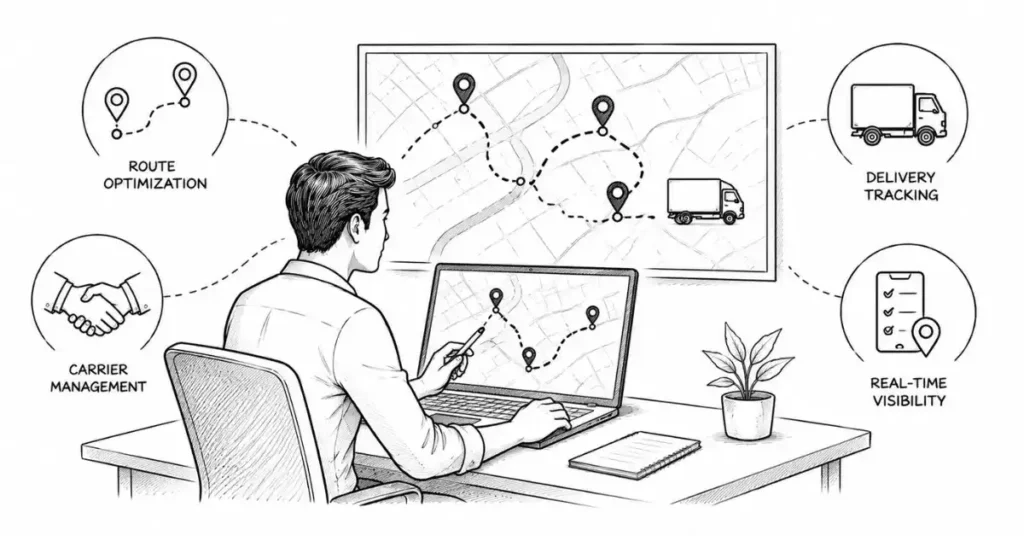
Planning and optimizing movement of goods—route planning, carrier selection, freight negotiation, delivery coordination, and network design.
Career Progression:
Logistics Coordinator (₹3-4 lakhs) → Transportation Planner (₹5-7 lakhs) → Logistics Manager (₹8-12 lakhs) → Regional Logistics Head (₹14-18 lakhs) → VP Logistics & Distribution (₹22-32 lakhs)
Core Responsibilities:
Early Career:
- Coordinate daily shipments and deliveries
- Track shipments and resolve delays
- Maintain relationships with transport vendors
- Process shipping documentation
- Handle customer delivery inquiries
Mid-Career:
- Design and optimize transportation networks
- Negotiate freight rates with carriers and 3PLs
- Manage transportation budgets and costs
- Implement Transportation Management Systems (TMS)
- Analyze route efficiency and optimize
- Manage relationships with logistics service providers
- Coordinate multi-modal transportation (road, rail, air, sea)
Senior Career:
- Develop logistics strategy aligned with business growth
- Design distribution network (warehouse locations, delivery models)
- Lead major logistics transformations
- Manage large logistics budgets (often ₹100+ crores)
- Build logistics capabilities and teams
- Partner with business leaders on expansion strategies
Subspecializations:
Last-Mile Delivery:
The final leg from local hub to customer—increasingly critical with e-commerce growth. Expertise in route optimization, delivery density improvement, and customer experience.
Freight Forwarding:
Managing international shipments—ocean freight, air cargo, customs clearance, documentation, Incoterms, trade compliance.
Multi-Modal Logistics:
Optimizing across transportation modes—when to use trucks vs. rail vs. air vs. ocean. Understanding trade-offs between speed, cost, and reliability.
Fleet Management:
For companies operating their own vehicle fleets—vehicle acquisition, maintenance management, driver management, GPS tracking, fuel optimization.
Reverse Logistics:
Managing return shipments—pickup coordination, consolidation, cost optimization for returned products.
Network Design:
Strategic analysis of optimal warehouse locations, delivery models, and distribution networks. Highly analytical, often requires advanced modeling skills.
Key Skills:
Technical Skills:
- Transportation Management Systems (TMS)
- Route optimization software
- Geographic knowledge and mapping tools
- Freight rate analysis and negotiation
- Understanding of transportation regulations
- Data analysis for cost and service optimization
Analytical Skills:
- Network modeling and optimization
- Cost-service trade-off analysis
- Scenario planning
- Statistical analysis of delivery performance
- Continuous improvement methodologies
Relationship Skills:
- Vendor management and negotiation
- Customer service orientation
- Cross-functional collaboration
- Conflict resolution (delivery failures, damaged goods)
Best For:
Problem-solvers who enjoy logistics puzzles, who can balance cost optimization with customer service, who are comfortable managing external partners, and who thrive in dynamic environments where issues arise constantly.
Industry Variations:
- E-commerce: Focus on speed, customer experience, last-mile innovation
- 3PL Companies (Delhivery, Blue Dart, DHL): Managing logistics for multiple clients
- Manufacturing: Inbound logistics coordination, JIT delivery, export logistics
- FMCG: Wide distribution networks, managing across urban and rural markets
- Express/Courier: Time-critical deliveries, premium services
Current Trends:
- Electric vehicles: Sustainability focus driving EV adoption in delivery fleets
- Route optimization AI: Machine learning improving delivery efficiency
- Autonomous vehicles: Long-term trend that will reshape trucking
- Crowd-sourced delivery: Gig economy models for last-mile delivery
- Real-time tracking: Customer expectations for shipment visibility
- Drone delivery: Experimental but growing for specific use cases
Career Appeal:
Logistics offers visibility—delivery performance is measured daily, and improvements have immediate impact. Success is tangible, making this satisfying for achievement-oriented professionals.
Salary Factors:
Logistics traditionally pays moderately, but specialists in emerging areas (last-mile optimization, network design, AI-driven routing) command premium compensation. E-commerce companies pay significantly more than traditional logistics providers.
5. Supply Chain Analytics and Data Science
What It Involves:
Using data, statistics, and increasingly AI/machine learning to optimize supply chain decisions—forecasting, optimization, network design, cost analysis.
Career Progression:
Supply Chain Analyst (₹4-7 lakhs) → Senior Analyst (₹8-12 lakhs) → Analytics Manager (₹13-18 lakhs) → Head of Supply Chain Analytics (₹20-28 lakhs) → VP Analytics & Digital Supply Chain (₹30-40 lakhs)
Why This is the Hottest Specialization:
Supply chain analytics is experiencing explosive growth. Companies recognize that data-driven supply chains outperform competitors significantly. Professionals combining supply chain domain knowledge with data science skills are rare and highly valued.
Core Responsibilities:
Early Career:
- Extract and analyze supply chain data
- Create reports and dashboards tracking KPIs
- Perform ad-hoc analyses for business questions
- Support forecasting and planning processes
- Identify trends and anomalies in data
Mid-Career:
- Build predictive models (demand forecasting, cost prediction, risk scoring)
- Develop optimization algorithms (inventory, network, routing)
- Implement advanced analytics platforms
- Lead analytics projects with measurable business impact
- Translate analytical insights into business recommendations
- Mentor junior analysts
Senior Career:
- Define analytics strategy for supply chain organization
- Build analytics centers of excellence
- Drive AI and machine learning adoption.
- Partner with business leaders on strategic decisions
- Recruit and develop analytics talent
- Manage relationships with technology vendors and consultants
Technical Skills Required:
Programming and Tools:
- Python or R: For statistical analysis and machine learning
- SQL: For database queries and data extraction
- Excel: Still essential despite advanced tools
- Visualization tools: Tableau, Power BI, or similar
- Statistics: Regression, hypothesis testing, time series analysis
- Machine learning: Understanding algorithms, model validation, deployment
Supply Chain Knowledge:
Technical skills alone aren’t enough—you must understand supply chain processes, challenges, and metrics to apply analytics effectively.
Business Translation:
Ability to explain technical analyses in business terms, connecting analytical insights to actionable recommendations.
Subspecializations:
Descriptive Analytics:
Creating dashboards, reports, and KPI tracking systems that provide visibility into supply chain performance.
Predictive Analytics:
Building models that forecast future outcomes—demand forecasts, cost predictions, risk assessments, quality predictions.
Prescriptive Analytics:
Optimization models that recommend best actions—optimal inventory levels, best routes, optimal network design, sourcing decisions.
Network Optimization:
Strategic modeling of supply chain networks—where to locate warehouses, which facilities to use, how to allocate production across plants.
AI/Machine Learning:
Applying advanced algorithms to supply chain problems—deep learning for image recognition (quality inspection), reinforcement learning for inventory policies, natural language processing for document automation.
Best For:
Analytically strong individuals who enjoy coding and quantitative work, who are curious about business problems, and who want to be at the cutting edge of supply chain innovation. If you liked mathematics and programming, and you want to apply those skills to real business problems, supply chain analytics is perfect.
Education Requirements:
This specialization often requires stronger educational credentials:
- Engineering background (Computer Science, Industrial Engineering, Data Science)
- Advanced degrees (MTech, MS, or MBA with analytics focus) provide advantages
- Online certifications in data science and machine learning are valuable
Current Trends:
- AI-driven forecasting: Algorithms outperforming traditional statistical methods
- Real-time analytics: Moving from batch reporting to streaming data analysis
- Digital twins: Virtual models simulating supply chain scenarios
- Explainable AI: Making black-box algorithms interpretable for business users
- Cloud platforms: Analytics moving to cloud-based platforms (AWS, Azure, Google Cloud)
Salary Premium:
Analytics specialists command 20-30% salary premiums over generalists at equivalent experience levels. The combination of supply chain knowledge and technical skills is rare and valuable.
Career Path Flexibility:
Analytics skills transfer broadly you can move between supply chain, marketing analytics, finance analytics, or general data science, providing excellent career flexibility.
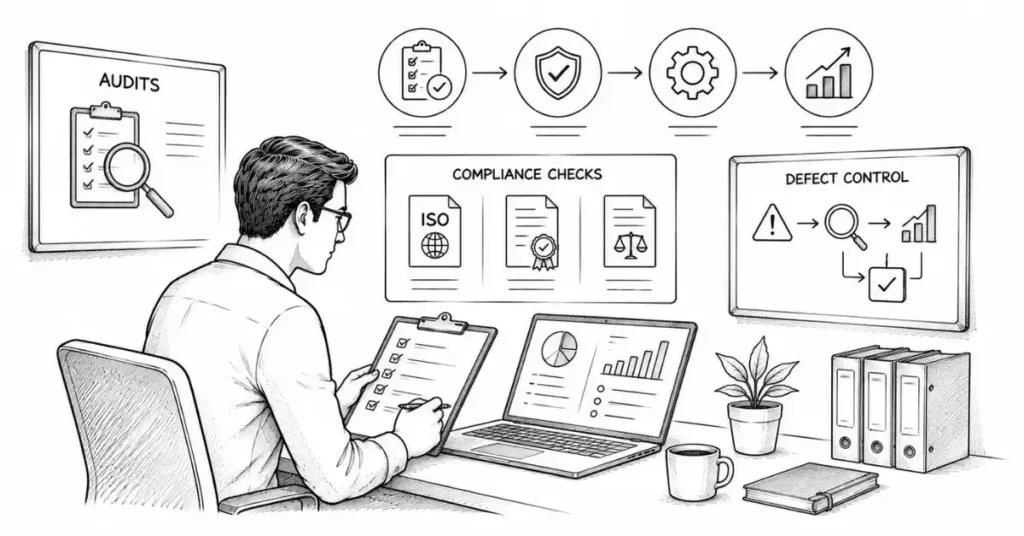
6. Quality and Compliance Management
What It Involves:
Ensuring products meet quality standards, managing supplier quality, driving continuous improvement, and maintaining regulatory compliance.
Career Progression:
Quality Analyst (₹3-5 lakhs) → Quality Manager (₹7-12 lakhs) → Quality Assurance Head (₹15-22 lakhs) → VP Quality & Compliance (₹25-35 lakhs)
Particularly Valuable In:
- Pharmaceuticals: Strict regulatory requirements (FDA, WHO-GMP)
- Automotive: Safety-critical components, stringent standards
- Food & Beverage: FSSAI compliance, safety standards
- Medical Devices: Regulatory compliance, quality systems
- Aerospace: Zero-defect requirements, extensive documentation
Core Responsibilities:
- Implement quality management systems (ISO 9001, etc.)
- Conduct supplier audits and quality assessments
- Drive root cause analysis and corrective actions
- Manage product recalls when necessary
- Ensure regulatory compliance
- Lead Six Sigma and continuous improvement initiatives
- Develop quality metrics and reporting systems
Key Skills:
- Six Sigma methodologies (Green Belt/Black Belt certifications highly valuable)
- Statistical process control (SPC)
- Root cause analysis techniques (5 Whys, Fishbone diagrams)
- Regulatory knowledge specific to industry
- Audit and inspection capabilities
- Documentation and reporting rigor
Best For:
Detail-oriented professionals who care deeply about getting things right, who enjoy systematic problem-solving, and who can balance quality standards with practical business constraints.
Career Note:
Quality management is often considered separate from supply chain, but increasingly they’re converging—quality of supply chain execution (on-time delivery, order accuracy) and quality of products are interrelated.
7. Sustainability and ESG in Supply Chain
What It Involves:
Managing environmental impact of supply chains—carbon footprint reduction, sustainable sourcing, circular economy initiatives, and ESG (Environmental, Social, Governance) compliance.
Career Progression:
Sustainability Analyst (₹5-7 lakhs) → Sustainability Manager (₹10-16 lakhs) → Head of Sustainable Supply Chain (₹18-28 lakhs) → Chief Sustainability Officer (₹30-50+ lakhs)
Why This is Emerging:
- Regulatory pressure (carbon reporting requirements increasing)
- Customer demand (consumers prefer sustainable brands)
- Investor scrutiny (ESG metrics impact valuations)
- Risk management (climate change poses supply risks)
- Cost savings (efficiency improvements often align with sustainability)
Core Responsibilities:
- Measure and report carbon footprint across supply chain (Scope 1, 2, 3 emissions)
- Develop sustainable sourcing strategies
- Implement circular economy initiatives (recycling, remanufacturing)
- Drive renewable energy adoption
- Ensure ethical labor practices in supply chain
- Set and track sustainability targets
- Engage suppliers on sustainability improvements
- Report ESG metrics to investors and regulators
Key Skills:
- Understanding of environmental science and carbon accounting
- Knowledge of sustainability frameworks (GRI, SASB, TCFD)
- Stakeholder engagement and change management
- Data collection and reporting systems
- Project management for sustainability initiatives
- Understanding of relevant regulations
Best For:
Purpose-driven professionals who want careers aligned with environmental and social values, who enjoy cross-functional work, and who can balance idealism with practical business constraints.
Career Appeal:
This emerging specialization offers both meaning (contributing to important global challenges) and growth potential (demand is accelerating). It’s particularly attractive to younger professionals seeking purpose-driven careers.
Salary Reality:
Still developing as a distinct function, so salaries vary widely. Large MNCs and listed companies facing investor pressure pay well. Smaller companies may be early in sustainability journeys with limited budgets.
How to Choose Your Specialization
With multiple attractive options, how do you decide? Consider these factors:
Assess Your Natural Strengths:
- Love numbers and analysis? → Demand Planning or Analytics
- Enjoy negotiation and business conversations? → Procurement
- Prefer hands-on operational environments? → Warehouse Management
- Like solving logistics puzzles? → Transportation Optimization
- Passionate about technology? → Analytics or Automation
- Care about sustainability? → ESG/Sustainability
Consider Market Demand:
Research job postings in your target location and industry. Which specializations have more openings? Which command better compensation?
Currently hot in India:
- Supply chain analytics (highest demand)
- Demand planning (top 5 profiles)
- Procurement specialists
- Last-mile logistics (e-commerce driving)
- Sustainability (emerging but growing)
Evaluate Long-term Growth:
Which specializations position you for senior leadership? Analytics and demand planning often lead to broader supply chain leadership. Procurement and operations management also provide excellent foundations.
Industry Alignment:
Different industries value different specializations:
- E-commerce: Warehousing, last-mile logistics, analytics
- Manufacturing: Procurement, production planning, quality
- FMCG: Demand planning, distribution, procurement
- Pharmaceuticals: Quality/compliance, procurement, cold chain
- Technology: Procurement (high IT/services spend), analytics
Education and Background:
Your educational background influences feasibility:
- Engineering/Data Science: Analytics is natural fit
- Commerce/Economics: Procurement or demand planning work well
- Any background: Logistics, warehousing, operations are accessible
Lifestyle Preferences:
- Prefer desk-based work? → Analytics, Demand Planning, Procurement
- Enjoy field work? → Warehouse Management, Logistics
- Want 9-6 schedule? → Procurement, Planning (usually regular hours)
- Comfortable with 24/7 operations? → Warehousing, Logistics
Geographic Mobility:
Some specializations concentrate in specific locations:
- E-commerce fulfillment: Bangalore, Mumbai, NCR
- Manufacturing procurement: Industrial clusters (Pune, Chennai, Ahmedabad)
- 3PL logistics: Major port cities and transportation hubs
Practical Steps to Develop Your Specialization
Once you’ve chosen your focus:
Build Foundational Knowledge:
- Take specialized courses (Coursera, Udemy, LinkedIn Learning)
- Read specialization-specific publications
- Join professional groups (APICS special interest groups, LinkedIn communities)
- Follow thought leaders in your specialization
Gain Practical Experience:
- Seek projects in your target specialization at current job
- Volunteer for cross-functional initiatives exposing you to the function
- Take lateral moves into specialized roles
- Accept temporary assignments or rotations
Develop Technical Skills:
- Master specialized software (SAP modules, demand planning tools, analytics platforms)
- Learn relevant methodologies (Six Sigma, statistical forecasting, negotiation techniques)
- Build coding skills if pursuing analytics
- Obtain specialized certifications
Network Within the Specialization:
- Connect with specialists on LinkedIn
- Attend specialized conferences and webinars
- Join professional associations
- Find mentors working in your target area
Document Your Expertise:
- Create portfolio of specialized projects
- Write articles or posts about your specialization
- Present at internal meetings or external forums
- Quantify your specialized achievements on resume
Position Your Personal Brand:
Update LinkedIn profile emphasizing your specialization, engage with specialized content, and build reputation as emerging expert in your focus area.
The Truth About Specialization Timing
When to specialize?
Years 0-3: Broad exposure is valuable. Don’t over-specialize too early. Understand how different supply chain functions connect.
Years 3-5: Natural time to develop a specialization. You’ve seen enough to know what interests you, but you’re early enough to pivot.
Years 5-8: Specialization should be clear. You’re building deep expertise and reputation in your domain.
Years 8+: You’re a recognized specialist. Continue deepening expertise while building leadership capabilities.
Can you change specializations later? Yes, but it’s harder after 7-8 years. Some transitions are easier (demand planning to analytics, procurement to operations) than others (analytics to warehouse management).
Final Thoughts: Your Unique Path
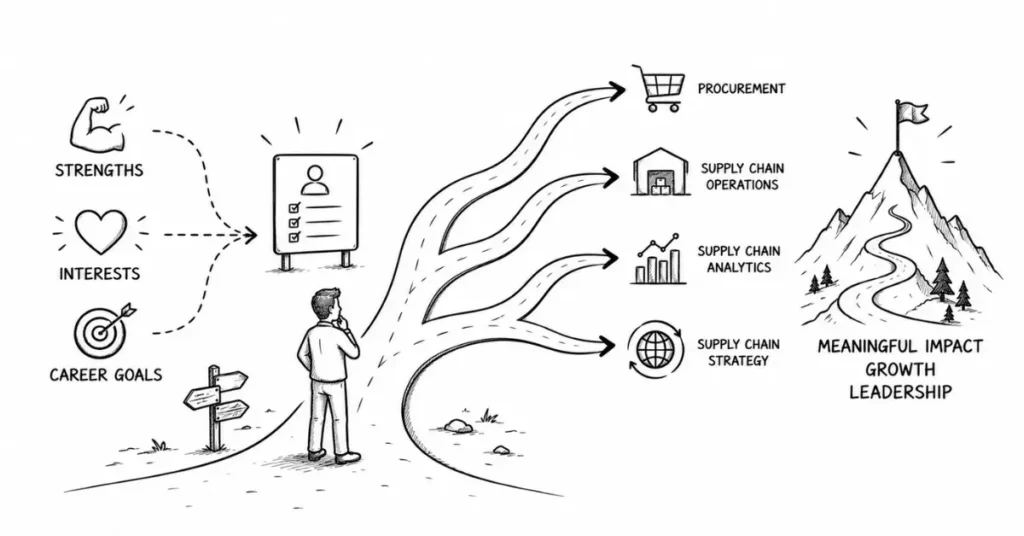
There’s no single “best” supply chain specialization—only the best fit for your unique combination of interests, strengths, and circumstances. The Indian supply chain market is large and growing enough to support successful careers in every specialization.
The key is choosing deliberately based on self-awareness rather than defaulting into a path accidentally. Those who specialize strategically, build deep expertise, and become known for their domain mastery consistently outpace generalists in both compensation and career advancement.
Start by exploring different areas through projects and rotations. Pay attention to what energizes versus drains you. Then commit to building expertise in your chosen domain while remaining curious about the broader supply chain ecosystem.
Your specialization will become a key part of your professional identity and competitive advantage. Choose wisely, invest deeply, and watch your supply chain career flourish.