Supply Chain Career Roadmap: 0-15 Years Progression
Table of Contents
Introduction: Your Career is a Marathon, Not a Sprint
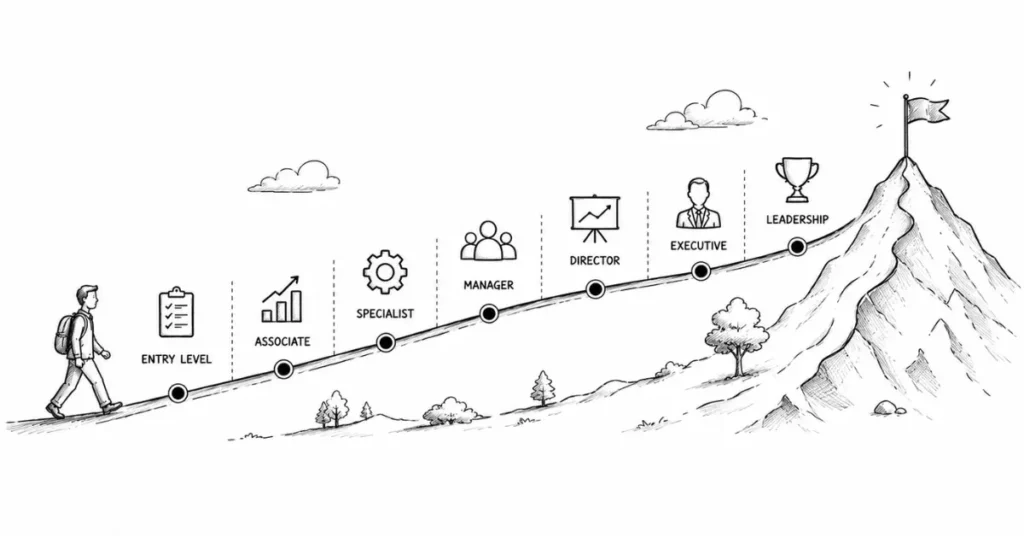
“Where will I be in 5 years? In 10 years?” These are questions every supply chain professional asks, especially when starting out. You see senior managers earning ₹20+ lakhs and directors at ₹35+ lakhs, and wonder: How do I get there? What’s the path? How long will it take?
Here’s the reality: Supply chain careers follow predictable progression patterns, but success isn’t automatic. Two people starting together can end up in very different places 10 years later—one as a director earning ₹30+ lakhs, another stuck at mid-level around ₹12 lakhs. The difference? Strategic career management, continuous skill development, and understanding the roadmap.
This guide provides your complete career progression timeline from fresh graduate to executive leadership. I’ll break down what happens at each stage (0-3 years, 3-7 years, 7-12 years, 12+ years), what skills matter most, when to pursue certifications, typical salary progression, and critical transition points that make or break careers.
Think of this as your GPS for supply chain career navigation—showing you not just the destination, but the exact route, milestones, and turns along the way.
PHASE 1: YEARS 0-3 – FOUNDATION BUILDING & LEARNING
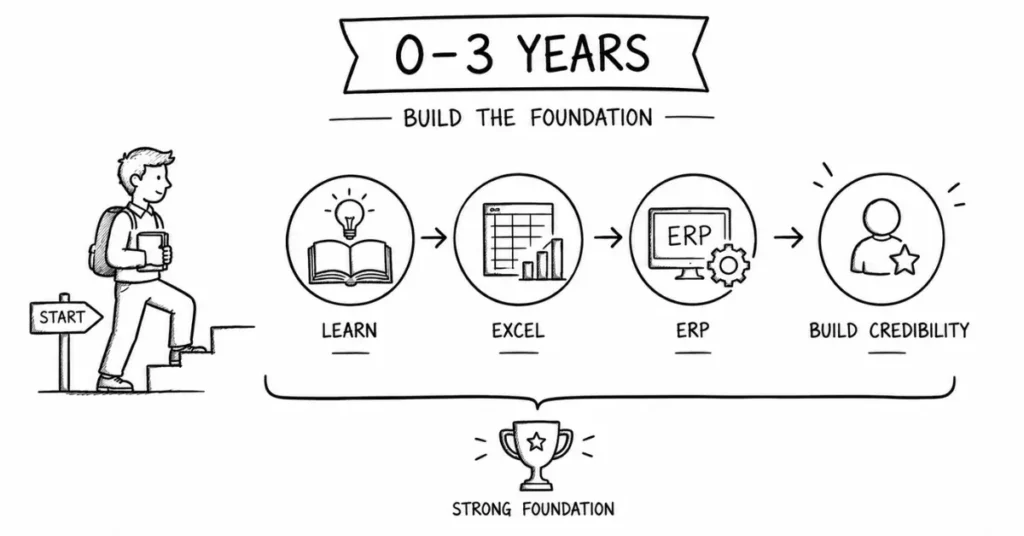
Career Stage: Entry-Level Professional
Typical Titles:
- Supply Chain Analyst
- Logistics Coordinator
- Procurement Executive
- Inventory Analyst
- Operations Assistant
- Warehouse Coordinator
Typical Salary Range: ₹2.5-7 lakhs (depending on company, location, education)
Primary Objectives in This Phase
Learn How Supply Chains Actually Work
Your education taught concepts; now you learn reality:
- How ERP systems function in practice
- Why theoretical optimal solutions don’t always work
- How different functions (procurement, logistics, planning, operations) interact
- The gap between plan and execution
- How to deal with constant disruptions and exceptions
Focus: Be a sponge. Absorb everything. Ask questions. Understand the “why” behind processes, not just the “how.”
Build Core Technical Skills
Must Develop:
- Advanced Excel: Master pivot tables, VLOOKUP/INDEX-MATCH, basic macros, data analysis
- ERP Systems: Learn navigation, transactions, basic reporting in SAP/Oracle/Dynamics
- Supply Chain Fundamentals: Deepen understanding of inventory management, forecasting, logistics
- Communication: Written (emails, reports) and verbal (presentations, meetings)
- Attention to Detail: Develop reputation for accuracy and thoroughness
How to Accelerate:
- Volunteer for extra projects beyond your job description
- Take online courses (Coursera, LinkedIn Learning) outside work hours
- Read supply chain publications and blogs
- Practice Excel skills with real work data
- Request training opportunities from your manager
Understand Your Organization
Critical Learning:
- How your company makes money
- Key supply chain challenges in your industry
- Who the important stakeholders are (internal and external)
- How decisions get made
- Company culture and unwritten rules
Why It Matters: Understanding organizational dynamics helps you navigate effectively and position yourself for advancement.
Develop Professional Credibility
Build Your Reputation:
- Consistently meet deadlines and deliverables
- Be reliable—do what you say you’ll do
- Maintain positive attitude even when tasks are mundane
- Support colleagues and be a team player
- Take ownership when things go wrong
Reality Check: Early career involves grunt work—data entry, status tracking, meeting coordination. How you handle unglamorous tasks determines whether managers give you better opportunities.
Key Milestones: Years 0-3
Year 1:
- Milestone: Complete onboarding, understand your specific role thoroughly
- Skills: Basic Excel, ERP navigation, company processes
- Salary: Starting salary (₹2.5-7 lakhs typically)
- Focus: Learn, absorb, build credibility
Year 2:
- Milestone: Take on expanded responsibilities, lead small projects
- Skills: Intermediate Excel, deeper ERP knowledge, basic analysis
- Salary: 8-12% increment (₹3-8 lakhs range)
- Focus: Demonstrate competence, expand scope
Year 3:
- Milestone: Promotion to senior analyst or specialist role, OR strategic job change
- Skills: Advanced Excel, specialized knowledge in your function, beginning leadership
- Salary: ₹4-9 lakhs (or ₹6-12 lakhs with job change)
- Focus: Position for mid-level transition
Common Mistakes to Avoid (Years 0-3)
❌ Job hopping too frequently: Staying less than 18 months looks unstable
❌ Staying too long in wrong role: If learning has stopped after 2.5 years, consider moving
❌ Ignoring skill development: Expecting experience alone to advance career
❌ Poor attitude: Complaining about routine work instead of excelling at it
❌ Not networking: Keeping head down without building relationships
❌ Pursuing certifications too early: APICS CSCP not useful yet; focus on practical skills
Strategic Decisions: End of Year 3
Should You Stay or Move?
Stay at Current Company If:
✅ You’re learning rapidly and challenged
✅ Clear promotion path visible (senior analyst/specialist role imminent)
✅ Good manager who invests in your development
✅ Company growing and creating opportunities
✅ You’re building valuable specialized expertise
Consider Moving If:
❌ Learning has plateaued
❌ No clear advancement path for 2+ years
❌ Poor manager with no development support
❌ Company/industry declining
❌ Better opportunity elsewhere (20-30% salary jump possible with strategic move)
Typical Pattern: High performers often stay 2.5-3.5 years at first company, then make strategic move to accelerate career.
PHASE 2: YEARS 3-7 – MID-LEVEL MANAGEMENT & SPECIALIZATION
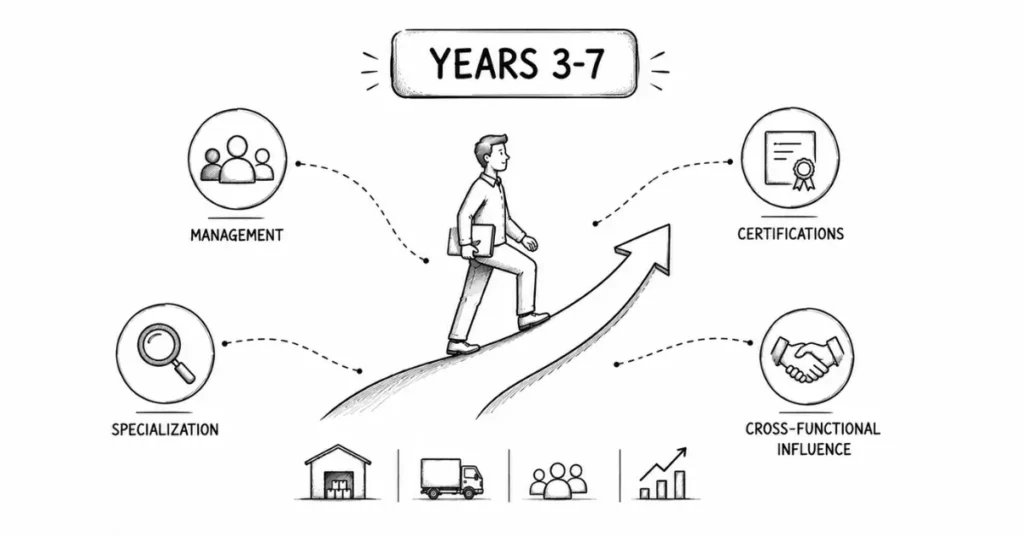
Career Stage: Mid-Level Manager/Specialist
Typical Titles:
- Supply Chain Manager
- Logistics Manager
- Procurement Manager
- Operations Manager
- Demand Planner
- Warehouse Manager
- Category Manager
Typical Salary Range: ₹8-18 lakhs (strong performers: ₹15-20 lakhs by year 7)
Primary Objectives in This Phase
Transition from Doer to Manager
Fundamental Shift:
- Before: You executed tasks yourself
- Now: You lead teams, delegate work, ensure others succeed
- Challenge: Many struggle because doing feels faster than teaching others
New Responsibilities:
- Managing 5-15 people (coordinators, analysts, specialists)
- Budget oversight (₹50 lakhs to ₹5 crores depending on role)
- Cross-functional coordination with sales, finance, operations
- Vendor/partner relationship management
- Making operational decisions with limited guidance
Leadership Development Needed:
- Setting clear expectations and goals
- Delegating effectively without micromanaging
- Providing constructive feedback
- Managing performance (both high and low performers)
- Motivating diverse personalities
- Conflict resolution
Develop Deep Functional Expertise
Choose Your Specialization:
This is when you typically specialize (though you can pivot later):
- Procurement & Sourcing: Deep category knowledge, negotiation mastery
- Logistics & Transportation: Network optimization, carrier management
- Demand Planning: Advanced forecasting, S&OP facilitation
- Operations Management: Process improvement, productivity optimization
- Warehouse Management: Facility operations, automation implementation
- Supply Chain Analytics: Data science, predictive modeling
Why Specialization Matters:
- Deeper expertise commands premium compensation
- Becomes your professional identity and competitive advantage
- Creates career options within specialization across industries
- Positions you for senior leadership in that function
How to Deepen Expertise:
- Pursue specialized certifications (APICS CSCP/CPIM now makes sense)
- Attend specialized conferences and webinars
- Read specialized publications
- Join professional associations (APICS local chapters)
- Build network within your specialization
- Take on complex projects in your domain
Build Strategic Thinking
Moving Beyond Tactical:
- Understanding how your function impacts overall business performance
- Connecting supply chain decisions to P&L implications
- Anticipating future challenges, not just solving today’s problems
- Developing business cases for investments
- Balancing short-term firefighting with long-term improvements
Business Acumen Development:
- Learn to read financial statements (income statement, balance sheet, cash flow)
- Understand your company’s business model and competitive positioning
- See supply chain through executive eyes (revenue, margin, cash flow)
- Quantify your impact in business terms (₹X crores saved, Y% margin improvement)
Expand Cross-Functional Influence
Critical Skill:
Supply chain success requires influencing people you don’t manage:
- Sales teams (aligning demand forecasts)
- Finance (justifying inventory investments)
- Manufacturing (balancing efficiency vs. flexibility)
- Marketing (coordinating promotions with supply availability)
- IT (prioritizing technology enhancements)
How to Build Influence:
- Understand other functions’ goals and constraints
- Speak their language (ROI for finance, customer satisfaction for sales)
- Build personal relationships through coffee chats and informal interactions
- Deliver consistently on commitments
- Find win-win solutions rather than compromising
- Use data to support recommendations
Key Milestones: Years 3-7
Year 4:
- Milestone: Solid manager role, leading meaningful team/projects
- Skills: Team management, specialized functional depth, cross-functional collaboration
- Salary: ₹9-14 lakhs
- Focus: Master management fundamentals, deepen specialization
Year 5:
- Milestone: Consider strategic job change (typical timing for 25-40% salary jump)
- Skills: Advanced functional expertise, proven leadership track record
- Salary: ₹11-16 lakhs (or ₹14-20 lakhs with strategic move)
- Certifications: APICS CSCP or CPIM completion
- Focus: Build reputation as strong mid-level leader
Year 6:
- Milestone: Senior manager consideration or expanded scope
- Skills: Strategic thinking developing, business acumen growing
- Salary: ₹13-18 lakhs
- Focus: Position for senior leadership transition
Year 7:
- Milestone: Promotion to senior manager OR transition to new company at senior level
- Skills: Full management competence, recognized functional expert
- Salary: ₹15-22 lakhs (top performers: ₹22-28 lakhs)
- Focus: Prepare for strategic leadership roles
Critical Certifications: Years 3-7
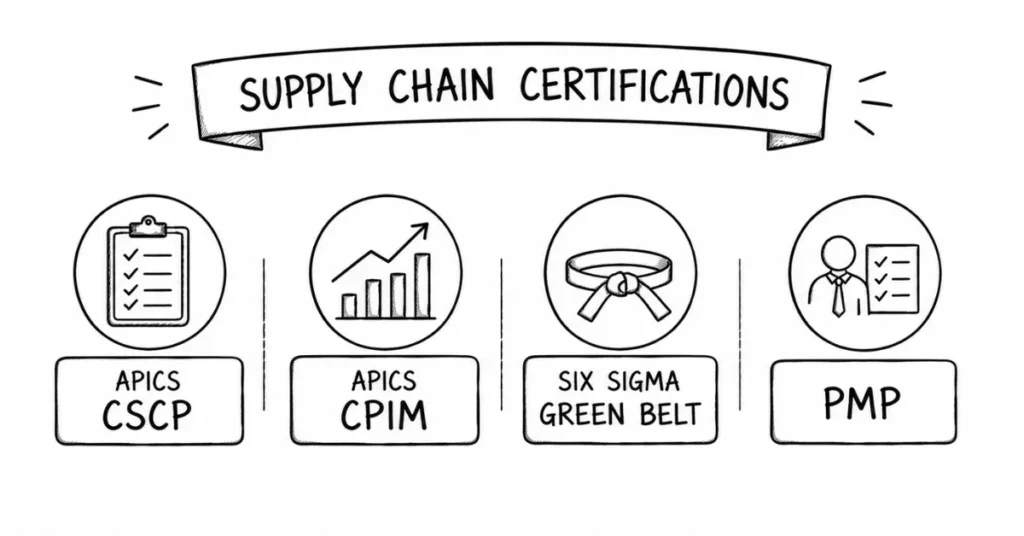
High-Value Certifications to Pursue:
Year 4-5:
- APICS CSCP (Certified Supply Chain Professional) – Broad supply chain expertise
- APICS CPIM (Certified in Production and Inventory Management) – Manufacturing focus
- Six Sigma Green Belt – Process improvement capability
Year 6-7:
- Six Sigma Black Belt – Advanced process improvement leadership
- PMP (Project Management Professional) – If leading major projects
- Industry-specific certifications – Pharma (GDP, GMP), Dangerous Goods (IATA DGR), etc.
ROI Reality:
Certifications at this stage can increase salary by ₹1.5-3 lakhs when changing jobs, particularly with MNCs. They also signal commitment to professional development.
Common Mistakes to Avoid (Years 3-7)
❌ Staying too long without promotion: If no advancement after 5 years, something’s wrong
❌ Moving too frequently: Jumping every 18 months looks opportunistic
❌ Avoiding people management: Technical individual contributor path has ceiling
❌ Not investing in leadership skills: Assuming technical expertise alone is enough
❌ Ignoring business acumen: Remaining purely functional without strategic perspective
❌ Not building network: Keeping head down without industry connections
❌ Poor work-life balance: Burning out before reaching senior levels
Strategic Career Moves: Years 3-7
Optimal Job Change Strategy:
Pattern 1 (Aggressive Growth):
- Years 0-3: Company A (learning foundation)
- Years 3-5: Company B (manager role, 30% salary jump)
- Years 6-8: Company C (senior manager, 25% salary jump)
Result: ₹6 lakhs → ₹13 lakhs → ₹21 lakhs (3.5x growth in 8 years)
Pattern 2 (Balanced Growth):
- Years 0-4: Company A (analyst to senior analyst)
- Years 4-8: Company B (manager to senior manager)
- Year 8+: Consider next strategic move
Result: ₹5 lakhs → ₹8 lakhs → ₹16 lakhs (3.2x growth in 8 years)
When to Move Companies:
Good Reasons:
✅ Significantly better role/scope (not just title)
✅ 20-30%+ salary increase
✅ Better company/industry opportunity
✅ Relocation for personal reasons
✅ Current company has limited growth potential
Bad Reasons:
❌ Slightly higher salary (less than 15%)
❌ Grass-is-greener thinking without research
❌ Running from challenges instead of solving them
❌ Following friends/colleagues without evaluating fit
❌ Prestige alone without considering learning opportunity
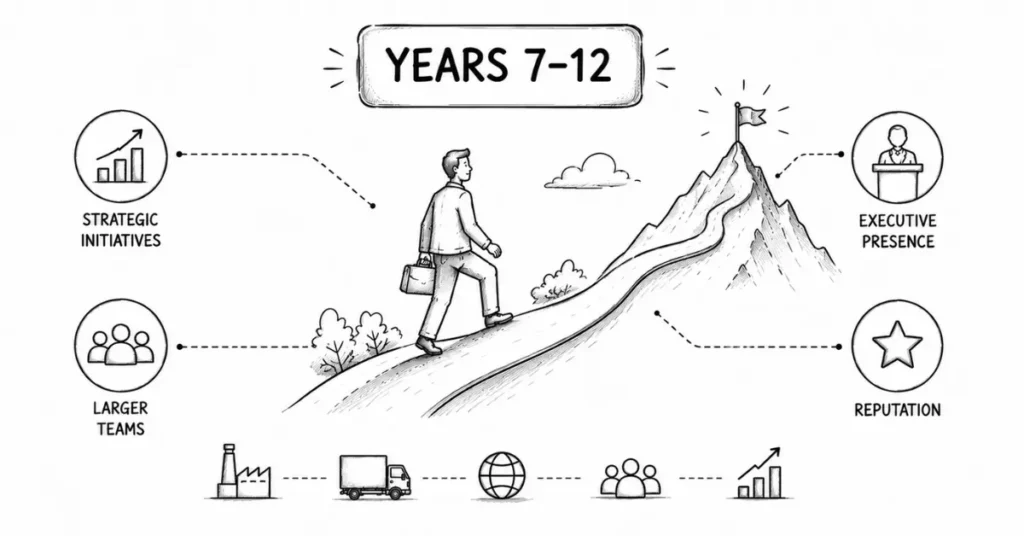
PHASE 3: YEARS 7-12 – SENIOR MANAGEMENT & STRATEGIC ROLES
Career Stage: Senior Manager / Associate Director / Director
Typical Titles:
- Senior Supply Chain Manager
- Associate Director – Supply Chain
- Director – Procurement/Logistics/Operations
- Head of Planning/Warehousing/Distribution
- Regional Supply Chain Manager
Typical Salary Range: ₹18-32 lakhs (strong performers at large companies: ₹28-40 lakhs)
Primary Objectives in This Phase
Lead Strategic Initiatives
Your Role Expands:
- Setting functional strategy (not just executing someone else’s strategy)
- Multi-year planning and capability building
- Major transformation projects (ERP implementations, network redesign, automation)
- Building organizational capabilities and processes
- Representing supply chain in leadership discussions
Examples of Strategic Leadership:
- Designing distribution network strategy for 3-5 year horizon
- Leading SAP S/4HANA migration impacting entire supply chain
- Building supply chain analytics capabilities from scratch
- Establishing sustainability programs and targets
- Creating talent development pipelines
Manage Larger Teams and Budgets
Scale Increases:
- Teams: 30-100+ people (direct and indirect reports)
- Budgets: ₹10-100+ crores depending on company size
- Geographic scope: Often regional or national responsibility
- Functional breadth: May manage multiple sub-functions
Leadership Complexity:
- Managing managers (not just individual contributors)
- Building leadership bench and succession planning
- Driving culture and organizational change
- Balancing competing priorities across teams
- Making difficult decisions impacting many people
Develop Executive Presence
New Requirements:
- Presenting to C-suite and board
- Representing company in external forums
- Media/PR interactions (in some cases)
- Industry thought leadership
- Executive communication style (concise, strategic, business-focused)
Shift in Communication:
- Before: Detailed analysis and recommendations
- Now: Executive summaries with clear recommendations, knowing details if asked
- Focus on business outcomes, not operational metrics
- Comfortable with ambiguity and incomplete information
Build Industry Reputation
Why It Matters:
Senior roles often filled through networks, not job postings. Your reputation matters enormously.
How to Build Reputation:
- Speak at industry conferences and webinars
- Write articles for supply chain publications
- Active thought leadership on LinkedIn
- Participate in professional associations (APICS leadership)
- Mentor younger professionals
- Serve on advisory boards or committees
Key Milestones: Years 7-12
Year 8:
- Milestone: Senior Manager or Associate Director role
- Skills: Strategic thinking, executive presence developing, talent development
- Salary: ₹18-25 lakhs
- Focus: Prove strategic leadership capability
Year 9:
- Milestone: Lead major transformation project successfully
- Skills: Change management at scale, stakeholder management, organizational influence
- Salary: ₹20-28 lakhs
- Focus: Demonstrate enterprise-level impact
Year 10:
- Milestone: Director-level promotion or move to Director role elsewhere
- Skills: Functional strategy ownership, executive communication mastery
- Salary: ₹22-32 lakhs (top tier: ₹30-40 lakhs)
- Focus: Establish thought leadership
Year 11-12:
- Milestone: Expand scope or consider VP track
- Skills: Enterprise thinking, cross-functional leadership, industry expertise
- Salary: ₹25-38 lakhs
- Focus: Position for VP/CSCO path
Education Considerations: Years 7-12
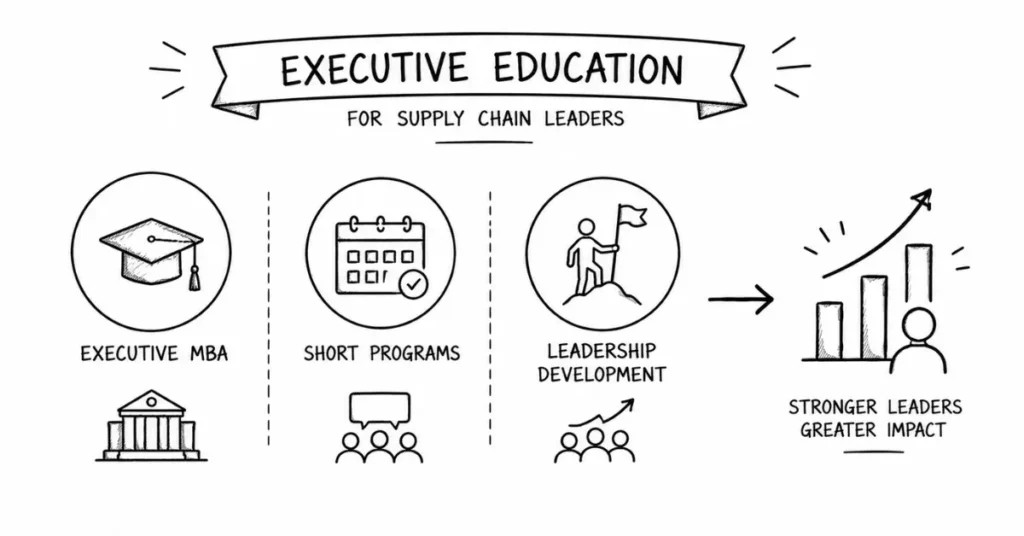
Should You Pursue Executive MBA?
Consider Executive MBA If:
✅ You don’t have MBA and it’s hindering advancement
✅ Company sponsors cost (₹15-30 lakhs for quality programs)
✅ Significant skill gaps in finance, strategy, marketing
✅ Career plateau and need credential boost
✅ Want career pivot into consulting or different industry
Skip Executive MBA If:
❌ You already have good MBA
❌ Self-funded and tight finances
❌ Career advancing well without it
❌ Can address skill gaps through shorter executive programs
Alternatives to Full Executive MBA:
- IIM Executive Education programs (3-12 months, ₹3-8 lakhs)
- Industry-specific leadership programs
- Global executive programs (INSEAD, Wharton, LBS short programs)
- Focus on demonstrable results over additional credentials
Common Mistakes to Avoid (Years 7-12)
❌ Staying in comfort zone: Not taking calculated career risks
❌ Micromanaging: Failing to delegate and develop others
❌ Losing technical touch: Becoming too far removed from operations
❌ Political games: Getting caught in organizational politics
❌ Neglecting network: Not building industry connections
❌ Work-life imbalance: Sacrificing health and relationships
❌ Arrogance: Forgetting humility and continuous learning
Strategic Career Decisions: Years 7-12
The Director-Level Crossroads:
Around year 10-12, most professionals face a critical choice:
Path A: Specialist Director
- Deep functional expertise (Director – Procurement, Director – Logistics)
- Become best-in-class in your specialization
- Industry-recognized expert
- Salary ceiling: ₹30-45 lakhs typically
- Best for: Those who love their specialization and want mastery
Path B: General Manager / VP Track
- Broader scope across supply chain functions
- Enterprise leadership perspective
- Path to CSCO/COO roles
- Salary potential: ₹40-70+ lakhs at VP/CSCO levels
- Best for: Those energized by strategy, business leadership, cross-functional roles
How to Choose:
Consider what energizes you. Do you love deep functional challenges, or are you more excited by broad business strategy and leadership? Neither is better—they’re different paths with different rewards.
PHASE 4: YEARS 12-15+ – EXECUTIVE LEADERSHIP
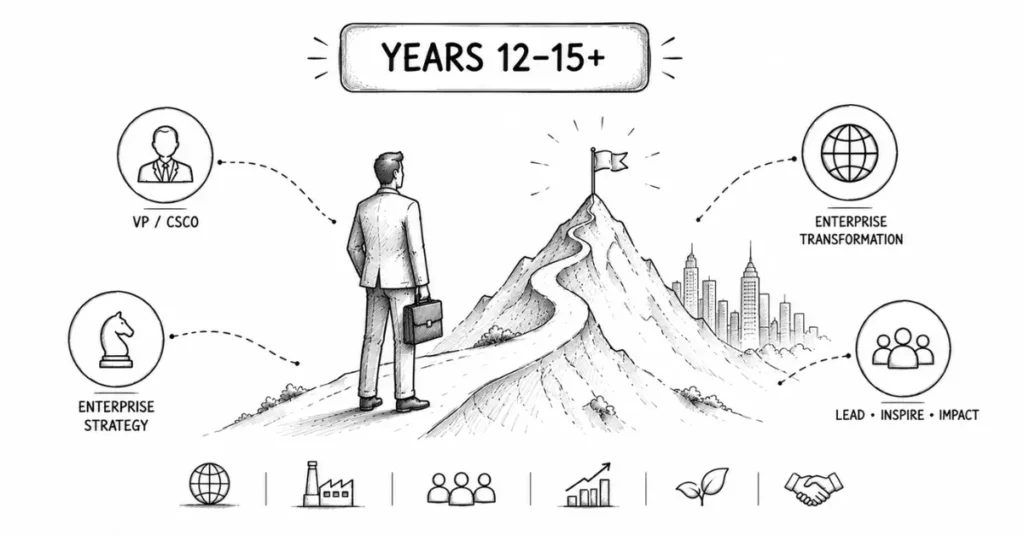
Career Stage: VP / CSCO / COO
Typical Titles:
- Vice President – Supply Chain
- Chief Supply Chain Officer (CSCO)
- Chief Operations Officer (COO)
- Head of Supply Chain (Enterprise)
Typical Salary Range: ₹35-70+ lakhs (Large corporates: ₹50-100+ lakhs total compensation)
Primary Objectives in This Phase
Enterprise Strategy Leadership
Your Responsibility:
- Setting enterprise supply chain vision and strategy
- Aligning supply chain with overall business strategy
- Board-level presentations on supply chain performance
- Major capital allocation decisions (₹50-500+ crore investments)
- M&A integration from supply chain perspective
- Industry positioning and competitive differentiation through supply chain
Organizational Transformation
Leading Change at Scale:
- Digital transformation initiatives
- Cultural change programs
- Organizational restructuring
- Geographic expansion supply chain setup
- Sustainability and ESG strategy implementation
- Building next-generation capabilities
Stakeholder Management at Highest Levels
Key Relationships:
- CEO and board of directors
- CFO (balancing investment and returns)
- Other C-suite executives
- Investors and analysts (for listed companies)
- Industry associations and government bodies
- Media and public relations
Talent and Succession
Building the Pipeline:
- Developing future supply chain leaders
- Succession planning for critical roles
- Creating learning and development programs
- Attracting top talent to organization
- Building high-performance culture
Key Characteristics of Successful Executives
What Got You Here Won’t Get You There:
Years 0-7: Technical expertise and hard work
Years 7-12: Strategic thinking and leadership
Years 12+: Vision, influence, and organizational impact
Executive-Level Competencies:
- Strategic vision and long-term thinking
- Enterprise perspective (not just functional)
- Influence without authority at highest levels
- Comfortable with ambiguity and complexity
- Resilience under pressure
- Executive presence and gravitas
- Building and leading leadership teams
- Political savvy and stakeholder navigation
Compensation at Executive Levels
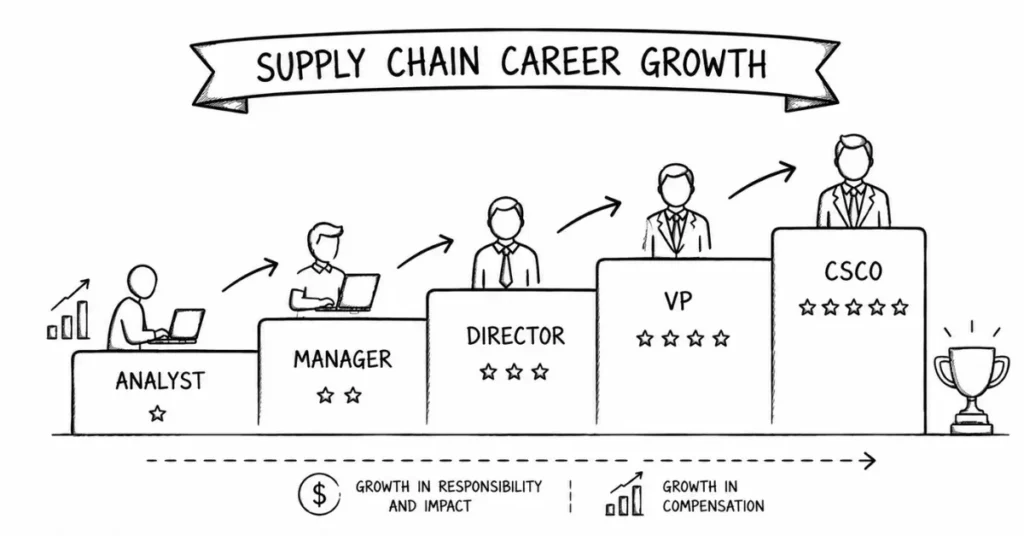
VP Supply Chain:
- Base salary: ₹25-40 lakhs
- Performance bonus: 30-50% of base
- Stock options: Variable (significant in listed companies)
- Total compensation: ₹35-60 lakhs
- Top tier (large MNCs/corporates): ₹50-80 lakhs
CSCO:
- Total compensation: ₹45-100+ lakhs
- Exists primarily in companies: ₹5,000+ crore revenue
- Top companies (Reliance, Tata, HUL, etc.): ₹70-120+ lakhs possible
The Reality of Executive Career Paths
Important Truths:
Not Everyone Becomes VP/CSCO
- These roles are limited (one per company)
- Many successful careers plateau at Director level (₹30-45 lakhs)
- That’s still excellent achievement and compensation
- Fulfillment doesn’t require C-suite title
Luck and Timing Matter
- Being in right company at right time
- Having executive sponsor/mentor
- Company growth creating opportunities
- Sometimes external factors beyond your control
Trade-offs Intensify
- Work-life balance often suffers
- High stress and pressure
- Constant travel (in some cases)
- Personal life sacrifices
- Job security concerns (executive roles more vulnerable)
Alternative Paths Exist
- Senior consulting roles
- Board advisor/non-executive director positions
- Entrepreneurship (starting supply chain services company)
- Teaching/academic careers
- Industry association leadership
COMPLETE 15-YEAR PROGRESSION SUMMARY
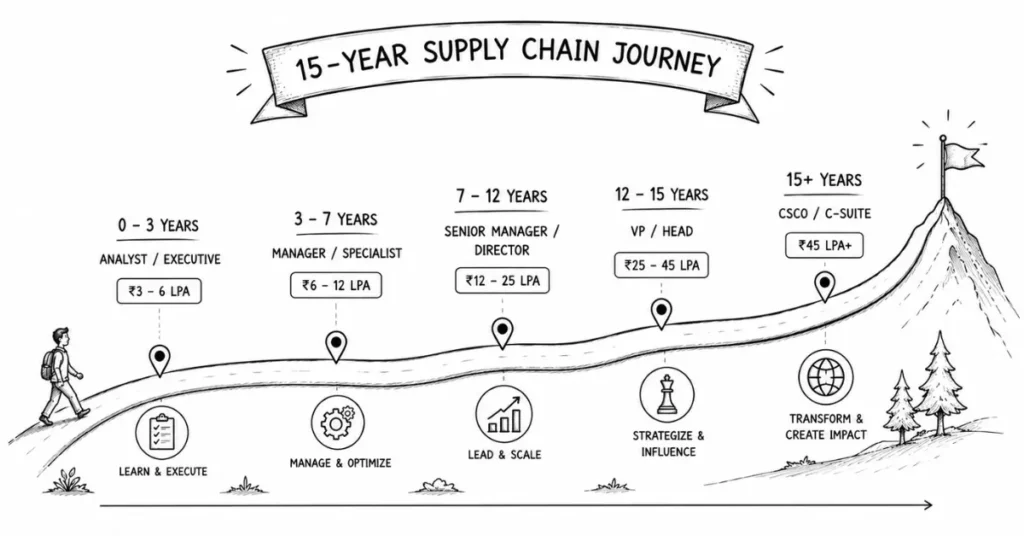
Typical Successful Career Trajectory
Years | Title | Salary Range | Key Focus |
0-1 | Analyst/Coordinator | ₹2.5-5L | Learning fundamentals |
1-3 | Senior Analyst | ₹4-8L | Building expertise |
3-5 | Manager | ₹8-14L | Leading teams |
5-7 | Senior Manager | ₹13-20L | Strategic impact |
7-10 | Associate Director/Director | ₹18-30L | Functional leadership |
10-15 | Director/VP | ₹25-50L | Enterprise leadership |
15+ | VP/CSCO | ₹40-80L+ | Executive strategy |
Salary Growth: ₹3L → ₹50L (16x over 15 years for high performers)
Final Thoughts: Your Career is Yours to Shape
Supply chain careers offer tremendous growth potential—both financially and professionally. The pathway from ₹3 lakhs to ₹30+ lakhs over 12-15 years is very achievable with strategic career management.
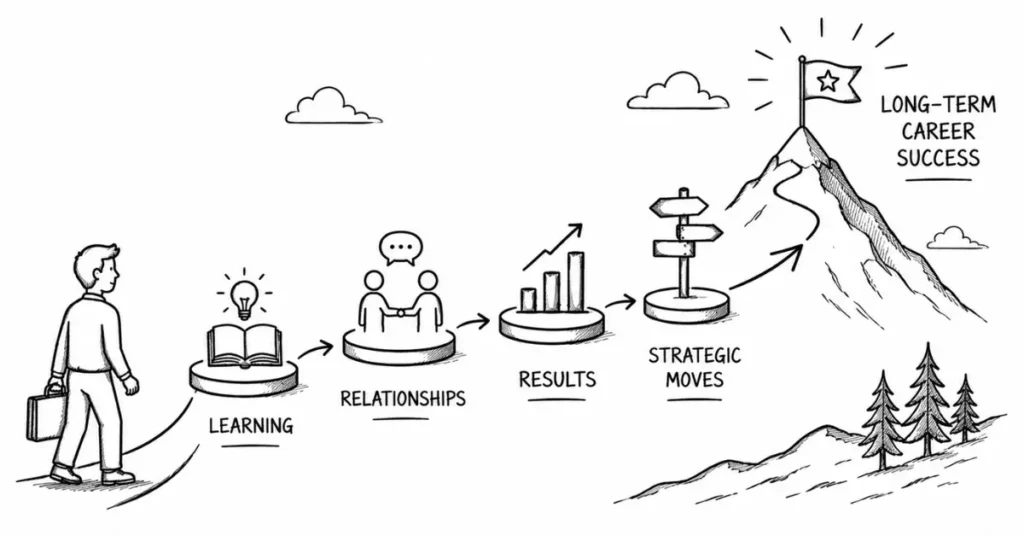
Keys to Success:
- Continuous learning – Never stop developing skills
- Strategic moves – Change companies deliberately every 3-5 years (not randomly)
- Build relationships – Network within and outside your organization
- Deliver results – Performance matters more than politics
- Balance patience and ambition – Move fast but not recklessly
- Invest in yourself – Certifications, education, skills
- Know yourself – Choose path aligned with your strengths and values
Your career is a 30-40 year journey. The roadmap I’ve outlined gets you to senior leadership in 12-15 years, but remember—success is personal. A fulfilling career at ₹18 lakhs doing work you love beats a miserable executive role at ₹50 lakhs.
Navigate deliberately, learn continuously, and build a supply chain career you’re proud of.