
SOCIAL MEDIA MANAGER CAREER GUIDE
Table of Contents
What Does a Social Media Manager Actually Do?
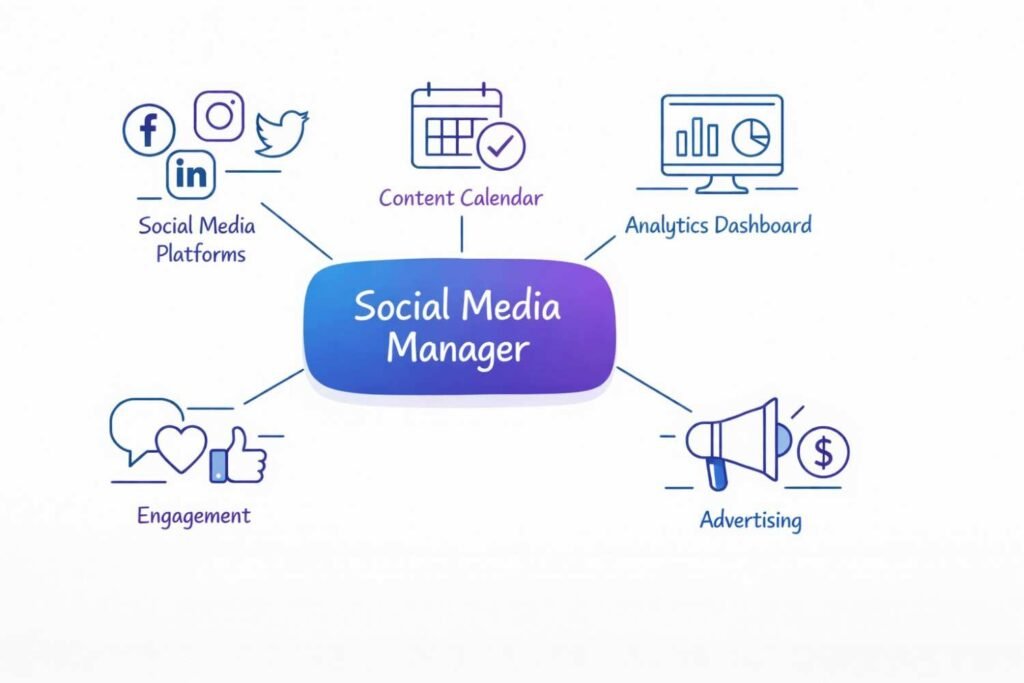
Social media managers are the voice of brands online. When you see a company’s Instagram post go viral, a witty tweet that gets thousands of shares, or a LinkedIn article that positions a CEO as a thought leader—there’s a social media manager orchestrating it all behind the scenes.
But it’s far more than just posting pretty pictures. Social media managers develop strategies to build communities, increase brand awareness, drive website traffic, generate leads, and ultimately contribute to revenue. They’re part strategist, part creative director, part customer service representative, and part data analyst—all rolled into one.
In 2026, India has over 900 million social media users, with platforms like Instagram, WhatsApp, YouTube, and LinkedIn dominating daily engagement. This massive audience means businesses desperately need skilled professionals who understand how to capture attention, spark conversations, and convert followers into customers. Whether you’re managing social media for a local bakery in Hyderabad or a national edutech platform, the core principles remain the same: authentic engagement, strategic content, and measurable results.
A Day in the Life of a Social Media Manager
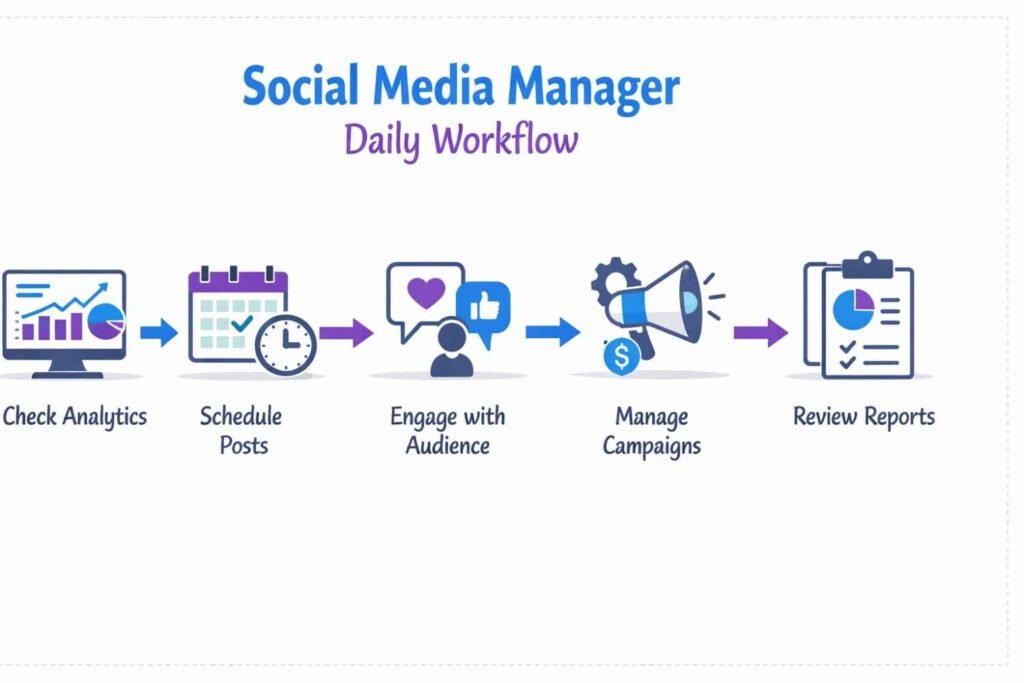
Let’s walk through what a typical workday looks like for a social media manager in India:
Morning (9:00 AM – 11:00 AM)
- Check notifications and respond to urgent messages or comments from overnight
- Review analytics from previous day’s posts to see what performed well
- Monitor brand mentions across all platforms using social listening tools
- Check trending topics and hashtags relevant to your industry
- Respond to customer queries and comments across Instagram, Facebook, LinkedIn, and Twitter
- Schedule posts for optimal engagement times using tools like Hootsuite or Buffer
Mid-Morning (11:00 AM – 1:00 PM)
- Create content for the day—write captions, design graphics, edit short videos
- Collaborate with design team on visual assets for upcoming campaigns
- Engage with followers by liking, commenting, and sharing user-generated content
- Research competitor activities to identify gaps and opportunities
- Brief influencers or coordinate collaborations for sponsored content
- Monitor campaign performance if running paid social ads
Afternoon (2:00 PM – 4:00 PM)
- Join meetings with marketing team to align social media with broader campaigns
- Plan content for the coming week using editorial calendar
- Conduct audience research to understand follower demographics and preferences
- Experiment with new content formats (Instagram Reels, LinkedIn carousels, YouTube Shorts)
- Respond to additional comments and messages to maintain engagement
- Research trending audio and hashtags for upcoming Reels or short-form videos
Late Afternoon (4:00 PM – 6:00 PM)
- Analyze week’s performance metrics—reach, engagement rate, follower growth
- Create weekly or monthly reports showing social media impact on business goals
- Brainstorm creative campaign ideas for next month
- Stay updated on platform algorithm changes and new features
- Schedule posts for evening and next morning when engagement peaks
- Wrap up urgent tasks and set priorities for tomorrow
Social media management is highly dynamic. One day might focus on crisis management (responding to negative feedback), while another involves creating viral campaign concepts.
Platform-Specific Strategies for Indian Audiences
Each social platform requires different content strategies. Here’s what works in 2026
Instagram (414 Million Users in India)
Instagram dominates visual content and short-form video consumption, especially among 18-34 age groups.
Content Strategy:
- Reels are king: Hook viewers in the first 2-3 seconds, participate in trends while adding original context, and post Reels to both Reels feed and main feed for double exposure
- Carousels increase engagement: Use storytelling across slides, “swipe to reveal” formats, educational breakdowns, or before/after comparisons to boost dwell time
- Stories for daily engagement: Use polls, quizzes, question stickers, and behind-the-scenes content to build intimate connections
- Optimal posting times: 11 AM–1 PM and 7 PM–9 PM IST for maximum engagement
- Algorithm priorities: Instagram favors content that generates saves, shares, and comments over simple likes. Create educational or entertaining content people want to save and return to
Key Instagram Algorithm Tips for 2026:
- Post 1-2 times daily for consistent visibility
- Focus on quality over quantity—one saveable post outperforms five average ones
- Use original content rather than reposting—remixing popular Reels works better
- Engage meaningfully with your community through DMs and comments
LinkedIn (140+ Million Users in India)
LinkedIn has evolved from a recruitment platform to a primary growth channel for B2B brands.
Content Strategy for B2B:
- Thought leadership posts: Share industry insights, trends, and personal experiences in long-form posts (1,200-2,000 characters)
- Document carousels: Break down complex topics into 10-15 slide presentations for maximum engagement
- Video content: Short 1-3 minute videos discussing industry challenges or solutions
- Engage before promoting: Comment meaningfully on others’ posts before sharing your own to increase visibility
- LinkedIn Live and Events: Host quarterly virtual panels, roundtables, and webinars to convert followers into leads
B2B Marketing Best Practices:
- Target decision-makers through granular filters (job titles, seniority, industries, company size)
- Use employee advocacy—encourage team members to share company content
- Personalize outreach messages instead of generic pitches
- Focus on intent-driven paid strategies measuring cost per qualified lead, not just form fills
YouTube (491 Million Users) & Short-Form Video
YouTube remains dominant for long-form content, while short-form platforms like Moj, Josh, and YouTube Shorts cater to quick entertainment.
Video Content Strategy:
- Create educational tutorials, how-tos, and explainer videos for YouTube
- Repurpose long videos into 30-60 second clips for Instagram Reels, YouTube Shorts, and other platforms
- Use compelling thumbnails and titles optimized for search
- Add captions and text overlays—many users watch without sound
- Leverage trending sounds and formats while adding original value
WhatsApp Business (487 Million Users)
WhatsApp dominates personal messaging but WhatsApp Business enables direct brand-customer communication.
Business Applications:
- Automated greeting messages and quick replies for common questions
- Broadcast lists for sending updates to customers who’ve opted in
- Catalog feature for showcasing products with images and prices
- Integration with e-commerce for order confirmations and delivery updates
- 40% response rates compared to just 6% for email
Regional Language Platforms (ShareChat – 180 Million MAU)
ShareChat and similar platforms dominate Tier 2 and Tier 3 cities with regional language content in Hindi, Tamil, Telugu, Bengali, and more.
Strategy for Regional Reach:
- Create content in multiple Indian languages, not just English
- Use user-generated content formats that resonate locally
- Leverage regional festivals, events, and cultural moments
- Partner with regional micro-influencers with strong community ties
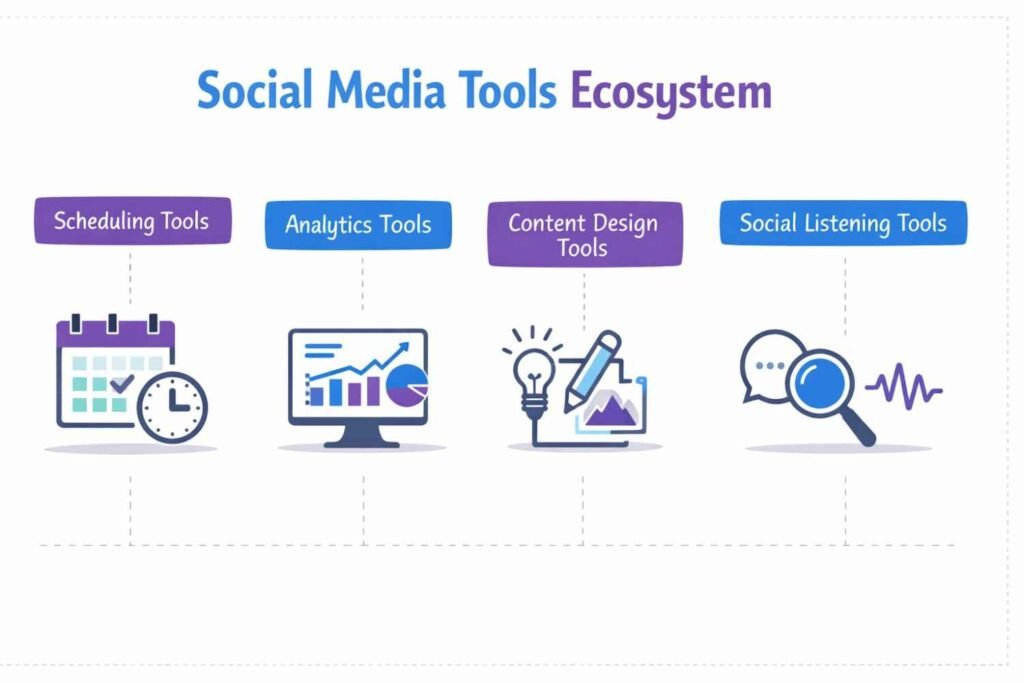
Essential Tools for Social Media Managers
Content Scheduling and Management
Hootsuite: Comprehensive platform for scheduling posts across multiple platforms, monitoring mentions, and analyzing performance. Manages Facebook, Instagram, Twitter, LinkedIn, YouTube, and Pinterest from one dashboard. Cost: Starting at ₹4,000/month.
Buffer: User-friendly scheduling tool with excellent analytics and team collaboration features. Offers clean interface and affordable pricing. Cost: Starting at ₹500/month.
Later: Visual content planner particularly strong for Instagram, allowing you to preview your grid before posting. Includes hashtag suggestions and best time recommendations. Cost: Free plan available; paid from ₹1,200/month.
Sprout Social: Enterprise-grade tool combining scheduling, analytics, social listening, and customer relationship management. Cost: Starting at ₹8,000/month.
Content Creation and Design
Canva: Accessible design platform with thousands of templates for social media posts, stories, Reels covers, and carousels. Even non-designers create professional graphics. Cost: Free version available; Pro at ₹1,000/month.
Adobe Express: More advanced design capabilities for creating branded content, videos, and animations. Cost: Starting at ₹800/month.
CapCut: Free video editing app perfect for creating Instagram Reels and YouTube Shorts with trending effects, transitions, and captions.
InShot: Mobile video editor for quick social media video edits with text, stickers, and music.
Analytics and Monitoring
Native Platform Analytics: Instagram Insights, Facebook Analytics, LinkedIn Analytics, Twitter Analytics provide built-in performance data (free).
Google Analytics: Track social media’s contribution to website traffic and conversions (free).
Sprout Social / Hootsuite Analytics: Consolidated reporting across all platforms with competitive benchmarking.
Brand24 / Mention: Social listening tools tracking brand mentions, sentiment analysis, and competitor monitoring. Cost: Starting at ₹3,000/month.
Most beginners start with free tools (native analytics, Canva free, Buffer free plan) and gradually invest in paid tools as budgets grow.
Social Media Manager Salary in India
Social media manager salaries vary based on experience, company size, and location:
Experience-Based Salary Ranges
- Entry-Level (0-2 years): ₹1.8-6 lakhs per year
- Mid-Level (3-5 years): ₹6-10 lakhs per year
- Senior-Level (5-8 years): ₹10-15 lakhs per year
- Lead/Manager (8+ years): ₹15-22 lakhs per year
Average salary for experienced social media managers is ₹6-8 lakhs annually, with top performers in premium companies earning ₹15+ lakhs.
City-Wise Comparison
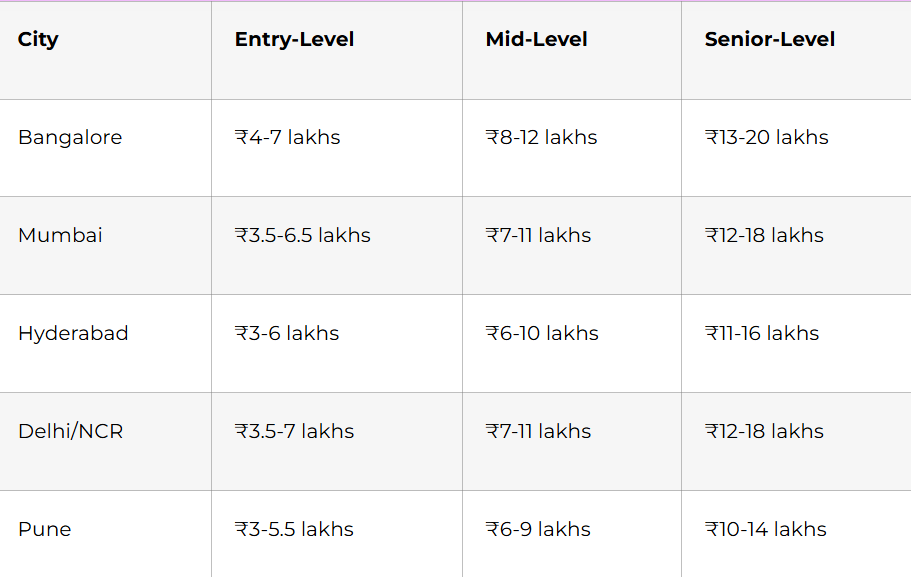
Monthly in-hand salaries for mid-level professionals range from ₹40,000-70,000 in metro cities.
Industry-Based Variations
- E-commerce: ₹4-14 lakhs (high volume, fast-paced)
- Agencies: ₹3-12 lakhs (managing multiple client accounts)
- Tech/SaaS: ₹5-16 lakhs (B2B focus, thought leadership)
- Edutech: ₹4-13 lakhs (student engagement, course marketing)
- Lifestyle Brands: ₹4-15 lakhs (influencer collabs, visual content)
Freelance Social Media Management
Freelancers managing social media typically charge:
- ₹15,000-40,000 per client per month (basic management)
- ₹40,000-1,00,000 per client per month (full-service with content creation)
- ₹5,000-15,000 per campaign project
Managing 4-6 clients simultaneously generates ₹80,000-3,00,000 monthly income for established freelancers.
How to Become a Social Media Manager: Step-by-Step Path
Month 1-2: Master Social Media Fundamentals
Before managing brand accounts, become an expert user yourself:
- Consume actively: Spend time on Instagram, LinkedIn, Twitter, YouTube understanding what content performs well and why
- Analyze successful accounts: Study 10-15 brands in different industries—what’s their posting frequency? What content gets most engagement?
- Take free courses:
- HubSpot Social Media Marketing Certification (completely free)
- Meta Blueprint Certifications for Facebook and Instagram (free)
- Hootsuite Social Marketing Certification (₹1,500 but worth it)
- Learn platform algorithms: Read official blog posts from Instagram, LinkedIn, Facebook about how their algorithms work
- Understand content formats: Master Stories, Reels, carousels, Lives, polls, and other interactive features
Month 2-3: Build Your Personal Brand
Your social media profiles are your portfolio. Demonstrate your skills publicly:
- Choose 1-2 primary platforms to focus on (Instagram + LinkedIn is a strong combination)
- Define your niche: Share content about digital marketing tips, career advice, or topics you’re passionate about
- Post consistently: 4-5 times per week minimum to understand what resonates
- Engage actively: Comment on 20-30 posts daily, respond to everyone who comments on yours
- Document your learnings: Share what you’re learning about social media management
- Grow your following organically: Aim for 1,000-2,000 engaged followers in 3 months
This real-world experience is more valuable than any certificate.
Month 3-4: Master Content Creation Tools
Learn to create professional content quickly:
- Canva mastery: Complete Canva Design School courses, create 50+ social posts using templates
- Video editing basics: Learn CapCut or InShot to edit Reels and short videos
- Copywriting skills: Study ad copy from successful brands, practice writing engaging captions
- Photography basics: Learn smartphone photography for creating original content
- Hashtag research: Understand how to find and use relevant hashtags effectively
Create a swipe file of 100+ high-performing posts for future reference.
Month 4-5: Learn Social Media Management Tools
Familiarize yourself with professional tools:
- Buffer or Hootsuite: Set up free account, schedule your own content, explore analytics
- Later: Plan Instagram grid visually, experiment with best posting times
- Google Analytics: Add tracking to your blog/website, understand social media referrals
- Meta Business Suite: Learn to manage Facebook and Instagram business accounts
- LinkedIn Campaign Manager: Explore LinkedIn Ads interface (even without running ads)
Knowing these tools makes you immediately hireable.
Month 5-6: Build Portfolio Projects
Create proof of your social media management abilities:
Project 1: Personal Brand Case Study
- Document your own social media growth over 3-4 months
- Show follower growth, engagement rate improvements, best-performing content
- Explain your strategy and what you learned
- Present as a PDF case study with screenshots and metrics
Project 2: Social Media Strategy Proposal
- Choose a real business (local shop, friend’s startup, nonprofit)
- Audit their current social media presence
- Create comprehensive strategy document including:
- Competitor analysis
- Content pillars and themes
- 30-day content calendar
- Platform-specific recommendations
- Expected KPIs and growth targets
Project 3: Content Portfolio
- Create 30 days of sample social media content for a fictional brand
- Include captions, hashtags, posting times, content format mix
- Demonstrate variety: educational posts, entertaining content, promotional material, user engagement posts
Month 6-8: Gain Real-World Experience
Option A: Internships
- Apply for social media internships at agencies, startups, or established brands
- Naukri, LinkedIn, Internshala regularly post social media intern roles
- Even unpaid 3-month internships provide portfolio material and references
Option B: Freelance Projects
- Offer social media management to 2-3 small businesses at discounted rates (₹5,000-10,000/month)
- Join Facebook groups for freelance social media managers
- Use platforms like Fiverr, Upwork, or Truelancer
- Get testimonials and document results for future clients
Option C: Volunteer Management
- Manage social media for nonprofits, community organizations, or causes you believe in
- Gain experience without pressure of immediate revenue goals
- Build case studies and references
Month 8+: Apply for Full-Time Roles
Job Titles to Search:
- Social Media Executive
- Social Media Marketing Executive
- Digital Marketing Executive (Social Media focus)
- Community Manager
- Social Media Coordinator
Resume Strategies:
- Lead with your personal social media metrics (grew Instagram from 0 to 2,000 followers in 4 months)
- Quantify freelance/volunteer results (increased engagement by 150%, grew Facebook page by 500 followers)
- Include relevant certifications
- Link to your social media profiles and portfolio website
- Showcase both creative and analytical skills
Where to Apply:
- Naukri.com, LinkedIn Jobs, Indeed, Internshala
- AngelList for startup opportunities
- Company career pages (agencies especially hire frequently)
- Networking through LinkedIn connections
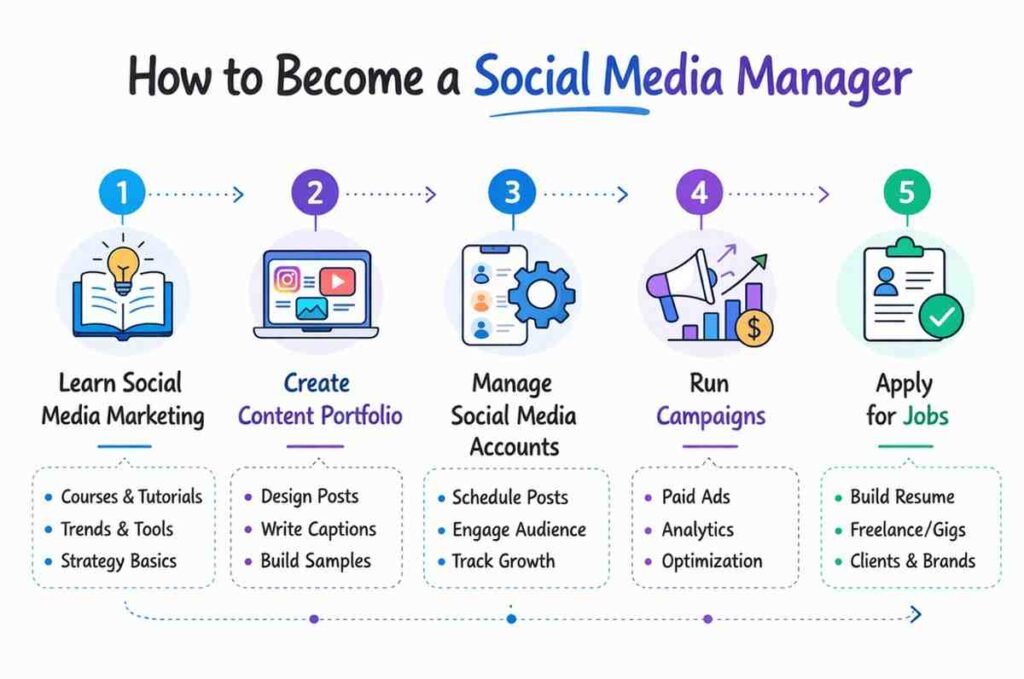
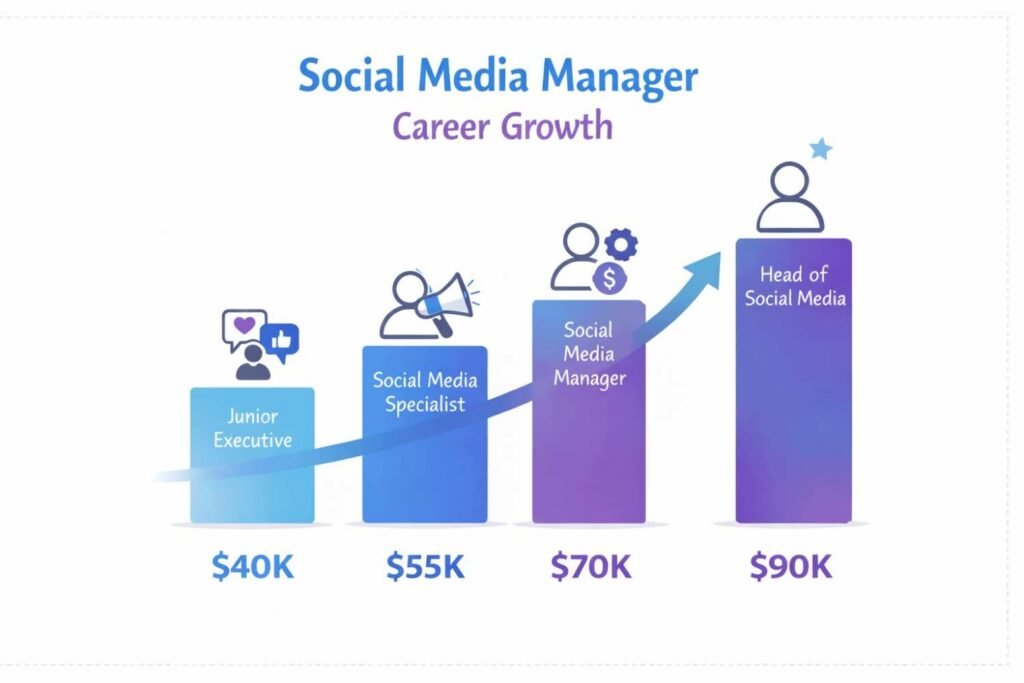
Career Growth Path for Social Media Managers
Year 0-2: Social Media Executive
Execute social media strategy under guidance. Create content, schedule posts, respond to comments, monitor basic analytics. Expected salary: ₹1.8-6 lakhs.
Year 2-4: Social Media Manager
Own social media strategy for brand or multiple clients. Plan content calendars independently, manage paid social campaigns, report on ROI. Expected salary: ₹6-10 lakhs.
Year 4-6: Senior Social Media Manager
Lead social media for larger organizations or major agency accounts. Manage junior social media executives, develop comprehensive strategies, handle crisis management. Expected salary: ₹10-15 lakhs.
Year 6-8: Social Media Lead/Team Lead
Oversee social media team of 3-6 people. Set departmental goals, allocate budgets across platforms, collaborate with broader marketing team. Expected salary: ₹13-18 lakhs.
Year 8+: Head of Social Media/Digital Marketing Manager
Shape organization’s entire social media vision, manage large budgets (crores for major brands), build scalable teams, report to CMO. Expected salary: ₹18-25+ lakhs.
Many experienced social media managers also transition into:
- Influencer marketing: Managing creator partnerships and campaigns
- Content creation: Becoming full-time content creators or influencers themselves
- Freelance consulting: Offering strategy to multiple brands simultaneously
- Agency founding: Starting their own social media marketing agencies
Common Challenges Social Media Managers Face
Challenge 1: Algorithm Changes
Platforms constantly change algorithms, making previously successful strategies less effective overnight.
Solution: Follow platform official blogs religiously, diversify across multiple platforms instead of relying on one, focus on fundamentals (engaging content, community building) that survive algorithm changes.
Challenge 2: Measuring ROI
Senior management wants proof that social media drives sales, but attribution is complex.
Solution: Set up UTM parameters for social links, track conversions in Google Analytics, document customer journey from social discovery to purchase, showcase both vanity metrics and business metrics.
Challenge 3: Content Burnout
Creating fresh, engaging content daily is mentally exhausting and creatively draining.
Solution: Batch content creation (create week’s content in one day), repurpose content across platforms, use content calendars planning 2-3 weeks ahead, leverage user-generated content, take breaks to recharge creativity.
Challenge 4: Negative Comments and Trolls
Dealing with criticism, negative reviews, and online trolls affects mental health.
Solution: Develop response protocols for different situations, don’t take criticism personally, know when to engage vs. ignore, have crisis management plans ready, take social media breaks when needed.
Challenge 5: Keeping Up With Trends
New platforms, features, and trends emerge constantly—staying current feels overwhelming.
Solution: Dedicate 30 minutes daily to consuming social media content, follow industry experts, join social media marketing communities, experiment with new features early, focus on trends relevant to your audience.
Social Media Management Best Practices for 2026
Daily Checklist:
- Monitor notifications and respond to comments/messages within 1 hour
- Engage with 20-30 posts from your community
- Check scheduled posts went live successfully
- Post Stories on Instagram/Facebook
- Track performance of recent posts
- Respond to customer service queries
Weekly Checklist:
- Analyze previous week’s content performance
- Plan next week’s content calendar
- Research trending hashtags and topics
- Update saved responses for common questions
- Conduct competitor analysis
- Engage with influencers or brand partners
Monthly Checklist:
- Comprehensive analytics review across all platforms
- Report social media impact to stakeholders
- Audit and update bio/profile information
- Review and refresh content strategy based on performance
- Plan campaigns for next month
- Clean up outdated content or inactive followers
FAQs: Social Media Manager Career
Q: Do I need a degree to become a social media manager?
No. Many successful social media managers are self-taught or come from unrelated backgrounds. Your portfolio and demonstrated results matter far more than formal degrees.
Q: Which platform should I specialize in?
Start with platforms where your target companies’ audiences are active. Instagram and LinkedIn are currently most in-demand. However, becoming multi-platform increases your value.
Q: Can introverts succeed as social media managers?
Absolutely. Behind-the-scenes strategic work, content creation, and analytics suit introverts perfectly. You don’t need to be personally outgoing—you’re building the brand’s voice, not your own.
Q: How many hours per day do social media managers work?
Full-time roles typically involve 8-9 hours daily, but social media requires some monitoring outside business hours (evenings, weekends) since that’s when audiences are most active. Freelancers have more flexibility.
Q: Is social media management a stable long-term career?
Yes. As long as people use social platforms (which will be for the foreseeable future), brands need professionals managing their presence. The skills evolve, but demand remains strong.
Your Next Steps: Launch Your Social Media Career
Social media management is one of the most accessible entry points into digital marketing—you can start learning and practicing today without any investment beyond your smartphone. Unlike technical fields requiring expensive courses or degrees, social media rewards creativity, consistency, and genuine understanding of human behavior.
Begin by managing your own profiles strategically. Document your growth. Engage authentically with communities you care about. Create content that adds value. Build proof that you understand what makes social media work. Three months of focused effort can give you enough portfolio material to land your first paid opportunity.
The social media managers earning ₹12-18 lakhs today started exactly where you are—scrolling through Instagram wondering if they could turn their social media obsession into a career. They did, and you can too. The difference between consuming social media and building a career from it is intentionality and consistent action.
Start today. Your first viral post, your first client, your first full-time social media role—they’re all within reach.