
Social Media Manager Job Guide: Responsibilities, Skills & Career Growth
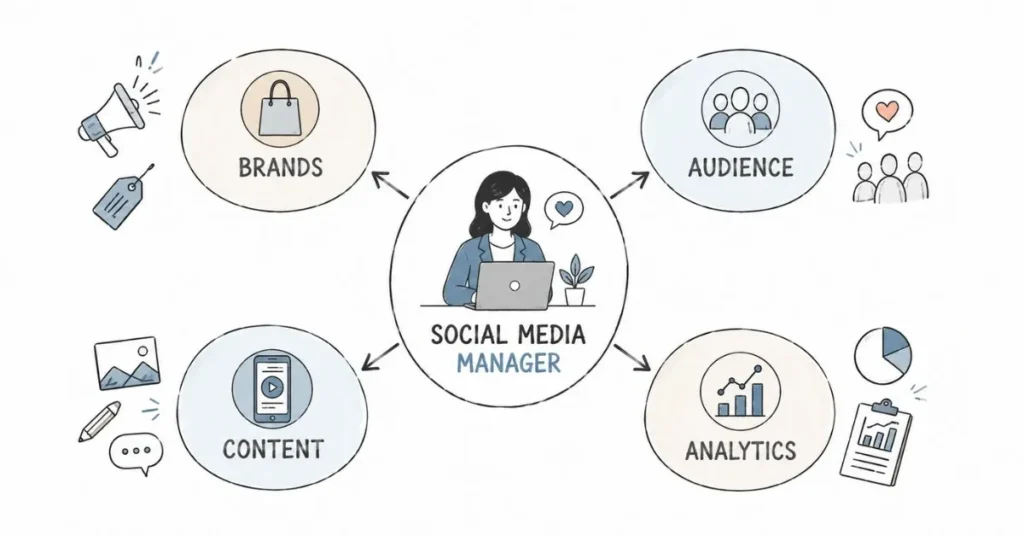
Table of Contents
Introduction: The Social Media Manager Role Explained
If you’ve ever wondered who’s behind the witty tweets from Zomato, the engaging Instagram Reels from Nykaa, or the informative LinkedIn posts from Tech Mahindra, it’s social media managers working strategically to build brand presence and drive business results. Social media management has evolved from simply scheduling posts to becoming a critical business function that directly impacts revenue, customer acquisition, and brand reputation.
In India’s competitive digital landscape, skilled social media managers are among the most sought-after professionals. Companies across every sector from startups in their early stages to established corporations, e-commerce brands to B2B service providers recognize that effective social media presence isn’t optional anymore; it’s essential for survival. This demand translates into solid career opportunities with clear growth trajectories and respectable salaries.
But what exactly does a social media manager do day-to-day? What skills separate exceptional managers from average ones? How do you transition into this field, and what can you expect in terms of salary and career progression? This comprehensive guide answers all these questions, providing a clear roadmap whether you’re a complete beginner exploring digital marketing careers or a professional looking to specialize in social media management.
Understanding the Social Media Manager Role
At its core, a social media manager is responsible for planning, implementing, managing, and monitoring a company’s social media strategy to increase brand awareness, improve marketing efforts, and drive business objectives. However, the specific responsibilities vary significantly based on company size, industry, and organizational structure.
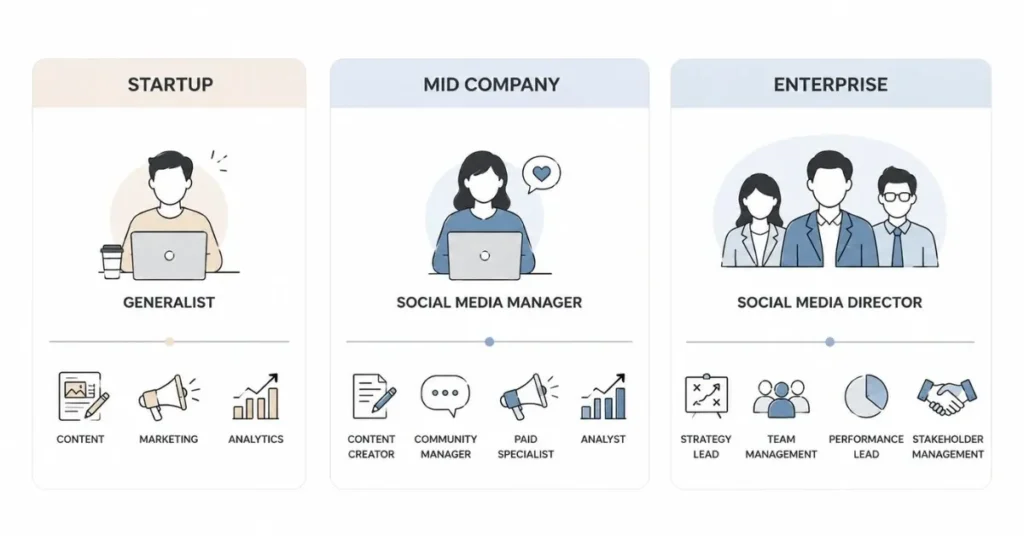
In small businesses and startups, social media managers often wear multiple hats. You might be the entire digital marketing team, handling everything from strategy development and content creation to community management and performance reporting. You’ll likely work directly with the founder or business owner, having significant creative freedom but also facing resource constraints. The salary range typically falls between ₹2.5-5 lakh annually, but you gain diverse experience that accelerates your learning curve.
In mid-sized companies, social media managers typically lead the social media function while collaborating with dedicated designers, copywriters, and paid advertising specialists. You focus more on strategy, campaign planning, and performance optimization rather than executing every task yourself. There’s established structure with approval processes, brand guidelines, and quarterly goals. Salaries range from ₹5-10 lakh annually depending on experience and location.
In large corporations and premier agencies, social media managers specialize even further perhaps focusing exclusively on one platform like LinkedIn or Instagram, or managing social media for one product line within a larger portfolio. You’re working with substantial budgets, managing teams of coordinators and executives, and presenting directly to senior leadership. Senior social media managers in top companies earn ₹10-15 lakh annually or more.
Understanding these distinctions helps you target opportunities that align with your current skill level and career preferences. Many successful managers start in startups for diverse experience, then transition to larger organizations for specialization and higher compensation.
Core Responsibilities of Social Media Managers
While specific duties vary, most social media manager roles include these fundamental responsibilities
Strategy Development:
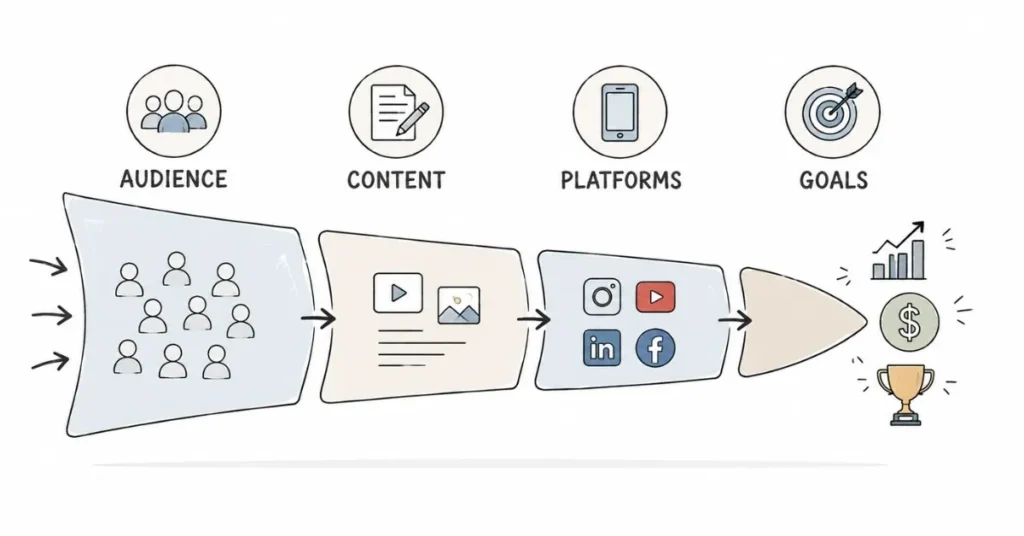
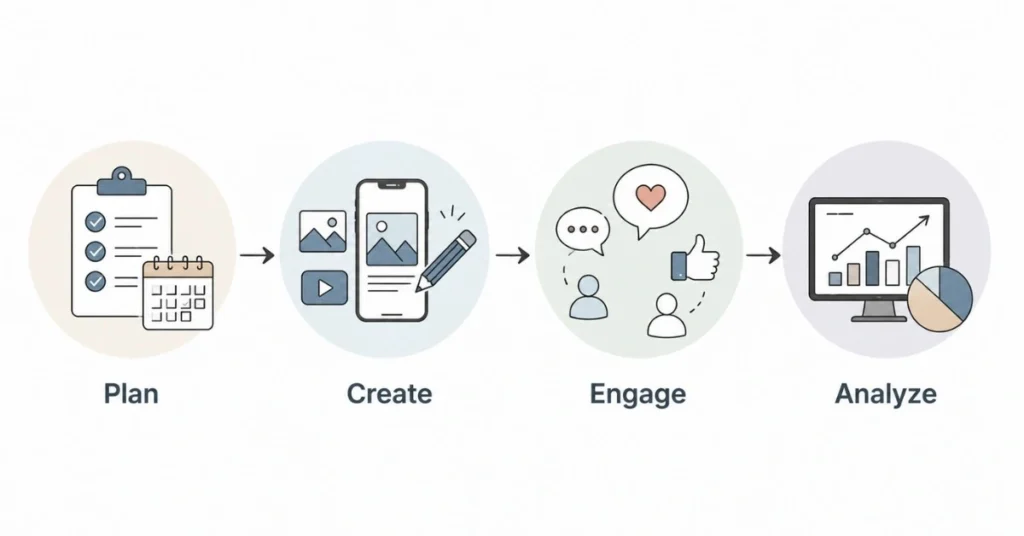
Professional social media managers don’t just post randomly; they develop comprehensive strategies aligned with broader business objectives. This involves conducting audience research to understand demographics, preferences, pain points, and online behavior patterns. You’ll perform competitive analysis, studying what competitors are doing well and identifying opportunities they’re missing. You’ll define clear objectives whether increasing brand awareness, driving website traffic, generating leads, or improving customer retention and establish key performance indicators (KPIs) to measure success.
Strategy development also means selecting which platforms deserve focus. Not every business needs presence on every platform. A B2B software company might prioritize LinkedIn and Twitter, while a fashion brand focuses on Instagram and Pinterest. Making informed platform decisions based on audience behavior rather than personal preference is a hallmark of strategic thinking.
Content Planning and Calendar Management:

Consistency is crucial in social media success, and that requires meticulous planning. Social media managers create monthly or quarterly content calendars mapping out what will be posted when, on which platforms, and for what purpose. This involves brainstorming content themes and pillars that align with brand values and audience interests, planning campaigns around product launches, seasonal events, or industry occasions, balancing promotional content with educational and entertaining posts (the 80/20 rule 80% value, 20% promotion), and coordinating with other departments (sales, product, customer service) to align social content with company activities.
Tools like Buffer, Hootsuite, or even Google Sheets help manage these calendars, ensuring nothing falls through the cracks and maintaining strategic consistency.
Content Creation and Curation:
While larger teams might have dedicated content creators, social media managers are involved in the content development process. This includes writing compelling copy for posts, captions, and ads that capture attention and drive action. You’ll brief designers on visual requirements or use tools like Canva to create simple graphics yourself. You’ll curate relevant third-party content that adds value for your audience (sharing industry news, useful resources, or complementary brands’ content). You’ll develop content guidelines ensuring consistency in brand voice, tone, and visual identity across all platforms.
Even when you’re not creating every piece yourself, you’re the quality gatekeeper ensuring everything published meets brand standards and strategic objectives.
Community Management and Engagement:
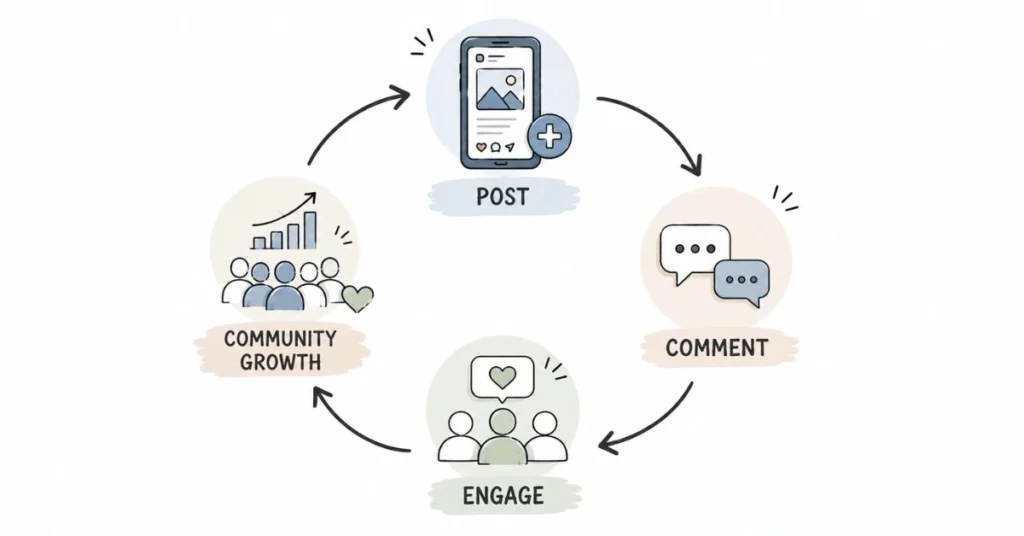
Social media is fundamentally about building relationships, not broadcasting messages. Professional managers dedicate significant time to community management, which includes responding promptly to comments, questions, and direct messages. You’ll engage proactively with relevant conversations in your industry, commenting on other accounts’ posts to increase visibility. You’ll monitor brand mentions across platforms even when you’re not directly tagged. You’ll handle negative feedback or complaints professionally, often de-escalating situations that could damage brand reputation.
Community management is time-intensive and often happens outside traditional work hours since your audience is active evenings and weekends. Setting boundaries while maintaining responsiveness is an important skill to develop.
Paid Social Media Advertising:
While organic reach remains important, most businesses now incorporate paid social advertising into their strategies. Social media managers typically handle setting up and managing campaigns on Meta Ads Manager (Facebook and Instagram ads) and other platforms. This involves defining campaign objectives, targeting specific audience segments based on demographics, interests, and behaviors, creating compelling ad creative and copy, setting budgets and bid strategies, and continuously monitoring and optimizing campaigns for better performance.
Understanding paid advertising significantly increases your value and earning potential. Even basic proficiency in Meta Ads and Google Ads can add ₹1-2 lakh to your annual salary.
Analytics and Reporting:
Data-driven decision making separates professional social media managers from hobbyists. You’ll regularly analyze performance metrics including reach and impressions (how many people saw your content), engagement rates (likes, comments, shares, saves), click-through rates (CTR) on links, conversion rates (leads generated or sales made), and follower growth trends. Tools like Instagram Insights, YouTube Analytics, LinkedIn Analytics, and third-party platforms like Sprout Social provide this data.
Beyond collecting numbers, professional managers interpret what the data means and translate insights into actionable recommendations. You’ll create regular reports (weekly, monthly, quarterly) for stakeholders demonstrating how social media contributes to business objectives and justifying continued investment in your activities.
Trend Monitoring and Innovation:
The social media landscape evolves rapidly with new features, trending formats, and shifting user behaviors. Professional managers stay ahead by monitoring emerging platforms and features (Instagram’s latest updates, LinkedIn newsletters, YouTube Shorts evolution), identifying trending topics and content formats within their industry, experimenting with new approaches before competitors do, and evaluating what works and what doesn’t through testing.
This continuous learning mindset keeps your strategies fresh and effective rather than stagnant and declining.
Essential Skills for Social Media Managers
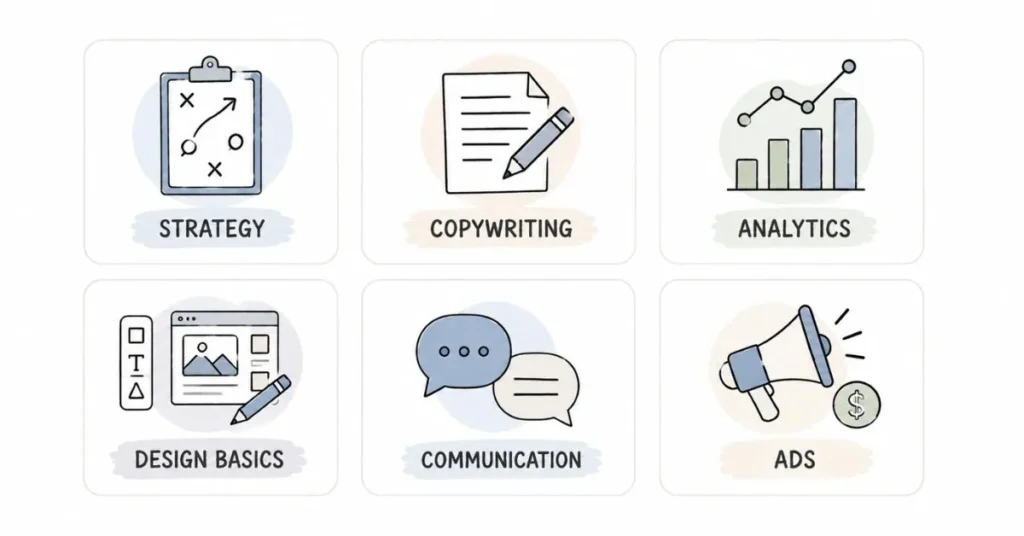
Success as a social media manager requires a combination of creative, analytical, technical, and interpersonal skills. Here’s what matters most:
Strategic Thinking:
The ability to see beyond individual posts and understand how social media contributes to broader business objectives is fundamental. Strategic thinkers ask questions like “How does this campaign support our quarterly revenue goals?” rather than just “Will this post get engagement?” You need to balance short-term tactical execution with long-term brand building, make data-informed decisions rather than following hunches, and adapt strategies based on performance insights and changing market conditions.
Platform Expertise:
Deep knowledge of at least 2-3 major platforms is non-negotiable. This goes beyond knowing how to post you must understand each platform’s algorithm and what content it prioritizes, best practices for different content formats (feed posts, stories, reels, carousels), optimal posting times for your specific audience, trending features and how to leverage them, and community norms and etiquette that vary between platforms. In India, prioritize mastering Instagram, LinkedIn, and Facebook initially, as these offer the most career opportunities.
Copywriting and Communication:
Social media managers are professional communicators who must write concisely, persuasively, and engagingly within character limits and attention constraints. You need to adapt your tone and style for different platforms and audiences what works on LinkedIn differs dramatically from Instagram. You’ll craft compelling calls-to-action that inspire audiences to take desired actions. You’ll tell stories that emotionally connect with audiences rather than just sharing information. And you’ll maintain brand voice consistency while showing personality and authenticity.
Visual Literacy and Design Basics:
While you might not be a professional designer, understanding visual communication principles helps you create appealing content or effectively brief designers. Learn basic design principles like hierarchy, contrast, and white space usage. Become proficient with Canva or similar user-friendly design tools. Develop the ability to recognize what makes content visually arresting in crowded feeds. Understand brand visual identity and ensure consistency across all content.
Data Analysis and Insights:
Comfort working with numbers and analytics tools is increasingly important. You need to track and interpret key metrics accurately, identify patterns and trends in performance data, draw meaningful conclusions about what’s working and why, translate data into clear, actionable recommendations for non-technical stakeholders, and prove ROI by connecting social media activities to business outcomes.
Many entry-level candidates have creative skills but lack analytical abilities developing this competency immediately sets you apart.
Project Management and Organization:
Social media managers juggle multiple campaigns, platforms, stakeholders, and deadlines simultaneously. Success requires managing content calendars across multiple platforms, coordinating with cross-functional teams (design, product, sales, customer service), meeting deadlines consistently without compromising quality, prioritizing tasks when everything feels urgent, and maintaining organized systems for content assets, brand guidelines, and performance reports.
Tools like Asana, Trello, or Notion help manage the complexity, but organizational discipline is fundamental.
Customer Service Orientation:
Since you’re often the first point of contact between brands and customers on social media, strong interpersonal skills matter immensely. You must respond to inquiries promptly and helpfully, handle complaints and negative feedback with grace and professionalism, recognize when issues need escalation to specialized teams, show empathy and genuine care in all interactions, and turn negative experiences into positive brand impressions through thoughtful responses.
Your community management directly impacts customer satisfaction and brand perception.
Adaptability and Continuous Learning:
Perhaps most critically, social media managers must embrace constant change. Platforms update features and algorithms frequently. Trending formats emerge and fade within weeks. What worked last quarter might not work this quarter. Successful managers stay curious and committed to ongoing learning, experiment with new approaches without fear of failure, adapt quickly when strategies aren’t delivering results, and view challenges as opportunities to innovate rather than obstacles.
Educational Background and Certifications
The good news about social media management is that it doesn’t require specific educational credentials. Professionals come from diverse backgrounds marketing, journalism, communications, business, and even completely unrelated fields. What matters more than your degree is demonstrable skills and results.
That said, certain educational paths and certifications strengthen your candidacy:
Relevant Degrees:
Degrees in Marketing, Mass Communication, Public Relations, Journalism, Business Administration, or related fields provide foundational knowledge useful in social media management. However, lack of these degrees isn’t disqualifying many successful managers studied engineering, science, or arts before transitioning into digital marketing.
Professional Certifications:
Free certifications demonstrate commitment to learning and provide structured knowledge. Valuable options include Meta Blueprint Certification covering Facebook and Instagram advertising and best practices (free), Google Digital Garage offering digital marketing fundamentals including social media (free), HubSpot Social Media Certification providing strategy and content planning knowledge (free), LinkedIn Marketing Labs covering LinkedIn advertising and organic strategies (free), and YouTube Creator Academy for video content and YouTube-specific strategies (free).
While employers value these certifications, practical experience and proven results matter more. Use certifications to build foundational knowledge, then apply that learning to real projects.
Paid Advanced Courses:
As you progress in your career, consider investing in specialized training from platforms like Coursera, Udemy, or Indian providers like UpGrad and Kraftshala. Look for courses covering advanced social media strategy, paid advertising mastery, analytics and data analysis, or content marketing. Evaluate course value based on instructor credentials, student reviews, and practical projects rather than just price or brand name.
Breaking Into Social Media Management
If you’re starting from zero experience, here’s a practical roadmap to land your first social media manager role:
Step 1: Build Your Own Social Presence (Month 1-3):
Before managing brands’ social media, demonstrate you can manage your own. Choose 1-2 platforms and post consistently for three months. You don’t need thousands of followers focus on creating quality content, engaging with your audience, and showing growth over time. Document your learnings, experiments, and results. This becomes your initial portfolio demonstrating you understand how social media works.
Step 2: Gain Practical Experience (Month 3-6):
Offer free or very low-cost social media management to friends’ businesses, local restaurants or shops, nonprofit organizations, or student organizations at your college. Treat these seriously develop strategies, create content calendars, track analytics, and document results. Even growing a small local business’s Instagram from 200 to 800 followers with improved engagement provides concrete evidence of your capabilities.
Step 3: Build Your Portfolio (Ongoing):
Create a simple portfolio website (using free platforms like Wix, WordPress.com, or Notion) showcasing your best work, results achieved (even from volunteer projects), case studies explaining your strategic approach, testimonials from clients or employers, and your certifications and skills. Your portfolio is more important than your resume for creative roles like social media management
Step 4: Complete Relevant Certifications (Month 4-6):
While working on practical projects, complete 2-3 certifications from Meta Blueprint, HubSpot Academy, and Google Digital Garage. These demonstrate foundational knowledge and commitment to the field. List them prominently on your resume and LinkedIn profile.
Step 5: Optimize Your LinkedIn Profile (Month 6):
Your LinkedIn profile is often the first impression potential employers have. Update your headline to clearly state your focus (e.g., “Social Media Manager | Helping Brands Build Engaged Communities | Instagram & LinkedIn Specialist”). Write a compelling summary highlighting your value proposition and approach. List relevant skills and ask connections to endorse them. Share social media tips and insights regularly, positioning yourself as knowledgeable in the field. Connect with hiring managers at companies you’re interested in.
Step 6: Apply Strategically (Month 6-9):
Rather than mass-applying to hundreds of positions, take a targeted approach. Research companies whose mission and values align with yours. Customize each application demonstrating knowledge of the company and specific ideas for their social media. Apply for internships and entry-level coordinator roles these provide valuable learning experiences and often convert to full-time positions. Consider starting at digital marketing agencies where you’ll gain diverse experience working on multiple client accounts simultaneously. Be open to remote opportunities many companies now hire social media managers regardless of location.
Step 7: Leverage Freelancing (Alternative Path):
If you’re struggling to land full-time positions, consider building a freelance business. Create profiles on Upwork, Fiverr, or Freelancer.in offering specific services like Instagram content management, LinkedIn profile optimization, or social media strategy consulting. Start with competitive rates (even ₹10,000-20,000 monthly per client) to build testimonials and case studies. As you prove results, gradually increase rates. Many successful social media managers started as freelancers before transitioning to full-time roles or building thriving consulting businesses.
Salary Expectations and Career Progression
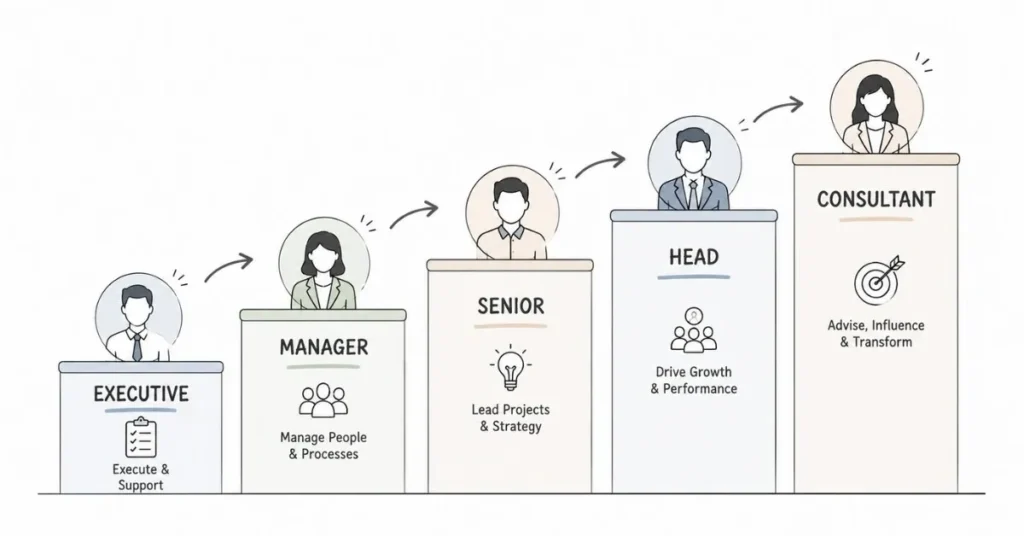
Understanding realistic salary expectations helps you negotiate effectively and plan your career trajectory. Here’s what social media managers earn in India in 2026:
Entry Level (0-2 years): Social Media Coordinator/Executive:
These roles focus on execution under supervision scheduling posts, monitoring engagement, conducting basic research, and assisting with campaigns. Salaries range from ₹1.8-4 lakh annually (approximately ₹15,000-35,000 monthly). While compensation is modest, you’re gaining foundational experience and proving your capabilities. Most professionals spend 12-18 months at this level before advancing.
Mid Level (2-5 years): Social Media Manager:
With proven experience, you’re managing entire social media functions or major accounts. Responsibilities expand to strategy development, campaign management, team collaboration, and stakeholder reporting. Salaries jump significantly to ₹5-10 lakh annually (approximately ₹40,000-85,000 monthly). Location matters significantly Mumbai, Bengaluru, and Gurgaon offer 20-30% higher salaries than tier-2 cities. Industry also impacts compensation tech companies, fintech firms, and established e-commerce brands pay premium salaries compared to traditional industries.
Senior Level (5-8 years): Senior Social Media Manager/Strategist:
At this level, you’re a strategic leader managing teams, overseeing substantial budgets, and directly influencing business outcomes. You might specialize in specific platforms (LinkedIn expert, Instagram specialist) or industries (B2B social media, D2C brand building). Salaries range from ₹10-15 lakh annually with some senior managers in top companies earning ₹18-20 lakh. You’re regularly presenting to executive leadership and your social media strategies directly impact revenue and growth targets.
Leadership Level (8+ years): Head of Social Media/Digital Marketing Manager:
After establishing a strong track record, you can progress to leadership roles overseeing entire digital marketing functions beyond just social media. Compensation reaches ₹15-25 lakh annually or more depending on company size and scope. At this level, you’re hiring and managing teams, allocating budgets across channels, and contributing to company-wide strategic planning.
Freelance/Consulting:
Experienced social media managers often transition to freelancing or consulting, managing multiple client accounts simultaneously. Successful freelancers in India charge ₹25,000-1 lakh per client monthly for comprehensive management. With 4-6 steady clients, freelancers can earn ₹1-4 lakh monthly while enjoying flexibility and autonomy. However, this path requires strong business development skills and financial discipline.
Essential Tools Every Social Media Manager Should Master
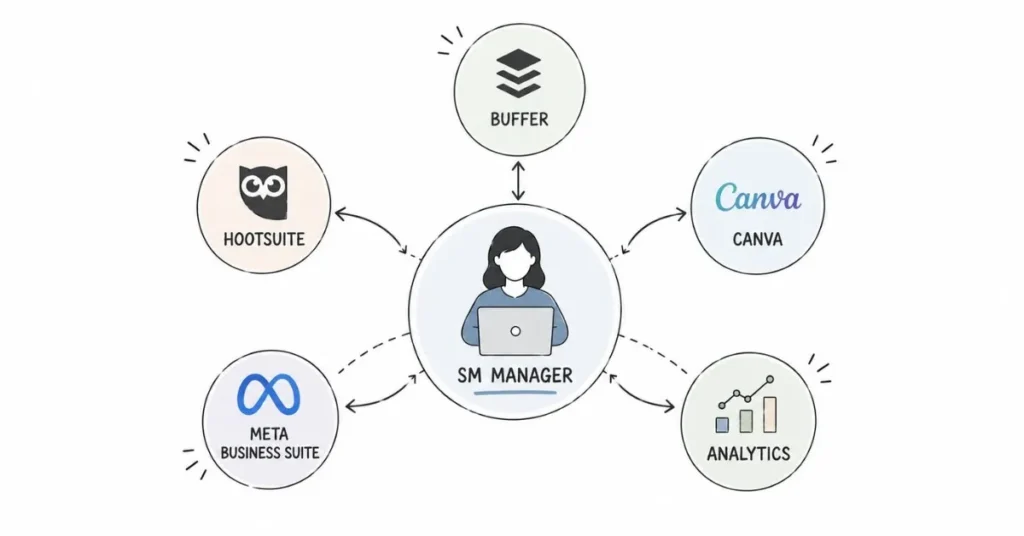
Professional social media managers leverage tools to work efficiently and deliver better results. Here are the must-know platforms:
Scheduling and Management Tools:
Buffer offers a generous free plan supporting three social accounts with 10 scheduled posts per channel, making it ideal for small businesses or freelancers managing limited accounts. The interface is clean and intuitive, with straightforward scheduling and basic analytics. Hootsuite provides more robust features including bulk scheduling (up to 350 posts at once), comprehensive analytics, team collaboration features, and social listening capabilities. However, it lacks a free tier, with plans starting around ₹5,000 monthly. Meta Business Suite (free) manages Facebook and Instagram from one platform, offering scheduling, inbox management, and detailed insights.
Choose based on your needs and budget Buffer for simplicity, Hootsuite for advanced features, or Meta Business Suite if focusing primarily on Facebook and Instagram.
Content Creation and Design:
Canva remains the go-to platform for social media managers with limited design skills. The free plan offers thousands of templates for social media graphics, presentations, and marketing materials. Canva Pro (₹499/month) adds features like brand kits, background removal, and resize magic. Adobe Creative Cloud (₹1,600/month for individuals) provides professional tools including Photoshop for image editing, Premiere Pro for video editing, and Illustrator for graphic design. While the learning curve is steeper, Adobe tools offer significantly more creative control for managers handling premium brands.
Analytics Platforms:
Native platform analytics are your starting point Instagram Insights, Facebook Analytics, LinkedIn Analytics, Twitter Analytics, and YouTube Analytics all provide essential data at no cost. For cross-platform analysis and more sophisticated reporting, consider Google Analytics (free) to track website traffic from social referrals, Sprout Social (starting around ₹15,000/month) for comprehensive social analytics and reporting, or Hootsuite Analytics (included in Hootsuite plans) for consolidated performance tracking.
AI and Productivity Tools:
ChatGPT helps with content ideation, caption writing, and copywriting variations. Notion or Trello organize content calendars, campaign plans, and team collaboration. Grammarly ensures error-free copy across all communications. Loom creates quick video recordings for client updates or team training.
Day in the Life of a Social Media Manager
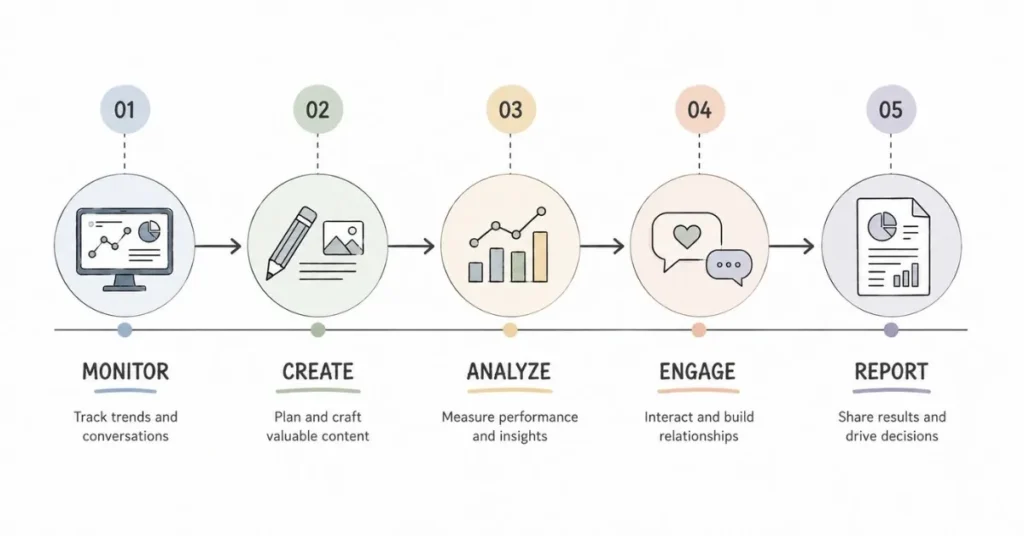
Understanding a typical workday helps set realistic expectations. While every role differs, here’s what a mid-level social media manager’s day might look like:
9:00 AM - Morning Check and Community Management:
Start your day reviewing overnight activity across platforms comments, messages, mentions, and engagement on scheduled posts. Respond promptly to customer inquiries or flag urgent issues to appropriate teams. Check trending topics and news that might affect your brand or present opportunistic content ideas.
10:00 AM - Content Creation and Scheduling:
Execute your content calendar by creating today’s posts writing captions, selecting or editing images, adding hashtags, and scheduling through Buffer or Hootsuite. Brief designers on upcoming content needs or create simple graphics yourself in Canva.
11:30 AM - Campaign Monitoring and Optimization:
Review performance of active paid campaigns. Adjust targeting, budgets, or creative based on early results. Pause underperforming ads and scale successful ones.
1:00 PM - Lunch and Personal Social Time:
Take a proper break constant social media exposure leads to burnout. Use this time to disconnect or catch up on industry content for personal learning.
2:00 PM - Collaboration and Meetings:
Participate in team meetings discussing upcoming launches, campaigns, or challenges. Collaborate with designers on visual content. Meet with sales teams to align social media support for their initiatives. Present weekly or monthly performance reports to stakeholders.
3:30 PM - Strategy and Planning:
Work on bigger-picture planning developing next month’s content calendar, researching competitor strategies, planning upcoming campaigns, or analyzing performance trends to inform future strategies.
4:30 PM - Community Engagement and Content Curation:
Proactively engage with relevant conversations in your industry. Comment on complementary brands’ posts. Share curated content from others. Build relationships with influencers or brand advocates.
5:30 PM - End of Day Wrap-up:
Schedule next day’s posts, respond to any urgent messages, document learnings or insights from the day, and prepare tomorrow’s priority list.
Evening and weekends often require occasional check-ins for urgent issues, though this varies by company culture and industry. Setting boundaries while maintaining responsiveness is an ongoing challenge for social media managers.
Common Challenges and How to Navigate Them
Every social media manager faces similar obstacles. Here’s how professionals handle them:
Proving ROI:
Stakeholders often question social media’s business impact. Combat this by establishing clear KPIs connected to business objectives from the start, tracking conversions and leads, not just vanity metrics like followers, using UTM parameters to attribute website traffic and sales to specific social campaigns, creating regular reports showing progress toward goals, and educating stakeholders on social media’s role in the broader marketing funnel.
Algorithm Changes:
Platform algorithms shift frequently, sometimes dramatically reducing organic reach. Mitigate this by diversifying your presence across multiple platforms, building owned audiences through email lists or communities, focusing on engagement quality over quantity (algorithms reward genuine conversations), staying informed about platform updates and adapting quickly, and incorporating paid promotion to ensure consistent reach.
Content Saturation:
Audiences see hundreds of posts daily, making it challenging to stand out. Differentiate by developing a distinctive brand voice that’s immediately recognizable, prioritizing video content, especially short-form videos which receive algorithmic preference, telling authentic stories rather than just promoting products, engaging in real-time conversations around trending topics when relevant, and consistently delivering genuine value rather than just asking for attention.
Negative Feedback and Crisis Management:
Public criticism on social media can escalate quickly. Handle these situations by responding promptly and professionally to legitimate concerns, taking heated conversations to private messages when possible, acknowledging mistakes transparently and explaining remediation steps, knowing when to escalate to senior management or legal teams, and maintaining composure even when comments are personal or unfair.
How you handle crises often defines your value more than routine success
Work-Life Balance:
Social media never sleeps, and audiences are active 24/7. Protect yourself by establishing clear boundaries about response times (e.g., monitoring weekdays 9 AM – 6 PM, checking weekends only for crises), using scheduling tools to maintain presence without constant manual posting, rotating weekend monitoring responsibilities with team members, and communicating boundaries clearly to stakeholders and audiences.
Burnout is real in social media roles proactively managing your energy and boundaries ensures long-term sustainability.
Conclusion: Building Your Social Media Management Career
Social media management offers a legitimate career path with clear progression, respectable compensation, and opportunities for creativity, strategy, and business impact. Whether you’re starting as a coordinator earning ₹2 lakh annually or aspiring to senior strategist roles commanding ₹15+ lakh, the path forward requires strategic skill development, practical experience, and continuous adaptation to the evolving digital landscape.
The barriers to entry are lower than traditional marketing careers you don’t need expensive degrees or industry connections to start. What you need is demonstrable ability to grow audiences, create engaging content, analyze performance, and ultimately drive business results through social platforms. Build that proof through your own social presence, volunteer work, internships, or early career roles, and opportunities will follow.
Start today by identifying 2-3 platforms to master, creating your own consistent social presence, and completing at least one professional certification. Your social media management career is waiting and the demand for skilled professionals in India has never been stronger.