
Senior Supply Chain Leadership: Executive Roles Guide
Table of Contents
Introduction: Reaching the Executive Suite

You’ve spent a decade building your supply chain career from analyst to manager to senior manager. You’ve led teams, managed multi-million rupee budgets, and driven measurable business impact. Now you’re eyeing the executive suite: Director, Vice President, and ultimately Chief Supply Chain Officer (CSCO) roles where you’ll shape organizational strategy and lead functions of 50-500+ people.
Senior supply chain leadership positions represent the pinnacle of the profession. These roles command compensation packages of ₹25-50+ lakhs annually, involve high-stakes decision-making, and require balancing operational excellence with strategic vision. But reaching this level requires more than technical expertise—you need executive presence, strategic thinking, change management capabilities, and the ability to influence across the entire organization.
This guide explores what senior supply chain leadership actually entails, how to position yourself for these roles, and what separates good executives from great ones.
The Senior Leadership Landscape
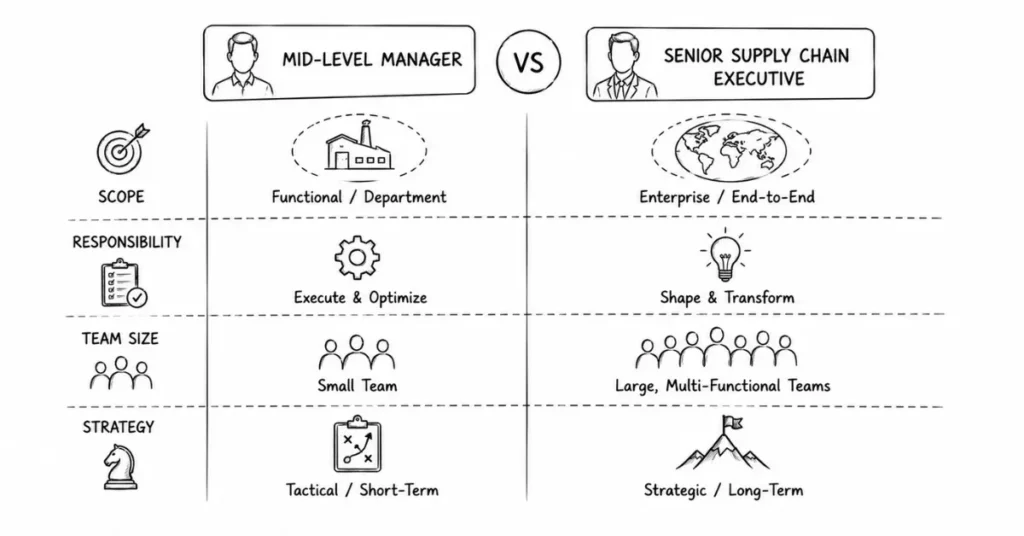
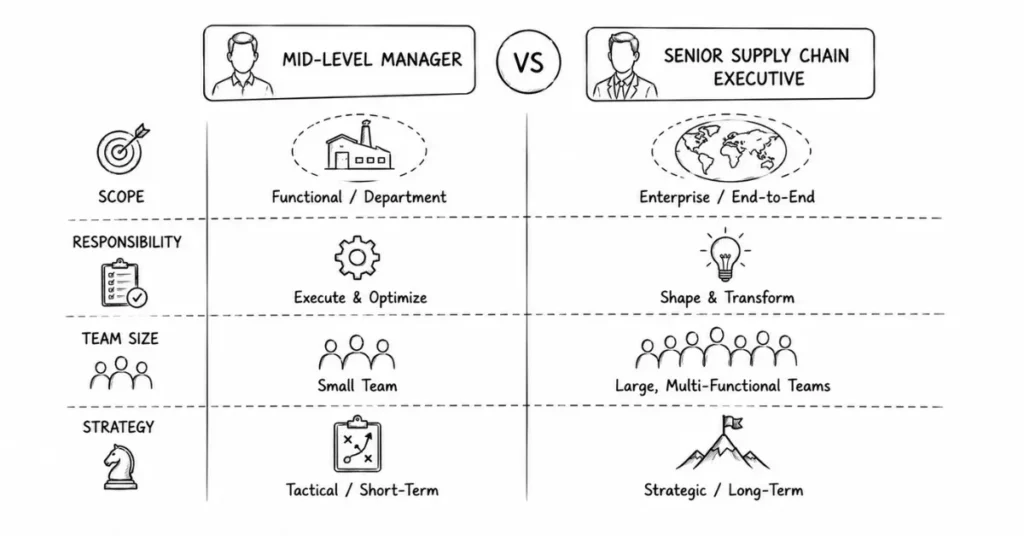
Senior supply chain roles differ fundamentally from mid-level positions:
Mid-Level Manager:
- Manages a specific function (procurement, logistics, warehouse)
- Focuses on operational efficiency within their domain
- Reports to directors or VPs
- Leads teams of 5-20 people
- Budget responsibility: ₹50 lakhs – ₹5 crores
Senior Executive:
- Oversees multiple functions or entire supply chain
- Shapes strategy and long-term vision
- Reports to C-suite (CEO, COO, CFO)
- Leads departments of 50-500+ people through multiple management layers
- Budget responsibility: ₹10 crores – ₹1000+ crores
- Board-level presentations and stakeholder management
The transition requires developing enterprise-level thinking—understanding how supply chain decisions impact overall business performance, shareholder value, and competitive positioning.
Key Senior Supply Chain Executive Positions
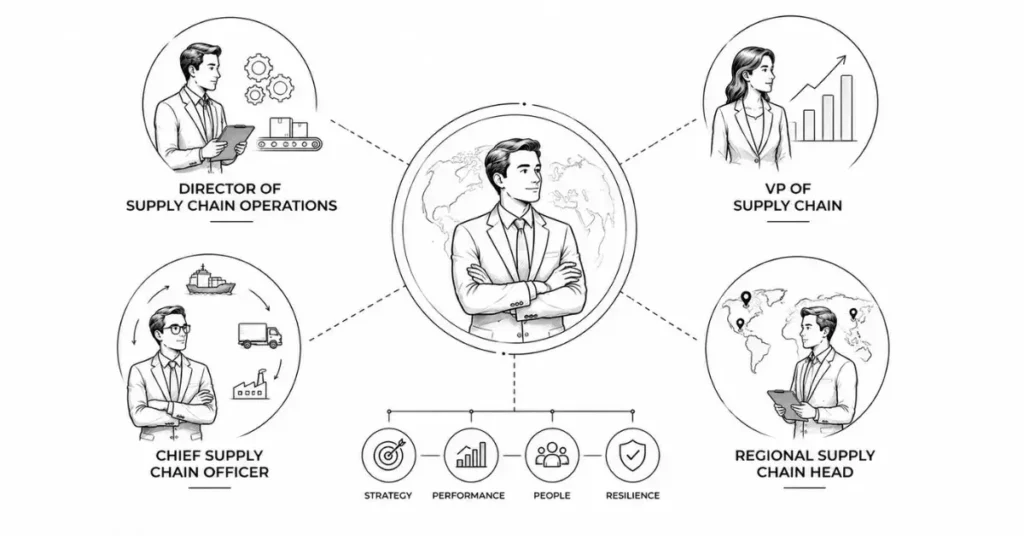
1. Director of Supply Chain Operations | ₹18-28 lakhs/year
The director level represents your entry into senior leadership—typically requiring 10-15 years of experience.
Scope of Responsibility:
Strategic Leadership:
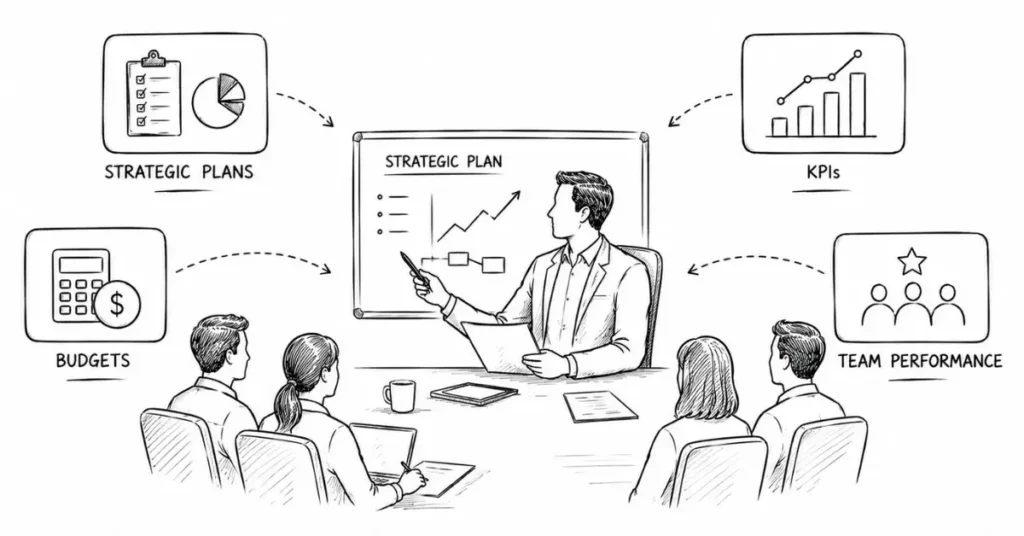
- Develop 3-5 year supply chain roadmaps aligned with business strategy
- Set organizational objectives and KPIs
- Identify and prioritize major improvement initiatives
- Present supply chain strategy to executive leadership
Multi-functional Oversight:
- Manage multiple supply chain functions (planning, procurement, logistics, warehousing)
- Ensure seamless coordination across functions
- Drive integration and break down silos
- Balance competing priorities across functions
People Leadership:
- Lead 50-150 people through multiple management layers
- Develop high-potential managers for future leadership roles
- Build organizational capabilities and culture
- Navigate union relationships in unionized environments
Financial Management:
- Manage supply chain budgets of ₹20-100 crores
- Drive cost reduction initiatives saving millions annually
- Evaluate major capital investments
- Demonstrate ROI on strategic initiatives
Stakeholder Management:
- Partner with business unit leaders on growth strategies
- Work with CFO on working capital optimization
- Collaborate with CTO on technology roadmap
- Present to board committees on supply chain performance
Real-world scenario: As Director of Supply Chain for a pharmaceutical company’s India operations, you’ll oversee end-to-end supply chain for ₹2,000 crore business. You’ll lead planning, procurement, manufacturing logistics, and distribution teams totaling 120 people, manage ₹60 crore supply chain budget, ensure regulatory compliance, drive initiatives reducing supply chain costs from 15% to 13% of revenue (₹40 crore savings), implement integrated business planning (IBP) process, and present quarterly supply chain reviews to managing director and board.
Key success factors:
- Strategic thinking beyond day-to-day operations
- Building and developing high-performing leadership teams
- Influencing senior executives and gaining buy-in for initiatives
- Balancing short-term operational demands with long-term transformation
Career path: Senior Supply Chain Manager (3-5 years) → Associate Director (2-3 years) → Director (current level) → Senior Director/VP (4-6 years)
2. Vice President - Supply Chain | ₹30-45 lakhs/year
VP-level roles represent significant organizational authority—you’re part of the senior leadership team shaping company direction.
Scope of Responsibility:
Enterprise Strategy:
- Define supply chain vision supporting 5-10 year business goals
- Lead digital transformation initiatives
- Make build vs. buy decisions (in-house operations vs. outsourcing)
- Evaluate and execute M&A integration from supply chain perspective
- Drive sustainability and ESG initiatives across supply chain
Organizational Leadership:
- Lead supply chain organization of 200-500+ people
- Build leadership pipeline and succession planning
- Shape organizational structure and reporting relationships
- Drive cultural transformation and change management
- Recruit and retain top talent in competitive market
Cross-Functional Partnership:
- Serve on executive leadership team
- Partner with business unit presidents on growth strategies
- Work with CFO on working capital targets and cash flow optimization
- Collaborate with CIO on technology infrastructure
- Align with Chief Commercial Officer on market expansion
External Relationships:
- Negotiate strategic partnerships with key suppliers and logistics providers
- Represent company in industry associations and forums
- Build relationships with government agencies (particularly for regulatory compliance)
- Manage relationships with board members focused on operations
Performance Accountability:
- Deliver supply chain performance targets (cost, service, cash)
- Ensure business continuity and risk management
- Drive year-over-year productivity improvements
- Maintain compliance across all operations
Innovation Leadership:
- Evaluate and pilot emerging technologies (AI, automation, blockchain)
- Lead innovation initiatives creating competitive advantage
- Build analytics capabilities across organization
- Partner with universities and technology vendors
Real-world scenario: As VP Supply Chain for a ₹5,000 crore FMCG company, you’ll lead 300-person supply chain organization across planning, procurement, manufacturing, and distribution. You’ll report to COO and attend board meetings, manage ₹150 crore supply chain budget, drive ₹100 crore cost reduction initiative over 3 years, lead SAP S/4HANA implementation (₹50 crore investment), expand distribution network supporting growth from 15 to 20 states, build supply chain analytics center of excellence, and ensure supply chain enables company’s ambitious 15% annual growth targets while improving margins.
Compensation structure:
- Base salary: ₹25-35 lakhs
- Performance bonus: 30-50% of base
- Long-term incentives: Stock options or ESOPs in listed companies
- Total compensation: ₹35-50 lakhs depending on company size and performance
What differentiates successful VPs:
- Strategic vision: Seeing 5+ years ahead and positioning the organization accordingly
- Executive presence: Commanding credibility with CEOs, board members, and external stakeholders
- Change leadership: Successfully navigating large-scale transformations
- Talent development: Building bench strength for organizational growth
- Business acumen: Understanding financial statements, market dynamics, and competitive landscape deeply
3. Chief Supply Chain Officer (CSCO) | ₹40-60+ lakhs/year
The ultimate supply chain position—typically found in large enterprises (₹5,000+ crore revenue). CSCOs are C-suite executives with enterprise-wide authority.
Scope of Responsibility:
Enterprise Leadership:
- Member of executive committee reporting directly to CEO
- Shape corporate strategy beyond just supply chain
- Represent supply chain perspective in major business decisions (pricing, market entry, product portfolio, M&A)
- Set enterprise-wide supply chain standards and policies
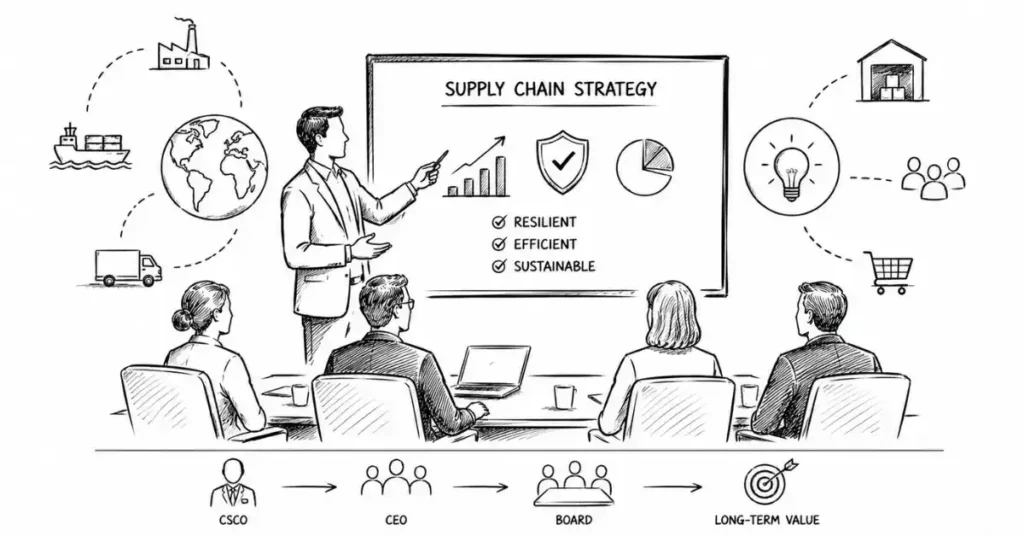
- Regular board presentations on supply chain performance and strategy
Global Operations:
- Oversee supply chain across multiple countries/regions
- Manage global supplier networks and manufacturing footprint
- Navigate geopolitical complexities and trade regulations
- Optimize global network design
- Balance global standardization with local flexibility
Strategic Transformation:
- Lead multi-year transformation programs (often ₹100+ crore investments)
- Drive competitive differentiation through supply chain excellence
- Position supply chain as growth enabler, not just cost center
- Build industry-leading capabilities
Risk and Resilience:
- Ensure business continuity across global operations
- Manage supply chain risks (geopolitical, natural disasters, supplier failures)
- Build resilient and agile supply chains
- Lead crisis management during disruptions
Sustainability Leadership:
- Drive environmental sustainability initiatives (carbon reduction, circular economy)
- Ensure ethical sourcing and labor practices
- Report on ESG metrics to stakeholders and regulators
- Build sustainable competitive advantage
Innovation and Technology:
- Set technology vision for supply chain
- Invest in emerging technologies creating competitive advantage
- Build data and analytics capabilities
- Partner with technology companies and startups
Real-world scenario: As CSCO for a ₹20,000 crore diversified manufacturing conglomerate, you’ll oversee global supply chain operations across 15 countries with 1,500+ supply chain professionals. You’ll report to CEO, present quarterly to board, manage ₹500 crore supply chain budget, lead ₹200 crore digital transformation creating integrated control tower, drive sustainability initiative targeting 30% carbon reduction by 2030, optimize global manufacturing and distribution network (closing 3 facilities, opening 2, consolidating suppliers), deliver ₹300 crore cost savings over 3 years while improving service levels, and build supply chain as key competitive differentiator supporting company’s global expansion strategy.
Compensation at CSCO level:
- Base salary: ₹35-50 lakhs
- Annual bonus: 50-100% of base
- Long-term incentives: Significant stock options
- Total compensation: ₹50 lakhs – ₹1+ crore in large enterprises
What makes exceptional CSCOs:
- Enterprise mindset: Thinking like a CEO, not just supply chain leader
- Strategic influence: Shaping business strategy, not just executing it
- Transformation expertise: Track record of successfully leading major change
- External visibility: Industry thought leadership and external reputation
- Board-ready communication: Articulating complex supply chain topics to non-experts persuasively
4. Regional Supply Chain Head | ₹25-40 lakhs/year
In multinational corporations, regional heads for Asia-Pacific, Middle East, or specific countries represent senior leadership roles.
Scope of Responsibility:
- Lead supply chain for defined geographic region
- Manage P&L for regional supply chain operations
- Navigate cultural and regulatory differences across countries
- Build regional leadership teams
- Coordinate with global supply chain leadership on standardization while adapting to local needs
- Manage relationships with regional business leaders
Why this role exists:
Large global companies need regional expertise to navigate local markets effectively while maintaining global consistency.
Career appeal:
Excellent stepping stone to global CSCO roles, offering international exposure and end-to-end supply chain leadership within manageable scope.
Critical Competencies for Senior Supply Chain Leaders
Technical skills are table stakes at senior levels. These competencies separate good from great:
Strategic Thinking
Long-term Vision:
Senior leaders must think 5-10 years ahead, anticipating market shifts, technology disruption, and competitive dynamics. You’re positioning the organization for future success, not just optimizing current operations.
Scenario Planning:
Developing multiple future scenarios and ensuring supply chain can adapt to different possibilities—what if e-commerce grows faster than expected? What if regulations change? What if key suppliers exit the market?
Portfolio Management:
Balancing multiple strategic initiatives, allocating resources to highest-impact opportunities, knowing when to kill projects that aren’t delivering.
Business and Financial Acumen
P&L Understanding:
Deep knowledge of how supply chain decisions impact revenue, margins, cash flow, and shareholder value. Speaking the language of finance fluently.
Investment Cases:
Building compelling business cases for major investments—calculating NPV, IRR, payback periods, and articulating strategic benefits beyond financial returns.
Working Capital Management:
Optimizing the balance between inventory investment, payment terms, and customer service—understanding cash-to-cash cycle and its impact on company’s financial health.
People Leadership
Developing Leaders:
Your success depends on building strong leadership teams. This means:
- Identifying high-potential talent early
- Providing stretch assignments and coaching
- Creating succession plans
- Building diverse and inclusive teams
- Retaining top performers in competitive market
Change Management:
Leading large-scale organizational changes—new technologies, process redesigns, organizational restructuring—requires:
- Creating compelling vision
- Building coalitions of support
- Managing resistance
- Maintaining momentum over multi-year transformations
- Celebrating wins while pushing for continued improvement
Culture Building:
Shaping organizational culture—continuous improvement mindset, data-driven decision-making, customer-first orientation, collaboration across functions.
Influence and Stakeholder Management
Executive Influence:
Gaining buy-in from CEO, CFO, and board for supply chain investments and strategic changes. This requires:
- Framing supply chain in business terms they care about
- Building credibility through consistent delivery
- Choosing battles wisely
- Bringing solutions, not just problems
Cross-Functional Partnership:
Supply chain success depends on collaboration with sales, marketing, finance, R&D, quality, and IT. Senior leaders must:
- Understand other functions’ priorities and constraints
- Find win-win solutions to conflicts
- Build trust through reliability
- Position supply chain as business partner, not service provider
External Relationships:
Managing relationships with:
- Key suppliers (strategic partnerships, not transactional relationships)
- Logistics providers and other service vendors
- Industry peers (learning from competitors and partners)
- Government officials (especially for regulatory compliance)
- Board members and investors
Technology Vision
Digital Transformation:
Senior supply chain leaders drive technology adoption:
- AI and machine learning for forecasting and optimization
- Automation and robotics in warehouses and manufacturing
- IoT for real-time visibility
- Blockchain for traceability
- Advanced analytics platforms
Build vs. Buy Decisions:
Evaluating whether to build custom solutions, buy commercial software, or use third-party services.
Partnership with IT:
Working effectively with CIO and technology teams—balancing business needs with technical constraints, prioritizing investments, managing implementation risks.
The Path to Senior Leadership
How do you actually reach these positions? The journey typically takes 15-25 years, but strategic career moves can accelerate progress.
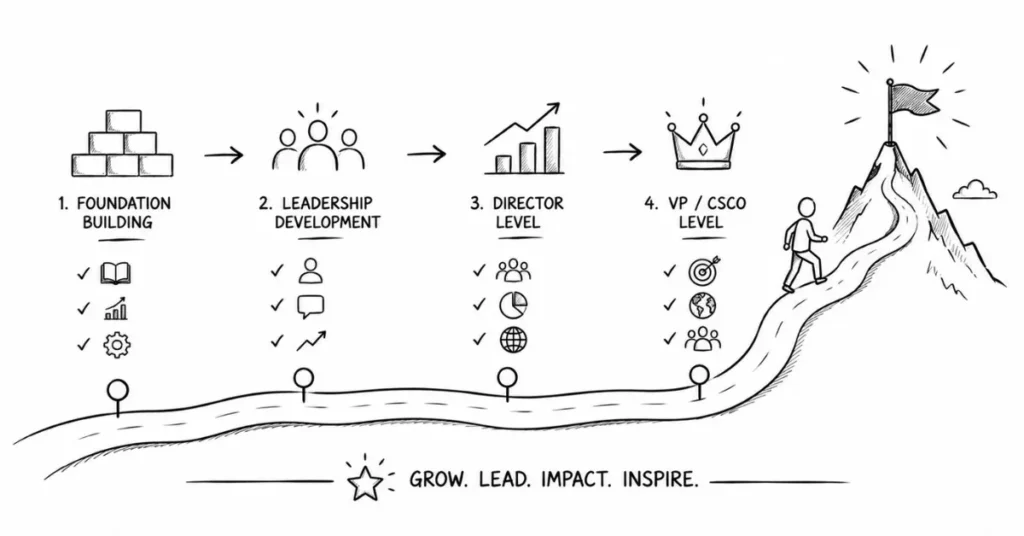
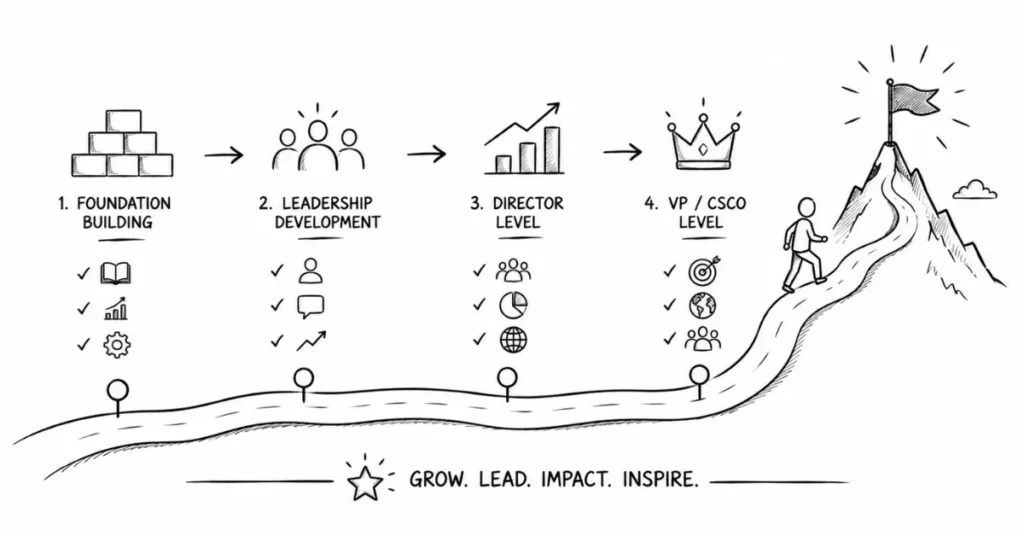
Foundation Building (Years 1-7)
- Excel in entry and mid-level roles
- Develop deep expertise in one supply chain area
- Gain cross-functional exposure through projects
- Build strong analytical and problem-solving capabilities
- Demonstrate consistent delivery and business impact
Leadership Development (Years 7-12)
- Move into management roles with growing team size
- Lead significant projects and initiatives
- Develop strategic thinking and business acumen
- Build cross-functional relationships and influence
- Pursue executive education or relevant certifications (APICS CSCP, executive MBA programs)
- Consider strategic job changes for accelerated growth
Senior Manager/Associate Director (Years 12-15)
- Manage larger teams through multiple layers
- Take ownership of broader supply chain functions
- Drive measurable business transformation
- Build reputation as strategic leader, not just operator
- Develop executive presence and communication skills
- Network with senior leaders and build visibility
Director Level (Years 15-18)
- Prove ability to lead multiple functions and large organizations
- Deliver significant business results (cost savings, service improvements, growth enablement)
- Develop talent and build strong teams
- Navigate complex stakeholder environments successfully
- Consider external opportunities for VP roles (often easier than internal promotion at this level)
VP and CSCO (Years 18+)
- Most companies promote from within for VP roles (hiring externally for cultural fit is risky)
- CSCO roles often filled by VP promotions or external hires with proven track records
- Executive presence, strategic thinking, and results delivery are critical
- Industry reputation and network become important
Strategic Career Accelerators
Targeted Development
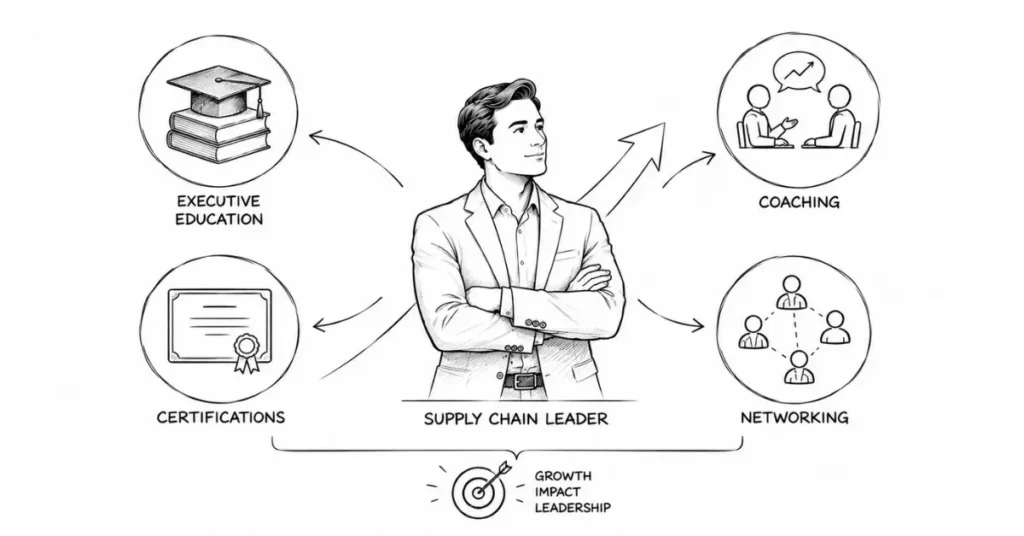
Executive Education:
Programs from IIMs, ISB, or international business schools (Wharton, MIT, INSEAD) provide:
- Advanced business and leadership frameworks
- Peer networking with other senior leaders
- Credential signaling readiness for senior roles
Industry Certifications:
While less critical than at mid-level, certifications like APICS CSCP demonstrate continued learning and global perspective.
Executive Coaching:
Working with experienced coaches helps develop leadership presence, communication skills, and strategic thinking.
Strategic Job Changes
When to Move:
- Every 4-6 years at senior levels (too frequent appears unstable, too infrequent limits growth)
- When you’ve delivered major results and growth opportunities are limited
- When external opportunities offer significantly broader scope or industry change
Where to Move:
- Larger companies for broader scope and bigger budgets
- Faster-growing industries for more opportunity
- Companies undergoing transformation where strong supply chain leadership is needed
- Geographic relocation for international exposure
Compensation Negotiation:
At senior levels, negotiate total compensation packages:
- Base salary (20-30% increases possible with strong moves)
- Performance bonuses (often 30-50% of base)
- Long-term incentives (stock options particularly valuable in growing companies)
- Benefits (relocation, club memberships, car, insurance)
- Job title and scope (sometimes scope matters more than immediate compensation)
Building Your Brand
Internal Visibility:
- Present at leadership meetings and town halls
- Lead high-visibility initiatives
- Build relationships with influential leaders
- Seek opportunities to present to board
External Reputation:
- Speak at industry conferences
- Publish articles in trade journals
- Participate in industry associations
- Build LinkedIn presence with thought leadership
- Win industry awards and recognition
Common Challenges at Senior Levels
Challenge 1: Politics and Organizational Dynamics
Senior roles involve navigating complex politics—competing agendas, turf battles, and organizational dynamics.
Managing it: Build genuine relationships, deliver results consistently, choose battles wisely, maintain integrity even when politically disadvantageous.
Challenge 2: Work-Life Balance
Senior roles demand significant time—60+ hour weeks, travel, evening and weekend work during crises.
Managing it: Set boundaries where possible, delegate effectively, take care of physical and mental health, ensure quality time with family, recognize this is a career phase with trade-offs.
Challenge 3: Keeping Technical Skills Current
As you move up, you’re further from technical work. Skills can atrophy.
Managing it: Stay curious, understand emerging technologies conceptually, rely on technical experts for details, focus your expertise on strategic application of technologies.
Challenge 4: Isolation
The higher you go, the fewer peers you have to discuss challenges with openly.
Managing it: Build external peer networks, work with executive coaches, maintain mentor relationships, join CEO or executive peer groups.
Challenge 5: High Stakes and Pressure
Decisions impact thousands of people, millions of rupees, and company performance. Mistakes are highly visible.
Managing it: Build strong teams you trust, make data-informed decisions, communicate transparently, learn from failures, develop resilience.
Real Talk: Is Senior Leadership Worth It?
Let me be honest about what senior supply chain leadership entails:
The Rewards:
- Significant compensation (₹30-60+ lakhs plus bonuses and equity)
- Meaningful business impact at enterprise level
- Authority to shape strategy and make major decisions
- Professional recognition and respect
- Sense of accomplishment leading large organizations
The Costs:
- High stress and pressure
- Long hours and significant travel
- Constant scrutiny from above and below
- Limited work-life balance during demanding periods
- Difficult people decisions (layoffs, performance issues)
- Personal accountability for major problems
The Truth:
Senior leadership isn’t for everyone. It requires genuine passion for the work, comfort with pressure, and willingness to make sacrifices. If you’re primarily motivated by compensation alone, you’ll likely burn out. But if you’re energized by strategic challenges, building organizations, and creating business impact, senior supply chain leadership is incredibly rewarding.
Your Path Forward
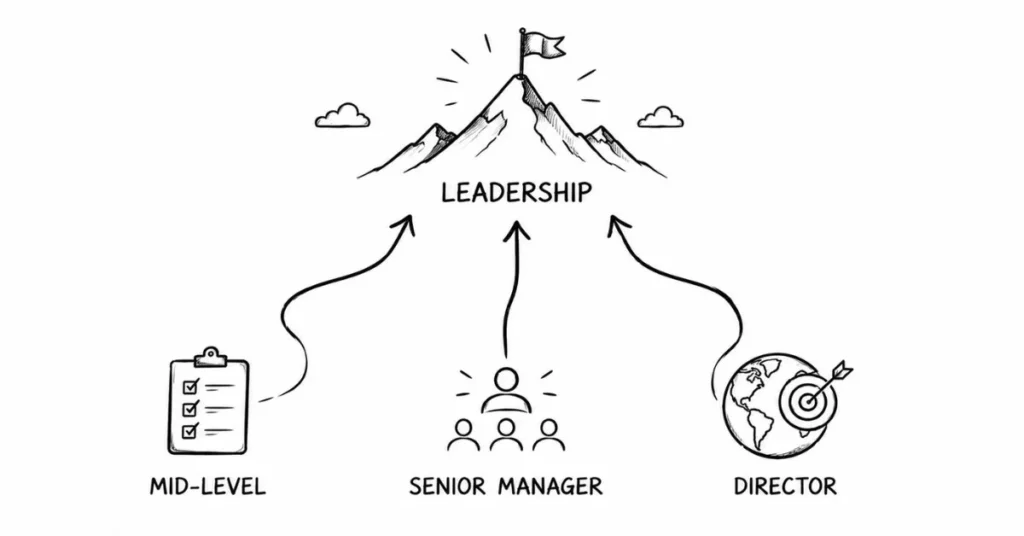
If you’re aspiring to senior supply chain leadership:
If you’re mid-level (5-10 years experience):
- Actively seek broader responsibilities beyond your current function
- Develop strategic thinking through executive education
- Build cross-functional relationships and influence
- Deliver measurable business results, not just operational improvements
- Find mentors at director or VP levels
If you’re senior manager/associate director (10-15 years):
- Position yourself for director opportunities (internal or external)
- Build external reputation through speaking, writing, networking
- Develop talent and demonstrate leadership capability
- Take on enterprise-level projects with high visibility
- Consider executive MBA if you don’t have advanced degree
If you’re director level (15+ years):
- Focus on delivering transformational business results
- Build board-level communication and presence
- Develop relationships with C-suite executives
- Position for VP opportunities when they arise
- Be patient—these opportunities don’t come frequently
Senior supply chain leadership represents the culmination of decades of learning, growing, and delivering results. India’s expanding economy and growing supply chain sophistication create increasing opportunities for capable leaders. With strategic career planning, continuous development, and consistent performance, senior leadership positions are achievable for those committed to the journey.