
Networking Event Self-Introduction: Build Professional Connections Fast

Table of Contents
Why Networking Introductions Are Your Career's Secret Weapon
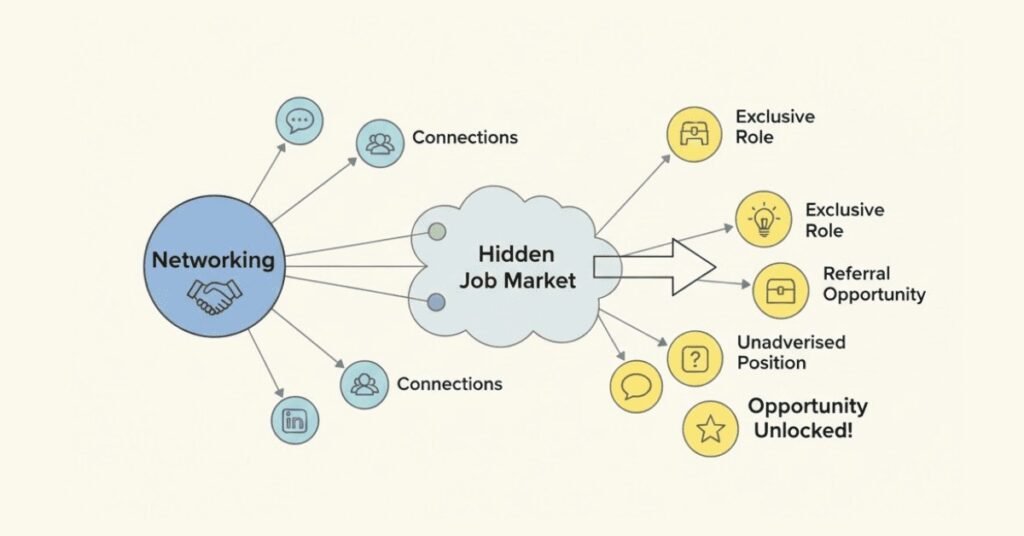
Most students focus on interview introductions and forget something equally important: the ability to introduce yourself at networking events often leads to the best opportunities.
Here’s a fact that recruiters won’t tell you: many positions are filled through networking before they’re ever posted publicly. The person who can confidently approach professionals, introduce themselves authentically, and leave a memorable impression often gets access to opportunities that others never even know exist.
But here’s the problem—networking events make most people nervous. Unlike interviews where you’re in a chair with a structured format, networking is chaotic. There’s no time limit, no formal questions, no script. You’re standing in a room of strangers, holding a drink, trying to figure out how to start conversations that lead to meaningful professional relationships.
The key is simple: you need an introduction that works as a conversation starter, not just an information dump. Your networking introduction should be brief, genuine, and designed to spark dialogue—not to tell your entire professional story.
The Networking Introduction Is NOT an Interview Introduction
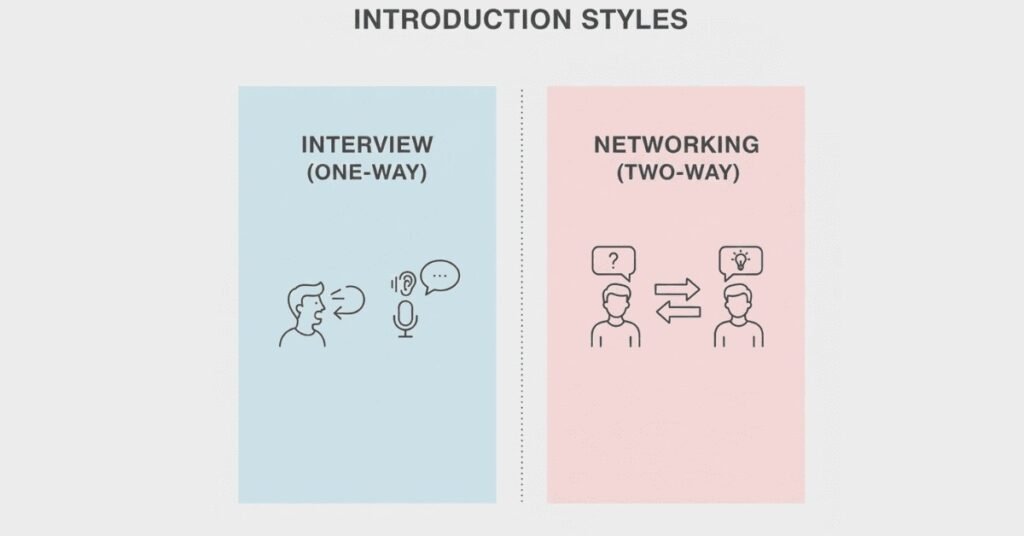
Let’s be clear: what works in an interview will fall flat at a networking event. Here’s why?
Interview introductions are monologues. You talk, they listen, they ask follow-up questions. Everyone knows the format.
Networking introductions are conversation starters. You say something brief, they respond, you engage based on their interest. It’s dialogue, not a performance.
Most people make the mistake of treating networking like mini-interviews. They launch into their 60-second prepared introduction and watch the other person’s eyes glaze over. Why? Because networking conversations need to feel natural, not rehearsed.
The Three-Tier Networking Introduction Framework
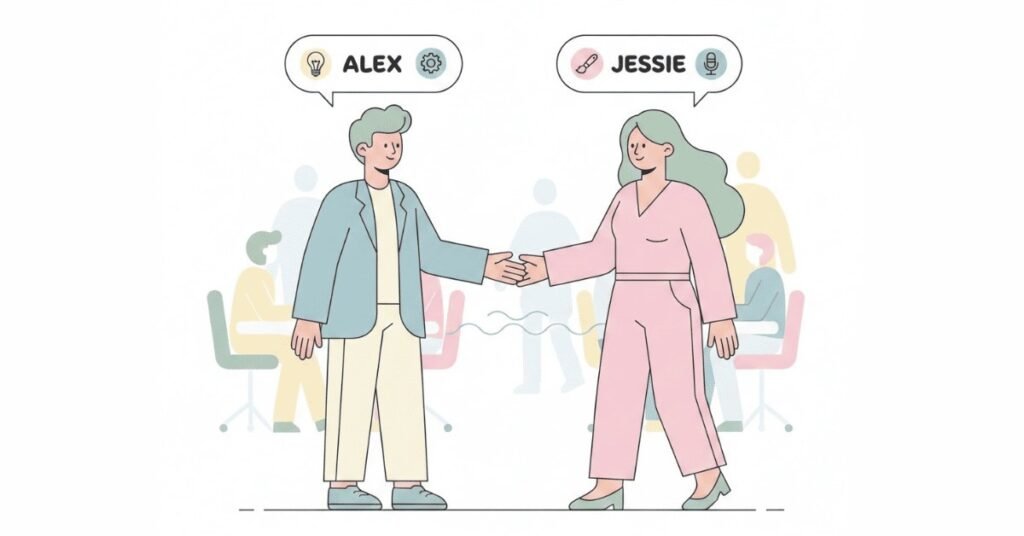
Effective networkers have three versions of their introduction, and they know exactly when to use each one.
Tier 1: The 15-Second Casual Introduction
This is your go-to for casual encounters—at a coffee break, in a corridor, while standing at the snack table.
Formula:
- Your name
- What you do (or what you’re studying/learning)
- One memorable detail or question
Example:
“Hi, I’m Priya! I’m currently learning digital marketing and I’m really passionate about how content strategy can help educational startups reach more students. Are you involved in education or marketing?
Notice what this does:
- Introduces you and your interest
- Gives them something to respond to
- Opens dialogue naturally
- Isn’t salesy or pushy.
Tier 2: The 30-Second Genuine Introduction
Use this when someone asks more detailed questions or you have a bit more time to chat.
“I’m Priya, currently pursuing my final year in marketing. I’ve been freelancing with 3 startups in the EdTech space, helping them build their social media presence. What’s fascinating to me is how authentic storytelling actually drives customer loyalty better than traditional advertising. That’s why I’m here today—to learn from professionals already doing this at scale. What brings you to this event?”
This version:
- Provides more context
- Shows genuine passion, not just ambition
- Includes a conversational hook (your perspective)
- Ends with a question about them.
Tier 3: The Full Introduction
This is for when you have a real conversation opportunity—someone sits down with you or you’ve been chatting for a few minutes and they ask to hear more.
“I’m Priya, and my journey to marketing wasn’t traditional—I started in data analysis but realized I was more excited about understanding why people make purchasing decisions than analyzing numbers. That’s what drew me to marketing. Over the past year, I’ve been working with EdTech startups to build their content strategies, and I’ve learned how crucial it is to understand your audience deeply. But I’m still learning, which is why I’m here—I want to understand how larger organizations scale marketing while maintaining authenticity. What’s your experience been?
This version:
- Tells a mini-story
- Shows self-awareness
- Demonstrates genuine learning mindset
Invites meaningful dialogue.
The Golden Rule: Always End with a Question About Them
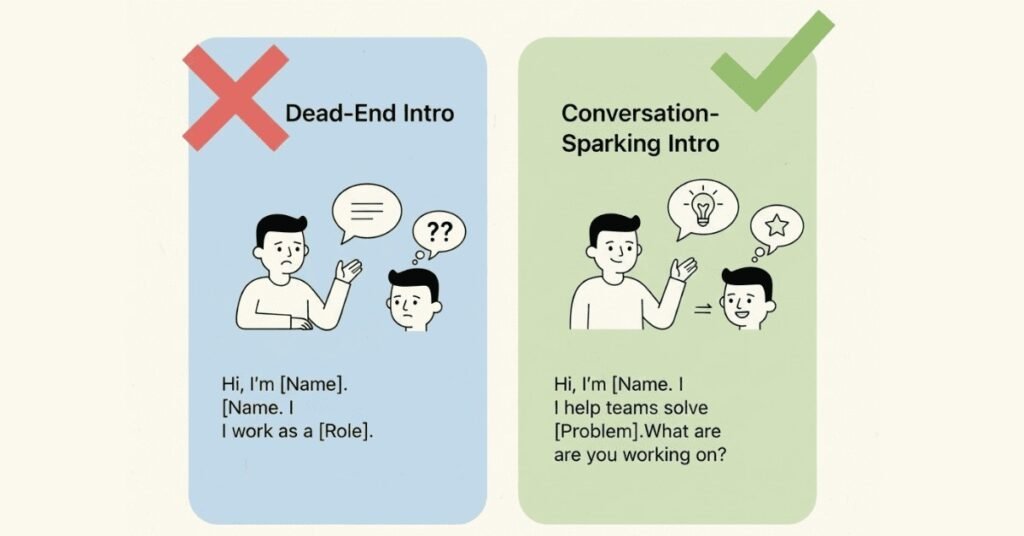
This is the difference between networking conversations that go nowhere and those that actually lead to connections.
What NOT to do:
“Hi, I’m Rahul, I’m in IT, I like coding. That’s it.”
Then silence. Awkward. The conversation dies.
What TO do:
“Hi, I’m Rahul, I’m really interested in cloud technologies—I just completed AWS certification. What’s your background in tech?”
Now they’re invested in answering because you’ve shown interest in them.
The magic of networking is this: people remember those who ask about them, not those who talk about themselves.
Real Networking Introduction Examples
Example 1: Fresher at Tech Conference
“Hi! I’m Sneha, I’m a recent computer science graduate learning web development. I’m actually teaching myself React because I believe frontend development is where user experience really comes alive. Are you more of a frontend or backend person?
Why this works:
- Clear about fresher status (no pretense)
- Shows self-directed learning
- Specific technology mention (gives them something to respond to)
- Ends with question about their specialty.
Example 2: Career Changer at Networking Meetup
“Hello! I’m Aditya, and I’m transitioning from banking into product management. Spent 5 years managing relationships with enterprise clients, which taught me how to listen to what customers actually need vs. what they think they need. That’s what drew me to product. I’m currently learning through online courses and would love to pick the brains of people already in product management. What’s your product background?
Why this works:
- Owns the career change confidently
- Connects previous experience to new field
- Shows humility (learning mindset)
- Asks for mentorship naturally
Example 3: Experienced Professional at Industry Event
“Hi, I’m Kavitha. I’ve spent 7 years in project management, mostly in IT services, but I’m increasingly interested in how organizations can build stronger cultures during rapid scaling. I’m exploring whether to move into HR or organizational development. What’s your take on that transition? How have you seen successful scaling happen?
Why this works:
- Establishes credibility (7 years experience)
- Shows strategic thinking (career direction matters)
- Admits uncertainty (human, relatable)
Asks for their perspective, not advice.
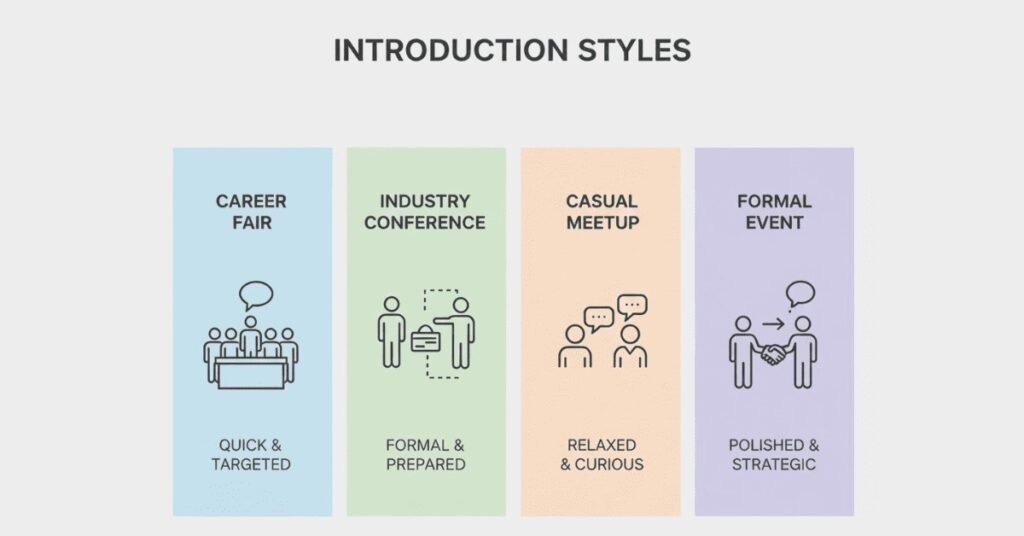
Context-Specific Networking Introductions
Different networking settings require different approaches.
At a Career Fair
Go shorter and more direct. People are rushed. You have maybe 90 seconds before they talk to the next person.
“Hi, I’m Priya, a final-year student in marketing. I’m specifically interested in roles where I can work on brand positioning. Do you have openings in that area?
At an Industry Conference
You can go longer because people are there to have real conversations. They’re less rushed.
“Hi, I’m Neha. I’m in digital marketing and I’m particularly interested in understanding how AI is changing customer personalization. I noticed your company’s recent case study on ML-driven recommendations. How did you approach the ethical considerations?
At a Casual Meetup (Webinar, Online Community)
Be warm and acknowledge the virtual format.
“Hey everyone! I’m Rahul, relatively new to data science—I’m 6 months into my transition from finance. I’m learning Python and SQL, and I’d love to connect with others in this community. Happy to help with finance-related questions or learn about your data projects!
At a Formal Industry Gathering
Be more structured but still conversational.
“Good evening, I’m Arun from ABC Tech, heading our marketing team. I’m fascinated by how B2B companies are leveraging content marketing to establish thought leadership. What’s been your experience with content strategy in your organization?
How to Handle Different Reactions
Not every networking conversation will flow smoothly. Here’s how to handle common scenarios.
If They Seem Uninterested:
Don’t push. Gracefully exit.
“Well, I don’t want to keep you! Great meeting you. Hope to connect on LinkedIn!”
Then move on. Not everyone will be a good fit, and that’s okay.
If They Ask More Questions:
This is great! They’re engaged. Keep it conversational, not salesy.
Answer their questions genuinely, then ask follow-up questions about their work.
If They Dominate the Conversation:
Let them talk—people love talking about themselves. Ask occasional questions. You’re gathering intelligence about the industry/company.
If You Get a Business Card:
Before they leave, ask: “What’s the best way to follow up with you?” This clarifies their preference—email, LinkedIn, phone.
The Follow-Up: Where Most Networkers Fail
You had a great conversation. You exchanged business cards. Then… nothing. The connection dies.
Here’s how to maintain the connection:
Within 24 hours:
Send a brief LinkedIn message or email referencing something specific you discussed.
“Hi Priya, great meeting you at the marketing conference yesterday! I’ve been thinking about what you said about content marketing for EdTech companies. I actually found an article I think you’d find relevant—[link]. Would love to stay connected!
After 1-2 weeks:
If they seemed like a potential mentor or good connection, reach out with a specific ask.
“Hi Kavitha, I’ve been reflecting on our conversation about career transitions into HR. Would you have 20 minutes for a quick call next week? I’d love to learn more about your transition experience.
Common Networking Introduction Mistakes
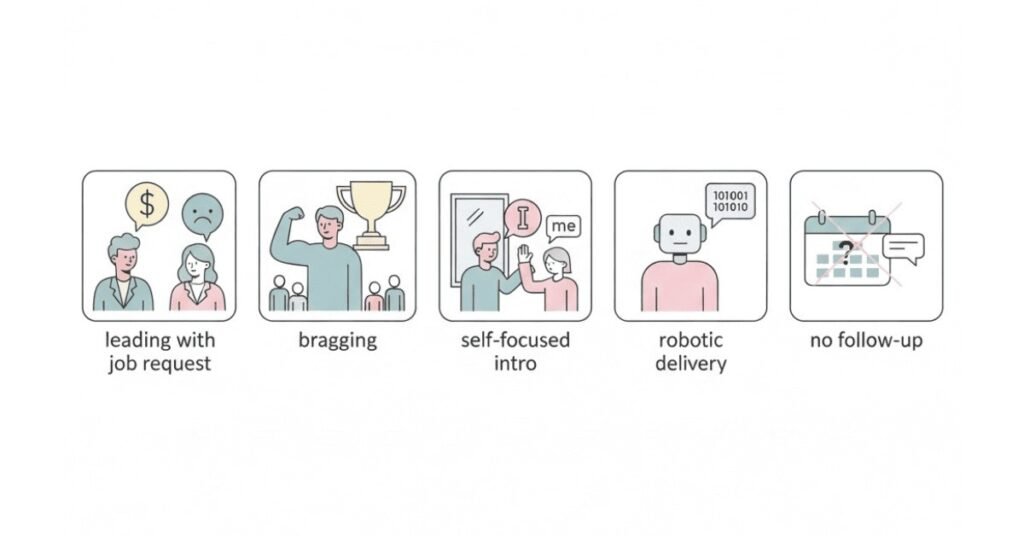
Mistake #1: Leading with Your Ask
“Hi, I’m looking for a job in marketing. Do you know anyone hiring?”
This sounds desperate and transactional.
Better: Build the relationship first. The ask comes naturally later.
Mistake #2: Name-Dropping or Bragging
“I worked with the CEO of XYZ Company” or “I just got recruited by…”
This makes people uncomfortable. You sound insecure.
Better: Let your achievements speak through natural conversation.
Mistake #3: Talking Only About Your Needs
If you spend the entire conversation talking about what you want, people won’t remember you fondly.
Better: Show genuine interest in what they do. Ask questions. Listen.
Mistake #4: Being Overly Rehearsed
If your introduction sounds like you’ve said it 50 times, you’ll sound inauthentic.
Better: Know your key points but let the words flow naturally.
Mistake #5: Not Following Up
You made a great connection but never reach out. They forget you.
Better: Follow up within 24 hours while the conversation is fresh.
Preparation Strategy: Your Networking Introduction Kit
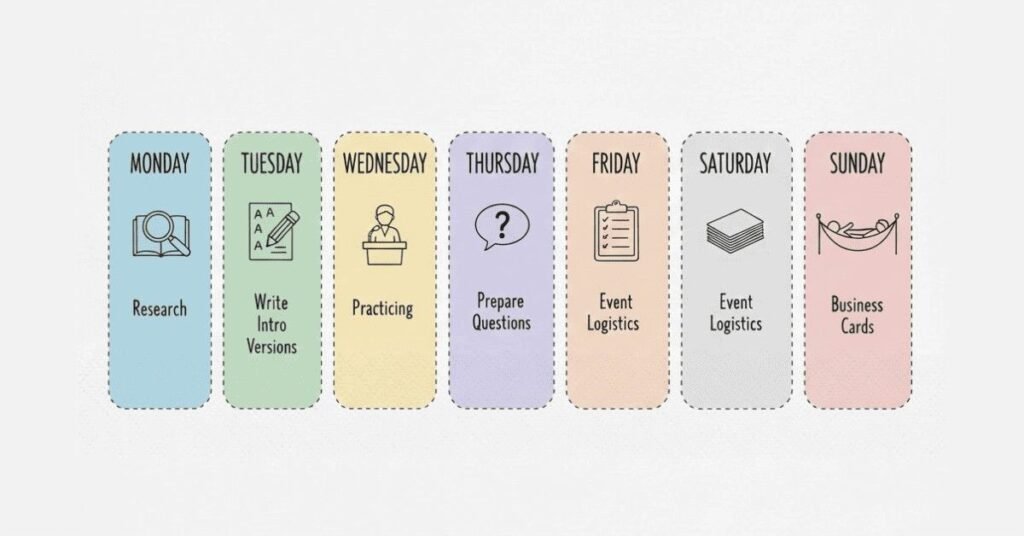
Week Before Event:
Day 1: Identify 5 people or companies you want to connect with. Research them briefly.
Day 2: Write your three introduction versions (15, 30, and 60 seconds).
Day 3: Practice out loud. Time yourself. Does it sound natural?
Day 4: Prepare 3-4 good questions you’ll ask people (specific to the event).
Day 5: Check logistics—what time does the event start? Where’s parking? What should you wear?
Day 6: Print or order business cards if possible. Pack them in an accessible pocket.
Day 7: Rest and visualize positive interactions.
The Psychological Advantage of Good Networking Skillst
Here’s what most people don’t realize: networking introductions aren’t just about landing opportunities—they’re about building genuine professional relationships that last throughout your career.
When you can introduce yourself authentically, listen genuinely, and follow up thoughtfully, you build a network of people who actually want to help you because they like you, not because you’re begging for help.
This network becomes your greatest career asset. Jobs, mentorship, collaborations, partnerships—they all flow from genuine relationships built through authentic networking.
Your Networking Confidence Starts Now
Most people’s networking anxiety comes from feeling unprepared. They don’t know what to say, so they avoid the event.
But here’s the secret: you don’t need a perfect introduction. You need an authentic one that starts conversations.
Write your three introduction versions this week. Practice them until they feel natural. Then commit to attending one networking event in the next month.
Go with the intention to learn about others, not to “sell yourself.” Ask genuine questions. Listen actively. Follow up thoughtfully.
That’s it. That’s the formula that builds real professional networks.
Your next great opportunity might be standing in the room at the next networking event you attend. Make sure you can introduce yourself in a way that makes them remember you after you leave.