
LEARNING AND DEVELOPMENT (L&D) CAREERS
Table of Contents

Imagine joining a company as a fresh graduate, eager but uncertain about how to navigate your new role. Within your first week, a structured onboarding program introduces you to the company’s culture, systems, and expectations. Over the following months, you attend training sessions that build your technical skills and soft skills. A year later, you’re confidently leading projects, thanks to the learning programs that accelerated your development.
Behind every effective training session, thoughtfully designed e-learning module, and leadership development program stands a Learning and Development (L&D) professional who is passionate about helping people grow. If you’ve ever thought “I’d love to teach” but wanted broader impact than a classroom teacher, or if you’re energized by watching others develop new capabilities and advance their careers, L&D might be your ideal career path.
This comprehensive guide explores what L&D professionals actually do, the skills required for success, realistic salary expectations in India, and how to build a fulfilling career in this rewarding field that blends education, psychology, business strategy, and creativity.
What is Learning and Development?
Learning and Development (sometimes called Training and Development or Talent Development) is the HR function focused on improving individual and organizational performance through systematic learning interventions.
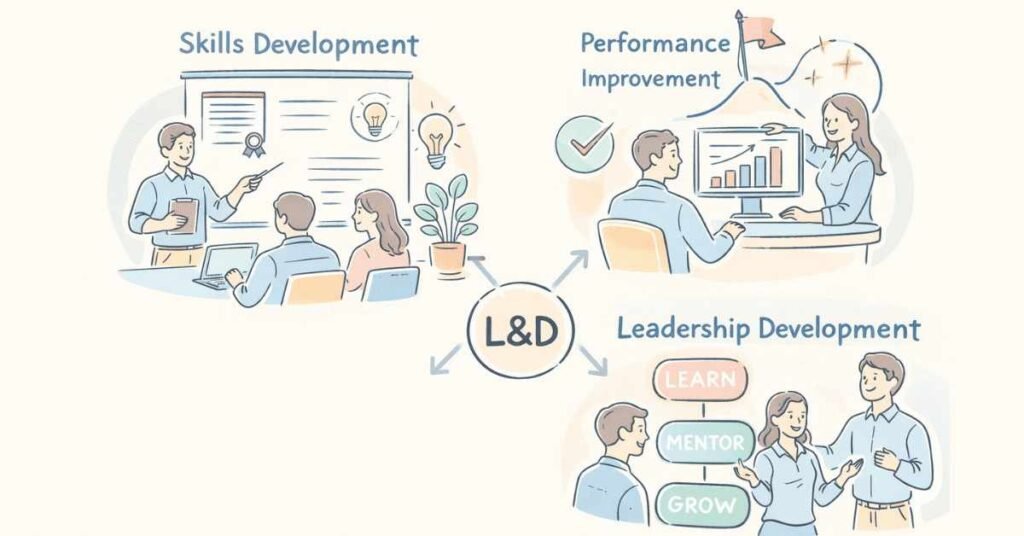
L&D professionals work to identify skill gaps in the workforce, design learning programs to address those gaps, deliver training through various methods and formats, evaluate learning effectiveness and business impact, develop leaders and high-potential employees, create career development frameworks, manage learning technologies and platforms, and build learning cultures where continuous development is valued.
The ultimate goal isn’t just teaching—it’s changing behavior and improving performance in ways that drive business results. An effective sales training program doesn’t just transfer product knowledge; it increases sales. A leadership development program doesn’t just teach management theories; it creates better leaders who build stronger teams.
This focus on business outcomes distinguishes corporate L&D from academic education. You’re not teaching for knowledge’s sake but developing capabilities that enable organizational success.
The L&D Landscape in India
Understanding the Indian L&D context helps you navigate career opportunities:
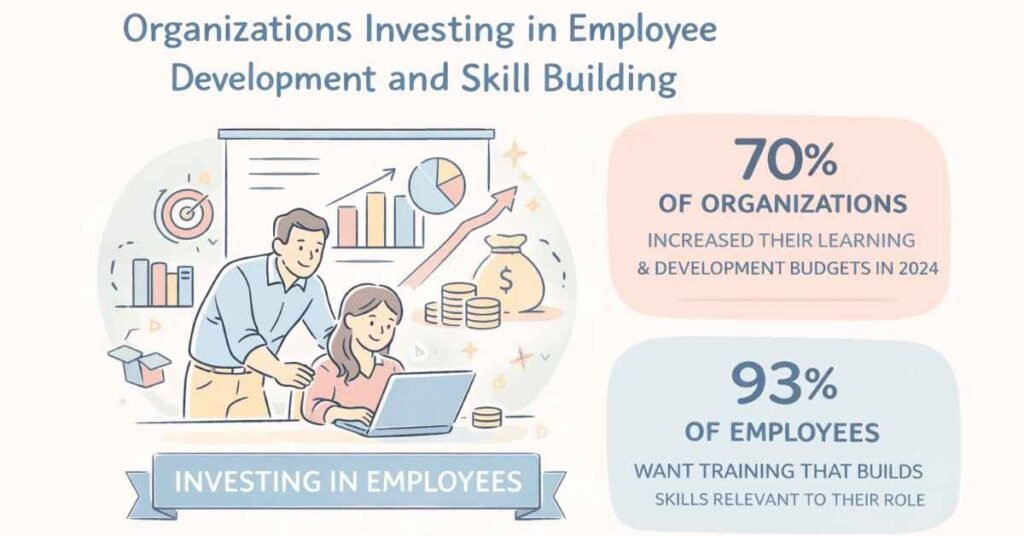
Growing Investment: Indian organizations are increasingly investing in employee development, recognizing that capability building drives competitive advantage. IT services companies, banks, large conglomerates, and progressive startups are building robust L&D functions.
Technology Sector Leadership: Technology companies lead L&D innovation in India, implementing modern learning technologies, offering extensive upskilling programs, and creating learning cultures. Companies like TCS, Infosys, Wipro, and tech MNCs have massive L&D operations training thousands of employees annually.
Compliance and Certifications: Many industries require mandatory training—banking certifications, safety training in manufacturing, medical education for healthcare. This creates consistent L&D demand regardless of economic cycles.[taggd]
Digital Learning Acceleration: COVID-19 permanently accelerated virtual and e-learning adoption. L&D professionals now design hybrid learning experiences blending digital and in-person delivery rather than defaulting to classroom training.
Skills Gap Challenges: Rapid technological change creates constant skill obsolescence. Organizations need L&D functions that can quickly upskill workforces in emerging technologies, tools, and methodologies. This challenge creates tremendous opportunity for L&D professionals.
Core L&D Responsibilities
What does L&D work actually involve? Let’s explore the key responsibilities:
Training Needs Assessment
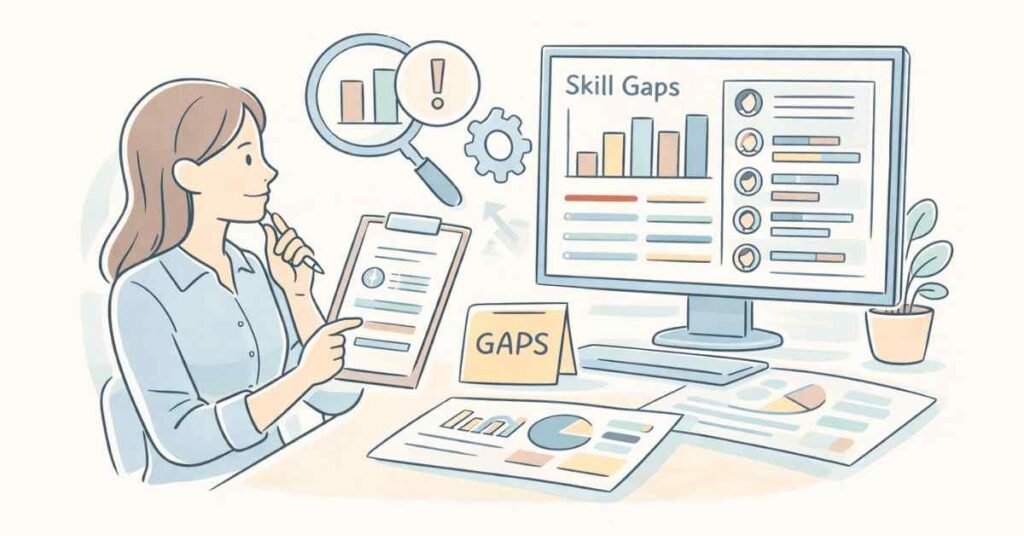
L&D begins with understanding what learning is needed and why. You’ll conduct needs assessments through consulting with business leaders about strategic priorities and capability gaps, analyzing performance data to identify skill deficiencies, surveying employees about development needs and interests, reviewing industry trends and future skill requirements, and conducting competency gap analyses comparing current versus required capabilities.
Effective needs assessment prevents the common trap of delivering training nobody needs or wants. You’re diagnosing organizational problems and determining whether learning interventions will actually solve them.
Instructional Design and Curriculum Development
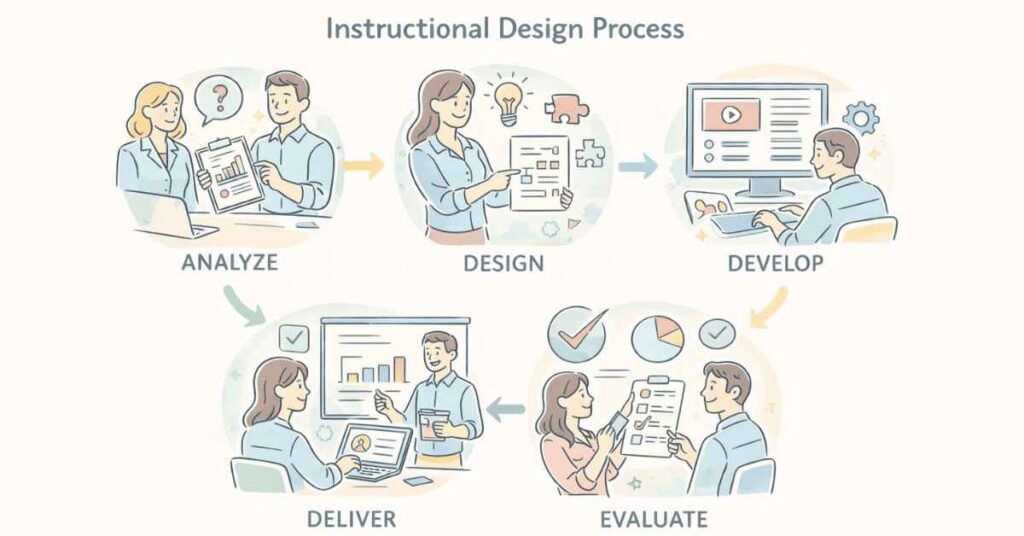
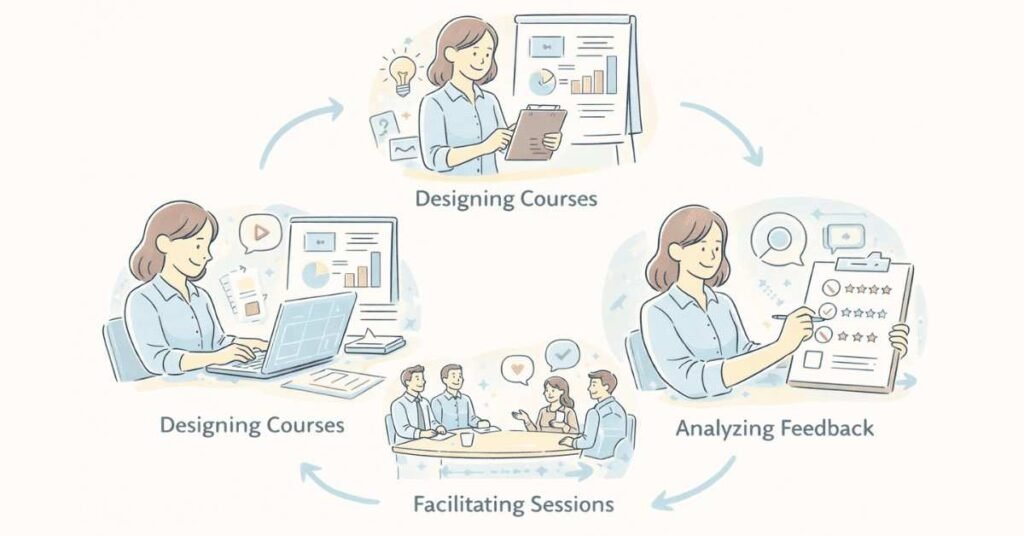
Once you understand learning needs, you design programs to address them. This involves defining clear learning objectives and outcomes, designing curricula and learning journeys (what to teach in what sequence), selecting appropriate delivery methods (classroom, virtual, e-learning, blended), creating engaging content including presentations, activities, case studies, developing assessment methods to measure learning, and designing practice opportunities for skill application.
Instructional design is part science (applying adult learning principles and cognitive research) and part art (creating engaging experiences that resonate with learners).
Many L&D professionals specialize in instructional design, focusing entirely on designing learning experiences rather than delivering them. This role suits creative individuals who enjoy crafting educational content.
Training Delivery and Facilitation
Some L&D professionals focus on delivering training—standing in front of (or on Zoom with) learners and facilitating learning experiences. This includes conducting classroom training sessions, facilitating virtual training via video conferencing, coaching individuals or small groups, leading workshops and experiential learning activities, managing group discussions and activities, adapting delivery based on learner engagement and understanding, and creating psychologically safe learning environments.
Great trainers combine subject matter expertise with presentation skills, emotional intelligence, ability to read and respond to group dynamics, humor and energy that engage learners, and flexibility to adjust when planned activities aren’t working.
Not all L&D professionals deliver training. Some organizations separate design (what to teach) from delivery (how to teach it), while others use external trainers or subject matter experts for delivery while internal L&D designs and coordinates.

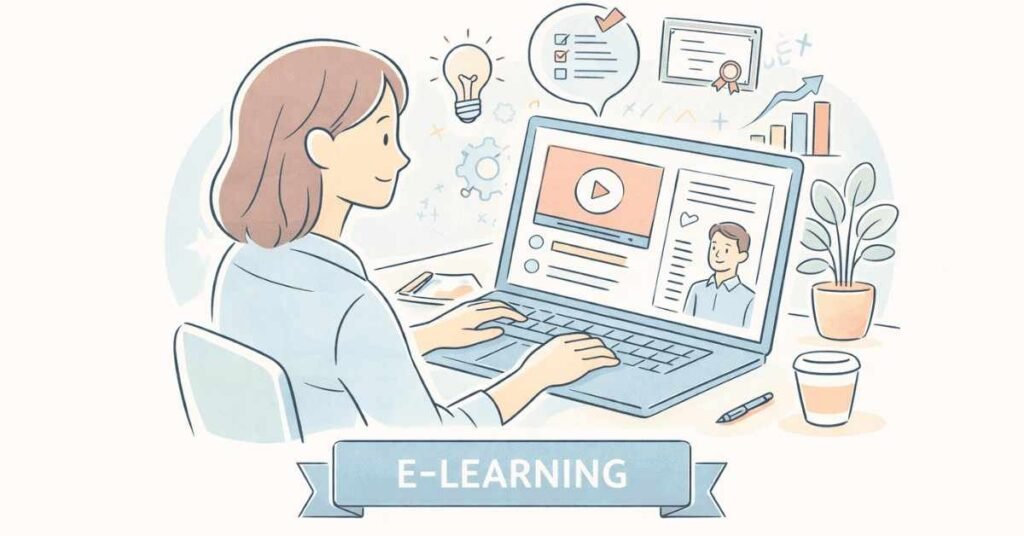
E-Learning Development
Digital learning has become central to L&D. You might develop e-learning content using authoring tools (Articulate Storyline, Adobe Captivate, Camtasia), design microlearning modules for just-in-time learning, create video content and tutorials, develop interactive simulations and scenarios, build knowledge bases and resource libraries, and design mobile-first learning for smartphone access.
E-learning development requires technical skills beyond traditional training—comfort with software tools, basic graphic design sensibility, video editing, and user experience thinking.
Learning Management System (LMS) Administration
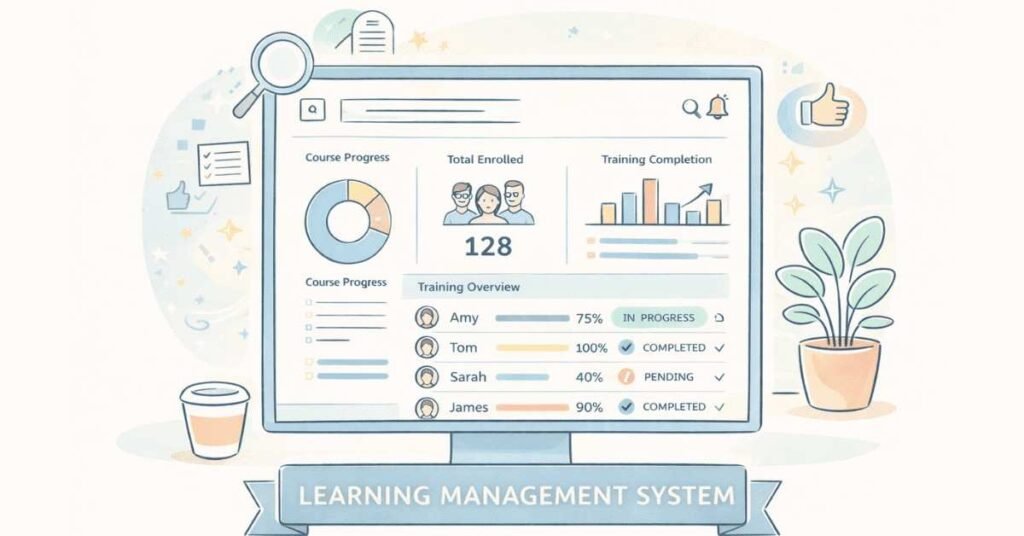
Most organizations use LMS platforms to manage learning. As an L&D professional, you’ll implement and configure LMS platforms (Moodle, SAP SuccessFactors Learning, Cornerstone, Talent LMS, others), upload and organize learning content, manage learner enrollment and access, track completion rates and learning metrics, generate reports on training activity and compliance, troubleshoot technical issues learners encounter, and integrate LMS with HRIS and other systems.
LMS administration is the technical backbone of L&D operations. In small teams, L&D generalists handle this along with other duties. Larger organizations have dedicated LMS administrators.
Leadership Development
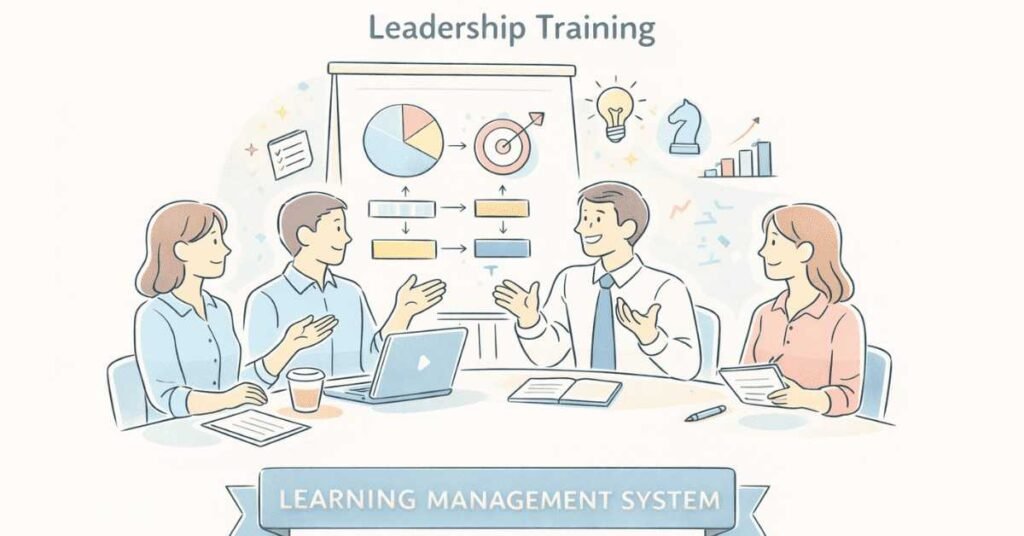
Developing leaders—from first-time managers to senior executives—is often L&D’s highest-impact work. Leadership development includes designing multi-month development programs for different leadership levels, creating cohort-based learning experiences, coordinating executive coaching engagements, facilitating action learning projects where leaders solve real business problems, developing emerging leaders and high-potentials, designing succession planning processes with talent management, and measuring leadership program impact on business results.
Leadership development typically involves L&D’s most senior professionals because it requires business acumen, executive presence, and understanding of complex organizational dynamics.
Career Development and Pathing
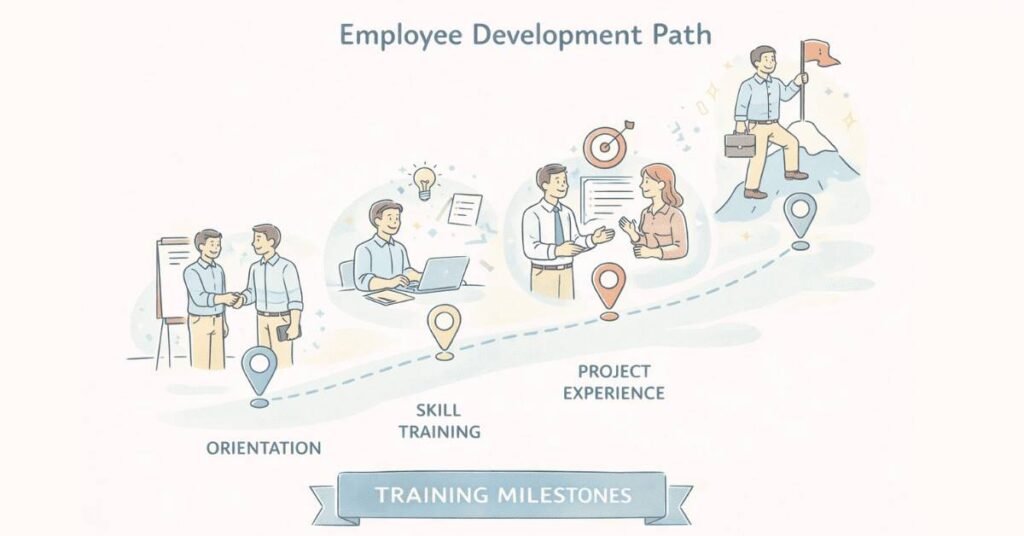
Beyond formal training, L&D often supports employees’ career growth through creating career development frameworks showing progression paths, designing competency models defining success at each level, implementing mentoring programs connecting learners with experienced colleagues, facilitating career conversations and planning, creating stretch assignment opportunities for development, and building internal mobility processes.
This work bridges L&D and Talent Management, recognizing that career development motivates and retains employees.
Learning Evaluation and Measurement
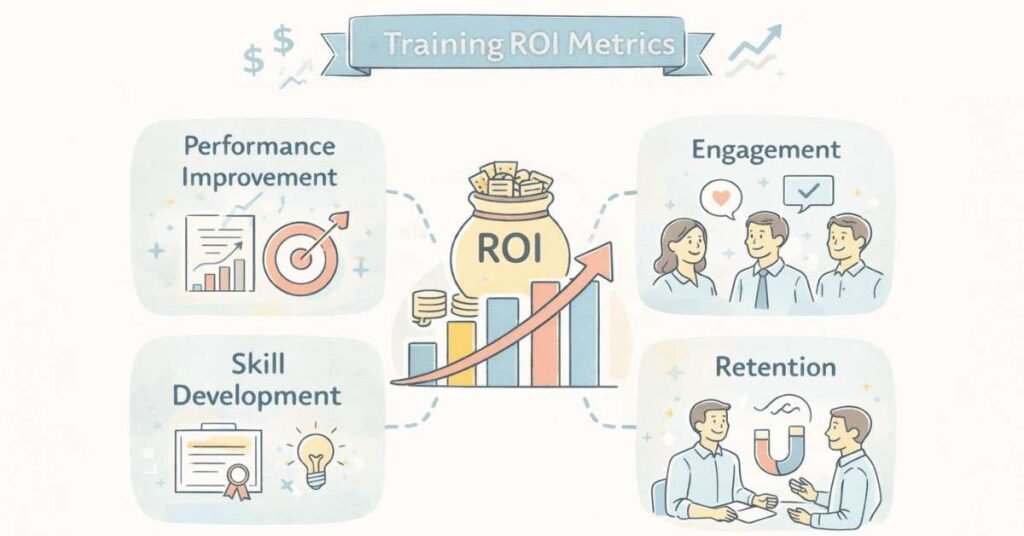
Demonstrating L&D impact requires systematic evaluation using the Kirkpatrick Model or similar frameworks:
Level 1 (Reaction): Did learners enjoy the training? Measured through satisfaction surveys.
Level 2 (Learning): Did learners acquire intended knowledge and skills? Measured through assessments, tests, or demonstrations.
Level 3 (Behavior): Did learners apply learning on the job? Measured through observations, 360 feedback, or performance data.
Level 4 (Results): Did the training impact business outcomes? Measured through productivity metrics, sales data, quality improvements, or other business KPIs.
Too many L&D functions stop at Level 1 or 2. Effective L&D professionals push to measure behavior change and business impact, demonstrating ROI that justifies continued investment.
Vendor and Stakeholder Management
L&D rarely does everything internally. You’ll manage relationships with external training vendors and consultants, negotiate contracts and pricing, coordinate subject matter experts who deliver specialized content, partner with business leaders on program design and priorities, collaborate with HR on talent strategy, and work with IT on learning technology infrastructure.
These relationships require communication skills, influencing abilities, and project management capabilities.
A Day in the Life of an L&D Specialist
What does this look like practically? Let’s walk through a typical day:
Morning (9:00 AM – 12:00 PM): Your day starts facilitating a three-hour virtual workshop on “Effective Communication Skills” for 25 mid-level managers. You’ve designed this workshop with interactive polls, breakout room activities, and role-play exercises. Despite Zoom fatigue being real, participants are engaged and sharing valuable insights from their experiences.
After the session, you quickly review the feedback survey responses. Most rated it 4-5 stars, though several requested more time for certain exercises. You make notes to extend that section in future deliveries.
Midday (12:00 PM – 2:00 PM): Over lunch, you review emails including a request from the sales director to develop training on the new CRM system launching next month. You schedule a meeting for tomorrow to understand requirements and timelines.
After lunch, you have a one-on-one with your manager to discuss a leadership development program you’re designing. You present your draft curriculum covering emotional intelligence, strategic thinking, and change management over a six-month period. Your manager provides feedback about incorporating more action-learning projects where participants solve real business challenges.
Afternoon (2:00 PM – 6:00 PM): You spend two hours in your LMS uploading the compliance training modules that Legal recently finalized. You enroll all relevant employees, set completion deadlines, and configure automated reminder emails.
You then work on developing an e-learning module about data privacy using Articulate Storyline. You’re building interactive scenarios where learners practice handling customer data appropriately and receive immediate feedback on their choices. The scenarios are taking longer than expected—good instructional design always does.
You join a meeting with an external vendor who specializes in sales training. Your organization wants to improve sales performance, and you’re evaluating whether their program fits your needs. You ask detailed questions about their methodology, customization options, and how they measure impact.
Late Afternoon (4:30 PM – 6:00 PM): Before ending your day, you analyze last month’s training metrics to prepare your monthly report. You notice that completion rates for the project management e-learning dropped to 65% from 80% the previous month. You make a note to investigate why and potentially send reminder communications.
You respond to several employee emails asking about training opportunities, recommend relevant programs, and help one employee navigate the LMS who’s having trouble finding a specific course.
This represents a relatively balanced day. Some days you’re facilitating training for eight hours straight. Other days you’re designing content with minimal meetings. The variety keeps L&D work interesting.
Essential Skills for L&D Success
What capabilities do successful L&D professionals need?
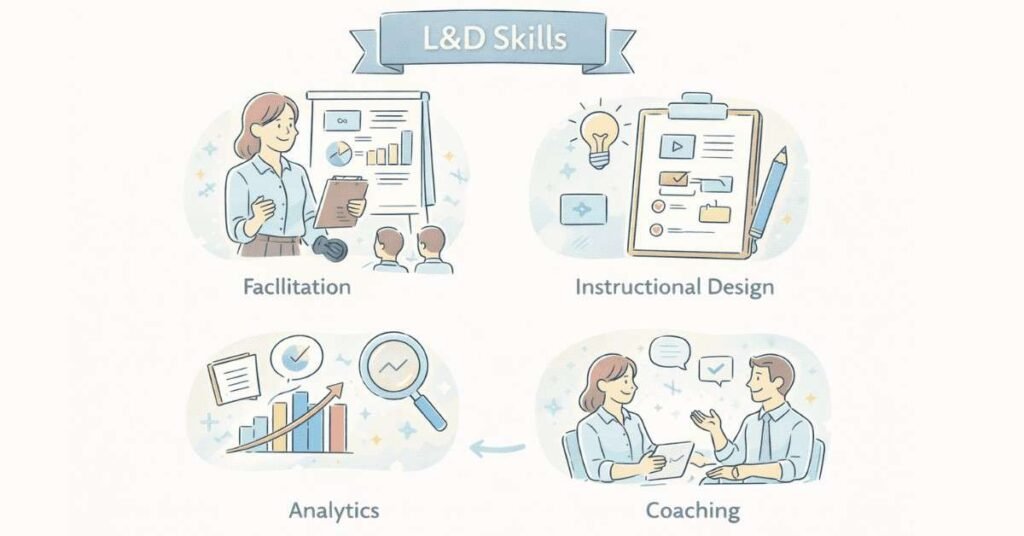
Adult Learning Principles and Instructional Design
Understanding how adults learn differently from children is foundational. Key principles include adults are self-directed and want control over their learning, adults bring experience that should be leveraged, adults are goal-oriented and want relevant learning, adults are practical and want applicable content, and adults need to understand “why” before “how”.
Effective L&D professionals design with these principles in mind—involving learners actively, connecting to real work situations, providing practical application opportunities, and respecting learners’ time and intelligence.
Communication and Presentation Skills
Whether facilitating training or consulting with stakeholders, communication is central to L&D. You need clear, engaging presentation delivery that holds attention, ability to simplify complex concepts, active listening to understand needs and concerns, questioning skills to draw out insights and check understanding, written communication for creating content and documentation, and ability to adapt communication styles to different audiences.
Many successful L&D professionals started as strong communicators and built other skills around that foundation.
Creativity and Instructional Creativity
Effective learning experiences require creative design to engage learners through developing innovative training activities and exercises, creating memorable analogies and examples, designing games and simulations that make learning fun, using storytelling to illustrate concepts, finding creative ways to teach dry or complex material, and keeping content fresh rather than reusing the same approaches.
Creativity distinguishes good L&D professionals from great ones. Anyone can deliver information, but creating experiences that transform understanding requires creativity.
Facilitation and Group Dynamics
Managing groups during training requires specific skills including creating psychologically safe environments where people participate, managing different personality types and participation levels, handling difficult participants or challenging questions, maintaining energy and engagement throughout sessions, reading group dynamics and adjusting accordingly, facilitating discussions that generate insights, and managing time to cover content within constraints.
These skills develop with practice. Early-career L&D professionals often co-facilitate with experienced colleagues before leading sessions independently.
Technical Proficiency
Modern L&D requires comfort with various technologies including LMS platforms (Moodle, SuccessFactors, Cornerstone, others), e-learning authoring tools (Articulate, Captivate, Camtasia), video conferencing platforms (Zoom, Teams, WebEx) and their features, Microsoft Office especially PowerPoint for presentations, video editing tools for creating learning content, and basic graphic design for creating visually appealing materials.
You don’t need to be a technical expert, but comfort learning new tools and platforms is essential as L&D technology evolves constantly.
Business Acumen and Strategic Thinking
L&D increasingly requires business understanding beyond just training expertise including how your organization creates value and makes money, your industry’s dynamics, trends, and competitive landscape, which capabilities are strategically critical to business success, how to align L&D programs with business priorities, and how to speak the language of business leaders rather than just training jargon.
Strategic L&D professionals partner with business leaders rather than just taking training orders. This requires understanding their world and challenges.
Analytical Skills and Measurement
Demonstrating L&D impact requires analytical capabilities including designing evaluation methods appropriate to learning objectives, analyzing training data to identify patterns and insights, calculating ROI and cost-benefit of learning programs, using data to make cases for resources or program changes, and creating reports and dashboards visualizing L&D metrics.
Data literacy helps L&D gain credibility with business leaders who want evidence that training investments pay off.
Project Management
L&D professionals constantly manage multiple projects—developing new programs, coordinating vendor-delivered training, rolling out organization-wide initiatives. This requires planning complex projects with multiple dependencies, managing timelines and ensuring deliverables meet deadlines, coordinating multiple stakeholders and subject matter experts, managing budgets for programs and vendors, and handling multiple priorities simultaneously.
Strong project management prevents the chaos of missed deadlines, over-budget programs, and frustrated stakeholders.
Empathy and Coaching Mindset
At its heart, L&D is about helping people grow. This requires genuine empathy for learners’ challenges and frustrations, patience when people struggle with concepts or skills, ability to provide constructive feedback supportively, coaching mindset focused on developing others’ potential, and celebration of learners’ growth and achievements.
The best L&D professionals genuinely care about people’s development, and that authenticity comes through.
Career Progression in L&D
Understanding the typical L&D career trajectory helps you plan professional development:
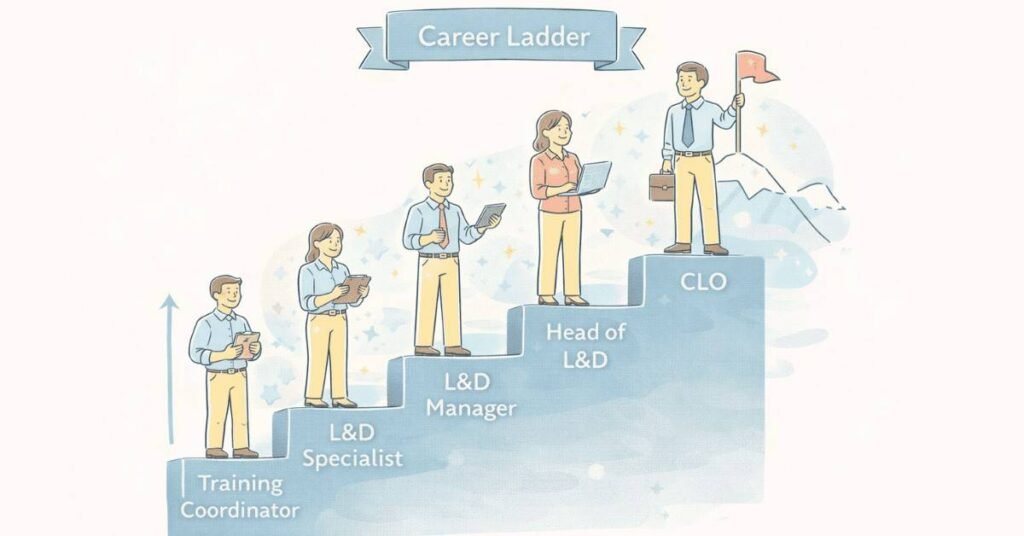
Entry Level: L&D Coordinator / Training Coordinator (0-2 Years)
Salary Range: ₹3-5 lakhs annually (₹25,000-42,000 monthly)
Responsibilities: At this level, you support senior L&D professionals by coordinating training logistics (venue, materials, catering), managing training calendars and scheduling, maintaining training records in the LMS, communicating with learners about upcoming programs, preparing training materials and handouts, assisting with training delivery, and handling administrative L&D tasks.
This role teaches L&D fundamentals and allows you to observe experienced professionals. You’ll gain exposure to different types of training and start building facilitation skills.
Early Career: L&D Specialist / Training Specialist (2-5 Years)
Salary Range: ₹5-9 lakhs annually
Responsibilities: You now own specific training programs or areas including designing training programs with guidance, delivering training sessions independently, developing e-learning content, conducting needs assessments for your assigned areas, evaluating training effectiveness, coordinating with vendors and subject matter experts, and managing the full training cycle for your programs.
You’re building credibility as a capable L&D professional who can handle increasing responsibility.
Mid-Career: Senior L&D Specialist / Learning & Development Executive (5-8 Years)
Salary Range: ₹8-15 lakhs annually
Responsibilities: As a senior specialist, you handle complex, high-impact programs including designing and delivering leadership development programs, leading organization-wide learning initiatives, mentoring junior L&D team members, consulting with senior business leaders on capability building, innovating with new learning methodologies and technologies, measuring and reporting on program business impact, and sometimes managing specialized areas like e-learning or leadership development.
You’re recognized as an L&D expert who can tackle any learning challenge.
Management: Learning & Development Manager (8-12 Years)
Salary Range: ₹13-22 lakhs annually
Responsibilities: You transition to people management, leading an L&D team (typically 3-7 people), setting L&D strategy aligned with business needs, managing the L&D budget and ROI, overseeing all training programs across the organization, building stakeholder relationships with business leaders, selecting and managing learning technologies and vendors, developing your team members’ capabilities, and reporting to HR leadership on L&D outcomes and impact.
This level requires developing leadership and strategic capabilities beyond instructional design expertise.
Senior Management: Senior L&D Manager / Head of Learning & Development (12-15 Years)
Salary Range: ₹18-32 lakhs annually
Responsibilities: You lead L&D for significant portions of the organization including developing organization-wide learning strategy, building learning culture and continuous development mindset, representing L&D in leadership discussions about talent strategy, managing large L&D teams or multiple teams, owning substantial budgets (crores in large organizations), driving adoption of innovative learning approaches, partnering with senior executives on capability building, and demonstrating L&D’s business impact through metrics.
You’re a strategic leader whose decisions affect thousands of employees’ development.
Executive: Director of L&D / Chief Learning Officer (15+ Years)
Salary Range: ₹25-45+ lakhs annually, significantly higher in large MNCs and progressive companies.
Responsibilities: As the most senior L&D leader, you own the entire learning and development function, set overall L&D vision and strategy, build and lead the complete L&D organization, partner with C-suite on organizational capability strategy, represent L&D in executive leadership, manage multi-crore budgets, drive organizational transformation through learning, own all learning metrics and outcomes, and sometimes serve on external boards or speak at industry conferences.
In some organizations this role is called Chief Learning Officer (CLO), reflecting its strategic importance. Not all companies have this level—it exists primarily in large organizations with significant scale.
L&D Salary Factors in India
Why do L&D salaries vary so dramatically? Several factors influence compensation:
Experience and Expertise: Years matter, but depth of expertise matters more. L&D professionals with proven track records designing high-impact programs, strong facilitation reputations, or specialized expertise (leadership development, e-learning, specific industries) command premiums.
Industry Sector: IT services, technology companies, and financial services typically pay highest L&D salaries—20-40% above manufacturing, retail, or other sectors. Organizations that view learning as competitive advantage invest more in L&D capabilities.
Company Size: Large organizations with thousands of employees need sophisticated L&D functions and pay accordingly. Multinationals often pay 25-40% more than mid-sized Indian companies for equivalent roles.
Specialization: L&D professionals specializing in high-value areas like leadership development, learning technology, or organizational development often earn more than generalist trainers. Your niche expertise makes you valuable.
Geography: Metro cities—Bangalore, Mumbai, Gurgaon, Pune, Hyderabad—pay 30-50% more than tier-2 cities. However, remote L&D roles are becoming common, sometimes offering metro salaries for remote workers anywhere.
Education and Certifications: Advanced degrees (master’s in psychology, organizational development, adult education) and certifications (CPTD from ATD, SHRM-CP/SCP) typically add ₹2-5 lakhs to salary packages.
L&D Specializations
As you advance, you might focus on specific L&D areas:
Instructional Design
Instructional designers focus entirely on designing learning experiences rather than delivering them. This highly creative role involves applying learning theories and cognitive science to design, creating curricula and learning journeys, developing storyboards for e-learning, designing assessments and evaluation methods, selecting appropriate learning methods and media, and continuously testing and refining designs based on effectiveness.
Instructional designers often have backgrounds in education, psychology, or communications combined with corporate experience. This specialization suits creative individuals who prefer designing over presenting.
E-Learning Development
E-learning developers create digital learning content using specialized tools. This technical specialization requires mastery of authoring tools (Articulate, Captivate, others), video production and editing, graphic design for learning content, user experience (UX) thinking for digital learning, understanding of technical constraints and requirements, and staying current with e-learning technologies and trends.
E-learning developers often transition from instructional design or come from multimedia/graphic design backgrounds. As digital learning dominates, this specialization is in high demand.
Leadership Development
Leadership development specialists focus on building leadership capabilities across all levels. This prestigious specialization involves designing multi-tiered leadership programs, facilitating senior executive workshops, coordinating executive coaching, understanding leadership theories and competencies, measuring leadership program impact, and partnering with senior executives and boards.
Leadership development requires significant experience, business acumen, and executive presence. It’s typically a mid-to-senior career specialization paying premium salaries.
Learning Technology / LMS Administration
Learning technology specialists manage learning platforms and infrastructure. This technical role includes implementing and configuring LMS platforms, integrating learning systems with HR tech stack, managing learning technology vendors, training others on system usage, generating analytics and reports from learning data, staying current with learning technology innovations, and evaluating new learning technologies.
This specialization suits technically-minded L&D professionals who enjoy the systems side more than facilitation.
Organizational Development (OD)
While sometimes separate from L&D, OD often partners closely and some L&D professionals transition into it. OD focuses on improving organizational effectiveness through change management and transformation, organizational culture development, team effectiveness interventions, strategic planning facilitation, and systemic organizational improvements.
OD requires understanding complex systems, change theory, and organizational behavior. It’s a natural progression for senior L&D professionals interested in broader organizational impact.
Tools and Technologies in L&D
Modern L&D relies on various technologies you’ll need to master:
Learning Management Systems (LMS)
Your LMS is your central platform. Popular options in India include SAP SuccessFactors Learning, Moodle (open-source, widely used), Cornerstone OnDemand, TalentLMS, Absorb LMS, and Docebo.
Each LMS has different strengths, costs, and learning curves. Most L&D professionals become experts in their organization’s chosen platform.
E-Learning Authoring Tools
These tools create interactive digital learning content including Articulate 360 (Storyline and Rise), Adobe Captivate, iSpring Suite, Camtasia (video-based learning), and Lectora.[taggd]
Articulate 360 dominates the market and is the most valuable authoring tool to learn if you’re entering e-learning development.
Video Conferencing and Virtual Training
Virtual training platforms beyond basic Zoom include Webex Training, Microsoft Teams, Zoom (with advanced features like breakout rooms, polls), and specialized platforms like GoToTraining.
Mastering virtual facilitation—engaging learners through screens rather than in-person—is now essential for all L&D professionals.
Content Creation Tools
L&D professionals use various tools for creating training materials including Microsoft PowerPoint (still dominant for presentations), Canva (graphic design without technical expertise), Adobe Creative Suite (for advanced content creation), Vyond or similar (for animated videos), and Audacity or Adobe Audition (audio editing).
Assessment and Survey Tools
Measuring learning and gathering feedback requires tools like Google Forms, SurveyMonkey, Typeform, Mentimeter (live polls during sessions), Kahoot (gamified quizzes), and assessment features within your LMS.
Learning Experience Platforms (LXP)
Newer than traditional LMS, LXPs offer personalized, Netflix-like learning experiences including Degreed, EdCast, Cornerstone Learning Experience, and Valamis.[taggd]
LXPs are growing in adoption, particularly in tech-forward organizations, representing the evolution beyond traditional LMS.
Challenges in L&D Careers
Understanding common challenges helps you prepare:
Proving ROI: L&D constantly faces pressure to demonstrate value and business impact. When budgets tighten, training is often cut first because its value isn’t always obvious. You’ll need to become skilled at measuring and communicating impact.
Learner Engagement: Getting busy employees to prioritize learning amid competing demands is perpetually challenging. Even the best-designed program fails if people don’t attend or complete it.
Keeping Current: Learning methodologies, technologies, and business needs evolve constantly. What worked five years ago may be obsolete. You need commitment to continuous learning about learning itself.
Resistance to Training: Some managers view training as time away from productive work or doubt its value. You’ll face skepticism and need to build credibility through results.[taggd]
Limited Resources: Most L&D teams want to do more than budgets and headcount allow. You’ll constantly prioritize and make difficult tradeoffs about which programs to pursue.
Pandemic Impact Continues: The shift to remote/hybrid work permanently changed L&D. Virtual training, while effective, can be exhausting for both facilitators and learners. Finding engaging approaches in digital environments remains challenging.
Organizational Change Fatigue: Employees face constant change and can become exhausted by continuous learning requirements. Balancing development needs with wellbeing requires sensitivity.
Why Choose an L&D Career?
Despite challenges, L&D offers compelling rewards:
Meaningful Impact: Few careers let you directly enable others’ growth like L&D does. You help employees develop capabilities that advance their careers, improve their performance, and increase their confidence. This impact is deeply satisfying.
Creativity and Variety: No two programs are identical. You’re constantly creating new content, trying different approaches, and working across diverse topics. If you dislike repetitive work, L&D offers perpetual variety.
Continuous Learning: L&D professionals must continuously learn about new topics, methods, and technologies. If you love learning itself, this career keeps you intellectually stimulated.
Blend of Skills: L&D combines teaching, designing, consulting, project management, and business partnership. This variety means you’ll develop diverse capabilities applicable across many contexts.
Positive Environment: L&D tends to attract passionate, positive people who care about developing others. The L&D community—both within organizations and professionally—tends to be supportive and collaborative.
Job Stability: Organizations always need employee development, even during economic challenges. While training volume may fluctuate, core L&D capabilities remain essential.
Transferable Skills: L&D builds capabilities—communication, facilitation, instructional design, project management—that serve you in any career path.
Getting Started in L&D
How do you break into Learning and Development?
Educational Backgrounds: Many L&D professionals studied education, psychology, human resources, organizational development, or communications. However, successful L&D practitioners come from diverse backgrounds including subject matter experts who transition into training roles (engineers who become technical trainers), teachers who move from academic to corporate education, HR generalists who specialize in L&D, and professionals from any field who discover passion for developing others.
Entry Paths: Common ways into L&D include starting as L&D coordinator or training coordinator, joining organizations with formal L&D rotational programs, transitioning from subject matter expert to trainer for your expertise area, moving from academic teaching to corporate training, starting in HR and specializing in L&D, and joining consulting firms specializing in learning and development.
Build Relevant Skills: While preparing for L&D roles, develop presentation and public speaking through Toastmasters or similar, teaching or tutoring experience, volunteer training or workshop facilitation, familiarity with e-learning tools through online courses, understanding of adult learning principles, and project management experience.
Certifications to Consider: The CPTD (Certified Professional in Talent Development) from ATD is the premier L&D certification. SHRM-CP or SHRM-SCP if coming from HR. Instructional design certificates from universities or online programs. Platform-specific certifications (Articulate, LMS certifications) also help.
Network in L&D: Connect with L&D professionals on LinkedIn, join ATD (Association for Talent Development) local chapters, attend L&D conferences and webinars, participate in L&D communities and forums, and learn from experienced L&D practitioners.
Start Small: Look for opportunities to deliver training in your current role, volunteer to create training materials or documentation, offer to facilitate team meetings or workshops, and build a portfolio of training content you’ve created—even if not in formal L&D roles.
Future of Learning and Development
L&D is evolving rapidly with technology and changing workplace dynamics:
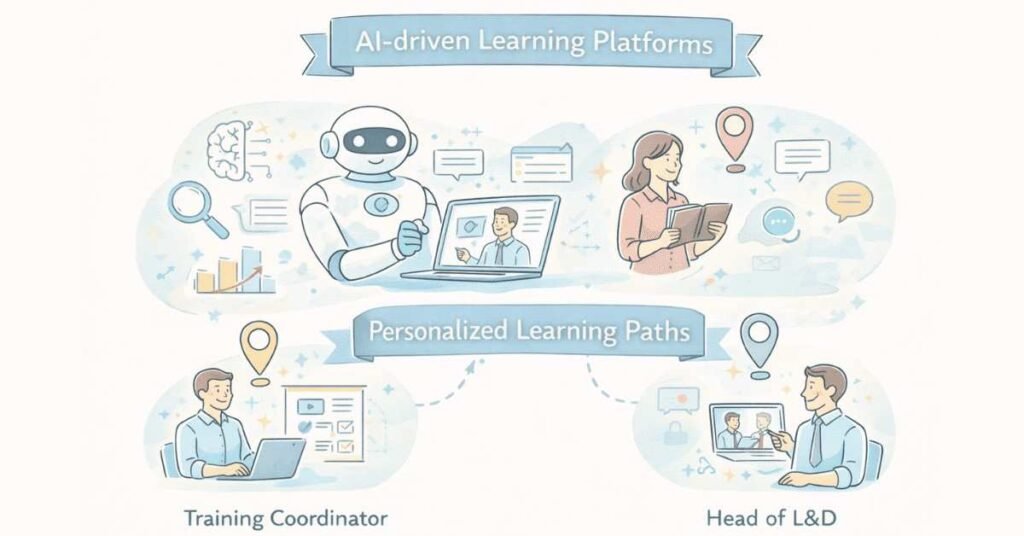
Personalized Learning: AI and adaptive learning technologies increasingly personalize content to individual needs, learning styles, and pace. L&D professionals will curate personalized learning journeys rather than one-size-fits-all programs.
Microlearning: Short, focused learning modules (3-7 minutes) delivered just-in-time are replacing lengthy training courses. L&D must rethink curriculum design for bite-sized consumption.
Skills-Based Learning: Organizations increasingly focus on specific skills rather than traditional credentials or courses. L&D will build skills taxonomies and design learning paths for capability development.
Immersive Technologies: Virtual reality (VR), augmented reality (AR), and mixed reality create immersive learning experiences. While still emerging, these technologies will become mainstream for certain types of training.
Learning in the Flow of Work: Rather than separate training events, learning increasingly happens embedded in daily work through performance support tools, just-in-time resources, and learning integrated into work systems.
Data-Driven L&D: Learning analytics provide unprecedented insights into what works, who’s learning, and business impact. L&D professionals need analytical capabilities to leverage this data.
Democratized Content Creation: Tools make content creation easier, allowing subject matter experts and employees to create learning content without specialized L&D support. L&D shifts from creating all content to curating and ensuring quality.
Focus on Wellbeing: Learning programs increasingly address holistic employee wellbeing—mental health, resilience, work-life balance—beyond just job skills.
Learning and Development offers a fulfilling career for those passionate about helping others grow, combining creativity with structure, intellectual stimulation with human connection, and educational principles with business strategy.
Whether you’re energized by standing in front of groups, prefer designing behind the scenes, or want to shape organizational capability strategically, L&D offers paths matching your strengths. The most successful L&D professionals combine genuine care for people’s development with continuous learning about how learning works, creativity in designing