
Job Search Strategy & Interview Preparation
Table of Contents
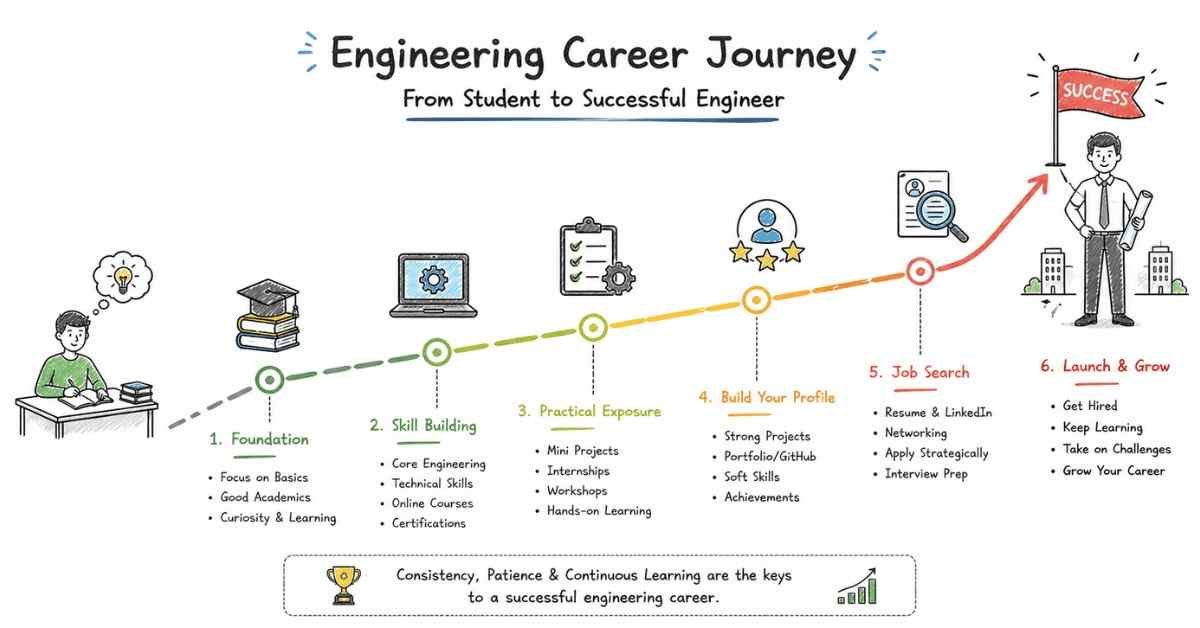
Electrical Engineering Job Search: Resume, Portfolio & Interview Success Guide
Landing your first electrical engineering job or transitioning to a better one is more than just having a decent CGPA and a degree. It’s a strategic process involving careful preparation, smart positioning, persistent networking, and confident interviewing. Yet most students approach placements reactively: updating resumes the night before, practicing interview questions last minute, applying randomly to any company visiting campus.
The electrical engineers who secure ₹12-15 LPA offers while classmates settle for ₹4-5 LPA aren’t necessarily smarter or more talented. They’re more strategic. They build impressive profiles systematically, craft compelling resumes, prepare thoroughly for technical interviews, and negotiate confidently.
This comprehensive guide walks you through the entire job search process: building a hire-ready profile, crafting an effective resume, leveraging networking, acing technical and HR interviews, and negotiating your offer. Whether you’re preparing for campus placements, searching off-campus, or planning a career switch, these strategies work.
Building Your Profile: Before the Job Search
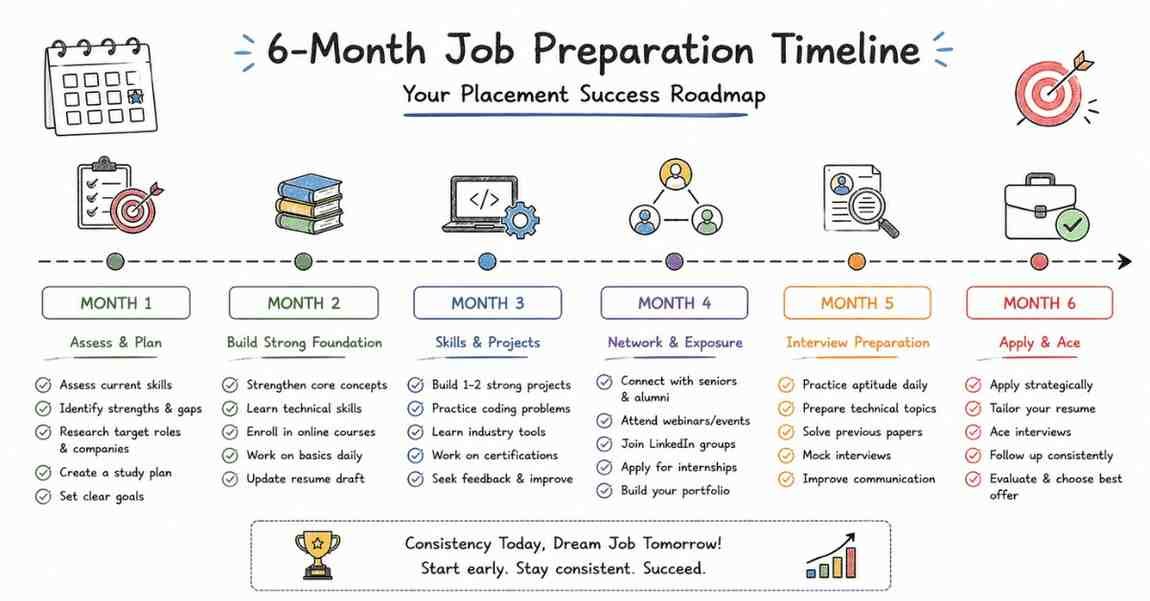
The 6-Month Preparation Window
Ideally, start preparing 6-9 months before placements (March-April of pre-final year for August-September final year placements).
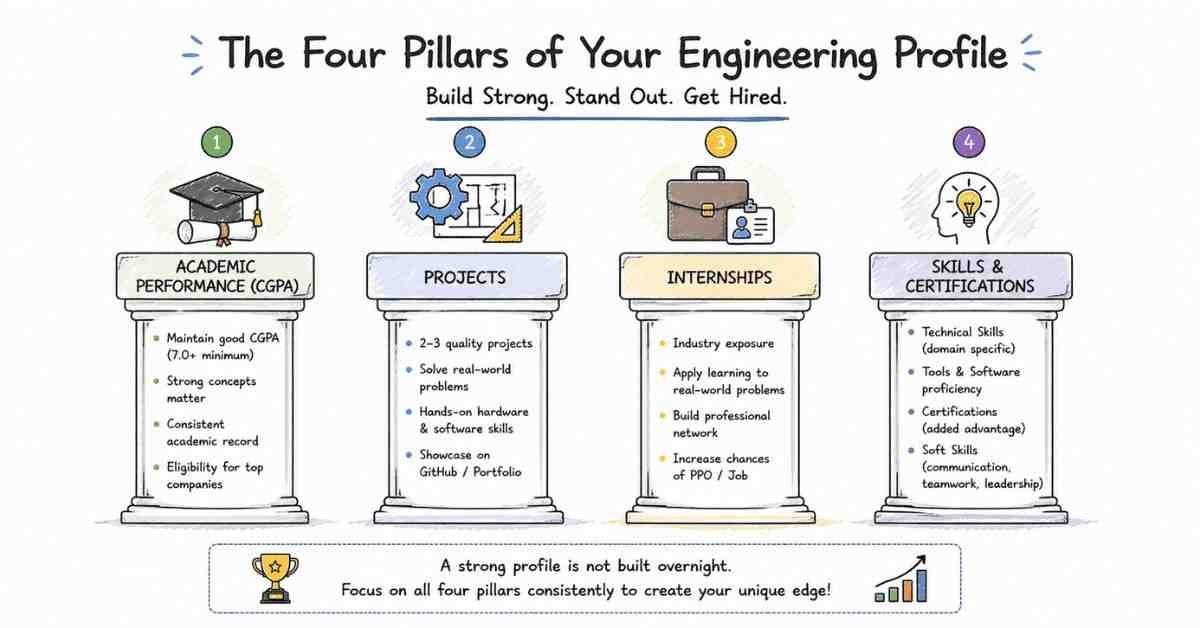
The Four Pillars of Your Profile
- Academic Performance
Reality Check: CGPA matters for eligibility cutoffs
- Most good companies set 7.0-7.5 CGPA minimum
- Top companies (Qualcomm, Texas Instruments, Siemens): 8.0+ often expected
- But CGPA alone doesn’t guarantee job seen 9+ CGPA students remain unplaced
Strategy:
- If CGPA is good (7.5+): Leverage it; focus on building other strengths
- If CGPA is average (6.5-7.5): Build strong projects and skills to compensate
- If CGPA is low (<6.5): Work extra hard on projects, internships, certifications show capability beyond grades
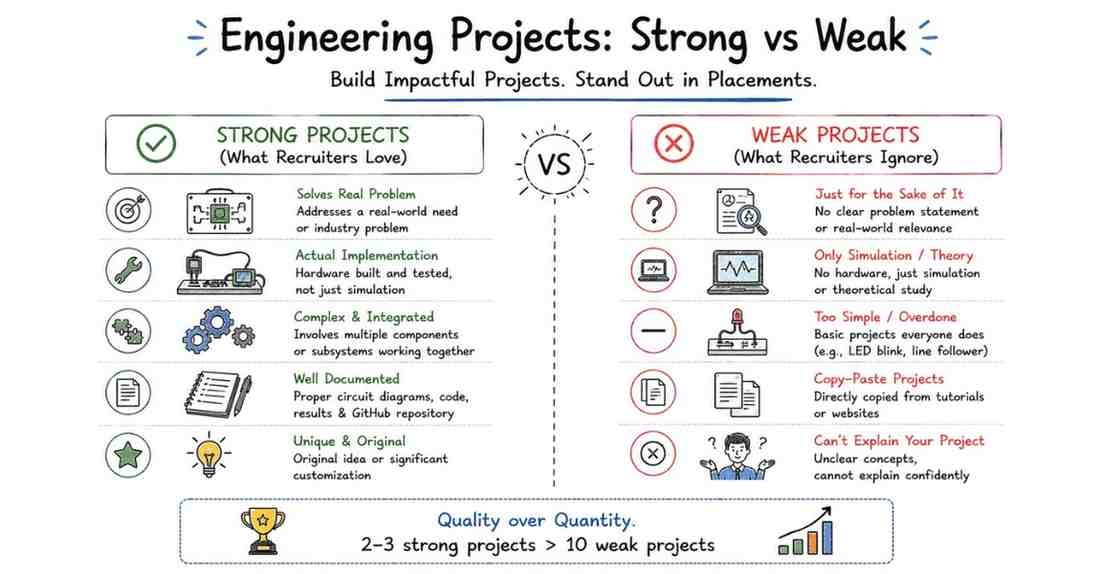
- Projects (Most Differentiating Factor)
Why Projects Matter: Demonstrate practical capability, interest, initiative
What Makes Projects Impressive:
- Solves real problem: Not just “college assignment” projects
- Hardware implementation: Actual working prototype, not just simulation
- Complexity: Multiple subsystems integrated
- Documentation: Proper GitHub repo, circuit diagrams, results
- Uniqueness: Not copy-paste from tutorials
Strong Project Examples:
- IoT-based industrial parameter monitoring with mobile dashboard
- Battery management system with cell balancing implementation
- Solar MPPT charge controller with weather-adaptive algorithm
- PLC-based automated system for specific industry application
- Custom PCB design and fabrication for useful device
- Embedded system for agricultural automation
- Smart grid monitoring with fault detection using ML
Weak Project Examples (Avoid these):
- “Study and simulation of…” (no implementation)
- Line follower robot (everyone does this)
- Simple Arduino LED projects
- Direct copy from online tutorials
- Projects you can’t explain or didn’t actually build
How Many Projects: 2-3 substantial projects better than 10 superficial ones
- Internships (Prove Industry-Ready)
Value: Shows real-world exposure, ability to work in professional environment
Strategy:
- Pre-final year summer: Most important internship opportunity
- Target electrical companies even small ones teach valuable skills
- Paid vs Unpaid: Paid preferable, but unpaid at good company acceptable
- Duration: 6-8 weeks minimum; 10-12 weeks better
- Get certificate: With specific work mentioned, not generic
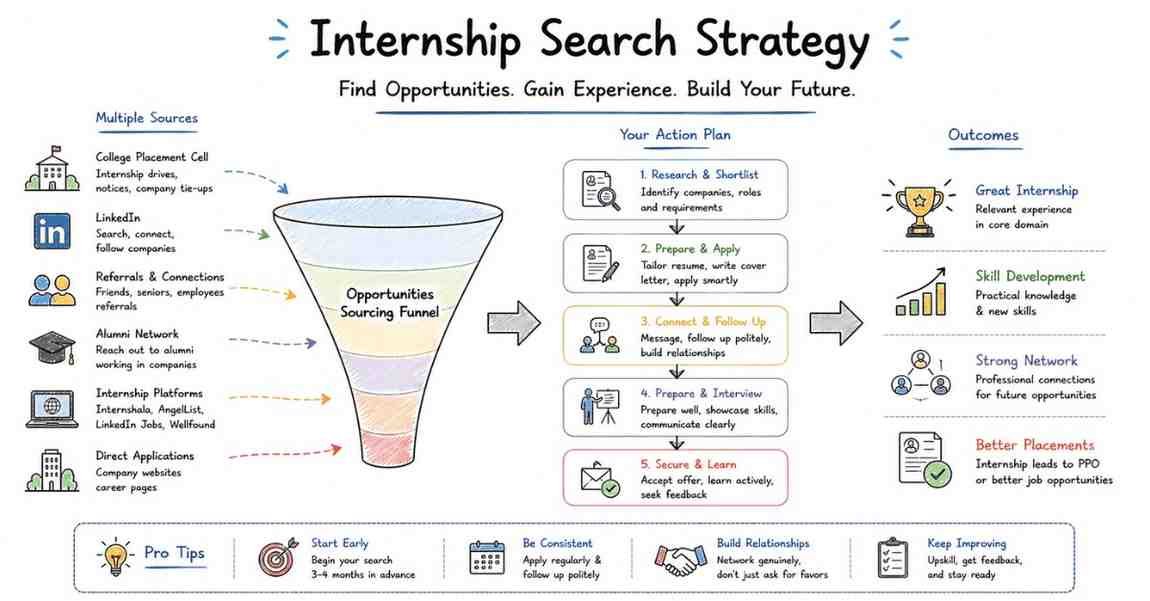
How to Get Internships:
- Apply through college placement cell (if they arrange)
- Direct applications on company websites
- LinkedIn connections and referrals
- Internship platforms (Internshala, LinkedIn, AngelList)
- Reach out to alumni working at companies
- Small companies more accessible than large MNCs initially
During Internship:
- Learn actively, ask questions
- Document your work
- Complete assigned projects thoroughly
- Build connections with engineers
- Request recommendation letter/LinkedIn endorsement
- If performed well, possibility of PPO (pre-placement offer)
- Certifications and Skills
Technical Certifications:
- Relevant to your target domain
- Examples: PLC programming (Siemens), ETAP, AutoCAD Electrical, MATLAB
- Online course certificates (Coursera, NPTEL) if genuinely learned
- Vendor certifications (Rockwell, Schneider) if pursuing automation
Soft Skills:
- Communication (visible in interviews, presentations)
- Teamwork (demonstrated in group projects)
- Leadership (technical club positions, event organization)
Crafting Your Resume: Your 30-Second Pitch
The Harsh Reality
Recruiters spend 20-30 seconds on initial resume screening. ATS (Applicant Tracking Systems) scan for keywords even before human sees it.
Your resume must:
- Pass ATS keyword filters
- Catch recruiter attention in 30 seconds
- Prove you’re worth interviewing
Resume Structure (One Page Mandatory for Freshers)
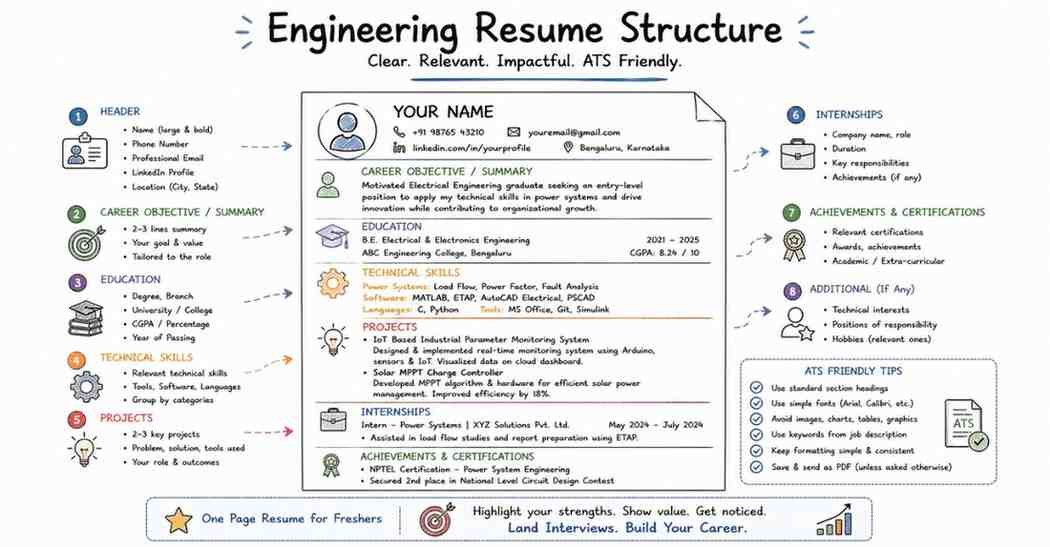
Header Section:
- Name (larger font, bold)
- Contact: Phone, Professional email, LinkedIn URL, GitHub (if you have technical projects there)
- Location: City, State
Education:
- B.Tech/B.E. in Electrical Engineering
- College name, Location
- CGPA: X.XX/10 (mention if >7.0; if lower, you can skip but be prepared to explain)
- Graduation year: Month Year
- Relevant coursework (optional): List 4-5 most relevant courses
Technical Skills (Critical Section):
- Programming Languages: Python, C/C++, MATLAB, etc.
- Software Tools: AutoCAD Electrical, ETAP, PLC Programming (Siemens TIA Portal), PVsyst, Simulink, etc.
- Technical Skills: Power Systems Analysis, PCB Design, Embedded Systems, Control Systems, etc.
- Hardware: Oscilloscope, Multimeter, specific equipment you’ve used
Professional Experience (Internships):
- Company Name, Location
- Role: Intern/Engineering Intern
- Duration: Month Year – Month Year
- 2-3 bullet points describing specific work:
- Started with action verb (Designed, Developed, Analyzed, Implemented, Optimized)
- Specific task and outcome
- Quantify if possible (“Improved efficiency by X%”, “Monitored X parameters”)
- Started with action verb (Designed, Developed, Analyzed, Implemented, Optimized)
Projects (Most Important Section):
- Project Title | Technologies Used | Month Year
- 2-3 bullet points per project:
- What problem it solves
- Your specific contribution
- Technologies/tools used
- Results or outcomes
- What problem it solves
- Include GitHub link if code is clean and documented
Certifications (if relevant):
- Certification Name – Issuing Organization (Month Year)
- Only include relevant technical certifications
Achievements (if space permits):
- Technical competition wins
- Paper publications
- Technical club leadership positions
- Relevant achievements only
Avoid Including:
- Objective statement (waste of space)
- Photo (not needed in India unless specifically asked)
- Personal details like father’s name, date of birth (unless mandatory)
- Hobbies (unless directly relevant)
- References (available upon request)
Resume Writing Best Practices
Use Action Verbs: Designed, Developed, Implemented, Analyzed, Optimized, Managed, Coordinated, Tested, Debugged
Quantify Achievements: “Reduced power consumption by 15%” better than “Improved efficiency”
Keywords Matter: Use job description keywords naturally (ATS scans for these)
Clean Formatting:
- Single column (ATS-friendly)
- Standard fonts (Arial, Calibri, Times New Roman)
- 10-11 point font size
- Consistent formatting (same bullet style, same date format)
- No colors, no images, no fancy graphics
Proofread Ruthlessly: Single typo can disqualify you
Tailor for Each Job: Adjust skills/projects emphasized based on job description
Common Resume Mistakes
Too Generic: Same resume for power sector and embedded systems role customize!
Lying or Exaggerating: You’ll be caught in interview disastrous
Unexplained Gaps: If gap exists, be prepared to explain constructively
Irrelevant Information: Your basketball hobby doesn’t matter for engineering job
Poor Formatting: Unreadable, inconsistent, too cramped or too sparse
Networking: The Hidden Job Market
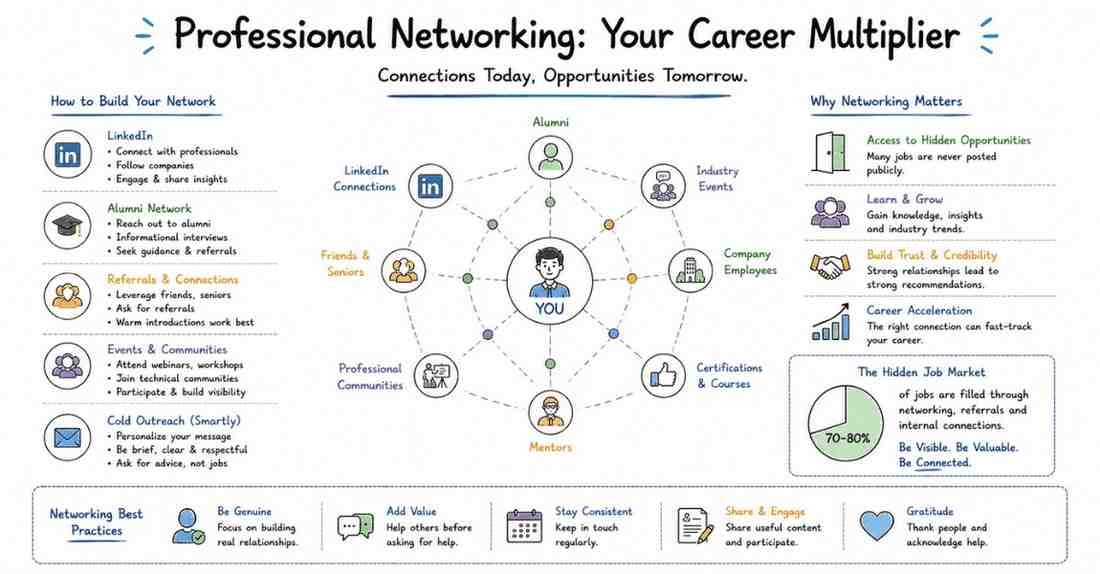
Why Networking Matters
Reality: 50-70% of jobs filled through referrals and networking, never publicly posted
Benefits:
Referrals get priority in screening
Insider information about openings
Guidance from experienced professionals
Fast-tracked interviews
Building Your Network
LinkedIn Optimization:
- Professional profile photo
- Compelling headline: “Electrical Engineering Student | Power Systems | Seeking Opportunities in…”
- Summary highlighting key skills and interests
- Detailed experience and project sections
- Skill endorsements
- Activity: Share relevant articles, comment on posts, demonstrate knowledge
Connecting Strategy:
- Connect with classmates and seniors
- Alumni from your college working in target companies
- Professionals in your interest area (with personalized connection request)
- Professors and industry visitors to college
- Follow companies you’re targeting
Engaging Meaningfully:
- Don’t just connect engage with content
- Share your learning, projects
- Ask thoughtful questions
- Provide value (share resources, help others)
- Comment intelligently on industry posts
Alumni Network:
- Most valuable resource alumni often help juniors
- Find alumni at target companies (LinkedIn, college database)
- Reach out respectfully
- Ask for advice, not directly for job (initially)
- Informational interviews
Professional Associations:
- Join IEEE student chapter
- Attend seminars, workshops, conferences
- Meet professionals, exchange contacts
- Participate in technical discussions
Asking for Referrals (The Right Way)
Don’t: “Hi, can you refer me to your company?”
Do:
- Connect and build rapport first
- Express genuine interest in their work
- Ask about their experience and advice
- Mention you’re looking for opportunities
- Share your resume if they offer to help
- If they refer you, keep them updated and thank them
Campus Placements: Maximizing Opportunities
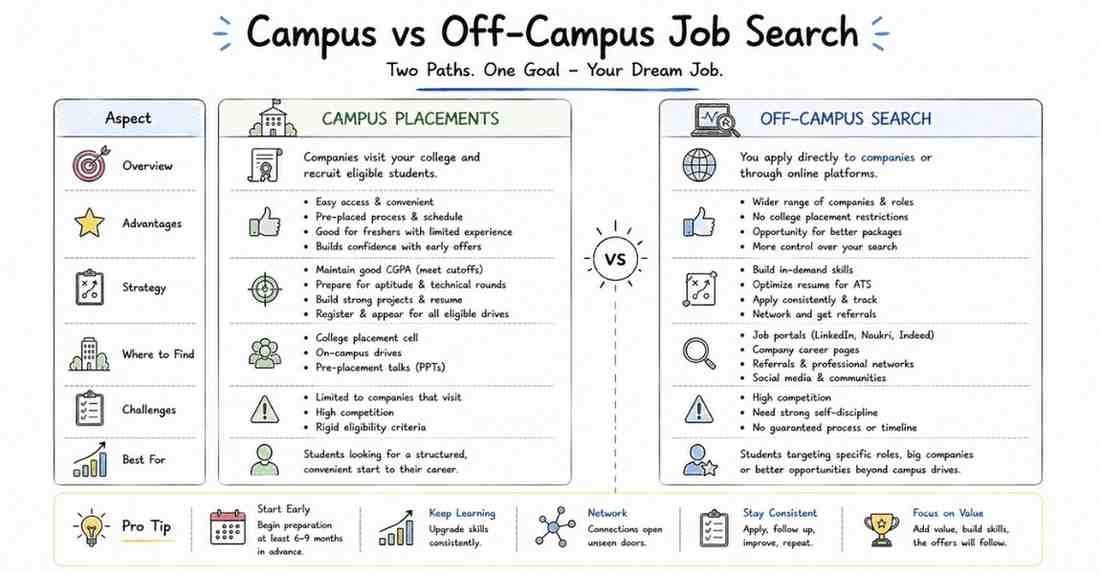
Understanding the Process
Pre-Placement Talks (PPTs): Companies present themselves attend to understand culture
Online Tests: Aptitude, technical MCQs, sometimes coding
Group Discussions: Some companies use GD for elimination
Technical Interviews: Core electrical engineering questions, project discussions
HR Interviews: Behavioral questions, salary discussion
The Strategy
Apply Broadly Initially: Don’t be too choosy early in placement season first job is learning opportunity
Prepare Intensively: Technical preparation should be ongoing, not last-minute
Track Applications: Maintain spreadsheet of companies applied, test dates, results
Learn from Rejections: After each interview, analyze what went well and what didn’t
Stay Positive: Placements are marathon, not sprint persistence matters
Support Network: Study groups for preparation, emotional support during tough phases
Off-Campus Job Search
When Campus Placements Don't Work
Don’t Panic: Many successful engineers got jobs off-campus
Reality: Off-campus requires more effort but is absolutely viable
Job Search Platforms
Primary Platforms:
- Naukri.com: Largest job portal in India
- LinkedIn: Excellent for direct applications and networking
- Indeed India: Good aggregator
- Shine: Another major portal
For Specific Sectors:
- AngelList: Startups
- Instahyre: Tech and engineering roles
- Cutshort: Tech hiring platform
Effective Job Search Strategy
Daily Routine:
- Morning: Apply to 5-10 relevant jobs
- Afternoon: Skill development, project work
- Evening: Networking, LinkedIn engagement
Application Quality Over Quantity:
- Customize resume for each application
- Write compelling cover letter if asked
- Follow up after 1 week if no response
Direct Company Applications:
- Go to company career pages directly
- Often better success than portals
- Shows genuine interest in that company
Leverage Connections:
- Inform network you’re job searching
- Ask for referrals
- Informational interviews can lead to opportunities
Technical Interview Preparation
What to Expect
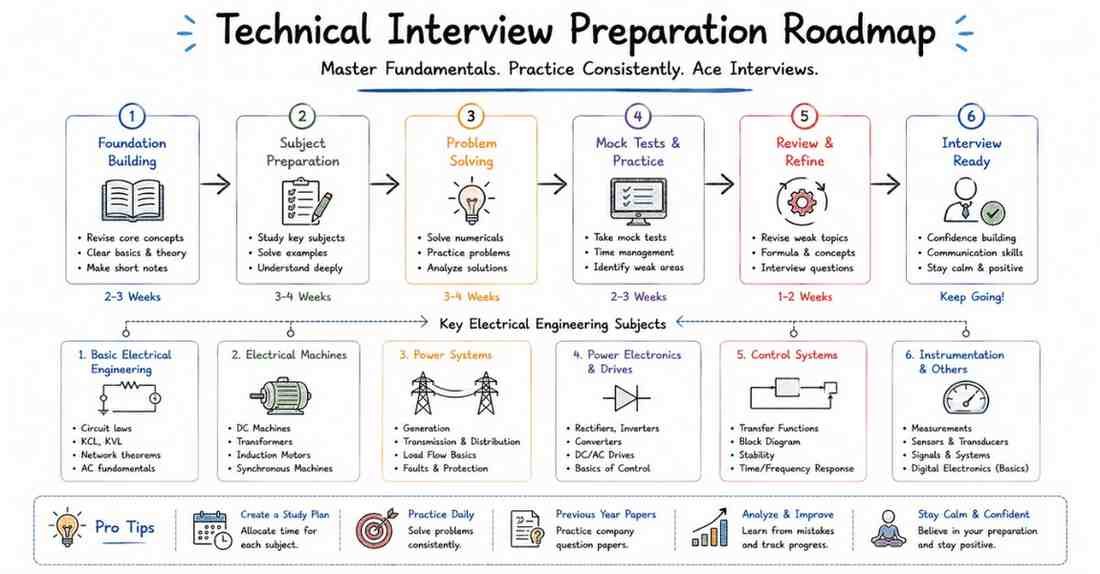
Basic Concepts: Circuit analysis, electrical machines, power systems, control systems fundamentals from core courses
Projects Deep-Dive: Expect detailed questioning on every project if you can’t explain, don’t include
Practical Questions: “How would you troubleshoot motor failure?” “Design a simple power supply for X application”
Problem-Solving: Application of concepts to new problems
Preparation Strategy
Core Subjects Review:
- Circuit Theory: KCL, KVL, Thevenin/Norton, network theorems, transient analysis
- Electrical Machines: DC machines, transformers, induction motors, synchronous machines working principles, characteristics, applications
- Power Systems: Generation, transmission, distribution basics; fault analysis basics; protection concepts
- Control Systems: Transfer functions, stability, PID control basics
- Power Electronics: Converters, inverters, applications
- Microprocessors/Microcontrollers: Architecture, programming basics
Focus on Understanding, Not Memorization: Interviewers probe understanding “Why does this happen?” “What if we change this parameter?”
Projects Mastery:
- Know every detail of your projects
- Circuit diagrams memorized
- Component selection rationale
- Challenges faced and how you solved them
- Results and learnings
- Be honest if something was done by teammate
Practice Problem-Solving:
- Solve problems aloud (practice with friends)
- Explain your thought process clearly
- It’s okay to ask clarifying questions
- Think systematically, not randomly
Common Technical Questions:
- Difference between AC and DC motors; where each is used?
- Explain transformer working and losses
- What is power factor and why does it matter?
- Types of circuit breakers and their applications
- How do you select motor for given application?
- Microcontroller vs microprocessor differences
- How would you design solar rooftop system for house?
- Explain your major project in detail
- What happens when motor overloads?
- How does protection relay work?
Mock Interviews: Practice with seniors, friends, or use online platforms
During Technical Interview
Structure Your Answers:
- Start with core concept
- Explain step-by-step
- Conclude with application or significance
If You Don’t Know:
- Don’t bluff you’ll be caught
- “I’m not certain about X, but my understanding is…” (if you have partial knowledge)
- “I haven’t studied that in depth, but I’m eager to learn” (if truly don’t know)
- Relate to something you do know
Show Problem-Solving Process:
- Think aloud
- Ask clarifying questions
- Break problem into parts
- Systematic approach matters more than instant answer
Body Language:
- Maintain eye contact
- Speak clearly and confidently
- Don’t fidget excessively
- Show enthusiasm and interest
HR Interview: The Final Hurdle
What HR Interviews Assess
- Cultural fit
- Communication skills
- Career goals and stability
- Attitude and personality
- Salary expectations
Common HR Questions and How to Answer
“Tell me about yourself” (Most common opening):
- 60-90 second answer
- Educational background briefly
- Key projects/internships
- Skills and interests
- Why interested in this company/role
“Why should we hire you?”:
- Match your skills to job requirements
- Highlight unique strengths
- Show enthusiasm for role
- Examples of past achievements
“What are your strengths and weaknesses?”:
- Strengths: Relevant to job, with examples
- Weaknesses: Real but not deal-breaker; mention how you’re improving it
- Avoid clichés like “I’m perfectionist” (weakness)
“Where do you see yourself in 5 years?”:
- Show ambition but realistic
- Growth within the company/field
- Avoid: “I want your job” or “I’ll do MBA and leave engineering”
“Why this company?”:
- Research company beforehand!
- Specific reasons (products, culture, growth, learning opportunities)
- Avoid: “Good salary” or “Brand name”
“Tell me about a challenging situation you faced”:
- Use STAR method (Situation, Task, Action, Result)
- Technical challenge or team conflict
- Focus on how you overcame it and learnings
“Why did you choose electrical engineering?”:
- Honest answer
- Connect to your interests and career goals
Salary Questions:
- Research typical salary for role
- “I’m looking for industry-standard compensation for this role”
- If pressed: Give range based on research
- Focus on learning and growth (for first job)
Questions to Ask Interviewer
Always ask questions—shows interest:
- “What would my typical day look like?”
- “What are the growth opportunities?”
- “What projects would I work on?”
- “What’s the team structure?”
- “What do you enjoy most about working here?”
Avoid asking initially: Salary, leaves, perks (unless they bring it up)
Salary Negotiation
Campus Placement Reality
Limited Negotiation: Salaries usually fixed for campus recruitment
When You Can Negotiate: If you have multiple offers
Off-Campus Negotiation
Research First: Know industry standard for role
Your Leverage:
- Skills in demand
- Relevant experience/projects
- Multiple offers (if true)
- Certifications
Negotiation Tips:
- Let them make first offer if possible
- Don’t accept immediately “I’d like to consider this”
- If low: “Based on my skills and market research, I was expecting ₹X-Y range”
- Be professional, not aggressive
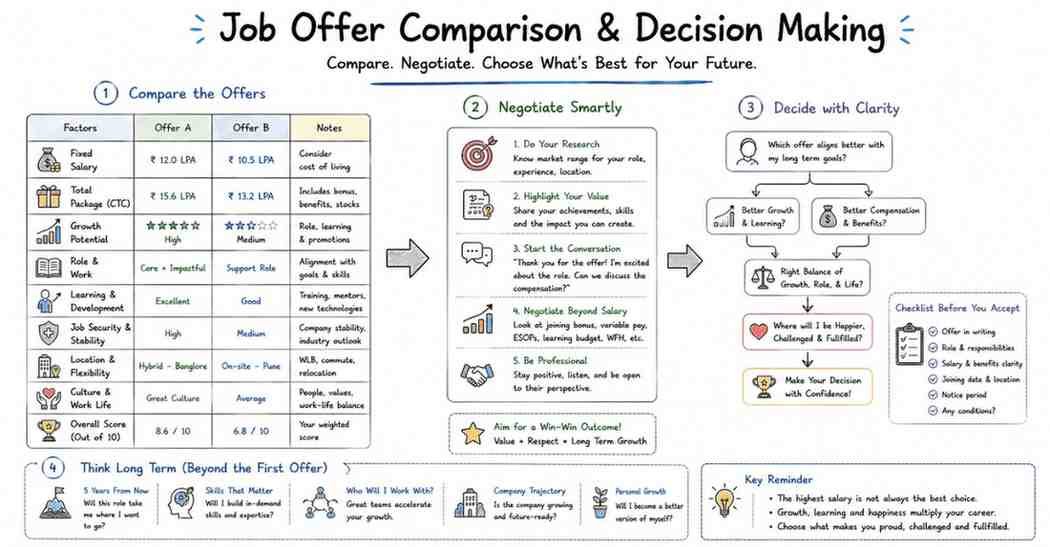
- Consider entire package (learning, growth, location, not just salary)
- Know your walk-away point
For Freshers: Focus more on learning opportunity than squeezing every rupee growth potential matters more
Offer Acceptance and Joining
Evaluating Offers
Consider:
- Salary and benefits
- Learning opportunities
- Company reputation and stability
- Work culture
- Location and cost of living
- Growth trajectory
Don’t Decide Solely on Salary: ₹8 LPA with excellent learning > ₹10 LPA with stagnant role (for long-term career)
Professional Offer Acceptance
- Accept or reject formally
- If rejecting, do so politely
- Honor your commitment once accepted
- Maintain relationships industry is small
Preparation Before Joining
- Brush up fundamentals
- Review company products/services
- Connect with future colleagues on LinkedIn
- Clarify doubts about joining formalities
- Get documents ready
- Plan logistics (accommodation if relocating)
Dealing with Rejection
Rejection is Normal
Reality: Even excellent candidates face multiple rejections
Reasons Beyond Your Control:
- Internal candidates preferred
- Budget changes
- Better-suited candidate
- Position filled
- Just bad luck sometimes
How to Handle Rejection Productively
Ask for Feedback: If possible, understand where you fell short
Analyze Objectively: What could you improve?
Don’t Take It Personally: You’re not the degree or the job
Keep Applying: Persistence matters enormously
Improve Continuously: Use gaps between interviews to strengthen weak areas
Support System: Talk to friends, family, mentors
Success Stories: Many successful engineers faced 20+ rejections before landing great jobs
Special Scenarios
Career Gap After Graduation
Don’t Panic: Utilize productively
How to Address in Interviews:
- Honest explanation (job search, skill development, personal reasons)
- Focus on what you did during gap
- Took online courses, built projects, freelanced, etc.
- Show initiative and learning, not idle gap
Switching from Non-Core to Core
Challenge: Explaining why you want to switch back
Strategy:
- Honest about initial job being necessity
- Passion for electrical engineering
- Demonstrate commitment through projects/certifications during non-core job
Low CGPA Scenarios
Reality: More challenging but not impossible
Compensation Strategy:
- Exceptional projects
- Strong internships
- Excellent communication skills
- Certifications
- Target companies without strict CGPA cutoffs
- Leverage networking heavily
Conclusion: Your Career Launch
Landing your first electrical engineering job or your next better opportunity requires strategy, preparation, persistence, and a bit of luck. But the engineers who succeed aren’t lucky they create their own luck through systematic preparation.
Start building your profile early. Create impressive projects. Gain real-world experience through internships. Craft a compelling resume. Network genuinely. Prepare thoroughly for technical interviews. Present yourself confidently in HR rounds. Negotiate professionally. Handle rejections gracefully. Keep improving continuously.
Your first job is just the beginning of a 40-year career. A few months of focused job search effort can set the trajectory for years. The ₹4 LPA vs ₹12 LPA difference as fresher matters, but more importantly, the learning opportunity and growth potential set your long-term path.
Remember: every senior engineer, every engineering manager, every CTO started exactly where you are looking for that first opportunity, facing interviews nervously, wondering if they’re good enough. They made it. So will you.
Your electrical engineering degree opens doors. Your preparation, presentation, and persistence determine which doors you walk through and how far you go.
Now go build that impressive profile, craft that compelling resume, and land that career-launching opportunity.
Your engineering career awaits. Make it count.