
Resources & Next Steps
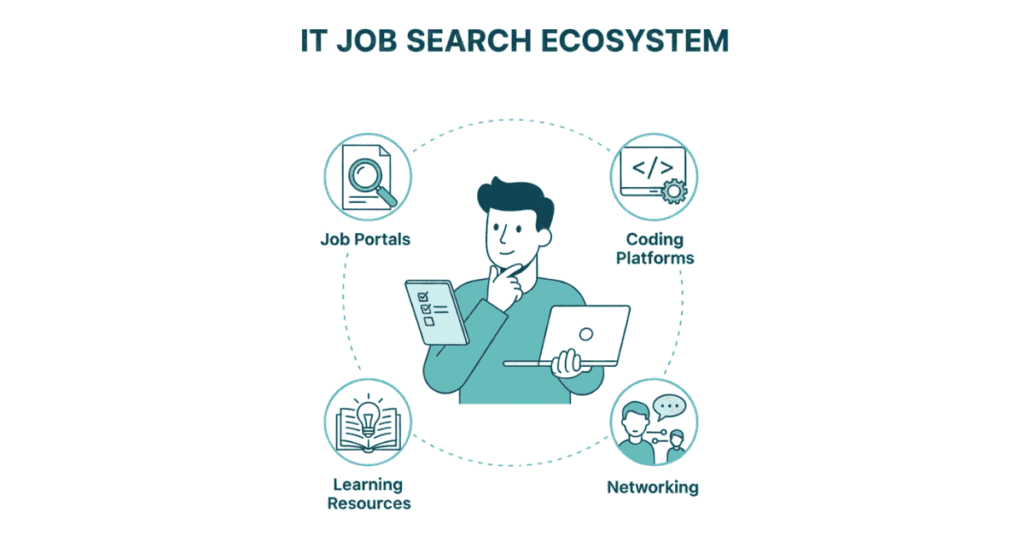
Table of Contents
You now understand IT careers. The specializations, salary trends, interview processes, and growth paths. But where do you actually start? What tools do you use? How do you find jobs? These practical resources bridge knowledge and action.

Job Portals and Recruitment Platforms
Primary Job Portals (India):
LinkedIn Jobs: The dominant platform. Most companies post here first. Build a strong LinkedIn profile before job hunting.
Naukri.com: India’s largest traditional job portal. Massive company presence, especially tier-1 companies.
AngelList: Startup-focused. If you want startup opportunities, this is essential.
Indeed India: Growing platform with good company coverage.
Internshala: Internships and entry-level roles. Essential for freshers.
Upwork & Toptal: Freelancing platforms. Flexible income, global opportunities.
Company Websites: Apply directly on company websites. Sometimes this gets more attention than portal applications.
How to Use Portals Effectively:
- Complete profiles 100% (higher visibility)
- Use keywords from job descriptions in your profile
- Set job alerts for your specialization
- Apply within 24 hours of posting (fresh applications get more visibility)
Customize cover letters for each role (generic ones get rejected)
Coding Practice Platforms
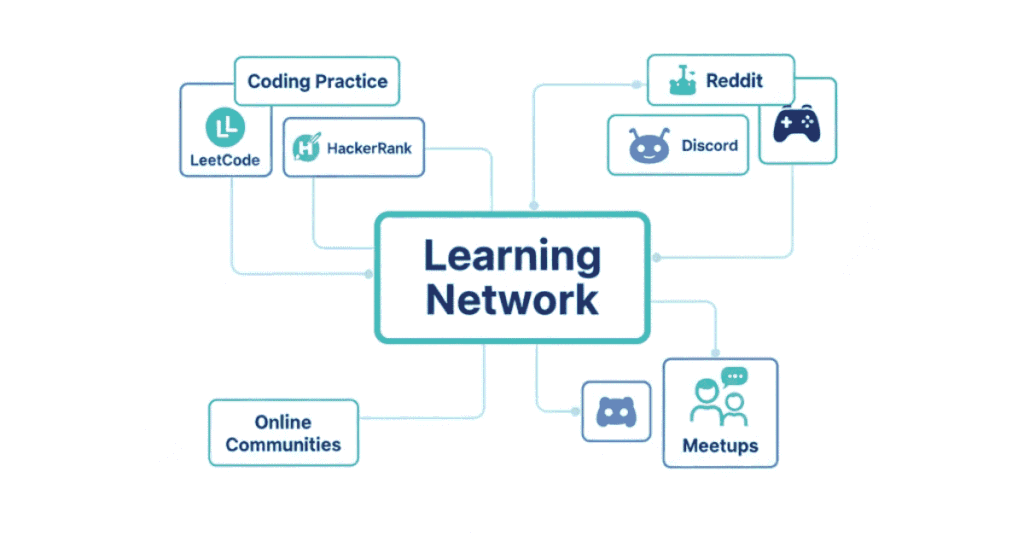
Leet Code: Coding interview prep. Most developers swear by it. Free and premium versions available.
Hacker Rank: Similar to Leet Code. Good for learning fundamentals too.
Code forces: Competitive programming. Good for algorithmic thinking.
GitHub: Build projects, contribute to open-source, showcase your work.
System Design Resources:
- “System Design Interview” by Alex Xu (book)
- Gaurav Sen’s YouTube channel (free system design education)
- Educative courses on system design
Learning Communities
Reddit:
- r/learnprogramming: General programming questions
- r/cscareerquestions: Career-specific advice
- r/india_jobs: Indian job market discussions
Discord Communities:
- Pepcoding Discord (free community with active discussions)
- DevTown Discord (Indian tech community)
- Dev.to Discord (general developer community)
LinkedIn Groups:
- Join groups specific to your specialization
- Engage in discussions
- Network with community members
Local Meetups:
- Search Meetup.com for tech meetups in your city (Hyderabad, Telangana, Andhra Pradesh have active communities)
- Attend regularly, network, learn
Tech Conferences:
- Attend major conferences (Bangalore International Conference, Google Cloud Summit, AWS Summit)
- Networking > Sessions (conferences are about people, not just content)
LinkedIn Profile Optimization
Your LinkedIn profile is your digital resume. Optimize it strategically.
Profile Structure:
Headline: Don’t just say “Junior Developer.” Be specific: “Python Developer | Django | Open to Startups”
Profile Picture: Professional photo. First impressions matter.
About Section:
Write in first person. Tell your story:
“I’m a full-stack developer passionate about building scalable web applications. Experienced with React, Node.js, and AWS. I love solving problems and learning new technologies. Currently exploring AI/ML applications in web development.”
Experience Section:
For each job, include:
- Specific accomplishments with metrics
- Technologies used
- Impact you created
Example:
Bad: “Worked as a developer”
Good: “Built a payment integration module that reduced transaction processing time by 40%, enabling 10,000+ daily transactions. Tech: Node.js, AWS, PostgreSQL”
Skills Section:
List top 10 skills in order of proficiency. Companies search by skills; this affects visibility.
Endorsements & Recommendations:
Get recommendations from colleagues and managers. They add credibility.
Activity:
Post or share content occasionally. It keeps your profile active and visible.
Engagement:
Comment on posts in your feed. Engagement increases visibility.
Content You Should Consume
Blogs & Newsletters:
- CSS Tricks (web development)
- Dev.to (diverse tech topics)
- Hacker News (cutting-edge tech)
- Martin Fowler’s blog (architecture and design)
Podcasts:
- “The Changelog” (software development)
- “CodeNewbie Podcast” (beginner-friendly)
- “Syntax” (web development)
YouTube Channels:
- Traversy Media (web development)
- FreeCodeCamp (comprehensive tutorials)
- Kannan Karthick (system design, Indian context)
Books:
- “Clean Code” by Robert C. Martin
- “Design Patterns” by Gang of Four
“The Pragmatic Programmer” (updated edition)
Certifications to Pursue (Based on Specialization)
AWS Certified Solutions Architect (₹5-6k exam fee): If targeting cloud careersniit
Google Cloud Certifications (₹3-4k exam fee): If targeting data/MLniit
Kubernetes Application Developer (₹5.5k exam fee): If targeting DevOpsniit
CompTIA Security+ (₹5k exam fee): If targeting cybersecurityniit
Certified Ethical Hacker (₹13k exam fee): If targeting security careersniit
Project Management Professional (₹6k exam fee): If targeting leadership
Building Your Personal Learning Plan
Create a 6-month plan:
Month 1: Identify specialization, choose primary learning resource
Months 2-3: Deep dive into fundamentals of your specialization
Months 3-4: Build first portfolio project
Months 4-5: Build second project, start interview prep
Month 6: Interview prep intensifies, apply for jobs
The Frontlines Edutech Advantage
As you embark on your IT career journey, structured learning accelerates progress significantly.
Why Frontlines Edutech Matters:
Frontlines Edutech specializes in career-ready IT training with a specific focus on Indian job market realities. Our programs are designed with one goal: getting you employed at a good company earning market-rate compensation.
What Frontlines Offers:
- Specialized Roadmaps: Don’t waste time on irrelevant content. Follow structured paths in your chosen specialization (Full-Stack Development, Data Analytics, Data Science, etc.)
- Interview Preparation Guides: We’ve created comprehensive interview prep materials covering technical questions, system design, behavioral patterns, and communication strategies specific to Indian companies.
- Project-Based Learning: Build real projects during training. Your portfolio becomes your ticket to jobs.
- Career Guidance: Learn not just technology but career strategy—how to navigate promotions, negotiate salaries, and make career moves strategically.
- Industry-Aligned Content: Our curriculum reflects what companies actually need, not what textbooks teach.
- Placement Support: Direct connections with hiring companies, referral assistance, and career placement support.
Courses Particularly Relevant to Your IT Career:
- Full-Stack Web Development: Launch your career in one of the most in-demand areas
- Data Analytics & Visualization: Start your data career with strong fundamentals
- Data Science: Advanced track for AI/ML aspirants
- Cloud Computing: AWS and Azure specialization
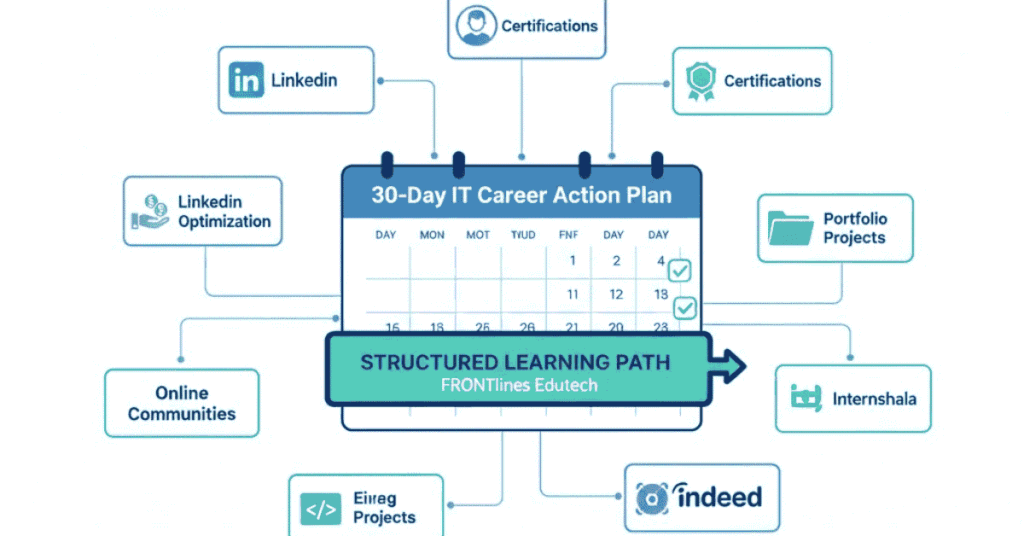
Your Action Plan: Next 30 Days
Week 1:
- Identify your IT specialization (refer to Subtopic 2)
- Build/optimize your LinkedIn profile
- Subscribe to 3 relevant newsletters
Week 2:
- Enroll in your first learning resource
- Join 2 online communities relevant to your specialization
- Start solving coding problems (if pursuing development)
Week 3:
- Complete first third of your chosen course
- Build first small project
- Attend one tech meetup or webinar
Week 4:
- Evaluate your learning (is this specialization right for you?)
- Connect with 10 professionals on LinkedIn in your target role
- Schedule a consultation with Frontlines Edutech about structured programs
Realistic Expectations
Timeline to First IT Job:
- With structured learning: 3-6 months
- With degree + learning: Parallel (4 years degree + continuous upskilling)
- With bootcamp: 3-4 months
Salary Reality:
- First job: ₹4-7 LPA (without specialization), ₹8-12 LPA (with specialization)
- Career progression requires strategy, not just time
- Specialization and job switches drive salary growth
Success Formula:
30% luck, 70% strategy and hard work. You control the 70%. Focus on that