
Common Challenges & Solutions

Table of Contents
Six months into his job, Arjun faced a problem every IT professional encounters: his skills felt outdated. The codebase used frameworks he’d never heard of. His colleagues discussed concepts that went over his head. He felt like a fraud. Meanwhile, he was working 60-hour weeks and couldn’t remember the last time he had a weekend free.
These challenges aren’t unique to Arjun. They’re systematic in IT. Let’s address them directly with practical solutions.

Challenge 1: Skill Gaps and Imposter Syndrome
The Problem:
Technology moves faster than any individual can learn. You’re always behind on something.
Why This Happens:
- New frameworks and languages launch constantly
- Your job uses specific tech; the industry uses hundreds
- Juniors learn new things faster (normal, not your fault)
- Everyone feels behind sometimes
Solutions:
Prioritize Over Perfection:
You can’t learn everything. Focus on skills directly relevant to your role and career goals. A full-stack developer doesn’t need to learn Kubernetes immediately.
The 70% Rule:
When you’re 70% comfortable with a technology, you’re ready to use it professionally. Don’t wait for mastery.
Learn While Doing:
You don’t learn coding by watching tutorials. You learn by building. Pick a project, start building, and learn what you need as you go.
Normalize Not Knowing:
Ask questions. Every professional doesn’t know some things. Asking isn’t weakness; it’s wisdom.
Imposter Syndrome Specifically:
Imposter syndrome (feeling like you don’t belong despite evidence otherwise) is extremely common in IT. Combat it by:
- Documenting your achievements
- Getting peer feedback (people often overestimate your confidence, underestimate your ability)
- Reminding yourself of past problems you’ve solved
Helping others (teaching forces you to recognize expertise)
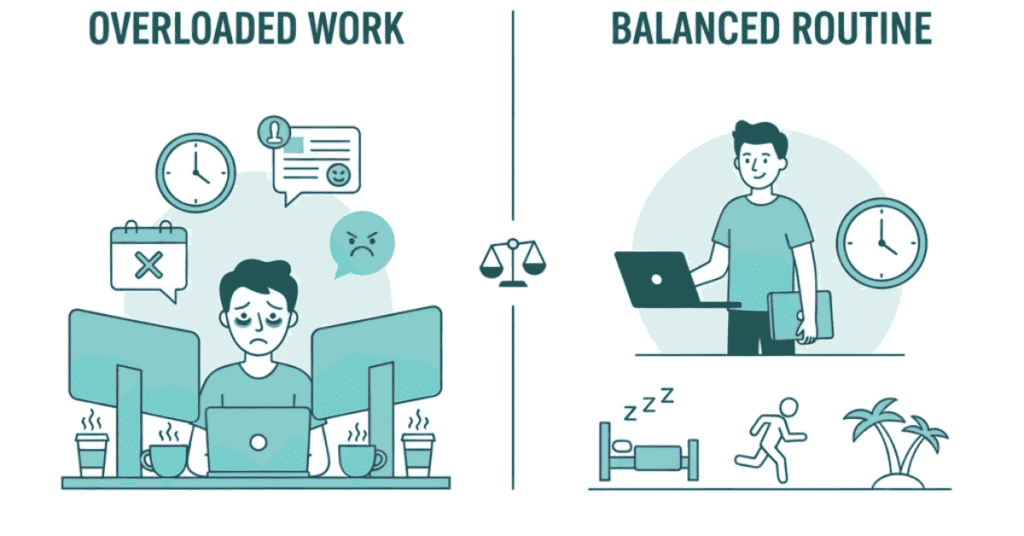
Challenge 2: Work-Life Balance and Burnout
The Problem:
IT is demanding. Deadlines are tight, problems are complex, and companies often expect availability 24/7.
Why This Happens:
- Product companies run on shipping velocity
- Debugging critical issues requires focus
- Meetings multiply with career progression
- Perfectionism drives professionals to work extra
Solutions:
Set Boundaries:
- Define work hours and stick to them
- Don’t respond to messages outside these hours
- Take actual vacations (not checking email)
- Say “no” to excessive meetings
Real Talk:
Some companies have poor work culture. If you’re consistently working 60+ hours, that’s a company problem, not a personal weakness. Consider moving.
Sustainable Pace:
You can’t sprint forever. Professionals who pace themselves outperform those who burn out.
Mental Health:
Burnout is real. If you’re exhausted, frustrated, and cynical about work, it’s time to address it:
- Talk to manager about workload
- Consider therapy (increasingly common and helpful)
- Take breaks
- If nothing improves, change jobs
Exercise & Sleep:
This sounds basic, but sleep and exercise are how your brain recovers. Prioritize them as much as work.
Challenge 3: Keeping Up With Technology
The Problem:
By the time you master one framework, three new ones emerge.
Why This Happens:
Technology innovation is accelerating. This is permanent. You’ll always feel behind.
Solutions:
Focus on Fundamentals:
Programming languages, data structures, algorithms, and design patterns are 80% of what you need. New frameworks are just applications of these fundamentals. Master fundamentals; frameworks become easier.
Follow a Learning Path:
Don’t randomly learn. Decide: “In 6 months, I want to master X.” Make a plan and execute it. Avoid random learning that leaves you knowing bits of many things and depth in nothing.
Stay Connected:
- Follow relevant blogs and newsletters
- Join communities (Reddit, Discord, local meetups)
- Listen to tech podcasts during commute
- Follow influential people in your field on Twitter/LinkedIn
20% Learning Rule:
Spend 20% of your time on learning that excites you. This keeps you sharp and prevents obsolescence.
Accept You Can’t Learn Everything:
This is crucial. You literally cannot master all of technology. Accept it. Focus on your domain and strategic adjacent skills.
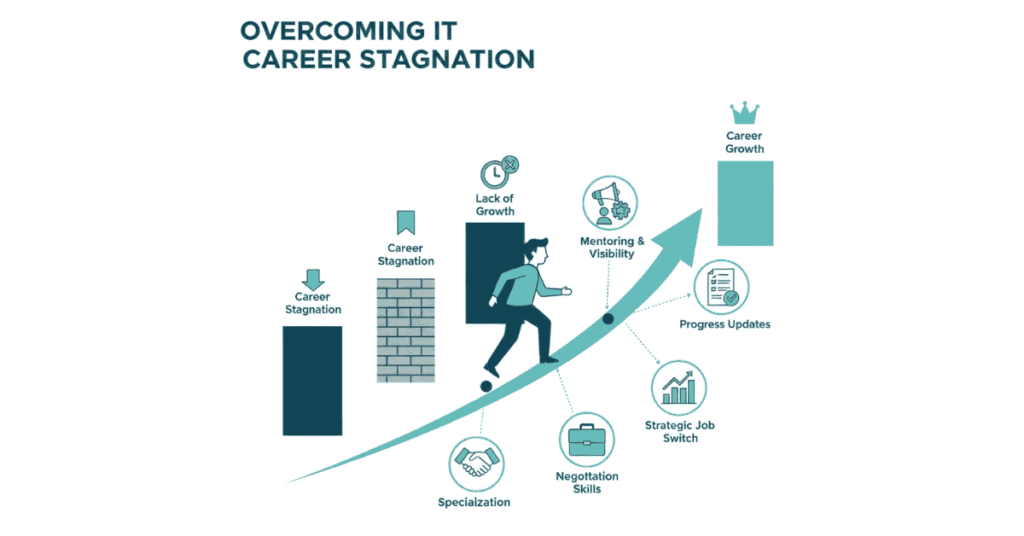
Challenge 4: Career Stagnation
The Problem:
You’ve been doing the same job for 3 years. You’re competent but not growing.
Why This Happens:
- Company isn’t growing (no new opportunities)
- You’re comfortable (comfort prevents growth)
- Manager doesn’t prioritize your development
- Role doesn’t have growth potential
Solutions:
Request Growth Conversations:
Talk to your manager: “I want to grow. What should I focus on?” Good managers will help. Bad managers will ignore you—sign to leave.
Create Growth Opportunities:
- Take on new projects
- Mentor junior developers
- Lead initiatives
- Contribute to company-wide improvements
Change Jobs:
Growth comes from new challenges. If your current company isn’t offering them, another one will. Don’t stay stagnant for false loyalty.
Challenge 5: Work Visibility and Recognition
The Problem:
You’re doing solid work, but nobody notices. Louder colleagues get promotions.
Why This Happens:
- Good work is expected (especially in large companies)
- You’re not communicating your impact
- You work quietly without visibility
Solutions:
Communicate Your Work:
- Share progress in team meetings
- Write status updates
- Showcase completed projects
- Document impact with metrics
Say It Out Loud:
In 1-on-1s, tell your manager about your achievements. Don’t assume they know.
Help Others Succeed:
Managers promote people who make their lives easier. Help your manager succeed, and they’ll advocate for you.
Network Internally:
Build relationships across teams. People promote those they know and like.
Challenge 6: Salary and Compensation Gaps
The Problem:
You discover a colleague earning 30% more for similar work.
Why This Happens:
- They negotiated better during hiring
- They switched companies (always pay more than internal raises)
- They specialized (higher demand skills pay more
- Discrimination (illegal but happens)
Solutinos:
Know Your Market Value:
Use Levels.fyi, Glassdoor, and Payscale to understand what you should earn. Information is power.
Negotiate Aggressively:
- When hired: Counter offers increase starting salary
- At promotions: Promotions are leverage; negotiate 20-30% increases
- At job switches: Never tell your current salary; ask for what you deserve
Specialize:
Specialized skills command 20-40% premiums. Investing in specialization pays dividends.
Job Switch Strategy:
External job switches typically give 20-35% raises. Every 2-3 years, a strategic switch accelerates salary growth significantly.
Challenge 7: Technical Debt and Legacy Code
The Problem:
You’re working with ancient code, no tests, and nobody understands how it works.
Why This Happens:
- Companies prioritized speed over quality early
- Developers left; knowledge disappeared
- Tech stack became outdated
- No refactoring culture
Solutions:
Document While Learning:
As you understand legacy code, document it. Future you will thank you.
Incremental Improvement:
You don’t fix everything at once. Write tests for code you touch. Gradually improve quality.
Propose Refactoring:
If technical debt is slowing everyone down, make a business case for refactoring. Frame it as “We’ll ship faster after we improve infrastructure.”
Know When to Leave:
If the codebase is so bad that you can’t function and nobody wants to improve it, this company is struggling. Better opportunities exist elsewhere.
Challenge 8: Difficult Team Dynamics
The Problem:
You’re on a dysfunctional team with poor communication, blame culture, or toxic colleagues.
Why This Happens:
- Poor management
- Bad hiring
- Burnout leading to poor behavior
- Misaligned incentives
Solutions:
Address It Directly:
If possible, talk to people involved. Often, one conversation clears misunderstandings.
Escalate Respectfully:
If direct conversation fails, talk to your manager or HR. Document issues if they’re serious.
Transfer Teams:
Large companies allow internal transfers. Move to a better team.
Leave:
If the culture is toxic, no amount of money is worth your mental health. Toxic teams leave scars. Better to leave.