
Hydropower Careers: Engineering and Environmental Roles
Table of Contents
Why Hydropower is Still Relevant
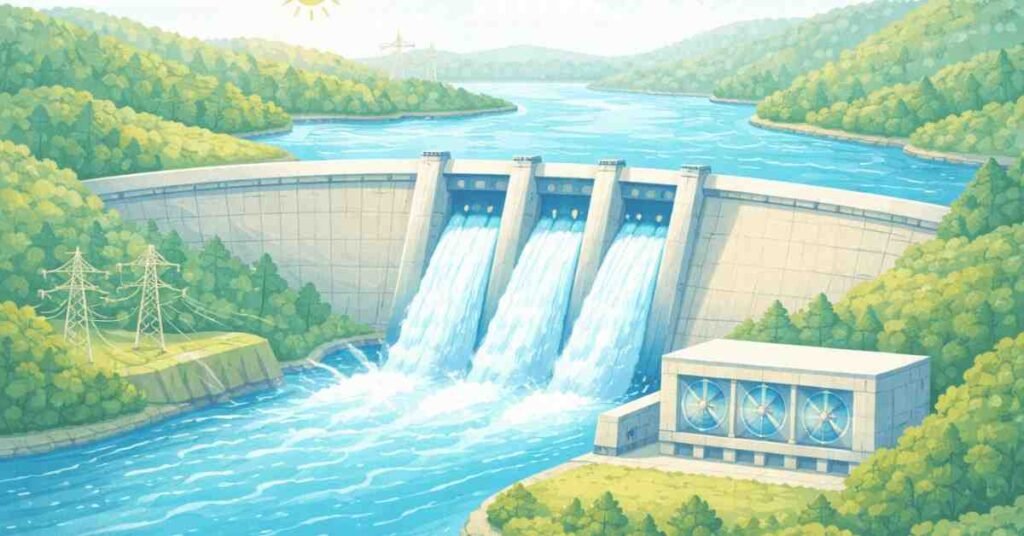
Hydropower is one of the oldest and most reliable forms of renewable energy. In India, hydropower contributes significantly to the national energy mix, especially in states like Himachal Pradesh, Uttarakhand, and Arunachal Pradesh. Hydropower plants convert the energy of flowing water into electricity, providing clean and sustainable power.
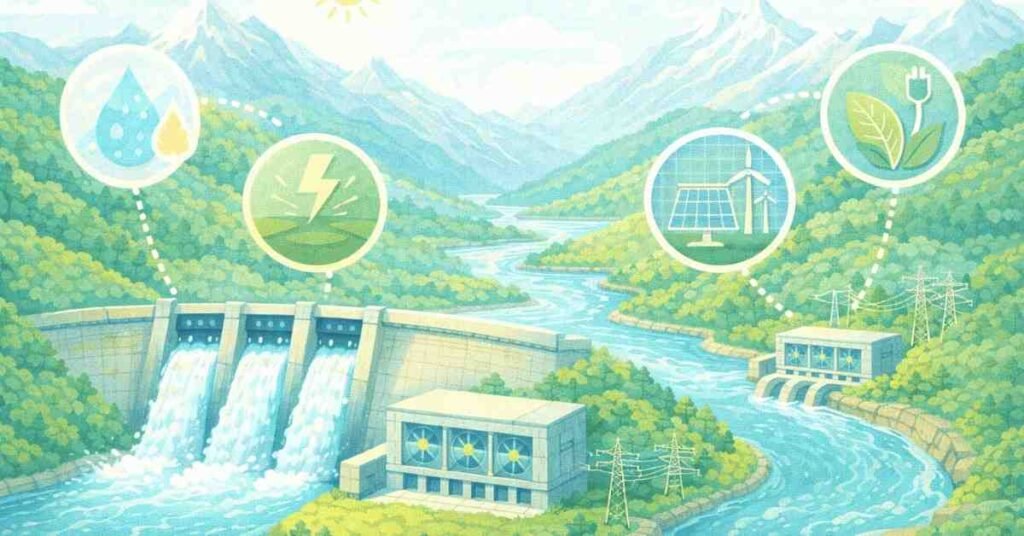
Hydropower careers are not just for engineers. There are roles for civil engineers, environmental consultants, project managers, and even researchers. Whether you are interested in hands-on work or prefer office-based planning, there is a place for you in the hydropower industry.
Types of Hydropower Careers
1. Hydropower Engineer
A hydropower engineer designs, constructs, and maintains hydropower plants. This role is perfect for those who enjoy working with technology and solving technical problems.
What You Do:
- Design and construct hydropower plants
- Maintain and repair plant equipment
- Monitor plant performance
- Troubleshoot technical issues
Skills Needed:
- Civil and mechanical engineering basics
- Project management skills
- Knowledge of hydropower systems
Education:
- B.Tech or M.Tech in Civil, Mechanical, or Electrical Engineering
Salary:
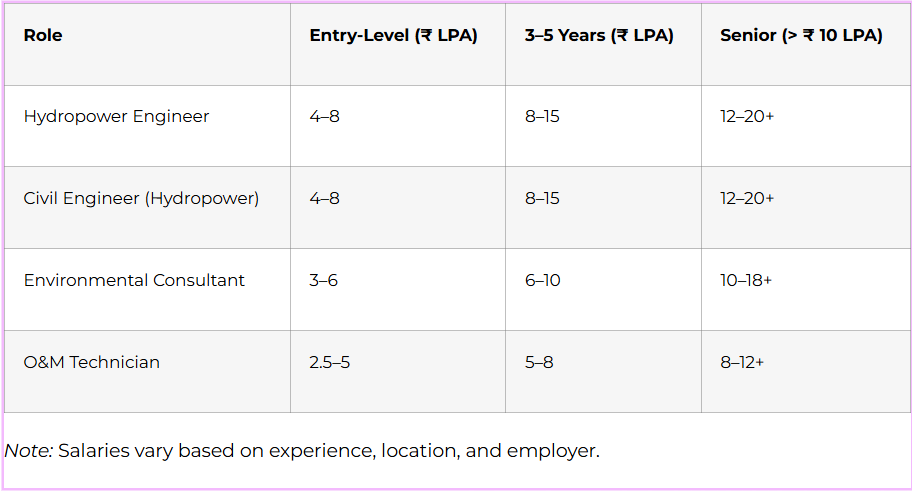
- Entry: ₹4–8 LPA
- Experienced: ₹8–15 LPA
How to Start:
- Take courses in hydropower engineering
- Do internships with hydropower companies
2. Civil Engineer (Hydropower)
A civil engineer designs and constructs the dams, canals, and tunnels for hydropower plants. This role is ideal for those who like planning, problem-solving, and working with teams.
What You Do:
- Design and supervise construction of dams and canals
- Coordinate with engineers and project managers
- Ensure structures are safe and efficient
- Troubleshoot technical issues
Skills Needed:
- Civil engineering basics
- Communication and leadership
- Problem-solving
Education:
- B.Tech or M.Tech in Civil Engineering
Salary:
- Entry: ₹4–8 LPA
- Experienced: ₹8–15 LPA
How to Start:
- Take civil engineering courses
- Do internships with hydropower companies
3. Environmental Consultant
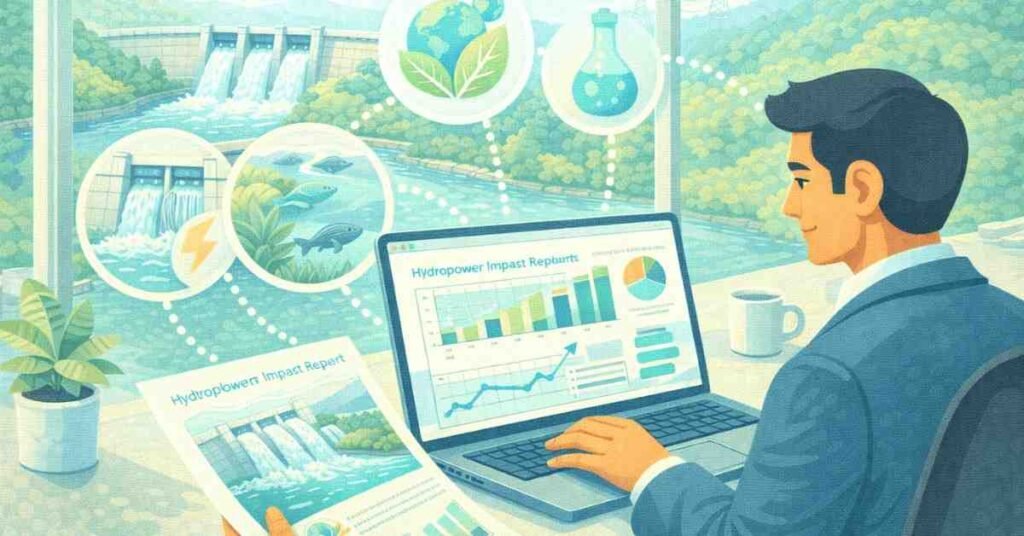
An environmental consultant assesses the environmental impact of hydropower projects. This role is for those who enjoy research, communication, and working with data and reports.
What You Do:
- Assess environmental impact of hydropower projects
- Suggest ways to minimize environmental damage
- Prepare environmental impact reports
- Coordinate with multiple departments
Skills Needed:
- Environmental science basics
- Communication and leadership
- Data analysis
Education:
- B.Tech or M.Tech in Environmental Engineering or Science
Salary:
- Entry: ₹3–6 LPA
- Experienced: ₹6–10 LPA
How to Start:
- Take environmental science courses
- Do internships with environmental consulting firms
4. O&M Technician
An O&M (Operations and Maintenance) technician maintains and repairs hydropower plant equipment. This role is perfect for those who enjoy practical work and don’t mind working outdoors.
What You Do:
- Maintain and repair plant equipment
- Monitor plant performance
- Troubleshoot technical issues
- Use basic tools and follow safety protocols
Skills Needed:
- Mechanical and electrical basics
- Safety training
- Hands-on skills
Education:
- ITI or Diploma in Mechanical/Electrical Engineering
Salary:
- Entry: ₹2.5–5 LPA
- Experienced: ₹5–8 LPA
How to Start:
- Get O&M technician certification
- Apply for jobs with hydropower companies
How to Build a Hydropower Career
Step 1: Choose the Right Education
- For engineering roles: Take Science (Physics, Chemistry, Maths) in 11th/12th
- For environmental roles: Take Environmental Science or Engineering
Step 2: Get Certified
- Hydropower engineering courses
- Civil engineering courses
- Environmental science courses
- Safety training
Step 3: Gain Practical Experience
- Do internships with hydropower companies
- Volunteer for community hydropower projects
- Build a portfolio of hydropower projects
Step 4: Network and Apply
- Create a LinkedIn profile and follow hydropower companies
- Apply for jobs on Naukri, Indeed, and company websites
- Attend industry events and seminars
Salary Expectations in Hydropower Sector
Real-Life Example: A Day in a Hydropower Plant
- Start with routine checks on plant equipment
- Monitor water flow and electricity generation
- Troubleshoot any issues with turbines or generators
- Perform maintenance and safety checks
- Attend team meetings and update performance reports
This role is ideal for those interested in sustainable energy, engineering, and hands-on technical work.