
HR SKILLS AND COMPETENCIES DEVELOPMENT
Table of Contents
Sarah started her HR career enthusiastically with an MBA in HR Management. Six months into her HR Generalist role, she realized something crucial: her degree taught her HR theories and frameworks, but actual success depended on skills her coursework barely covered—navigating difficult conversations with upset employees, analyzing turnover data to identify patterns, influencing resistant managers to adopt new policies, and quickly learning unfamiliar HR software. Sarah’s experience reflects a universal truth: HR success requires continuously developing diverse competencies beyond formal education.
This comprehensive guide identifies the essential skills every HR professional needs across technical capabilities, interpersonal competencies, and strategic thinking abilities. Whether you’re a student preparing for HR roles, an early-career professional building foundations, or a mid-career specialist seeking advancement, you’ll learn which skills matter most, why they’re critical, and practical strategies to develop them.
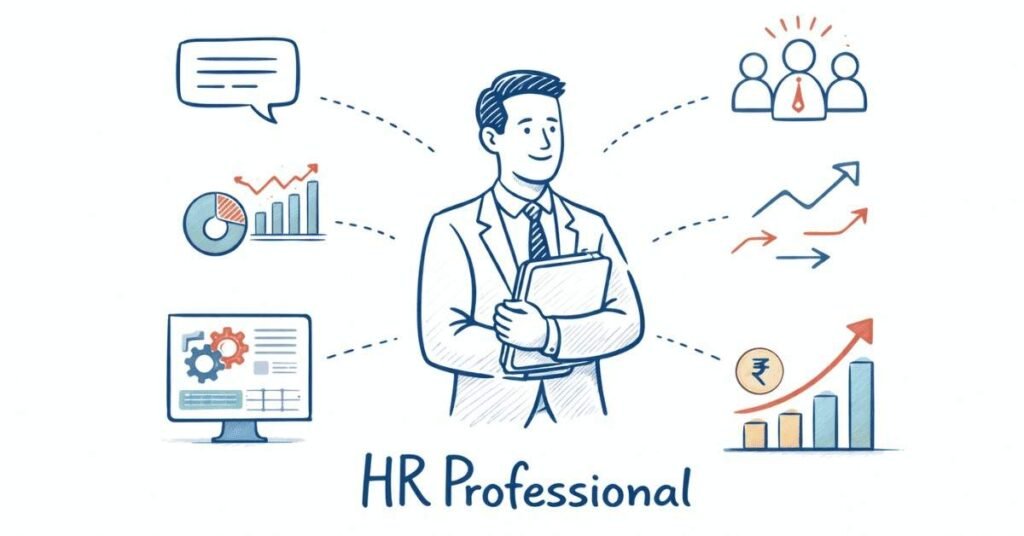
The Evolving HR Skills Landscape
HR is transforming from administrative function to strategic business partner, fundamentally changing required competencies. Traditional HR focused on processes, policies, and transactions. Modern HR demands data literacy, technology fluency, strategic business thinking, and change leadership.
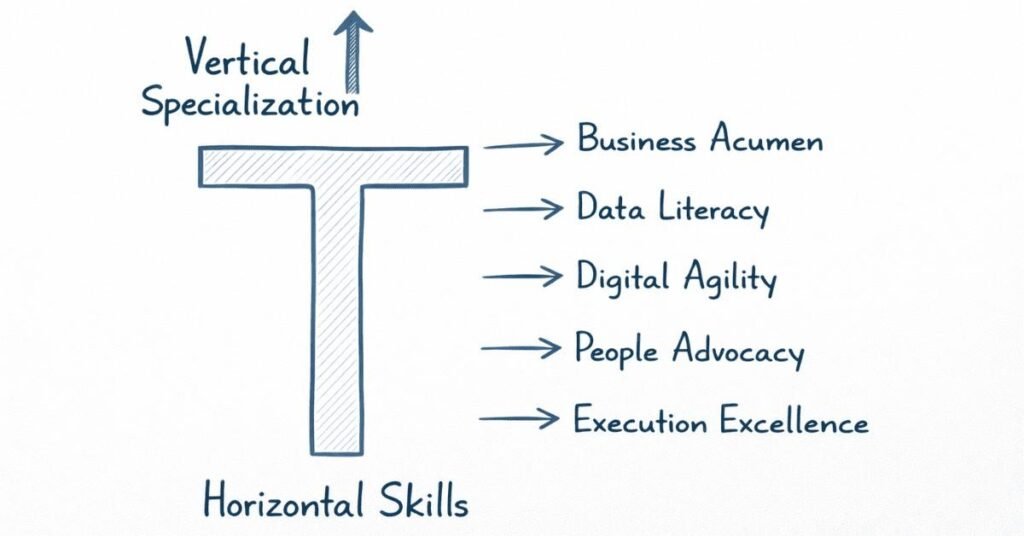
The T-Shaped HR Professional: AIHR’s competency model describes modern HR professionals as “T-shaped”—with deep expertise in specific specializations (the vertical bar) plus broad competencies across five core areas that all HR professionals need: Business Acumen, Data Literacy, Digital Agility, People Advocacy, and Execution Excellence (the horizontal bar).
This guide organizes skills into four categories: Core HR Competencies (foundational for all HR roles), Technical/Hard Skills (specific knowledge and tools), Soft/Interpersonal Skills (human interaction capabilities), and Strategic/Leadership Skills (for advancing to senior roles).

Core HR Competencies for All HR Professionals
These five foundational competencies underpin all other HR capabilities:
1. Business Acumen
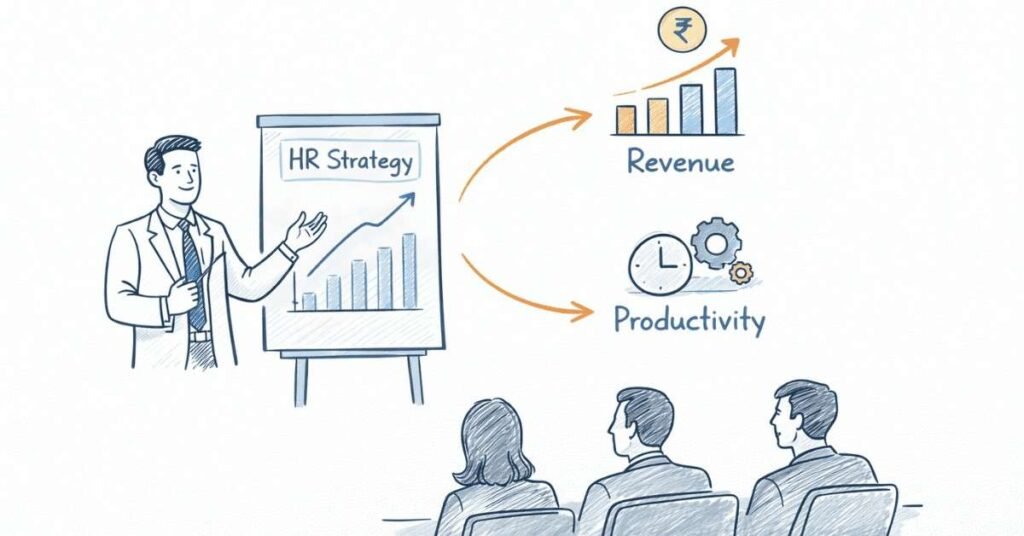
What It Is: Understanding how businesses operate, create value, compete, and succeed—enabling you to align HR strategies with business objectives.
Why It Matters: HR professionals without business understanding are order-takers who implement programs regardless of business relevance. Those with strong business acumen become trusted partners who recommend solutions driving business results.
Components:
- Understanding your organization’s business model and revenue sources
- Grasping competitive dynamics and industry trends
- Reading and interpreting financial statements (P&L, balance sheet)
- Connecting HR decisions to business outcomes
- Speaking the language of business leaders
How to Develop:
- Read business publications (Harvard Business Review, McKinsey Quarterly, industry journals)
- Take business fundamentals courses (finance, strategy, operations)
- Attend business meetings, not just HR meetings
- Ask leaders to explain business strategy and challenges
- Practice connecting HR initiatives to business metrics (revenue, profitability, customer satisfaction)
Example in Practice: Rather than proposing training because “employees need development,” you analyze that sales have declined 15% due to competitive new products. You recommend product knowledge training and competitive positioning workshops, projecting 8-10% sales recovery within six months. This business-focused approach secures immediate budget approval.
2. Data Literacy and Analytics
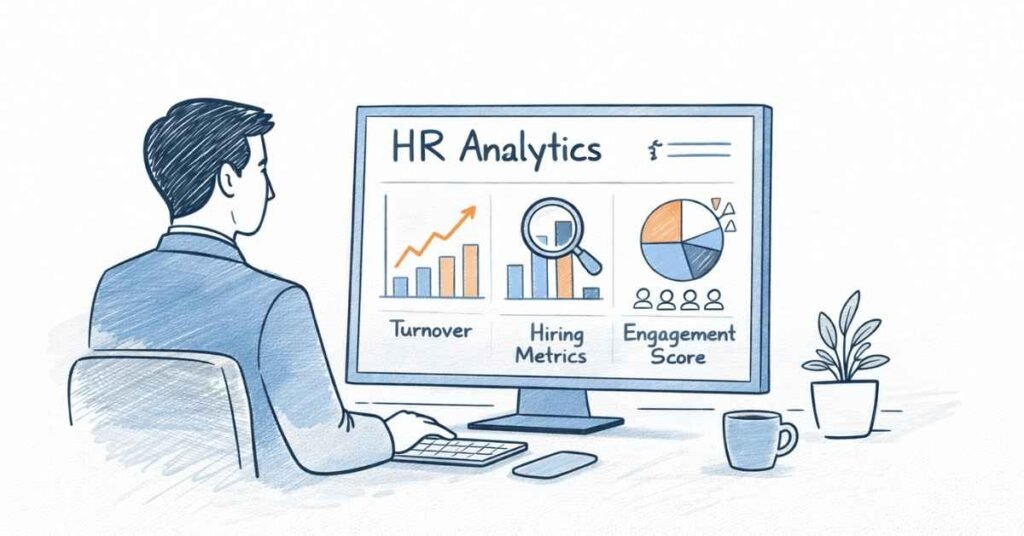
What It Is: Ability to collect, analyze, interpret, and communicate insights from data to inform HR decisions.
Why It Matters: Intuition-based HR lacks credibility. Data-driven HR earns respect from business leaders, demonstrates impact, and makes better decisions. HR professionals who can’t work with data will struggle in modern organizations.
Components:
- Understanding HR metrics (turnover, time-to-hire, engagement, cost-per-hire, etc.)
- Analyzing data to identify trends and patterns
- Drawing valid conclusions from data
- Creating compelling visualizations (charts, graphs, dashboards)
- Understanding statistical basics (correlation, significance, averages vs. medians)
- Measuring and communicating ROI of HR programs
How to Develop:
- Take courses in HR analytics and statistics
- Practice analyzing HR data in your current role
- Learn Excel deeply (pivot tables, formulas, charts)
- Explore data visualization tools (Tableau, Power BI)
- Study how to measure HR program effectiveness
- Read “People Analytics” by Ben Waber or similar books
Example in Practice: Your organization has 22% annual turnover. Rather than generic retention programs, you analyze data and discover 68% of exits happen within first 18 months and primarily in two departments. Deeper analysis reveals inadequate onboarding and toxic manager behaviors. Your targeted interventions (enhanced onboarding, manager training) reduce turnover to 16% within 12 months.
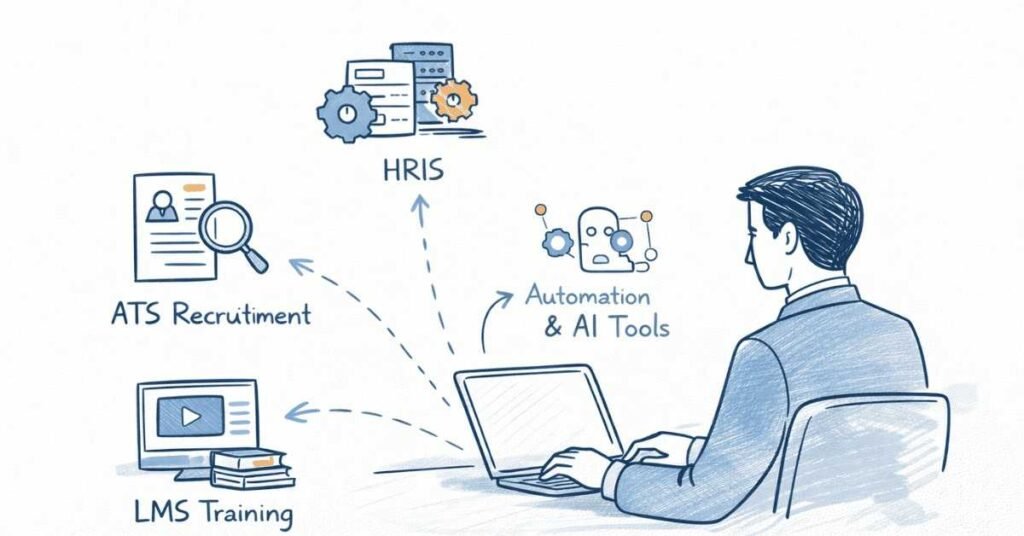
3. Digital Agility and Technology Proficiency
What It Is: Comfort with HR technology, ability to learn new tools quickly, and understanding how technology transforms HR delivery.
Why It Matters: HR technology is essential infrastructure. Professionals who resist or struggle with technology limit their effectiveness and career prospects. Technology expertise increasingly differentiates high-performing HR professionals.
Components:
- HRIS platforms (Workday, SAP SuccessFactors, Oracle, Darwinbox, etc.)
- Applicant Tracking Systems (ATS) for recruitment
- Learning Management Systems (LMS)
- Performance management platforms
- HR analytics and reporting tools
- Communication and collaboration tools (Teams, Slack, Zoom)
- Understanding of emerging technologies (AI, automation, chatbots)
How to Develop:
- Seek opportunities to work with HR systems in your role
- Take platform-specific training (many vendors offer free certifications)
- Volunteer for HRIS implementation or enhancement projects
- Stay current on HR technology trends through blogs and webinars
- Experiment with new tools and platforms
- Build comfort with learning unfamiliar technology quickly
Example in Practice: Your organization implements new performance management software. While colleagues resist change, you quickly master the platform, create training guides, and become the go-to resource. This visibility leads to your selection for a high-profile HRIS project.
4. People Advocacy and Employee Relations
What It Is: Genuine commitment to employee wellbeing while balancing business needs; ability to build trust and handle sensitive people issues.
Why It Matters: HR exists to serve employees while enabling organizational success. Professionals without authentic people focus become viewed as “management police” rather than trusted partners.
Components:
- Empathy for diverse employee experiences and challenges
- Building trust across organizational levels
- Advocating for fair treatment and equity
- Handling sensitive situations (complaints, conflicts, terminations) diplomatically
- Maintaining confidentiality and professional boundaries
- Creating psychologically safe environments
How to Develop:
- Practice active listening without immediately problem-solving
- Seek to understand different perspectives and experiences
- Build relationships with employees across all levels
- Volunteer for challenging employee relations situations
- Reflect on your biases and blind spots
- Study employee relations best practices and case studies
Example in Practice: An employee reports feeling excluded due to their accent and regional background. Rather than dismissing it as oversensitivity, you listen deeply, investigate patterns, and discover systemic bias in team interactions. You design interventions addressing unconscious bias and celebrating diversity, improving team culture.
5. Execution Excellence and Personal Effectiveness
What It Is: Getting things done efficiently, reliably, and with high quality; personal productivity and professional habits.
Why It Matters: Strategic vision without execution is worthless. HR professionals must deliver consistently, meet deadlines, and produce quality work.
Components:
- Project management and organization
- Time management and prioritization
- Attention to detail and accuracy
- Meeting commitments and following through
- Managing multiple priorities simultaneously
- Continuous learning and self-development
How to Develop:
- Use project management tools and methods
- Practice prioritization frameworks (urgent/important matrix)
- Build systems for tracking commitments and deadlines
- Develop checklists and templates for recurring work
- Seek feedback on reliability and quality
- Study productivity and time management techniques
Essential Technical/Hard Skills
Beyond core competencies, specific technical capabilities enable HR work:
HR Process Knowledge
What You Need: Deep understanding of recruitment and selection, onboarding and offboarding, performance management, compensation and benefits, learning and development, employee relations and investigations, succession planning, and HR compliance and labor law.
How to Build: Formal HR education provides foundations. Real expertise develops through hands-on experience in these processes, studying best practices and case studies, earning HR certifications (SHRM, HRCI), and learning from experienced HR professionals.
Microsoft Excel and Office Suite
Why It Matters: Excel is HR’s primary analysis tool. Proficiency is non-negotiable.
Minimum Competency: Formulas (VLOOKUP, IF statements, SUMIF), pivot tables for analysis, data filtering and sorting, basic charts and visualizations, and formatting for professional presentation.
Advanced Skills: Complex formulas, macros and automation, PowerPivot for large datasets, and advanced data modeling.
How to Build: Take Excel courses (LinkedIn Learning, Coursera), practice with real HR data, and challenge yourself with progressively complex analyses.
Statistical and Research Methods
For Advanced Roles: Understanding survey design, statistical significance and confidence intervals, regression and correlation analysis, and research methodology.
When It Matters: Essential for people analytics roles, valuable for understanding research and studies, and helpful for designing HR programs with measurable outcomes.
Labor Law and Compliance
What You Need: Understanding employment law basics (contracts, termination, discrimination), statutory compliance (PF, ESI, POSH Act in India), wage and hour laws, and occupational health and safety requirements.
How to Build: Take employment law courses, follow legal updates and court decisions, work closely with legal counsel on employee matters, and learn from employee relations cases.
Critical Soft/Interpersonal Skills
Technical skills get you hired; soft skills determine success and advancement:
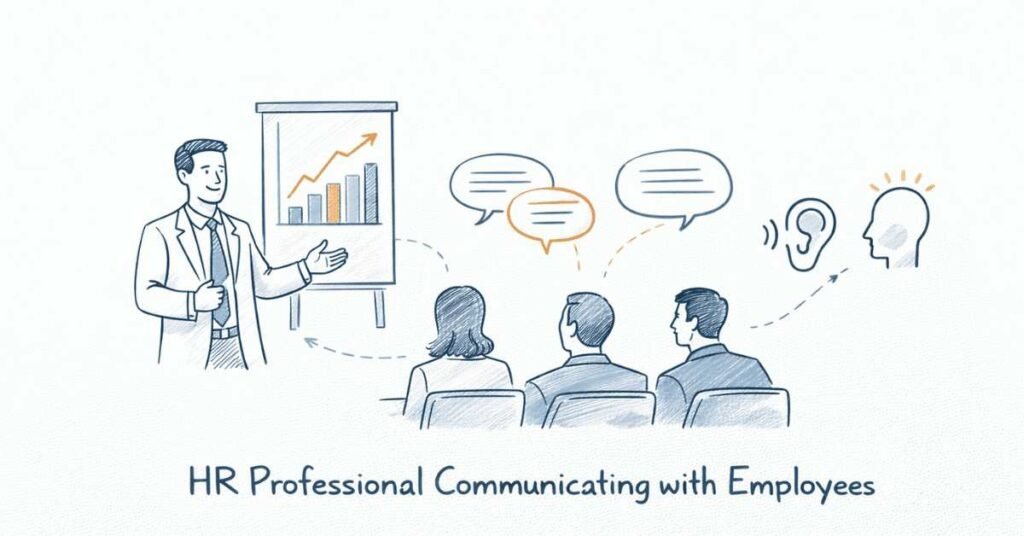
1. Communication Skills (Most Essential)
Why It’s #1: Communication underlies everything HR does—interviewing candidates, explaining policies, facilitating difficult conversations, presenting to leadership, writing documentation, and resolving conflicts.
Components:
Verbal Communication: Clear, confident speaking; adjusting communication style for different audiences (frontline employees vs. executives); active listening that makes others feel heard; and asking powerful questions.
Written Communication: Professional emails and letters; clear policy documentation; compelling presentations; and persuasive business writing.
Presentation Skills: Engaging delivery; using visual aids effectively; managing nervousness; and facilitating discussions.
How to Develop:
- Join Toastmasters or public speaking groups
- Volunteer for presentations
- Record yourself and identify improvement areas
- Practice writing daily (emails, documents, blog posts)
- Seek feedback on communication effectiveness
- Study effective communicators in your organization
2. Emotional Intelligence (EQ)
What It Is: Understanding and managing your own emotions while recognizing and influencing others’ emotions.
Why It Matters: HR constantly deals with emotionally charged situations—terminations, conflicts, complaints, organizational change. High EQ enables you to navigate these effectively while maintaining composure.
Components:
- Self-awareness (understanding your emotional triggers and responses)
- Self-regulation (managing emotions productively)
- Social awareness (reading others’ emotions and group dynamics)
- Relationship management (building trust, influencing, managing conflict)
- Empathy (genuinely understanding others’ perspectives and feelings)
How to Develop:
- Practice mindfulness and self-reflection
- Seek feedback about your emotional impact on others
- Study emotional intelligence frameworks
- Practice perspective-taking
- Develop stress management techniques
- Work with a coach on EQ development
Example in Practice: During a termination meeting, the employee becomes angry and accusatory. Your high EQ helps you remain calm, show empathy for their distress while maintaining professional boundaries, and de-escalate the situation effectively.
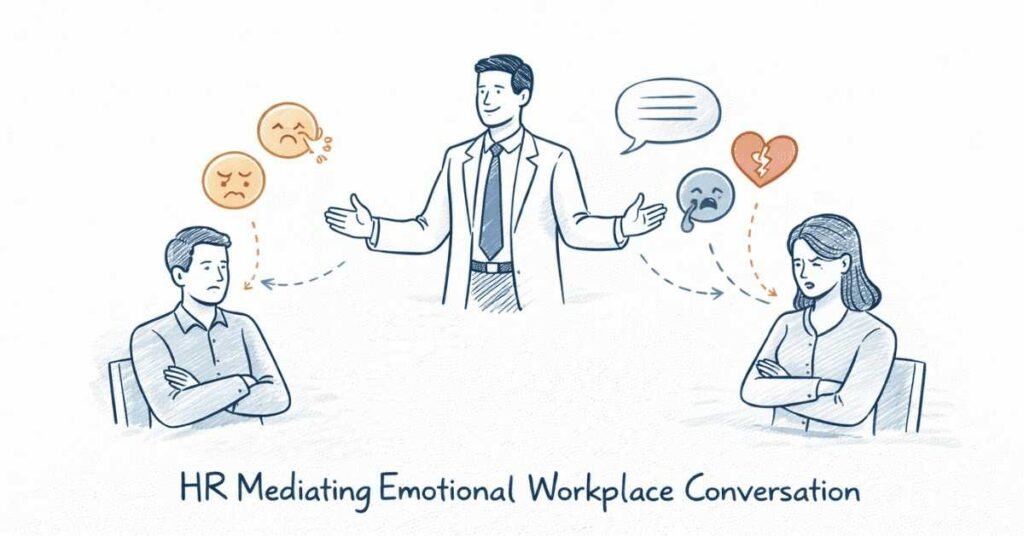
3. Conflict Resolution and Mediation
What It Is: Helping parties in conflict reach constructive resolution.
Why It Matters: Workplace conflicts are inevitable. HR must resolve them before they damage relationships, productivity, or culture.
Components:
- Understanding conflict dynamics and escalation patterns
- Remaining neutral when mediating
- Facilitating difficult conversations
- Identifying underlying interests beyond stated positions
- Generating creative solutions
- Building sustainable agreements
How to Develop:
- Study mediation techniques and frameworks
- Volunteer to mediate low-stakes conflicts
- Observe experienced mediators
- Practice staying neutral even when you have opinions
- Learn negotiation skills
4. Adaptability and Resilience
What It Is: Adjusting effectively to changing circumstances and bouncing back from setbacks.
Why It Matters: HR operates in constant change—new regulations, leadership changes, organizational restructures, technology implementations. Rigid HR professionals struggle while adaptable ones thrive.
Components:
- Embracing change rather than resisting it
- Learning new skills and approaches quickly
- Remaining productive amid uncertainty
- Recovering from failures and setbacks
- Managing stress healthily
How to Develop:
- Seek stretch assignments outside your comfort zone
- Practice reframing challenges as opportunities
- Build stress management practices
- Reflect on past adaptations and what enabled them
- Cultivate growth mindset
5. Relationship Building and Influence
What It Is: Creating trust-based relationships and persuading others without formal authority.
Why It Matters: HR rarely has direct authority over business leaders or employees. Success depends on influence—getting others to embrace your recommendations.
Components:
- Building genuine connections across organizational levels
- Understanding stakeholder priorities and motivations
- Presenting recommendations persuasively
- Navigating organizational politics constructively
- Building coalitions and support
- Earning credibility through consistent delivery
How to Develop:
- Practice seeing situations from others’ perspectives
- Focus on stakeholder benefits, not just HR benefits
- Build relationships before you need favors
- Study influence and persuasion techniques
- Seek mentors who excel at organizational influence
Strategic Skills for Senior HR Roles
As you advance toward HR leadership, additional strategic capabilities become critical:
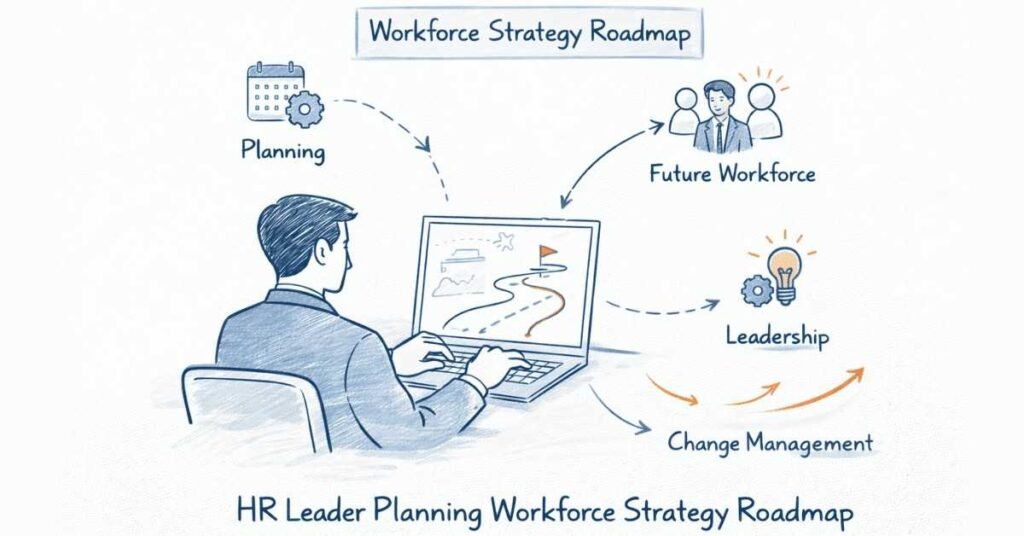
Strategic Thinking and Planning
What It Is: Thinking beyond immediate tasks to long-term implications; aligning HR strategy with business direction.
Components:
- Connecting HR initiatives to business goals
- Anticipating future challenges and opportunities
- Thinking systemically about cause and effect
- Scenario planning and risk management
- Balancing short-term pressures with long-term objectives
How to Develop:
- Study business strategy frameworks
- Participate in strategic planning processes
- Practice asking “What’s the long-term impact?”
- Learn from strategic leaders in your organization
- Read strategic thinking books (Good Strategy/Bad Strategy by Richard Rumelt)
Change Management and Transformation
What It Is: Leading organizational change initiatives effectively.
Components:
- Assessing change readiness and impact
- Developing change strategies and communication plans
- Identifying and addressing resistance
- Building change capability in organizations
- Measuring change adoption and effectiveness
How to Develop:
- Study change management frameworks (Kotter, ADKAR, Prosci)
- Volunteer for transformation projects
- Lead smaller change initiatives
- Learn from both successful and failed changes
Leadership and Team Management
What It Is: Leading HR teams and developing others.
Components:
- Setting vision and direction
- Developing team members’ capabilities
- Providing effective feedback and coaching
- Managing performance
- Building high-performing teams
- Making difficult people decisions
How to Develop:
- Seek leadership roles (project leads before formal management)
- Find leadership mentors
- Take leadership development programs
- Practice coaching others
- Study leadership frameworks and books
Practical Skill Development Framework
Knowing which skills matter is one thing. Developing them systematically is another. Here’s a practical approach:
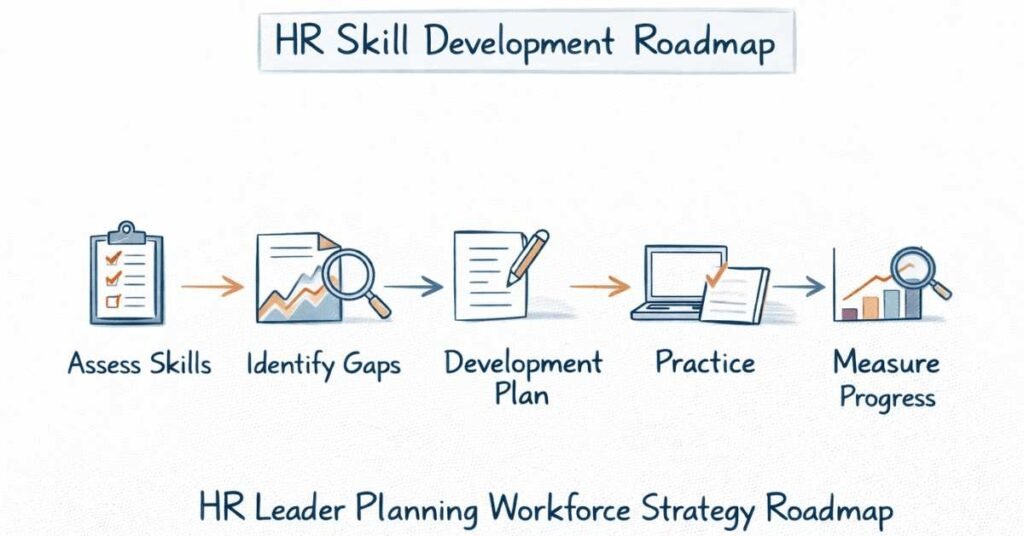
Step 1: Assess Your Current Skills
Self-Assessment: Honestly rate yourself on each skill area (1-10 scale).
Seek Feedback: Ask managers, peers, and mentees for input on your strengths and development areas.
Use Assessment Tools: Take AIHR’s T-Shaped HR Assessment or similar validated tools.
Step 2: Identify Priority Development Areas
Consider Your Career Stage: Entry-level professionals prioritize foundational skills (communication, HR processes, Excel). Mid-career professionals build specialized depth and strategic capabilities.
Align with Career Goals: If you want to become HRBP, prioritize business acumen and stakeholder management. If you’re targeting analytics, focus on data and statistical skills.
Address Critical Gaps: Identify skills limiting your current effectiveness or advancement.
Step 3: Create Development Plan
Set Specific Goals: Not “improve communication” but “deliver five presentations to senior leadership within six months”.
Identify Learning Methods: Formal training (courses, certifications), on-the-job learning (stretch assignments, projects), coaching and mentoring, reading and self-study, and peer learning.
Schedule Development Time: Block time weekly for skill-building, treating it as non-negotiable as meetings.
Step 4: Apply Skills Deliberately
Seek Practice Opportunities: Volunteer for assignments using target skills.
Reflect on Application: After using a skill, reflect on what worked, what didn’t, and how to improve.
Request Feedback: Ask for specific feedback on skill application.
Step 5: Measure Progress and Adjust
Track Development: Document skills practiced and progress made.
Reassess Periodically: Every 3-6 months, reassess skills and update priorities.
Celebrate Progress: Acknowledge improvements to maintain motivation.
Future of Talent Acquisition
Online Learning Platforms:
- AIHR Academy (HR-specific courses)
- LinkedIn Learning (broad skill library)
- Coursera (university courses)
- SHRM Learning (HR certification prep and courses)
Professional Certifications:
- SHRM-CP/SCP (foundational HR)
- Platform-specific (Workday, SuccessFactors)
- Specialized (People Analytics, Compensation)
Communities and Networks:
- SHRM local chapters
- LinkedIn HR groups
- Industry conferences and webinars
Books and Publications:
- HR Dive, SHRM’s HR Magazine
- Harvard Business Review’s HR section
- Books by Dave Ulrich, Marcus Buckingham, Josh Bersin
HR success isn’t determined by your degree or initial knowledge—it’s built through continuous skill development. The most successful HR professionals commit to lifelong learning, systematically building capabilities across technical expertise, interpersonal effectiveness, and strategic thinking. They seek feedback courageously, embrace stretch opportunities, and stay curious about their profession’s evolution.
Whether you’re just starting your HR journey or leading HR organizations, the skills in this guide provide your roadmap. Assess where you are, identify priority development areas, create your learning plan, and commit to growing 1% better each week. Over months and years, that compound growth transforms competent HR professionals into exceptional ones who shape organizational success and advance their careers to the highest levels.