
HR SALARY GUIDE AND COMPENSATION TRENDS
Table of Contents
One of the most common questions students and professionals ask when exploring HR careers is: “What will I actually earn?” Understanding compensation is crucial for career planning, negotiation, and making informed decisions about specializations and career moves. This comprehensive salary guide provides detailed, current compensation data across all HR roles, experience levels, specializations, and geographic locations in India based on 2025-2026 market data.
Whether you’re a fresh graduate evaluating whether HR offers financially viable career prospects, a mid-career professional considering specialization, or someone negotiating your next role, this guide equips you with the salary intelligence you need.
Overall HR Compensation Landscape in India
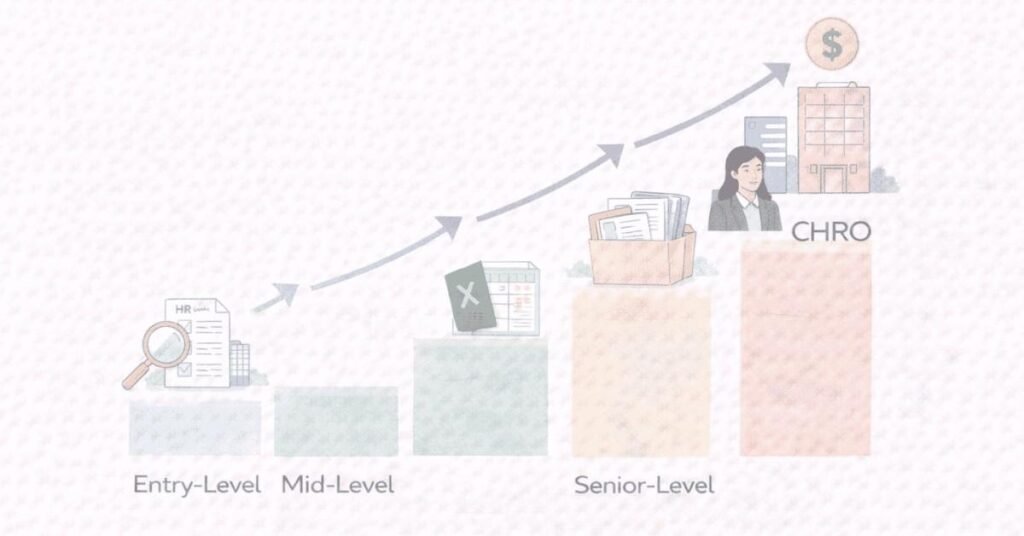
Average HR Professional Salary: The average salary for HR professionals in India is ₹19.2 lakhs per annum, with 70% of salaries ranging between ₹14 lakhs to ₹50 lakhs. This places HR professionals solidly in the middle-to-upper-middle-income bracket in India.
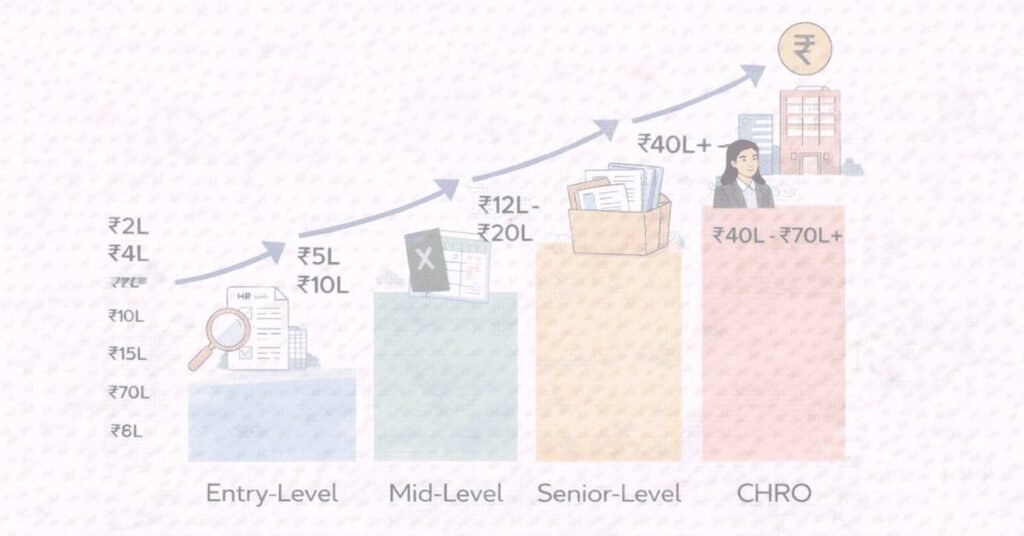
Salary Range: HR salaries show significant variation—from entry-level positions at ₹2-3 lakhs annually to C-suite CHRO roles commanding ₹35-70 lakhs or even ₹3.5 crores in large organizations. This wide range reflects the diverse career opportunities and advancement potential within HR.
Growth Trajectory: HR salaries have grown consistently, with average increases of 6-12% annually depending on role and level. Strategic HR roles (HRBP, People Analytics, CHRO) show the strongest growth—10-12% annually—reflecting increasing recognition of HR’s strategic value.
Gender Pay Dynamics: While improving, gender pay gaps persist in HR. Male HR specialists earn approximately ₹20 lakhs average versus ₹19 lakhs for female counterparts—a 5% gap. In compensation and benefits roles, this gap widens to 12%, with males earning ₹5.18 lakhs versus females at ₹4.62 lakhs. Awareness and active DEI efforts are gradually narrowing these disparities.
HR Salaries by Experience Level
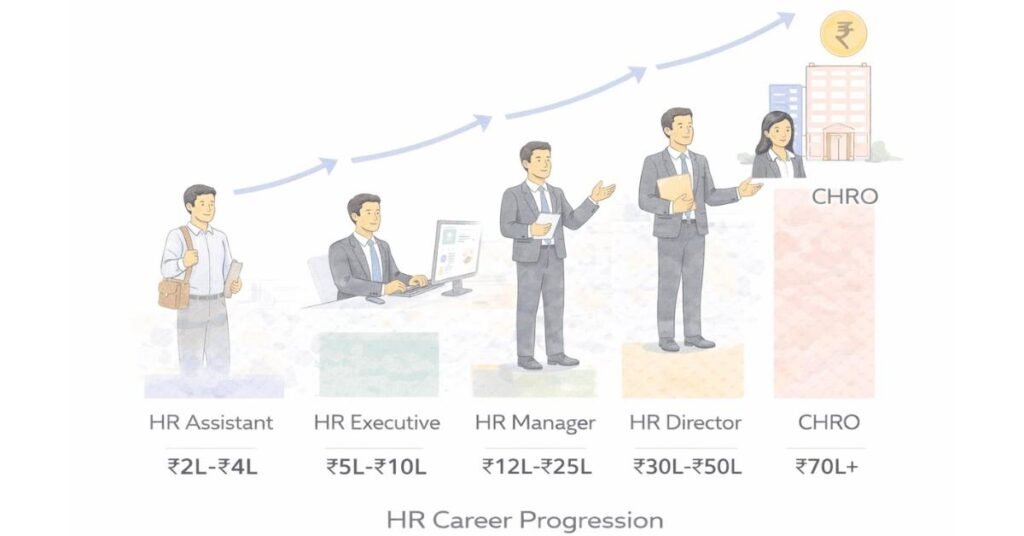
Experience is the single strongest predictor of HR compensation. Here’s what you can expect at each career stage:
Entry-Level (0-2 Years Experience)
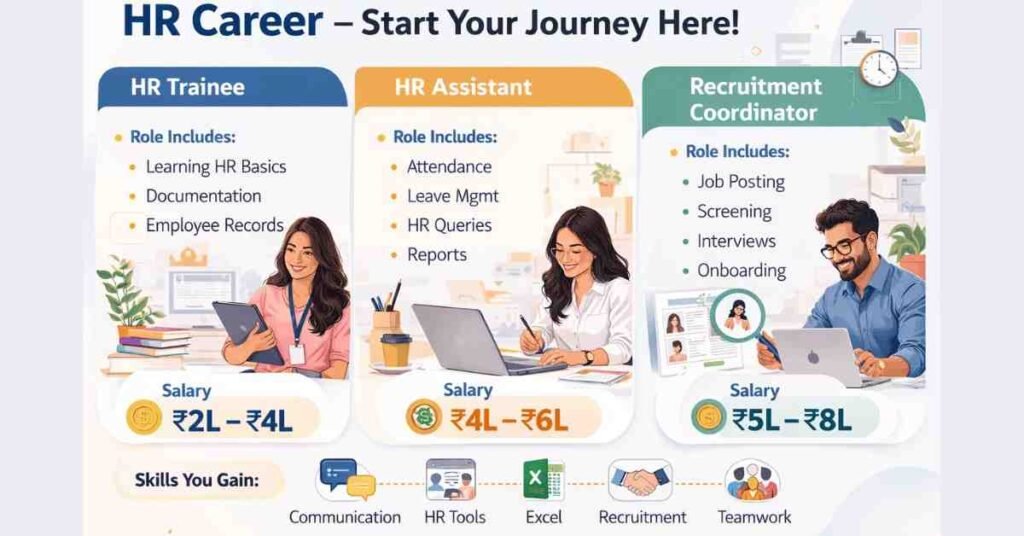
Salary Range: ₹2-5 lakhs annually (₹18,000-42,000 monthly)
Common Roles: HR Assistant, HR Coordinator, Recruitment Coordinator, HR Trainee, Junior HR Executive
What to Expect: Entry-level compensation is modest but provides foundation for growth. Starting salaries vary significantly based on company size (startups often pay ₹2-3 lakhs, MNCs pay ₹3.5-5 lakhs), location (metro cities pay 30-40% more than tier-2 cities), and education (MBA-HR graduates command ₹1-2 lakhs premium over bachelor’s graduates).
Growth Potential: With strong performance and skill development, expect 15-25% salary increases in first two years as you prove value and take on more responsibility.
Early Career (2-5 Years Experience)
Salary Range: ₹5-9 lakhs annually (₹42,000-75,000 monthly)
Common Roles: HR Executive, Senior HR Executive, Recruitment Specialist, HR Generalist, Compensation Analyst
What to Expect: This phase shows significant salary acceleration as you develop specialized capabilities. By year 3-4, you’re handling complete processes independently rather than supporting others. Mid-level HR professionals average ₹6.1 lakhs, but those in high-demand specializations (talent acquisition, HRIS, compensation) can reach ₹8-9 lakhs.
Strategic Focus: This is the time to specialize. Generalists plateau around ₹7-8 lakhs, while specialists in analytics, HRIS, or compensation progress faster toward ₹10-12 lakhs range.
Mid-Career (5-10 Years Experience)
Salary Range: ₹9-18 lakhs annually (₹75,000-1.5 lakhs monthly)
Common Roles: Senior HR Executive, HR Manager, Talent Acquisition Manager, Senior HR Business Partner, L&D Manager, Compensation & Benefits Manager
What to Expect: This level represents transition from execution to management and strategy. HR Managers average ₹9.3 lakhs, but compensation varies widely based on scope, industry, and specialization. HRBPs at this level earn ₹12-15 lakhs, while specialized roles in analytics or HRIS can command ₹15-18 lakhs
Key Differentiator: Managing people (leading HR teams) versus being individual contributor. People managers typically earn 15-25% more than individual contributors at equivalent experience.
Senior Professional (10-15 Years Experience)
Salary Range: ₹15-30 lakhs annually (₹1.25-2.5 lakhs monthly)
Common Roles: Senior HR Manager, Head of Talent Acquisition, HR Business Partner (Senior), Director of L&D, Head of Compensation & Benefits
What to Expect: Senior professionals lead significant HR functions or partner with executive leadership. Senior HR managers earn ₹1.7-2.5 lakhs monthly. Those heading functions (Talent Acquisition, L&D, Compensation) or serving as senior HRBPs typically reach ₹18-25 lakhs.
Strategic Premium: Roles directly partnering with C-suite executives or managing multi-location operations command highest compensation in this bracket.
Leadership (15+ Years Experience)
Salary Range: ₹25-70+ lakhs annually (₹2.1-5.8+ lakhs monthly)
Common Roles: Head of HR, VP of HR, Director of HR, CHRO
What to Expect: HR leadership compensation varies dramatically based on organization size and complexity. VPs and Directors of HR in mid-sized companies earn ₹25-40 lakhs. CHROs in large organizations average ₹55 lakhs with 12% projected annual growth. In India’s largest corporations, CHRO compensation averages ₹3.5 crores, with top 10% earning ₹6.5 crores.
Compensation Components: At this level, total compensation includes base salary, performance bonuses (30-50% of base), stock options or equity (in startups and public companies), retention bonuses, and executive perks.
HR Salaries by Function/Specialization
Different HR specializations command different compensation reflecting demand, complexity, and business impact:
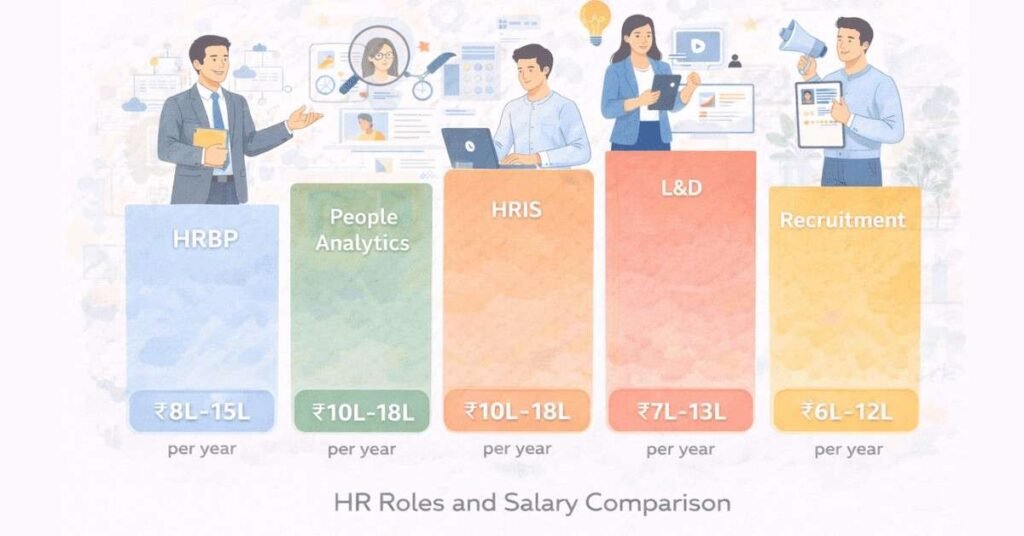
Talent Acquisition / Recruitment
Entry-Level Recruiter: ₹2.5-4.5 lakhs annually
Senior Recruiter: ₹6-10 lakhs annually
Talent Acquisition Manager: ₹8.4-12.2 lakhs annually
Director of Talent Acquisition: ₹6-8.6 lakhs annually (varies significantly by organization)
Factors Affecting TA Salaries: Volume of hiring (high-volume tech hiring pays premiums), specialization (executive search, niche technical roles), and metrics/results (recruiters who consistently fill difficult roles faster earn more).
Compensation and Benefits
C&B Analyst: ₹4-7 lakhs annually
Senior C&B Analyst: ₹8-14 lakhs annually
C&B Manager: ₹13-25 lakhs annually
Director of Compensation: ₹25-40 lakhs annually
Why C&B Pays Well: Compensation directly impacts organizational costs (requiring business acumen and analytical rigor), involves complex analytics and modeling, requires specialized knowledge (labor law, market data, statistics), and mistakes can be costly.
Experience Impact: C&B shows strong experience premium—professionals with 5-10 years earn ₹5.1 lakhs, while those with 10-15 years reach ₹6.3 lakhs.
Learning and Development (L&D)
L&D Coordinator: ₹3-6 lakhs annually
L&D Specialist: ₹6-12 lakhs annually
L&D Manager: ₹10.5-18 lakhs annually (with 9% projected growth)
Head of L&D: ₹18-30 lakhs annually
Value Drivers: Strategic L&D roles command premiums—designing leadership development, managing learning technology platforms, demonstrating measurable business impact.
HRIS and HR Technology
HRIS Analyst: ₹5-10 lakhs annually
Senior HRIS Analyst: ₹10-18 lakhs annually
HRIS Manager: ₹15-28 lakhs annually
Director of HRIS/HR Technology: ₹28-50 lakhs annually
Technical Premium: HRIS professionals with strong technical skills (programming, databases, integrations) earn 25-40% more than those with basic system administration skills.
People Analytics
HR Data Analyst: ₹4-8 lakhs annually
People Analytics Specialist: ₹9-18 lakhs annually
Senior Analytics Specialist: ₹15-28 lakhs annually
Head of People Analytics: ₹25-45 lakhs annually
Highest Growth: People Analytics shows fastest salary growth in HR, reflecting demand for data-driven insights. Professionals with advanced analytics skills (Python, R, machine learning) command top-tier compensation.
HR Business Partner (HRBP)
Junior HRBP: ₹10-16 lakhs annually
HRBP: ₹12-22 lakhs annually (with 10% projected growth)
Senior HRBP: ₹18-32 lakhs annually
Principal HRBP: ₹28-45 lakhs annually
Strategic Premium: HRBPs earn among the highest salaries in HR reflecting strategic scope, executive partnership, and broad responsibility.
Employee Relations and Compliance
ER Specialist: ₹6-12 lakhs annually
Senior ER Specialist: ₹10-18 lakhs annually
ER Manager: ₹15-25 lakhs annually
Compliance Manager: ₹18-30 lakhs annually
Compliance Premium: Deep labor law expertise and handling of sensitive investigations justify higher compensation.
DEI (Diversity, Equity, and Inclusion)
DEI Coordinator: ₹4-8 lakhs annually
DEI Specialist: ₹8-15 lakhs annually
DEI Manager: ₹18-35 lakhs annually
Chief Diversity Officer: ₹35-50+ lakhs annually
Emerging Field: DEI salaries are rising rapidly as organizations prioritize diversity initiatives.
HR Generalist
HR Generalist: ₹5-10 lakhs annually
Senior HR Generalist: ₹8-15 lakhs annually
HR Manager (Generalist): ₹11.1 lakhs average
Generalist Trade-off: Generalists gain broad exposure but typically earn 15-25% less than specialists at equivalent experience levels.
HR Salaries by City/Geography
Location significantly impacts HR compensation:
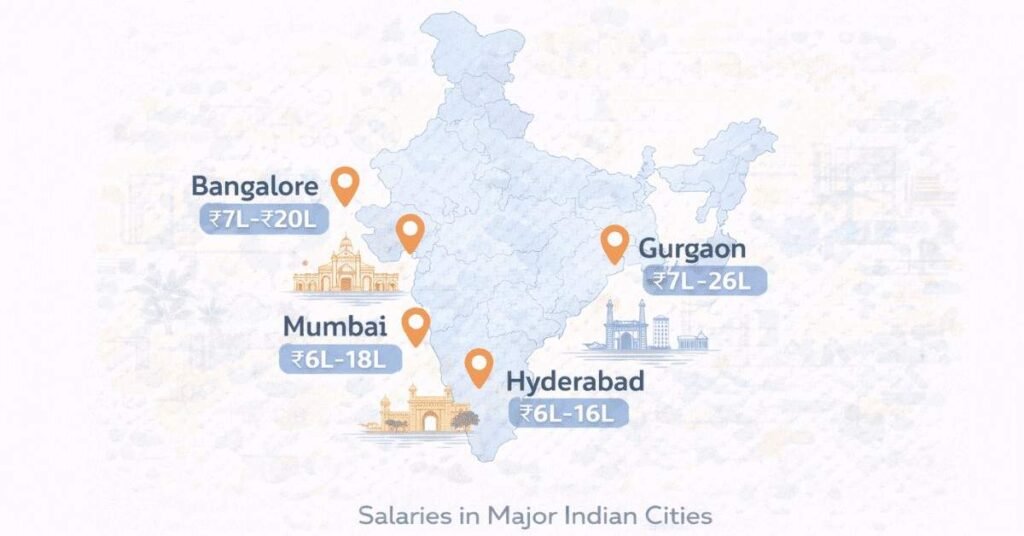
Tier-1 Metro Cities
Bangalore: Highest HR salaries in India averaging ₹12-15 lakhs for mid-level roles. Tech industry dominance and intense competition for HR talent drive premiums.
Gurgaon/NCR: Second-highest, averaging ₹11-14 lakhs for mid-level. MNC regional headquarters and consulting firms pay competitively.
Mumbai: ₹10-13 lakhs for mid-level. Financial services sector pays well, though high cost of living offsets some premium.
Pune: ₹9-12 lakhs for mid-level. Strong IT and manufacturing presence creates demand.
Hyderabad: ₹8-11 lakhs for mid-level. Growing tech sector and improving compensation.
Tier-2 Cities
Ahmedabad, Chandigarh, Jaipur, Coimbatore: ₹6-9 lakhs for mid-level roles—approximately 30-40% below tier-1 cities but with significantly lower cost of living.
Remote Work Impact
Remote HR roles increasingly offer metro-city salaries regardless of location, narrowing geographic disparities for roles that can be performed virtually (analytics, HRIS, some HRBP work).
HR Salaries by Industry Sector
Industry significantly influences HR compensation:
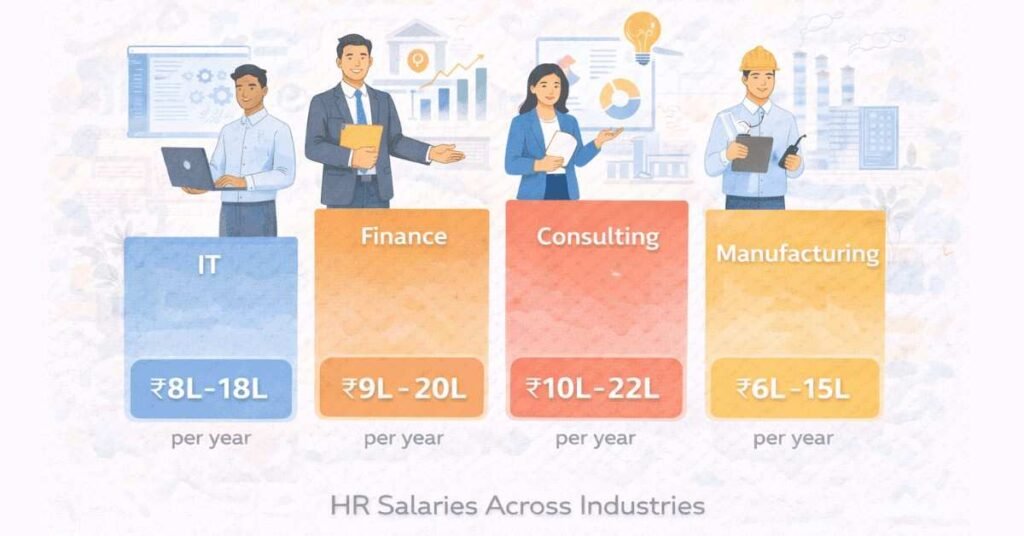
Highest-Paying Industries
Technology and IT Services: 25-40% above average. Tech companies view HR as strategic and compensate accordingly.
Financial Services (Banking, Insurance, Investment): 20-35% above average. Regulated environment requires sophisticated HR compliance and competitive talent markets drive premiums.
Consulting: 20-30% above average. Exposure to diverse clients and project-based work commands premiums.
Pharmaceuticals and Healthcare: 15-25% above average. Specialized talent needs and compliance complexity.
E-commerce and Startups: Highly variable. High-growth startups often pay competitive base plus significant equity. Later-stage startups pay like established tech companies.
Mid-Range Industries
Manufacturing: Near average. Large workforces create HR demand but traditional sector offers moderate compensation.
FMCG/Consumer Goods: Near average. Stable compensation with moderate growth.
Lower-Paying Industries
Education and Non-Profit: 20-40% below average. Mission-driven organizations often have constrained budgets.
Retail and Hospitality: 15-30% below average. High workforce volumes but typically lower HR compensation.
BPO/KPO: 10-25% below average for HR roles (though high-volume recruitment creates opportunities).
Factors That Increase Your HR Salary
Understanding what drives higher compensation helps you strategically build earning potential:
Education and Certifications
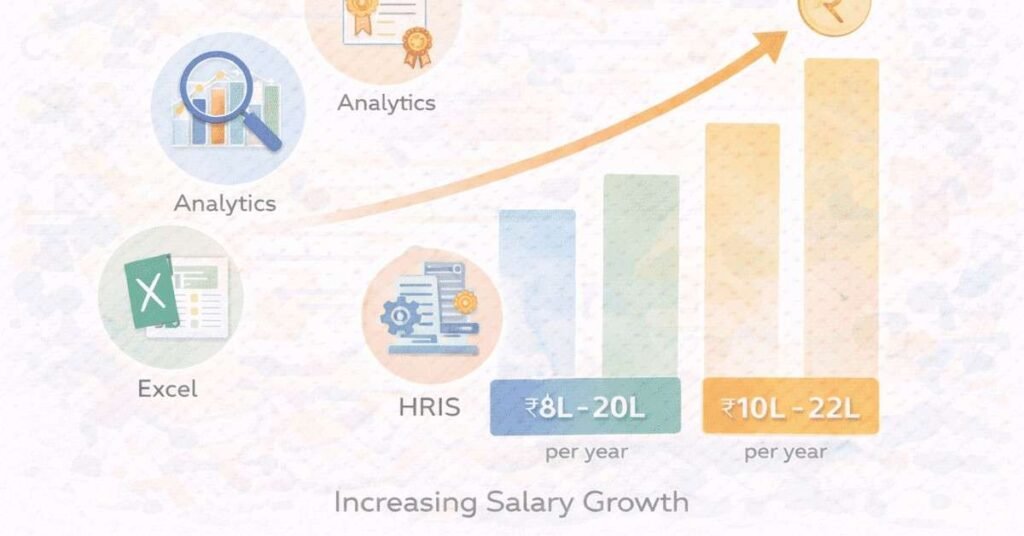
MBA/PGDM in HR: Adds ₹2-5 lakhs to starting salary and ₹5-10 lakhs at mid-career versus bachelor’s degree alone.
Professional Certifications: SHRM-CP/SCP adds ₹2-4 lakhs; specialized certifications (HRIS platforms, compensation, analytics) add ₹3-6 lakhs at senior levels.
Advanced Degrees: Master’s in Industrial-Organizational Psychology, Organizational Development, or relevant fields adds ₹4-8 lakhs premium.
Technical Skills
Data Analytics: Python, R, SQL, Tableau proficiency adds ₹5-12 lakhs for analytics-focused roles.
HRIS Platforms: Deep Workday, SAP SuccessFactors, or Oracle expertise adds ₹3-8 lakhs.
Advanced Excel: Strong Excel with statistical analysis adds ₹2-4 lakhs across roles.
Specialization
Narrow Expertise: Deep specialization in high-demand areas (equity compensation, people analytics, HR technology, executive compensation) commands 25-50% premiums over generalists
Company Size and Type
Large MNCs (5,000+ employees): Pay 25-40% more than mid-sized Indian companies for equivalent roles.
Public Companies: Stock compensation adds 15-30% to total compensation.
High-Growth Startups: Base may be competitive with equity potentially adding significant value.
Performance and Results
Demonstrated Impact: HR professionals who quantify business impact (reduced turnover by X%, improved time-to-hire by Y days, saved ₹Z through compensation optimization) negotiate 15-30% higher salaries.
Leadership and Management
People Management: Managing teams adds 15-25% compared to individual contributors.
Strategic Scope: Partnering with executive leadership adds 20-35% premiums.
Salary Negotiation Insights for HR Professionals
Armed with market data, how do you negotiate effectively?
Research Thoroughly: Use this guide plus company-specific data (Glassdoor, 6figr, AmbitionBox) to know your market value.
Consider Total Compensation: Look beyond base salary to bonuses (typically 10-30% of base for senior roles), equity (especially in startups), benefits (PF, insurance, learning budgets), and flexibility (remote work, flexible hours).
Timing Matters: Negotiate at offer stage (strongest leverage), during annual reviews (with documented performance), and when taking on expanded responsibilities.
Justify with Value: Frame requests around impact you’ll deliver, specialized skills you bring, and market data supporting your ask—not personal financial needs.
Know Your Walk-Away Point: Understand minimum acceptable compensation before negotiating.
Consider Long-Term Growth: Sometimes accepting slightly lower base for better learning, brand name, or career trajectory makes sense early in career.
Future HR Salary Trends (2026-2027)
What can HR professionals expect in coming years?
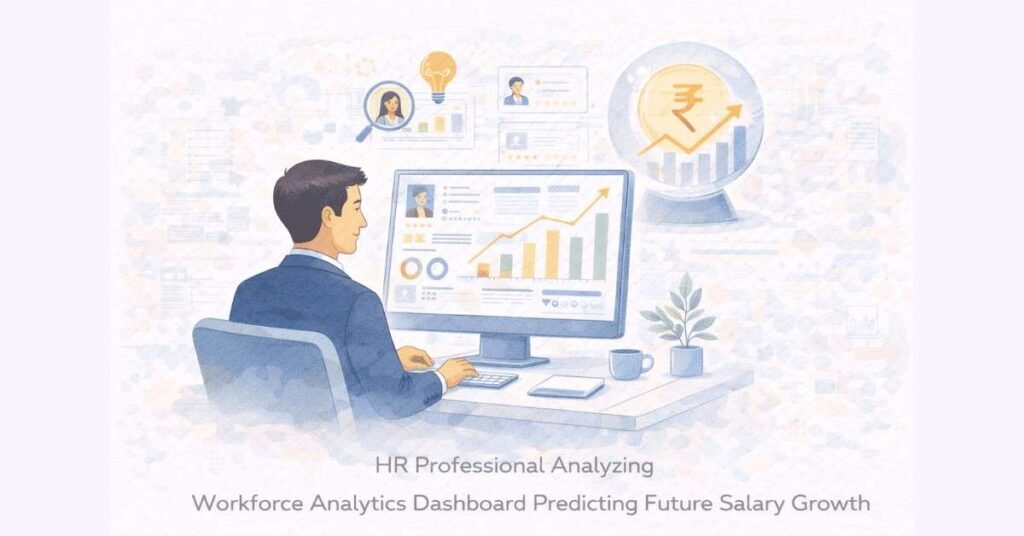
Overall Growth: HR salaries projected to grow 6-12% annually, outpacing general inflation.
Fastest-Growing Roles: People Analytics (12-15% growth), HRIS/HR Technology (10-12%), HRBP (10%), and DEI (10-12%) showing strongest growth.
Moderate Growth: Traditional HR roles (generalist, coordinator) growing 6-8%—solid but slower than specialized roles.
Experience Premium Increasing: Gap between experienced and entry-level compensation widening as organizations value proven expertise.
Skills Premium: Technical skills (data, HRIS, analytics) commanding growing premiums as HR becomes more tech-enabled.
Remote Salary Arbitrage: Remote work increasingly allows tier-2 city residents to earn tier-1 salaries, though some companies adjust compensation by location.
Conclusion: Strategic Salary Planning for Your HR Career
HR offers financially viable, rewarding career progression from entry-level salaries of ₹2-3 lakhs to senior leadership compensation exceeding ₹50-70 lakhs. Strategic choices dramatically impact earning trajectory:
Early Career (0-5 years): Focus on learning and capability building over marginal salary differences. The foundation you build determines mid-career trajectory.
Mid-Career (5-12 years): Specialize strategically in high-growth, high-value areas. This phase determines whether you plateau at ₹12-15 lakhs or accelerate to ₹25-35 lakhs.
Senior Career (12+ years): Position yourself for strategic leadership roles through business acumen, executive relationships, and demonstrated impact. CHRO compensation ₹35-70 lakhs+ rewards this positioning.
Remember: Salary data provides benchmarks, but your unique combination of skills, experience, performance, and value determines your actual compensation. Use this guide as starting point for informed career planning and confident negotiation.