
HR Interview Basics
Table of Contents
Blog Content
Imagine this: You’ve just received an email inviting you for an interview. Your heart races, but then you notice something—”HR Round scheduled for tomorrow.” Your first thought? “What exactly is an HR interview, and is it different from other interviews?”
If you’re feeling confused, you’re not alone. Thousands of candidates ask this question every year, and the good news is that understanding HR interviews isn’t complicated once you break it down into simple pieces.
Why This Guide Matters
The HR round is often your first interaction with a company, which means it’s your golden opportunity to make a lasting first impression. Unlike technical interviews where you’re evaluated on your problem-solving skills, HR interviews focus on who you are as a person—your communication style, your values, and whether you fit the company’s culture.
What Exactly is an HR Interview?
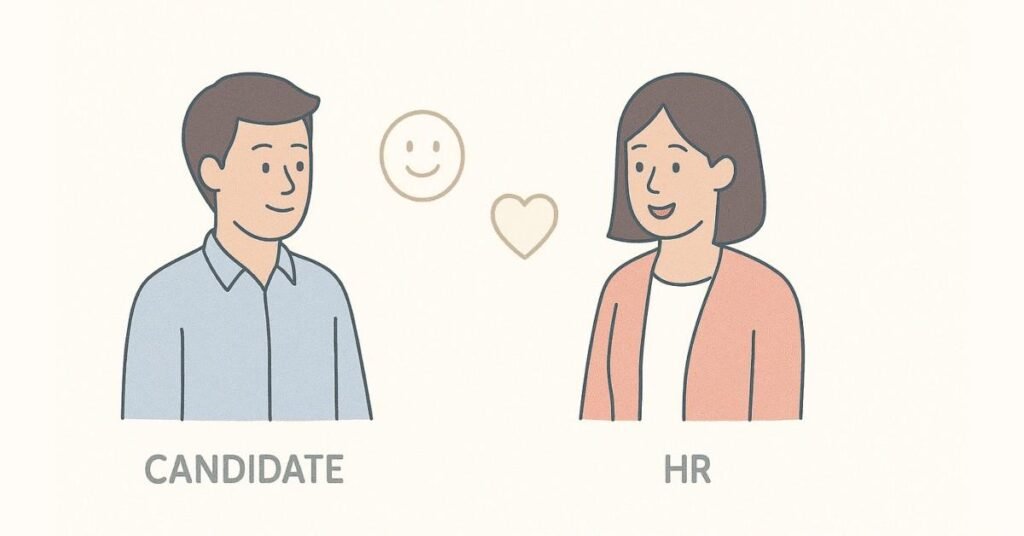
An HR interview is a conversation between you and a representative from the company’s Human Resources department. Think of it as a “meet and greet” session where the HR professional gets to know you better beyond your resume.
The main objective? The HR department wants to understand:
- Whether you have the soft skills needed for the role
- How well you communicate and express your ideas
- Your personality and work ethics
- Whether your values align with the company’s culture
- How you handle pressure and challenging situations
Real-World Example:
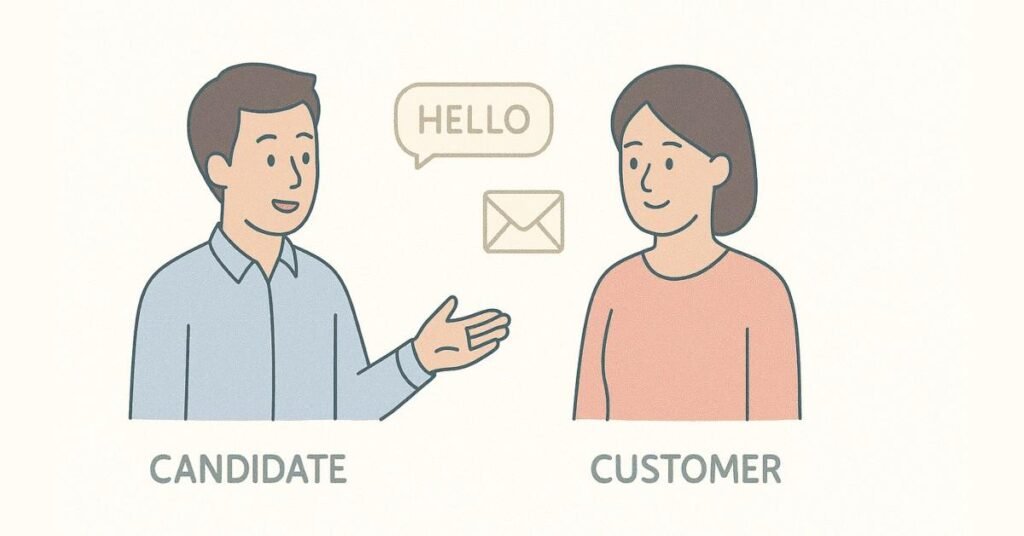
Imagine you’re applying for a sales position at a tech company. During the HR round, they won’t ask you technical questions about software development (that comes later). Instead, they’ll ask: “Tell me about a time when you handled a difficult customer” or “Why are you interested in working with us?” They’re trying to understand if you’re genuinely passionate about sales and if you can represent their brand professionally.
How Does the HR Interview Differ From Other Interview Rounds?
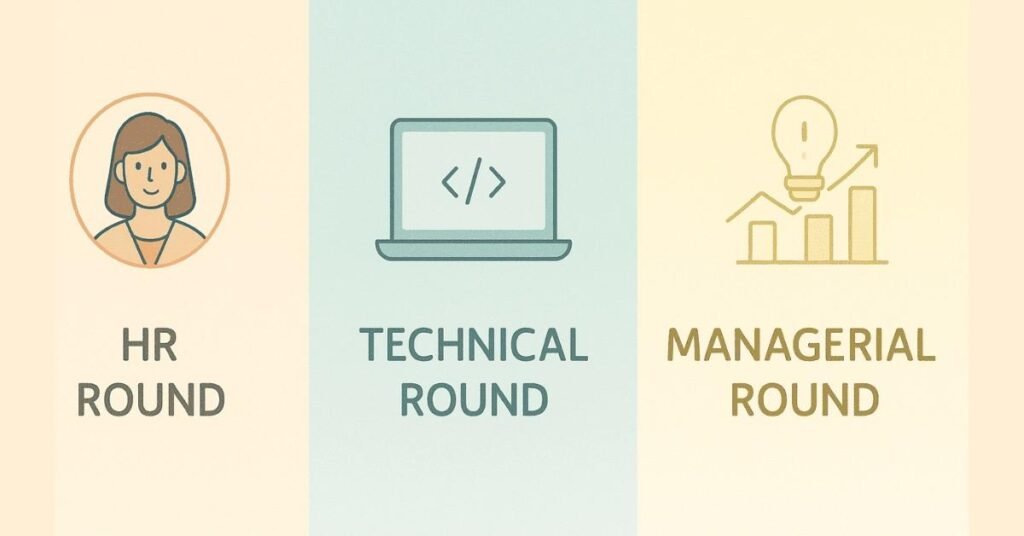
This is where many candidates get confused. Most companies conduct multiple rounds of interviews, and each has a different purpose.
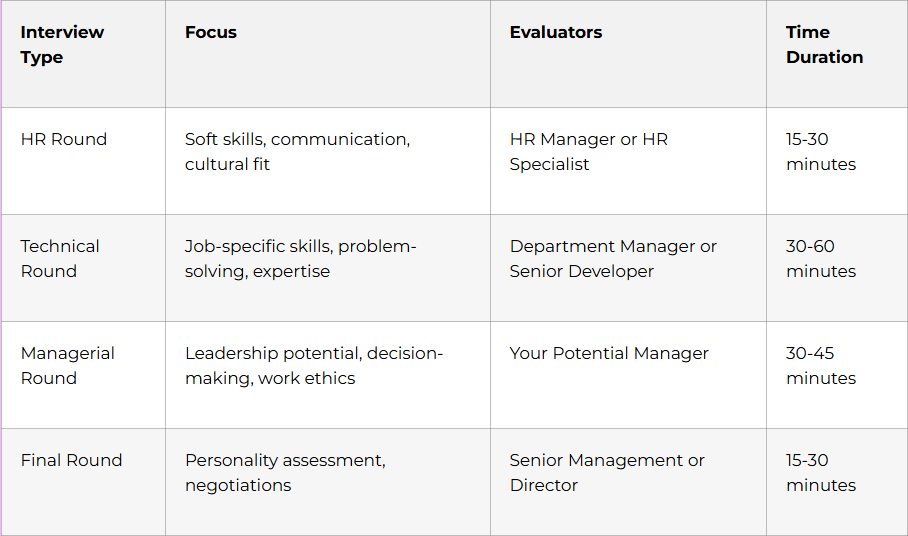
Why This Matters: The HR round is usually your first checkpoint. If you can’t communicate effectively or if your values don’t match the company’s culture, you might not even get to the technical round—no matter how skilled you are.
Where Does the HR Interview Fit in the Hiring Process?
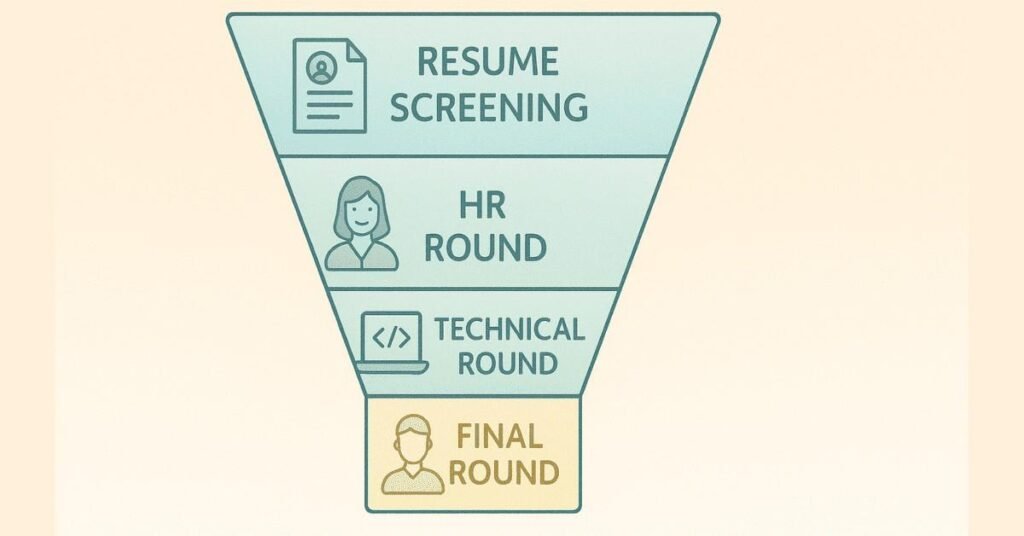
Think of a typical hiring process as a funnel. It starts wide at the top and gets narrower as you move down:
Stage 1 (Initial Screening): Your resume gets reviewed (automated or by HR team)
Stage 2 (HR Round): You have a phone call or video interview with HR ← You are here
Stage 3 (Technical/Skill-Based Round): Specific skills are tested
Stage 4 (Managerial Round): Your potential manager evaluates you
Stage 5 (Final Round): Senior leadership makes the final decision
Stage 6 (Offer & Negotiation): Job offer is presented
Most companies place the HR round early because they want to filter out candidates who might not be cultural fits before investing time in technical interviews. This saves both their time and yours.
What Does an HR Interviewer Actually Look For?
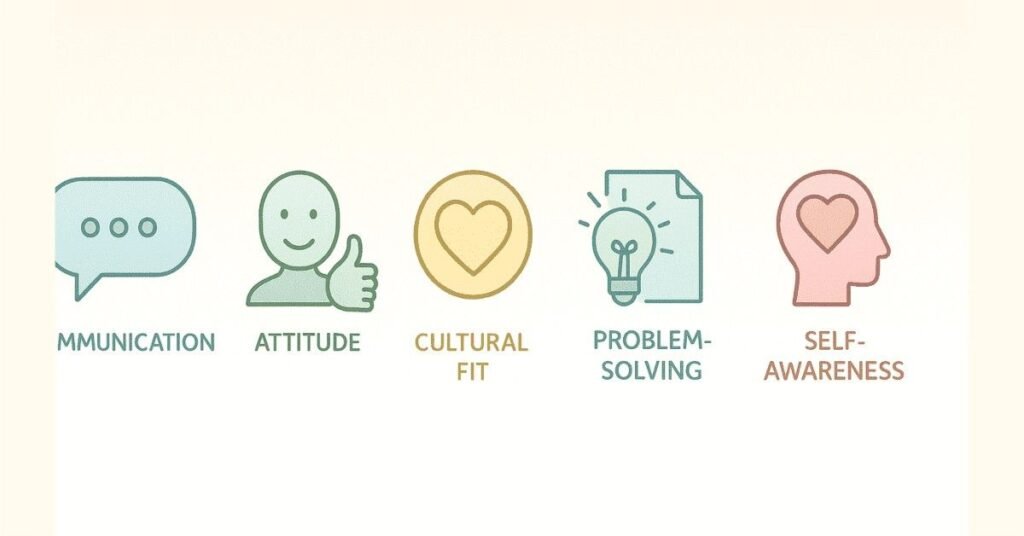
HR professionals aren’t trying to trick you. They’re evaluating you on these key competencies:
- Communication Skills
Can you express yourself clearly and concisely? When you speak, do people understand what you’re saying? HR professionals listen carefully to how you construct sentences, whether you use professional language, and if you can explain complex ideas simply.
Real Scenario: An HR manager asks, “Why do you want to join our company?”
- Weak Answer: “Because you’re a big company and I need a job.”
- Strong Answer: “I’ve followed your company’s work in sustainable technology, and I’m impressed by your 2024 environmental initiative. My background in project management aligns perfectly with your growth plans, and I’m excited to contribute to your mission.”
Notice the difference? One is vague; the other shows research, passion, and alignment.
- Reliability and Attitude
Will you show up on time? Will you follow instructions? HR professionals observe your punctuality, how you handle mistakes, and your willingness to improve. They’re looking for someone who takes responsibilities seriously. - Cultural Fit
Does your personality mesh with the company’s values? If the company values innovation and you’re someone who prefers doing things the traditional way, there might be a mismatch. HR tries to understand this early on. - Problem-Solving Approach
When faced with a challenge, how do you think through it? HR might ask situational questions like, “What would you do if you had conflicting instructions from two managers?” They want to see your logical thinking process. - Self-Awareness
Do you know your strengths and weaknesses? Can you talk honestly about areas where you need to improve? People who can acknowledge their limitations and work on them are usually more successful in their roles.
What is the Typical Duration and Format of an HR Interview?
Duration: Most HR interviews last between 15 to 30 minutes, though some can extend to 45 minutes.
Formats You Might Encounter:
- Phone Call: Often the first HR screening, usually quick (15 minutes)
- Video Call: More common now, allows the interviewer to assess body language and communication (20-30 minutes)
- In-Person Interview: Face-to-face meetings, usually for final or follow-up rounds (30-45 minutes)
- Group Interview: Multiple candidates interviewed together, less common but used by some companies
What to Expect Timeline-Wise:
The interview typically follows this pattern:
- Opening (2-3 minutes): Introductions and small talk to ease tension
- Your Introduction (2-3 minutes): You introduce yourself
- Main Questions (10-20 minutes): HR asks 5-8 questions
- Your Questions (3-5 minutes): You ask questions about the role or company
- Closing (1-2 minutes): Next steps are discussed
Pro Tip: Time management matters. If an HR professional asks you to tell them about yourself and you speak for 8 minutes straight, they’ll get bored. Aim for answers that are clear, concise, and around 2-3 minutes each.youtube
The Self-Introduction Guide Format (Critical for HR Interviews)
The “Tell me about yourself” question is asked in approximately 90% of HR interviews. This is your make-or-break moment. Let me show you a proven format that works:
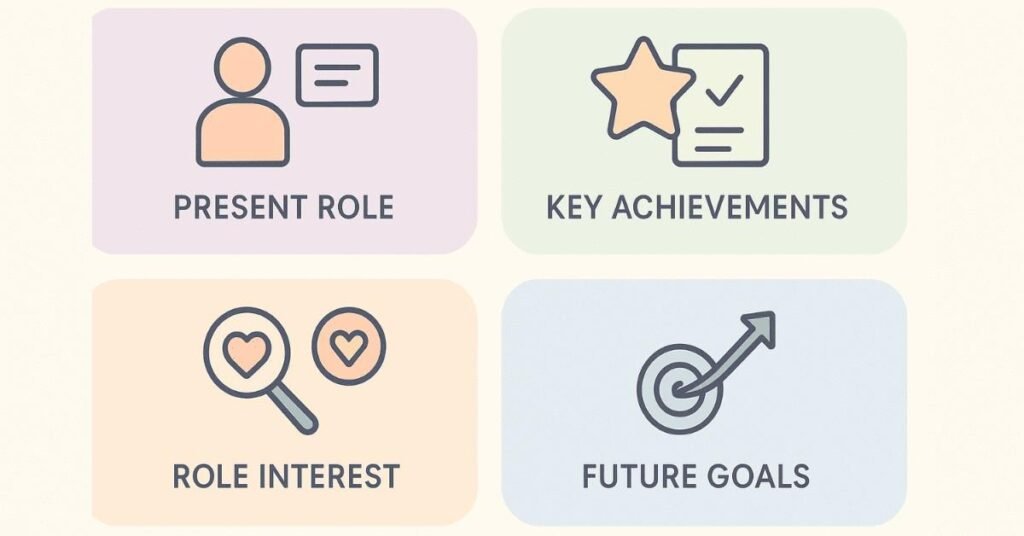
Structure Your Answer in 4 Sections:
Section 1: Present Role & Experience (30 seconds)
Start with your current situation and relevant experience. Keep it simple and directly related to the role you’re applying for.
Example: “I’m currently working as a Social Media Executive at XYZ Marketing Company, where I’ve been managing social campaigns for B2B clients for the past 2 years.”
Section 2: Key Achievements & Skills (1 minute)
Highlight 2-3 accomplishments that directly relate to the job you’re applying for. Use numbers when possible to make your impact tangible.
Example: “In my current role, I’ve increased our client engagement rate by 45% through targeted content strategies and improved conversion rates by 30%. I’m also skilled in Google Analytics, content planning, and team coordination.”
Section 3: Why This Role Interests You (45 seconds)
Connect your experience and skills to why this position excites you. Show that you’ve done research about the company and understand how you can add value.
Example: “When I learned about this Digital Marketing Manager role at Frontlines Edutech, I was immediately interested because your company’s focus on educational technology aligns with my belief that technology should democratize learning. I see an opportunity to leverage my content and strategy expertise to help your team reach more students.”
Section 4: What You’re Looking For (30 seconds)
End on a forward-looking note about career growth or values alignment.
Example: “I’m looking for a role where I can grow my leadership skills while working with a team that values innovation and collaboration. I’m confident that this opportunity will help me achieve both.”
Complete Self-Introduction Example:
“I’m currently working as a Social Media Executive at XYZ Marketing Company, where I’ve been managing social campaigns for B2B clients for the past 2 years. In my current role, I’ve increased our client engagement rate by 45% through targeted content strategies and improved conversion rates by 30%. I’m also skilled in Google Analytics, content planning, and team coordination.
When I learned about this Digital Marketing Manager role at Frontlines Edutech, I was immediately interested because your company’s focus on educational technology aligns with my belief that technology should democratize learning. I see an opportunity to leverage my content and strategy expertise to help your team reach more students.
I’m looking for a role where I can grow my leadership skills while working with a team that values innovation and collaboration. I’m confident that this opportunity will help me achieve both.”
Total Time: 2.5-3 minutes
Why This Format Works:
- It’s organized: The interviewer can follow your story easily
- It’s relevant: You’re not rambling about irrelevant details
- It shows preparation: You’ve thought about what matters to the role
It’s memorable: Stories are more memorable than lists
Key Competencies That HR Interviews Evaluate
Think of HR interviews as assessing your “people readiness.” Here are the specific areas they evaluate:
Communication Clarity (Most Important)
Can you express complex ideas simply? Do you listen when others speak?
Reliability
Do you follow through on commitments? Are you punctual?
Teamwork
Can you work effectively with different types of people? Do you collaborate well?
Adaptability
Can you handle change? Do you learn from mistakes?
Professionalism
Do you maintain professional standards in speech and behavior?
Emotional Intelligence
Can you understand and manage your emotions? Can you empathize with others?
Common Mistakes to Avoid in HR Interviews
Based on 2025 interview trends, here are the biggest mistakes candidates make that HR professionals notice immediately.
- Speaking Too Much or Too Little
- Problem: You either ramble on for 5 minutes or give one-word answers
- Solution: Aim for 2-3 minute answers. If the interviewer wants more, they’ll ask follow-up questions
- Being Too Casual or Too Formal
- Problem: You’re either acting like you’re at a family dinner or like a robot
- Solution: Be professional but personable. Smile, maintain eye contact (if video), and speak naturally
- Criticizing Previous Employers
- Problem: You say negative things about your past boss or company
- Solution: Always frame past experiences positively, even if it was difficult
- Showing Up Unprepared
- Problem: You haven’t researched the company or the role
- Solution: Spend 30 minutes before the interview learning about the company’s mission, values, and recent news
- Not Asking Questions
- Problem: When asked “Do you have questions for us?” you say no
- Solution: Have 2-3 thoughtful questions ready (more on this later in the guide)
- Appearing Desperate for Any Job
- Problem: You make it seem like you need this job, not that you want it
- Solution: Show enthusiasm for THIS specific role, not just any job
- Ignoring Body Language
- Problem: Poor posture, avoiding eye contact, fidgeting with your phone
Solution: Sit upright, maintain open body language, and show genuine interest through your expressions.
Expected Questions in the HR Interview (Brief Overview)
While we’ll cover these in detail in later sections, here’s what to expect:
- “Tell me about yourself”
- “Why do you want to join our company?”
- “What are your strengths?”
- “What are your weaknesses?”
- “Tell me about a time when you…”
- “Where do you see yourself in 5 years?”
- “How do you handle stress?”
“Do you have questions for us?
Timeline Expectations: How Soon Will You Know the Results?
After your HR interview, here’s what typically happens:
- Immediately after: HR thanks you and might give you a vague timeline
- Within 24-48 hours: HR usually makes an initial decision on whether to proceed
- If moving forward: You’ll get a call or email for the next round
- If not selected: You might receive a polite rejection email (though sadly, many companies don’t send these)
Note: If you haven’t heard back in 7 days, it’s acceptable to send a polite follow-up email expressing your continued interest.youtube
Your Action Plan Before Your HR Interview
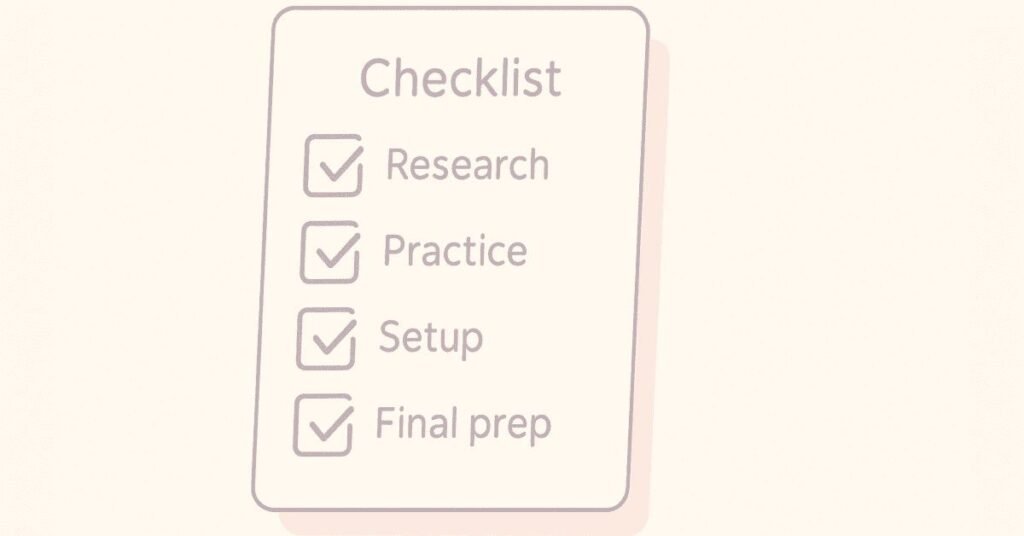
Here’s what you should do before stepping into that interview room:
Research Phase (30 minutes)
- Visit the company’s official website and understand their mission
- Check their LinkedIn company page for recent news
- Read about the role on their careers page
- Look for company values or culture statements
Preparation Phase (45 minutes)
- Write out your self-introduction following the format above
- Practice your introduction 3-5 times until it sounds natural
- Prepare 3-5 stories about your achievements using the STAR method (Situation, Task, Action, Result)
- List 2-3 questions you want to ask the interviewer
Technical Setup (15 minutes)
- Test your internet connection
- Set up your camera and microphone
- Arrange your background (clean, professional)
- Charge your phone or device
Final Checklist (10 minutes)
- Have a pen and paper ready for notes
- Wear professional clothes appropriate for the role
- Get your resume and the job description handy
- Clear your desk of distractions