
HR CAREER PATHS AND SPECIALIZATIONS
Table of Contents
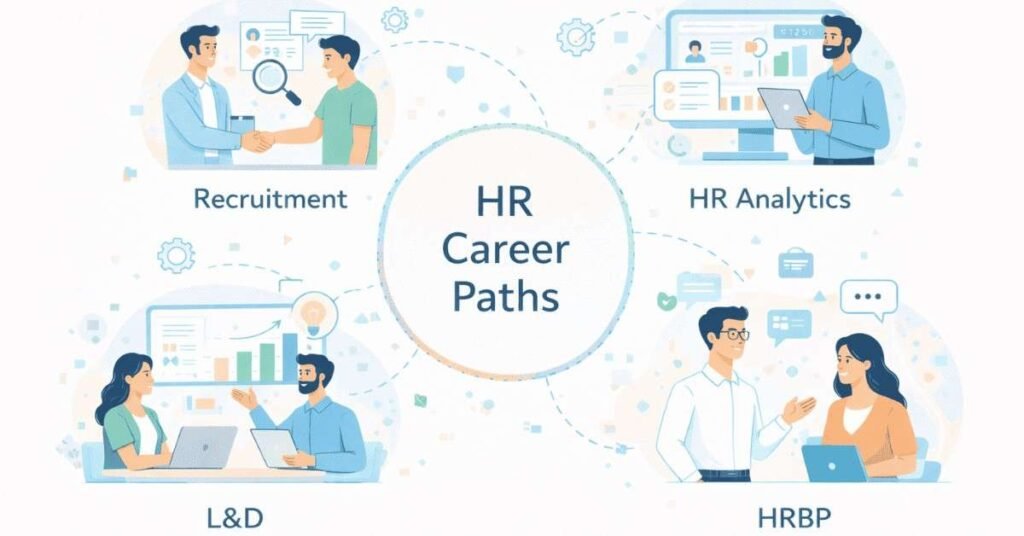
One of the most appealing aspects of Human Resources is that it’s not just one career—it’s a collection of distinct career paths, each offering unique challenges, rewards, and growth opportunities. Whether you’re analytically inclined, love working with technology, enjoy teaching and developing others, or prefer strategic business partnership, HR has a specialization that matches your natural strengths.
This guide explores the major HR career paths available in India, helping you understand what each specialization involves, the skills required, earning potential, and how to determine which path aligns best with your interests and capabilities.
Understanding HR Career Trajectories
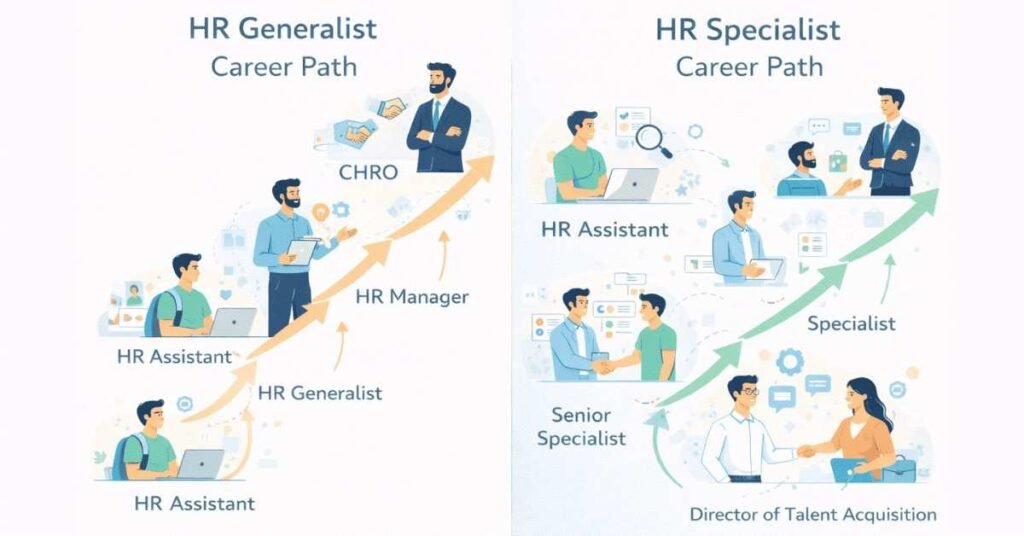
Before diving into specializations, it’s helpful to understand the two primary career trajectories in HR:
The Generalist Path: HR Generalists maintain broad exposure across all HR functions. You might handle recruitment one day, employee relations the next, and work on compensation matters the third. This path suits smaller organizations where HR teams wear multiple hats and professionals who enjoy variety and breadth over depth.
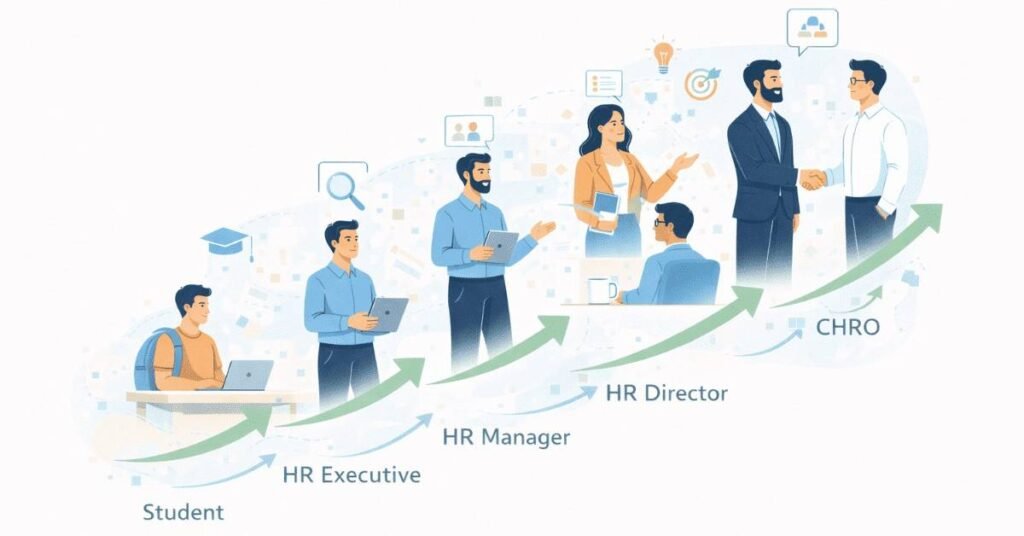
Generalists typically progress from HR Executive to HR Manager to Senior HR Manager or HR Head roles, taking on increasing scope and leadership responsibility. The advantage is flexibility—you understand how all HR pieces connect and can pivot between different functions. The challenge is that you may not develop deep expertise in any single area.
The Specialist Path: Specialists develop deep expertise in specific HR domains. You become the go-to expert in your area—whether that’s talent acquisition, learning and development, compensation, or HR technology. This path suits larger organizations with dedicated functional teams and professionals who prefer depth and mastery.
Specialists typically progress within their function—for example, from Recruiter to Senior Recruiter to Talent Acquisition Manager to Head of Talent Acquisition. The advantage is deep expertise that commands premium compensation and recognition. The potential challenge is narrower career options if you want to change focus areas later.
Many HR careers blend both approaches. You might start as a generalist to learn the breadth of HR, specialize mid-career to develop expertise, then return to generalist leadership roles like CHRO that require comprehensive HR understanding
Talent Acquisition and Recruitment
Talent acquisition specialists focus on finding, attracting, and hiring the best candidates for their organizations.
Core Responsibilities: Your day involves sourcing candidates through job boards, LinkedIn, referrals, and creative channels, screening resumes and conducting phone screens to assess fit, coordinating and conducting interviews with hiring teams, managing candidate relationships and experience throughout the process, negotiating offers and closing candidates, analyzing recruiting metrics like time-to-fill and cost-per-hire, and building talent pipelines for future needs.
Required Skills: Successful recruiters are excellent communicators who can engage candidates and stakeholders, strong relationship builders who maintain extensive networks, persuasive sellers who can attract passive candidates, organized multitaskers managing multiple open positions simultaneously, tech-savvy with ATS platforms and sourcing tools, and business-minded to understand what roles require and why they matter.
Career Progression: Entry-level Recruitment Coordinators (₹2-4 lakhs) progress to Recruiters/Talent Acquisition Specialists (₹4-10 lakhs), then Senior Recruiters (₹10-18 lakhs), Talent Acquisition Managers (₹15-25 lakhs), and eventually Heads of Talent Acquisition or Directors (₹25-50+ lakhs).
Why Choose This Path: Talent acquisition suits you if you enjoy networking and meeting new people, thrive in fast-paced, target-driven environments, like variety (every candidate and role is different), want to see immediate results (successful hires), and are excited by competitive challenges (beating competitors for candidates).
Industry Considerations: Tech companies and startups offer the highest salaries and most aggressive hiring, but also the most pressure. Consulting firms provide exposure to diverse industries and senior-level recruiting. IT services companies offer high-volume recruiting experience. Consider which environment matches your preferences.

Learning and Development (L&D)
L&D professionals focus on building employee capabilities and organizational effectiveness through training and development programs.
Core Responsibilities: You’ll identify training needs through assessments and stakeholder discussions, design learning programs and curricula for various topics, develop training content including presentations, videos, and e-learning modules, deliver training sessions or coordinate external trainers, implement and manage learning management systems (LMS), measure training effectiveness through assessments and feedback, develop leadership development programs, create career development frameworks, and partner with business leaders on capability building.
Required Skills: Strong L&D professionals are passionate teachers who enjoy helping others grow, creative designers who create engaging learning experiences, strong presenters comfortable in front of groups, knowledgeable about adult learning principles and instructional design, analytical about measuring learning effectiveness and ROI, technically proficient with LMS platforms and content development tools, and consultative in understanding business needs and designing relevant solutions.
Career Progression: Entry-level L&D Coordinators (₹3-5 lakhs) advance to Training Specialists (₹5-9 lakhs), Learning and Development Managers (₹10-18 lakhs), Senior L&D Managers (₹15-25 lakhs), and ultimately Chief Learning Officers or Heads of L&D (₹22-40 lakhs).
Why Choose This Path: L&D is rewarding if you’re passionate about education and developing people, enjoy creative work designing learning experiences, like variety in content (technical skills, soft skills, leadership), want to see long-term impact on people’s careers, and appreciate mix of strategic planning and hands-on delivery.
Specialization Options: Within L&D, you might focus on instructional design (creating content), training delivery (facilitating sessions), leadership development (executive coaching and programs), technical training (job-specific skills), or organizational development (systemic capability building).

Compensation and Benefits (C&B)
Compensation and benefits specialists design and manage pay structures, incentive programs, and benefits offerings.
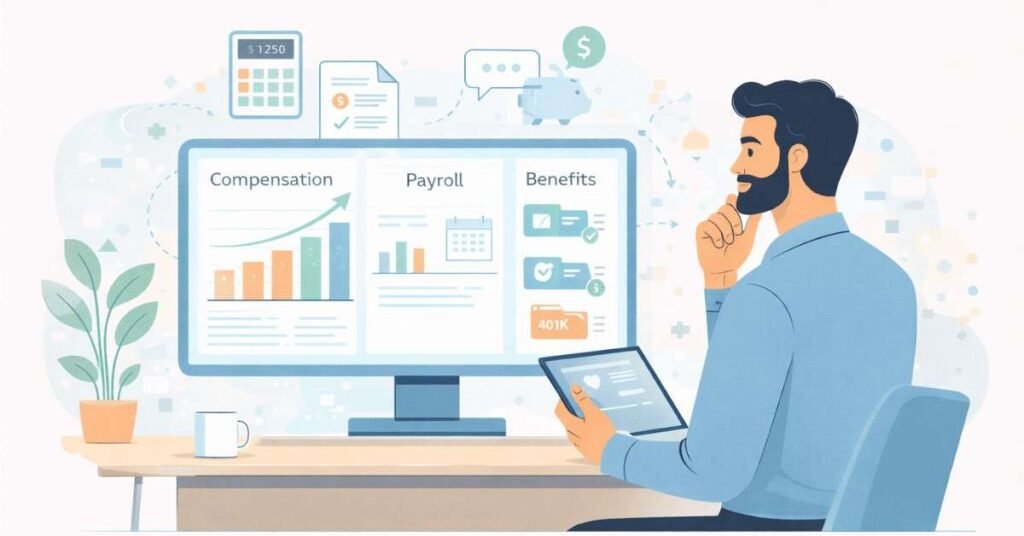
Core Responsibilities: Your work includes conducting salary benchmarking research against market data, designing salary structures with pay grades and ranges, managing benefits programs (health insurance, leave policies, retirement), administering variable pay and bonus programs, handling equity compensation and stock options in startups, conducting job evaluations and leveling, ensuring pay equity across demographics, advising managers on compensation decisions, preparing compensation budgets and forecasts, and ensuring compliance with wage and benefits regulations.
Required Skills: Top compensation professionals have strong analytical and Excel skills for data analysis, attention to detail ensuring accuracy in sensitive pay matters, understanding of statistics and data interpretation, knowledge of labor laws regarding wages and benefits, discretion handling confidential salary information, communication skills to explain complex compensation concepts, and business acumen to balance market competitiveness with budget constraints.
Career Progression: Entry-level Compensation Analysts (₹3-6 lakhs) move to Compensation Specialists (₹6-12 lakhs), Compensation and Benefits Managers (₹12-20 lakhs), Senior C&B Managers (₹18-30 lakhs), and Directors of Total Rewards (₹25-45 lakhs).
Why Choose This Path: C&B fits you if you love working with numbers and data, enjoy the precision of analytical work, are interested in behavioral economics (how pay motivates), want significant business impact (compensation is major expense), and value specialization (C&B is highly specialized).
Industry Considerations: Financial services companies often pay premium for C&B expertise due to complex compensation structures. Tech startups need equity compensation expertise. Large MNCs offer exposure to global compensation programs.
HR Information Systems (HRIS)
HRIS professionals manage HR technology platforms and leverage data for insights and efficiency.
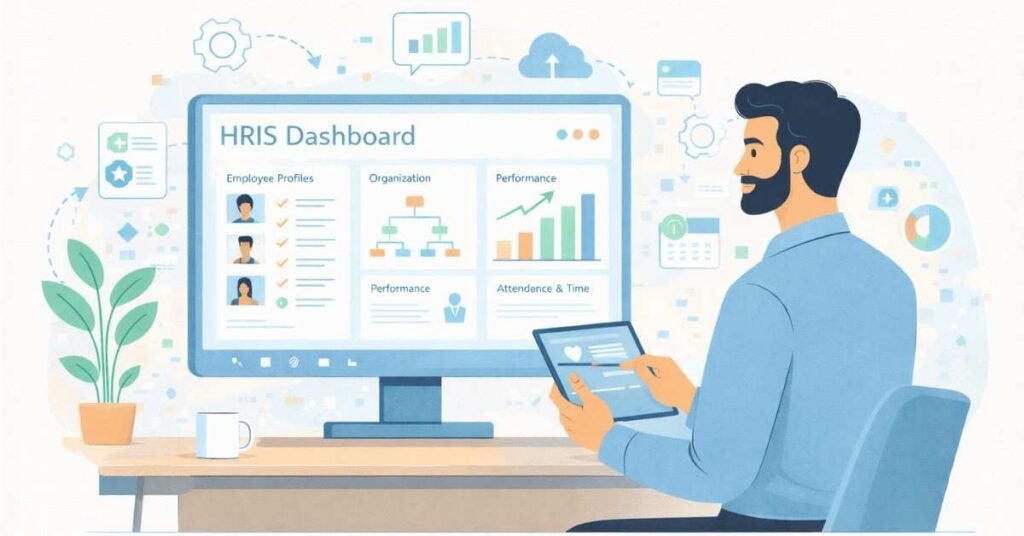
Core Responsibilities: You’ll implement and configure HRIS platforms (Workday, SAP SuccessFactors, Zoho People, Darwinbox), maintain HR data integrity and security, create reports and dashboards tracking HR metrics, integrate HR systems with payroll and other platforms, train HR teams and employees on system usage, troubleshoot technical issues and coordinate with vendors, optimize system workflows for efficiency, manage system upgrades and new feature rollouts, and ensure compliance with data privacy regulations.
Required Skills: Successful HRIS professionals are technically proficient with databases, systems, and basic programming, analytical in understanding data structures and reports, detail-oriented ensuring data accuracy, problem-solvers who can troubleshoot technical issues, communicators who bridge HR and IT perspectives, project managers implementing complex system changes, and continuous learners keeping up with HR technology evolution.
Career Progression: HRIS Coordinators (₹3-6 lakhs) advance to HRIS Analysts (₹6-12 lakhs), HRIS Managers (₹12-20 lakhs), Senior HRIS Managers or Directors (₹18-35 lakhs), and in some organizations VP of HR Technology or Chief People Technology Officer (₹30-80+ lakhs).
Why Choose This Path: HRIS suits you if you enjoy technology and systems thinking, like solving puzzles and technical challenges, want to blend HR knowledge with technical skills (unique combination), appreciate that your work enables all other HR functions, and value the strong job security (HRIS skills are in high demand).
Emerging Opportunities: With organizations adopting sophisticated HR tech stacks, HRIS professionals with expertise in specific platforms (especially Workday and SAP SuccessFactors) command premium salaries.
Employee Relations and HR Compliance
Employee Relations (ER) specialists handle workplace relationships, conflicts, and ensure legal compliance.
Core Responsibilities: Your role involves managing employee grievances and complaints through fair processes, conducting workplace investigations into misconduct, harassment, or policy violations, mediating conflicts between employees or between employees and managers, handling disciplinary actions and performance improvement plans, managing terminations and exit processes, conducting exit interviews to understand departure reasons, ensuring compliance with labor laws and regulations, developing and implementing HR policies, maintaining employee relations climate and engagement, and handling union relations in unionized environments.
Required Skills: Strong ER professionals possess excellent interpersonal skills and emotional intelligence, impartiality and fairness in handling sensitive situations, thorough knowledge of employment laws and regulations, investigation and documentation skills, ability to handle difficult conversations with empathy but firmness, conflict resolution and mediation capabilities, strong judgment often with incomplete information, emotional resilience to handle workplace conflicts, and discretion with confidential employee matters.
Career Progression: ER Coordinators (₹3-6 lakhs) advance to Employee Relations Specialists (₹6-12 lakhs), ER Managers (₹12-20 lakhs), Senior ER Managers (₹18-28 lakhs), and Directors of Employee Relations or HR Compliance (₹25-40 lakhs).
Why Choose This Path: Employee Relations fits you if you’re passionate about fairness and justice in workplaces, can remain calm under pressure and emotional situations, enjoy detective work (investigations require careful fact-finding), want to directly improve workplace culture and relationships, are comfortable being the “bad cop” when necessary, and value being the trusted advisor employees turn to.
Regulatory Focus: In India, ER professionals must navigate complex labor laws including the Industrial Disputes Act, Shops and Establishments Acts (varying by state), and regulations around PF, ESI, and gratuity. HR Compliance roles earning ₹18-25 lakhs focus heavily on ensuring organizational adherence to these regulations.
Industry Considerations: Manufacturing companies with unionized workforces need strong labor relations expertise. IT services companies handle high-volume employee relations due to large workforces. Startups often combine ER with generalist HR roles.

HR Business Partner (HRBP)
HRBPs serve as strategic partners to business leaders, aligning HR strategy with business objectives.
Core Responsibilities: You’ll partner closely with business unit leaders to understand their goals and challenges, provide strategic guidance on organizational design and structure, advise on talent strategy, workforce planning, and succession planning, lead change management initiatives during reorganizations or transformations, use HR data and analytics to solve business problems, coach leaders on people management and team effectiveness, drive employee engagement within your business units, balance employee advocacy with business needs, translate business strategy into people implications, and influence senior leaders on people decisions.
Required Skills: Successful HRBPs have strong business acumen beyond HR knowledge, strategic thinking and problem-solving abilities, relationship-building skills across all organizational levels, influence skills without direct authority over business leaders, consulting mindset to diagnose issues and recommend solutions, comprehensive HR knowledge across all functions, data literacy to use analytics in decision-making, change management expertise, political savvy to navigate complex organizational dynamics, and confidence to challenge senior leaders when appropriate.
Career Progression: Junior HRBPs (₹8-14 lakhs) advance to HRBPs (₹12-22 lakhs), Senior HRBPs (₹18-32 lakhs), Principal HRBPs or HRBP Directors (₹28-45 lakhs), and often to VP HR or CHRO roles (₹35-60+ lakhs).
Why Choose This Path: The HRBP role suits you if you love understanding business operations and strategy, enjoy consulting and advising senior leaders, want broad impact across an organization, thrive on variety (every business challenge is different), value strategic work over tactical execution, and can handle ambiguity and complex situations.
Path to Leadership: Many CHROs built their careers through HRBP roles because the position develops comprehensive business understanding, exposure to senior leadership decision-making, experience driving organizational change, and credibility as strategic partners rather than just HR administrators.
Preparation: HRBP roles typically require 5-10 years of HR experience with exposure to multiple HR functions. You’ll need to demonstrate business impact, not just HR activities. Consider pursuing generalist roles or rotating through different HR specializations before targeting HRBP positions.
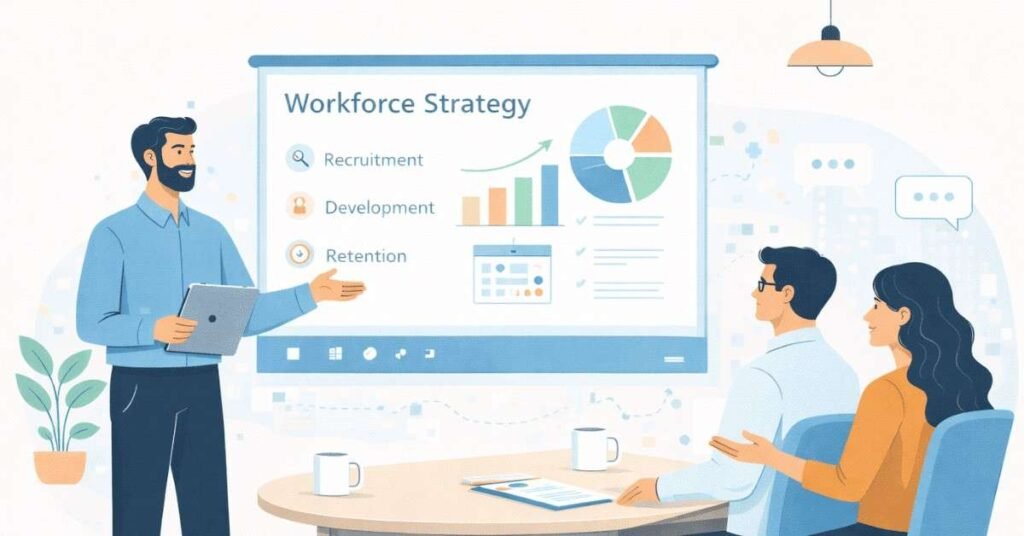
People Analytics and HR Data Analysis
People Analytics professionals use data science and analytics to inform HR decisions and business strategy.
Core Responsibilities: Your work involves analyzing workforce metrics (turnover, engagement, performance, diversity), building predictive models for hiring success, retention risk, and performance, creating dashboards and visualizations for HR insights, conducting employee surveys and analyzing results, identifying trends and patterns in workforce data, presenting data-driven recommendations to leadership, partnering with other HR functions to embed analytics, evaluating ROI of HR programs and interventions, and using statistical methods to test hypotheses about workforce dynamics.
Required Skills: Strong People Analytics professionals are highly analytical with comfort working with large datasets, proficient in Excel at advanced level (pivot tables, complex formulas, data modeling), familiar with data visualization tools (Tableau, Power BI, Looker), knowledgeable in statistics and research methods, increasingly comfortable with programming languages (SQL, Python, R), curious about understanding “why” behind the numbers, strong storytellers who translate data into compelling narratives, business-oriented to focus on insights that drive decisions, and collaborative partners to other HR functions.
Career Progression: People Analytics Analysts (₹5-10 lakhs) progress to Senior Analysts (₹10-18 lakhs), People Analytics Managers (₹15-28 lakhs), Senior Managers or Directors (₹25-40 lakhs), and in large organizations VP of People Analytics or Chief People Officer (₹35-60+ lakhs).
Why Choose This Path: People Analytics fits you if you love data and uncovering insights, enjoy both quantitative analysis and qualitative interpretation, want to influence major organizational decisions with evidence, are excited by emerging field with high growth potential, value combining HR understanding with technical skills, and prefer office/remote work over constant people interaction.
Emerging Opportunities: People Analytics is one of the fastest-growing HR specializations. Organizations increasingly recognize the competitive advantage of data-driven people decisions. Professionals who bridge HR knowledge and data science capabilities are highly sought after, often commanding salaries at the higher end of HR ranges.
Skills Development: Build Excel proficiency first, then progress to SQL for database queries, learn a visualization tool (Power BI is popular in India), develop statistics knowledge through online courses, and understand HR metrics deeply. Consider certifications in data analytics or business intelligence.

Diversity, Equity, and Inclusion (DEI)
DEI specialists focus on building inclusive workplace cultures where everyone can thrive regardless of background.
Core Responsibilities: You’ll develop and implement comprehensive DEI strategies aligned with business goals, conduct unconscious bias training and inclusion workshops, analyze diversity metrics across hiring, promotion, and retention, set diversity goals and hold leaders accountable for progress, support employee resource groups (ERGs) for different communities, advise leadership on inclusive practices and policies, partner with recruiting on diversity sourcing and hiring, measure DEI program effectiveness and ROI, facilitate difficult conversations about bias, privilege, and inclusion, and stay current on DEI best practices and research.
Required Skills: Successful DEI professionals have genuine passion for equity and social justice, cultural competence and awareness of different communities’ experiences, change management skills to drive systemic transformation, influence abilities to work with resistance and skepticism, data analysis to track diversity metrics and identify gaps, facilitation skills for difficult, emotionally charged conversations, business acumen to position DEI as business imperative, empathy and active listening, resilience to handle backlash and slow progress, and continuous learning about evolving DEI concepts.
Career Progression: DEI Coordinators (₹4-8 lakhs) advance to Diversity and Inclusion Specialists (₹8-16 lakhs), DEI Managers (₹15-25 lakhs), Senior DEI Directors (₹25-40 lakhs), and Chief Diversity Officers in large organizations (₹40-80+ lakhs).
Why Choose This Path: DEI suits you if you’re passionate about creating equitable workplaces, can handle emotionally difficult topics with grace, want to drive meaningful social change through business, are comfortable with long-term impact (culture change is slow), have resilience when facing resistance or setbacks, and value purpose-driven work even when challenging.
Indian Context: DEI in India encompasses unique dimensions including caste diversity and inclusion, gender equity in male-dominated industries and leadership, regional and linguistic diversity, religious diversity and accommodation, LGBTQ+ inclusion in conservative contexts, and differently-abled employee inclusion.
While still emerging compared to Western markets, Indian organizations are increasingly investing in DEI. Tech companies, MNCs, and progressive Indian firms are building dedicated DEI roles.
Organizational Development (OD)
OD professionals focus on improving organizational effectiveness through systematic interventions.
Core Responsibilities: Your role involves diagnosing organizational issues through assessments and data, designing and facilitating organization-wide interventions, managing large-scale change initiatives and transformations, developing organizational culture and values, designing organizational structures and reporting relationships, facilitating strategic planning and goal-setting processes, conducting team effectiveness interventions, implementing performance management systems, and evaluating intervention effectiveness.
Required Skills: OD professionals need strong diagnostic skills to understand complex organizational dynamics, change management expertise, facilitation and process consulting abilities, systems thinking to see connections and unintended consequences, research and assessment capabilities, knowledge of OD models and theories, strategic thinking and planning, influence without authority, patience (organizational change is slow), and comfort with ambiguity.
Career Progression: OD Specialists (₹6-12 lakhs) advance to OD Managers (₹12-20 lakhs), Senior OD Managers (₹18-30 lakhs), Directors of Organizational Development (₹25-45 lakhs), and sometimes VP of HR or Chief People Officer roles.
Why Choose This Path: OD fits you if you’re fascinated by how organizations function, enjoy complex, systemic problem-solving, want to drive large-scale transformation, prefer strategic consulting over operational work, can think long-term (OD impact takes time), and value variety (OD touches many organizational aspects).
Total Rewards and Executive Compensation
Total Rewards specialists manage comprehensive compensation and benefits strategies, often including executive compensation.
Core Responsibilities: Beyond standard C&B work, you’ll design total rewards strategies integrating all forms of compensation, manage executive compensation including long-term incentives, handle equity compensation plans and stock options, design sales compensation and incentive structures, manage benefits strategy and vendor relationships, conduct total rewards communications to employees, benchmark compensation against competitors, manage compensation governance and committee support, and ensure compliance with executive compensation regulations.
Required Skills: Total Rewards professionals need advanced analytical capabilities with complex modeling, deep knowledge of compensation philosophies and strategies, understanding of accounting and tax implications of compensation, executive presence to interact with senior leaders and boards, strategic thinking beyond tactical administration, financial acumen, strong negotiation skills with vendors, excellent communication of complex concepts, and discretion with highly sensitive information.
Career Progression: This specialization typically requires significant compensation experience. Total Rewards Managers (₹15-25 lakhs) advance to Senior Managers (₹22-35 lakhs), Directors of Total Rewards (₹30-50 lakhs), and VPs of Total Rewards in large organizations (₹45-80+ lakhs).
Why Choose This Path: Total Rewards suits you if you love complex analytical work, are fascinated by how compensation drives behavior, want direct impact on business outcomes, enjoy working with senior leadership and boards, value high specialization and expertise, and can handle high-stakes work (executive pay is scrutinized).
Talent Management and Succession Planning
Talent Management specialists focus on identifying, developing, and retaining high-potential employees.
Core Responsibilities: You’ll identify high-potential employees through assessments and performance data, design and manage leadership development programs, implement succession planning for critical roles, manage talent review processes and calibration, create career development frameworks and paths, coordinate mentoring and coaching programs, analyze talent bench strength and gaps, develop retention strategies for key talent, and partner with business leaders on talent strategy.
Required Skills: Successful Talent Management professionals have strong assessment and evaluation skills, understanding of leadership development principles, strategic thinking about organizational capability, consulting skills to advise leaders, program management capabilities, data analysis to identify talent trends, relationship-building across levels, discretion with sensitive talent information, and business acumen to understand future needs.
Career Progression: Talent Management Specialists (₹6-12 lakhs) advance to Talent Management Managers (₹12-22 lakhs), Senior Managers (₹18-32 lakhs), Directors of Talent Management (₹28-48 lakhs), and sometimes Chief Talent Officer or CHRO roles.
Why Choose This Path: Talent Management fits you if you enjoy developing high-performers, can think strategically about future organizational needs, like working with senior leaders, want impact on organizational capability, value seeing people you’ve developed advance, and appreciate blending assessment, development, and strategy.
International HR and Global Mobility
International HR professionals manage HR for global workforces and expatriate assignments.
Core Responsibilities: Your work includes managing expatriate assignments and relocations, handling international compensation and benefits, ensuring compliance with employment laws across countries, managing work visas and immigration processes, coordinating international HR policies, supporting global HR projects and implementations, managing HR for international remote employees, and handling cultural integration and global team effectiveness.
Required Skills: International HR requires knowledge of employment laws across multiple countries, understanding of global compensation practices, cultural intelligence and sensitivity, project management across time zones, vendor management for relocation and immigration, communication across cultural contexts, compliance mindset, and often foreign language skills.
Career Progression: International HR Coordinators (₹4-8 lakhs) advance to Global Mobility Specialists (₹8-15 lakhs), International HR Managers (₹15-28 lakhs), Senior Managers or Directors (₹25-45 lakhs), and VPs of International HR in MNCs (₹40-70+ lakhs).
Why Choose This Path: International HR suits you if you’re interested in global business and different cultures, enjoy complex compliance challenges, want exposure to international organizations, appreciate variety across countries, value travel opportunities (often required), and like supporting people through major life changes (relocations).
Choosing Your Specialization
With so many options, how do you choose? Consider these factors:
Natural Strengths: What are you naturally good at? If you’re highly analytical, consider People Analytics or Compensation. If you’re relationship-focused, explore HRBP or Employee Relations. If you’re tech-savvy, HRIS might fit. Play to your strengths.
Interests and Energy: What genuinely interests you? What topics do you read about voluntarily? Where do you naturally focus your attention? Choose areas that energize rather than drain you.
Career Goals: Where do you want to end up? If you aspire to CHRO, HRBP or broad generalist experience helps. If you want deep expertise and premium specialization pay, choose a specialist path. If you value work-life balance, some specializations (like HRIS or People Analytics) often have more predictable hours than others (like Talent Acquisition or Employee Relations).
Market Demand: Research which specializations are growing in your target companies and industries. Currently, HRIS, People Analytics, and DEI are high-growth areas with strong demand.
Early Career Flexibility: Early in your career, gain broad exposure before specializing. Many professionals start as generalists, discover what they enjoy and excel at, then specialize accordingly. You’re not locked into your first choice.
Building Your Specialized Expertise
Once you’ve chosen a direction:
Seek Relevant Experience: Volunteer for projects in your target area, even if it’s not your primary responsibility. This builds skills and demonstrates interest.
Pursue Specialized Learning: Take courses, certifications, or read extensively in your chosen specialization. For HRIS, learn specific platforms. For People Analytics, study statistics and data analysis. For DEI, engage with research and best practices.
Network with Specialists: Connect with professionals in your target specialization through LinkedIn, professional associations, and events. Learn from their experiences and career paths.
Demonstrate Impact: In your current role, find ways to apply your specialization knowledge. If interested in People Analytics, volunteer to analyze turnover data. If drawn to L&D, offer to design a training program. Showing results attracts specialized opportunities.
Communicate Your Goals: Tell your manager and HR leaders about your interests. Organizations often support employees developing toward needed capabilities.
Combining Specializations
Some professionals develop expertise across complementary specializations. Useful combinations include:
- HRIS + People Analytics: Technical system skills combined with analytical capabilities create powerful combination
- Talent Acquisition + Employer Branding: Recruiting expertise with marketing skills for attraction
- L&D + Talent Management: Development expertise with strategic talent focus
- Compensation + People Analytics: Pay expertise with analytical capabilities
- HRBP + Any Specialization: Business partnering skills plus deep functional expertise
These combinations make you uniquely valuable and open doors to senior roles requiring both breadth and depth.
The beauty of HR careers is that you’re not choosing once and forever. Your path will evolve based on experiences, opportunities, and changing interests. The specialization you choose at 25 might differ from where you focus at 35. What matters is starting somewhere that aligns with your current strengths and interests, then staying curious and open to where your career naturally leads you.
Every specialization contributes to organizational success. Whether you’re helping hire great talent, developing employee capabilities, ensuring fair compensation, or building inclusive cultures, you’re making meaningful impact on people’s work lives and organizational outcomes.