
HR BUSINESS PARTNER (HRBP) CAREER PATH
Table of Contents

Picture a Monday morning executive meeting where the CFO announces plans to restructure the finance department, consolidating three teams into two and eliminating 15% of positions. As the HR Business Partner supporting finance, you’re not just taking notes—you’re actively contributing to the discussion. You raise questions about critical talent at risk, succession gaps the restructuring might create, change management needs, and how to retain key performers during uncertainty. Your insights shape the restructuring plan, and you leave with clear accountability for the people aspects of this transformation.
This is HR Business Partnership—the most strategic, influential HR role where you sit at the leadership table as a trusted advisor on all people matters. If you’re energized by business strategy more than HR administration, want to influence organizational direction rather than just implement programs, enjoy consulting and problem-solving with senior leaders, and are ready to move beyond tactical HR execution, the HRBP role might be the pinnacle of your HR career.
This guide explores what HRBPs actually do, how they differ from traditional HR generalists, the competencies required for success, realistic salary expectations in India, and how to prepare yourself for this challenging, rewarding role that represents the evolution of HR from support function to strategic partner.
What is an HR Business Partner?
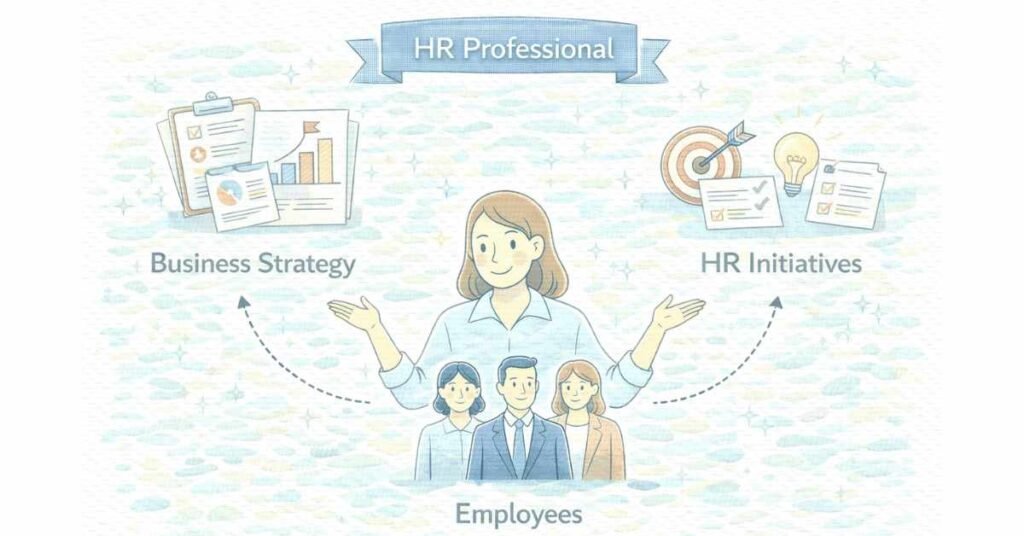
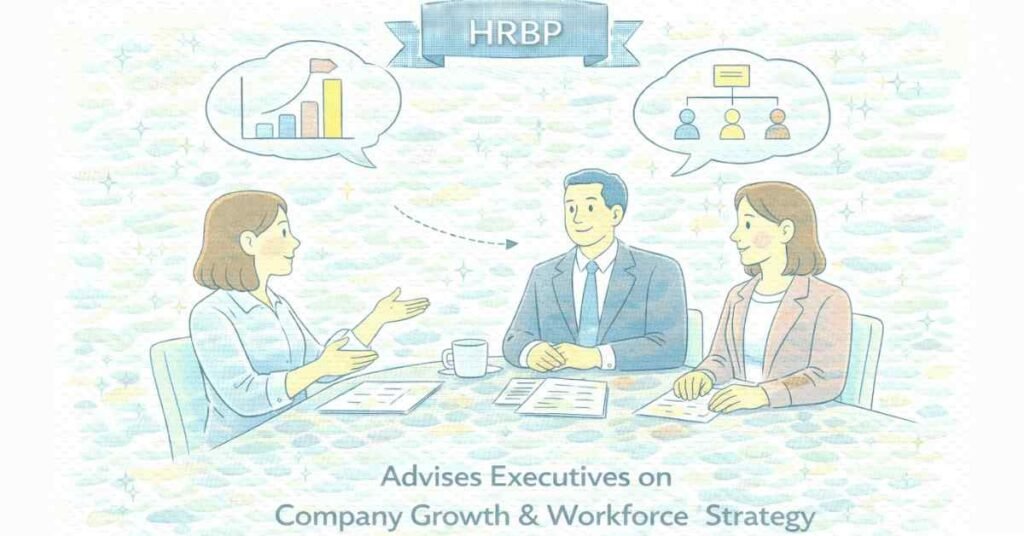
An HR Business Partner (HRBP) is a senior HR professional who partners with specific business units, functions, or geographic regions to align HR strategy with business objectives and drive organizational effectiveness.
Unlike traditional HR generalists who implement HR programs designed by others, HRBPs operate strategically by partnering directly with business leaders (VPs, directors, senior managers) to understand their goals and challenges, diagnosing organizational issues affecting business performance, recommending people solutions that drive business results, influencing workforce decisions and organizational design, leading change management during transformations, using data and analytics to solve business problems, balancing employee advocacy with business needs, and translating business strategy into people implications.
The “partner” in HRBP is key—you’re not a vendor taking orders or a service provider executing transactions. You’re a strategic partner who shares accountability for business outcomes through the people dimension.
HRBP Model Origins: The HRBP model was popularized by Dave Ulrich in the 1990s, who proposed organizing HR into three roles: HRBPs providing strategic partnership, Centers of Excellence (compensation, L&D, talent acquisition) developing specialized expertise and programs, and Shared Services handling transactional work (payroll, benefits administration).
Today, most large organizations use variations of this model, with HRBPs serving as the “face of HR” to the business while leveraging specialized HR functions as needed.
HRBP vs. HR Generalist: Key Differences
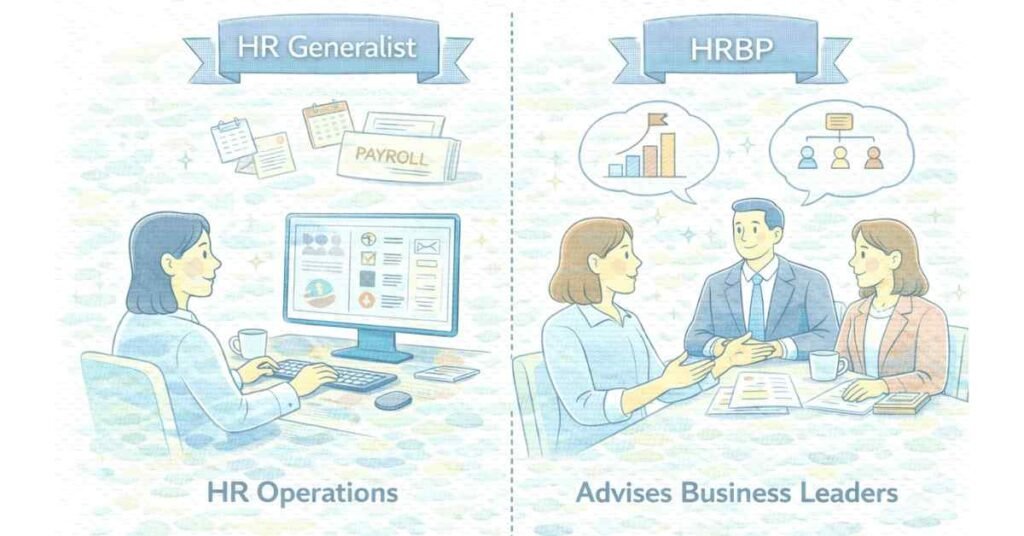
Many people confuse HRBPs with HR Generalists. While both have broad HR responsibility, they differ fundamentally:
Strategic vs. Tactical: Generalists primarily implement HR programs, policies, and processes designed by others. HRBPs shape strategy, recommend solutions, and drive organizational initiatives.
Business Integration: Generalists support HR functions. HRBPs are integrated into business teams, attending business meetings, participating in strategic planning, and sharing business accountability.
Senior Stakeholders: Generalists typically support managers and employees. HRBPs partner with senior leaders—VPs, directors, and executives.
Proactive vs. Reactive: Generalists often react to issues as they arise. HRBPs proactively identify trends, anticipate challenges, and initiate interventions before problems escalate.
Influence Model: Generalists work within established processes. HRBPs influence decisions, challenge assumptions, and shape how the business thinks about people issues.
Scope and Impact: Generalists typically support departments or locations. HRBPs support entire business units with P&L responsibility, affecting hundreds or thousands of employees.
This isn’t to diminish generalist roles—they’re essential and often the path to HRBP positions. But HRBP represents a qualitative shift from HR execution to HR strategy, from supporting HR functions to driving business outcomes.
Core HRBP Responsibilities
What does HRBP work actually involve?
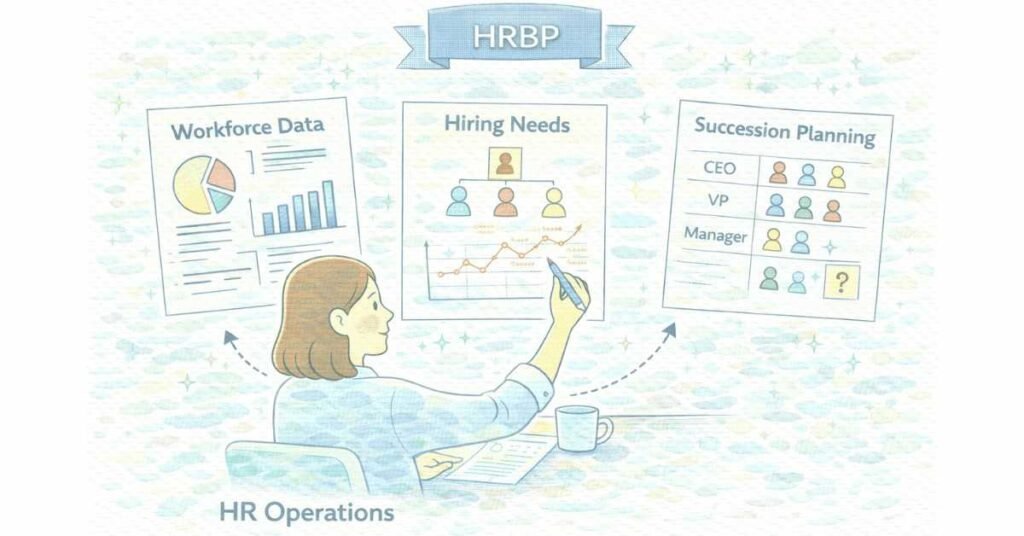
Strategic Workforce Planning
You help leaders plan for future talent needs by analyzing workforce gaps against business plans, forecasting hiring needs based on growth projections, identifying succession risks for critical roles, recommending build vs. buy vs. borrow strategies, planning organizational capacity for strategic initiatives, and anticipating skill requirements from business changes.
Example: Your business unit plans to launch a new product line in six months. You partner with the VP to determine headcount needs (15 new roles), identify which capabilities exist internally versus requiring external hiring (8 internal transfers, 7 external hires), build recruitment timelines ensuring people are ready when needed, and identify development needs for existing staff taking on new responsibilities.
Organizational Design and Effectiveness
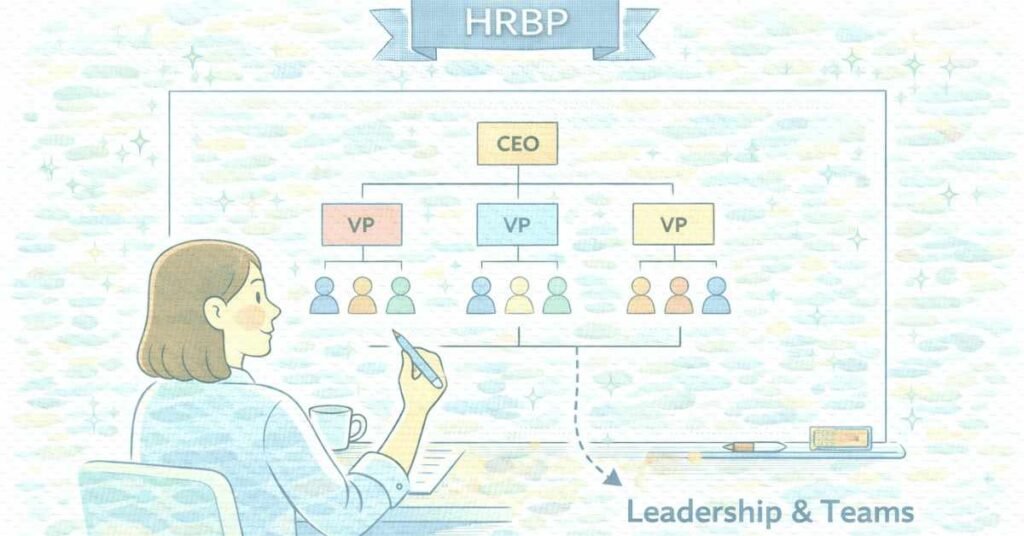
You optimize how work is organized and executed through evaluating organizational structures for efficiency and effectiveness, recommending reporting relationships and team configurations, facilitating discussions about role clarity and accountabilities, designing governance and decision-making processes, identifying and addressing organizational silos, and implementing structural changes during growth or restructuring.
Strong HRBPs understand that organization design dramatically affects results. Poorly designed structures create confusion, conflict, and inefficiency regardless of how talented individuals are.
Talent and Performance Management
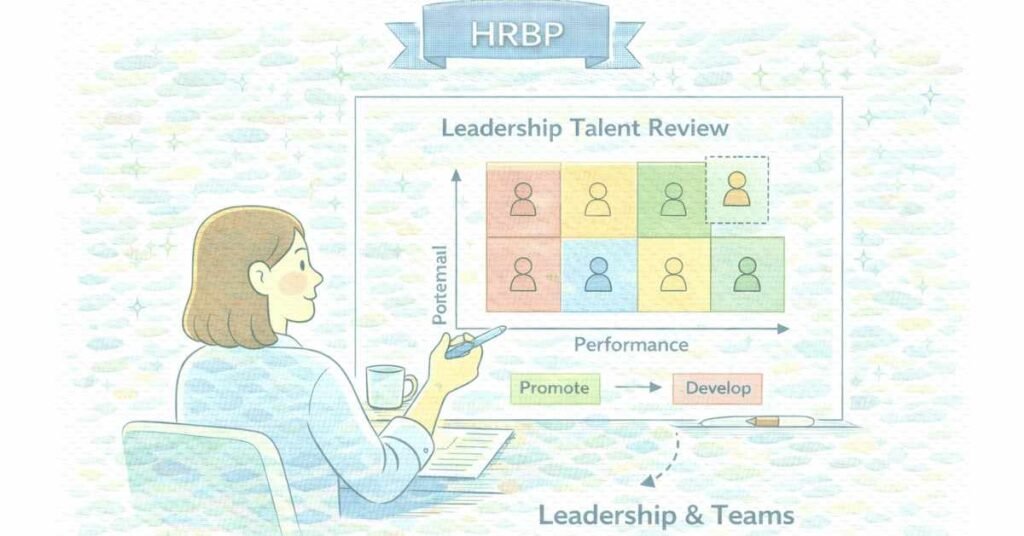
You ensure the business has and develops the right talent by identifying high-potential employees for development, conducting talent reviews with leadership teams, managing succession planning for critical positions, addressing performance issues with coaching and interventions, driving differentiation in performance ratings and rewards, facilitating difficult conversations about talent, and ensuring alignment between performance and consequences.
Unlike generalist HR that administers performance processes, HRBPs actively shape talent decisions, advising leaders on who to promote, develop, or exit.
Change Management and Transformation
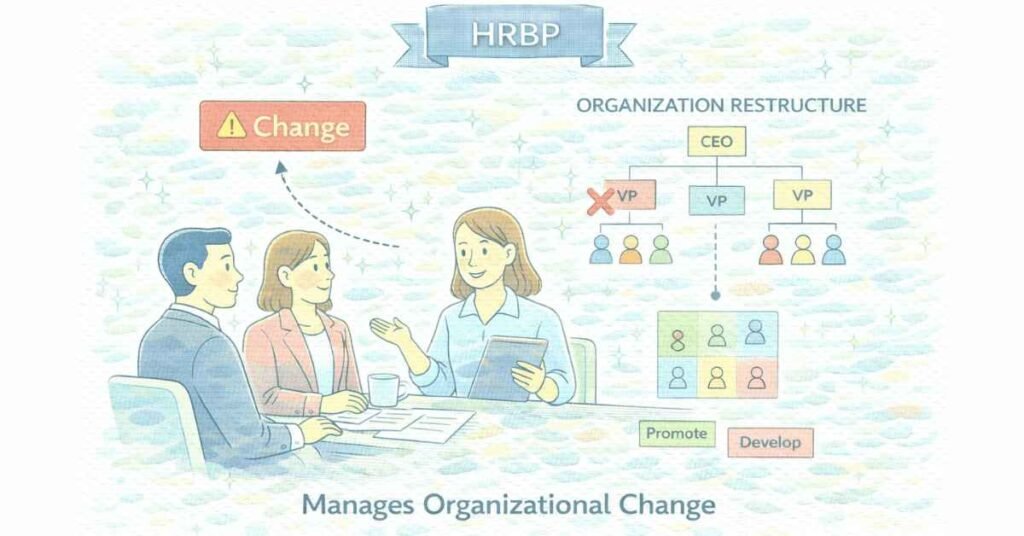
You lead people aspects of organizational changes including partnering on restructures, mergers, or transformations, assessing change impact on employees and culture, developing change management strategies and communication plans, identifying and addressing resistance, supporting leaders through transitions, and measuring change adoption and effectiveness.
Business transformation fails or succeeds largely based on people factors. HRBPs ensure the people dimension receives attention equal to strategy and technology.
Leadership Development and Coaching
You build leadership capabilities by assessing leadership strengths and development needs, coaching leaders on team management and people issues, facilitating team effectiveness interventions, recommending development opportunities and experiences, providing candid feedback to leaders about their impact, and sometimes addressing leadership performance issues.
HRBPs develop trusted relationships where leaders seek coaching on their toughest people challenges—underperforming team members, team conflicts, their own development areas.
Employee Relations and Culture
While specialized ER teams may handle investigations, HRBPs often address employee relations issues including partnering with managers on performance and conduct issues, addressing team dynamics and conflicts, monitoring employee engagement and satisfaction, identifying and addressing cultural issues, serving as escalation point for employee concerns, and shaping team and organizational culture.
You’re the eyes and ears of HR within your business unit, identifying brewing problems before they explode.
Data-Driven Problem Solving
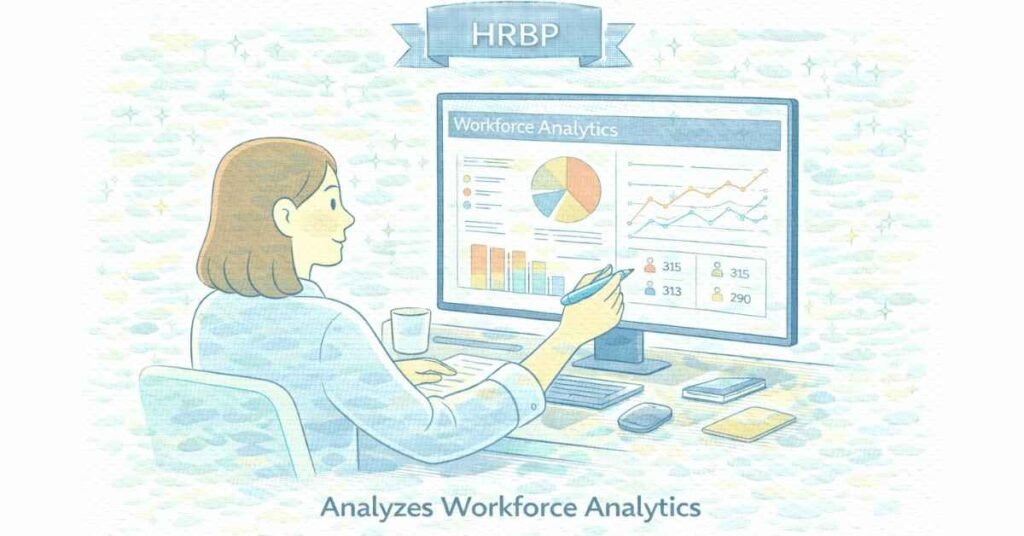
You use analytics to inform decisions by analyzing workforce data (turnover, engagement, performance, diversity), identifying trends and patterns requiring attention, building business cases for HR investments using data, measuring ROI of people programs and initiatives, benchmarking against industry and organizational standards, and translating data into insights that drive action.
Modern HRBPs are comfortable with data, using analytics to diagnose problems and persuade leaders rather than relying only on intuition.
HR Program Implementation and Adoption
While Centers of Excellence design HR programs (performance management, compensation, learning), HRBPs ensure adoption by communicating programs to business stakeholders, adapting programs to business unit needs (within guardrails), training managers on program implementation, monitoring compliance and adoption, gathering feedback for program improvement, and troubleshooting issues during rollout.
You’re the bridge between HR programs and business reality, ensuring programs actually work in practice not just in theory.
A Day in the Life of an HRBP
Let’s walk through a typical (busy) day:
Morning (9:00 AM – 12:00 PM): Your morning starts with your weekly one-on-one with the VP of Sales you support. She shares that two senior sales directors are at risk of leaving for competitors. You discuss retention strategies—accelerated development, expanded scope, or compensation adjustments. You commit to analyzing their compensation against market and meeting with each to understand their concerns.
You attend the sales leadership team meeting where they review quarterly performance. Sales are below target in two regions. You ask probing questions about whether this is a capability issue (wrong people or insufficient skills) or an enablement issue (inadequate tools, support, or processes). Your questions shift the conversation from blaming individuals to examining systemic factors.
You have a difficult conversation with a sales manager about a team member’s performance. The manager wants to place the employee on a Performance Improvement Plan (PIP). You review documentation—there are clear performance gaps and the manager has provided feedback. You advise on structuring the PIP with specific, measurable objectives and timelines, and coach the manager on conducting the conversation with empathy but directness.
Midday (12:00 PM – 2:00 PM): Over lunch, you review engagement survey results for your business unit. Overall engagement dropped 8 percentage points from last year. You analyze by team—one team’s scores are significantly lower than others. You make a note to meet with that team’s leader to understand what’s driving dissatisfaction.
You spend an hour analyzing turnover data. Turnover in sales has increased to 28% annually, well above company average of 16%. You dig deeper—most exits are employees with 12-24 months tenure. You hypothesize they’re leaving after gaining experience but before building strong retention ties. You outline a hypothesis to test and potential interventions.
Afternoon (2:00 PM – 6:00 PM): You facilitate a talent review meeting with the VP and her leadership team. You work through the nine-box grid, discussing each manager and above employee’s performance and potential. You challenge ratings when you see possible bias—are women being rated lower than men with similar achievements? You advocate for high-potential employees to receive stretch assignments and developmental opportunities.
You meet with an employee who’s considering leaving. Through active listening, you learn they feel their contributions aren’t recognized and don’t see career path clarity. You commit to facilitating a conversation with their manager about career development and ensure they’re nominated for a high-visibility project. Sometimes retention is about demonstrating that people are valued.
You have a planning meeting about an upcoming reorganization. The business is consolidating three product lines into two, requiring restructure. You discuss which roles are critical and must be retained, which capabilities can be developed internally versus hired, and how to communicate changes to minimize anxiety. You outline a change management plan and timeline.
Late Afternoon (4:30 PM – 6:00 PM): You prepare a presentation for next week’s business review on workforce metrics—headcount trends, turnover analysis, open requisition aging, and diversity data. You don’t just show numbers; you provide insights about what’s driving trends and recommend actions.
Before ending your day, you respond to emails including a manager’s question about how to handle a team conflict, a request from talent acquisition about offer approval, and coordination with the L&D center of excellence about leadership training for your business unit.
HRBP days are varied, strategic, and relationship-intensive. You’re constantly juggling multiple priorities, switching between strategic planning and tactical problem-solving, and balancing competing demands.
Essential Skills for HRBP Success
What distinguishes successful HRBPs?
Business Acumen
HRBPs must deeply understand business including how your organization makes money and creates value, your business unit’s strategy, goals, and success metrics, competitive dynamics and industry trends, financial basics (P&L, budgets, key business metrics), and how HR decisions impact business results.
Without business acumen, you’re HR-in-a-business-suit, not a true business partner. Senior leaders want partners who understand their world.
Strategic Thinking
HRBPs think beyond immediate problems by seeing connections between people issues and business outcomes, anticipating future challenges and opportunities, thinking systemically about root causes not just symptoms, balancing short-term pressures with long-term objectives, and generating creative solutions to complex problems.
Consulting and Influence Skills
HRBPs succeed through influence, not authority, requiring building trusted relationships with senior leaders, asking powerful questions that surface insights, diagnosing situations by gathering information from multiple sources, presenting recommendations persuasively, influencing decisions without direct control, and knowing when to push back versus when to support.
The best HRBPs are consummate consultants who earn influence through adding value.
Emotional Intelligence and Relationship Building
Effective HRBPs build strong relationships through connecting authentically with diverse personalities, reading political dynamics and organizational culture, managing their emotions in stressful situations, showing empathy while maintaining objectivity, earning trust through consistency and follow-through, and navigating conflict productively.
Data Literacy and Analytics
Modern HRBPs use data to inform decisions by analyzing workforce metrics and identifying trends, using data to build cases for recommendations, understanding statistical concepts and what numbers mean, presenting data in compelling, visual ways, and balancing quantitative data with qualitative insights.
Change Management Expertise
HRBPs constantly navigate change including assessing change impact and readiness, developing change strategies, communicating change effectively, identifying and addressing resistance, supporting leaders through uncertainty, and measuring change adoption.
Comprehensive HR Knowledge
While HRBPs are strategic, they must understand all HR functions deeply—talent acquisition, compensation, benefits, learning and development, performance management, employee relations, and compliance—to advise credibly and leverage specialized resources effectively.
Courage and Resilience
HRBPs must speak truth to power including delivering unwelcome messages to senior leaders, challenging decisions when people implications are ignored, advocating for employees when appropriate, maintaining integrity under pressure to compromise, and bouncing back from setbacks and conflicts.
Career Progression to HRBP
HRBPs are senior roles requiring significant experience:
Building Toward HRBP (5-8 Years Experience)
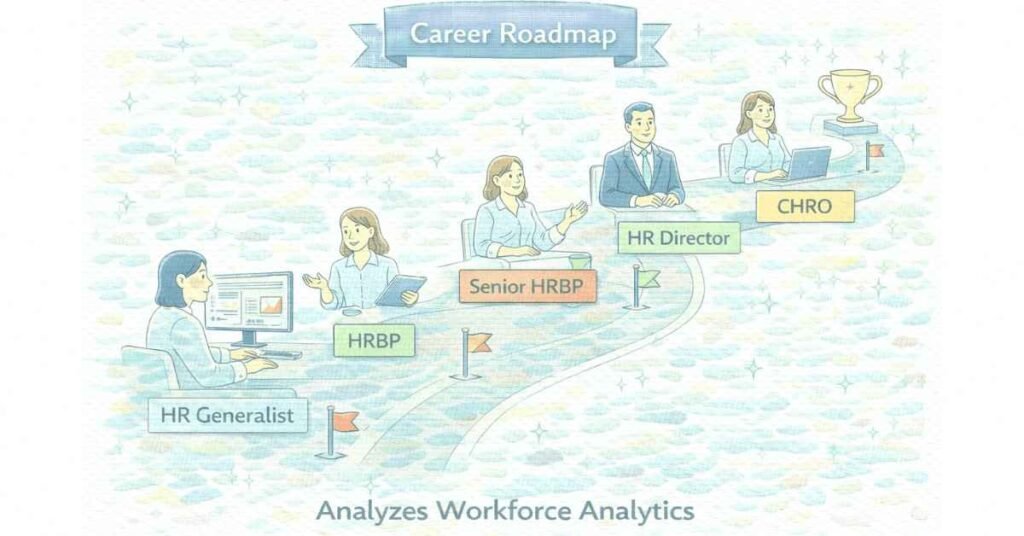
Most HRBPs have 5-8+ years of diverse HR experience before assuming HRBP roles. Typical preparation paths include:
HR Generalist Experience: Working as generalist supporting departments or locations, gaining exposure to all HR functions, building relationships with managers and leaders, and demonstrating business impact.
Specialist Experience: Deep expertise in areas like talent acquisition, compensation, or L&D, then transitioning to HRBP bringing specialized knowledge.
Rotational Programs: Some organizations offer HR rotational programs exposing professionals to different HR functions before placing them in HRBP roles.
Consulting Experience: HR consultants develop many HRBP skills—client relationships, problem-solving, influence—making consulting a pathway to HRBP roles.
HRBP / Junior HRBP (6-10 Years Experience)
Salary Range: ₹12-22 lakhs annually
Responsibilities: Supporting smaller business units or geographic regions, partnering with mid-level leaders (directors, senior managers), building credibility and demonstrating business partnership value, and managing HR with guidance from senior HRBPs.
Senior HRBP (10-15 Years Experience)
Salary Range: ₹18-32 lakhs annually
Responsibilities: Supporting large business units or senior executives, independently managing complex organizational issues, leading major change initiatives, mentoring junior HRBPs, and having significant influence on business decisions.
Principal HRBP / HRBP Director (15+ Years Experience)
Salary Range: ₹28-45 lakhs annually
Responsibilities: Supporting C-suite executives or major business divisions, setting HRBP strategy and approaches, leading HRBPs supporting related business areas, driving enterprise-wide people initiatives, and often representing HR in senior leadership forums.
Many HRBPs progress to senior HR leadership—VP of HR or CHRO—because HRBP develops comprehensive business understanding and executive relationships.
HRBP Salary Factors
HRBP compensation varies based on:
Business Unit Size and Complexity: Supporting larger, more complex business units pays more. An HRBP supporting a 2,000-person division earns significantly more than one supporting 200 people.
Seniority of Stakeholders: HRBPs partnering with C-suite executives earn premiums over those supporting directors or managers.
Industry: Technology, financial services, and consulting offer highest HRBP salaries. Traditional sectors pay moderately.
Experience and Track Record: Proven ability to drive business impact, manage complex situations, and build executive relationships commands premiums.
Geography: Metro cities pay 30-50% more than tier-2 locations.
Challenges in HRBP Roles
HRBPs face unique challenges:
Ambiguity and Complexity: Business problems are messy with no clear answers. You must navigate ambiguity and make judgment calls with incomplete information.
Conflicting Loyalties: Balancing employee advocacy with business needs creates tension. When business wants cost cuts requiring layoffs, do you push back or enable? HRBPs constantly navigate these dilemmas.
High Expectations: Leaders expect HRBPs to solve complex people problems quickly while balancing fairness, legality, and business needs. Expectations often exceed what’s realistic.
Limited Authority: HRBPs influence without direct control. You can recommend but can’t mandate. Leaders might ignore your advice, leaving you accountable for outcomes you can’t control.
Relationship Pressure: HRBP effectiveness depends on relationships. Conflicts with key leaders can make your role untenable.
Burnout Risk: Senior stakeholder demands, complex problems, and constant availability expectations create burnout risk.
Why Choose the HRBP Path?
Despite challenges, HRBP offers unique rewards:
Strategic Impact: HRBPs influence organizational direction and business outcomes through the people dimension.
Regular interaction with senior leaders provides visibility, learning, and career acceleration.
Business Integration: You’re part of business teams, not separate HR function, making work more engaging and impactful.
Intellectual Challenge: Complex, ambiguous problems requiring strategic thinking keep work intellectually stimulating.
Strong Compensation: HRBPs earn among the highest HR salaries reflecting strategic value.
Leadership Pipeline: HRBP experience prepares you for senior HR leadership or even general management roles.
Preparing for HRBP Roles
How do you position yourself for HRBP opportunities?
Develop Business Acumen: Read business publications, understand your company’s financials, learn about your industry, and take business courses or MBA programs.
Build Strategic Skills: Volunteer for strategic projects beyond routine HR, think critically about root causes not just symptoms, and practice connecting HR to business outcomes.
Cultivate Relationships: Build relationships with business leaders through proactive partnership, delivering value, and demonstrating business understanding.
Develop Consulting Skills: Practice asking powerful questions, structuring ambiguous problems, and influencing without authority.
Seek Diverse Experience: Gain exposure across multiple HR functions building comprehensive HR knowledge.
Demonstrate Business Impact: Measure and communicate your impact using business metrics, not just HR activity.
Find Mentors: Learn from experienced HRBPs about navigating the role’s complexities.
The HRBP role represents the pinnacle of strategic HR—where business strategy meets people capability. Success requires blending deep HR expertise with business acumen, relationship building with analytical rigor, empathy with pragmatism, and strategic vision with tactical execution. If you’re ready to move beyond HR administration to true business partnership, the HRBP path offers a challenging, impactful career influencing organizational success through people.