
How to Start an Environmental Career: 9-Step Roadmap for Students & Freshers
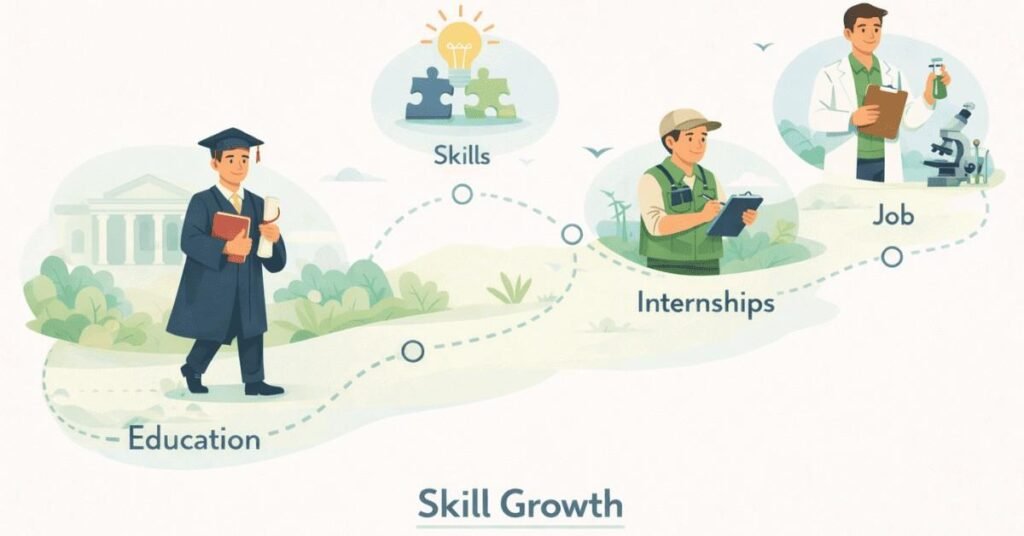
Table of Contents
Introduction
Many students want a career that feels meaningful, not just “a job for salary.” Environmental and sustainability careers let you protect nature, improve public health, and support climate action—while still building a stable professional life.
This roadmap breaks your journey into clear, simple steps—from school to your first job—so you know exactly what to focus on at each stage.
Step 1: Understand What Environmental Careers Actually Look Like
Before choosing a course, you need a clear picture of what environmental professionals do in real life.
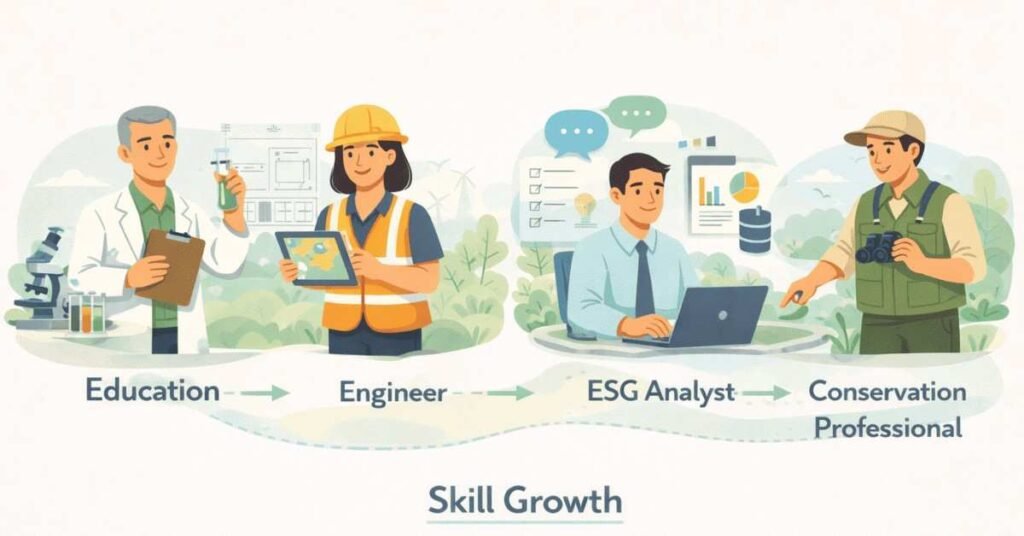
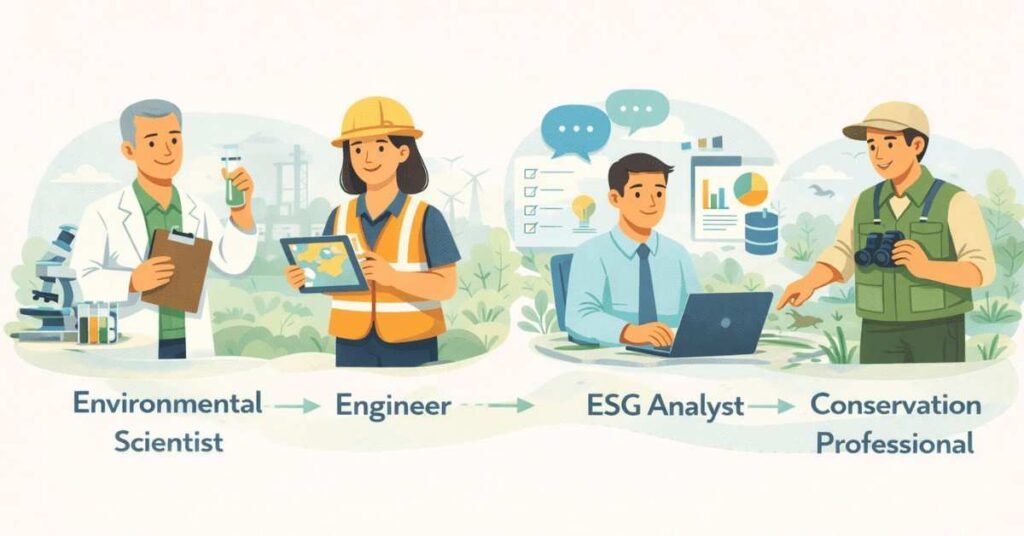
Common career directions include:
- Environmental Scientist / Analyst: Testing air, water, and soil, analyzing data, and preparing reports.
- Environmental Engineer / EHS Officer: Designing treatment systems, controlling pollution, ensuring safety and compliance in industries.
- Sustainability / ESG / Climate Analyst: Working with company data on energy, emissions, and social impact to support sustainability and ESG decisions.
- Conservation / Wildlife Roles: Protecting forests, wildlife, and biodiversity through fieldwork and community projects.
Knowing these options helps you choose the right subjects, degree, and skills early instead of guessing later.
Step 2: Choose the Right Stream After Class 10
Essential Components Every Introduction Must Include
Your 11th–12th stream doesn’t lock your future, but it makes some paths easier.
Best Choice: Science Stream
- PCB (Physics, Chemistry, Biology) or PCMB is ideal if you want:
- BSc Environmental Science, Life Sciences, Zoology, Botany, Geology.
- Later MSc in Environmental Science, Ecology, Conservation, or related fields.
- BSc Environmental Science, Life Sciences, Zoology, Botany, Geology.
- PCM (Physics, Chemistry, Maths) or PCMB is ideal if you want:
- BTech/BE Environmental or Civil Engineering with environmental focus.
- Later MTech in Environmental Engineering or Energy-related fields.
- BTech/BE Environmental or Civil Engineering with environmental focus.
If You Choose Arts or Commerce
You can still enter environmental and sustainability work, usually via:
- BA/BSc in Environmental Studies, Geography, or related subjects.
- Later master’s degrees or diplomas in Environmental Management, Sustainability, Urban Planning, or an MBA in Sustainability/ESG.
The key at this stage is:
- Build basic science awareness through school subjects and general reading.
Start following environmental news, climate stories, and local pollution or conservation issues.
Step 3: Select the Degree That Fits Your Interest
After 12th, pick a course that matches both your strengths (science vs maths vs social) and your preferred type of work (field vs technical vs corporate).
If You Like Science and Field/Lab Work
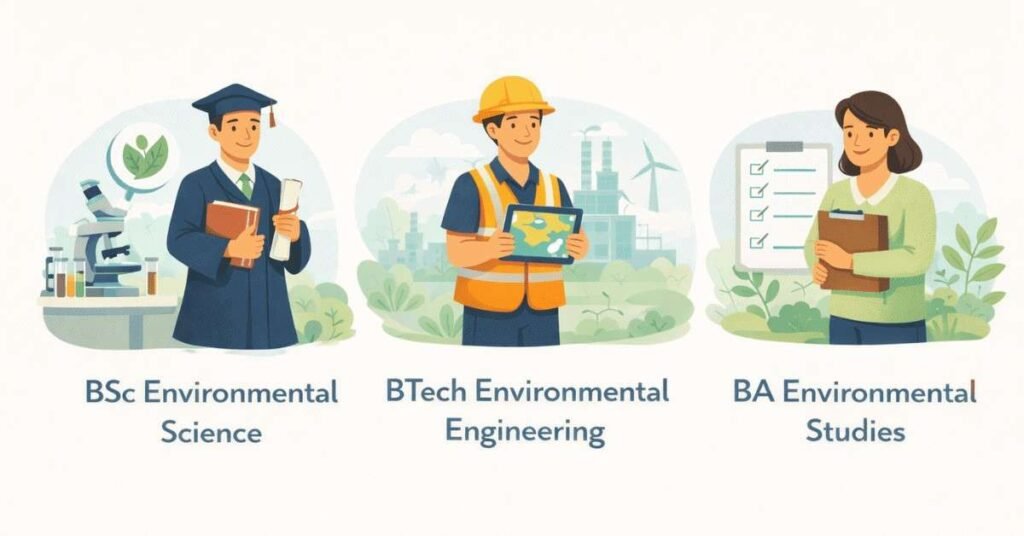
- BSc Environmental Science
- Good for roles in environmental monitoring, labs, NGOs, and consulting support.
- Good for roles in environmental monitoring, labs, NGOs, and consulting support.
- Related options: BSc Life Sciences, Zoology, Botany, Geology, Microbiology with an environmental focus later.
If You Like Maths and Engineering
- BTech/BE Environmental Engineering
- Good for designing treatment systems, pollution control, waste management facilities.
- Good for designing treatment systems, pollution control, waste management facilities.
- Or Civil/Chemical Engineering with later specialization in environmental subjects.
If You Like Policy, Urban Planning, or Society-Nature Link
- BA/BSc in Environmental Studies, Geography, or related social/environmental programs.
- Later move into urban planning, environmental policy, or community-based conservation through PG courses.
While choosing, check:
- Eligibility and entrance requirements.
- Type of subjects taught (look at syllabus, not just course name).
Whether the college has practicals, field visits, and project work.
Step 4: Build Skills Alongside Your Degree (Not After)
Many students wait until final year to think about skills. That’s too late. Start early and grow gradually.
During Year 1–2
Focus on:
- Understanding basics of ecology, pollution, environmental chemistry, and laws.
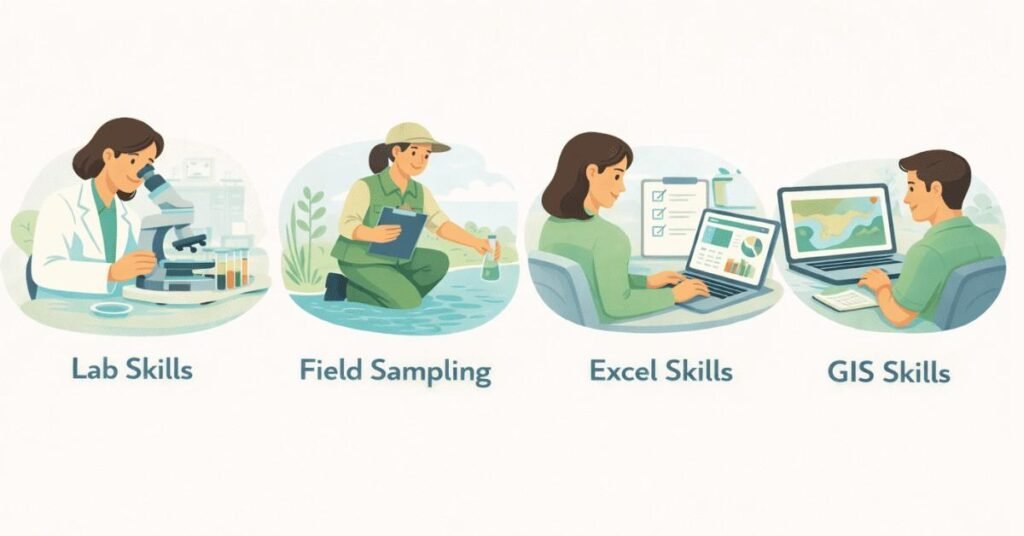
- Becoming comfortable with Excel, basic graphs, and data tables.
- Improving English writing and presentation skills through assignments and small seminars.
During Year 2–3
Add:
- Basic field and lab skills: sampling, simple tests, reading instruments.
- Introduction to GIS (QGIS/ArcGIS) if available.
- Exposure to environmental regulations and EIA concepts.
The goal is to graduate with both knowledge and practical skills, not just marks.
Step 5: Get at Least One Good Internship (Ideally Two)
Internships are often the biggest difference between a fresher who gets shortlisted and one who doesn’t. They show you can work in real conditions, not just exam halls.
Where to Look for Internships
- Environmental consulting firms and testing labs.
- NGOs working on conservation, waste management, climate, or water.
- Corporate EHS or sustainability teams.
- Research projects in your college or external institutes.
What You Might Do
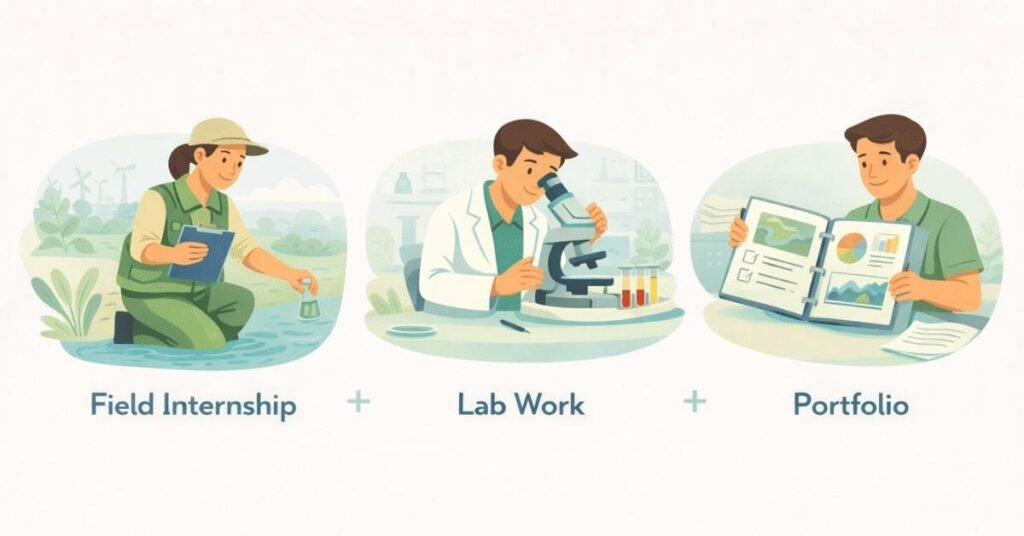
- Help collect and record samples and field data.
- Assist with simple lab tests under supervision.
- Support basic report preparation or documentation.
- Help organize awareness activities or stakeholder meetings.
Even if the tasks feel small, you are learning the workflow, language, and expectations of the industry.
Step 6: Create a Small but Strong Portfolio
A portfolio is proof of what you can do. It doesn’t have to be fancy; it just has to be real.
Include:
- 1–3 academic or final-year projects related to environment, sustainability, or climate.
- Internship summaries: what you did, tools you used, what you learned.
- Any simple GIS maps, data analyses, or reports you have prepared.
- Participation in relevant events, competitions, or workshops.
You can keep this in:
- A PDF file with sections.
- A simple Google Drive folder.
- Or a basic personal website/online document if you’re comfortable.
When you apply for jobs, this portfolio makes you look serious and prepared, not just like “another fresher with a degree.”
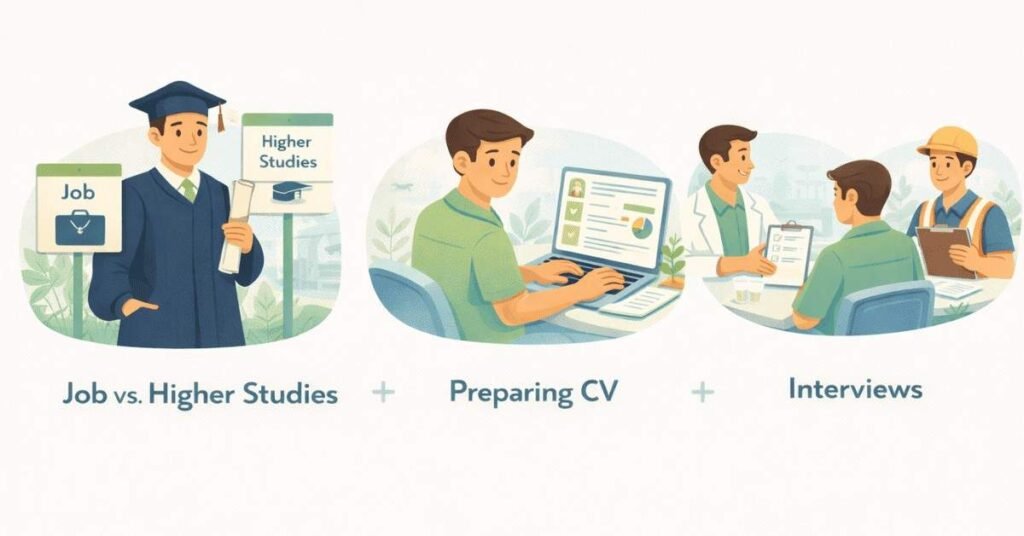
Step 7: Decide: Job First or Higher Studies First?
After your bachelor’s, you have two main choices. Neither is “right” for everyone; it depends on your situation.
Option A: Start Working After Graduation
Good if you:
- Need to start earning early.
- Want to understand real-world work before specializing.
You can apply for roles like:
- Environmental technician, field officer, or junior analyst.
- Junior EHS officer or assistant.
- Project assistant in NGO or conservation projects.
Later, you can do a master’s or PG diploma once you know which direction you like.
Option B: Do Higher Studies Immediately
Good if you:
- Can invest more time in education now.
- Want faster access to mid-level jobs and specialist roles.
Options:
- MSc Environmental Science / Management / Ecology / Conservation
- MTech Environmental Engineering / related fields
- MBA in Sustainability / Environmental Management / ESG
Higher degrees often lead to better growth and higher salaries in the long term, especially in consulting, corporate, and technical leadership roles.
Step 8: Prepare for Your First Job Search
When you are ready to apply, treat job search itself like a project.
Build a Focused CV
- Keep it to 1–2 pages.
- Highlight:
- Degree and relevant subjects.
- Internships and projects (with 2–3 bullet points each).
- Skills: lab techniques, tools (Excel, GIS), languages, certifications.
- Degree and relevant subjects.
Where to Search
- Job portals (general and niche environmental/sustainability listings).
- LinkedIn – follow companies and people in the environmental space, switch on job alerts.
- College placement cells and alumni contacts.
- Direct emails to local environmental consultancies, labs, NGOs, and industries.
How to Approach Interviews
- Revise basics: pollution types, simple treatment concepts, environmental laws, and your own project work.
- Practice explaining your project or internship in simple language: problem, approach, result, and what you learned.
- Show willingness to learn, work on-site if needed, and handle real-world challenges.
Many employers hire fresher environmental candidates mainly on attitude, basics, and demonstrated interest.
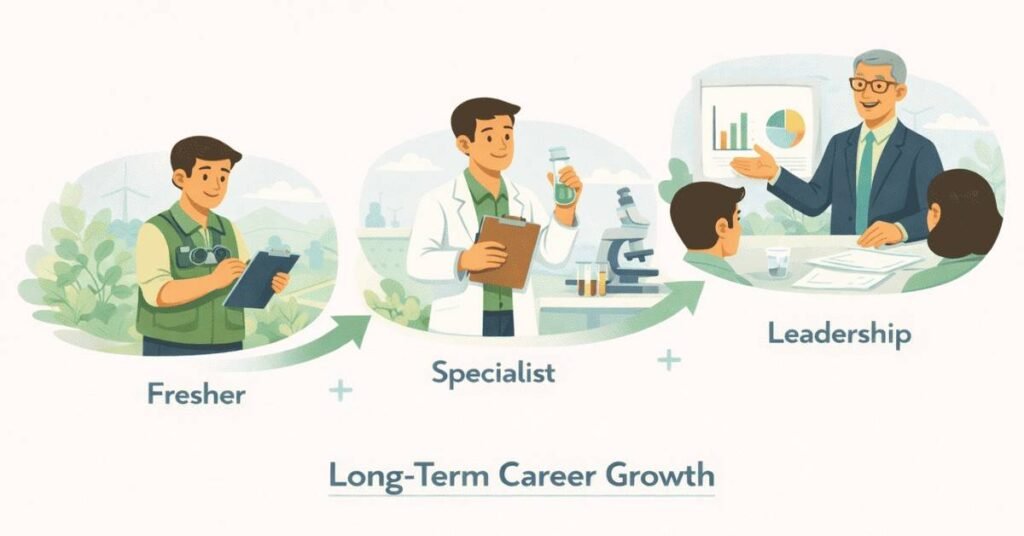
Step 9: Plan Your Growth for the Next 3–7 Years
Getting the first job is just the beginning. To grow, you need a simple, long-term plan.
Years 0–2: Foundation
- Learn as much as you can from seniors.
- Volunteer for different types of tasks to understand the full workflow.
- Strengthen technical skills (lab, monitoring, GIS, EHS, or data) depending on your role.
Years 3–5: Specialize
- Choose a niche that interests you and has demand:
- Pollution control and engineering.
- Environmental consulting and EIA.
- ESG and sustainability analysis.
- Climate and carbon accounting.
- Conservation and wildlife management.
- Pollution control and engineering.
- Consider one strong certification aligned with your niche.
- If needed, pursue a master’s or MBA to move into higher responsibility roles.
Years 5–7 and Beyond: Lead and Strategize
- Take ownership of projects, teams, client relationships, or program design.
- Start mentoring juniors—this is also how you become a better professional.
- For higher pay and impact, look at roles in consulting, large corporates, or international projects.
Quick “Getting Started” Checklist for Students
You can use this as a simple progress tracker:
- I know the main environmental career paths and which 1–2 interest me most.
- I chose a suitable stream after 10th (or I know my alternative path if not in science).
- I picked a degree aligned with my interests (BSc/BTech/BA-type).
- I actively built skills during my degree (not only aimed for marks).
- I completed at least one relevant internship.
- I have a basic portfolio of projects, reports, or maps.
- I have decided whether I will work first or do higher studies first.
- I have a clear, updated CV and a list of target organizations.
- I have a rough plan for how to grow in the next 3–7 years.
If you can honestly tick most of these, you are far ahead of many students who only start thinking about careers in their final semester.