
Why a Medical Shop is a Superb Start-Up Idea?
If you want to run a small business at little cost, a medical shop is one of the perfect options. It is because it doesn’t involve the kind of investment like so many other businesses; further, there is constant demand for the product in every place.
Here are just a few reasons why opening a medical shop makes good sense:
1. High demand: Medicines are necessary and people always need it, whether for simple sicknesses or serious diseases.
2. Low initial investment: Establishing a medical shop doesn’t require much capital in comparison to large businesses. You can start from a small store and then extend as your customer base expands.
3. Flexibility: The business can be adjusted according to your budget, location, and target market. Whether it is an independent store or franchise, it can be fitted depending on the need in a particular locality.
Types of Medical Stores:
The word “medical shop” is something everybody knows by name, at least pharmaceutical students, so they play an essential role in meeting healthcare requirements. Of course, every person would need medication one day. Opening a medical shop can also be such a rewarding investment. Here are some of the most popular types of medical shops you can consider, each catering to different market needs.
1. Hospital Medical Store
A Hospital Medical Store is established in collaboration with a hospital, making it easy for patients to access drugs. These stores are usually located within the premises of the hospital and provide patients with the drugs prescribed by their doctors. These stores may also provide health supplies and other medical products needed for patient care.
Example: Care Pharmacy, A pharmacy that is established within a hospital to cater to the patients and healthcare staff of the hospital.
2. Independent Medical Store
An Independent Medical Store is a single standalone pharmacy usually operating in residential or commercial areas. They are small to medium-sized, offering a wide range of medicines, including over-the-counter drugs, prescription medications, and health products. Independent stores can be very flexible when it comes to pricing and inventory and thus cater to the needs of the community they serve.
Example: A-Z Medical Store, an ordinary pharmacy situated in the residential area, easy to reach and bring medicine.
3. Chain Pharmacy or Franchise Outlets
Chain Pharmacies or Franchise Outlets refer to large-scale pharmacies working under a well-known brand. These stores are either franchise outlets or chain stores with similar services in all branches. One of the biggest advantages of chain pharmacies is that they use brand recognition as their strength, and people love to go to places which have a brand name behind them. These stores are relatively bigger in size and cater to a variety of drugs and health products.
Example: Apollo Pharmacy is a popular chain operating many stores, offering an enormous range of medicines and health products.
4. Township Medical Shops
Township medical shops are designed to be able to cater to small towns or villages, catering to the rural or the less privileged. The medical stores sell essential medicines and other healthcare products to the general population. Township medical stores can also conduct medical camps or health awareness programs. This is why they are integral to society. It may be a good opportunity for entrepreneurs who wish to do something positive and at the same time meet a critical need by starting a medical shop in a township.
Example: Medical Camps, where essential health services and medicines are provided to residents in remote areas.
5. Government Premises Shops
Government Premises Shops are pharmacies that are established in the government buildings, offices, or hospitals. They function under the guidelines and policies of the government. Usually, these shops are run by the government authorities or the appointed contractors. These shops sell medicines to the employees of the government, patients, or to the public at large. Such shops are usually supported by the government and regulated.
Example: A Medical store within a government hospital or office complex, with governmental policies and regulations being adopted as guidance.
Starting a medical shop entails many critical steps, like securing the right permissions and registrations. You need to ensure that you have the right team and facilities; that is what this guide shall take you through, in terms of all the necessary aspects when setting up your own medical store.
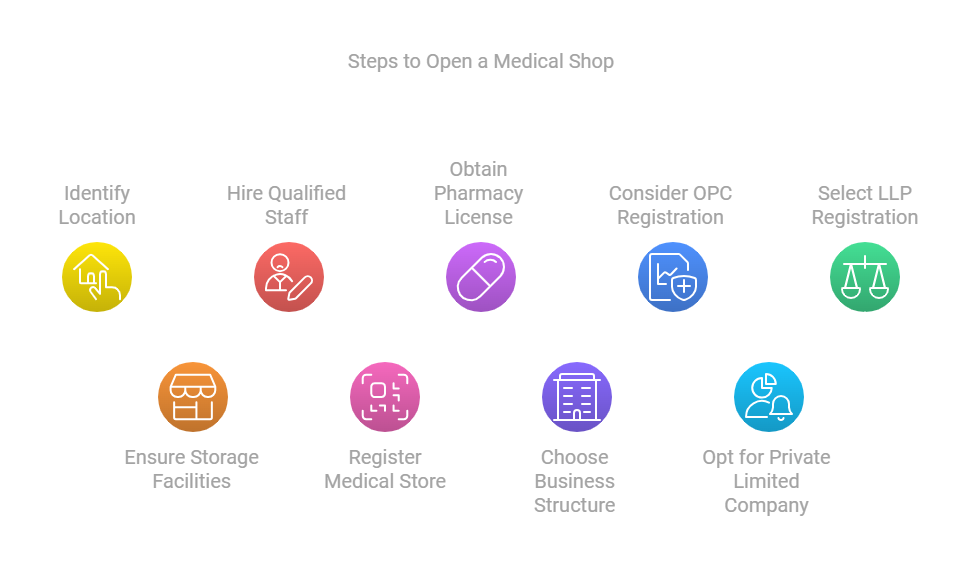
1. Important Considerations Before Opening a Medical Shop
To run a medical shop effectively, there are a few essential aspects to consider:
Area Specification: It will target a place with a high demand for medical products. Places that are highly trodden, such as hospital environs, clinics, and residential areas, are considered places
Storage Facility: Ensure that proper storage facilities are available within your shop for medicines. Some medicines have to be kept in certain conditions-these might need refrigeration or be kept in some cool and dry places-so that they remain of appropriate quality.
Technical Staff: You must have qualified staff, including a registered pharmacist, who can assist customers in selecting the right medications and provide professional advice.
2. Medical Store Registration
There are various ways to register your medical store, depending on the type of business structure you choose.
E-Registration: You can also register your medical store online. Online registration of medical shops is a full procedure, involving many requirements like getting licenses and approvals.
Pharmacy License: This is mandatory for all medical stores. The Pharmacy Council of India provides this license to ensure that your store operates under the Drug and Cosmetics Act, 1940.
3. Proprietor Registration
If you own the medical shop and you are the only owner, you should be registered as a Sole Proprietor. It is the most simple form of business ownership wherein one owner runs and assumes all the risks associated with the operation of the store.
4. Partnership Registration
If you are opening the medical store with one or more partners, then you need to do Partnership Registration. This will define your roles and responsibilities along with the profit-sharing amongst the partners.
5. OPC (One Person Company) Registration
An OPC will allow an entrepreneur to carry on the business while at the same time getting some legal protection as well. This gives OPC benefits such as limited liability, perpetual succession, and separate legal personality, which makes it ideal for entrepreneurs looking to run their store as a single company but require company structure advantages.
6. Private Limited Company Registration
If you want to expand your business and are inviting investors or more than one director, you can register your medical store as a Private Limited Company. The Private Limited Company structure is the best when it comes to expanding business, as it allows you to sell shares and thus raise capital. It limits the liability of the directors to the amount they invested in the company.
7. Limited Liability Partnership (LLP) Registration
An LLP combines the benefits of a partnership and a company. It limits the liabilities of partners and provides a flexible management structure. LLP registration is gaining popularity among small businesses, including medical stores, due to the legal protections it offers.
Documents Required for Medical Store Registration
To complete the registration process for your medical store, you’ll need to submit the following documents:
1. Pharmacy License Application: This ensures that you’re authorized to sell medicines legally.
2. Drug Licence Fee or Challan Invoices: Proof of payment for filing drug license application with you
3. Blueprint or Key Plan for the Premises: A layout drawing showing arrangement of the shop and storehouse.
4. Proof of Ownership of Premises: You further need to provide evidence of ownership or tenancy proof of the premises where you intend to conduct your medical shop.
5. Identity and Address Proof: All the owners, partners, or directors should enclose proof of identity along with the proof of an address.
6. Registered Pharmacists’ Appointment Letter: There should be an appointed registered pharmacist who is working full-time at your shop. You can submit the letter of an appointment for their proof.
7. Full-Time Registered Pharmacist Affidavit: This affidavit will confirm that the pharmacist will work fulltime in the store and that he is qualified enough to deal with prescriptions.
8. Non-Conviction Affidavit: This affidavit states that the owner, partners, or directors of the firm have no criminal convictions under the Drugs and Cosmetics Act, 1940.
Conclusion
Opening a medical store requires more than just selling medicines—it involves complying with various legal regulations and ensuring that the right infrastructure and staff are in place. By following the above steps and obtaining the necessary registrations, you can set up a successful and legal medical store. Always keep up with updates in the laws related to pharmacies, and ensure that you provide excellent service to your customers.