
Guest Lecturer to Permanent Faculty: Building Your College Teaching Career
Table of Contents

The path to becoming a tenured college professor can feel like a long and daunting one, often requiring a PhD and a long list of publications. But what if there was a way to get your foot in the door, gain invaluable teaching experience, and start building your academic network while you work towards your long-term goals? This is where roles like Guest Lecturer and Visiting Faculty come in.
These temporary positions are the hidden entry points into the world of higher education. They allow you to experience college teaching, earn a respectable income, and build a compelling resume that makes you a stronger candidate for permanent Assistant Professor roles later on. This guide will show you exactly how to leverage these opportunities to launch and accelerate your academic career.
Understanding the "Contingent" Academic Workforce
Before diving in, it’s important to understand the different types of temporary teaching roles available in Indian colleges and universities. These are often called “contingent” or “non-tenure-track” positions.
- Guest Lecturer: This is typically the most temporary role. Guest lecturers are hired on a per-lecture basis to teach specific courses or fill short-term vacancies. The pay is calculated per class, and there are usually no additional benefits.
- Ad-hoc Faculty: Similar to guest lecturers, ad-hoc faculty are appointed for a fixed term, usually one semester or academic year, to manage teaching loads.
- Visiting Faculty: This is a more structured role. Visiting faculty are often industry experts or established academics from other institutions who are invited to teach for a semester or a full year. The pay is generally a fixed monthly or semester-based salary, and the role carries more prestige.
While these roles don’t offer the job security of a permanent position, they are powerful strategic tools for aspiring professors.

Part 1: The Guest Lecturer – Your First Step into the Classroom
Think of a Guest Lecturer position as your academic internship. It’s a low-risk way to test the waters of college teaching and decide if it’s the right fit for you.

What Does a Guest Lecturer Do?
A Guest Lecturer’s primary responsibility is to deliver lectures for a specific course for which the college needs a temporary teacher. This could be due to a permanent faculty member being on leave or an unexpected increase in student enrollment.
Your responsibilities typically include:
- Delivering a set number of lectures per week for a particular subject.
- Preparing lesson plans and course materials.
- Conducting internal assessments and grading assignments.
- Interacting with students and clearing their doubts.
Qualifications & How to Apply
The qualifications for a Guest Lecturer are generally the same as for an Assistant Professor: a Master’s degree with at least 55% marks and a UGC NET qualification. However, colleges often relax the NET requirement for temporary positions if they are unable to find a qualified candidate, especially for niche subjects.
How to find these opportunities:
- College Websites: Many colleges post guest lecturer vacancies directly on their career or notice board pages.
- Walk-in Interviews: This is the most common method. Colleges often announce walk-in interviews with just a few days’ notice. Keep a close watch on the websites of local colleges in your city.
Networking: Let your professors and academic contacts know you are looking for teaching opportunities. A referral can often get you an interview
Salary and Compensation
Guest Lecturers are paid on a per-lecture basis. According to UGC guidelines, the pay is ₹1,500 per lecture, with a monthly cap of ₹50,000.
- This means if you teach 10 lectures a week, you could earn around ₹15,000 weekly or up to the ₹50,000 cap monthly.
- In reality, many state-run and private colleges may pay less, ranging from ₹500 to ₹1,000 per lecture. It’s important to clarify the payment structure during the interview.
While this income may not seem high, remember the primary goal: gaining experience.
Part 2: The Visiting Faculty – A More Substantial Role
If a guest lectureship is an internship, a Visiting Faculty position is like a full-time contract role. It’s a more integrated and prestigious appointment.
Who Becomes a Visiting Faculty?
Visiting Faculty roles are often filled by two types of professionals:
- Industry Experts: A seasoned marketing manager, a software architect, or a chartered accountant might be invited to teach a practical, industry-focused course.
- Established Academics: Professors from other universities might take a sabbatical to teach at a different institution, bringing fresh perspectives.
For an early-career academic, securing a Visiting Faculty position is a significant achievement. It signals that the institution values your expertise enough to give you a semester-long or year-long responsibility.
Responsibilities and Salary
A Visiting Faculty member’s responsibilities are closer to those of a permanent professor. You’ll be expected to:
- Design and teach one or more full courses.
- Hold regular office hours for students.
- Participate in departmental meetings and activities.
- Contribute to the academic life of the department.
The compensation reflects this increased responsibility. The average annual salary for a Visiting Faculty in India is around ₹8 lakhs, but this can vary widely. In top-tier institutions like IIMs or ISB, a Visiting Faculty can earn ₹40 lakhs or more annually.
Part 3: The Strategic Advantage – Why These Roles Matter
Why should you bother with temporary roles instead of just waiting for a permanent position to open up? Because these roles give you a powerful competitive edge.
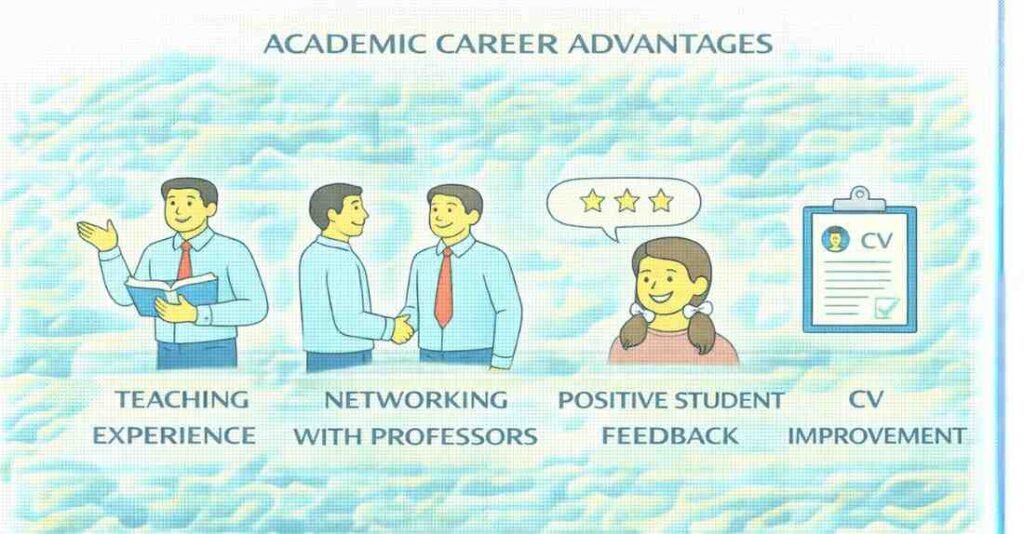
1. Building Invaluable Teaching Experience
There is no substitute for standing in front of a class. As a Guest Lecturer, you will learn:
- Classroom Management: How to hold the attention of 50+ young adults.
- Effective Communication: How to explain complex topics simply and engagingly.
- Time Management: How to cover a syllabus within a tight semester schedule.
This practical experience is something you can speak about with confidence in interviews for permanent positions. You can say, “I have already taught this course for two semesters and have developed a full set of teaching materials.” This is far more powerful than just having theoretical knowledge.
2. Networking and Building Your Academic Reputation
When you work at a college, even temporarily, you become a known entity.
- Departmental Connections: The Head of the Department and other senior professors get to see your work ethic, your teaching style, and your professionalism firsthand. When a permanent position opens up, you are no longer just a name on a resume; you are a trusted colleague.
- Student Feedback: Positive feedback from students is a powerful endorsement. If students appreciate your teaching, the department will take notice.
- Institutional Familiarity: You learn the internal workings of the college—its culture, its policies, and its people. This makes you a low-risk hire for a permanent role.
3. Strengthening Your CV for Permanent Positions
Your resume will look much stronger with actual teaching experience listed.
Before (Without Experience):
- M.A. in Economics, Delhi University (2024)
- UGC NET Qualified (2025)
After (With Guest Lecturer Experience):
- Guest Lecturer in Economics, XYZ College (2025-2026)
- Taught courses in Microeconomics and Indian Economy to undergraduate students.
- Developed course materials, assignments, and examinations.
- Received positive student feedback for clear and engaging teaching style.
- Taught courses in Microeconomics and Indian Economy to undergraduate students.
- M.A. in Economics, Delhi University (2024)
- UGC NET Qualified (2025)
The second profile is significantly more compelling to a hiring committee.
4. A Pathway to Your PhD
If you are planning to pursue a PhD, working as a Guest Lecturer can be a great interim step.
- Financial Support: The income, though modest, can help support you while you prepare for PhD entrance exams.
- Access to Resources: You’ll have access to the college library and online journals, which is a huge help for writing your research proposal.
Finding a Supervisor: You can build a rapport with professors in your department, one of whom might end up becoming your PhD supervisor.
Part 4: The Game Plan – Your Transition Strategy
Simply taking on a guest lectureship isn’t enough. You need a clear strategy to convert this temporary opportunity into a permanent career.
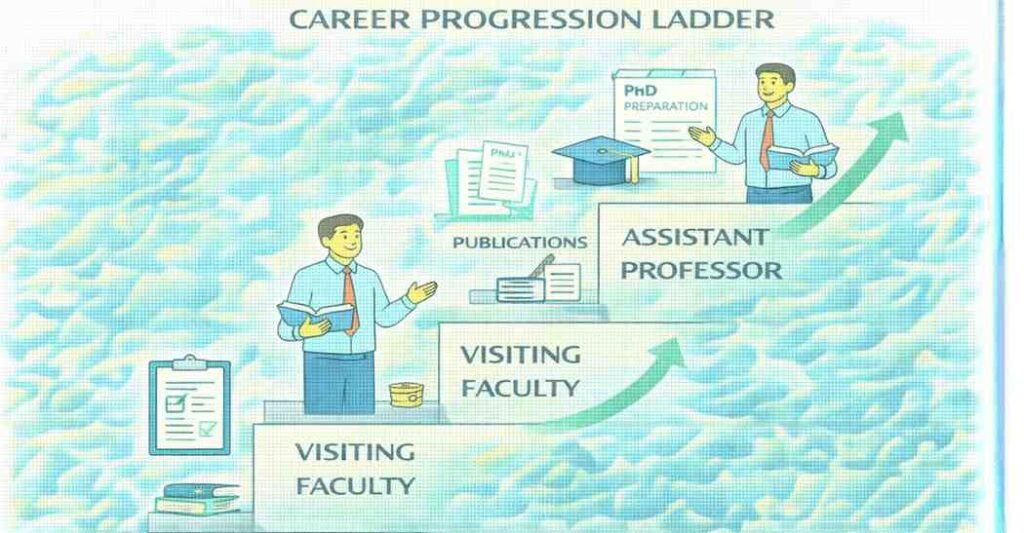
Step 1: Secure Your First Temporary Role
- Prepare Your CV: Tailor your resume to highlight your subject expertise and any teaching-related skills.
- Stay Alert: Monitor the websites of at least 10-15 colleges in your vicinity daily. Walk-in interview announcements can appear suddenly.
Network Proactively: Connect with your former professors on LinkedIn. Send them a polite message expressing your interest in teaching opportunities.
Step 2: Excel in the Role – Go Above and Beyond
Once you get the job, your goal is to make yourself indispensable.
- Be Professional: Arrive on time, be well-prepared for every lecture, and grade assignments promptly.
- Be a Team Player: Volunteer to help with departmental activities like admissions counseling, event organization, or setting exam papers.
- Seek Feedback: Ask a senior professor if they would be willing to observe one of your classes and provide feedback. This shows initiative and a desire to improve.
Document Everything: Keep a portfolio of your work, including your lesson plans, sample assignments, and any positive student feedback or appreciation emails.
Step 3: Continue Building Your Qualifications
hile working, don’t let your long-term goals slide.
- Work on Publications: Use your free time and access to library resources to work on a research paper. Aim to get at least one paper published in a decent journal while you are a guest lecturer.
- Prepare for PhD: If a PhD is your goal, actively work on your research proposal and prepare for entrance exams.
Attend Seminars and Workshops: Participate in academic events to stay updated in your field and expand your network.
Step 4: The Transition to a Permanent Role
When a permanent position is advertised at your college (or another college), you will now be a prime candidate.
- Leverage Internal Knowledge: You already know the department’s needs and culture. Tailor your application and interview answers to show how you are the perfect fit.
- Use Your Network: Your Head of Department can now provide a strong, credible reference for you, having seen your work firsthand.
- Showcase Your Experience: In your interview, you can give specific examples of how you handled classroom challenges, improved student engagement, or contributed to the department during your temporary role.
By following this strategy, you transform the humble Guest Lecturer position from a simple temporary job into a powerful, deliberate stepping stone toward your ultimate goal of becoming a permanent college professor.