
GD Techniques and Best Practices
Table of Contents
Blog Content:

So you know your content, you can listen well, and you understand leadership. But here’s the question: How do you actually execute these in a real Group Discussion?
Execution requires specific techniques. Think of them like tools in a toolkit. The better you know how to use each tool, the better your final product.
Let’s walk through the practical techniques that will transform you from “decent” to “standout” in a GD.
1. The Opening: Making Your First Impression Count
The first 30 seconds of a GD set the entire tone. If you open strongly, people listen. If you open weakly, they tune out.
But here’s what students get wrong: They think “opening” means just jumping in first. Wrong. Opening means providing clarity, context, or a roadmap for the discussion.
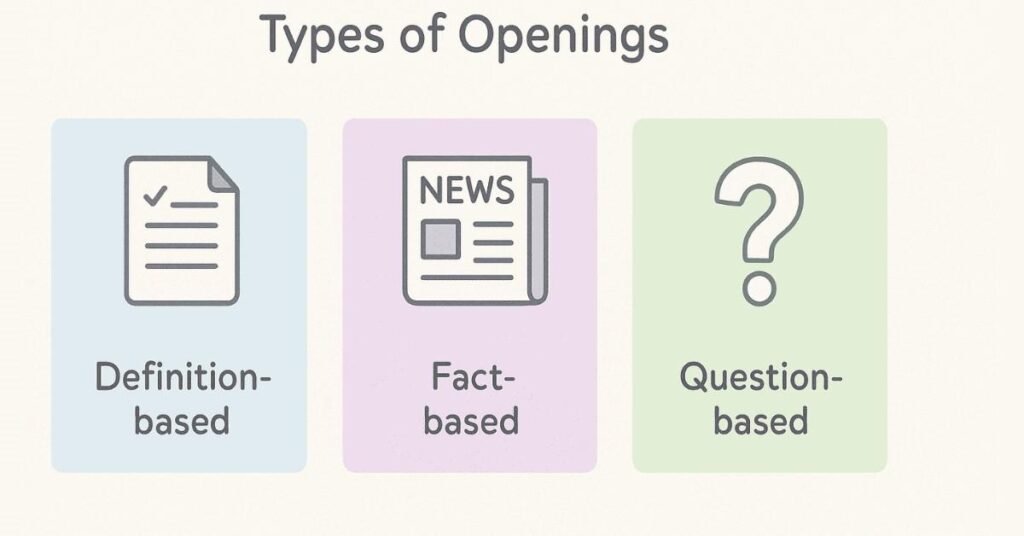
Three Types of Powerful Openings:
Type 1: The Definition-Based Opening
This works great for abstract or complex topics. You define the core issue and break it down.
Topic: “Is artificial intelligence a threat or opportunity?”
Weak opening: “AI is very important these days. Let’s talk about it.”
Strong opening: “AI is a tool—not inherently good or bad. The real question is: How do we design AI systems that benefit everyone, not just rich nations and tech companies? I think we should look at three angles: opportunity in jobs and innovation, threat in job displacement, and governance—how we regulate it. Let me start with the opportunity side…”
Notice what happened? You:
- Defined what “AI” really means in this context
- Broke the vague topic into manageable parts
- Gave direction to the discussion
- Invited others to follow your structure
Type 2: The Fact-Based Opening
This works for news-based or statistics-heavy topics. You start with a surprising fact that captures attention.
Topic: “Should India focus on manufacturing or technology?”
Weak opening: “Both manufacturing and technology are important.”
Strong opening: “Here’s an interesting stat: India’s tech sector contributes 8% to GDP but employs only 5 million people. Manufacturing, meanwhile, contributes 17% but employs 150 million people. This shows that while tech generates more revenue per person, manufacturing employs vastly more people. So the real question isn’t ‘which one’—it’s how do we strengthen both? Let me explain why…”
This opening:
- Grounds the discussion in reality
- Shows you’ve done homework
- Presents a nuanced view
- Gives others concrete data to build on
Type 3: The Question-Based Opening
This works when you want to engage people’s thinking immediately. You pose a thought-provoking question.
Topic: “Haste makes waste”
Weak opening: “I think haste makes waste because rushing leads to mistakes.”
Strong opening: “Here’s a question: If haste always makes waste, how did companies like Tesla and Airbnb grow so fast? They moved quick, yet they succeeded. So maybe the real question is: When is haste beneficial, and when is it harmful? I think it depends on the situation…”
This opening:
- Challenges the obvious
- Creates curiosity
- Invites debate
- Shows critical thinking
Pick the opening type that fits your strength. Some people naturally think in definitions, others in data, others in questions. Use what comes naturally to you.
🔍 Explore structured learning resources to strengthen communication clarity →
2. Using the PREP Method to Structure Each Point
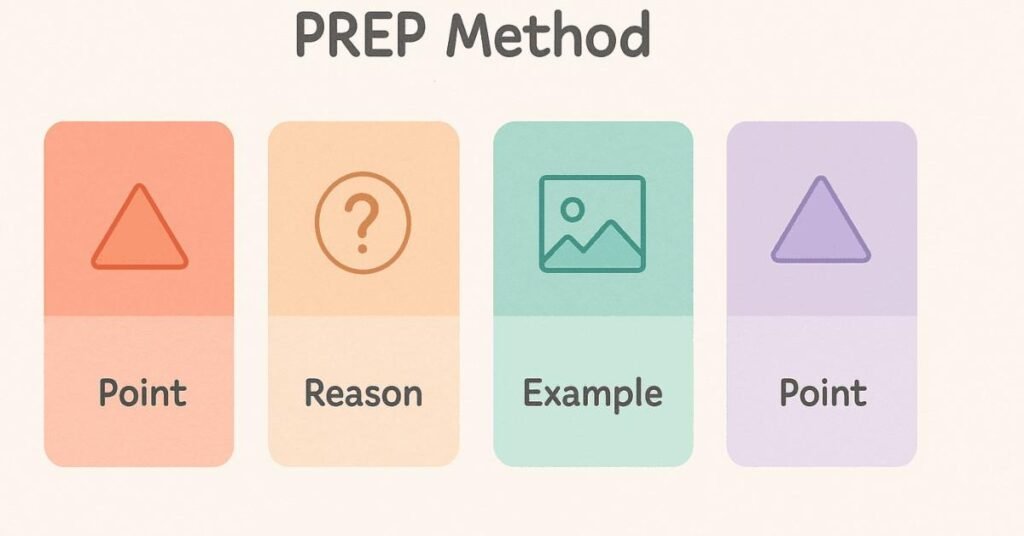
We mentioned PREP earlier, but here’s how to use it as a technique during the GD, not just preparation.
When you speak in a GD, use this structure for every significant point:
P – Point (What’s your main argument? State it clearly in one sentence.)
R – Reason (Why do you believe this? What’s the logic?)
E – Example (Can you back it with data, news, or a real case?)
P – Point (Conclude by restating or narrowing your main argument.)
Here’s a real-world GD conversation using PREP:
You: “I think companies should implement 4-day work weeks in knowledge industries.” (P)
Why? “Because research shows employees are more productive when they have adequate rest. The Microsoft study in 2023 found that productivity increased 40% with a 4-day week.” (R)
For example, “Iceland tested this with 2,500 workers. They produced same output in 4 days as they did in 5 days, while reporting higher life satisfaction.” (E)
So my final point is: “A 4-day week isn’t laziness—it’s smart resource management that benefits both employees and employers.” (P)
Now someone responds with their counter-argument, and you’re ready to use PREP again for your rebuttal.
Why does PREP work so well?
- It forces you to think clearly before speaking
- Listeners can follow your logic easily
- You don’t ramble
- It sounds professional and organized
Practice PREP so much that it becomes automatic. Then during a real GD, your points will naturally flow in this structure.
📘 Discover more preparation content and performance-oriented guidance →
3. Powerful Closing Statements (The Last Impression)
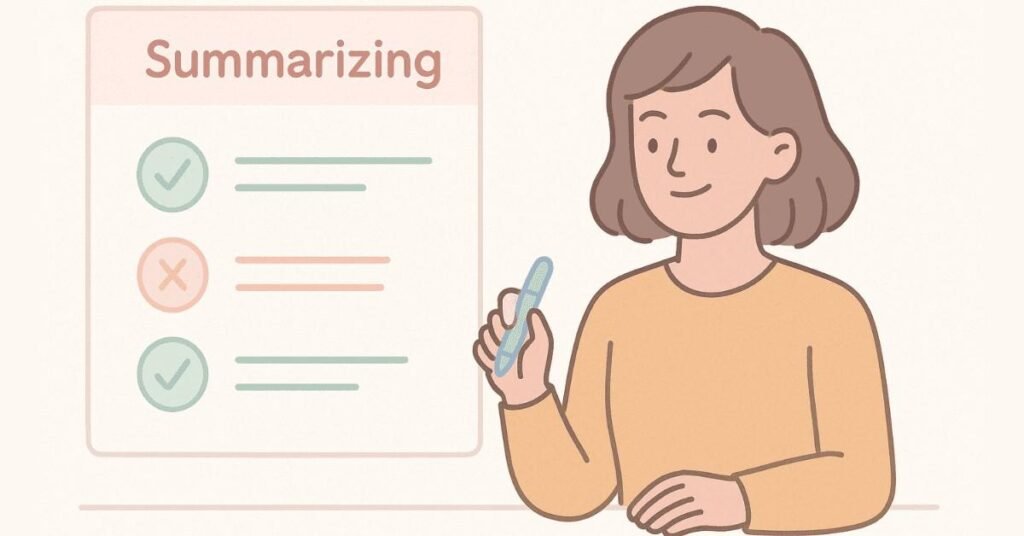
Most students ignore the closing. Don’t. The closing is your last chance to influence the group’s perception and summarize what was discussed.
In the last 2 minutes of a GD, the discussion often becomes chaotic. This is when you step in with a strong closing.
What a good closing does:
- Summarizes key points discussed
- Highlights areas of agreement and disagreement
- Proposes a balanced conclusion
- Leaves a positive, organized impression
Example of a weak closing:
“Um, yeah, so we discussed a lot of things about AI. There were different opinions. Some people think it’s good, some think it’s bad. So, I think AI is important. Thank you.”
This is forgettable and disorganized.
Example of a strong closing:
“Let me summarize what I heard: Everyone agreed AI will significantly impact our economy. We also agreed that job displacement is a real concern. The disagreement was about timing and solutions. I think the consensus is: ‘AI adoption is inevitable, but we need government-led reskilling programs alongside it.’ This way, we get the benefits of innovation while protecting workers. That’s how we should approach this.”
This closing:
- Shows you listened to everyone
- Identifies common ground
- Acknowledges disagreement respectfully
- Proposes a balanced solution
- Sounds confident and organized
Try this closing formula:
- “What I heard today was…” (Summarize 2-3 key points)
- “We mostly agreed on…” (Common ground)
- “Our disagreement was about…” (Differences)
- “So I think the way forward is…” (Balanced conclusion)
📂 Access complete learning materials designed for improved reasoning and presentation →
4. Recovery Techniques: What to Do When You Mess Up
Here’s the reality: You will mess up. You might mispronounce a word, forget your thought mid-sentence, or realize you said something wrong.
How you handle this matters more than the mistake itself.
Mistake 1: You start speaking and suddenly forget what you were saying
❌ Bad recovery: Stop, look confused, say “uh, I forgot what I was going to say” and sit down.
✅ Good recovery: “Let me restructure that thought… What I meant to say is…” (Pause, collect yourself, continue)
Companies see this and think: “They can think on their feet and recover from confusion.” That’s a skill.
Mistake 2: You realize you said something factually wrong
❌ Bad recovery: Ignore it and move on. (Later, someone corrects you publicly—looks bad)
✅ Good recovery: “Actually, let me correct myself. I said the statistic was 50%, but I think it’s closer to 35%. Thanks for letting me think through that.”
By correcting yourself, you show intellectual honesty. Recruiters like that.
Mistake 3: Someone points out a flaw in your argument
❌ Bad recovery: Get defensive. “No, I’m right because…”
✅ Good recovery: “That’s a fair point. I didn’t consider that angle. Let me adjust my argument…” (Now your response seems thoughtful, not rigid)
Mistake 4: You speak too long and someone interrupts
❌ Bad recovery: Get upset. “Let me finish!”
✅ Good recovery: “I’ll wrap up my point quickly… [finish in 20 seconds]” (Shows you can be concise when needed)
The Recovery Principle:
Every mistake is a chance to show maturity. Show that you can:
- Laugh at yourself
- Accept feedback
- Think critically about your own words
- Adjust quickly
People who do this often leave a better impression than people who never mistake anything.
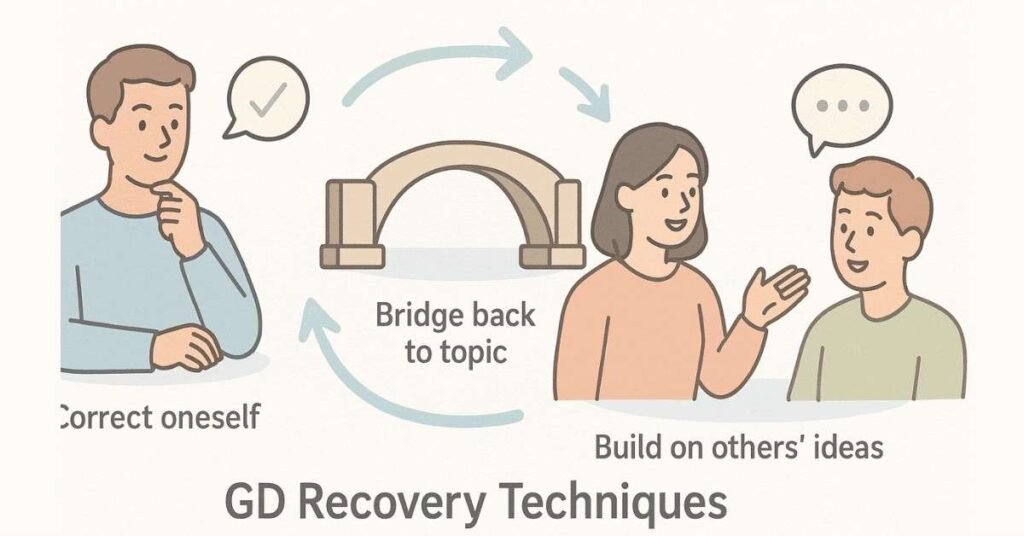
5. Advanced Techniques: Bridging and Building
We mentioned these earlier, but here’s how to master them.
Bridging: Connecting someone’s point back to the main discussion when it gets lost.
Scenario: The discussion has drifted into complaining about government, but the original topic is about educational technology.
You: “I hear what you’re saying about government support. That actually connects back to our main point—that educational technology needs infrastructure investment. So if the government funded digital learning platforms in rural areas, we’d solve both issues: better education and better job readiness.”
You just brought the conversation back on track while validating what others said. Genius move.
Building: Taking someone’s incomplete idea and making it better.
Scenario: Someone says, “I think companies should hire more women.”
You: “I agree with the goal. But I’d add specifics: Companies should hire more women in technical roles—engineering, product, data science—where representation is below 20%. In HR and communications, women are already over-represented. So it’s not just about hiring women; it’s about hiring women in underrepresented areas. That’s true equality.”
Now you’re not just agreeing—you’re adding depth and nuance. This is what leadership looks like.
Final Technique: The Strategic Question
Sometimes the best contribution isn’t a statement—it’s a question that makes everyone think.
Weak question: “What do you think?” (Too vague)
Strong question: “If automation eliminates manufacturing jobs, how do we ensure displaced workers can transition to service sector jobs? Should companies be responsible, or the government, or both?”
Strategic questions show you:
- Understand the complexity
- Are thinking beyond obvious answers
- Want to include others in problem-solving
- Have intellectual curiosity
Use these 5 techniques, and you’ll execute like a seasoned professional.