
Frequently Asked Questions About Renewable Energy Careers
Table of Contents

1. Is a technical background necessary to work in renewable energy?
Answer:
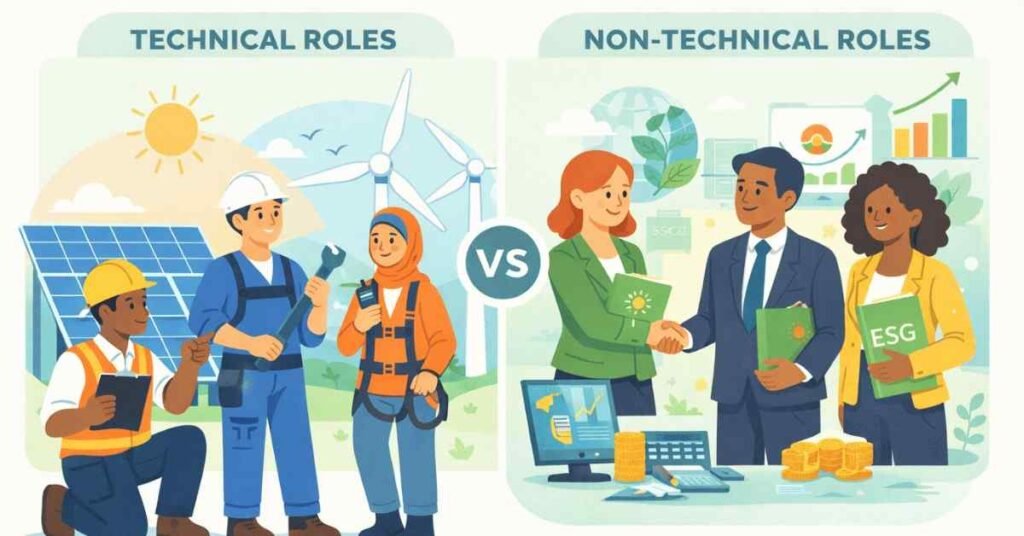
While technical roles like engineers, technicians, and designers typically require a background in science or engineering, many non-technical roles such as sales, business development, finance, and ESG consulting do not require an engineering degree. These roles value soft skills, certifications, and relevant experience.
2. Are renewable energy careers stable and long-term?
Answer:
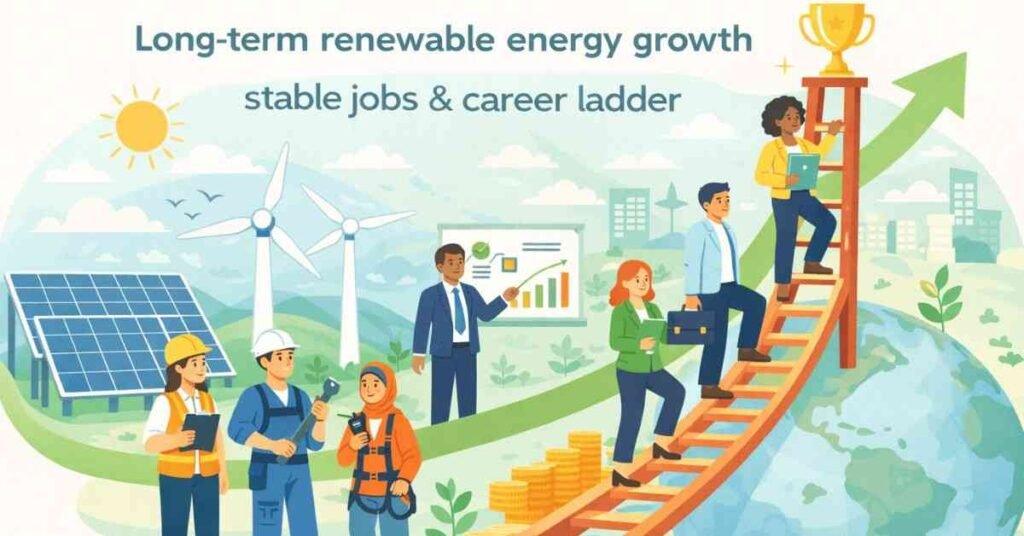
Yes! The global drive towards clean energy, driven by climate commitments and government policies, means renewable energy is here to stay. India aims for 500 GW of renewable capacity by 2030, creating millions of jobs. As the industry grows, career stability and opportunities for advancement are expected to increase.
3. Can someone start a renewable energy career even if they are from a non-engineering background?
Answer:
Absolutely! The sector offers roles in sales, marketing, finance, project management, ESG, and policy, which don’t require an engineering degree. These roles often require certifications or short courses in specific areas. Experience and soft skills are equally valued.
4. What are the future opportunities to work abroad in renewable energy?
Answer:
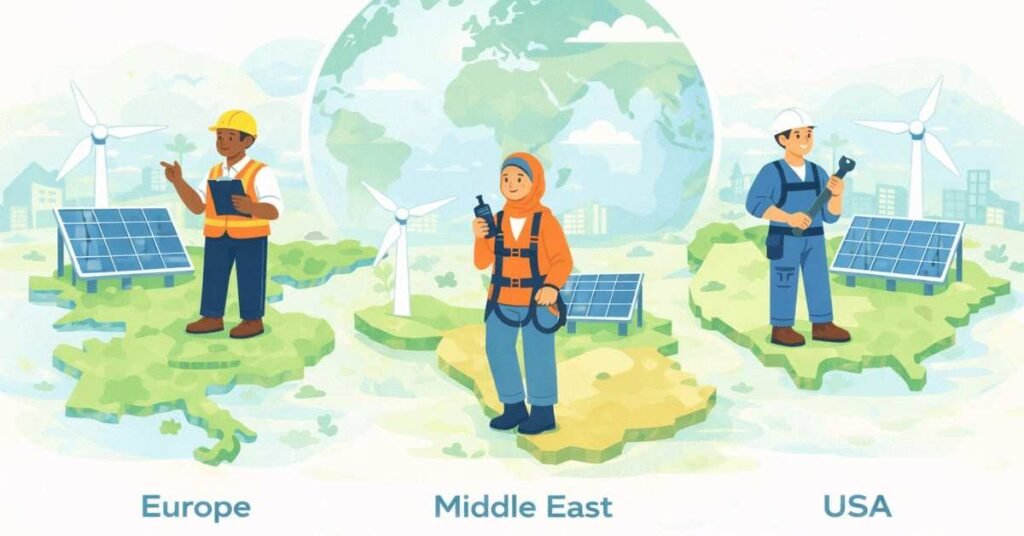
Many countries are investing heavily in renewable projects, including Europe, the Middle East, Africa, and North America. Skills in solar, wind, batteries, and green hydrogen are highly sought after worldwide. India’s experience is valued, especially for large-scale or innovative projects.
5. How quickly can I expect to grow in this sector?
Answer:
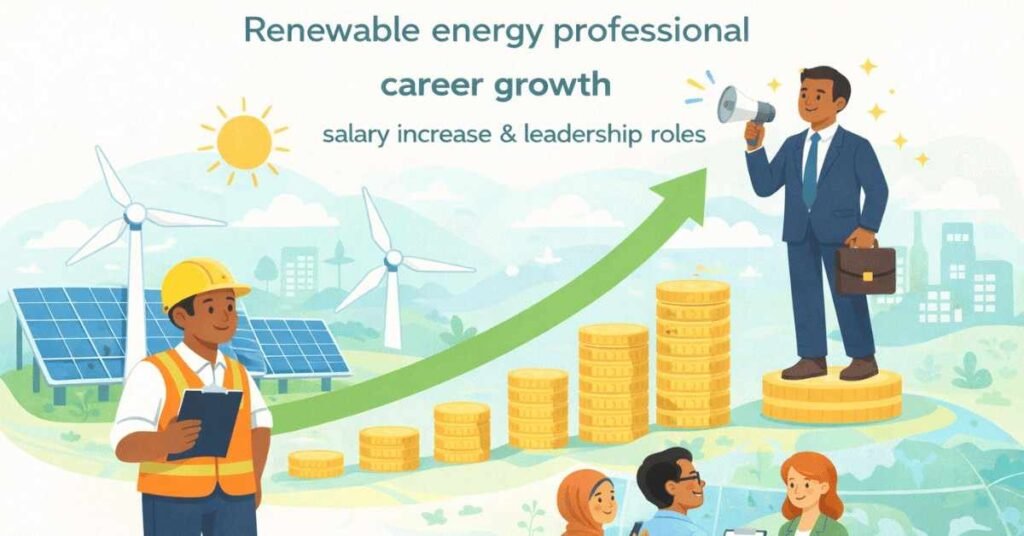
Career growth depends on your skills, certifications, and experience. Entry-level roles typically see rapid growth within 2–3 years, and with continuous learning, managers and senior specialists can reach high salaries within 5–7 years. Sector growth also means new roles are constantly emerging.
6. Are there opportunities for women in renewable energy?
Answer:
Yes! The sector is increasingly promoting diversity and gender equity. Many companies actively encourage women to enter roles like project management, research, and consulting. Women are making significant contributions, especially in leadership and technical innovations.
7. How important are certifications and courses?
Answer:
Certifications and courses greatly enhance your profile, especially in specialized fields like solar design, wind safety, or ESG reporting. They demonstrate your commitment and expertise, making you more attractive to employers. Many certifications are now accessible online.
8. Is the renewable energy sector financially rewarding?
Answer:
Yes. Salaries vary based on role, experience, and location. Entry-level roles start at ₹2–4 LPA, while experienced professionals like project managers and senior engineers can earn ₹15–50+ LPA. The sector also offers benefits like stock options, bonuses, and international projects.
Final Note
The renewable energy sector offers a bright future for students and professionals willing to learn, adapt, and innovate. Whether you’re an engineer, a manager, or a sales expert, there is a role for you in building a sustainable energy future.