FinTech Careers :Where Finance Meets Technology

Table of Contents
What Is FinTech? (The Finance Revolution)
FinTech = Financial Technology. It’s the intersection where finance meets cutting-edge technology to solve real-world problems.
Simple examples:
- Paytm, PhonePe, Google Pay: Digital payments (you don’t need cash anymore)
- Zerodha, Groww: Stock trading apps (invest from your phone)
- CRED, Slice: Credit card management and rewards
- PolicyBazaar: Compare and buy insurance online
- Razorpay, Stripe: Payment processing for businesses
Why FinTech is booming in 2025:
- India has 750+ million internet users—all potential FinTech customers
- Government push for digital payments (UPI processed ₹200+ lakh crore in 2024)
- Massive funding (FinTech startups raised $10+ billion in recent years)
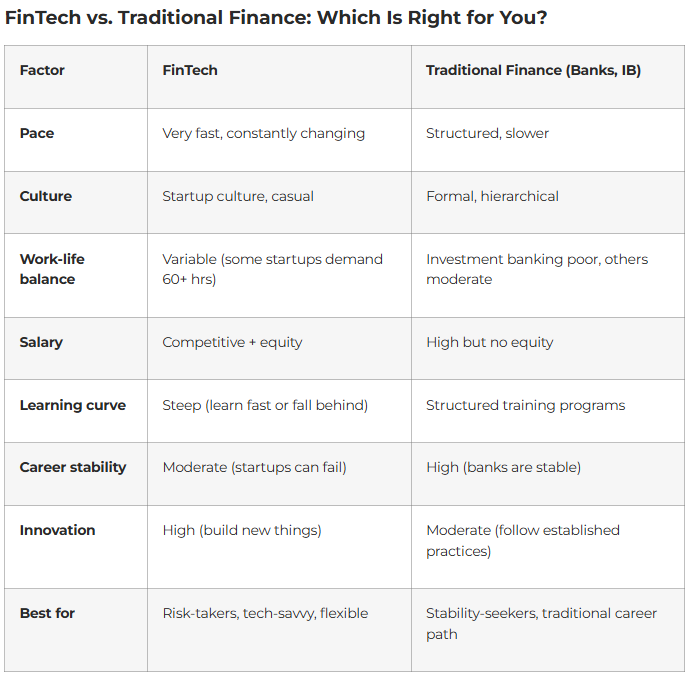
- Traditional banks can’t move fast—FinTech startups can

Top 10 FinTech Career Roles
- Quantitative Analyst (The Math Wizard)
What they do:
- Build mathematical models for trading and investments
- Create algorithms that make automated trading decisions
- Analyze market data to predict trends
- Work with huge datasets and complex statistics
Skills needed:
- Advanced mathematics (statistics, calculus, probability)
- Programming (Python, R, C++)
- Financial markets knowledge
- Machine learning basics
Salary: ₹15-25 LPA (India) → ₹1.3 crore+ (global roles)siecindia
Best for: Math lovers, PhDs, engineering grads who love problem-solving
Top companies: Goldman Sachs, Deutsche Bank, Alphagrep, Tower Researchsiecindia
- Blockchain Developer (Building the Future of Finance)
What they do:
- Develop blockchain applications (cryptocurrency, smart contracts)
- Build decentralized finance (DeFi) platforms
- Ensure security and scalability
- Work on Web3 projects
Skills needed:
- Programming (Solidity, JavaScript, Python)
- Understanding of blockchain technology
- Cryptography basics
- Smart contract development
Salary: ₹12-20 LPA (India) → Much higher for experienced rolessiecindia
Why it’s hot: Blockchain is transforming banking, payments, contracts, and investments.
Top companies: Polygon, CoinDCX, WazirX, international crypto exchangessiecindia
- Product Manager (The Visionary)
What they do:
- Define product strategy (what features should the app have?)
- Work with engineers, designers, and business teams
- Understand customer pain points and solve them
- Launch new products and features
Skills needed:
- Business acumen (understand finance AND technology)
- User research and data analysis
- Communication and leadership
- Basic technical knowledge
Salary: ₹15-30 LPA (experienced PMs can earn ₹50+ LPA)siecindia
Best for: People who love both technology and business strategy
Top companies: Paytm, PhonePe, CRED, Razorpay, Stripesiecindia
- Data Scientist / Data Analyst (The Insight Generator)
What they do:
- Analyze user behavior (why customers drop off?)
- Build predictive models (who will default on loans?)
- Create dashboards for decision-making
- Use AI/ML to improve products
Skills needed:
- Python, SQL, R
- Machine learning and statistics
- Data visualization (Tableau, Power BI)
- Business understanding
Salary: ₹10-20 LPA (analyst) → ₹25-50+ LPA (senior data scientist)
Why it’s valuable: Every decision in FinTech is data-driven. Companies need people who can extract insights from massive datasets.
Top companies: Flipkart, Amazon Pay, PhonePe, Razorpaysiecindia
- Risk & Compliance Analyst (The Guardian)
What they do:
- Ensure FinTech companies follow regulations (RBI, SEBI guidelines)
- Detect fraud and suspicious activities
- Build risk models (who might default?)
- Work with regulators and legal teams
Skills needed:
- Understanding of financial regulations
- Data analysis and risk modeling
- Attention to detail
- Communication skills
Salary: ₹8-15 LPA (entry) → ₹25-40 LPA (senior)
Why it matters: FinTech is heavily regulated. One compliance mistake can shut down the company or result in huge fines.
Top companies: Paytm, PhonePe, CRED, PolicyBazaarimperialbschool+1
- DevOps Engineer (Keeping Systems Running)
What they do:
- Ensure FinTech platforms are fast, secure, and reliable
- Manage servers and cloud infrastructure
- Monitor system performance
- Automate deployment processes
Skills needed:
- Cloud platforms (AWS, Google Cloud, Azure)
- Programming (Python, Shell scripting)
- Understanding of security
- System architecture knowledge
Salary: ₹12-20 LPA → ₹1.2 crore+ (global roles)siecindia
Why it’s critical: When PhonePe goes down during a sale, millions of transactions stop. DevOps engineers prevent that.
- UX/UI Designer (Making Finance User-Friendly)
What they do:
- Design intuitive app interfaces
- Conduct user research
- Create seamless user experiences
- Test and improve designs
Skills needed:
- Design tools (Figma, Sketch, Adobe XD)
- User research methods
- Understanding of user psychology
- Basic technical knowledge
Salary: ₹8-15 LPA → ₹25-40 LPA (senior designers)
Why it’s important: Finance is complex. Great design makes it simple. CRED’s success is largely due to its delightful user experience.
- Financial Analyst (Finance + Tech)
What they do:
- Analyze company and product performance
- Build financial models and forecasts
- Support fundraising and business strategy
- Work on pricing strategies
Skills needed:
- Financial modeling and analysis
- Excel and SQL
- Business understanding
- Communication skills
Salary: ₹10-18 LPA → ₹30+ LPA (senior roles)
Best for: Finance grads who want to work in tech environmentimperialbschool
- Cybersecurity Specialist (The Protector)
What they do:
- Protect customer data and money from hackers
- Identify security vulnerabilities
- Build secure systems
- Respond to security incidents
Skills needed:
- Cybersecurity knowledge (ethical hacking, penetration testing)
- Programming (Python, Java)
- Understanding of financial systems
- Problem-solving under pressure
Salary: ₹12-25 LPA → ₹40+ LPA (senior roles)
Why it’s crucial: FinTech companies handle money and sensitive data. One breach can destroy customer trust.
- Business Development / Partnerships Manager
What they do:
- Find and close partnerships (banks, merchants, other FinTechs)
- Expand business into new markets
- Negotiate deals
- Build strategic relationships
Skills needed:
- Relationship building and networking
- Negotiation and sales
- Understanding of FinTech ecosystem
- Strategic thinking
Salary: ₹10-20 LPA → ₹30-50+ LPA (senior BD roles)
Best for: Extroverted people who love networking and closing deals

How to Break Into FinTech (Step-by-Step)
Step 1: Choose Your Path
FinTech needs TWO types of people:
- Finance people who learn tech (accountants, financial analysts learning Python, SQL)
- Tech people who learn finance (engineers, developers learning financial concepts)
If you’re from finance background:
- Learn SQL, Python, Excel (advanced)
- Understand basics of technology (APIs, cloud, databases)
- Study how FinTech products work (use apps, understand workflows)
If you’re from tech background:
- Learn financial concepts (how payments work, lending, investing)
- Understand regulations (RBI guidelines, KYC, AML)
- Study FinTech business models
Step 2: Build Relevant Skills

Step 3: Get Practical Experience
Projects you can build:
- Personal finance tracker app
- Stock portfolio analyzer
- Loan default prediction model
- Payment gateway integration
- Cryptocurrency price tracker
Internships:
- Apply to FinTech startups (they hire interns regularly)
- Even 2-3 months internship adds credibility
- Many convert to full-time
Step 4: Network in FinTech Community
- Attend FinTech meetups and conferences
- Join LinkedIn groups (FinTech India, Payments Community)
- Follow FinTech leaders on Twitter/LinkedIn
- Engage with content (comment, share insights)
Step 5: Apply Strategically
Target companies by stage:
Tier 1 (Established FinTechs):
- Paytm, PhonePe, Razorpay, CRED, PolicyBazaar
- More structured, better pay, stable
- Harder to get in (competitive)
Tier 2 (Growing Startups):
- Slice, Jupiter, FamPay, Jar, INDmoney
- Faster growth, more responsibility
- Easier to get in, good learning
Tier 3 (Early-Stage):
- Seed/Series A startups
- High risk, high learning
- Easier entry, potential for equity upside