Self-Introduction Strategies for Experienced Professionals
Table of Contents

Why Experienced Professionals Need a Different Introduction Strategy

If you’ve been in the workforce for a few years, you’ve probably realized something: the self-introduction that landed you your first job doesn’t work anymore. When you had zero experience, your introduction was about potential. Now, with years under your belt, it needs to be about proven impact.
Here’s the challenge experienced professionals face: you have too much to say, not too little. You’ve worked on multiple projects, held different roles, developed numerous skills. The temptation is to cram everything into your introduction—and that’s exactly where most experienced candidates go wrong.
Recruiters interviewing experienced professionals aren’t looking for a chronological recitation of your career history. They’re asking three specific questions:
- What level of impact have you delivered? (Numbers, results, improvements)
- What makes you different from other experienced candidates? (Unique value)
- Why are you the right fit for this specific role? (Strategic alignment)
Your introduction needs to answer all three—concisely, confidently, and strategically.
The Present-Past-Future Framework for Experienced Professionals

The most effective introduction structure for experienced professionals follows a simple three-part flow: where you are now, how you got here, and where you’re heading.
Present (20 seconds): Your Current Professional Identity
Start with your name, current role, and years of experience. But don’t stop at your job title—explain what you actually do and the scope of your responsibility.
Weak opening:
“I’m Anil, a Senior Software Engineer with 6 years of experience.
Strong opening:
“I’m Anil, a Senior Software Engineer with 6 years of experience building scalable backend systems for fintech applications. I currently lead a team of 4 developers at ABC Solutions, where we process over 2 million transactions daily.
Notice the difference? The second version tells the interviewer your level of operation and scale of impact.

Past (30 seconds): Your Career Journey with Achievements
This is where you briefly explain your progression and highlight 2-3 key achievements that demonstrate your value.
The key word here is achievements, not responsibilities. Any experienced professional can list what they were supposed to do. What sets you apart is what you actually accomplished.
Framework: Situation → Action → Result
“I started my career as a junior developer at XYZ Tech, where I quickly moved into API development. One project I’m particularly proud of involved optimizing our payment gateway—I identified bottlenecks in the code that were causing 15-second delays, refactored the entire module, and reduced transaction time to under 2 seconds. That single improvement increased our successful payment completion rate by 23%, which translated to an additional ₹50 lakhs in monthly revenue.
See how this works? You’ve shown technical skill (optimization), problem-solving ability (identifying bottlenecks), and business impact (revenue increase).
Future (15 seconds): Why This Opportunity
End by connecting your experience to what you’re seeking next. This shows strategic thinking and genuine interest in the role.
“I’m now looking to take on more architectural challenges where I can design systems from the ground up. Your company’s work in building India’s next-generation payment infrastructure is exactly the kind of complex, high-impact problem I want to solve at this stage of my career.
Total time: 65-75 seconds for most interview contexts.
Customized Introductions for Different Experience Levels

Your introduction should evolve as your career progresses. Here’s how to adapt based on your experience level.
For 2-5 Years Experience: Showcasing Growth Trajectory
At this stage, you’re no longer a fresher but not yet a senior leader. Your introduction should emphasize rapid learning and increasing responsibility.
Complete Example:
“Hello, I’m Priya, a Digital Marketing Specialist with 3 years of experience in B2B SaaS marketing. I’m currently at Tech Solutions, where I manage end-to-end campaigns across LinkedIn, email, and content marketing. In my first year, I was responsible for social media execution. By year two, I was given ownership of our entire content strategy. Last quarter, I implemented a lead nurturing workflow that increased our marketing-qualified leads by 45% and improved sales conversion rates by 18%. My campaigns have directly contributed to closing deals worth ₹1.2 crore. I’m now looking to step into a marketing manager role where I can combine my hands-on execution skills with strategic planning, which is why your company’s focus on educational technology marketing really excites me.
What this does well:
- Shows clear progression (execution → strategy → leadership)
- Provides specific metrics (45% increase, ₹1.2 crore)
- Demonstrates business understanding (connects marketing to sales)
States clear career goals (manager role)
For 5-10 Years Experience: Emphasizing Leadership and Strategy
At this level, your introduction should highlight team leadership, strategic thinking, and cross-functional impact.
Complete Example:
“Good morning, I’m Karthik, a Project Manager with 7 years in IT services, currently leading delivery for enterprise clients at Global Tech. I manage a team of 15 across development, QA, and business analysis, overseeing projects ranging from ₹50 lakhs to ₹2 crore. Over the past three years, I’ve successfully delivered 12 projects with a 95% on-time delivery rate despite complex requirements and tight deadlines. One achievement I’m particularly proud of is turning around a failing project that was 4 months behind schedule—I restructured the team, implemented agile sprints, and brought it to successful completion within 2 months, saving the client relationship and a ₹1.5 crore contract. I’m known for balancing technical understanding with strong stakeholder management. I’m now looking for a senior program manager role where I can oversee multiple projects strategically while mentoring the next generation of project leaders.
What this does well:
- Opens with scope of responsibility (team size, budget)
- Quantifies success (95% on-time rate, 12 projects)
- Shows crisis management (turnaround story)
- Demonstrates people skills (team restructuring, mentoring)
Positions for next-level role (program management)
For 10+ Years Experience: Demonstrating Vision and Transformation
Senior professionals need introductions that emphasize organizational impact, vision, and industry expertise.
Complete Example:
“Hello, I’m Madhavi, with over 12 years of experience in supply chain and operations management, currently serving as Head of Operations for the South India region at Logistics Corp. I oversee a network of 8 warehouses, manage a team of 120 people, and handle logistics for 50+ enterprise clients. When I joined this company 5 years ago, our on-time delivery rate was 78% and customer complaints were averaging 45 per month. I led a complete transformation—implemented warehouse management systems, redesigned routing algorithms, and built a quality culture through training programs. Today, our on-time delivery stands at 96%, complaints have dropped to 8 per month, and we’ve reduced operational costs by 22% while increasing capacity by 40%. I’ve also mentored 3 managers who’ve gone on to lead their own regional operations. At this stage, I’m looking for a VP Operations role where I can drive transformation at a national level and contribute to long-term strategic planning.
What this does well:
- Opens with scope (regional head, 120 people, 50+ clients)
- Shows transformation (before/after metrics)
- Demonstrates multiple competencies (systems, people, strategy)
- Highlights leadership development (mentoring)
- Positions for C-suite trajectory (VP role)
Industry-Specific Introduction Strategies
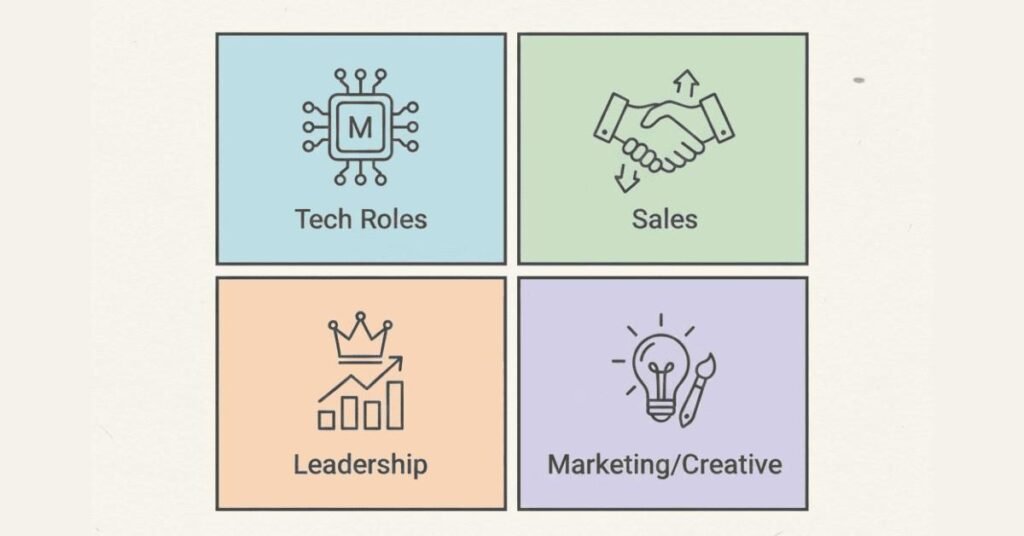
Different industries value different things. Tailor your introduction accordingly.
For Technical Roles (Software, Engineering, Data)
Focus on: Technologies mastered, complex problems solved, systems built, technical leadership
Key phrases to include:
- “I specialize in [specific technology stack]”
- “I’ve architected systems that handle [scale/volume]”
- “I’ve optimized [process] resulting in [performance improvement].
For Sales and Business Development
Focus on: Revenue generated, deals closed, relationships built, market expansion
Key phrases to include:
- “I’ve consistently exceeded targets by [percentage]”
- “I’ve closed deals worth [amount]”
- “I’ve expanded our presence in [market/geography].
For Management and Leadership Roles
Focus on: Team size, budget managed, strategic initiatives, organizational impact.
Key phrases to include:
- “I lead a team of [number] across [functions]”
- “I’ve driven [transformation/change] resulting in [outcome]”
- “I’ve built [systems/processes] that improved [metric].
For Creative and Marketing Roles
Focus on: Campaigns launched, brand growth, audience engagement, creative innovation
Key phrases to include:
- “I’ve grown [metric] from [X] to [Y]”
- “My campaigns have generated [leads/revenue/engagement]”
“I’ve repositioned [brand/product] resulting in [market impact].
Advanced Techniques for Experienced Professionals

Technique #1: The Strategic Pivot
If you’re interviewing for a role that’s different from your current position, address it proactively.
“While I’ve spent the last 5 years in product management, I’ve increasingly been drawn to the strategic side—leading market research, competitive analysis, and go-to-market planning. That’s why I’m excited about this Strategy Manager role where I can leverage my product expertise within a broader business strategy context.
Technique #2: The Industry Bridge
Transitioning industries? Show how your skills transfer.
“I’ve spent 8 years in retail banking, where I specialized in customer experience improvement. While I’m now exploring opportunities in healthcare, the core challenge is identical—understanding user pain points and designing services that are both efficient and empathetic. My experience reducing banking customer complaints by 60% is directly applicable to improving patient satisfaction in healthcare settings.
Technique #3: The Leadership Evolution
Positioning for promotion? Show readiness for the next level.
“As a Senior Analyst for the past 4 years, I’ve not only handled complex data modeling but also mentored 6 junior analysts, presented insights to C-level executives, and collaborated across departments. I’m ready to move into a Data Science Manager role where I can combine my technical depth with strategic team leadership.
Common Mistakes Experienced Professionals Make

Mistake #1: Being Too Modest
Indian professionals often downplay their achievements. This doesn’t work in interviews. State your impact clearly and confidently—with numbers.
Don’t say: “I was part of a team that did well.”
Say instead: “I led the technical workstream that delivered the project 3 weeks ahead of schedule.
Mistake #2: Overcomplicating with Jargon
Just because you know industry acronyms doesn’t mean you should use 15 of them in your introduction.
Keep it clear: “I improved our deployment process” works better than “I implemented CI/CD pipelines leveraging containerized microservices architecture with K8s orchestration.
Mistake #3: Forgetting the “So What?”
Every achievement should connect to business value.
Weak: “I automated the reporting process.”
Strong: “I automated the reporting process, which saved the team 20 hours weekly and allowed us to reallocate resources to strategic analysis.
Mistake #4: Not Preparing for Different Time Frames
Have three versions ready: 30-second elevator pitch, 60-second standard interview intro, and 90-second detailed version for panel interviews.
Your 5-Day Preparation Plan
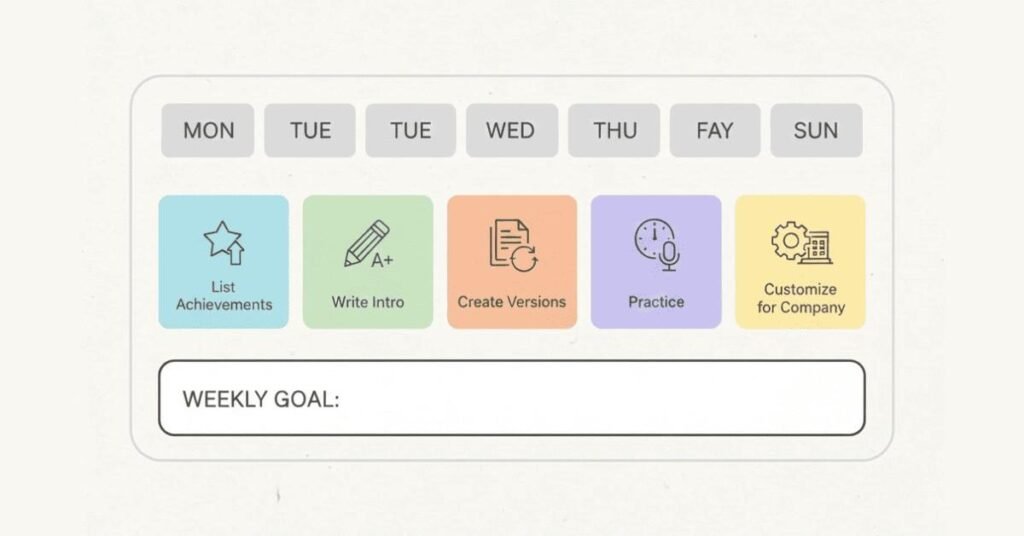
Day 1: List your last 3-5 major achievements with specific metrics. Choose the 2-3 most impressive ones.
Day 2: Write your full 90-second introduction using the Present-Past-Future framework.
Day 3: Create shorter 60-second and 30-second versions by prioritizing the most relevant points.
Day 4: Practice out loud. Record yourself. Refine based on what sounds natural vs. rehearsed.
Day 5: Research the company you’re interviewing with and customize your “Future” section specifically for them.
The Competitive Advantage
Here’s what experienced professionals often forget: you’re not just competing on skills anymore—you’re competing on articulation of value.
Two candidates with identical experience will get very different responses based on how effectively they communicate their impact. The one who can clearly articulate their strategic value, connect their achievements to business outcomes, and demonstrate readiness for the next level—that’s who gets the offer.
Your introduction is your first opportunity to show you’re not just experienced—you’re strategically aware, business-minded, and ready for bigger challenges.
Invest the time to craft it properly. Your career trajectory depends on those crucial 90 seconds.