
EVENT MANAGEMENT & COORDINATION
Table of Contents
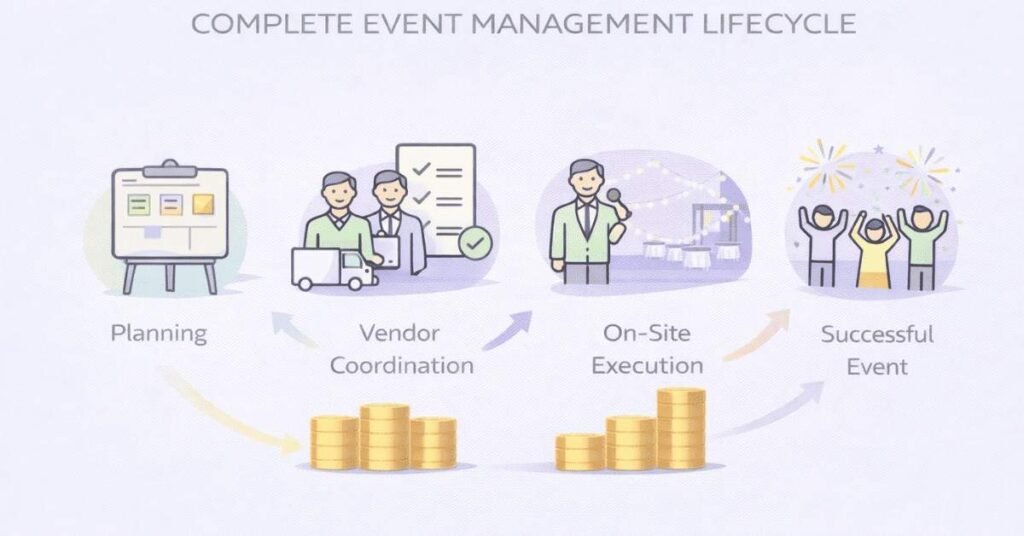
Event Management Careers: Create Memorable Experiences & Build Successful Events
Why Event Management is Uniquely Rewarding
Imagine having the power to create moments that define people’s lives. A wedding day. A major corporate conference. A product launch that changes a brand’s future. If you’re creative, organized, and energized by bringing visions to reality, event management offers career satisfaction beyond just earning a paycheck.
Event management in hospitality is booming in 2025. Corporate events, destination weddings, conferences, product launches, and celebrations are growing categories. Hotels are increasingly investing in event spaces and specialized teams to capture this revenue. This growth creates abundant career opportunities for professionals who can orchestrate complex events flawlessly.
Understanding the Event Management Ecosystem
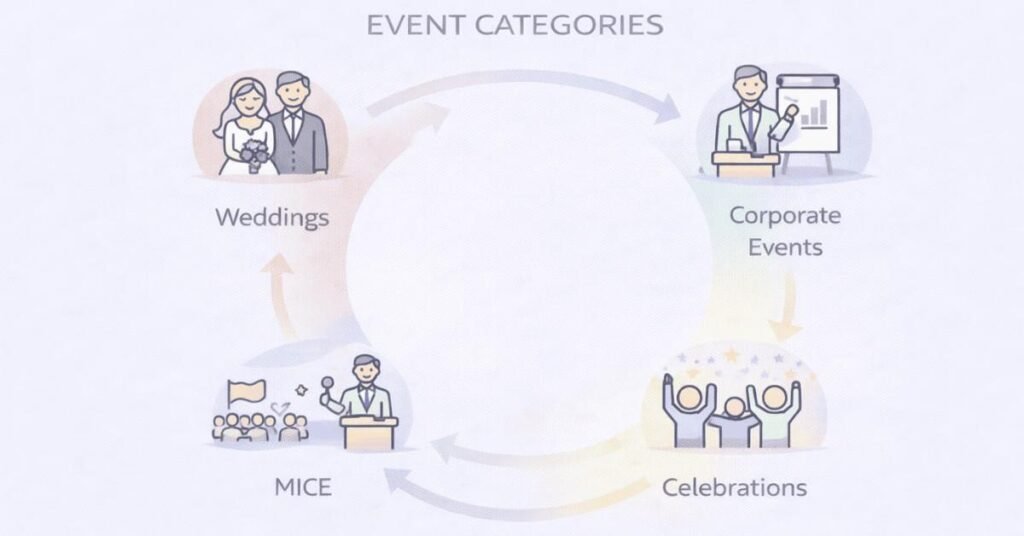
Events can be broadly categorized:
Weddings & Social Events – Destination weddings, intimate ceremonies, celebrations (fastest-growing segment)
Corporate Events – Conferences, product launches, team-building activities, annual meetings
MICE Events – Meetings, Incentives, Conferences, Exhibitions (often large, high-value events)
Celebrations & Parties – Private parties, milestone celebrations, anniversary events
Public Events – Community festivals, public celebrations, brand activations
Each category has different demands, timelines, budgets, and coordination requirements. Your role as an event professional is to manage all variables and deliver a seamless experience.
Key Event Management Roles
1. Event Coordinator
Who They Are:
Event Coordinators are the operational backbone of events. They handle logistics, timelines, vendor coordination, and on-site management. While Event Planners conceptualize events, coordinators make them happen.
Daily Responsibilities:
- Vendor Coordination – Managing vendors (caterers, decorators, musicians, photographers, florists)
- Timeline Management – Creating detailed timelines from booking to day-of execution
- Budget Tracking – Monitoring expenses, processing invoices, staying within budget
- Client Communication – Regular updates with clients on progress and decisions
- Site Logistics – Venue setup, room arrangements, technical requirements (AV, lighting, sound)
- Contingency Planning – Preparing backup plans for potential issues
- Documentation – Maintaining contracts, agreements, specifications
- On-Site Management – Being present during events, managing execution, handling last-minute issues
Typical Day:
Morning: Client calls, vendor confirmations, budget reviews
Midday: Site inspections, vendor meetings
Afternoon: Documentation, timeline updates, problem-solving
Evening: Possibly attending a client event or vendor meeting
Salary Range: INR 25,000 to 50,000 per month for entry to mid-level coordinators. Experienced coordinators managing multiple events earn INR 60,000-1,00,000+.
Why This Role Matters: Event coordinators are practical problem-solvers. When the florist arrives late or the client changes their mind, coordinators find solutions immediately.
Career Progression: Event Coordinator → Senior Coordinator → Event Manager → Head of Events

2. Event Manager/Event Planner
Who They Are:
Event Managers oversee the conceptualization, planning, and execution of events. They work more strategically than coordinators—designing event concepts, client relationship management, and ensuring events align with client objectives.
Key Responsibilities:
- Event Conceptualization – Understanding client goals and designing event concepts
- Team Leadership – Managing coordinators, vendors, and support staff
- Client Relationship Management – Building relationships, understanding needs, managing expectations
- Proposal Development – Creating detailed proposals with concepts, timelines, budgets
- Vendor Selection – Choosing vendors (caterers, decorators, entertainment) that fit the event
- Budget Management – Creating budgets, negotiating with vendors, monitoring expenses
- Creative Direction – Ensuring event design aligns with client vision and brand positioning
- Quality Assurance – Ensuring event delivers promised experience and value
- Post-Event Analysis – Client feedback, lessons learned, documentation
Event Management Skills:
- Project Management – Coordinating multiple activities, timelines, stakeholders
- Budget Management – Creating, justifying, and managing substantial budgets
- Communication – Clear articulation of concepts and expectations
- Problem-Solving – Creative solutions to complex logistical challenges
- Creativity – Designing unique, memorable event experiences
- Vendor Management – Negotiating, coordinating, evaluating multiple vendors
Salary Range: INR 40,000 to 1,00,000+ per month depending on event types and experience. Premium event managers handling high-value events earn INR 1,20,000-2,00,000+.
Career Significance: Event Managers are often entrepreneurs-in-waiting. Many transition to starting their own event management companies.
3. Wedding Planner
Who They Are:
Wedding Planners specialize in one of the most emotionally significant events—weddings. They work with couples and families to create dream weddings, managing everything from concept to flawless execution. In India, destination weddings and elaborate celebrations are particularly popular.
Unique Responsibilities:
- Couple Consultation – Understanding couple’s vision, budget, non-negotiables, preferences
- Venue Selection – Researching and recommending venues matching couple’s vision
- Theme & Decor Planning – Designing overall wedding aesthetics and decor
- Vendor Coordination – Managing caterers, florists, photographers, musicians, choreographers
- Multi-Day Event Planning – Many weddings span multiple events (mehendi, sangeet, wedding, reception)
- Family Management – Facilitating communication between couple’s families
- Ceremony Direction – Planning ceremony sequence, timings, traditions
- Reception Planning – Menu planning, entertainment, guest flow, photography timeline
- Logistics & Transportation – Guest accommodations, airport pickups, travel logistics
- Emergency Management – Weather contingencies, vendor backup plans, quick problem-solving
Why It’s Unique:
Weddings aren’t just events—they’re emotionally charged occasions. Wedding planners often become trusted confidants, managing not just logistics but family dynamics and expectations.
Salary Range:
- Fresher (0-1 year): INR 20,000-30,000 monthly
- 1-3 years: INR 40,000-70,000 monthly
- 3-5 years: INR 60,000-1,50,000 monthly
- 5+ years/Established planners: INR 1,00,000-3,00,000+
Wedding planners often earn through multiple streams: event fees + vendor commissions + additional services. Highly successful planners managing high-end weddings can earn INR 4,88,501 – 8,83,201 annually (INR 40,000-74,000 monthly), with top performers earning significantly more.
Growth Path: Most wedding planners either grow within event management companies or become independent entrepreneurs after gaining experience.
4. Corporate Event Manager
Who They Are:
Corporate Event Managers handle business-related events—conferences, product launches, annual meetings, team-building activities, trade shows. These events directly impact business outcomes (lead generation, brand awareness, team engagement).
Corporate Event Types Managed:
- Conferences & Seminars – Large-scale educational or industry events
- Product Launches – Brand-new product introductions requiring significant coordination
- Annual General Meetings (AGM) – Shareholder meetings, company announcements
- Trade Shows & Exhibitions – Industry-specific large-scale events
- Team Building Events – Off-sites, retreats, celebration events for internal teams
- Client Entertainment Events – Client appreciation, VIP events, business development events
Responsibilities:
- Client Understanding – Understanding business objectives, target audience, desired outcomes
- Event Design – Creating events that achieve business goals (lead generation, engagement, sales)
- Logistics – Managing complex logistics for potentially 500+ attendees
- Vendor Coordination – Managing tech teams, caterers, security, transportation
- Budget Justification – Demonstrating ROI and justifying event investment to executives
- Audience Engagement – Designing interactive elements, keynote coordination, networking opportunities
- Analytics & Reporting – Measuring event success (attendance, engagement, lead generation, feedback)
Salary Range: INR 50,000 to 1,50,000+ per month depending on event scale, company size, and experience. Corporate event managers in large corporations earn INR 1,50,000-3,00,000+.
Why It’s Valuable: Corporate events generate business results. A successful conference generates leads, partnerships, and revenue. This direct business impact justifies investment in skilled event managers.
5. Banquet Manager
Who They Are:
Banquet Managers oversee hotel banquet operations—managing event spaces, coordinating with kitchens, ensuring flawless service during events, managing staffing. If you work in a hotel, banquet management is often your event career entry point.
Key Responsibilities:
- Event Booking – Coordinating with sales team on event bookings, confirming details
- Kitchen Coordination – Working with F&B teams on menu execution, catering logistics
- Staff Scheduling – Planning and scheduling banquet staff (servers, housekeeping, setup teams)
- Service Execution – Overseeing service quality during events
- Room Setup – Ensuring rooms are set up correctly (table arrangements, decor, AV equipment)
- Client Liaison – Being client contact point during events, addressing concerns
- Vendor Coordination – Managing external vendors (decorators, musicians) coordinating with hotel
- Quality Assurance – Ensuring events meet hotel standards and client expectations
Salary Range: INR 40,000 to 1,00,000 per month depending on hotel category and experience. Experienced banquet managers in luxury hotels earn INR 1,00,000-2,00,000+.
Why It’s Important: Hotel banquets are significant revenue generators. A single wedding with 500 guests can generate INR 15-30 lakhs in revenue. Skilled banquet managers ensure revenue conversion and client satisfaction.
Event Management Skills Required
Organization & Planning
- Managing multiple timelines simultaneously
- Coordinating various stakeholders
- Creating detailed project plans
- Anticipating and preventing issues
Communication
- Clear client communication
- Managing vendor expectations
- Team coordination during hectic periods
- Problem-solving communication during crises
Budget Management
- Creating detailed budgets
- Negotiating vendor pricing
- Monitoring expenses meticulously
- Justifying investments to stakeholders
Creativity & Design Sense
- Envisioning event concepts
- Designing memorable experiences
- Adapting designs based on constraints
- Differentiating events from competitors
Crisis Management
- Handling unexpected situations calmly
- Finding quick solutions
- Maintaining quality under pressure
- Turning problems into solutions that enhance reputation
Emotional Intelligence
- Understanding client emotions and expectations
- Managing stakeholder dynamics
- Handling pressured situations with grace
- Building trust and relationships
Event Management Salary Progression


Your Path Into Event Management
Route 1: Hotel-Based Event Career
Best For: Those seeking stable employment within hospitality
- Start as Banquet Coordinator or Banquet Executive in a hotel
- Learn event logistics, client coordination, team management
- Progress to Banquet Manager role
- Transition to Hotel Event Manager role (coordinating multiple event spaces)
- Advance to Director of Events or leadership roles
Advantages: Stable employment, consistent salary, learning from established systems
Timeline: 3-5 years to reach Banquet Manager level, 5-8 years to Event Manager
Route 2: Independent Event Planner Path
Best For: Those entrepreneurial, creative, and comfortable with variable income
- Work 2-3 years with an event company to learn processes and build network
- Start freelancing while employed (building client base)
- Transition to full-time event planning business
- Build reputation through successful events
- Potentially grow into event management agency
Advantages: Flexibility, unlimited earning potential, creative control
Challenges: Inconsistent income initially, self-employment responsibilities
Route 3: Corporate Event Specialist
Best For: Those interested in business events, conferences, corporate environments
- Start in corporate event coordination role
- Join professional associations (MICE associations)
- Build expertise in conference management, trade shows
- Transition to corporate event manager roles
- Potentially work for event management companies serving corporate clients
Advantages: Higher budgets, interesting global events, stable employment
Step 1: Get Educated
Consider:
- Diploma/Degree in Event Management or Hospitality with event specialization
- Short-term event management certification (3-6 months)
- Online courses in specific areas (wedding planning, corporate events, etc.)
Step 2: Gain Practical Experience
- Interning with event companies or hotels
- Volunteering at events
- Starting with entry-level coordinator roles
- Building portfolio of successfully managed events
Step 3: Specialize or Generalize
- Specialization: Excel in one area (weddings, corporate, conferences) and become expert
- Generalization: Develop broad skills managing various event types
Both paths lead to leadership—choose based on your interests.
Step 4: Build Your Network
- Join event industry groups (Hotel Event Managers associations, Wedding Planners Guild)
- Attend industry conferences
- Connect with vendors, photographers, caterers, venues
- Maintain strong relationships with past clients
Step 5: Develop Specialization or Scale
- If independent: Build reputation, develop niche market (luxury weddings, corporate conferences)
- If employed: Seek leadership roles managing teams and portfolios
- Consider geographic expansion or starting event management agency
Why Event Management Offers Unique Career Satisfaction
Unlike many hospitality roles focused on routine operations, event management offers:
- Creative Expression – Designing unique experiences
- Project-Based Work – Clear beginning, middle, and end; tangible outcomes
- Direct Impact – Your work directly impacts how people remember occasions
- Variety – Different events, clients, challenges keep work engaging
- Relationship Building – Building connections with clients, vendors, team members
- Recognition – Successful events bring praise, testimonials, referrals
- Growth Potential – Clear path to leadership or entrepreneurship

Key Insight: The Event Management Advantage
Event management skills are transferable beyond hospitality:
- Event companies
- Corporate event departments
- Tourism and destination management
- Wedding/entertainment industry
- MICE (Meetings, Incentives, Conferences, Exhibitions) industry
- Digital/Hybrid event platforms
- Entertainment and production companies
- Non-profit event coordination
This flexibility means career options extend far beyond traditional hospitality, making event management a strategic career choice for those seeking adaptability and growth.