
Esports Tournament Management Career in India: How to Run Tournaments & Get Hired (2026)
Table of Contents
Introduction:
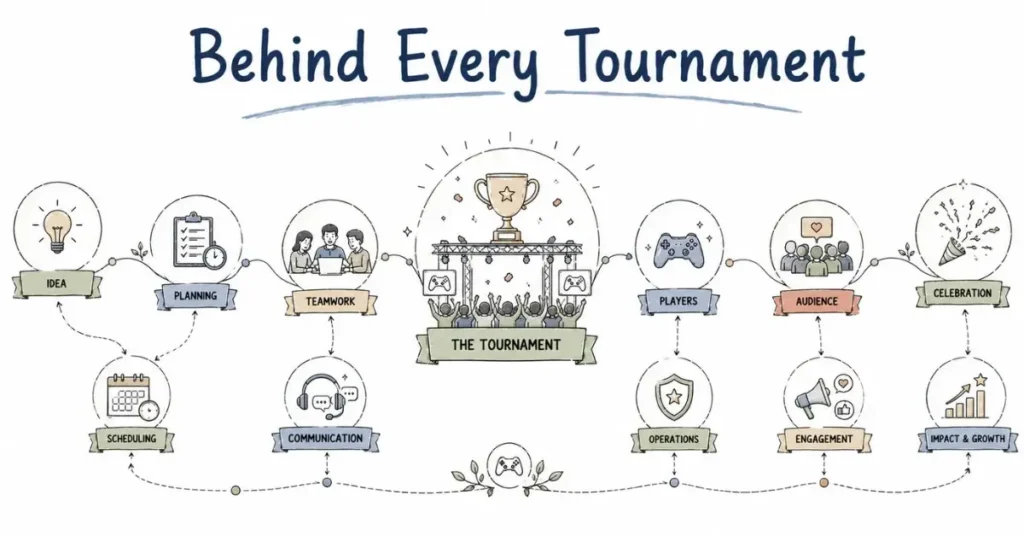
Every esports tournament you have watched the ones with clean brackets, smooth match scheduling, on-time results, and zero drama about rule disputes had a tournament manager running it behind the scenes. When it works well, nobody notices the manager. When it falls apart, everyone does.
Tournament management is one of the most practical, accessible, and genuinely in-demand career paths in Indian esports. It does not require you to be a top-ranked player. It does not require a specific degree. It requires one thing above all else: the ability to keep many moving parts organised simultaneously while staying calm when something inevitably goes wrong.
This guide covers the full picture what the job looks like day to day, what tools you need, what it pays, and the exact steps to land your first paid role.
What Does an Esports Tournament Manager Actually Do?
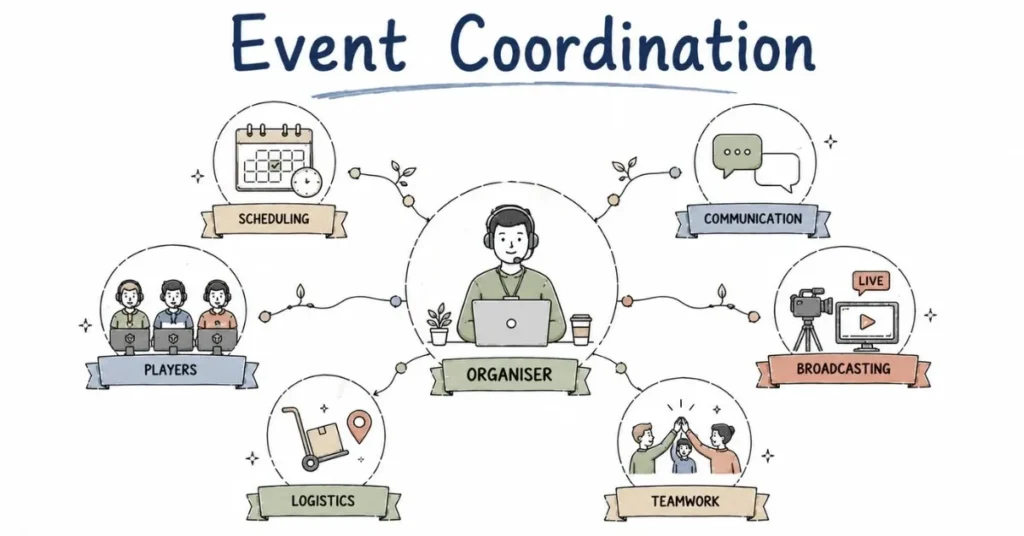
The title covers a wide range of responsibilities depending on the organisation’s size and whether the event is online or offline. Here is the honest breakdown.
For online tournaments:
- Design the bracket structure and format (single elimination, double elimination, round robin, Swiss each suits different scenarios)
- Set and communicate rules, tiebreakers, and dispute processes
- Schedule matches and coordinate timing across time zones if international players are involved
- Monitor matches in progress and resolve disputes quickly
- Manage participant communication through Discord and email
- Collect results, update brackets in real time, and publish standings
- Write post-event reports for organisers and sponsors
For offline (LAN) events:
Everything above, plus:
- Venue coordination stage layout, equipment setup, power requirements, internet infrastructure
- Player check-in, ID verification, and equipment inspection
- Broadcast coordination working with the production team on match timing and broadcast feeds
- Volunteer and staff management on the day
- Sponsor activation coordination banners, product placements, sponsored segments
- Contingency planning backup brackets, spare equipment, replacement players
At a company like NODWIN Gaming, a mid-level tournament manager might handle three to four online events per month and two to three offline events per year. The pace is real. The responsibility is real. And the satisfaction of watching 500 players compete in something you built from a spreadsheet is also very real.
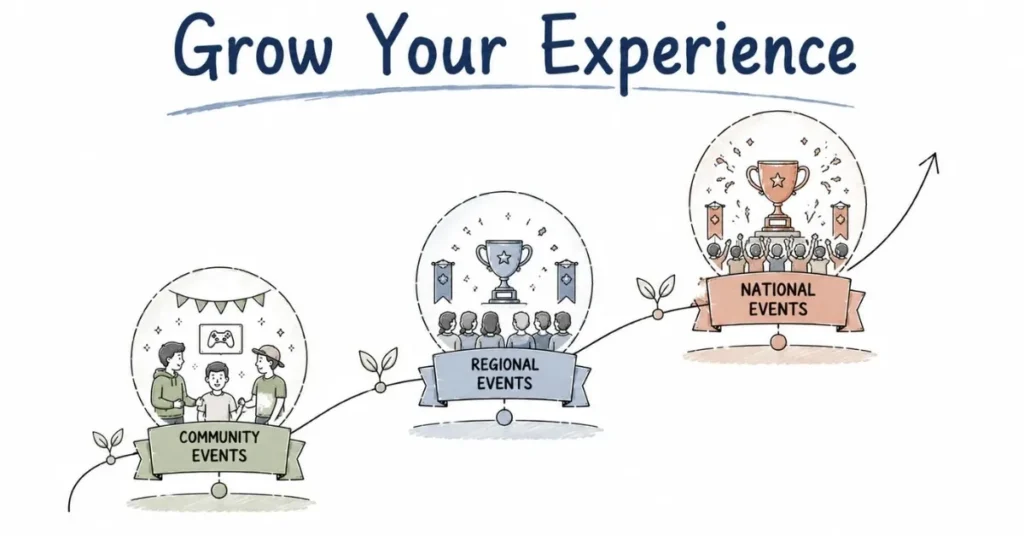
The Three Levels of Tournament Management
Understanding where you are starting from shapes every decision about how to build this career.
Level 1: Community Organiser
You run small tournaments within a game’s community college events, city-level Discord competitions, clan cups. No pay or small honorariums. This is where everyone starts. The goal here is not money it is building operational experience and the habit of documentation.
Level 2: Regional Tournament Manager
You work for a regional esports organisation or a gaming cafe chain that runs regular competitions. Events are 64–512 players. You receive a salary (₹20,000–40,000 per month) or a per-event fee. At this level, sponsors start appearing, broadcast streams become standard, and the consequences of mistakes are visible to a larger audience.
Level 3: National/Professional Tournament Manager
You work for NODWIN Gaming, Skyesports, ESL India, or a comparable organisation. Events have thousands of participants and lakhs of rupees in prize money. Your role may specialise further some managers focus exclusively on broadcast coordination, others on logistics. Salary: ₹6–20 LPA depending on seniority and scope
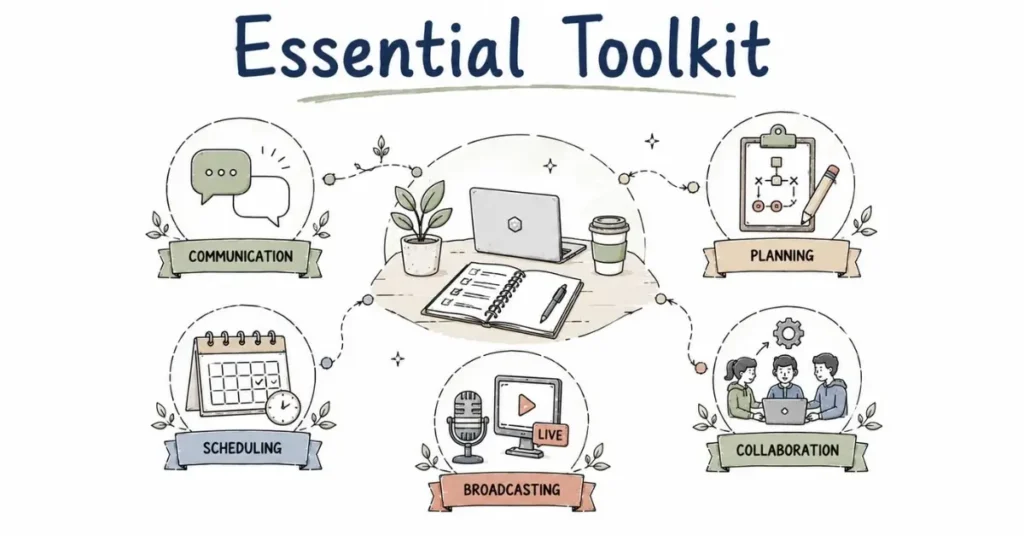
Tools Every Tournament Manager Needs to Know
These are not optional extras. Hiring managers expect you to know these before they train you on anything internal.
Bracket and tournament management platforms:
Battlefy the most commonly used platform for esports tournament management in India. Handles registration, bracket generation, match reporting, and participant communication. Free to use for organisers. Learn this first.
Toornament used for larger, more complex events. Offers more customisation for bracket formats and integration with broadcast overlays. Used by NODWIN Gaming and ESL for major events.
Challengermode newer platform, growing usage in Valorant and CS2 communities in India. Worth knowing at Level 2 and above.
Communication and coordination tools:
Discord the primary platform for player communication during tournaments. Know how to set up and manage a Discord server properly: roles, permissions, announcement channels, support tickets, and moderation.
Google Sheets underrated but essential. Custom tracking spreadsheets, seeding algorithms, result logs, and financial summaries all get built here. A tournament manager who cannot build a clean, functional spreadsheet will struggle at every level.
Notion or Trello project management for multi-week event planning. Break the event into tasks, assign deadlines, track completion.
Broadcast coordination tools:
OBS Studio even if you are not personally streaming, understanding how OBS works helps you communicate clearly with your production team and troubleshoot basic technical issues on event day.
StreamElements or Streamlabs overlay and alert management for broadcast streams. Knowing the basics prevents you from being helpless when the stream overlay breaks 10 minutes before a match.
Salary Benchmarks: What Tournament Managers Earn in India
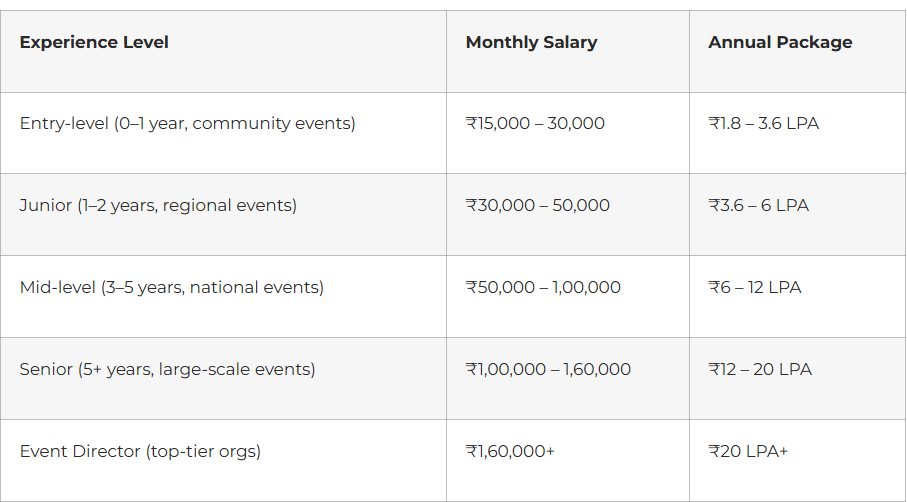
Additional income comes from per-event freelance fees at the early career stage. Many tournament managers start on a per-event basis (₹3,000–15,000 per event depending on scale) before securing full-time roles
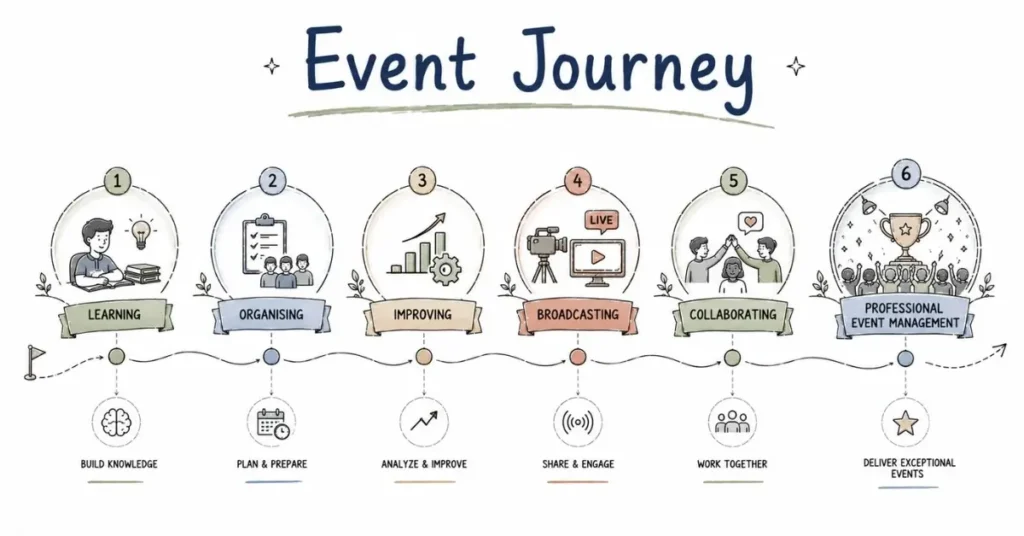
Step-by-Step Roadmap: From Zero to First Paid Role
Month 1–2: Learn the tools and the formats
Install Battlefy and Toornament. Create a free account on both. Build a test tournament bracket 16 teams, single elimination, with match reporting enabled. Go through every feature: seeding, bye management, match dispute settings, result approval.
Simultaneously, study the major bracket formats and when each is used:
- Single elimination fast, no second chances, good for large player counts with limited time
- Double elimination players get a second chance after one loss, fairer for competitors, takes longer
- Round robin every team plays every other team, used for smaller groups or league stages
- Swiss system players are matched against opponents with similar records, used for large events where a full round robin is impractical
You will be asked about these in every interview. Know them cold.
Month 3–4: Run your first tournament
Organise a 16-team online tournament for a game you know well BGMI, Valorant, CS2, or Free Fire. Keep it simple: free entry, small prize (even a sponsored gaming peripheral from a local shop works), Discord-based communication, Battlefy for brackets.
Promote it in college gaming groups, local gaming Discord servers, and Reddit communities for that game.
Run it. Document everything:
- How many teams registered vs showed up
- How many no-shows caused bracket delays
- What technical issues occurred and how you resolved them
- Post-event: did participants report a good experience? What would you do differently?
This documentation is the foundation of your portfolio.
Month 5–6: Scale up and add broadcast
Run a second tournament, bigger 32 to 64 teams. Add a live stream this time, even a basic one via OBS and a YouTube stream key. Recruit a caster from the community (offer them visibility in exchange for free casting at this stage).
The addition of a broadcast changes the operational complexity significantly. You are now managing player schedules, a production timeline, a caster, and participant communication simultaneously. This is what the job actually feels like at a professional level.
Month 7–9: Intern or freelance for a regional organisation
By this point you have two completed tournaments, documented processes, and basic tool proficiency. Reach out to regional esports organisations gaming cafe chains that run tournaments, college esports clubs with external funding, local game publishers who run community events.
Offer to assist on event operations as an intern or on a per-event contract. You are not doing this for money yet you are doing it for a supervisor’s name and a reference who can verify you can do this at a professional level.
Month 10–12: Apply to national organisations
NODWIN Gaming, Skyesports, ESL India, and Rooter all hire operations and tournament staff. Your application at this stage should include:
- A one-page summary of events you have run (team counts, format, any prizes involved)
- Your documentation from each event
- References from anyone you interned with or collaborated with
- A portfolio link even a simple Notion page with your event summaries is enough
The Interview Process at Esports Organisations
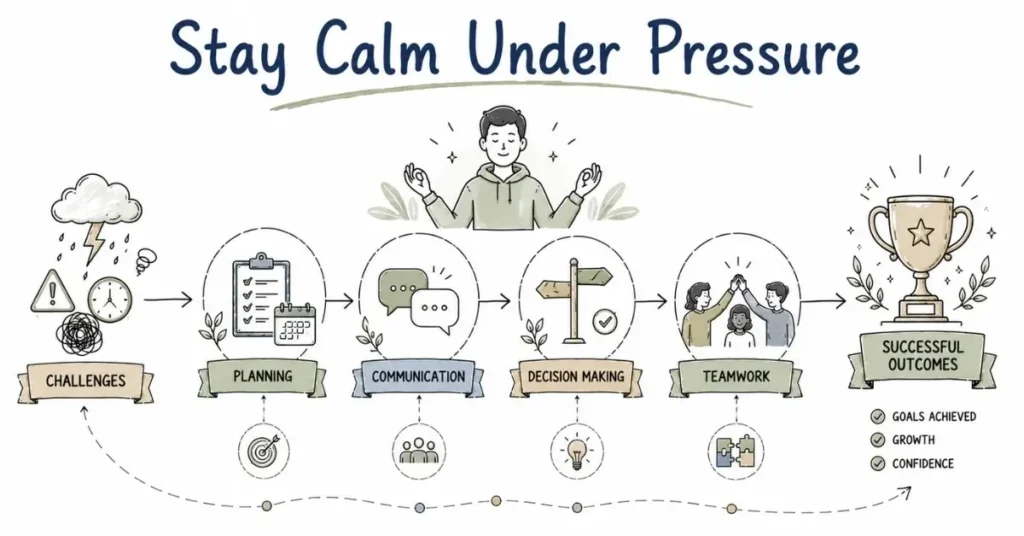
Tournament management interviews differ from standard job interviews in one important way: they are heavily scenario-based. Hiring managers want to know how you think under pressure, not just what you know.
Start With Clear Objectives:
“You are running a 128-team bracket. Match 47 is scheduled in 10 minutes but neither team has checked in. What do you do?”
Good answer: Explain your escalation process first contact both teams via Discord DM, then ping the team role in the server, then make a no-show call after the check-in window closes, advance the opposing team, and document the no-show for any future disputes.
“Your stream goes down 5 minutes before the grand final. The production team says it will take 20 minutes to fix. What do you communicate to the players and audience?”
Good answer: Delay the match start, post a clear update to the Discord and stream chat immediately with an estimated restart time, keep the audience informed every 5 minutes, and reassure the players with a confirmed timeline rather than vague updates.
“A player disputes a match result, claiming their opponent was cheating. The match is already recorded as complete in the bracket. How do you handle it?”
Good answer: Acknowledge the dispute formally, request VOD or screenshot evidence from both parties, review it with your anti-cheat coordinator or head referee, make a decision within a defined timeframe (24 hours maximum), and communicate the decision clearly with reasoning.
The hiring manager is not looking for perfect answers. They are looking for a structured, calm, fair thought process.
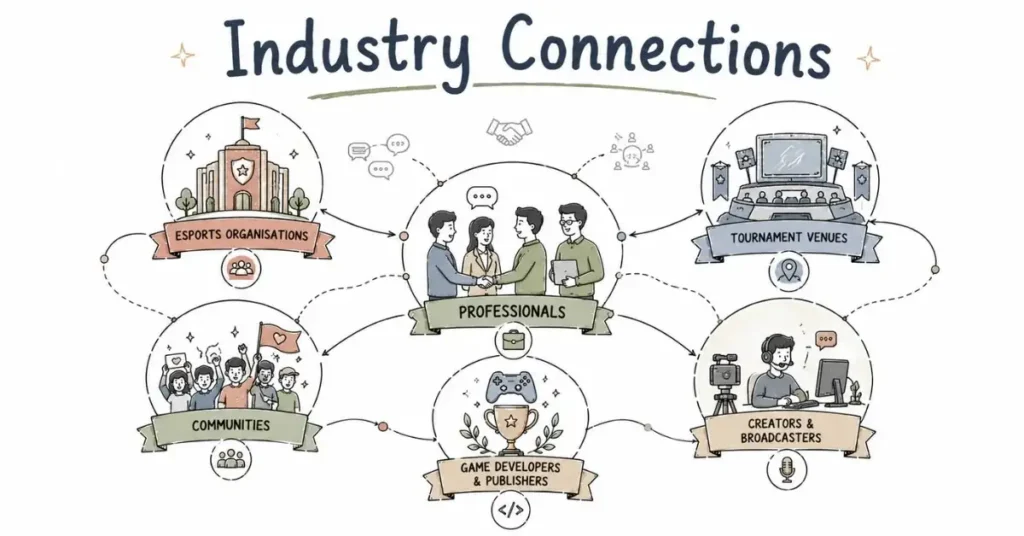
The Organisations Hiring Tournament Managers in India
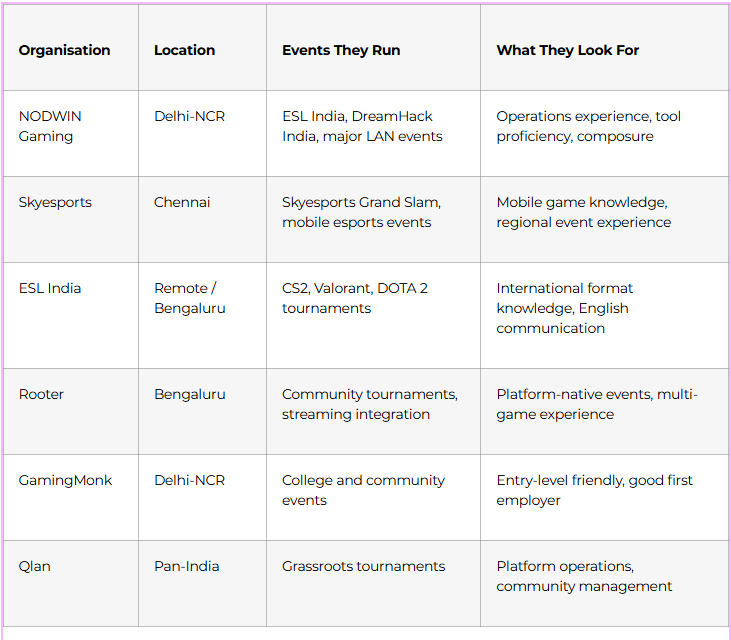
One Thing That Separates Good Tournament Managers from Great Ones
Every experienced tournament manager will tell you the same thing: the job is 20% planning and 80% problem-solving.
You will plan a perfect bracket. A team will no-show. Your stream will drop. The venue’s internet will cut out. A player will file a dispute about a match that happened three rounds ago. A sponsor will change a requirement the morning of the event.
None of this is exceptional. It is Tuesday in esports operations.
The managers who build long careers are not the ones who prevent every problem. They are the ones who solve problems quickly, communicate clearly while solving them, and document what happened so the next event runs smoother.
Build that muscle early. Every small tournament you run teaches you something a training course cannot. Start running events before you feel ready. The experience you need to get hired is the experience you get from doing the thing.