
ENTRY-LEVEL HR JOBS AND HOW TO START YOUR HR CAREER
Table of Contents
You’ve just graduated with a degree in Business Administration or Psychology, or perhaps you’re looking to switch careers into HR. You’re excited about working with people, building workplace cultures, and solving organizational challenges. But staring at job postings requiring “2-3 years HR experience,” you feel stuck in the classic catch-22: How do you get experience when every job requires experience? Where do you actually start in HR? What do entry-level roles look like, and what skills do employers actually want?
This comprehensive guide answers those questions. Whether you’re a fresh graduate, a career switcher, or someone exploring HR as a profession, you’ll learn exactly what entry-level HR jobs exist in India, what they pay, what qualifications and skills you need, and most importantly—a practical, step-by-step roadmap to land your first HR role and build a successful career.
Understanding Entry-Level HR Career Landscape in India
The good news: HR is a growing field in India with increasing opportunities for freshers. The startup boom, expansion of MNCs, and recognition that people are competitive advantage have created strong demand for HR professionals at all levels, including entry-level.[
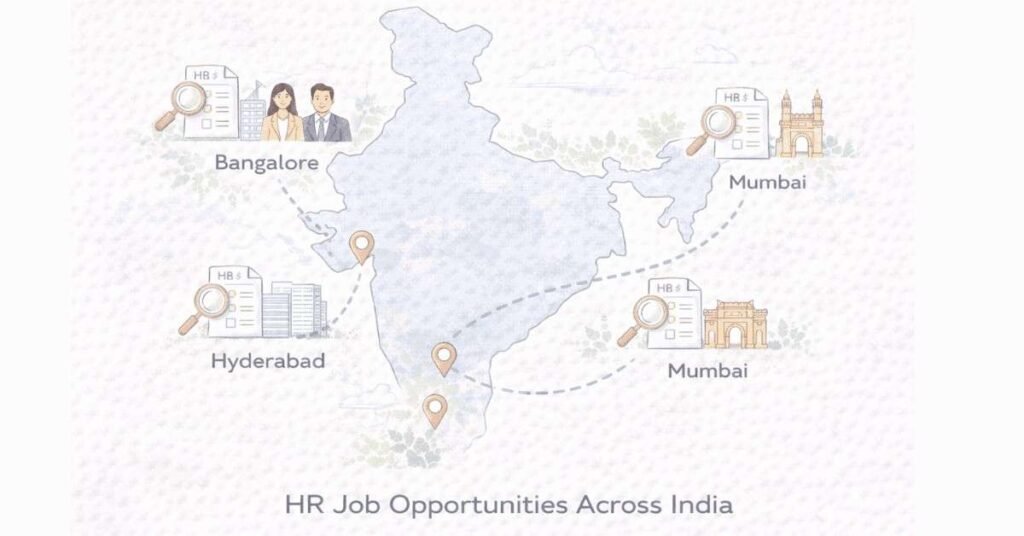
Current Opportunity Landscape: As of 2026, there are 289+ entry-level HR positions actively posted across India, with concentrations in metro cities like Bangalore (42+ roles), Hyderabad, Mumbai, Pune, and Gurgaon. This represents consistent demand for new HR talent.
Salary Expectations for Entry-Level HR: Fresh HR professionals in India can expect starting salaries of ₹15,000-25,000 per month (₹1.8-3 lakhs annually) for HR assistant or trainee roles. With 1-2 years of experience, salaries typically increase to ₹3-5 lakhs annually. The average top salary for HR freshers reaches ₹2.5+ lakhs per annum in good companies.
While these starting salaries may seem modest compared to IT or finance, HR offers strong career progression—mid-level HR professionals (2-4 years) earn ₹6-9 lakhs, and senior HR roles (5-9 years) command ₹12-18 lakhs. The key is getting your foot in the door and building experience.
Where Entry-Level Opportunities Exist: Entry-level HR roles exist across industries including IT services and technology companies (high volume of hiring creates HR needs), startups and fast-growing companies (building HR functions from scratch), consulting and staffing firms (constant recruitment needs), manufacturing companies (large workforces requiring HR support), FMCG and retail (distributed operations needing HR generalists), BPO/KPO sectors (high-volume hiring and HR operations), and healthcare and education sectors.
Common Entry-Level HR Job Titles and Roles
What do actual entry-level positions look like? Let’s explore the most common roles:
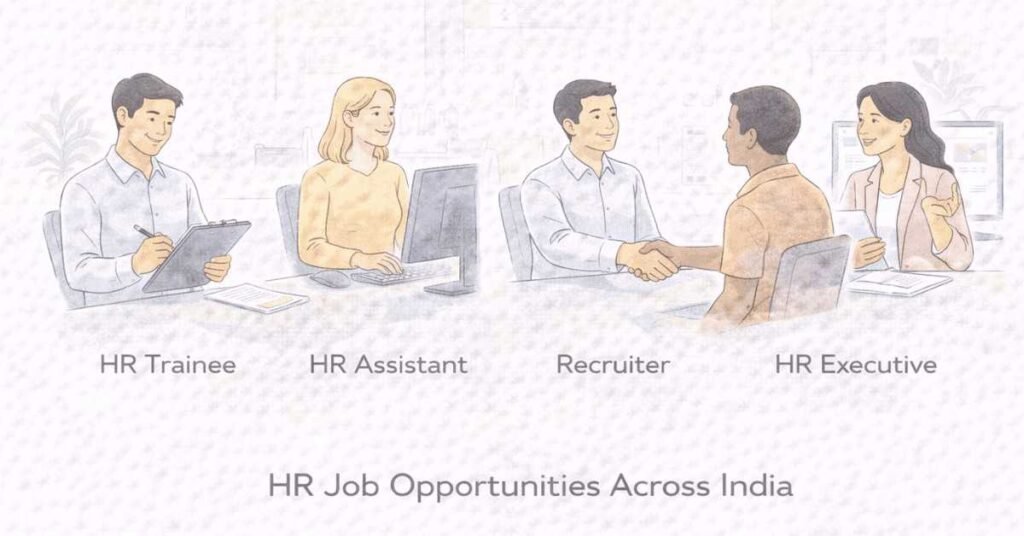
HR Trainee / Management Trainee (HR)
Typical Salary: ₹15,000-20,000/month (₹1.8-2.4 lakhs annually)
Duration: Usually 6-12 months training program
What You’ll Do: HR trainee programs rotate you through different HR functions (recruitment, employee relations, compensation, L&D) to build foundational knowledge. You’ll assist senior HR professionals, learn HR systems and processes, complete assigned training modules, work on projects with guidance, and gradually take on independent responsibilities.
Why It’s Valuable: Trainee programs provide structured learning with mentorship. Many large companies (especially MNCs and conglomerates) offer trainee programs that can fast-track your career. After completing training, you’re typically absorbed into permanent HR roles.
HR Assistant / HR Coordinator
Typical Salary: ₹18,000-25,000/month (₹2.1-3 lakhs annually)
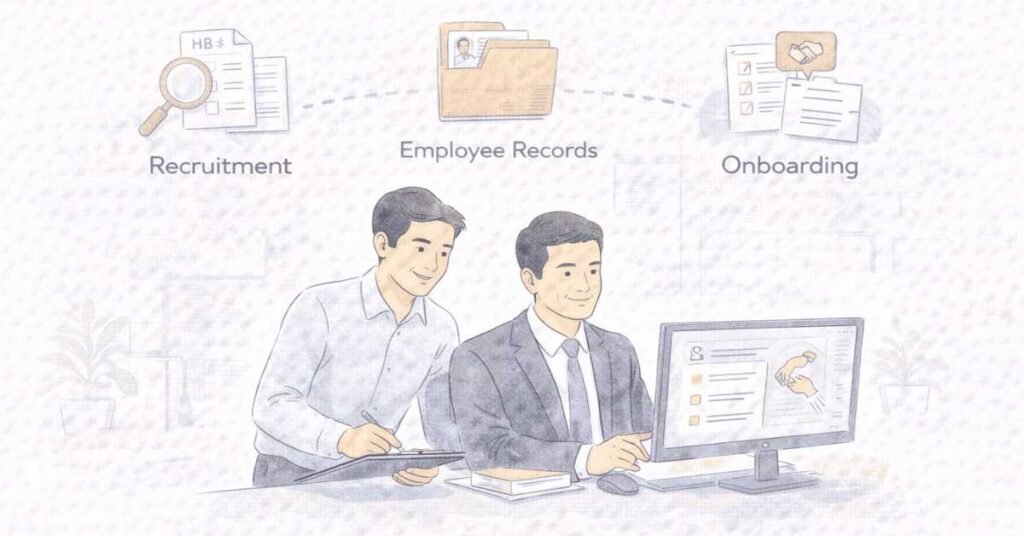
What You’ll Do: HR assistants provide operational support including maintaining employee records and databases, scheduling interviews and coordinating recruitment logistics, preparing employment letters and documentation, maintaining attendance and leave records, assisting with payroll data preparation, coordinating training sessions and events, responding to routine employee inquiries, filing and maintaining HR documentation, and supporting HR managers with administrative tasks.
Skills Needed: Strong organizational abilities, attention to detail, proficiency in MS Office (especially Excel), good communication skills, and ability to maintain confidentiality.
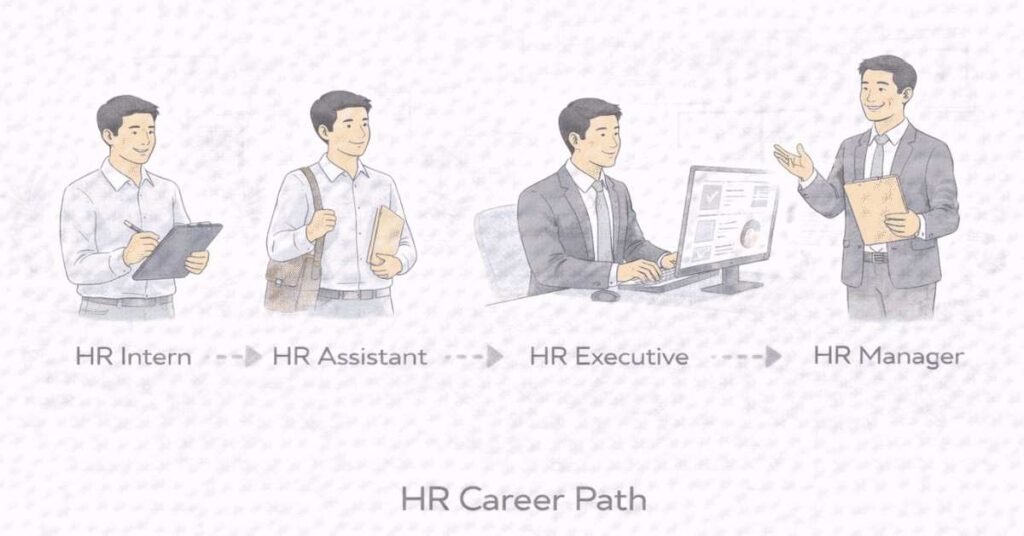
Career Path: HR Assistant roles teach HR fundamentals and organizational skills. After 1-2 years, you typically progress to HR Executive or Specialist roles with greater responsibility.
Recruitment Coordinator / Talent Acquisition Coordinator
Typical Salary: ₹20,000-30,000/month (₹2.4-3.6 lakhs annually)
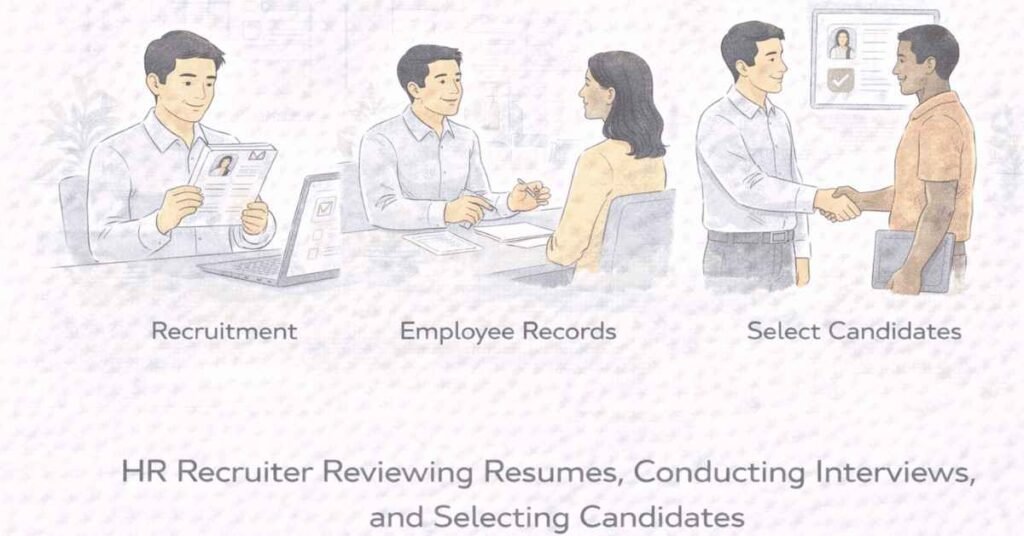
What You’ll Do: Supporting recruitment teams by posting job openings on job boards and social media, screening resumes based on basic criteria, scheduling candidate interviews with hiring managers, coordinating candidate communication, conducting initial phone screenings, maintaining applicant tracking system (ATS), preparing recruitment reports, and coordinating onboarding logistics for new hires.
Why It’s Popular: Recruitment is the most common entry point into HR because it’s always in demand and requires less prior HR knowledge than other functions. You’ll quickly learn about roles, interviewing, candidate assessment, and business needs.
Skills Needed: Communication skills (you’ll talk to many candidates daily), scheduling and coordination, ability to multitask, persuasion skills (convincing candidates to join), and comfort with rejection (many candidates decline offers).
HR Intern
Typical Salary: ₹10,000-20,000/month (or sometimes unpaid/stipend-based)
Duration: Typically 3-6 months
What You’ll Do: HR interns assist with various projects including supporting recruitment processes, helping with employee engagement events, conducting HR research and analysis, assisting with policy documentation, participating in training program coordination, and working on assigned HR projects.
Why Consider It: Internships are excellent for absolute beginners with zero experience. Many companies hire interns into full-time roles after graduation. Even if not hired, internship experience significantly improves your resume for other job applications.
How to Find: Check Internshala, LinkedIn, company career pages, college placement offices, and HR networking groups.
HR Executive (Entry-Level)
Typical Salary: ₹20,000-35,000/month (₹2.4-4.2 lakhs annually)
What You’ll Do: Entry-level HR Executives have more responsibility than assistants including end-to-end recruitment for junior positions, conducting employee onboarding programs, maintaining employee records and HRIS, handling employee queries and requests, supporting performance management processes, coordinating training programs, assisting with HR compliance and policy implementation, and preparing HR reports and analytics.
Difference from Assistant: Executives have more autonomy and handle complete processes rather than just supporting. This role suits candidates with some prior experience (internship, trainee program, or 1 year as assistant).
HR Operations Associate
Typical Salary: ₹22,000-32,000/month (₹2.6-3.8 lakhs annually)
What You’ll Do: Focusing on operational HR processes including payroll processing and validation, statutory compliance (PF, ESI, tax), employee data management in HRIS, leave and attendance administration, generating HR reports and dashboards, handling employee service requests, managing vendor relationships (insurance, background verification), and ensuring process documentation.
Skills Needed: Strong Excel skills, attention to detail, understanding of labor laws and compliance, comfort with HR systems and technology, and ability to handle confidential information.
Why It’s Valuable: HR operations is growing rapidly with outsourcing and shared services models. It provides excellent foundation in HR systems, compliance, and process management.
Essential Qualifications for Entry-Level HR Roles
What education and qualifications do you need to break into HR?
Educational Requirements
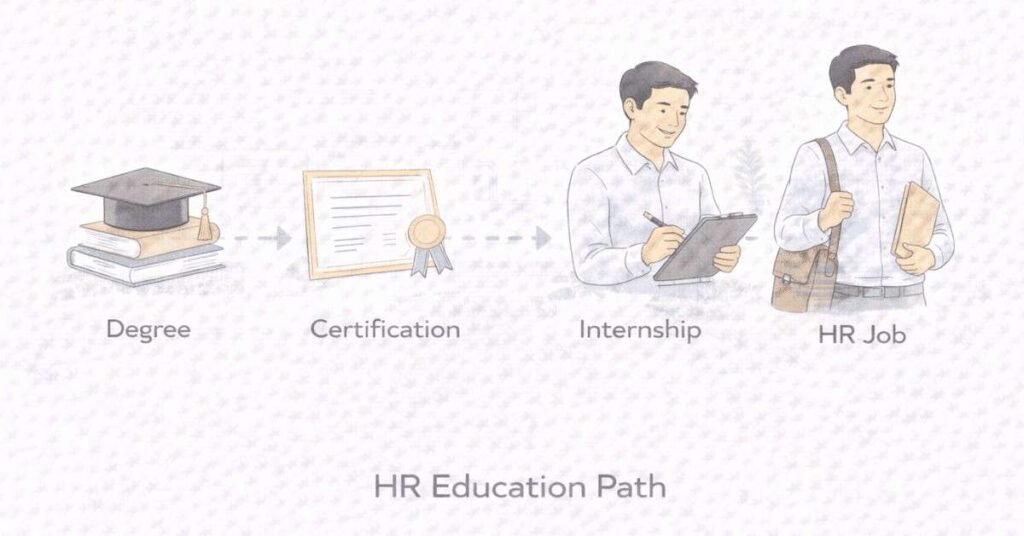
Minimum Qualification: Most entry-level HR roles require at minimum a bachelor’s degree in Human Resources Management, Business Administration, Psychology, Sociology, Commerce, or any related field. Some companies accept graduates from any discipline if you demonstrate HR interest and aptitude.
Preferred Qualifications: MBA or postgraduate diploma in HR Management (PGDM-HR) from recognized institutions significantly improves your opportunities and starting salary (typically ₹5,000-10,000 higher monthly). Specialized HR certifications also add value.
Does Your Degree Matter? While HR degrees are preferred, many successful HR professionals come from diverse backgrounds—psychology (excellent for understanding human behavior), sociology (valuable for organizational dynamics), law (useful for compliance and labor law), engineering or science (especially when transitioning with technical background), and commerce (helpful for compensation and payroll).
What matters more than your specific degree is demonstrating genuine interest in HR, willingness to learn, and relevant skills.
Professional Certifications for Freshers
While not mandatory for entry-level roles, certifications enhance your resume:
SHRM-CP (Society for Human Resource Management – Certified Professional): Globally recognized certification demonstrating HR knowledge. Requires bachelor’s degree plus 1 year HR experience OR master’s degree. Many freshers pursue this after gaining 1 year of experience.
HRCI Certifications (aPHR – Associate Professional in Human Resources): Designed specifically for new HR professionals, aPHR requires no experience and demonstrates foundational HR knowledge.
AIHR Certificates: AIHR offers various certificates including HR Generalist, Digital HR, People Analytics—many suitable for beginners building specialized knowledge.
LinkedIn Learning / Coursera HR Courses: Free or low-cost courses in recruitment, employee relations, HR analytics, labor law, and other HR topics. Completing relevant courses shows initiative and builds knowledge.
Excel and Data Analysis Certifications: Since HR increasingly uses data, Excel proficiency certifications demonstrate valuable technical skills.
Pro Tip: If you’re still in college, pursue certifications that will be completed by graduation. List them prominently on your resume to differentiate yourself from other freshers.
Essential Skills Employers Want in Entry-Level HR Professionals
Beyond qualifications, what skills help you succeed and get hired?
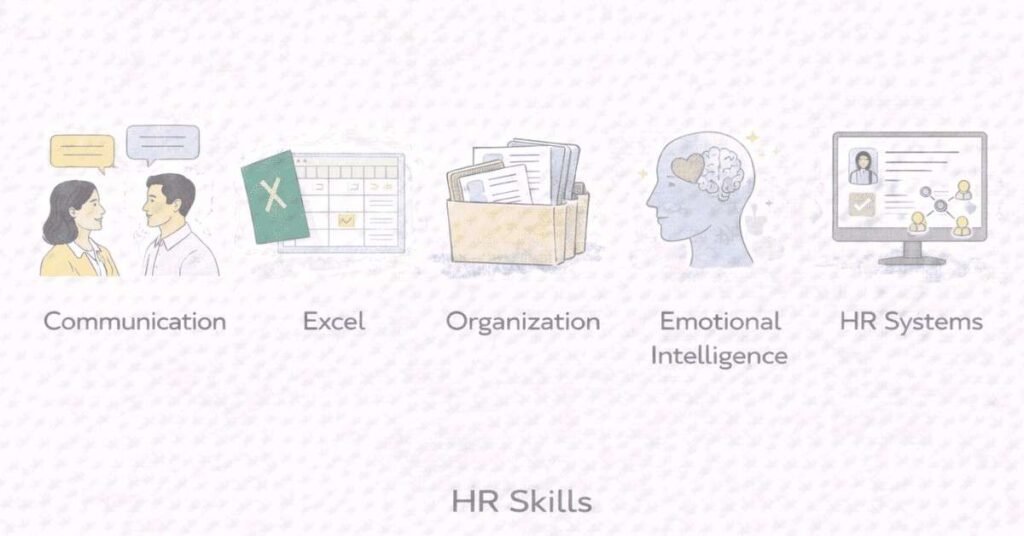
Communication Skills
HR is fundamentally about communication—with employees, managers, candidates, and vendors. You need clear written communication (emails, policies, documentation), confident verbal communication (phone screening, explaining policies), active listening (understanding concerns and needs), ability to communicate with diverse audiences (from factory workers to executives), and professional phone and email etiquette.
How to Develop: Join Toastmasters or public speaking clubs, practice writing professional emails and documents, record yourself speaking and identify improvement areas, and volunteer for roles requiring communication (event hosting, teaching).
Organizational and Administrative Skills
Entry-level HR involves significant administrative coordination requiring managing multiple tasks and deadlines simultaneously, maintaining organized files and documentation, scheduling and calendar management, attention to detail (documentation must be accurate), following processes and procedures systematically, and managing time effectively.
How to Demonstrate: Highlight any experience organizing events, managing projects, coordinating activities, or administrative work—even from college or volunteer roles.
MS Office Proficiency (Especially Excel)
HR professionals live in Excel and Office applications including Excel for data management, reports, pivot tables, and formulas, Word for documentation, letters, and policies, PowerPoint for presentations and training materials, and Outlook for email management and scheduling.
What Level? Entry-level roles typically expect intermediate Excel (VLOOKUP, pivot tables, basic formulas, data filtering). Advanced skills (macros, complex formulas) provide competitive advantage.
How to Build: Take Excel courses on LinkedIn Learning or Coursera, practice creating sample HR reports and dashboards, and earn Excel certifications.
Interpersonal and Emotional Intelligence
HR requires working with people across all levels including building rapport and trust quickly, showing empathy and understanding, handling sensitive situations diplomatically, managing conflicts constructively, reading social cues and body language, and maintaining composure under pressure.
How to Develop: These skills develop through experience, self-awareness, and reflection on interpersonal interactions.
Confidentiality and Ethics
HR handles sensitive employee information requiring discretion about personal employee matters, understanding ethical boundaries, judgment about what to share with whom, and trustworthiness.
How to Demonstrate: Highlight any experience handling confidential information or positions of trust.
Basic HR Knowledge
While you’re not expected to be expert, demonstrating foundational HR understanding helps including understanding of HR functions (recruitment, compensation, L&D, etc.), awareness of basic labor laws and compliance, familiarity with HR metrics and terminology, knowledge of HR software and tools (ATS, HRIS), and current HR trends and best practices.
How to Build: Read HR blogs and publications, take introductory HR courses, follow HR thought leaders on LinkedIn, and learn HR terminology and concepts.
Adaptability and Learning Agility
HR constantly evolves with changing laws, technologies, and business needs requiring willingness to learn continuously, adapting to new tools and processes quickly, handling ambiguity and changing priorities, being open to feedback and improvement, and showing initiative to learn independently.
How to Demonstrate: Highlight situations where you learned new skills quickly, adapted to changes, or took initiative.
Step-by-Step Action Plan to Land Your First HR Job
Ready to break into HR? Follow this practical roadmap:
Step 1: Build Your Foundation (2-3 Months)
Learn HR Fundamentals: Invest 2-3 months understanding HR before applying. Take online courses (LinkedIn Learning, Coursera, AIHR) covering HR basics, recruitment fundamentals, employee relations, labor law basics, and HR analytics.
Read HR Resources: Follow HR blogs (SHRM, AIHR, HR Technologist), read books on HR (“HR from the Outside In” by Dave Ulrich, “The Essential HR Handbook”), and join HR groups on LinkedIn.
Understand Your Target: Research companies you’d like to join, understand their HR challenges and priorities, and learn about HR roles in your target industry.
Step 2: Build a Strong Resume (1-2 Weeks)
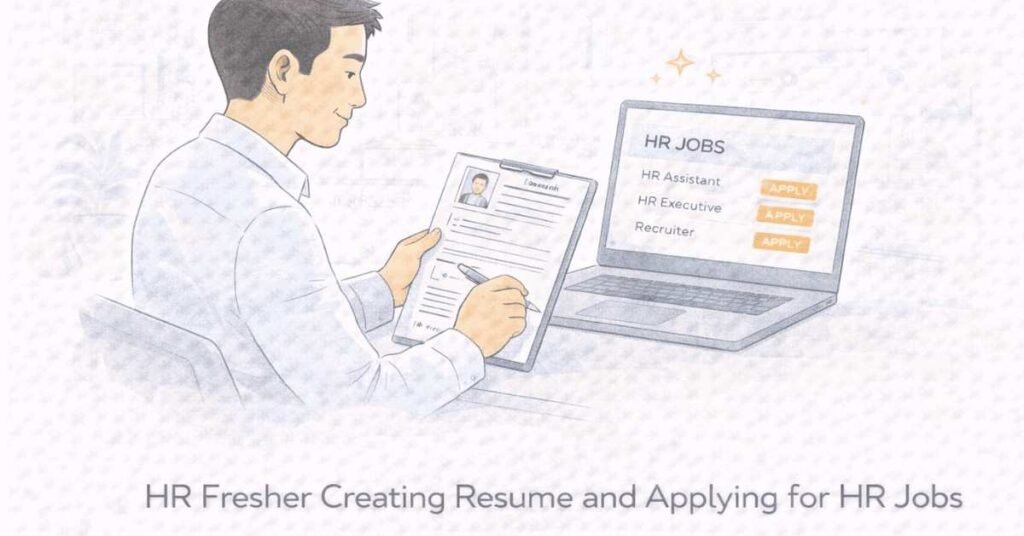
Structure Your Resume: Use clean, professional format with clear sections (objective/summary, education, skills, experience, certifications, projects).
Craft Compelling Objective: Write a 2-3 sentence objective stating your HR interest and value. Example: “Recent Business Administration graduate with HR internship experience and SHRM certification, seeking HR Assistant role to leverage strong organizational skills, Excel proficiency, and passion for building positive workplace cultures”.
Highlight Relevant Experience: Even without formal HR experience, highlight transferable experiences like any administrative or coordination roles, leadership in college clubs or organizations, event planning or organizing, volunteer work, and project management or team coordination.
Emphasize Skills: Create a skills section highlighting MS Office proficiency (specify Excel, PowerPoint), communication and interpersonal skills, organizational abilities, any HR software knowledge (mention ATS, HRIS if familiar), and language skills (valuable in multinational environments).
Include HR-Relevant Keywords: Use HR terminology like recruitment, onboarding, employee relations, HRIS, compliance, talent acquisition, performance management, and employee engagement. This helps with Applicant Tracking Systems (ATS) that screen resumes.
Quantify When Possible: Rather than “helped with recruitment,” write “coordinated interviews for 20+ candidates monthly” or “managed database of 500+ employee records”.
Step 3: Gain Practical Experience (3-6 Months)
Pursue Internships: Apply to HR internships through Internshala, LinkedIn, company websites, and college placement cells. Even 3-month internships provide valuable experience and resume content.
Volunteer for HR Tasks: In your current role (even non-HR), volunteer to help with recruitment, onboarding new team members, organizing events or training, or HR administrative projects.
Do Virtual Internships: Several platforms offer remote HR internships allowing you to gain experience while studying or working.
Create Projects: If you can’t get internships, create HR projects independently like conducting mock recruitment process, creating sample employee handbook, analyzing public HR data and creating reports, or designing training program on topic of interest.
Step 4: Network Strategically (Ongoing)
Build LinkedIn Presence: Create professional LinkedIn profile highlighting your HR interest and skills, connect with HR professionals in your target companies, join HR groups and participate in discussions, follow HR thought leaders and engage with their content, and share HR-related content demonstrating knowledge. Participate in HR webinars, conferences (many free or low-cost), local SHRM chapter meetings, and college career fairs.
Informational Interviews: Request 15-20 minute conversations with HR professionals to learn about their careers, seek advice, and build relationships (not asking for jobs directly).
Alumni Networks: Connect with alumni working in HR who may provide guidance, referrals, or mentorship.
Step 5: Apply Strategically (Ongoing)
Where to Apply: Target multiple channels including LinkedIn Jobs (289+ entry-level HR roles currently posted), Internshala (292+ HR fresher openings), Naukri.com (India’s largest job portal), company career pages directly, startup job boards (AngelList, Instahyre), and staffing/recruitment firms (many entry-level opportunities).
Apply Smart, Not Just More: Don’t spray applications everywhere. Target companies and roles matching your interests. Customize each application emphasizing relevant skills and experiences.
Follow Up: After applying, follow up professionally after 1-2 weeks expressing continued interest.
Track Applications: Maintain spreadsheet tracking where you applied, when, contact person, status, and follow-up dates.
Step 6: Prepare for Interviews (Before Each Interview)
Research the Company: Understand their business, culture, values, recent news, and HR challenges. This demonstrates genuine interest.
Prepare for Common Questions: Practice answering questions like “Why do you want to work in HR?”, “What do you know about HR?”, “Tell me about a time you handled conflict,” “Why should we hire you as a fresher?”, and “What are your strengths and weaknesses?”.
Prepare Examples: Use STAR method (Situation, Task, Action, Result) to prepare specific examples demonstrating your skills even from non-HR contexts.
Showcase Your Knowledge: Mention HR tools, methodologies, or concepts you’ve learned. Example: “I’ve learned about competency-based interviewing and structured selection” or “I’m familiar with ATS systems from my coursework”.
Prepare Questions: Ask intelligent questions showing you’ve researched like “What would my first 90 days look like?”, “What HR systems and tools does the team use?”, “How is this role measured for success?”, “What HR challenges is the company currently facing?”.
Dress Professionally: HR roles require professional appearance. Dress formally for in-person interviews, professionally even for video interviews.
Step 7: Keep Learning and Stay Persistent (Ongoing)
Continuous Skill Building: While job hunting, keep building skills through online courses, reading, and projects. This ensures you’re constantly improving and have fresh content for interviews.
Handle Rejection Positively: You’ll face rejections—this is normal for freshers. Learn from each interview, ask for feedback when possible, and keep applying.
Stay Positive and Patient: Finding your first HR role typically takes 2-6 months of active searching. Persistence and continuous improvement are key.
Consider Adjacent Roles: If struggling to find HR-specific roles, consider administrative roles in organizations you admire, recruitment roles in staffing firms, or HR operations roles—all provide pathways into HR.
Realistic Timeline Expectations
Understanding typical timelines helps manage expectations:
From Graduation to First HR Job: With focused effort, expect 3-6 months to land your first HR role. Some find opportunities faster (especially through college placements or strong networks), while others may take longer without experience or in competitive markets.
Building Competitive Profile: If starting with zero HR knowledge, invest 2-3 months learning fundamentals before actively applying. This foundation makes you more competitive and confident in interviews.
Gaining Experience: After landing first role, plan to stay 1.5-2 years minimum building solid foundation before seeking advancement. Job hopping too early in HR career can raise red flags.

Common Mistakes Freshers Make (And How to Avoid Them)
Mistake 1: Generic Applications: Sending identical resumes and cover letters to every job without customization.
Solution: Customize each application highlighting skills and experiences most relevant to that specific role.
Mistake 2: Underselling Transferable Skills: Thinking “I have no HR experience so I have nothing to offer.”
Solution: Recognize that communication, organization, problem-solving, and people skills from ANY context transfer to HR.
Mistake 3: Neglecting Online Presence: Having incomplete or unprofessional LinkedIn profile, or no presence at all.
Solution: Build professional LinkedIn presence—recruiters actively search LinkedIn for candidates.
Mistake 4: Focusing Only on Salary: Choosing first job purely based on highest salary without considering learning opportunities.
Solution: Prioritize learning, mentorship, and brand name for first role. Long-term career trajectory matters more than ₹2,000 monthly difference at entry-level.
Mistake 5: Giving Up Too Early: Applying to 10-15 jobs, facing rejections, and concluding “HR isn’t for me.”
Solution: Job searching requires persistence. Expect to apply to 50-100+ positions and face multiple rejections before landing role.
Mistake 6: Not Preparing for Interviews: Showing up without researching company or preparing answers.
Solution: Invest 2-3 hours before each interview researching and preparing. Preparation dramatically improves success rates.
Breaking into HR as a fresher is absolutely achievable with the right approach. Focus on building foundational knowledge through courses and reading, gaining any HR-related experience through internships or volunteering, crafting a strong resume highlighting transferable skills, networking actively with HR professionals, applying strategically to appropriate entry-level roles, preparing thoroughly for each interview, and staying persistent through rejections.
Your first HR job may not be glamorous—you’ll likely handle administrative tasks, coordinate logistics, and learn the basics. But that foundation is invaluable. Within 2-3 years of focused learning and performance, you’ll have opportunities to specialize, take on strategic work, and build the HR career you envision. Every senior CHRO started with their first entry-level role. Your journey begins with that first step.