
ENTERTAINMENT MANAGEMENT & BUSINESS ROLES
Table of Contents
Introduction
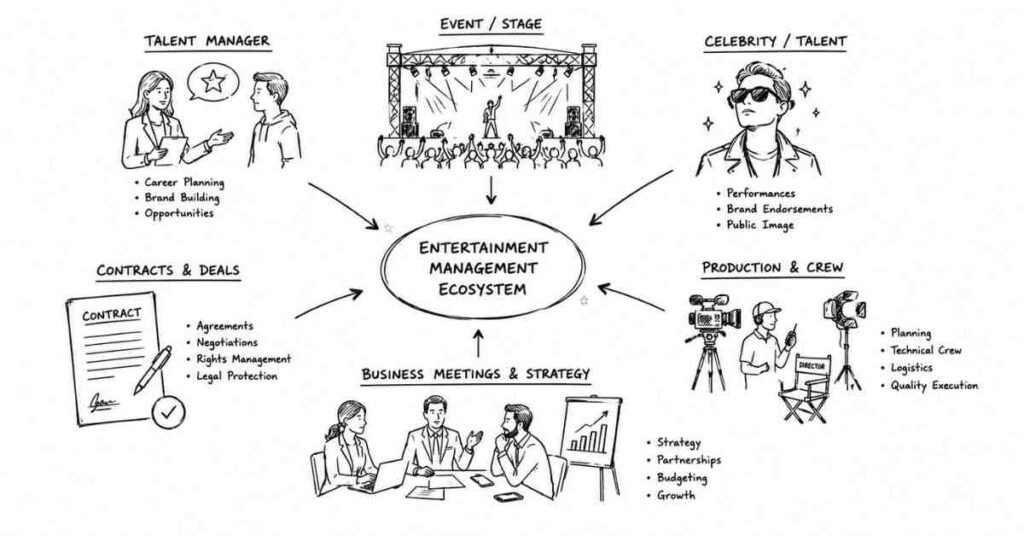
Behind every successful artist, blockbuster film, sold-out concert, or viral content creator stands a network of business professionals making it all happen. While actors, musicians, and content creators capture public attention, entertainment managers, agents, event producers, and business executives orchestrate careers, negotiate deals, produce experiences, and build the commercial infrastructure supporting creative work.
Entertainment management and business roles represent the industry’s essential backbone—connecting talent with opportunities, audiences with experiences, and creative vision with commercial viability. These careers blend creativity with business acumen, relationship-building with negotiation skills, and passion for entertainment with strategic thinking. Unlike performing or creating content, these roles operate behind the scenes but offer influence, stability, and financial rewards matching or exceeding front-facing positions.
The business side of Indian entertainment is growing rapidly alongside content expansion. Talent management professionals earn an average of ₹26.8 lakhs annually, ranging from ₹21-48.9 lakhs with top performers exceeding ₹44.8 lakhs. Event management professionals earn an average of ₹20.7 lakhs annually, with ranges from ₹15.4-50 lakhs and top earners exceeding ₹33 lakhs per year. Entry-level event managers earn ₹4-10 lakhs annually while senior event managers and directors earn ₹18-36 lakhs. These roles exist across Bollywood, regional cinema, music industry, live entertainment, brand partnerships, and digital content—creating diverse opportunities for business-minded individuals passionate about entertainment.
This comprehensive guide explores entertainment management and business careers including talent management and artist representation, event production and concert promotion, music business management, entertainment law, brand partnerships and sponsorship management, and artist booking and tour management. You’ll learn what these roles entail, required skills and qualifications, career paths, salary expectations, and strategies for breaking into this relationship-driven, dynamic field.
Understanding Entertainment Business Landscape
The Entertainment Value Chain
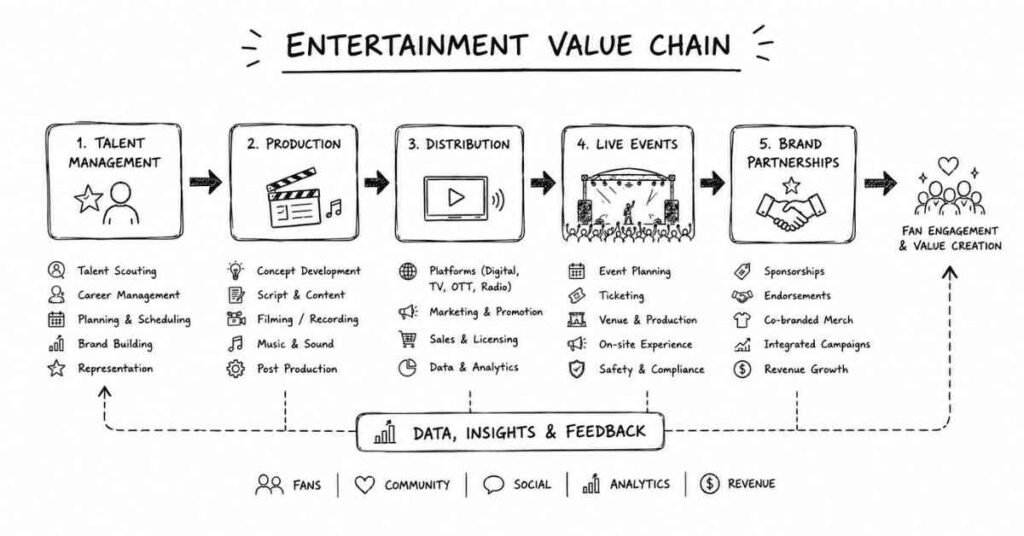
Entertainment businesses operate across interconnected segments, each requiring specialized management expertise.
Talent and artist management represents the starting point—managers guide artist careers, negotiate contracts, secure opportunities, and handle business affairs allowing creatives to focus on their craft. Talent managers work with actors, musicians, content creators, athletes, or other entertainers building and sustaining their careers.
Content production and financing involves producing films, series, music albums, or digital content. Producers secure financing, manage budgets, hire creative teams, oversee production, and deliver finished products. Production companies employ business managers, line producers, and production coordinators handling operational and financial aspects.
Distribution and platforms connect content with audiences through theaters, streaming platforms, television networks, radio, or digital channels. Distribution executives negotiate deals, plan releases, and manage relationships between content creators and platforms.
Live entertainment and events produces concerts, festivals, award shows, theater productions, or branded experiences. Event producers, promoters, and venue managers coordinate logistics, talent booking, marketing, and execution delivering memorable live experiences.
Brand partnerships and marketing monetizes fame and audience attention through endorsements, sponsorships, branded content, or licensing deals. Brand managers connect entertainers with commercial opportunities while protecting their public images.
Legal and contractual services through entertainment lawyers who negotiate deals, protect intellectual property, resolve disputes, and ensure compliance with regulations. Legal expertise enables everything else in entertainment business.
Why Entertainment Needs Business Professionals
Creative talent alone doesn’t ensure success. Business professionals provide crucial support:
Strategic guidance: Managers help artists make career decisions—which projects to accept, how to position themselves, when to take risks versus play it safe, and how to build long-term rather than chase short-term gains.
Negotiation expertise: Entertainment involves constant negotiation—compensation, contract terms, creative control, profit participation. Skilled negotiators secure favorable deals maximizing client earnings and protecting their interests.
Network access: Established managers, agents, and producers have relationship networks built over years—connections with casting directors, producers, brand executives, venue owners, media contacts. These networks create opportunities talent can’t access independently.
Business infrastructure: Managing finances, contracts, schedules, travel, staff, and administrative details allows creatives to focus on creating rather than administrative burdens.
Market understanding: Business professionals track industry trends, audience preferences, competitive landscape, and emerging opportunities helping clients stay relevant and capitalize on shifts.
Talent Management & Artist Representation

Talent Manager: Building and Guiding Careers
Talent managers represent individual entertainers or small rosters of artists, guiding their careers strategically and handling business affairs.
What talent managers do: They develop career strategies defining short-term and long-term goals for clients, secure opportunities identifying and pursuing roles, projects, or platforms advancing careers, negotiate deals handling contract terms, compensation, and creative control, manage relationships coordinating with agents, lawyers, publicists, and other team members, handle business affairs including finances, scheduling, and administrative matters, provide personal support often becoming trusted advisors and confidantes, and build client brands shaping public image and positioning.
The manager-artist relationship is deeply personal. Managers often work with clients for years or decades, becoming invested in their success personally and financially. Unlike agents who simply book jobs, managers think holistically about entire careers.
Skills required: Understanding entertainment business including deal structures, industry norms, and revenue models. Negotiation skills securing favorable terms while maintaining positive relationships. Strategic thinking planning careers with foresight rather than reacting to immediate opportunities. Relationship management cultivating extensive networks across the industry. Communication skills articulating vision to clients and opportunities to industry contacts. Financial literacy understanding contracts, royalties, and money management. Emotional intelligence reading people, managing personalities, and navigating interpersonal dynamics. Patience and persistence building careers takes years of sustained effort.
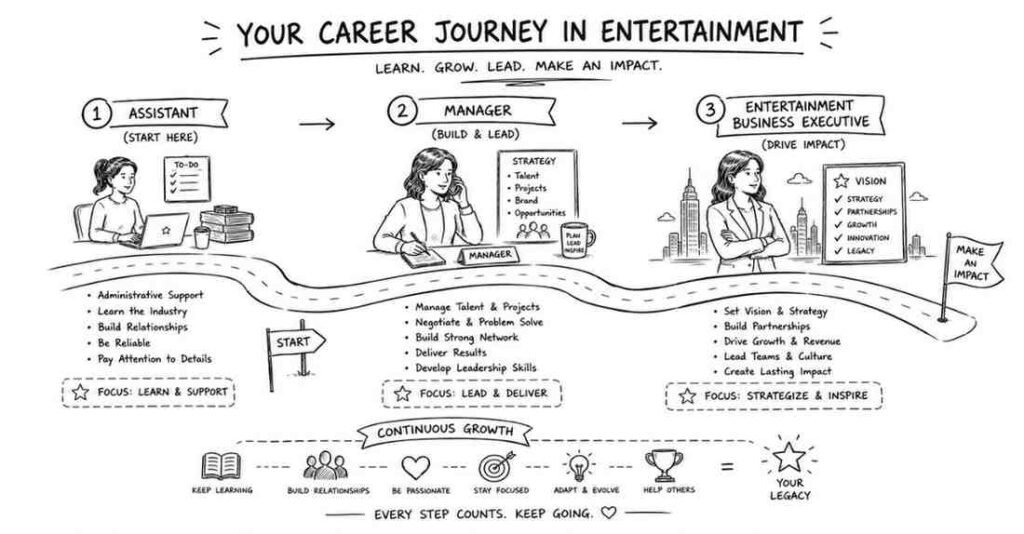
Career progression: Many talent managers start as assistants to established managers, learning the business while handling administrative tasks, coordinating schedules, and managing communication. After 2-4 years, you might manage one or two smaller clients while assisting senior managers with bigger clients. Building your own roster happens through discovering emerging talent, being referred clients by industry contacts, or transitioning clients as you leave to start your own management company. Successful managers eventually establish their own firms representing multiple artists and perhaps hiring junior managers themselves.
Compensation models: Talent managers typically earn 10-20% commission on client gross earnings. This means compensation directly ties to client success—if they don’t earn, you don’t earn. Established managers representing successful artists earn substantial income. A manager with clients earning ₹1 crore annually collectively would earn ₹10-20 lakhs in commissions. However, building to that point takes years of modest or no income while developing clients. Talent management salary ranges from ₹30,750 to ₹1,66,666 monthly (₹3.7-20 lakhs annually) depending on client roster and success. More broadly, talent management and development professionals earn an average of ₹26.8 lakhs annually, with ranges from ₹21-48.9 lakhs.
Talent Agent: Booking Opportunities
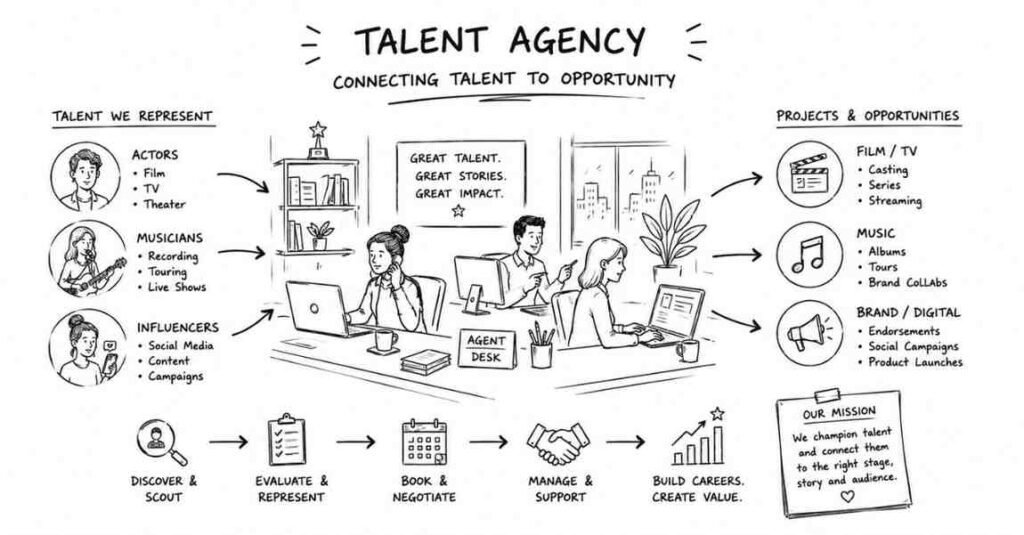
Talent agents focus specifically on securing work for clients—auditions for actors, gigs for musicians, brand deals for influencers, or speaking engagements for personalities.
How agents differ from managers: Agents primarily book jobs while managers guide overall careers. Agents have relationships with casting directors, producers, and employers who hire talent. Managers have broader strategic focus. Many successful entertainers have both—agents finding opportunities and managers deciding which to pursue.
What agents do: They submit clients for auditions, roles, or opportunities matching their profiles, negotiate deals once opportunities arise, maintain relationships with decision-makers who hire talent, track industry developments identifying emerging opportunities, and represent multiple clients simultaneously unlike managers’ more personal relationships.
Licensing and regulations: In many countries including increasingly in India, talent agents require licensing or registration with labor departments or entertainment authorities. This regulates the profession protecting artists from exploitation.
Compensation: Agents typically earn 10-15% commission on deals they negotiate. Like managers, earnings tie directly to client bookings.
Artist Management Companies and Agencies
Major talent management companies and agencies in India include YRF Talent Management (part of Yash Raj Films), TM Talent Management, Exceed Entertainment, Kwan Entertainment, and numerous boutique firms. These companies represent actors, musicians, athletes, content creators, and other personalities.
Working at established agencies provides learning opportunities, infrastructure, and network access. You might start as coordinator, assistant, or junior agent learning processes before managing your own clients or eventually launching independent practice
Event Management & Production
Event Producer: Creating Experiences
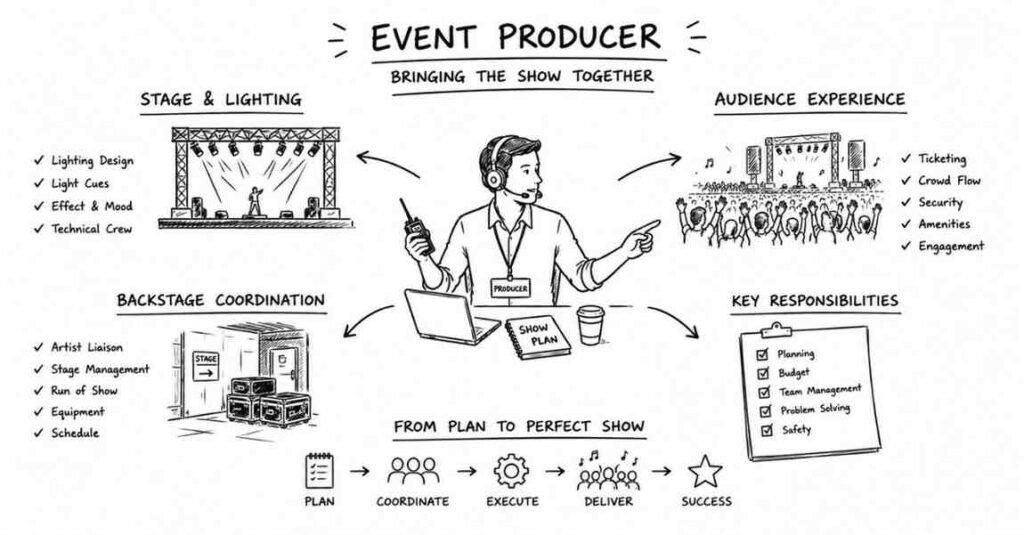
Event producers conceptualize, plan, and execute entertainment events—concerts, festivals, award shows, theater productions, corporate entertainment, or branded experiences.
Responsibilities: They conceptualize events defining themes, formats, and experiences, develop budgets estimating costs and securing financing, select and book venues negotiating terms and ensuring suitability, coordinate vendors managing caterers, technical crews, security, transportation, and dozens of other suppliers, book talent negotiating artist contracts and managing their needs, oversee marketing and ticket sales driving attendance, manage logistics coordinating detailed timelines and operations, supervise event execution managing real-time problem-solving, and conduct post-event analysis evaluating success and identifying improvements.
Event production combines creative vision with meticulous logistics. Successful producers balance artistic ambition with practical constraints—budgets, regulations, safety, and operational feasibility.
Types of events: Concert promoters produce music performances from club shows to arena tours to multi-day festivals. Festival producers create multi-stage, multi-day events requiring complex logistics. Corporate event producers create entertainment for company events, product launches, or conferences. Award show producers manage ceremonies honoring achievements in film, music, or other fields. Theater producers finance and mount theatrical productions. Wedding and social event producers create entertainment for private celebrations.
Skills required: Project management coordinating numerous moving parts and stakeholders. Budget management allocating resources efficiently while maintaining quality. Vendor management negotiating with and coordinating multiple service providers. Crisis management solving problems quickly when things go wrong (weather issues, technical failures, no-show performers). Marketing understanding how to promote events and sell tickets. Understanding technical production including sound, lighting, staging, and AV requirements. Negotiation securing favorable terms with venues, artists, and vendors. Attention to detail ensuring nothing falls through cracks. Physical stamina handling long hours including nights and weekends.
Career path: Many event producers start as event coordinators or assistants supporting senior producers by handling logistics, coordinating vendors, managing guest lists, or coordinating day-of operations. After 2-4 years, you might produce smaller events independently or major components of larger events. Eventually you produce significant events or start your own event production company. Some specialize in specific event types (music festivals, corporate events) while others maintain general expertise.
Salary expectations: Event management professionals earn an average of ₹20.7 lakhs annually, ranging from ₹15.4-50 lakhs with top earners exceeding ₹33 lakhs. Entry-level event planning assistants earn ₹3-4.5 lakhs annually. With 2-5 years experience, event managers earn ₹4-10 lakhs annually. Wedding planners with experience command ₹5.5 lakhs average salary with potential for ₹8 lakhs to ₹24 lakhs annually for top planners. Corporate event managers earn ₹3.6-18 lakhs annually. Senior event managers and directors earn ₹18-36 lakhs annually. Income for freelance event managers and owners of event companies can significantly exceed these figures as earnings are project-dependent and performance-driven.
Concert and Tour Management
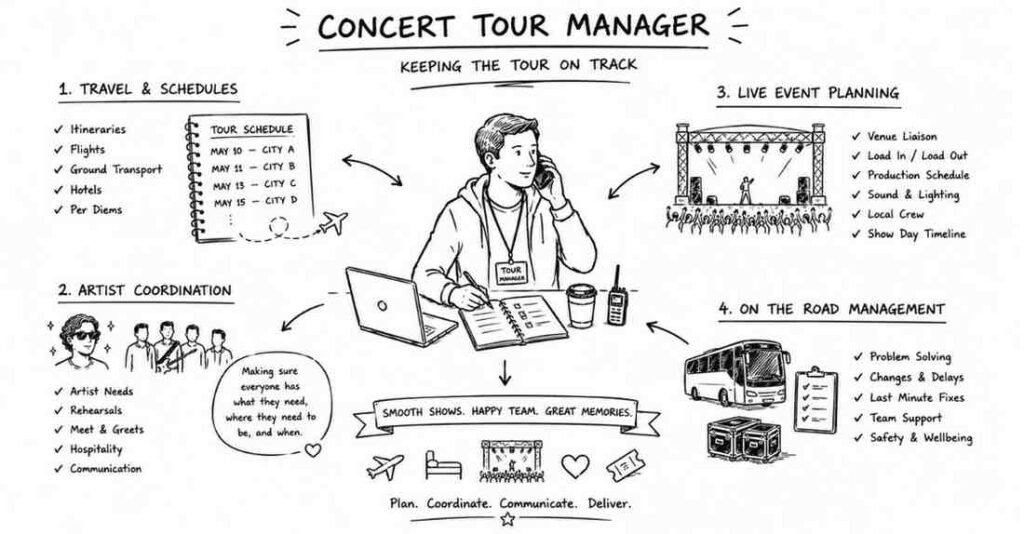
Concert promoters and tour managers specialize in live music events.
Concert promoters finance and produce concerts, taking financial risk in exchange for profit potential. They book artists, rent venues, handle marketing, sell tickets, and manage all aspects of concert production. Successful promoters build relationships with artists, managers, and booking agents securing access to popular acts.
Tour managers travel with artists managing logistics for concert tours. They coordinate travel and accommodation, manage tour budgets, liaise with local promoters at each venue, troubleshoot problems on the road, and serve as artist’s primary point person during tours. Tour management requires flexibility, problem-solving, and ability to work under constant pressure away from home for extended periods.
Venue managers operate entertainment venues—concert halls, clubs, theaters, arenas. They book acts, manage venue operations, coordinate technical staff, ensure safety compliance, and maintain relationships with artists and promoters. Venue management offers more stable employment than freelance event production.
Music Business Management
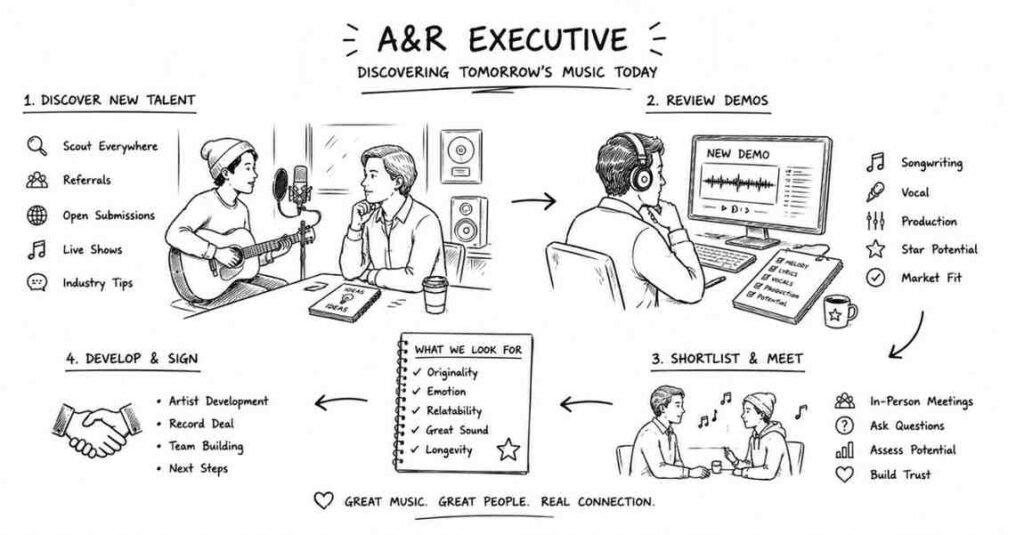
Music Manager: Guiding Artist Careers
Music managers specialize in representing musicians, bands, or composers managing their careers in recording, touring, publishing, and brand partnerships.
What music managers do: They develop artist brands defining image, sound, and positioning, secure record deals negotiating with labels or coordinating independent releases, plan releases strategizing timing, marketing, and distribution, book tours coordinating with booking agents and promoters, manage recording budgets overseeing studio costs and production, secure publishing deals protecting and monetizing songwriting, develop brand partnerships connecting artists with endorsements, manage band finances handling income, expenses, and accounting, and coordinate teams including lawyers, accountants, publicists, booking agents.
Music management requires understanding music business’s unique aspects—royalties, publishing, touring economics, streaming platforms, and artist development.
Compensation: Music managers typically earn 15-20% commission on artist earnings across all revenue streams—recordings, touring, publishing, merchandise, endorsements. Like other management roles, earnings directly correlate with artist success.
A&R (Artists and Repertoire): Finding Talent
A&R executives at record labels discover and develop artists, serving as crucial links between creative and commercial sides of music business.
Responsibilities: They scout talent attending shows, monitoring social media, and networking to discover artists, sign artists negotiating contracts bringing talent to labels, develop artists providing creative guidance on material selection and sound, coordinate recording projects working with producers and studios, and serve as artist advocates within labels championing their artists internally.
A&R roles combine passion for music discovery with business judgment about commercial viability. Successful A&R executives have great ears for talent and trends plus ability to convince labels to invest in their discoveries.
Career path: Many A&R professionals start as scouts or assistants, then progress to coordinators managing administrative aspects before becoming A&R managers responsible for artist rosters. Senior A&R executives oversee multiple managers and help shape overall label direction.
Compensation: Entry-level A&R coordinators earn ₹3-6 lakhs annually. A&R managers earn ₹8-18 lakhs. Senior A&R executives at major labels earn ₹20-40 lakhs or more.
Music Publishing and Licensing
Music publishers manage songwriting copyrights, licensing compositions for use in films, advertisements, television, or other media.
What music publishers do: They acquire song catalogs buying or licensing publishing rights from songwriters, license compositions negotiating fees when songs are used commercially, collect royalties tracking and collecting payments from various uses, develop songwriters investing in talent likely to create valuable catalogues, and pitch compositions suggesting songs for film soundtracks, advertisements, or other placements.
Music publishing is specialized but lucrative. Understanding copyright law, royalty structures, and music licensing is essential.
Entertainment Law
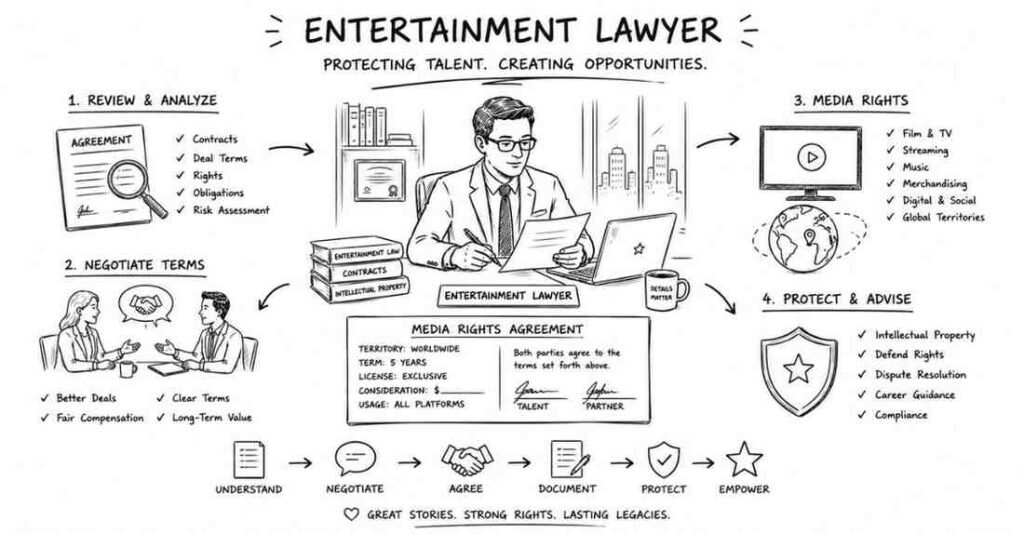
Entertainment Lawyer: Protecting Creative Interests
Entertainment lawyers specialize in legal matters affecting entertainment industry—contracts, intellectual property, rights management, disputes, and regulatory compliance.
What entertainment lawyers do: They negotiate contracts drafting and reviewing agreements for recording, publishing, production, distribution, or talent representation, protect intellectual property handling copyrights, trademarks, and rights management, advise on corporate structure helping clients establish production companies or business entities, resolve disputes handling conflicts over contracts, royalties, or rights through negotiation or litigation, ensure regulatory compliance navigating censorship, licensing, or labor laws, and conduct due diligence reviewing legal aspects of deals or acquisitions.
Entertainment law combines general legal practice with specialized entertainment industry knowledge. Understanding entertainment business operations, revenue models, and industry norms makes lawyers more effective advocates.
Practice settings: Entertainment lawyers work at large law firms with entertainment practice groups (Khaitan & Co., DSK Legal, Naik Naik & Co., Phoenix Legal), boutique entertainment law firms, in-house legal departments at studios, labels, or production companies, or independent practice. Each setting offers different advantages—firms provide resources and prestige, in-house positions offer stability and deep client relationships, solo practice provides autonomy and potentially higher earnings.
Educational pathway: Becoming entertainment lawyer requires law degree (LLB, typically after BA or as integrated BA LLB) followed by passing bar examinations. Specialized courses or internships focused on media and entertainment law provide relevant expertise. Working at firms handling entertainment matters builds necessary experience. Networking within entertainment industry through events, organizations, or personal initiative creates client relationships.
Career prospects and compensation: Entertainment law has become lucrative, with top firms offering good salaries even to new hires. Entry-level associates at major firms might earn ₹6-10 lakhs annually. Mid-level associates earn ₹12-25 lakhs. Senior associates and partners earn ₹30-60+ lakhs or more. Independent entertainment lawyers’ earnings vary widely based on client roster and deal flow. Entertainment lawyers at major firms represented significant clients including production companies like Endemol and T-series, and celebrities like Deepika Padukone, Amitabh Bachchan, and Sonam Kapoor.
Skills required: Strong legal knowledge in contracts, intellectual property, corporate law, and litigation. Understanding entertainment business operations, revenue models, and industry practices. Negotiation skills securing favorable terms while maintaining relationships. Attention to detail in drafting and reviewing complex agreements. Communication abilities explaining legal concepts to creative clients. Business development skills attracting and retaining clients. Ethical judgment navigating conflicts between commercial interests and client protection.
Brand Partnerships & Sponsorship Management
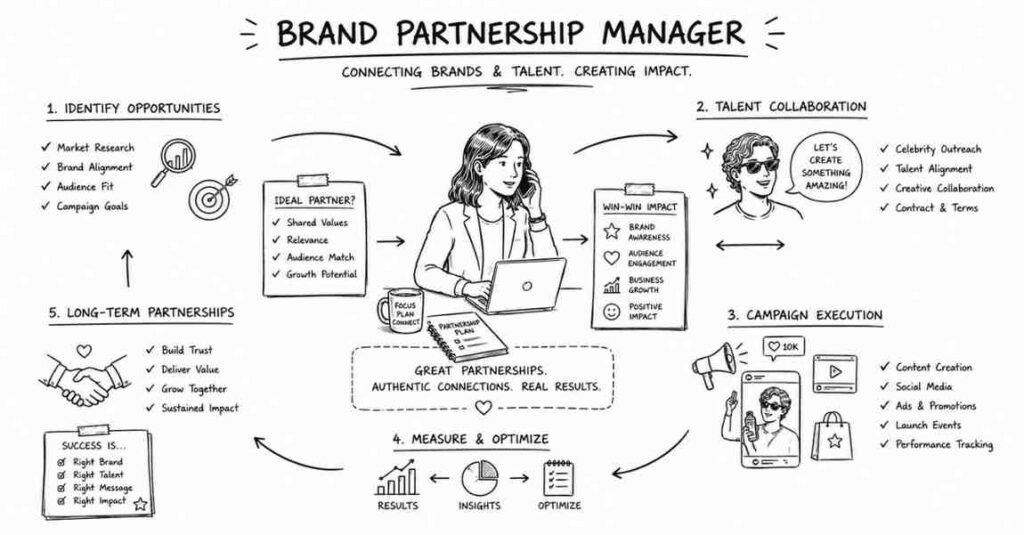
Brand Partnership Manager: Connecting Entertainment with Commerce
Brand partnership managers develop commercial relationships between entertainers, properties, or events and corporate sponsors or brands.
Responsibilities: They identify partnership opportunities recognizing potential brand-entertainment alignments, develop partnership proposals creating compelling cases for brand involvement, negotiate sponsorship deals handling terms, activation rights, and compensation, manage partner relationships ensuring satisfaction and contract compliance, coordinate activation ensuring sponsors get agreed visibility and engagement, measure partnership value demonstrating ROI to justify continued investment, and maintain industry relationships building networks with brand marketing executives.
Brand partnerships represent significant revenue streams for artists, events, and properties. Skilled partnership managers unlock commercial value beyond core entertainment revenue.
Types of partnerships: Endorsement deals where celebrities promote products or services. Sponsorships where brands support events or content in exchange for visibility. Product placement integrating brands into content. Brand ambassadorships creating ongoing relationships between celebrities and brands. Licensing allowing brands to use entertainment intellectual property on merchandise.
Skills required: Understanding both entertainment and brand marketing knowing what each side values and needs. Sales and business development abilities identifying and pursuing opportunities. Negotiation securing mutually beneficial terms. Relationship management maintaining positive partnerships through execution. Creativity developing innovative activation concepts. Analytical abilities measuring and demonstrating partnership value. Communication articulating value propositions to both creative talent and corporate executives.
Compensation: Brand partnership managers earn ₹8-20 lakhs annually at mid-level, ₹20-40 lakhs as senior managers, and ₹45-70 lakhs as directors depending on organization and performance.
Celebrity Endorsement Management
Specialized managers focus specifically on securing and managing brand endorsements for celebrities, influencers, or athletes.
What they do: They build brand relationships cultivating contacts with marketing executives who hire celebrities, evaluate endorsement opportunities assessing brand fit and appropriate compensation, negotiate endorsement contracts defining deliverables, exclusivity, and payment terms, coordinate campaign execution managing shoots, approvals, and deliverables, protect client image ensuring endorsements align with public persona, and track endorsement income ensuring proper payment and accounting.
Celebrity endorsement management requires understanding brand marketing, celebrity value propositions, and contract structures specific to endorsements.
Publicity & Public Relations
Entertainment Publicist: Managing Public Image
Publicists manage public image for entertainers, productions, or entertainment companies through media relations and strategic communication.
Responsibilities: They develop PR strategies defining messaging and positioning, manage media relations cultivating relationships with journalists and coordinating interviews, issue press releases announcing news and managing information flow, coordinate publicity events including premieres, press conferences, or media appearances, handle crisis management responding to controversies or negative publicity, manage social media collaborating with digital teams on public-facing communication, and advise clients on public statements and behavior.
Publicists serve as buffer between talent and media, gatekeepers controlling information flow and protectors managing reputation.
Skills required: Media relations cultivating productive journalist relationships. Strategic communication thinking long-term about image building. Crisis management remaining calm and effective under pressure. Writing crafting compelling press materials. Understanding media cycles and news values. Discretion handling confidential information appropriately. Interpersonal skills managing sometimes-difficult talent or demanding media.
Career path: Many publicists start as assistants at PR agencies learning media relations, writing, and coordination. Junior publicists might handle smaller clients or supportive roles on major accounts. Mid-level publicists manage client rosters independently. Senior publicists lead agencies or major corporate communications departments.
Compensation: Entry-level publicists earn ₹3-5 lakhs annually. Mid-level publicists earn ₹6-12 lakhs. Senior publicists and PR firm leaders earn ₹15-35 lakhs or more depending on client roster and firm size.
Breaking Into Entertainment Business Careers
Educational Backgrounds
Entertainment business roles accept diverse educational paths depending on specific function.
For management roles: Business administration (MBA), arts management, entertainment management, or related business degrees provide foundations. However, many successful managers lack formal business education, building expertise through industry experience and self-learning.
For law roles: Law degrees (LLB or BA LLB) are mandatory. Specialized courses in media and entertainment law from institutions offering them (NALSAR, NLSIU, or specialized programs) provide relevant focus.
For event management: Event management degrees or diplomas, hospitality management, or business degrees with event focus offer relevant training. However, practical experience often matters more than specific degrees in event careers.
For business development/partnerships: Marketing, business, or communications degrees provide useful foundations, though demonstrated sales and relationship-building abilities matter more than degrees.
Building Industry Knowledge and Networks
Intern extensively: Internships at talent agencies, production companies, event firms, law practices, or entertainment companies provide invaluable exposure. Even unpaid internships offer learning and networking worth short-term financial sacrifice if affordable.
Attend industry events: Film festivals, music conferences, award ceremonies, industry panels, or networking events connect you with working professionals. Events like MAMI, IFFI, Sunburn Festival, or NH7 Weekender offer networking alongside entertainment.
Volunteer or work on productions: Offering services on film sets, events, or concerts even in unglamorous capacities builds understanding of how entertainment operates and creates contacts with professionals.
Consume entertainment critically: Watch films, attend concerts, follow celebrity careers, track business news, and analyze entertainment business developments. Deep industry knowledge differentiates informed professionals from outsiders.
Develop specialized knowledge: Becoming expert in specific entertainment segment—regional cinema, independent music, digital content, or sports entertainment—creates niche value. Specialists often access opportunities generalists miss.
Starting Positions and Career Progression
Here’s an advanced strategy: develop expertise in two complementary specializations.
For example:
- Structural + BIM: Design structures and create BIM models—highly valuable combination
- Construction Management + Environmental: Lead projects while ensuring sustainability compliance
- Geotechnical + Structural: Foundation design with deep understanding of both soil and structure
- Transportation + Urban Planning: Comprehensive expertise in city infrastructure
This hybrid approach makes you more versatile and valuable.
Essential Skills to Develop
Relationship building: Entertainment business runs on relationships. Cultivate genuine connections with diverse industry participants. Help others when possible. Maintain relationships even when they don’t immediately benefit you. Networks built over years become career foundations.
Negotiation: Practice negotiating in low-stakes situations developing comfort and skill. Study negotiation theory. Observe experienced negotiators. Success in entertainment business often depends on securing favorable deals while maintaining positive relationships.
Financial literacy: Understand budgets, contracts, royalties, profit participation, and financial statements. Business-side entertainment requires comfort with numbers and financial structures.
Communication: Develop persuasive writing, confident public speaking, and interpersonal communication skills. You’ll pitch ideas, negotiate deals, manage relationships, and represent clients—all requiring excellent communication.
Project management: Entertainment involves coordinating complex projects with multiple stakeholders and tight deadlines. Develop organizational systems, prioritization skills, and ability to manage competing demands.
Challenges in Entertainment Business
Relationship Dependency
Success depends heavily on networks and relationships. Breaking in without connections proves difficult. Building networks takes years of consistent effort. Maintaining relationships requires ongoing investment even when not immediately beneficial.
Income Uncertainty
Commission-based compensation (management, agents) means income directly ties to client success and fluctuates unpredictably. Event producers face uneven project flow. Building stable income takes years. Financial planning and emergency funds are crucial.
Long Hours and Pressure
Entertainment rarely operates 9-to-5. Events happen evenings and weekends. Tours require travel and irregular schedules. Crisis management means responding immediately regardless of hour. Work-life balance can be challenging.
Dealing with Personalities
Entertainment attracts strong personalities and egos. Managing difficult talent, demanding clients, or temperamental creatives requires patience, diplomacy, and emotional intelligence.
Geographic Concentration
Entertainment business concentrates in Mumbai for film, and increasingly Bangalore, Delhi, and regional centers. Accessing opportunities often requires relocating to industry hubs.
Rewards of Entertainment Business Careers
Financial Potential
Successful entertainment business professionals earn substantial income—particularly managers with successful rosters, event producers with major events, lawyers at top firms, or partnership managers at premium agencies. Earnings potential often exceeds front-facing creative roles.
Influence Without Spotlight
You shape entertainment landscape without facing public scrutiny performers endure. You influence careers, create experiences, and impact industry while maintaining privacy.
Variety and Excitement
Entertainment business involves diverse challenges—negotiating deals, producing events, discovering talent, solving crises. No two days are identical. The work environment is dynamic and engaging.
Relationships and Access
You work closely with talented creatives, successful executives, and interesting personalities. You attend premieres, concerts, exclusive events, and industry gatherings. The lifestyle offers unique experiences and connections.
Building Something Lasting
Successful managers build roster legacies. Event producers create memorable experiences. Lawyers structure important deals. The work has tangible impact beyond individual transactions.
Conclusion
Entertainment management and business careers offer financially rewarding, intellectually engaging paths for business-minded individuals passionate about entertainment. Whether as talent managers guiding artist careers, event producers creating experiences, entertainment lawyers protecting interests, partnership managers building brand relationships, or publicists shaping public images, opportunities exist across India’s expanding entertainment ecosystem. With talent managers earning ₹26.8 lakhs annually on average and event management professionals earning ₹20.7 lakhs, plus potential for significantly higher earnings in senior roles or successful independent practices, these careers provide solid financial prospects.