
Energy Storage and Battery Technology Careers
Table of Contents
Why Energy Storage is Important
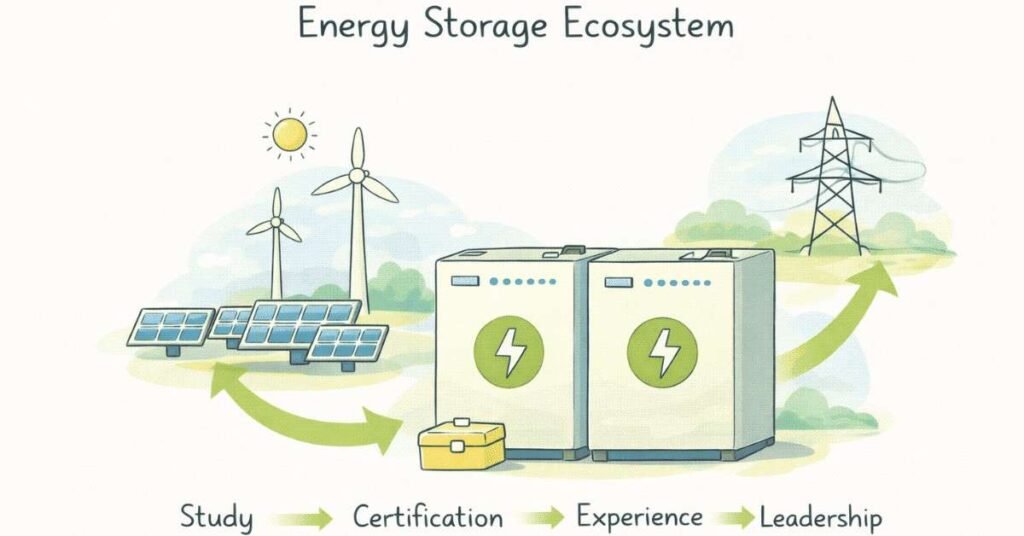
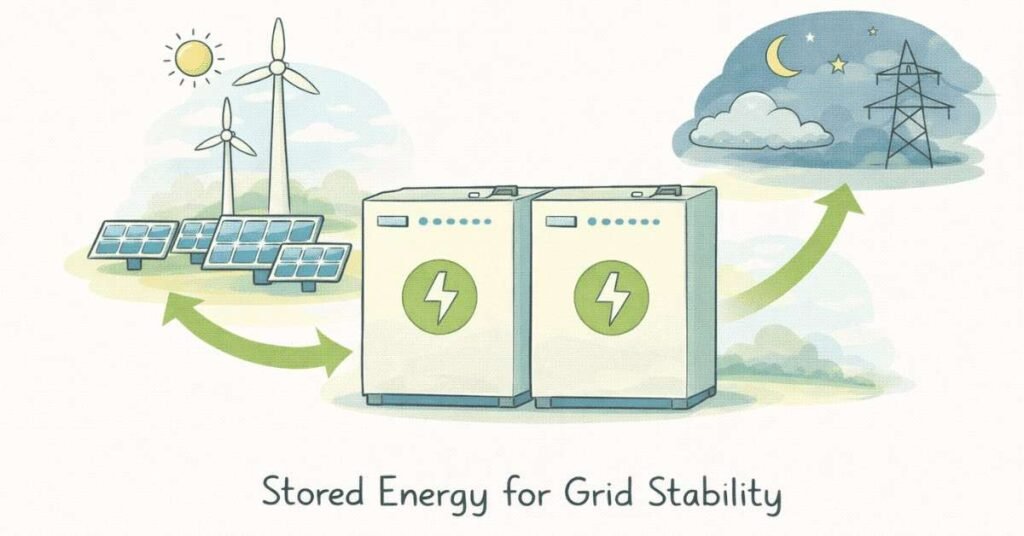
Energy storage and battery technology are crucial for the renewable energy sector. Solar and wind energy are intermittent, meaning they don’t produce electricity all the time. Batteries and storage systems help store extra power for use when the sun isn’t shining or the wind isn’t blowing. This makes energy storage one of the most exciting and fast-growing fields in renewable energy.
Energy storage careers are not just for engineers. There are roles for technicians, system designers, project managers, and even researchers. Whether you are interested in hands-on work or prefer office-based planning, there is a place for you in the energy storage industry.
Types of Energy Storage and Battery Technology Careers
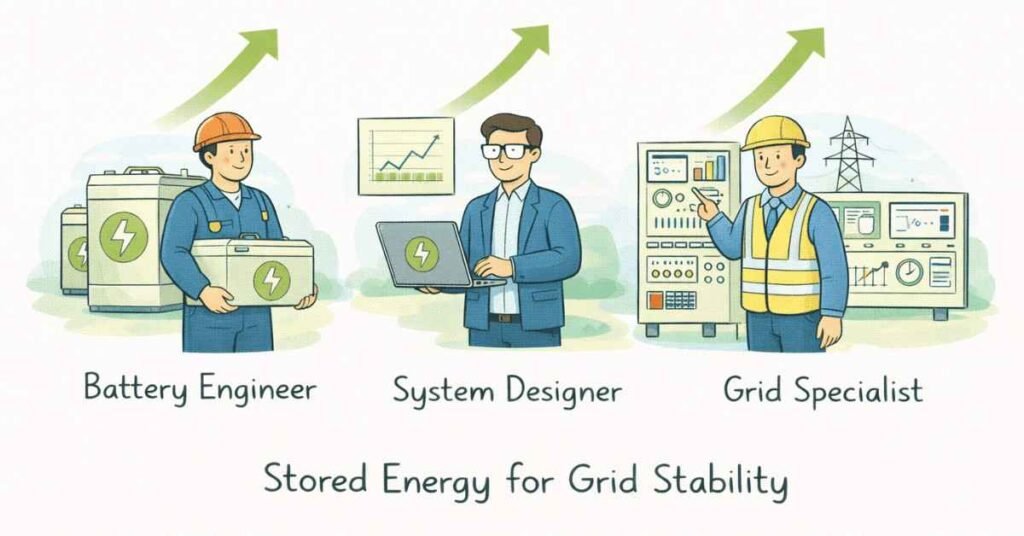
1. Battery Engineer
A battery engineer designs and manages battery systems for solar, wind, and electric vehicles. This role is perfect for those who enjoy working with technology and solving technical problems.
What You Do:
- Design and manage battery systems
- Calculate capacity and performance
- Test and optimize battery performance
- Work with software tools for system design
Skills Needed:
- Electrical engineering basics
- Battery chemistry basics
- Software tools (Excel, MATLAB, PVsyst)
Education:
- B.Tech or Diploma in Electrical/Electronics
- 12th with Physics, Chemistry, Maths
Salary:
- Fresher: ₹4–7 LPA
- Experienced: ₹7–12 LPA
How to Start:
- Take a battery technology course or certification
- Do internships with battery companies or EPC firms
2. Energy Storage System Designer
An energy storage system designer plans and designs storage systems for solar, wind, and electric vehicles. This role is ideal for those who like planning, problem-solving, and working with teams.
What You Do:
- Plan and design storage systems
- Coordinate with engineers and project managers
- Ensure systems are efficient and cost-effective
- Troubleshoot technical issues
Skills Needed:
- Electrical and mechanical basics
- Communication and leadership
- Problem-solving
Education:
- B.Tech or Diploma in Electrical/Electronics
Salary:
- Fresher: ₹4–7 LPA
- Experienced: ₹7–12 LPA
How to Start:
- Take an energy storage course or certification
- Do internships with energy storage companies
- Build a portfolio of storage system designs
3. Grid Integration Specialist
A grid integration specialist ensures that energy storage systems are integrated with the power grid. This role is for those who enjoy planning, leadership, and managing teams.
What You Do:
- Plan and manage grid integration projects
- Coordinate with engineers, technicians, and clients
- Handle budgets and timelines
- Ensure projects are completed on time and within budget
Skills Needed:
- Leadership
- Communication
- Planning and risk management
Education:
- B.Tech or MBA
- Any graduate with experience
Salary:
- Fresher: ₹5–8 LPA
- Experienced: ₹8–15 LPA
How to Start:
- Get project management certification (PMP, PRINCE2)
- Gain experience in grid integration projects
- Apply for specialist roles
How to Build a Career in Energy Storage and Battery Technology
Step 1: Choose the Right Education
- For technical roles: Take Science (Physics, Chemistry, Maths) in 11th/12th
- For non-technical roles: Commerce or Arts are also fine
Step 2: Get Certified
- Battery technology course or certification
- Energy storage course or certification
- Safety training (electrical safety, working at height)
Step 3: Gain Practical Experience
- Do internships with battery or energy storage companies
- Volunteer for community energy storage projects
- Build a portfolio of storage system designs
Step 4: Network and Apply
- Create a LinkedIn profile and follow energy storage companies
- Apply for jobs on Naukri, Indeed, and company websites
- Attend industry events and seminars
Salary Expectations


These are approximate ranges and can vary based on company, location, and your skills.

Real-Life Example: A Day in the Life of a Battery Engineer
- Start the day by reviewing battery system designs
- Use software tools to calculate capacity and performance
- Test and optimize battery performance
- Coordinate with engineers and project managers
- End the day by updating reports or photos on WhatsApp/CRM tools
This role is ideal if you enjoy working with technology and solving technical problems.