
CONTENT MARKETING STRATEGIST CAREER GUIDE
Table of Contents
What is a Content Marketing Strategist?
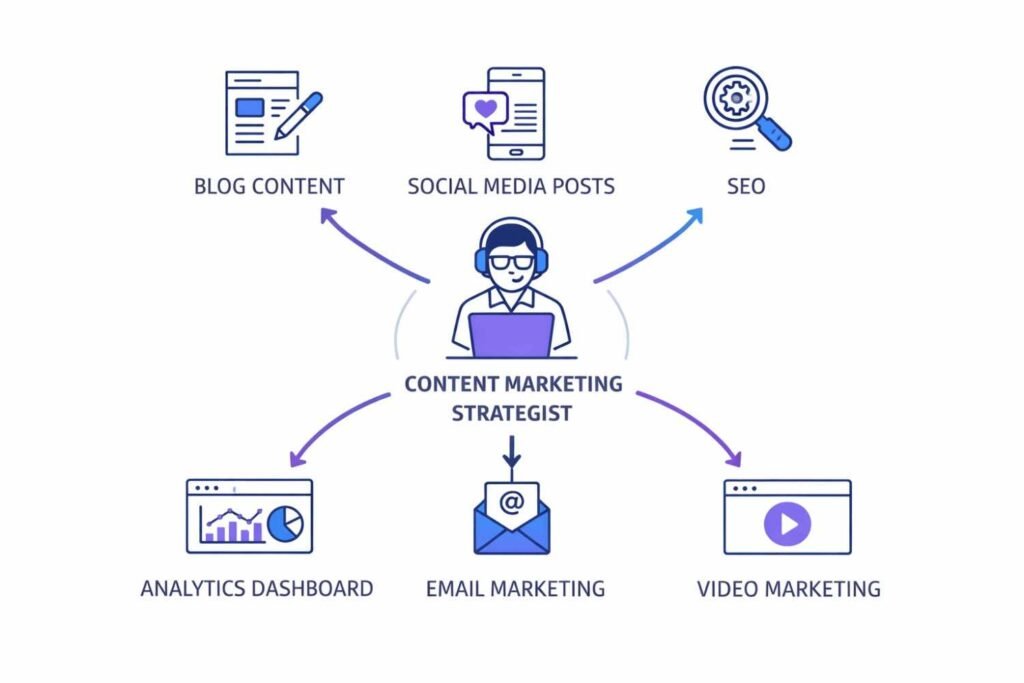
Content marketing strategists are the architects behind every blog post, video, infographic, and social media update you see from successful brands. While content writers create individual pieces, strategists design the entire content ecosystem—deciding what content gets created, when it’s published, who it targets, and how it supports business goals.
Think of it this way: if a company were building a house, content writers are the construction workers, while content strategists are the architects who design the blueprint. You’re not just creating content for content’s sake—you’re using content as a tool to attract customers, build trust, and ultimately drive sales.
In 2026, content marketing has become even more sophisticated with AI tools handling basic content creation. This shift makes strategic thinking more valuable than ever. Anyone can use ChatGPT to write a blog post, but crafting a content strategy that positions a brand as an industry leader? That requires human expertise, creativity, and strategic thinking.
Day in the Life: What Content Strategists Actually Do
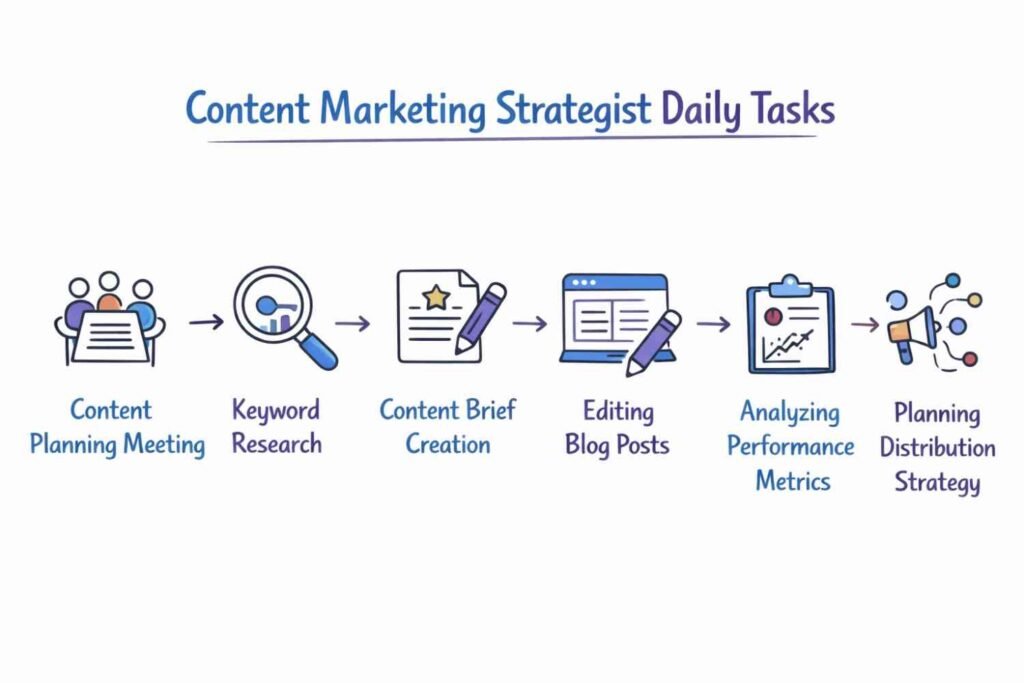
Let’s walk through a typical workday for a content marketing strategist at an Indian company:
Morning (9:00 AM – 12:00 PM)
- Review content performance from previous week using Google Analytics and social media insights
- Check which blog posts are ranking on Google and driving organic traffic
- Hold content planning meeting with writers, designers, and SEO specialists
- Analyze competitor content to identify gaps and opportunities
- Brainstorm new content ideas based on audience questions and search trends
- Update content calendar with upcoming topics and deadlines
- Review and provide feedback on draft content from writers
Afternoon (12:00 PM – 3:00 PM)
- Conduct keyword research to identify topics with search demand
- Create detailed content briefs for writers, including SEO keywords, target audience, tone, and structure
- Edit and optimize content before publication
- Collaborate with design team on visual content like infographics and social media graphics
- Interview subject matter experts for case studies or thought leadership pieces
- Plan content distribution strategy across channels (blog, social media, email, LinkedIn)
Late Afternoon (3:00 PM – 6:00 PM)
- Update existing content to keep it fresh and improve rankings
- Prepare monthly content performance reports showing traffic, engagement, and conversions
- Strategize content for upcoming product launches or campaigns
- Stay updated on content marketing trends by reading industry blogs
- Engage with audience comments and questions on published content
- Plan content repurposing (turning blog posts into LinkedIn carousels, videos into blog posts, etc.)
The role blends creativity with analytics—you need both strategic thinking to plan content and creative instincts to know what resonates with audiences.
Essential Skills for Content Marketing Strategists
Strategic Planning
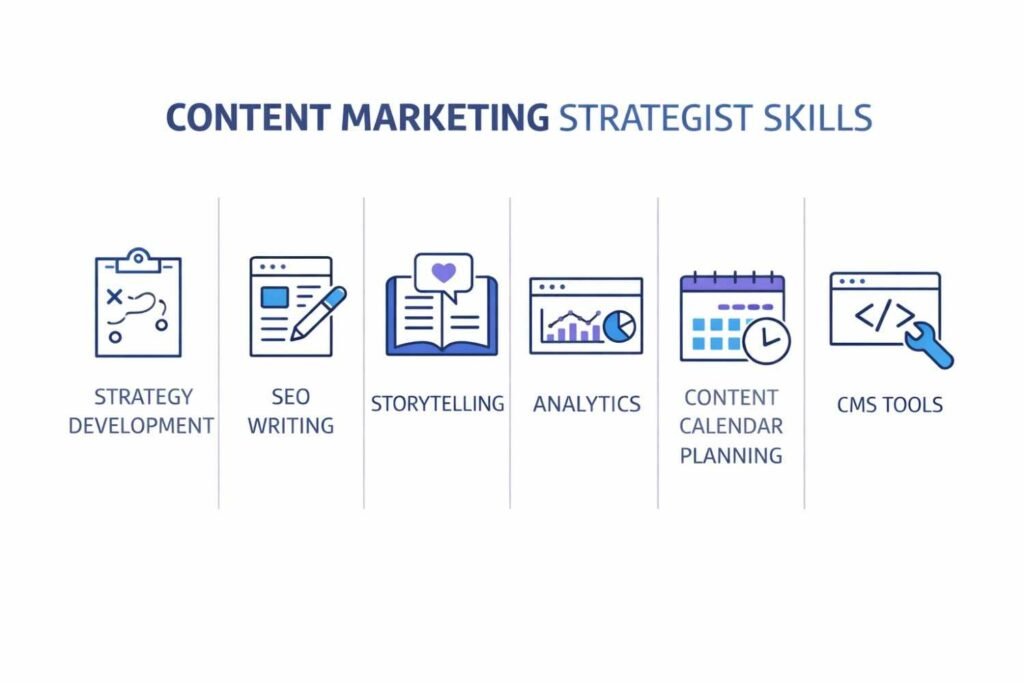
Content Strategy Development: Creating comprehensive plans that align content with business objectives, whether that’s generating leads, building brand awareness, or driving product sales.
Audience Research: Understanding target audience demographics, pain points, questions, and content consumption preferences through surveys, interviews, and analytics.
Topic Architecture and Pillar Content: Organizing content into topic clusters with pillar pages covering broad topics and cluster content addressing specific subtopics. This approach boosts SEO and establishes topical authority.
Content Calendar Management: Planning what content gets created weeks or months in advance, coordinating across teams, and maintaining consistent publishing schedules.
Content and Writing Skills
SEO Writing: Creating content that ranks well on search engines while providing genuine value to readers. Understanding keyword placement, header structure, meta descriptions, and internal linking.
Storytelling: Crafting narratives that engage audiences emotionally, making complex topics relatable through examples, case studies, and real-world applications.
Copywriting: Writing compelling headlines, calls-to-action, and promotional content that drives conversions.
Editing and Quality Control: Reviewing content for clarity, grammar, brand voice consistency, and factual accuracy.
Analytical Skills
Data Analysis: Using Google Analytics, social media analytics, and SEO tools to understand what content performs well and why.
KPI Tracking: Monitoring metrics like organic traffic, time on page, bounce rate, social shares, and conversion rates to measure content effectiveness.
A/B Testing: Experimenting with different headlines, content formats, and CTAs to optimize performance.
ROI Measurement: Calculating content marketing’s return on investment to justify budgets and resources.
Technical Skills
Content Management Systems: Proficiency in WordPress, HubSpot, or other CMS platforms for publishing and managing content.
Basic SEO Tools: Using Google Search Console, Ahrefs, SEMrush, or Ubersuggest for keyword research and performance tracking.
Project Management Tools: Managing workflows with tools like Trello, Asana, Notion, or Monday.com.
Basic Design Tools: Creating simple graphics using Canva or understanding design principles to brief designers effectively.
AI Content Tools: Leveraging tools like ChatGPT, Jasper, or Copy.ai for content ideation and drafting while adding human creativity and strategy.
Content Marketing Strategist Salary in India
Content strategist salaries vary significantly based on experience, industry, and company size:
Experience-Based Salary Ranges
- Junior Content Strategist (0-2 years): ₹3-5 lakhs per year
- Content Strategist (2-5 years): ₹6-12 lakhs per year
- Senior Content Strategist (5-8 years): ₹12-20 lakhs per year
- Lead/Manager (8+ years): ₹20-33 lakhs per year
Average salary for experienced content strategists is ₹12.3 lakhs annually, with top performers in premium companies earning up to ₹33 lakhs.
Industry-Specific Variations
Content-heavy industries pay premium salaries:
- SaaS and Tech Companies: ₹8-25 lakhs (higher than average due to complex product content needs)
- Fintech: ₹7-22 lakhs (regulatory content requires expertise)
- Edutech: ₹6-18 lakhs (educational content creation and course marketing)
- E-commerce: ₹5-15 lakhs (product descriptions, buying guides, category content)
- Agencies: ₹4-14 lakhs (varies by client portfolio and agency size)
City-Wise Comparison
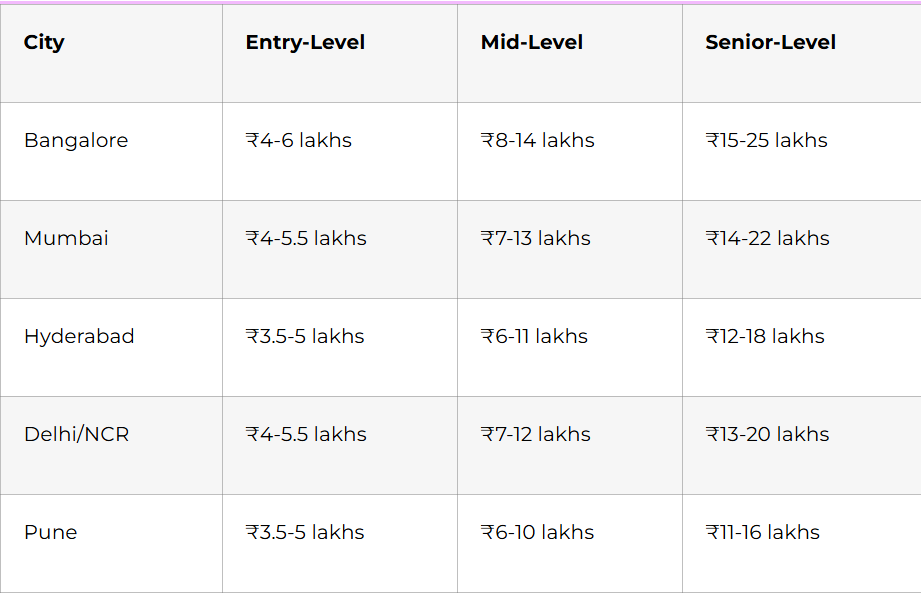
Freelance Content Strategy Income
Freelance content strategists often earn more than salaried positions:
- Project-based consulting: ₹25,000-1,50,000 per project
- Monthly retainers: ₹50,000-2,00,000 per client
- Hourly rates: ₹1,500-5,000 per hour
Managing 3-4 retainer clients can generate ₹2-6 lakhs monthly income for established strategists.
How to Build a Content Strategy Framework (2026 Approach)
Creating effective content strategies requires a systematic framework. Here’s the proven approach used by successful content teams in 2026:
Step 1: Define Business Goals and Audience
Start by answering these fundamental questions:
- Business Goal: What does your company want to achieve? (increase website traffic by 50%, generate 100 qualified leads monthly, build brand awareness in new markets)
- Target Audience: Who are you creating content for? (job seekers, business owners, students, professionals switching careers)
- Audience Pain Points: What problems keep your audience up at night?
- Current Behavior: Where does your audience currently find information? (Google, LinkedIn, YouTube, industry forums)
Create detailed audience personas documenting demographics, goals, challenges, content preferences, and buying journey stages.
Step 2: Conduct Content and Keyword Research
Audience Research: Survey existing customers, analyze support tickets, review sales call recordings, and participate in industry communities to understand what questions your audience asks.
Keyword Research: Use SEMrush, Ahrefs, or Google Keyword Planner to identify:
- Primary topics with high search volume
- Long-tail keywords with lower competition
- Questions people ask (use AnswerThePublic or Google’s “People Also Ask”)
- Search intent behind keywords (informational, navigational, transactional)
Competitor Analysis: Analyze what content competitors create, which pieces perform well, and identify content gaps you can fill.
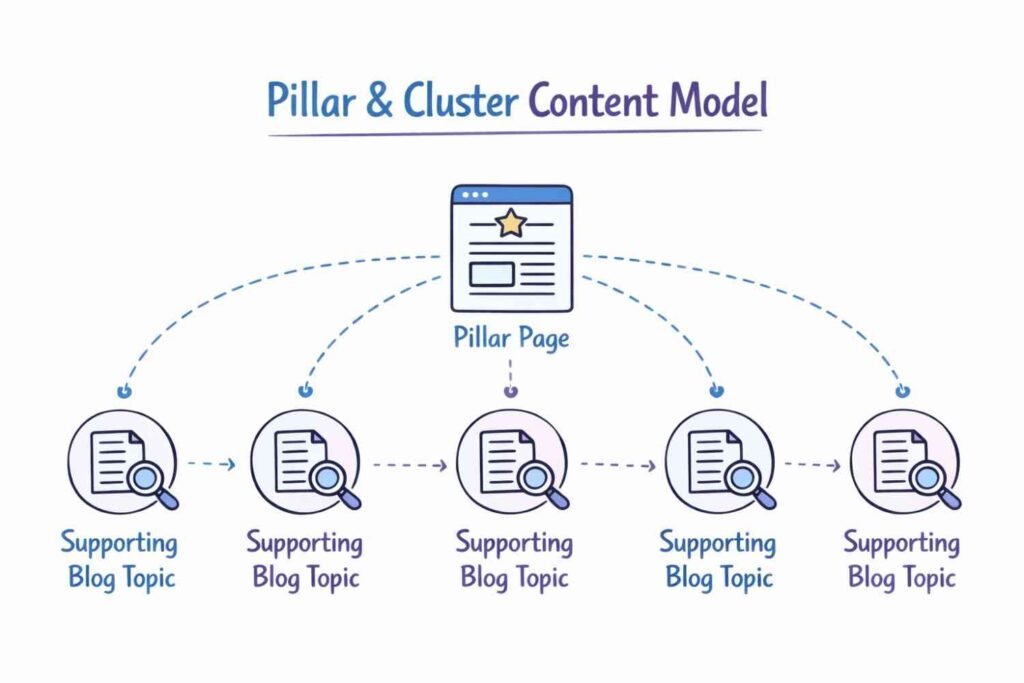
Step 3: Develop Topic Architecture (Pillar and Cluster Model)
Organize your content into pillar pages and topic clusters:
Pillars: 4-6 broad themes you want to dominate in your industry. For example, a digital marketing company might choose: SEO, Content Marketing, Social Media Marketing, PPC, Analytics, Career Guidance.
Clusters: Subtopics supporting each pillar. For the SEO pillar, clusters might include: keyword research, on-page SEO, link building, technical SEO, local SEO, SEO tools.
This structure helps:
- Establish topical authority with search engines
- Organize content logically for users
- Identify content gaps systematically
- Create clear internal linking opportunities
Step 4: Create Content Calendar
Plan content production 3-6 months in advance:
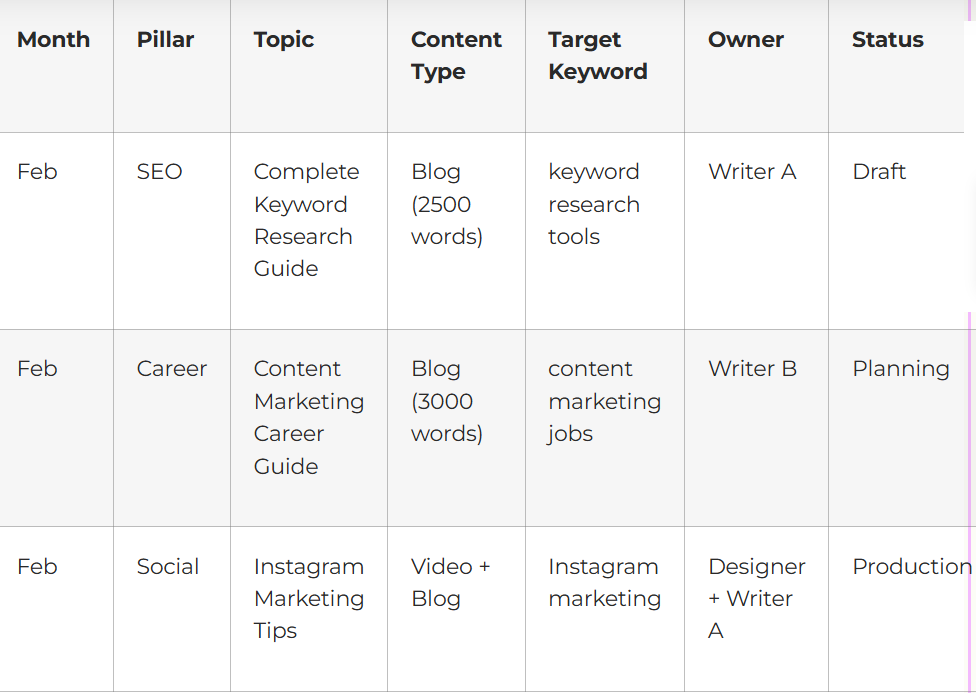
Your calendar should specify:
- Publishing dates
- Content topics and formats
- Target keywords
- Responsible team members
- Production status
- Distribution channels
Step 5: Choose Core Content Formats and Channels
Don’t spread yourself too thin. In 2026, successful brands focus on 2-3 core channels they can commit to consistently:
Common Format Combinations:
- Long-form blog guides + LinkedIn posts + Email newsletter
- Video tutorials + Written blog transcripts + Social media clips
- Case studies + Webinars + LinkedIn articles
- Podcasts + Show notes blogs + Social audio clips
Choose based on where your audience spends time and what your team can realistically produce.
Step 6: Create and Distribute Content
Content Creation Process:
- Research topic thoroughly using multiple sources
- Create detailed outline covering all relevant subtopics
- Write first draft focusing on value and clarity
- Optimize for SEO (keywords, headers, meta descriptions, internal links)
- Add visual elements (images, infographics, videos)
- Edit for grammar, tone, and brand voice
- Get stakeholder approval
- Publish and optimize meta descriptions
Distribution Strategy:
- Publish on owned channels (blog, website)
- Share on social media with platform-specific formatting
- Send to email subscribers with context
- Repurpose into multiple formats (blog → LinkedIn carousel → Twitter thread → YouTube video)
- Submit to content aggregators and communities
- Reach out to industry influencers
Step 7: Measure, Analyze, and Optimize
Track these key performance indicators (KPIs):
Traffic Metrics:
- Organic traffic growth
- Page views per piece of content
- Traffic sources (organic, social, referral, direct)
Engagement Metrics:
- Time on page
- Bounce rate
- Social shares and comments
- Email open and click rates
Conversion Metrics:
- Lead generation (form submissions, downloads)
- Sales qualified leads from content
- Conversion rate by content type
- Revenue attributed to content
SEO Metrics:
- Keyword rankings
- Backlinks earned
- Domain authority improvement
Review performance monthly, identify top performers, understand why they succeeded, and apply those lessons to future content.
How to Become a Content Marketing Strategist
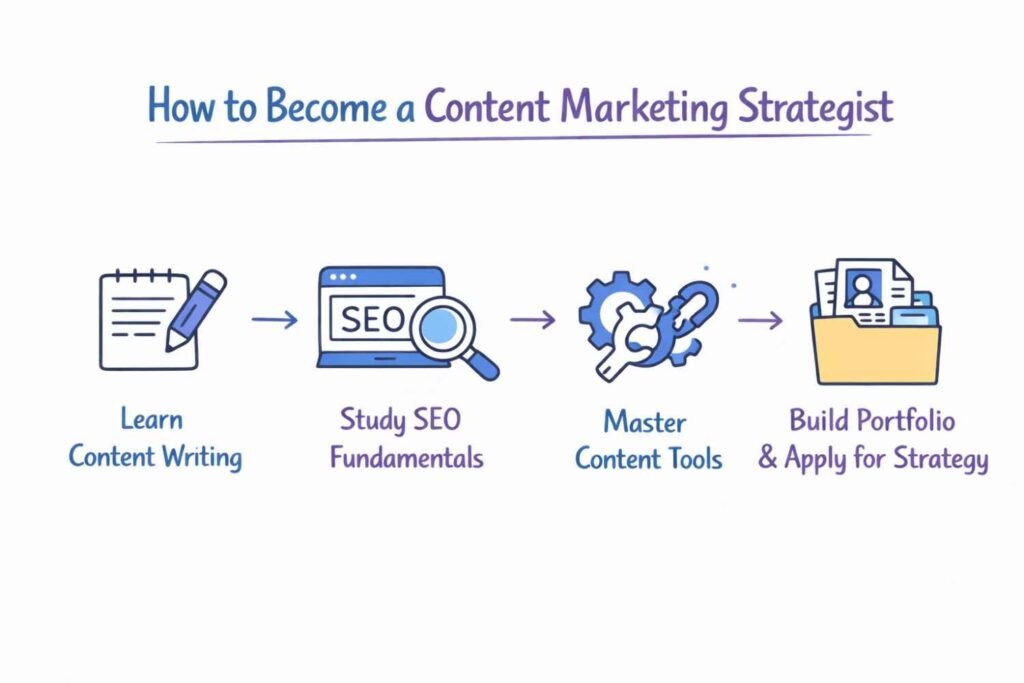
Step 1: Build Strong Writing Foundation (Months 1-2)
Before strategizing content, master creating it:
- Practice writing daily (blog posts, LinkedIn articles, Medium posts)
- Study persuasive writing techniques and storytelling
- Learn basic SEO writing (keyword placement, header structure)
- Read excellent content from brands like HubSpot, Neil Patel, Buffer, Backlinko
- Take free writing courses on Coursera or HubSpot Academy
Start a personal blog documenting your learning journey—this becomes portfolio material.
Step 2: Learn Content Marketing Fundamentals (Months 2-3)
Free Certifications to Complete:
- HubSpot Content Marketing Certification (4-5 hours, completely free)
- Google Digital Garage Fundamentals of Digital Marketing
- SEMrush Content Marketing Toolkit Course
- Copyblogger’s Content Marketing Certification
Read These Essential Books:
- “Content Rules” by Ann Handley
- “Everybody Writes” by Ann Handley
- “Epic Content Marketing” by Joe Pulizzi
Follow Content Marketing Experts:
- Ann Handley (Chief Content Officer, MarketingProfs)
- Neil Patel (Co-founder, NP Digital)
- Rand Fishkin (Founder, SparkToro)
- Jay Baer (Founder, Convince & Convert)
Step 3: Master Content Strategy Tools (Months 3-4)
Gain hands-on experience with:
- WordPress: Create and publish content (use free WordPress.com or install on cheap hosting)
- Google Analytics: Install on your blog, track performance, understand user behavior
- Google Search Console: Monitor search performance and indexing
- Canva: Create basic graphics for social media and blog posts
- SEMrush/Ubersuggest: Conduct keyword research (use free versions)
- Trello/Notion: Create content calendars and manage workflows
Document everything you learn as case studies for your portfolio.
Step 4: Create Portfolio Projects (Months 4-6)
Employers want proof you can develop and execute content strategies. Create these portfolio pieces:
Project 1: Personal Blog Content Strategy
- Document your blog’s strategy (goals, target audience, content pillars, calendar)
- Publish 10-15 high-quality posts over 3 months
- Show traffic growth, ranking improvements, and engagement metrics
- Present as a case study with before/after screenshots
Project 2: Content Strategy Proposal
- Choose a real business (local shop, friend’s startup, nonprofit)
- Audit their existing content
- Create a comprehensive content strategy document (50-60 pages) including:
- Audience research
- Competitor analysis
- Content pillars and topics
- 3-month content calendar
- Distribution plan
- KPI framework
Project 3: Content Performance Analysis
- Analyze a brand’s content (Buffer, HubSpot, Moz—choose one)
- Identify their best-performing content
- Explain why it performs well
- Provide recommendations for improvement
Create a simple portfolio website (using Wix, WordPress, or Notion) showcasing these projects.
Step 5: Get Real-World Experience (Months 6-9)
Option A: Internships
Apply for content marketing internships at:
- Digital marketing agencies
- Startups (check AngelList, LinkedIn)
- Edutech companies
- SaaS companies
Even unpaid 3-month internships provide invaluable experience and networking opportunities.
Option B: Freelance Projects
- Offer content strategy services on Upwork, Fiverr, or Freelancer
- Start with lower rates (₹500-1000 per article) to build reviews
- Join Facebook groups for freelance writers and content marketers
- Reach out to small businesses in your network
Option C: Volunteer Work
- Offer free content help to nonprofits or social organizations
- Manage content for community groups or local initiatives
- Get testimonials and case studies in exchange
Step 6: Apply for Content Strategy Jobs (Month 9+)
Job Titles to Search:
- Content Marketing Executive
- Content Strategist
- Content Marketing Manager (for those with 2+ years experience)
- Digital Content Specialist
- SEO Content Writer (often includes strategy responsibilities)
Resume Tips:
- Lead with a strong summary highlighting strategic thinking and results
- Quantify achievements (“Grew blog traffic from 500 to 5,000 monthly visitors”)
- Include certifications prominently
- Link to portfolio website
- Showcase both creative and analytical skills
Where to Apply:
- Naukri.com, LinkedIn Jobs, Indeed, Internshala
- AngelList for startup opportunities
- Company career pages directly
- Content marketing agencies (Contently, Scripted, Writer Access have Indian operations)
Content Marketing Career Growth Path
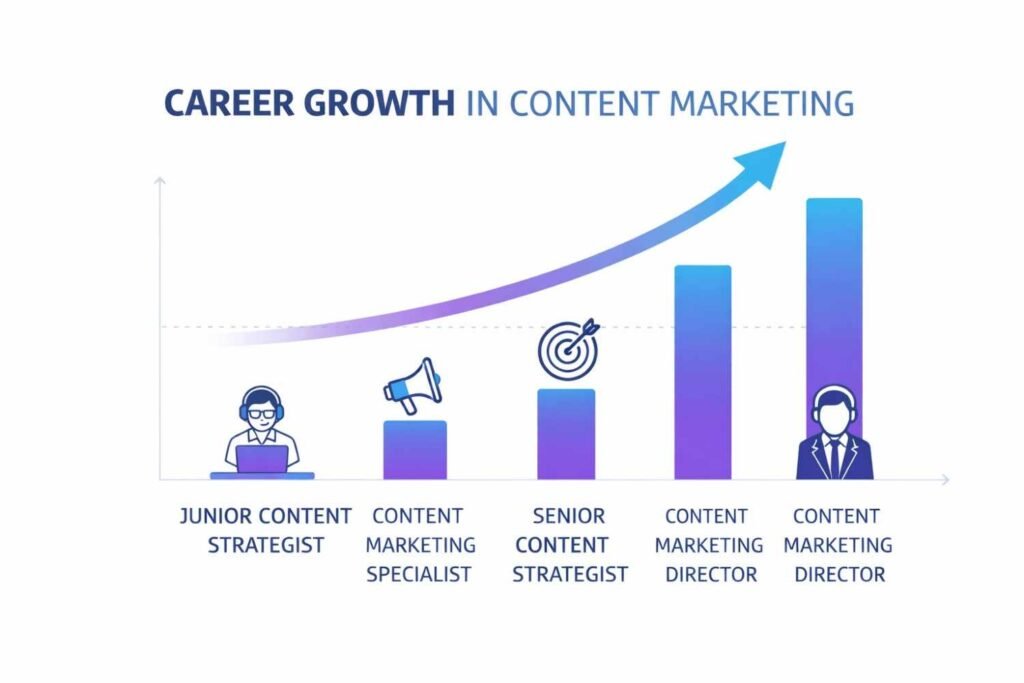
Year 0-2: Content Writer/Junior Content Strategist
Execute content plans created by seniors. Write blog posts, social media content, and basic content pieces while learning strategy. Expected salary: ₹3-5 lakhs.
Year 2-4: Content Strategist
Develop content strategies independently for specific channels or smaller clients. Manage content calendars, coordinate with writers and designers. Expected salary: ₹6-12 lakhs.
Year 4-6: Senior Content Strategist
Lead comprehensive content strategies for large clients or major company initiatives. Mentor junior strategists and writers. Expected salary: ₹12-18 lakhs.
Year 6-8: Content Marketing Manager
Oversee entire content marketing function, manage team of 5-10 people, set departmental goals, allocate budgets. Expected salary: ₹15-24 lakhs.
Year 8+: Head of Content/Content Marketing Director
Shape organization’s overall content vision, collaborate with C-level executives, build and scale content teams, manage significant budgets. Expected salary: ₹20-33 lakhs.
Many experienced content strategists transition into freelance consulting or start content agencies after 5-7 years.
Content Marketing Trends Shaping 2026
AI-Assisted Content Creation
AI tools handle first drafts and basic content, allowing strategists to focus on higher-level thinking, editing, and adding unique insights humans provide. The future isn’t AI replacing strategists—it’s strategists leveraging AI to work more efficiently.
AI Search Optimization
With ChatGPT, Google’s AI Overviews, and other AI search tools changing how people find information, content must be optimized for both traditional search and AI-generated answers.
Short-Form Video Dominance
Instagram Reels, YouTube Shorts, and LinkedIn video posts drive significantly higher engagement than text. Content strategists must understand video content planning even if they don’t produce videos themselves.
Interactive Content
Quizzes, calculators, assessments, and interactive tools generate higher engagement and lead conversion than static content.
Personalization at Scale
Using marketing automation to deliver different content based on user behavior, demographics, and funnel stage.
Community-Driven Content
Building communities (Slack groups, Discord servers, Facebook groups) where audiences engage with each other and co-create content.
FAQs: Content Marketing Strategist Career
Q: What’s the difference between a content writer and content strategist?
Writers execute—creating individual pieces of content. Strategists plan—deciding what content gets created, why, when, and how it fits into larger business goals. Strategists typically earn 30-50% more than writers.
Q: Do I need to be an excellent writer to become a content strategist?
You need good writing skills to understand what makes content effective, but you don’t need to be a professional writer. Strong strategic thinking, analytical skills, and understanding of content marketing principles matter more.
Q: Can I transition from content writing to content strategy?
Absolutely. This is the most common path. Most strategists start as writers, gain experience understanding what content works, then transition into strategy roles after 2-3 years.
Q: Which industries hire the most content strategists?
SaaS, technology, fintech, edutech, healthcare, e-commerce, and digital marketing agencies all hire content strategists heavily. Any industry with complex products requiring education hires content strategists.
Q: Is content marketing stable long-term, or will AI replace it?
Content marketing remains essential—AI changes how content is created, not whether it’s needed. Strategic thinking, creativity, and understanding audience psychology can’t be automated. Strategists who leverage AI tools will thrive.
Your Next Steps: Launch Your Content Strategy Career
Content marketing strategy combines creativity with analytical thinking, making it perfect for people who enjoy both writing and data. Unlike pure content writing roles, strategists shape entire content ecosystems, seeing direct business impact from their work.
Start today by creating your first content strategy document—even if it’s just for your own blog. Choose 3-4 content pillars, create a 3-month content calendar, and start publishing. Document your process and results. Six months from now, you’ll have portfolio pieces and real experience that set you apart from others just starting.
The content strategists earning ₹15-25 lakhs today started with a single blog post and curiosity about what makes content work. They kept learning, testing, and improving. You can follow that same path starting right now.