
COMPLIANCE OFFICER CAREER PATH
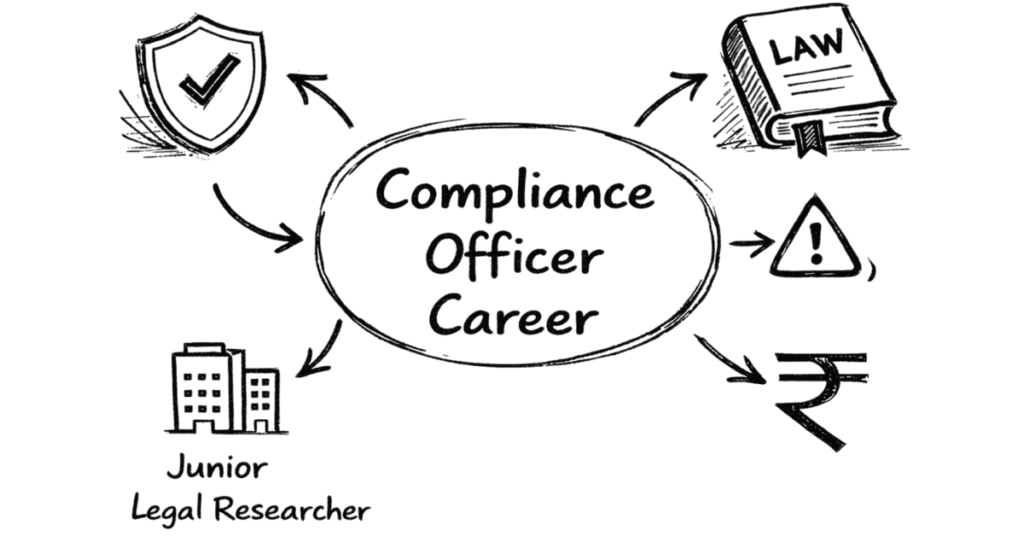
Table of Contents
Introduction:
Every major business decision passes through a compliance officer’s desk. You’re not just ensuring companies follow the law—you’re protecting them from massive fines, reputational damage, and operational disruptions that can destroy businesses overnight. When SEBI fines reach crores or RBI bans violate banking operations, compliance officers are the guardians preventing these disasters.
Compliance has transformed from a back-office checkbox exercise into a strategic C-suite function. Modern compliance officers partner with CEOs on business expansion strategies, guide digital transformation initiatives, and shape corporate governance frameworks. With India’s regulatory landscape exploding—450+ central laws, thousands of state regulations, 70+ sector regulators—the demand for skilled compliance professionals has never been higher.
Compliance officers in India earn strong compensation: ₹8-18 lakhs annually on average, with experienced professionals in banking/fintech making ₹25-40 lakhs in metro cities. Entry-level roles start at ₹5-9 lakhs, offering clear paths to senior positions. If you enjoy solving complex regulatory puzzles, working at the intersection of law and business, and making tangible organizational impact, compliance offers one of the most secure and rewarding career paths available today.
What Compliance Officers Actually Do
The Regulatory Shield of Modern Business
Compliance officers serve as the organization’s early warning system for regulatory risk. When a fintech launches a new lending product, you’ll analyze RBI guidelines, PMLA requirements, and data privacy obligations before launch. When a pharma company enters new markets, you’ll map FDA approvals, drug pricing regulations, and local licensing requirements.
Your work prevents existential threats. A single compliance failure can trigger ₹100+ crore fines (like HDFC Bank’s recent ₹10 crore PMLA penalty), license suspensions, or criminal prosecutions of executives. Excellent compliance officers don’t just avoid disasters—they enable growth by identifying lawful paths through regulatory complexity.
Core Daily Responsibilities
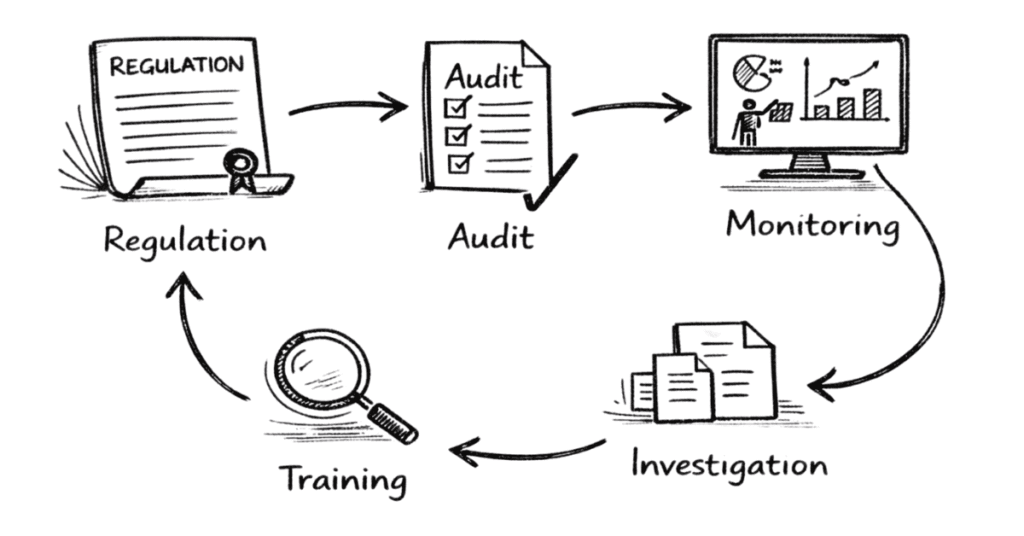
Regulatory Mapping: Creating comprehensive compliance matrices identifying all applicable laws, regulations, circulars, and internal policies affecting business operations. For a digital lender, this includes RBI Master Directions, FEMA provisions, DPDP Act requirements, and KYC/AML obligations.
Policy Development: Drafting practical compliance policies translating vague regulatory requirements into actionable procedures. Employees need clear guidance—”Exactly what documents prove customer identity?” rather than “Follow KYC guidelines.”
Risk Assessments: Conducting enterprise-wide compliance risk assessments identifying high-risk activities, third-party exposures, and emerging regulatory threats. You’ll prioritize remediation efforts based on fine exposure, reputational risk, and operational impact.
Training Programs: Designing and delivering compliance training ensuring every employee understands their obligations. Frontline staff learn transaction monitoring red flags; executives understand board-level governance duties.
Monitoring and Testing: Implementing automated monitoring systems flagging suspicious transactions, contract compliance failures, or regulatory reporting gaps. Regular testing validates control effectiveness.
Incident Management: Investigating compliance breaches, determining root causes, implementing corrective actions, and reporting to regulators when required. Your incident reports often determine whether companies face fines or warnings.
Board Reporting: Translating complex compliance issues into executive summaries for board meetings. Directors need to understand material risks without drowning in regulatory detail.
Types of Compliance Careers
Financial Services Compliance
Banking Compliance: RBI regulations dominate—KYC/AML, lending guidelines, priority sector lending, cybersecurity framework. Mumbai offers highest salaries (₹20-35 lakhs senior level).
Fintech Compliance: Navigating RBI’s digital lending guidelines, PMLA, DPDP Act, payment aggregator regulations. Bangalore hub with rapid growth opportunities.
NBFC Compliance: Similar to banking but with higher risk profiles, complex group structures. Chennai strong hub.
Capital Markets Compliance: SEBI regulations for brokers, mutual funds, PMS, AIFs. Delhi-NCR concentration.
Corporate Compliance
Data Privacy Compliance: DPDP Act 2023 implementation creates massive demand. You’ll build data mapping programs, consent management systems, DPIA frameworks.
Anti-Bribery/Anti-Corruption: Prevention of Corruption Act, FCPA compliance for MNCs. High stakes with personal criminal liability for executives.
ESG Compliance: SEBI LODR requirements, green bond frameworks, sustainability reporting. Emerging high-growth area.
Export-Import Compliance: FEMA, EXIM policy, customs regulations for international trade businesses.
Industry-Specific Compliance
Pharmaceuticals: Drug pricing, clinical trials, FSSAI (for nutraceuticals), Medical Device Rules. Hyderabad/Mumbai hubs.
Technology: IT Rules 2021, DPDP Act, CERT-In cybersecurity reporting. Bangalore leadership.
Real Estate: RERA compliance across 30+ states with varying requirements. Gurugram strong market.
Manufacturing: Environmental clearances, labor laws, factory licensing. Diverse opportunities nationwide.
Essential Skills for Compliance Success
Regulatory Intelligence
Multi-Jurisdictional Mastery: Tracking regulations across ministries, regulators, states. RBI, SEBI, IRDAI, PFRDA each issue hundreds of circulars annually—you need systematic tracking systems.
Legislative Analysis: Understanding intended vs. literal regulatory meanings. RBI’s “spirit of regulation” often matters more than exact wording during regulatory examinations.
Global Standards: Comparing Indian requirements with international standards (GDPR vs. DPDP, SOX vs. Companies Act) helps multinational clients.
Technical and Technology Skills
RegTech Proficiency: GRC platforms (MetricStream, RSA Archer), transaction monitoring systems (Actimize, SymphonyAI), automated compliance testing tools.
Data Analytics: Analyzing transaction patterns identifying AML red flags, compliance gaps, or emerging risks.
RPA/Automation: Robotic Process Automation for repetitive compliance tasks like KYC refresh, regulatory reporting.
Cybersecurity Basics: Understanding NIST frameworks, ISO 27001, RBI cybersecurity directions affecting compliance programs.
Risk Management Expertise
Enterprise Risk Framework: COSO, ISO 31000 frameworks adapted for compliance risk. You’ll quantify fines, probability of detection, reputational impacts.
Third-Party Risk: Vendor due diligence, contract compliance monitoring, supply chain risk assessment.
Scenario Analysis: Stress-testing compliance programs against regulatory changes, business expansion, M&A transactions.
Soft Skills and Leadership
Executive Communication: Translating regulatory complexity into business language. CEOs need one-page risk summaries, not 50-page circular analyses.
Change Management: Implementing new compliance programs across resistant business units. Fintech sales teams hate additional KYC requirements—you’ll persuade them.
Investigation Skills: Root cause analysis of compliance failures, interviewing witnesses, building remediation plans.
Stakeholder Influence: Convincing profit centers to invest in compliance controls yielding no immediate ROI.
Educational Pathways and Certifications
Academic Foundation
Law Graduates: LLB/LLM with corporate law specialization provides strongest regulatory foundation. Understanding Companies Act, FEMA, contract law proves invaluable.
Commerce/Finance: CA, CS, MBA(Finance) understand business drivers behind compliance decisions. CS qualification particularly valuable for corporate governance roles.
Engineering/IT: B.Tech/MCA backgrounds excel in fintech, cybersecurity compliance roles requiring technical understanding.
Risk Management: Postgraduate diplomas in compliance/risk management build specialized knowledge.
Must-Have Certifications
Certified Compliance Professional (CCP): Indian Institute of Compliance Professionals offers foundational certification.
Certified Anti-Money Laundering Specialist (CAMS): Essential for financial services compliance roles.
Certified Information Privacy Professional (CIPP): For DPDP Act/data privacy specialists.
Certified Internal Auditor (CIA): Valuable for compliance testing/monitoring roles.
ISO 37301 Compliance Management Systems: International standard for compliance programs.
Sector-Specific: AMFI certification (mutual funds), IRDA licensing (insurance), PFRDA (pension funds).
Entry-Level Experience Building
Compliance Analyst Roles: Entry point monitoring transactions, preparing regulatory reports, supporting policy implementation.
Internal Audit: Builds risk assessment, testing, reporting skills transferable to compliance.
Legal Roles: Contract management, regulatory advisory roles provide compliance foundation.
Risk Management: Enterprise risk roles teach frameworks applicable to compliance.
Salary Expectations and Career Progression
Compensation by Experience
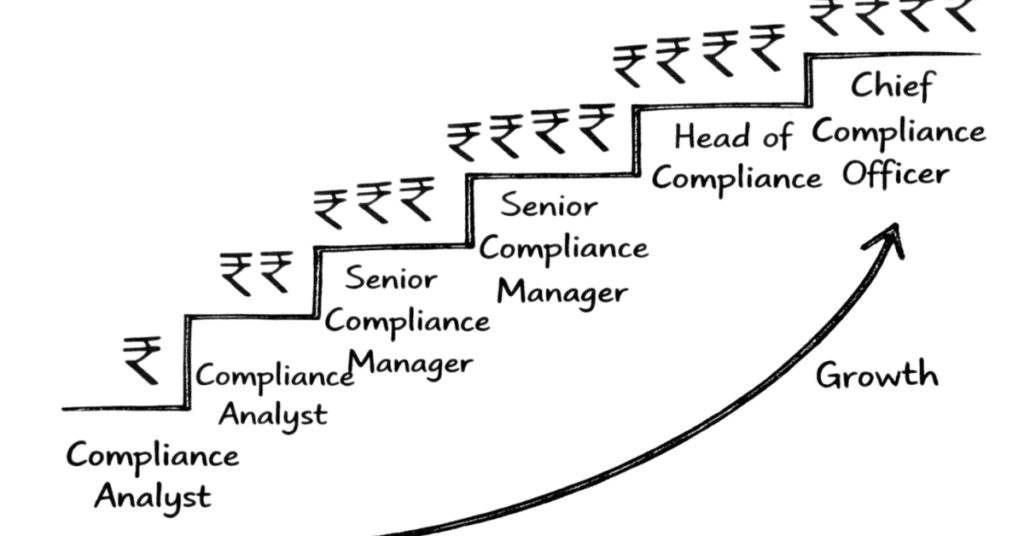
Entry-Level (0-3 Years): ₹5-9 lakhs annually. Transaction monitoring, basic reporting, policy support.
Mid-Level (4-8 Years): ₹10-18 lakhs. Independent compliance program ownership, regulatory filings, training delivery.
Senior Level (9-15 Years): ₹20-35 lakhs. Department leadership, enterprise risk ownership, CCO reporting.
Executive Level (15+ Years): ₹40 lakhs – 1 crore+. Chief Compliance Officers, Regional Compliance Heads.
Location Premiums:
- Mumbai: +30% (financial hub)
- Bangalore: +25% (fintech concentration)
- Delhi-NCR: +20% (regulatory/policy hub)
- Hybrid/Remote: Growing trend, 10-15% below metro salaries
Career Progression Path
- Compliance Analyst → Transaction monitoring, report preparation
- Compliance Manager → Program ownership, regulatory filings
- Senior Compliance Manager → Cross-functional leadership, policy development
- Head of Compliance/Regional CCO → Department leadership, board reporting
- Chief Compliance Officer → C-suite strategy partner
High-Growth Specializations:
- Fintech Compliance (rapid sector growth)
- Data Privacy (DPDP Act implementation)
- Climate/ESG Compliance (mandatory disclosures)
- Cybersecurity Compliance (CERT-In, RBI cyber directions)
Technology Transforming Compliance
RegTech Revolution
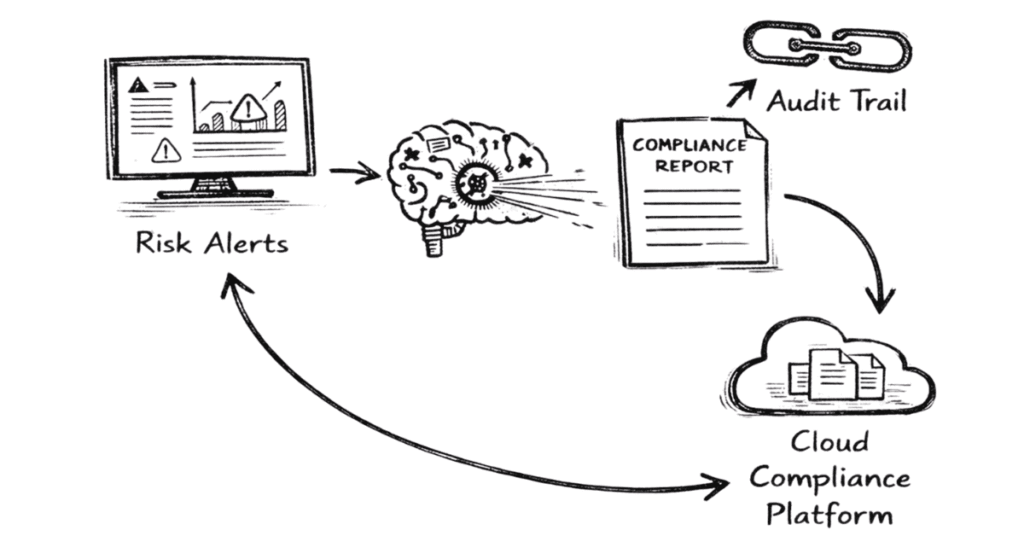
Automated Monitoring: Real-time transaction screening against sanctions lists, PEP databases, adverse media.
AI Risk Scoring: Machine learning models predicting compliance risk by customer, product, geography.
NLP Regulation Tracking: AI scanning circulars/notifications extracting actionable requirements.
Blockchain Audit Trails: Immutable records proving compliance program execution.
GRC Platforms
Integrated Solutions: MetricStream, OneTrust, LogicGate combining policy management, risk assessment, incident tracking, reporting.
Industry Leaders: NAVEX Global (ethics/compliance), Thomson Reuters (regulatory intelligence), Workiva (ESG reporting).
Industry Demand Drivers
Fintech Explosion: 8,000+ RBI-registered fintechs need compliance infrastructure. Digital lending guidelines alone employ hundreds of specialists.
DPDP Act Implementation: Phased rollout creates 5,000+ data privacy compliance jobs by 2027.
SEBI Rationalization: 100+ LODR amendments annually require continuous compliance updates.
Global Expansion: Indian MNCs entering 50+ countries need multi-jurisdictional expertise.
ESG Mandates: Listed companies require sustainability compliance officers by FY2026-27.
Getting Started: Action Plan
- Choose Specialization: Fintech, data privacy, or corporate governance based on interest/market demand
- Build Foundation: CS/CA for corporate, law degree for regulatory depth
- Get Certified: CAMS for financial services, CIPP for privacy, CCP for general
- Gain Experience: Analyst roles in banks, fintechs, Big 4 consulting
- Master Tech: Learn one GRC platform + Excel/SQL for reporting
- Network: Join Indian Institute of Compliance Professionals, LinkedIn compliance groups
Is Compliance Right for You? Perfect for systematic thinkers who enjoy regulatory puzzles, risk mitigators protecting organizational futures, business-oriented professionals bridging law and strategy. Less suitable for those seeking courtroom drama, disliking detail-oriented work, or preferring pure legal practice over business advisory.
Compliance offers unmatched job security, rapid advancement, strategic influence, and direct P&L impact. As regulatory complexity explodes, skilled compliance officers become organizational lifelines—earning premium compensation while sleeping soundly knowing they’ve protected their companies from existential threats.