
8 Civil Engineering Specializations: Find Your Career Path
Table of Contents
Introduction
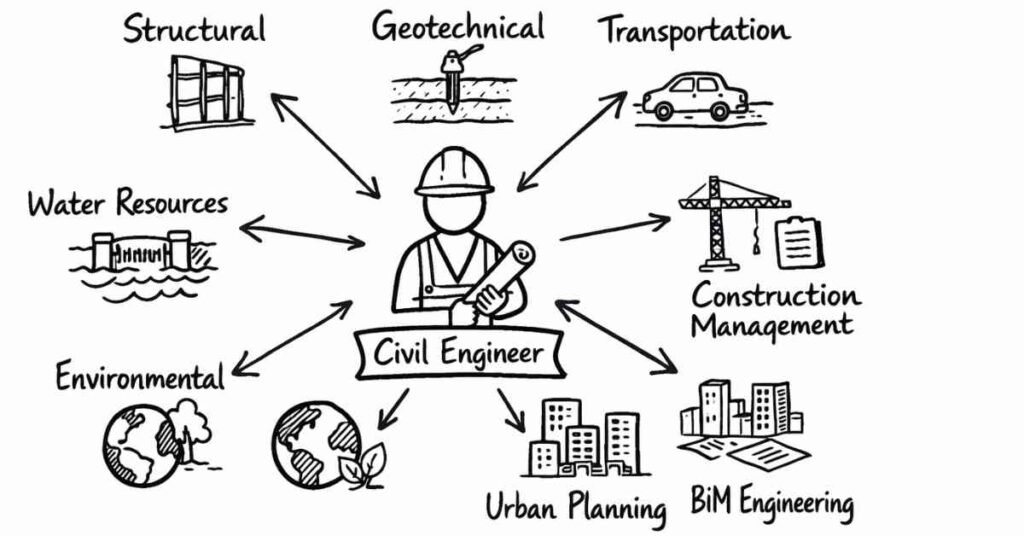
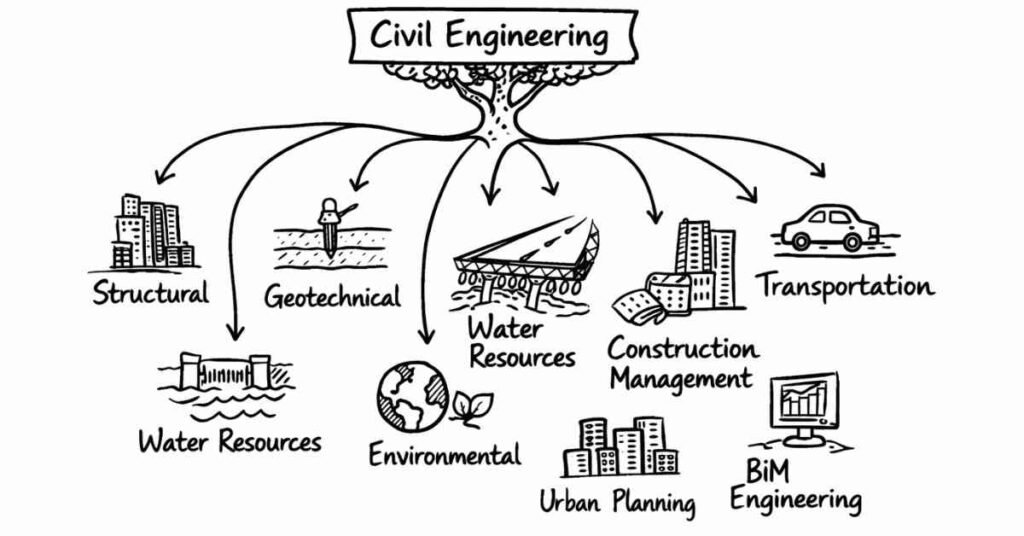
Here’s something they don’t tell you clearly in engineering college: “civil engineering” is not one career—it’s actually eight or nine different careers bundled under one name.
A structural engineer designing earthquake-resistant buildings has a completely different daily routine, skill set, and career path compared to a transportation engineer planning metro routes. Both are civil engineers, but their work is worlds apart.
Choosing your specialization is one of the most important career decisions you’ll make. Choose wrong, and you might spend years doing work you don’t enjoy. Choose right, and you’ll wake up excited about solving problems in your field.
Let me break down the major civil engineering specializations in simple, practical terms—what each one involves, what kind of work you’ll do, what skills you need, and what the career prospects look like.
1. Structural Engineering: Designing What Stands
What Structural Engineers Do
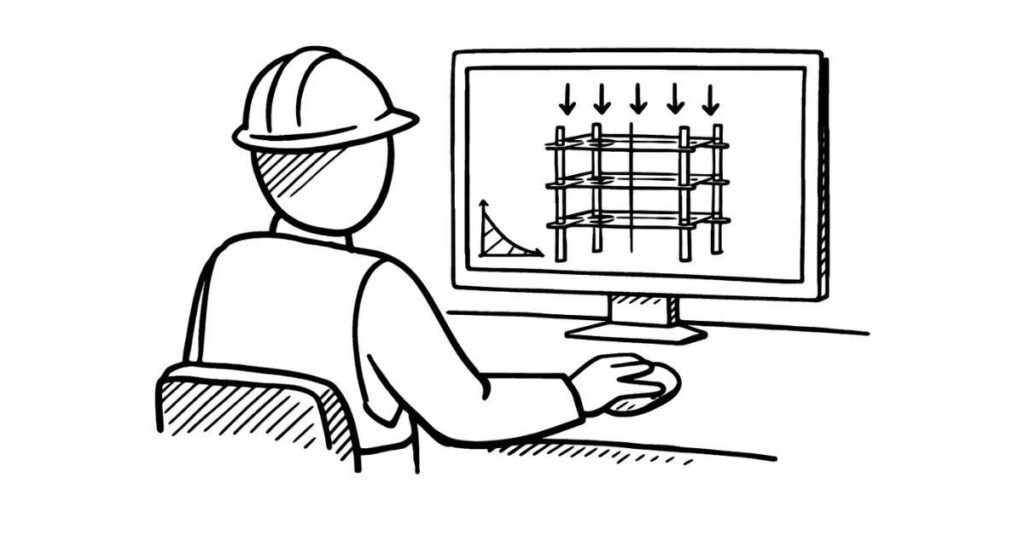
Structural engineers ensure buildings and structures are safe, stable, and strong enough to carry the loads they’ll face. You’re essentially asking and answering one fundamental question: “Will this structure stand, or will it collapse?”
Your daily work involves:
- Analyzing forces acting on structures (dead loads, live loads, wind loads, earthquake forces)
- Designing structural elements like beams, columns, slabs, and foundations
- Using software like STAAD Pro, SAP2000, ETABS to model and analyze structures
- Creating structural drawings showing reinforcement details
- Reviewing contractor shop drawings
- Inspecting construction to ensure work matches design.
Types of Projects
Structural engineers work on:
- High-rise buildings: Commercial towers, residential apartments
- Bridges: Road bridges, railway bridges, pedestrian bridges
- Industrial structures: Factories, warehouses, power plants
- Special structures: Stadiums, auditoriums, amusement park rides
- Infrastructure: Metro stations, airport terminals.
Skills You Need
- Strong grasp of structural mechanics and analysis
- Proficiency in structural analysis software
- Understanding of building codes and standards (IS codes in India)
- Attention to detail (small calculation errors can have serious consequences)
- Visualization ability (imagining how structures behave under loads)
- Problem-solving skills (every project has unique challenges).
Career Prospects
Entry-level structural engineers earn ₹4-6 LPA. With 5-7 years experience, salaries reach ₹7-12 LPA. Senior structural engineers and consultants can earn ₹15-25 LPA.
Work Environment
Mix of office (design work) and site (supervision and inspection). More office-heavy than other civil engineering specializations.
Best Fit For
You’ll enjoy structural engineering if you:
- Like problem-solving and mathematical work
- Enjoy working with software and calculations
- Want to see your designs become real structures
- Prefer a mix of office and field work
- Are detail-oriented and methodical
2. Geotechnical Engineering: The Ground Beneath
What Geotechnical Engineers Do
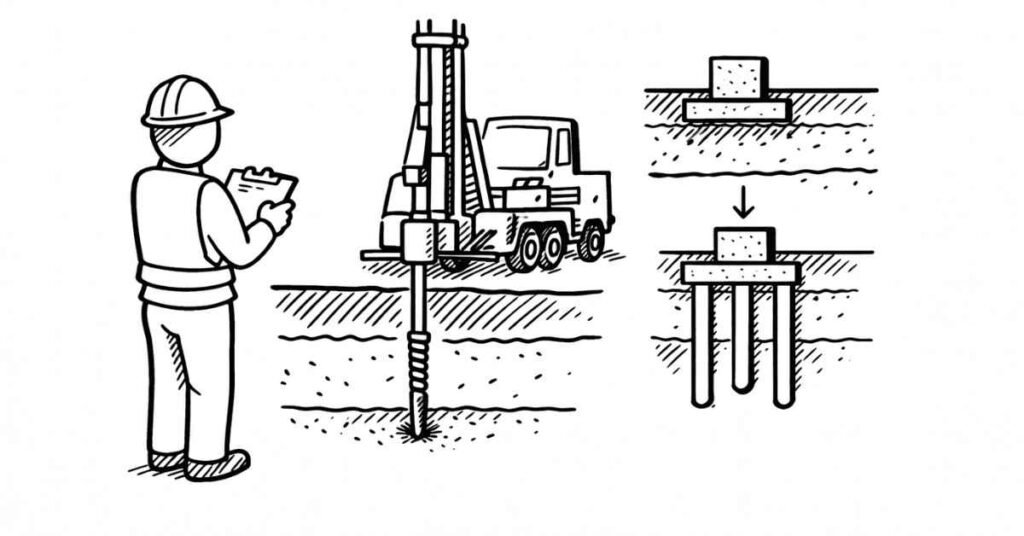
Before any construction begins, someone needs to study the ground. That’s where geotechnical engineers come in. You investigate soil and rock properties to determine how they’ll behave when a structure is built on them.
Your work involves:
- Conducting soil investigations and testing
- Analyzing soil properties (strength, compressibility, permeability)
- Designing foundations (shallow foundations, pile foundations, raft foundations)
- Assessing slope stability and designing retaining walls
- Ground improvement techniques
- Analyzing earthquake-related ground behavior.
Types of Projects
- Foundation design for buildings, bridges, and industrial structures
- Earth dams and embankments
- Tunnel design
- Slope stabilization
- Ground improvement for weak soils
- Deep excavations and dewatering.
Skills You Need
- Strong understanding of soil mechanics
- Field investigation skills
- Laboratory testing knowledge
- Foundation design capabilities
- Geological knowledge
- Software skills (GeoStudio, Plaxis).
Career Prospects
Geotechnical engineers are somewhat scarce, which works in your favor. Starting salaries range from ₹4-6.5 LPA. Experienced geotechnical consultants earn ₹10-18 LPA. Those with specialized expertise (like earthquake geotechnical engineering) command premium salaries.
Work Environment
Heavy field work, especially early in career. You’ll spend time at boring sites, supervising soil testing, collecting samples. As you advance, work becomes more office-based (analyzing data, designing foundations).
Best Fit For
Geotechnical engineering suits you if you:
- Don’t mind field work and site conditions
- Like both practical field work and analytical design
- Are interested in geology and earth sciences
- Enjoy investigative work
- Want a specialization with less competition
3. Transportation Engineering: Moving People and Goods
What Transportation Engineers Do
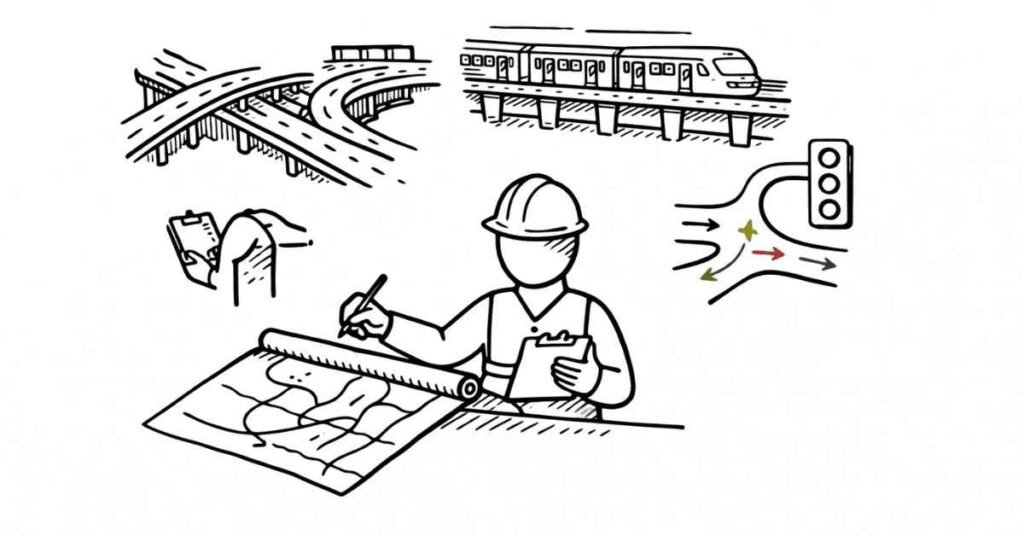
Transportation engineers plan, design, and manage systems that move people and goods—roads, highways, railways, airports, metro systems.
Your work includes:
- Highway geometric design (alignment, gradients, cross-sections)
- Traffic engineering and management
- Pavement design (flexible and rigid pavements)
- Transportation planning and modeling
- Designing intersections, interchanges, and traffic signals
- Public transportation system planning
- Railway and metro alignment and station design
- Airport runway and taxiway design.
Types of Projects
- National highway projects
- State road development
- Urban road networks
- Metro rail systems
- Monorail and light rail
- Bus Rapid Transit (BRT) systems
- Airport development
- Railway modernization
Skills You Need
- Highway geometric design
- Traffic engineering and analysis
- Pavement materials and design
- Transportation planning software (VISSIM, Synchro)
- GIS and mapping
- Understanding of traffic regulations and road safety.
Career Prospects
Transportation is a booming field in India with massive government investment in highway and metro projects. Starting salaries: ₹3.5-5.5 LPA. Mid-level (5-8 years): ₹7-12 LPA. Senior transportation planners and consultants: ₹15-22 LPA.
Government organizations like NHAI, state PWDs, and metro corporations are major employers.
Work Environment
Depends on the role. Planning and design roles are office-based. Construction supervision roles involve extensive site work, often on highway projects in varied locations.
Best Fit For
Transportation engineering is ideal if you:
- Are interested in urban planning and development
- Like working on large-scale infrastructure projects
- Want opportunities in government sector
- Enjoy fieldwork and travel
- Are interested in sustainable transportation solutions
4. Water Resources Engineering: Managing Our Most Precious Resource
What Water Resources Engineers Do
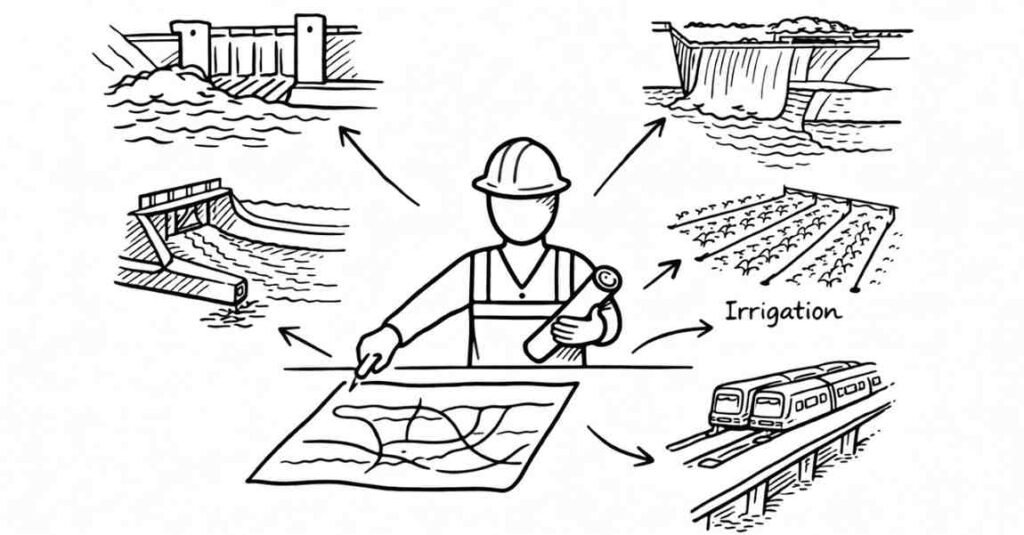
Water resources engineers deal with everything related to water—supply, irrigation, flood control, dams, canals.
Your work involves:
- Hydrological studies and water resource assessment
- Designing dams and reservoirs
- Irrigation system design
- Canal and water distribution network design
- Flood forecasting and control measures
- Watershed management
- Groundwater studies
- Coastal engineering (for coastal states).
Types of Projects
- Dam construction and rehabilitation
- Irrigation schemes
- Inter-basin water transfer projects
- Flood protection works
- Water supply schemes for cities
- Rainwater harvesting systems
- Desalination plants (in water-scarce areas)
- Coastal protection structures.
Skills You Need
- Hydrology and hydraulics
- Fluid mechanics
- Dam and hydraulic structure design
- Understanding of water resources planning
- GIS and remote sensing
- Irrigation engineering
- Software: HEC-RAS, SWMM, GIS tools.
Career Prospects
Water resources engineering offers steady opportunities, especially in water-scarce states. Starting salaries: ₹3.5-5.5 LPA. Experienced engineers: ₹7-14 LPA. Senior consultants specializing in dam design or water resource planning: ₹15-20 LPA.
Government irrigation and water resources departments are major employers.
Work Environment
Mixed. Design work is office-based. Project execution involves site work, often in remote locations where dams or canals are being built.
Best Fit For
Consider water resources engineering if you:
- Are passionate about water conservation and sustainability
- Don’t mind working in rural or remote project locations
- Like working on socially impactful projects
- Are interested in environmental aspects
- Want to work on large infrastructure projects
5. Environmental Engineering: Building a Sustainable Future
What Environmental Engineers Do
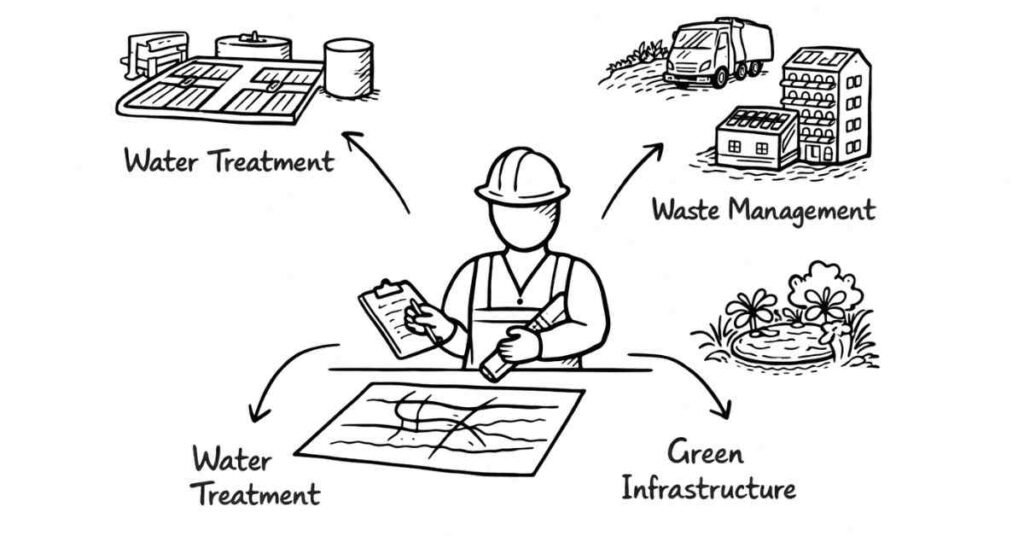
Environmental engineers address environmental challenges—waste management, pollution control, water and air quality, sustainable construction.
Your work includes:
- Designing water treatment plants
- Wastewater and sewage treatment system design
- Solid waste management systems
- Air pollution control systems
- Environmental impact assessments
- Green building design and LEED certification
- Industrial effluent treatment
- Remediation of contaminated sites.
Types of Projects
- Municipal water supply and sewage treatment plants
- Industrial wastewater treatment facilities
- Solid waste management (landfills, recycling facilities, waste-to-energy plants)
- Environmental compliance for construction projects
- Green building certification
- Pollution monitoring and control
- Sustainable infrastructure development.
Skills You Need
- Water and wastewater treatment processes
- Environmental regulations and compliance
- Environmental impact assessment
- Green building practices and LEED standards
- Pollution control technologies
- Sustainability principles
- Software: AutoCAD, EPANET, wastewater modeling tools.
Career Prospects
Growing field with increasing environmental awareness and stricter regulations. Starting salaries: ₹3.5-6 LPA. Mid-level: ₹6-11 LPA. LEED-certified environmental consultants: ₹12-20 LPA.
Work opportunities in consulting firms, government environmental departments, construction companies, and industrial firms.
Work Environment
Mostly office-based design work with occasional site visits for assessment and supervision. Less physically demanding than construction-focused roles.
Best Fit For
Environmental engineering suits you if you:
- Care deeply about environmental sustainability
- Want to contribute to cleaner environment
- Prefer office-based technical work
- Are interested in emerging green technologies
- Want to work in a growing, future-oriented field
6. Construction Management: Leading Projects to Success
What Construction Managers Do
Construction managers are the orchestrators who bring projects from drawings to reality. You don’t just design or supervise—you manage the entire construction process.
Your responsibilities:
- Project planning and scheduling
- Budget estimation and cost control
- Procurement of materials and services
- Contractor and subcontractor management
- Quality assurance and control
- Safety management
- Coordination between design team, contractors, and client
- Problem-solving and decision-making
- Progress monitoring and reporting
Types of Projects
Construction managers work on:
- Residential buildings
- Commercial complexes
- Industrial facilities
- Infrastructure projects (roads, bridges, metro)
- Renovation and retrofit projects
Skills You Need
- Project management methodologies
- Cost estimation and budgeting
- Scheduling (MS Project, Primavera P6)
- Contract management
- Leadership and people management
- Negotiation skills
- Communication skills
- Decision-making under pressure
- Understanding of construction processes.
Career Prospects
Construction management offers one of the fastest career growth paths in civil engineering. Starting as site engineer: ₹3.5-6 LPA. Project engineers (3-5 years): ₹6-10 LPA. Project managers (7-10 years): ₹12-20 LPA. Senior project managers and construction directors: ₹20-35 LPA.
Work Environment
Highly dynamic. You’re constantly moving between office and site, dealing with multiple stakeholders, solving problems, making decisions. Challenging but rewarding.
Construction management is perfect if you:
- Enjoy leadership and managing people
- Thrive in dynamic, fast-paced environments
- Like problem-solving and decision-making
- Have strong communication skills
- Want faster career progression
- Don’t mind high-pressure situations
7. Urban Planning and Municipal Engineering: Designing Cities
What Urban Planners and Municipal Engineers Do
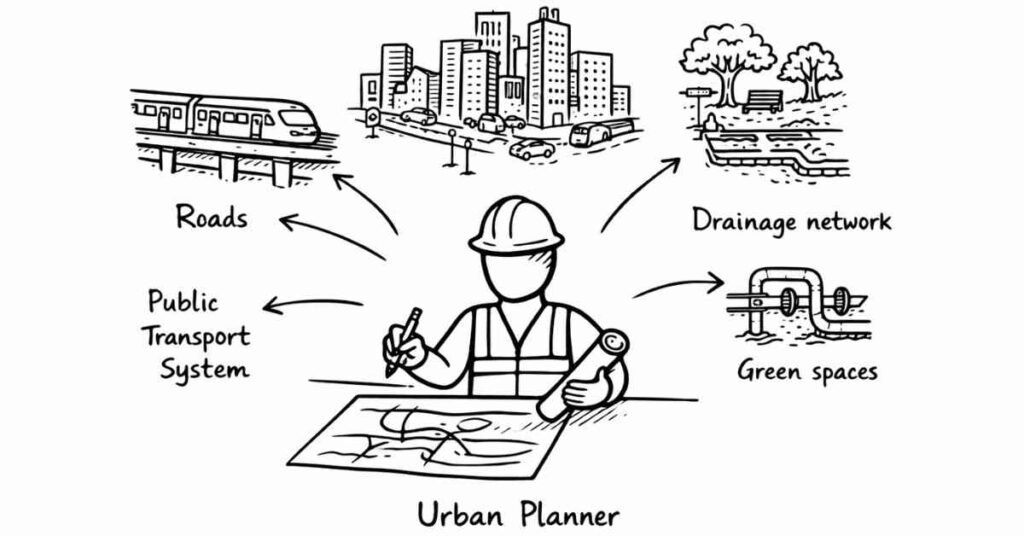
These engineers focus on planning and managing urban infrastructure—city roads, water supply, drainage, solid waste management.
Your work includes:
- Urban infrastructure planning
- City drainage system design
- Municipal water supply networks
- Solid waste collection and disposal systems
- Urban road networks
- Parking facilities
- Public spaces and parks
- Smart city planning and implementation.
Types of Projects
- Smart city projects
- Municipal water supply and sewerage schemes
- Urban drainage improvement
- Road widening and improvement
- Urban transport planning
- Slum redevelopment
- Green spaces and urban forestry.
Skills You Need
- Urban planning principles
- Municipal infrastructure design
- GIS and spatial analysis
- Understanding of smart city technologies
- Environmental considerations
- Public policy awareness
- Stakeholder management.
Career Prospects
With 100 smart cities under development and rapid urbanization, urban planners are in demand. Starting: ₹3.5-5.5 LPA. Mid-level: ₹6-10 LPA. Senior urban planners in consulting firms or government: ₹12-18 LPA.
Work Environment
Mix of office planning work and field surveys. Government municipal corporations, urban development authorities, and consulting firms are main employers.
Best Fit For
Urban planning suits you if you:
- Are interested in city development and planning
- Like working on socially relevant projects
- Enjoy multidisciplinary work
- Want to shape how cities develop
- Are interested in smart city technologies
8. BIM and Digital Construction: The Future is Here
What BIM Specialists Do
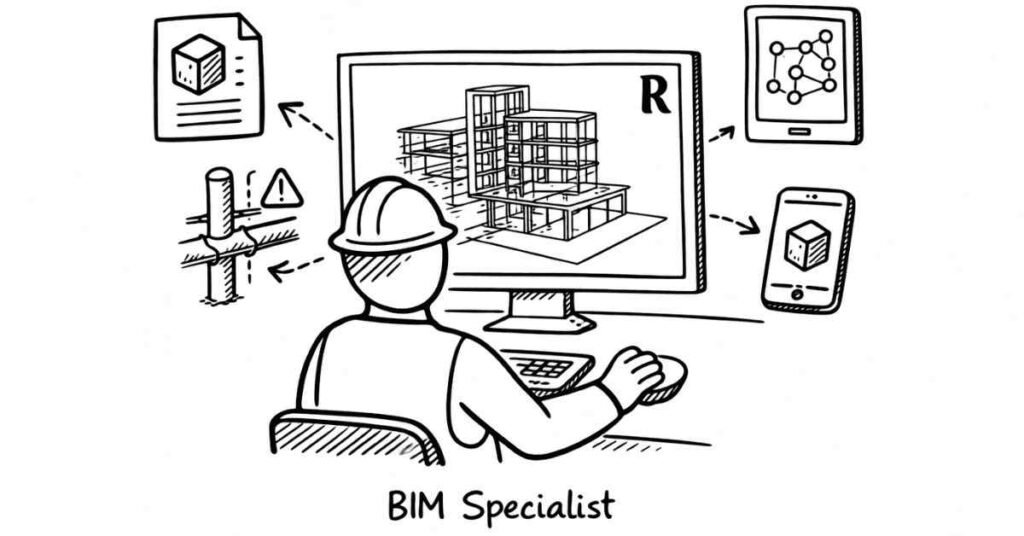
Building Information Modeling (BIM) specialists work with 3D digital models of construction projects, coordinating between different disciplines and detecting clashes before construction.
- Creating 3D BIM models using Revit, Tekla, or ArchiCAD
- Coordinating models from different disciplines (architecture, structural, MEP)
- Clash detection and resolution
- Quantity take-offs from models
- 4D scheduling (time) and 5D cost integration
- Facility management and lifecycle modeling
- Virtual reality walkthroughs
- Generating construction documentation from models.
Types of Projects
BIM is used across all project types:
- Commercial and residential buildings
- Infrastructure projects
- Industrial facilities
- Renovation projects
Skills You Need
- Proficiency in Revit (most important)
- Understanding of Tekla, Navisworks
- Knowledge of structural, architectural, and MEP systems
- Clash detection tools
- Collaboration platforms (BIM 360)
- Basic understanding of construction processes
- Problem-solving and coordination skills
Career Prospects
BIM is the fastest-growing specialization with severe skill shortage. Starting BIM modelers: ₹5-8 LPA. Experienced BIM coordinators: ₹8-15 LPA. BIM managers: ₹15-25 LPA. Top BIM specialists earn ₹90,000 to ₹2.3 lakhs monthly.
Work Environment
Primarily office-based, working with design teams. Occasional site visits for coordination. Better work-life balance than traditional site roles.
Best Fit For
BIM specialization is ideal if you:
- Are tech-savvy and enjoy working with software
- Like detailed, precise work
- Prefer office environment over site work
- Want high earning potential
- Are interested in the future of construction
How to Choose Your Specialization
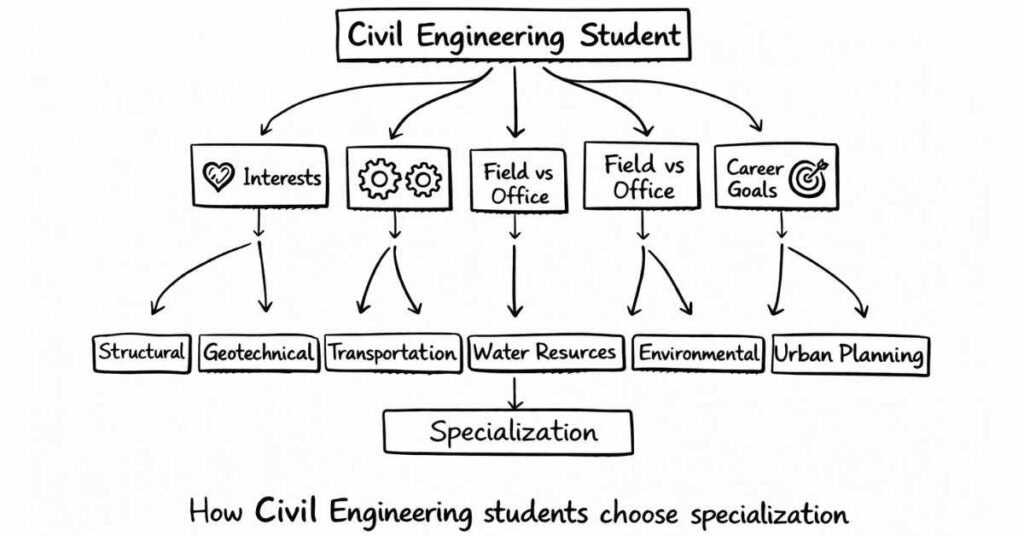
Choosing the right specialization isn’t easy. Here’s a practical approach:
Explore During BTech
Your BTech curriculum covers all these areas. Pay attention to which subjects you actually enjoy studying, not just which ones you score well in. Enjoyment matters more for long-term career satisfaction.
Do Diverse Internships
Try internships in different specializations. Spend a summer at a structural consultancy, another at a construction site, maybe do a project in transportation. Exposure helps you understand what you actually like doing.
Talk to Professionals
Connect with civil engineers working in different specializations. Ask about their daily work, challenges, and satisfaction levels. Reality check your assumptions.
Consider Market Demand
Some specializations (like BIM, construction management) currently have more opportunities and better pay. While you shouldn’t choose solely based on this, it’s a factor to consider.
Assess Your Preferences
- Do you prefer office work or field work?
- Are you good at managing people or prefer individual technical work?
- Do you like analytical work or practical, hands-on problem-solving?
- Does high salary matter most, or work-life balance, or social impact?
Your honest answers will guide you toward the right specialization.
You Don’t Have to Decide Immediately
Many civil engineers start in one area and switch to another. A site engineer might move into project management. A structural designer might transition to BIM. Your first job doesn’t lock you in forever.
Multiple Specializations: The Hybrid Approach
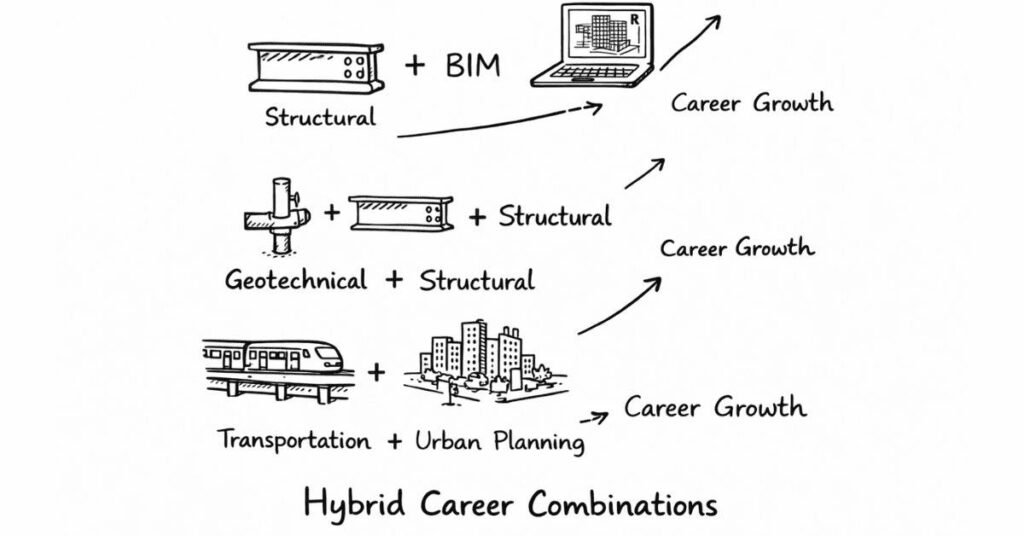
Here’s an advanced strategy: develop expertise in two complementary specializations.
For example:
- Structural + BIM: Design structures and create BIM models—highly valuable combination
- Construction Management + Environmental: Lead projects while ensuring sustainability compliance
- Geotechnical + Structural: Foundation design with deep understanding of both soil and structure
- Transportation + Urban Planning: Comprehensive expertise in city infrastructure
This hybrid approach makes you more versatile and valuable.
The Path Forward
Each specialization offers fulfilling career opportunities. There’s no “best” specialization—only what’s best for you based on your interests, skills, and goals.
The key is to choose consciously, based on understanding what each field actually involves, not based on what sounds prestigious or what your friends are doing.aiecet+1
Your specialization shapes your career trajectory, your daily work, the problems you solve, and ultimately your job satisfaction. Choose wisely, commit to developing deep expertise, and stay updated with emerging trends in your field.
The infrastructure India needs over the next decades will require experts in all these specializations. Find yours, master it, and contribute to building the nation’s future.