
15 Essential Civil Engineering Skills: Technical & Soft Skills Guide
Table of Contents
Introduction
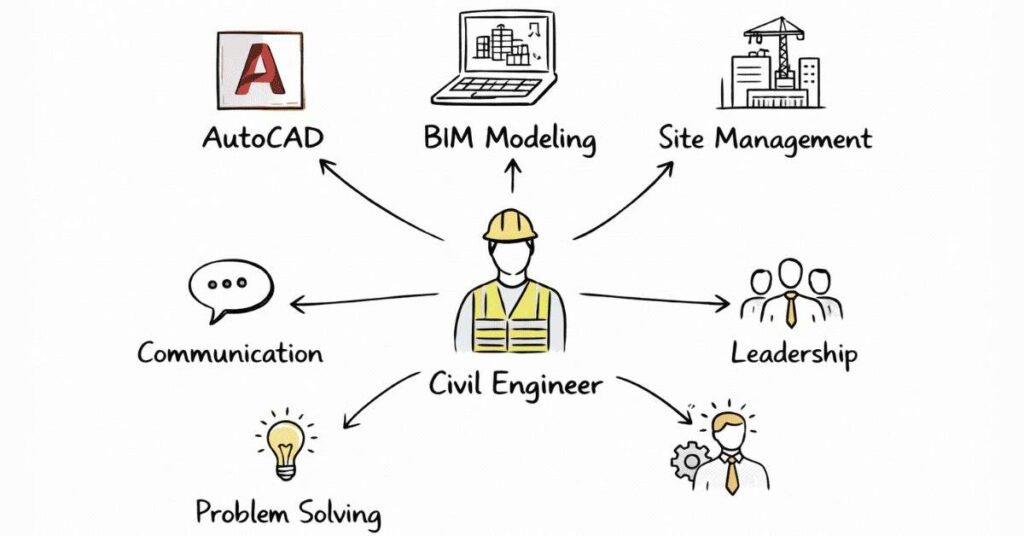
A lot of students think, “Once I finish BTech, I’ll automatically have all the skills I need.” Sadly, that’s not how it works.
A degree gives you theory. The job needs skills.
If you want to be the kind of civil engineer companies fight to hire, you must deliberately build certain technical and people skills. The good news? Every single one of these skills can be learned, even if you don’t come from a top college.
Let’s break down the most important skills in a simple, practical way.
Technical Skills Every Civil Engineer Should Have
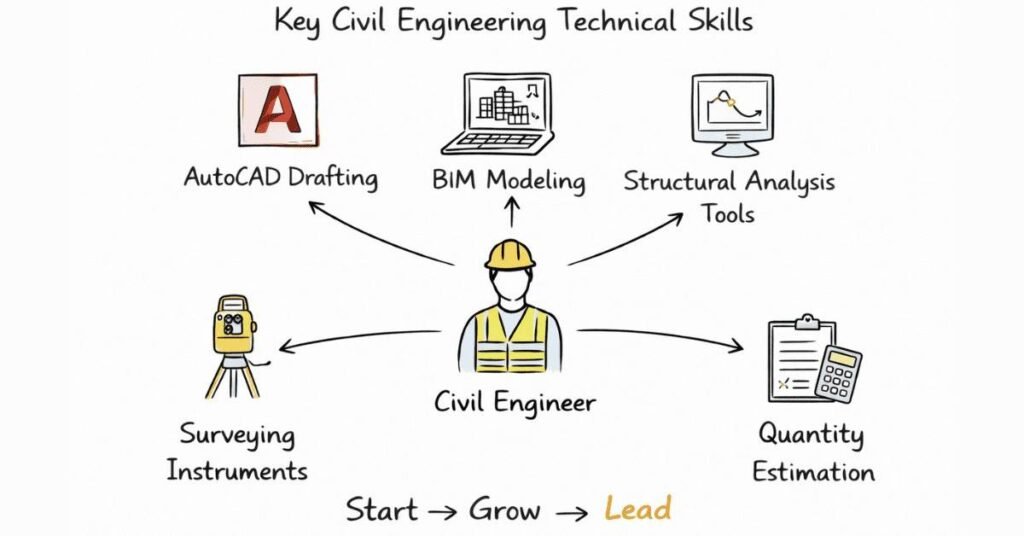
1. AutoCAD – Your Basic Language
AutoCAD is like the alphabet of civil engineering drawings. Almost every project—building, road, bridge—has drawings made or edited in AutoCAD.
You should be able to:
- Read plans, elevations, and sections easily.
- Create basic 2D drawings from scratch.
- Edit and annotate existing drawings.
- Print / plot drawings with proper scales and title blocks.
Without AutoCAD, you’ll always be dependent on others. With it, you can communicate ideas clearly and quickly.
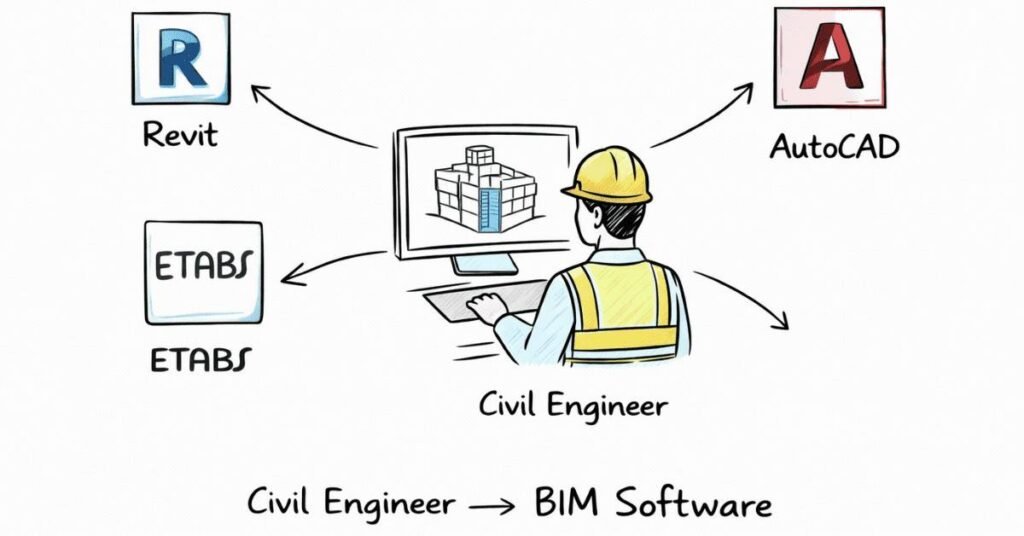
2. Building Information Modeling (BIM) – The Future Standard
BIM is not “just another software”. It’s a new way of working.
Using tools like Revit, you:
- Create a 3D model of the building or structure.
- See how different systems (structure, plumbing, electrical) fit together.
- Find clashes before construction starts.
- Generate quantities and drawings directly from the model.
Companies working on metro, airports, big real estate, and smart city projects are rapidly moving to BIM. Young engineers who are BIM-savvy are in high demand and often earn more than those sticking only to 2D CAD.
3. Structural Analysis & Design Tools
If you’re even slightly interested in structural engineering, you must know at least one major analysis tool:
- STAAD Pro
- ETABS
- SAP2000
These tools help you:
- Model beams, columns, slabs, frames.
- Apply loads like dead load, live load, wind load, earthquake load.
- Check if members are safe and within allowable limits.
- Optimize design to use materials efficiently.
Even if you don’t plan to be a hardcore structural designer, basic familiarity is a huge plus.
4. Quantity Estimation & BOQ Preparation
Every project boils down to money: how much concrete, steel, bricks, and labour will it take?
Skills here include:
- Calculating quantities from drawings.
- Preparing BOQ (Bill of Quantities).
- Understanding basic rates.
- Supporting tender preparation.
Even as a site engineer, estimation skills help you understand whether the work being done matches the budget and plan.
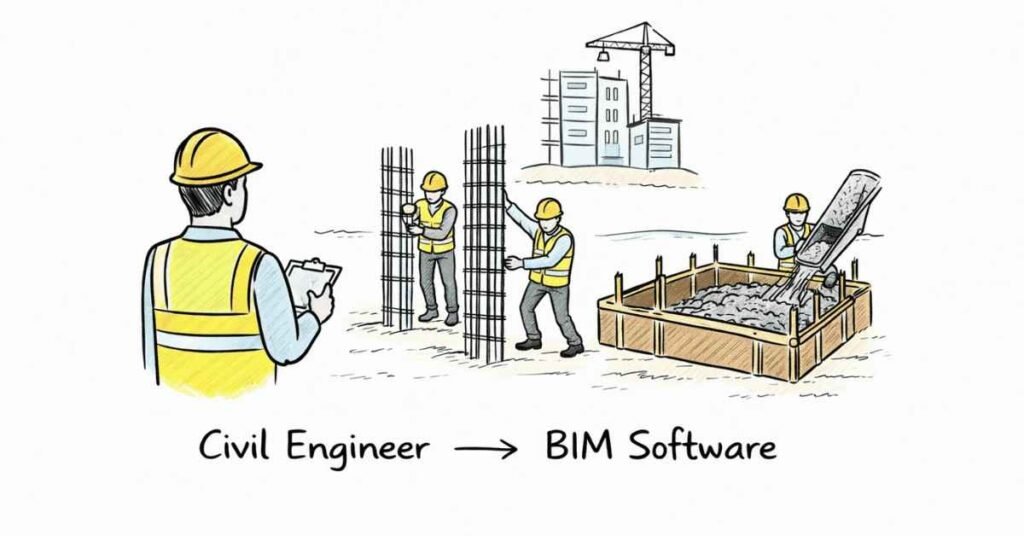
5. Site Execution Basics
No matter what specialization you choose, spending some time on site early in your career will transform your understanding.
Key site skills:
- Reading drawings and matching them with actual work.
- Understanding bar bending schedules and rebar placement.
- Basic shuttering and formwork concepts.
- Concrete pouring, curing, and quality checks.
- Knowing how site teams (engineers, contractors, labour) operate day-to-day.
The more time you spend watching how drawings become reality, the better engineer you’ll become in any role.
6. Surveying & Use of Instruments
Surveying is how we understand the land before construction starts.
Essential skills:
- Using total station and auto level (or at least understanding them).
- Setting out points on site (for buildings, roads, etc.).
- Taking levels and calculating contours.
- Converting site data into usable plans.
In many infrastructure jobs, good surveying skills are a big advantage.
7. Basics of Geotechnical & Foundation Design
You don’t have to be a geotech expert, but you should understand:
- Basic soil tests (SPT, plate load test, etc.).
- Types of foundations (isolated footings, raft, piles).
- When deep foundations are needed.
- Common soil problems (settlement, liquefaction, bearing capacity issues).
This helps you converse intelligently with geotechnical consultants and avoid wrong assumptions during planning.
8. Understanding Codes & Standards
In India, we use IS codes for design and construction. For example:
- Earthquake design.
- Concrete design.
- Steel design.
You don’t need to memorize every clause, but you should:
- Know which code applies where.
- Be comfortable opening and reading codes.
- Understand that design is not random—it follows codal rules for safety.
Engineers who know their codes instantly appear more serious and trustworthy.
Soft Skills That Separate Good Engineers from Average Ones
Technical skills get you hired. Soft skills get you promoted.
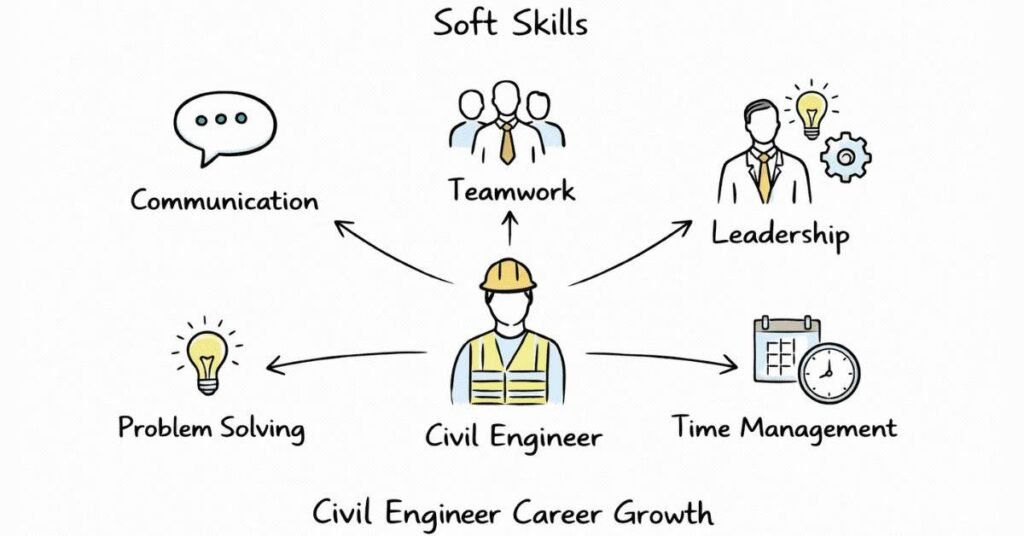
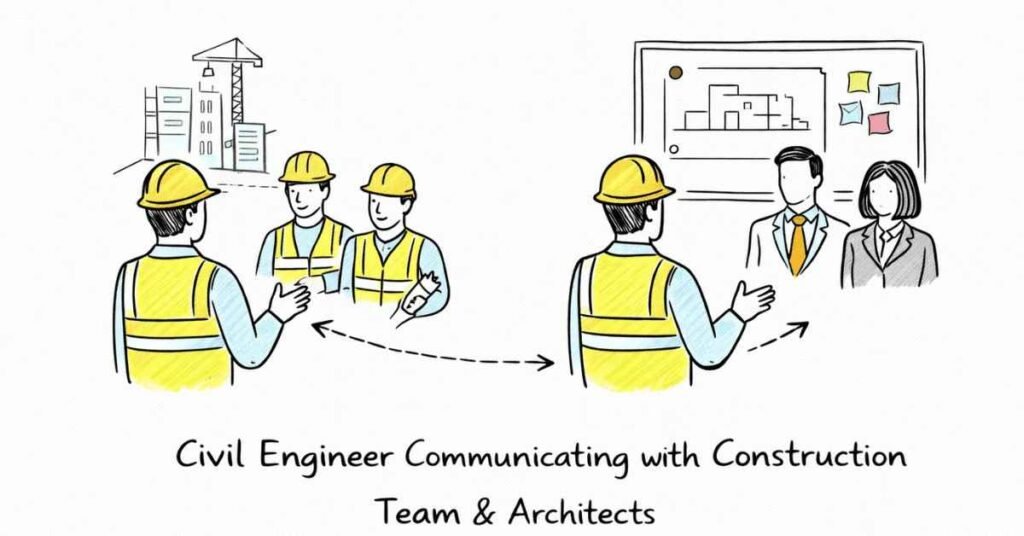
9. Communication Skills (In Simple, Clear English)
You may be brilliant at design, but if you can’t explain your idea, others won’t understand or support you.
Important aspects:
- Speaking: Explaining site issues, design choices, and risks clearly to seniors, clients, or contractors.
- Writing: Clear emails, site reports, RFIs (Requests for Information).
- Listening: Understanding client or senior expectations correctly.
Remember: You’re not trying to impress people with complex English. You’re trying to communicate clearly and respectfully.
10. Problem-Solving & Practical Thinking
On site, things rarely go exactly as per plan.
- A drawing might be unclear.
- A material delivery may get delayed.
- A mistake might be discovered late.
Good civil engineers don’t just complain—they solve problems:
- Can we use an alternative method?
- How can we minimize delay?
- Who do we need to talk to for a decision?
Your ability to stay calm and find workable solutions is more valuable than your exam marks.
11. Time Management & Prioritization
Civil engineering projects run on deadlines.
If you:
- Reach late regularly,
- Don’t plan your daily tasks,
- Delay decisions or drawings,
…you’ll cause project delays and lose trust.
Practical habits:
- Make a simple daily task list.
- Prioritize critical tasks first (things that block others’ work).
- Keep a buffer for unexpected issues.
- Learn to say, “I need X days for this” realistically instead of overpromising.
Projects succeed when engineers manage their own time well.
12. Teamwork & People Skills
You will work with:
- Labourers who may not understand engineering terms.
- Contractors who focus on cost and speed.
- Architects who care about aesthetics.
- Seniors who care about safety and quality.
Your job is to coordinate, not fight with everyone.
Important points:
- Respect every role, from labourer to project director.
- Don’t shout or insult when mistakes happen—solve the problem, then coach.
- Learn to negotiate and compromise when needed.
- Give credit to others; it builds loyalty and goodwill.
Construction is a team game. Lone wolves don’t last long.
13. Leadership & Taking Ownership
Leadership isn’t about having a “Manager” title. It starts much earlier.
You show leadership when you:
- Take responsibility without waiting for someone to push you.
- Own mistakes and fix them.
- Help juniors understand things patiently.
- Keep calm during crises.
The engineers who become Project Managers and Directors are usually those who showed leadership even as site engineers.
14. Attention to Detail
A small mistake in drawing or calculation can:
- Waste lakhs of rupees in rework.
- Delay the project.
- In serious cases, impact safety.
Train yourself to:
- Double-check critical calculations.
- Review drawings carefully before issuing.
- Read tender documents and contracts slowly and fully.
- Inspect reinforcement, formwork, and concreting personally for key members.
Detail-oriented engineers are trusted with high-responsibility tasks.
15. Learning Mindset & Adaptability
The tools and methods in civil engineering are changing:
- From 2D drawings to BIM.
- From manual bar bending schedules to software-generated ones.
- From traditional materials to new composites and green materials.
If you stop learning after BTech, you will become outdated quickly.
Practical habits:
- Spend some time each week learning something new (a software feature, a code clause, a new technique).
- Ask questions on site and in office.
- Watch good technical YouTube channels or webinars.
- Attend workshops when possible.
Adaptable engineers stay relevant, even as the industry evolves.
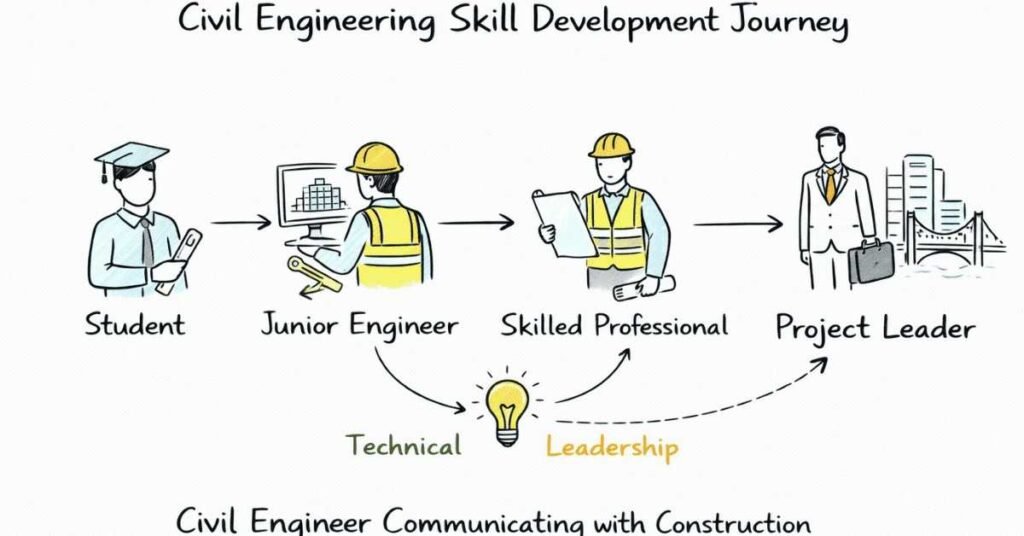
How Students Can Start Building These Skills in College
You don’t have to wait till you start working.
During BTech:
- Use labs and projects seriously instead of only aiming to pass.
- Volunteer to do drawings and reports in group projects.
- Take at least one good internship and spend real time on site.
- Learn at least:
- AutoCAD
- One analysis or BIM tool (even at basic level).
- AutoCAD
- Join technical clubs, fests, or competitions—these improve communication and teamwork.
Even if your college is not top-tier, strong skills can make you stand out in interviews.
How Working Professionals Can Upgrade
If you’re already working:
- Pick one technical skill and one soft skill to improve every 6 months.
- Request more responsibility at work (handling a small part of planning, or leading a small team).
- Observe seniors you admire—how they talk, plan, and solve problems.
- Take short online courses or weekend workshops—don’t wait for your company to train you.
Small, consistent improvements compound over time.
Putting It All Together
In simple words:
- Technical skills help you do the job right.
- Soft skills help you grow in your career.
A civil engineer who:
- Can read and create drawings,
- Understands site realities,
- Uses modern tools like BIM, and
- Communicates clearly, solves problems, and leads people
…will always be in demand, in India and abroad.
You don’t need to learn everything overnight. Start with the basics, keep adding skills, and treat your growth like a long-term project—just like a well-planned building, built one floor at a time.