
Career Progression & Leadership Paths
Table of Contents
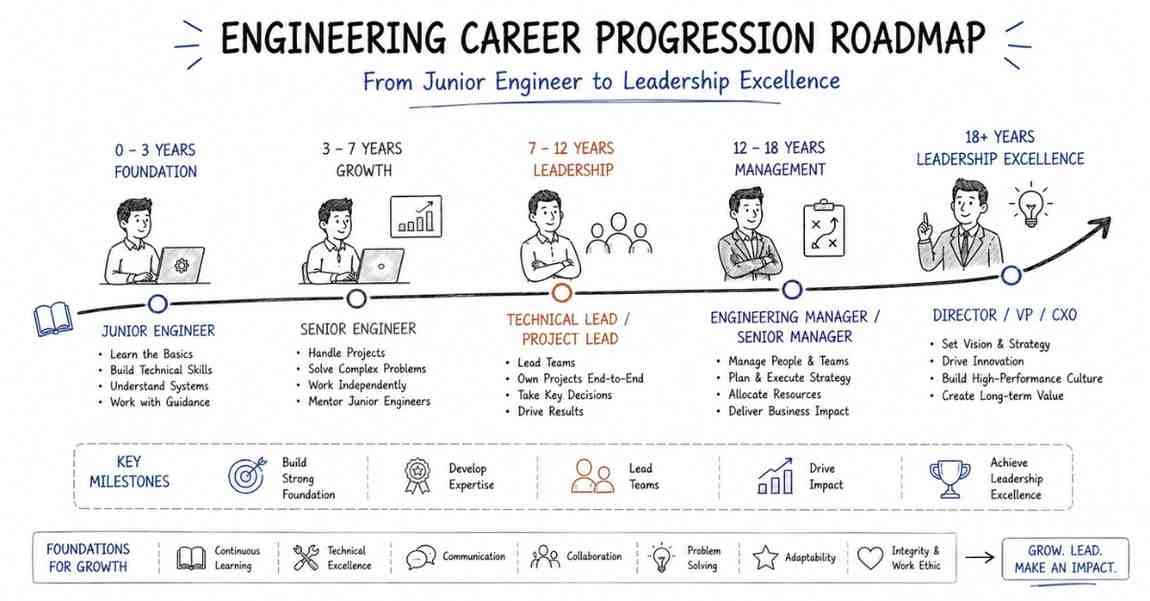
Electrical Engineering Career Growth: Senior Roles, Management & Leadership
Your first engineering job is exciting finally applying years of study to real problems, earning your own income, starting professional life. But after the initial honeymoon period, a question emerges: “What’s next? Where does this lead? How do I grow from here?”
Many engineers plateau after 5-7 years, stuck in mid-level roles with stagnant salaries and repetitive work. Others systematically build expertise, expand responsibilities, and progress to senior technical roles or management positions commanding ₹40-80 LPA or more. The difference isn’t just talent or luck it’s understanding career pathways and making strategic choices at critical junctures.
This comprehensive guide maps electrical engineering career progression: from fresh graduate to senior engineer, from technical specialist to engineering manager, from project lead to director-level leadership. We’ll explore the technical and management tracks, skills needed at each level, typical timelines, salary progression, and how to position yourself for advancement.
Whether you’re a fresh graduate planning long-term, a mid-career engineer contemplating next moves, or an aspiring engineering leader, this roadmap provides the clarity you need.
Understanding Career Trajectories
The Two Primary Paths
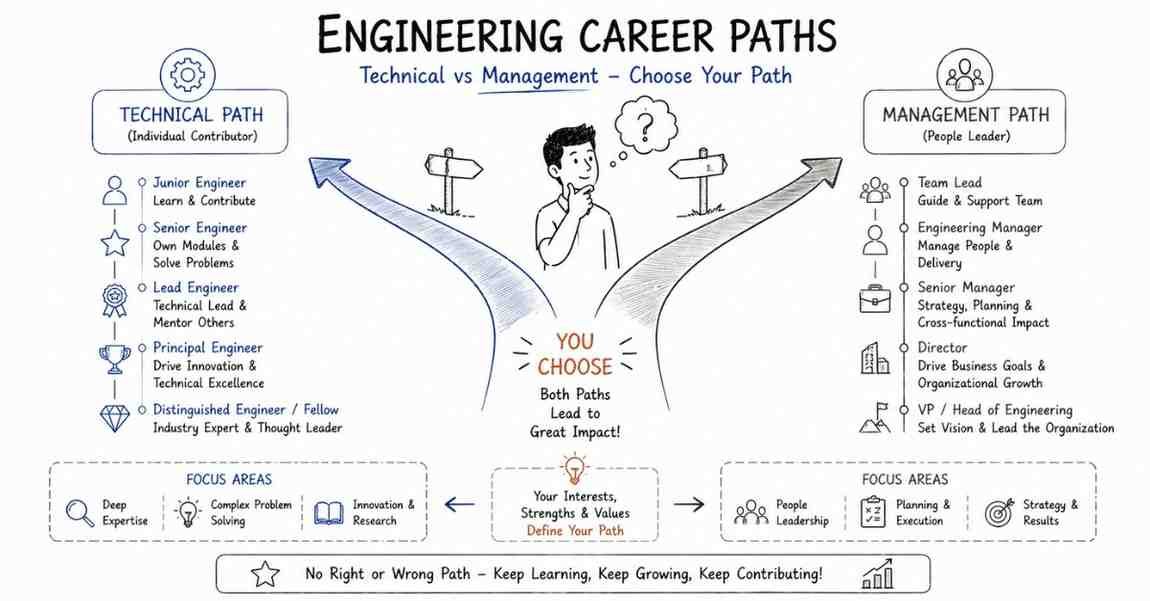
Around year 5-7, most engineers face a fork: continue deepening technical expertise or move toward management and leadership.
Technical Track (Individual Contributor):
- Deepening specialization in technical domain
- Becoming subject matter expert
- Solving complex technical problems
- Mentoring technically
- Titles: Senior Engineer → Lead Engineer → Principal Engineer → Distinguished Engineer/Fellow
Management Track:
- Leading teams and projects
- People management and development
- Resource allocation and budgets
- Strategic planning
- Titles: Team Lead → Engineering Manager → Senior Manager → Director → VP Engineering
Reality: Both tracks can lead to excellent compensation and respect. Neither is inherently “better” depends on your interests and strengths.
Hybrid Roles: Some positions blend both (Technical Lead with team responsibility)
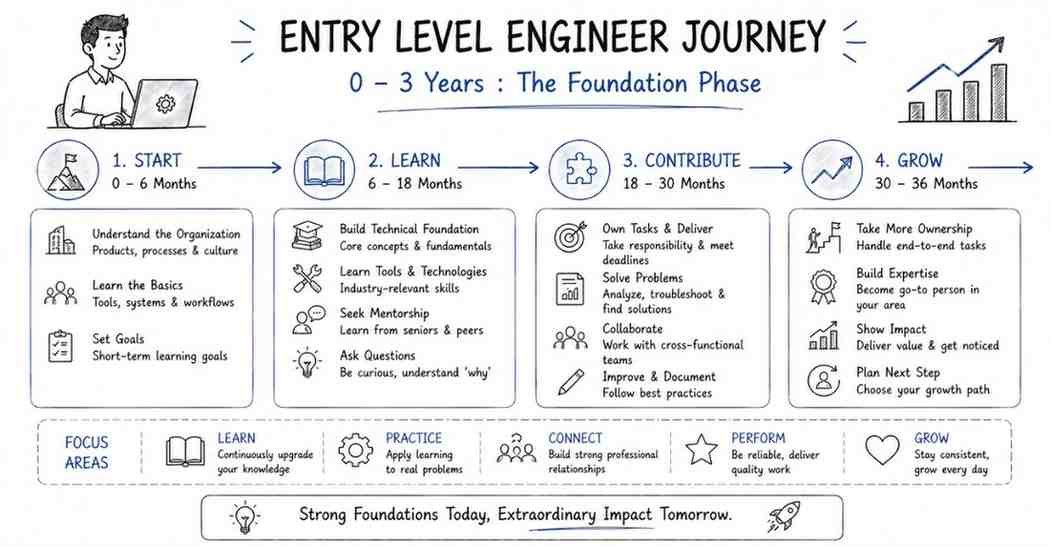
Years 0-3: The Foundation Phase
Typical Titles
- Graduate Engineer Trainee (GET)
- Junior Engineer
- Engineer
- Associate Engineer
What You're Doing
Learning Fundamentals:
- Understanding company products, processes, systems
- Learning tools and methodologies
- Contributing to projects under supervision
- Documentation and reporting
Building Skills:
- Technical depth in job-specific areas
- Professional work habits
- Communication and collaboration
- Problem-solving approaches
Typical Responsibilities:
- Specific technical tasks within larger projects
- Testing and validation work
- Supporting senior engineers
- Documentation and analysis
- Learning company standards and practices
Success Metrics
- Delivering assigned tasks on time
- Quality of work
- Learning speed
- Asking smart questions
- Taking initiative within scope
Salary Range
- Entry: ₹4-12 LPA (varies dramatically by company type and college tier)
- Year 2-3: ₹6-16 LPA
- Average growth: 10-30% annually in this phase
Key Focus Areas
Technical Competence: Master fundamentals of your role power systems engineer should know load flow analysis thoroughly; embedded engineer should write clean, efficient code
Work Ethic: Reliability, meeting deadlines, quality work establishes reputation
**Learning Aggressively**: Absorb everything learn from seniors, read documentation, understand why things are done certain ways
Build Relationships: Network within company relationships accelerate learning and future opportunities
Demonstrate Initiative: Don’t just do assigned work suggest improvements, volunteer for challenging tasks
Communication: Learn to explain technical work clearly to different audiences
Common Mistakes to Avoid
Job-Hopping Too Quickly: Changing jobs every 10-12 months looks bad give minimum 2 years unless truly toxic
Staying Too Comfortable: Don’t coast first 3 years set career trajectory
Ignoring Soft Skills: “I’m technical, I don’t need communication skills” wrong!
Not Seeking Feedback: Ask seniors for honest feedback on your performance
Burning Bridges: Industry is small maintain good relationships even when leaving
Years 3-7: The Growth Phase
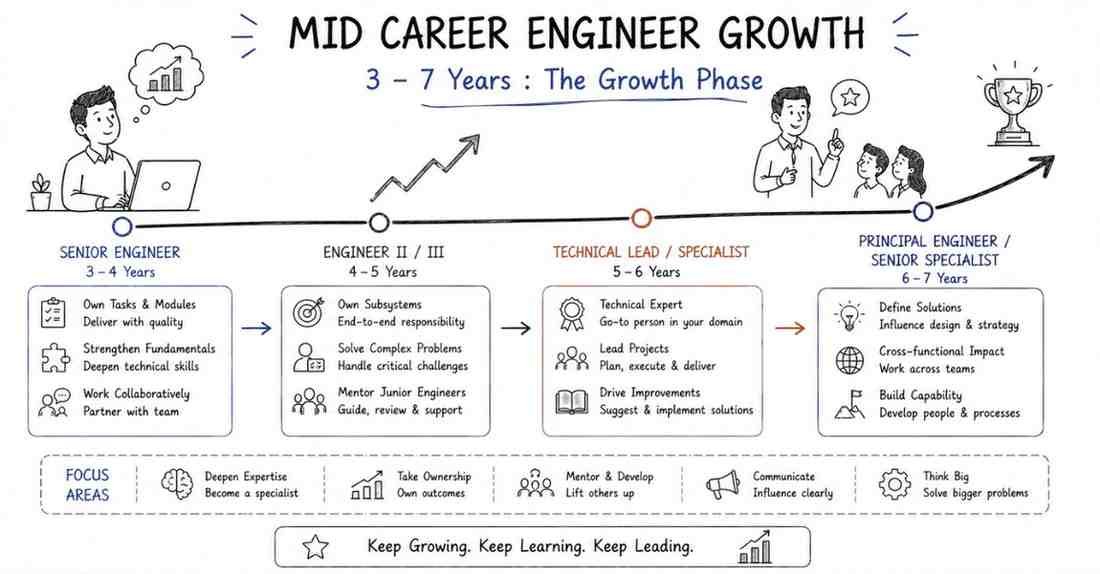
Typical Titles
- Senior Engineer
- Engineer II/III
- Specialist
- Technical Lead (early management entry)
What Changes
Increased Autonomy:
- Own complete modules or subsystems
- Make technical decisions independently
- Less supervision, more ownership
Mentoring Junior Engineers:
- Training new hires
- Code/design reviews
- Technical guidance
Cross-Functional Collaboration:
- Working with other departments (mechanical, software, manufacturing)
- Customer/vendor interactions sometimes
- Project coordination
Specialization Deepening:
- Becoming recognized expert in specific area
- Handling complex problems others struggle with
Critical Career Decision Point
Years 5-7: The fork between technical specialist and management paths becomes clear
Questions to Ask Yourself:
- Do I energize from solving technical problems or organizing people?
- Am I more satisfied completing complex technical work or seeing team succeed?
- Do I enjoy mentoring and developing others?
- Am I interested in business aspects beyond technical execution?
- Can I handle office politics and people conflicts?
Both Paths Valid: Don’t let anyone pressure you that “management is growth” senior technical roles equally valuable
Salary Range
- Year 3-5: ₹10-25 LPA
- Year 5-7: ₹16-35 LPA
- Top performers/hot skills: ₹30-50 LPA possible
Skills to Develop
Technical Depth: Become the go-to person for your specialization
System Thinking: Understand how your component fits into larger system
Project Management Basics: Even on technical track, project planning helps
Communication: Technical writing, presentations, explaining to non-technical stakeholders
Problem-Solving Under Uncertainty: Real-world problems are messy—handle ambiguity
Mentoring: Teaching others reinforces your own knowledge
Strategic Moves
Choose Specialization Thoughtfully: Power electronics? Power systems? Embedded? Automation? Your choice impacts next 10+ years
Build Reputation: Deliver consistently excellent work reputation is currency
Visibility: Ensure management knows your contributions not about politics, about clear communication
Certifications: Strategic certifications boost credentials (PMP for management track, technical certifications for specialist track)
Consider Strategic Job Change: If learning plateauing, strategic move to better role/company can accelerate growth
The Technical Specialist Track
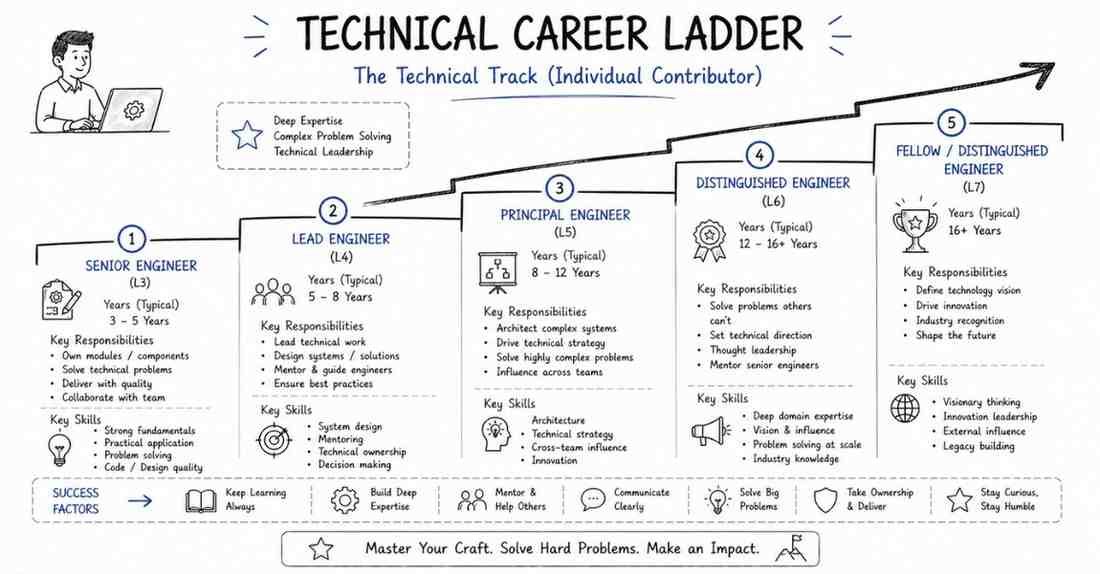
Years 7-12: Senior Engineer to Principal Engineer
Titles: Senior Engineer → Lead Engineer → Principal Engineer
What You’re Doing:
- Technical Architecture: Designing complex systems end-to-end
- Innovation: Developing new approaches, optimizing existing systems
- Technical Leadership: Guiding multiple engineers technically (without managing them)
- Problem-Solving: Called when tough technical problems arise
- Standards and Best Practices: Defining how things should be done
- Technology Evaluation: Assessing new technologies for adoption
Responsibilities:
- System-level design and architecture
- Technical roadmap contribution
- Cross-project technical coordination
- Patent generation (in R&D environments)
- Technical documentation
- Customer-facing technical discussions (for senior roles)
- Representing company at technical forums
Salary Range:
- Senior Engineer (7-10 years): ₹20-45 LPA
- Lead Engineer (9-12 years): ₹30-55 LPA
- Principal Engineer (12-15 years): ₹40-70 LPA
Skills Required:
- Deep technical expertise in domain
- Systems thinking and architecture
- Innovation and creativity
- Technical communication (documentation, presentations, papers)
- Ability to influence without authority
- Staying current with technology evolution
Years 12+: Distinguished Engineer, Technical Fellow
The Apex of Technical Track:
- Company-wide technical authority
- Strategic technical decisions
- Innovation and IP generation
- External reputation (conference speaking, papers, patents)
- Influencing industry standards sometimes
Salary Range:
- Distinguished Engineer: ₹60-1 Cr+
- Technical Fellow: ₹80 LPA – 1.5 Cr+
- Elite companies/positions can exceed this significantly
How to Reach:
- Consistent technical excellence over 12-15+ years
- Multiple patents or significant innovations
- Industry recognition
- Deep expertise in critical domain
- Rare positions few companies have formal Fellow positions
Examples:
- Chief Architect for company’s power systems products
- Distinguished Engineer leading battery technology research
- Technical Fellow defining automation standards
Advantages of Technical Track
Deep Satisfaction: Solving complex technical problems
Continuous Learning: Always at cutting edge
Flexibility: Less meetings, more focused technical work
Expertise Value: Technical experts always in demand
No Office Politics: Less political navigation than management
Challenges
Fewer Positions: Pyramid narrows significantly at senior levels
Age Bias: Some worry about “aging out” technically (less issue in electrical than software)
Salary Ceiling: Very senior management may out-earn senior technical (company-dependent)
Visibility: Technical contributions sometimes less visible than management achievements
The Management Track
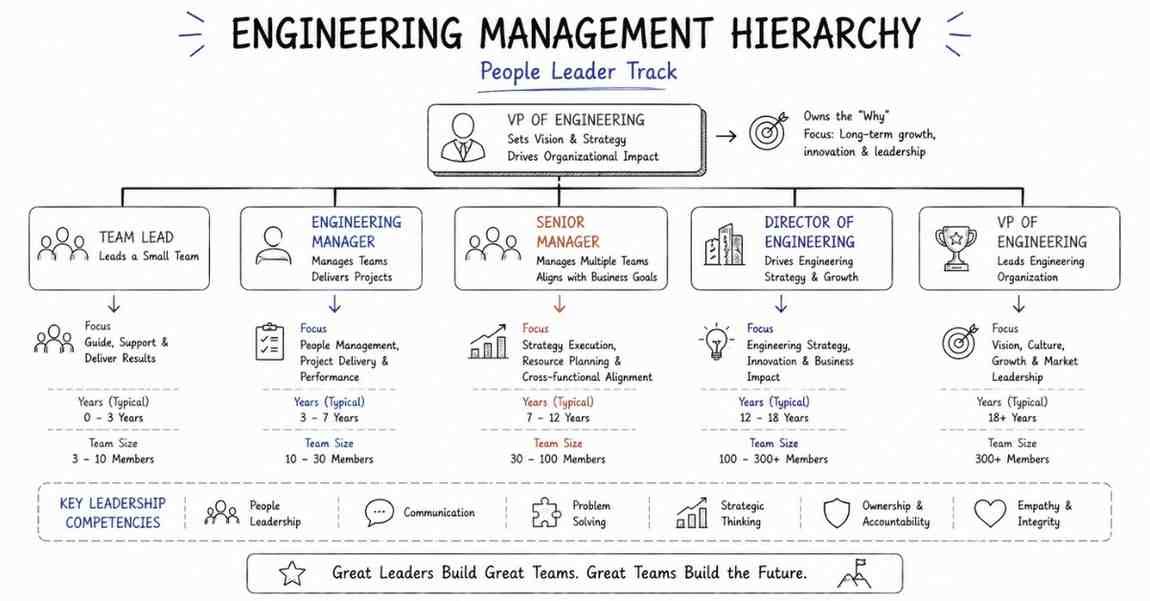
Years 5-8: Team Lead / Technical Lead
The First Step: Managing 3-6 engineers while often remaining hands-on technically
Responsibilities:
- Task allocation and tracking
- Team coordination and meetings
- Performance monitoring
- Hiring participation
- Escalation handling
- 50-70% time still on technical work (hands-on)
Skills to Develop:
- People management basics
- Conflict resolution
- Performance feedback
- Meeting facilitation
- Time management (yours and team’s)
- Balancing technical and management work
Salary Range:
- ₹18-35 LPA typically
Common Struggles:
- Time management (technical work + management responsibilities)
- Transitioning from peer to manager
- Handling underperformers
- Learning to delegate (instead of doing everything yourself)
Success Factors:
- Supporting team’s success, not showcasing your technical skills
- Developing others, not just solving problems yourself
- Communication upward (keeping management informed) and downward (keeping team aligned)
Years 8-12: Engineering Manager
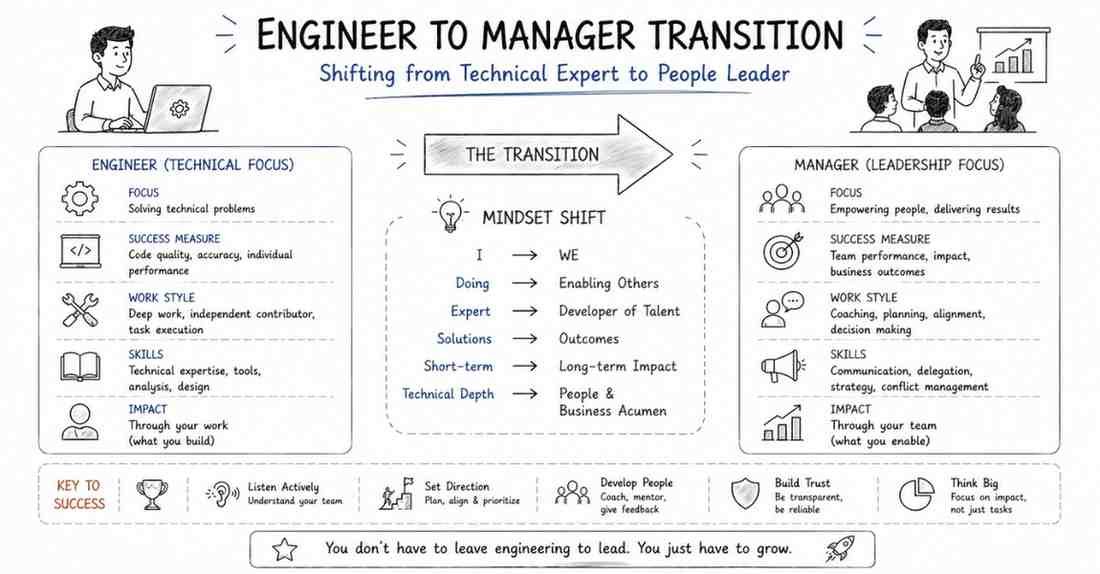
Full Management Role: Leading 8-15 engineers, often multiple sub-teams
Responsibilities:
- Team hiring, development, performance management
- Project planning and delivery
- Budget responsibility
- Cross-functional coordination
- Strategy contribution
- Stakeholder management
- 20-30% technical involvement (mostly reviews, architecture decisions)
Key Skills:
- People Development: Growing your team members’ capabilities
- Resource Management: Allocating people and budget optimally
- Strategic Thinking: Beyond day-to-day execution
- Influence and Negotiation: Getting resources, managing expectations
- Business Acumen: Understanding beyond engineering—costs, customers, competition
Salary Range:
- ₹25-55 LPA
Challenges:
- Balancing multiple projects and priorities
- Managing diverse personalities and skills
- Dealing with organizational politics
- Pressure from above (management) and below (team)
- Less hands-on technical work (if you loved that)
Measuring Success:
- Team performance and delivery
- Team member growth and retention
- Budget management
- Stakeholder satisfaction
- Project success rates
Years 12-18: Senior Manager / Director
Leading Leaders: Managing managers, overseeing 30-100+ engineers
Responsibilities:
- Department/division strategy
- Multiple project portfolio management
- Organizational design (team structures)
- Talent management at scale
- Significant budget authority
- Cross-department coordination
- Executive stakeholder management
- Minimal direct technical work (strategic decisions only)
Salary Range:
- Senior Manager: ₹40-75 LPA
- Director: ₹60 LPA – 1.2 Cr
Skills at This Level:
- Strategic planning and execution
- Organizational leadership
- Change management
- Business strategy understanding
- Executive communication
- Political navigation (reality of senior levels)
- Long-term thinking
Years 18+: VP Engineering, CTO, Head of Engineering
Executive Leadership:
- Company-wide engineering strategy
- Technology vision and roadmap
- Large-scale organizational leadership (100s of engineers)
- Board presentations and investor relations
- M&A technical due diligence
- Building and maintaining engineering culture
- Representing company in industry
Salary Range:
- VP Engineering: ₹80 LPA – 2 Cr+
- CTO: ₹1-5 Cr+ (depends enormously on company size and funding)
- Equity/stock options significant component
Rarely Reached: Very few positions at this level highly competitive
Path to Top: Combination of technical credibility, business acumen, leadership capability, organizational savvy, and often some luck/timing
Advantages of Management Track
Broader Impact: Shape organization and products beyond individual technical contribution
Leadership Satisfaction: Developing people, building teams
Business Exposure: Understanding beyond engineering
Compensation: Potentially higher ceiling than technical track (very senior levels)
Career Security: Management skills more transferable across industries
Challenges
Less Technical Work: If you loved hands-on engineering, you’ll miss it
People Problems: Managing difficult people, conflicts, performance issues
Politics: More pronounced at senior levels
Stress: Responsibility for others’ performance and careers
Always On: Management rarely has clean start/stop like technical tasks
Alternative Paths
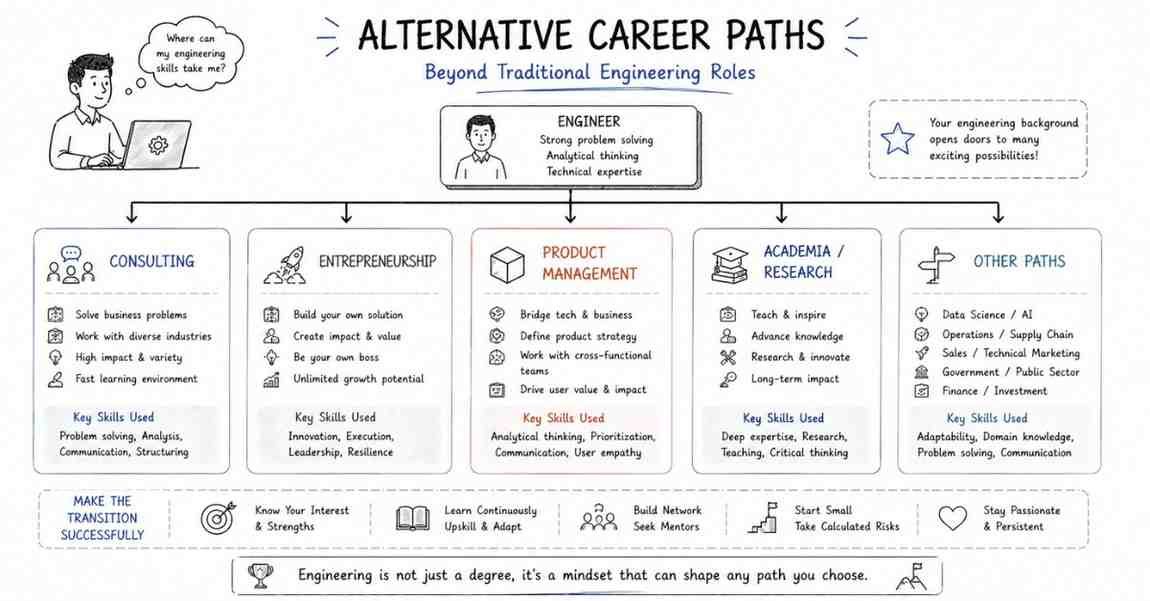
Project Management
Specializing in Delivery:
- Managing projects without direct people management
- Coordination, scheduling, risk management
- Cross-functional orchestration
Certifications: PMP (Project Management Professional) valuable
Salary: ₹15-50 LPA depending on experience and project scale
Companies: EPC firms, manufacturing, large projects
Product Management (Technical to Business)
Transitioning from Engineering:
- Defining what to build based on customer/market needs
- Requires technical understanding + business acumen
- Cross-functional leadership without direct management
Path: After 5-8 years engineering, transition to product management; often requires MBA or demonstrated business aptitude
Salary: ₹20-80 LPA depending on company and experience
Consulting
Independent or Firm-Based:
- Technical consulting after 8-10 years experience
- Advisory roles for projects, companies
- Requires deep expertise + business development capability
Income: Highly variable ₹30 LPA – 1 Cr+ depending on reputation and clients
Entrepreneurship
Starting Your Own Venture:
- Automation solutions company
- Renewable energy consulting/EPC
- Electronics product company
- Engineering services firm
- Battery technology startup
- EV components manufacturer
Timing: Usually after 7-12 years gaining industry experience
Success Factors: Technical expertise + business acumen + risk tolerance + capital
Income: Sky’s the limit or zero high risk, high potential reward
Academia and Research
Teaching and Research:
- After M.Tech/Ph.D., faculty positions at engineering colleges
- Research positions in national labs (DRDO, ISRO, CSIR)
- Corporate R&D (Qualcomm, Intel, automotive R&D centers)
Salary: Faculty ₹8-25 LPA; corporate R&D ₹15-60 LPA depending on level
Appeal: Intellectual work, flexibility, long-term impact on students/society
Accelerating Your Career Growth
Strategic Career Moves
When to Switch Companies:
- Learning plateaued in current role
- No clear growth path visible
- Significant salary jump possible (30%+ for lateral, 50%+ for significant level jump)
- Opportunity for responsibility increase
- Industry/domain shift aligned with goals
When to Stay:
- Rapid growth happening in current company
- Good mentorship and learning
- Clear promotion path
- Building valuable long-term expertise
- Loyalty rewarded in company culture
Strategic Timing: Years 2-3, 5-6, 8-10 are common switching points
Building Visibility
Make Your Work Known:
- Regular updates to management
- Presentations at company forums
- Documentation of achievements
- Contributing beyond immediate role
- Volunteering for visible projects
Not Politics, But Communication: Ensuring your contributions are understood and recognized
Continuous Skill Development
Never Stop Learning:
- New technologies in your domain
- Adjacent domains (power systems engineer learning renewable integration)
- Management skills (even on technical track project management, mentoring)
- Business understanding
- Communication and presentation skills
Certifications: Strategic certifications at career stages (PMP, technical certs, PE certification)
Building Your Personal Brand
Establishing Expertise:
- Writing technical blogs or articles
- Speaking at conferences or company events
- Contributing to open-source (if relevant)
- LinkedIn presence and thought leadership
- Patents and publications (in R&D)
Why It Matters: Industry reputation opens opportunities consulting, offers, recognition
Mentorship and Sponsorship
Find Mentors: Senior people who guide your career not necessarily in reporting chain
Find Sponsors: Senior people who actively advocate for you in promotion/opportunity discussions
Difference: Mentors advise; sponsors use political capital to advance your career
How to Get: Deliver excellent work, build relationships, ask for guidance
Navigating Career Challenges
The Mid-Career Plateau
Common Around Year 8-12: Feeling stuck, repetitive work, salary stagnating
Causes:
- Company/industry slow-growth
- Haven’t developed new skills
- Pigeonholed in narrow specialization
- Not positioning for advancement
Solutions:
- Skill refresh learn new, in-demand technologies
- Change domain within company
- Strategic company change
- Consider management track if on technical (or vice versa)
- Consulting or side projects to reignite passion
Dealing with Career Setbacks
Passed Over for Promotion:
- Ask for honest feedback
- Understand gaps and work on them
- Sometimes politics, not performance decide if worth staying
Layoffs or Company Shutdown:
- Industry reality not personal failure
- Update skills during notice period
- Leverage network for next opportunity
- Negotiate exit terms
Bad Manager or Toxic Environment:
- Try to resolve or transfer internally first
- f untenable, plan exit but have job first if possible
- Your mental health matters don’t stay in truly toxic situation indefinitely
Work-Life Balance at Senior Levels
Reality: Senior roles often demand more time and energy
Strategies:
- Set boundaries where possible
- Efficiency over long hours
- Delegate effectively (if managing)
- Choose companies/roles aligned with your work-life preferences
- Some companies/industries more demanding than others
Salary Progression Summary
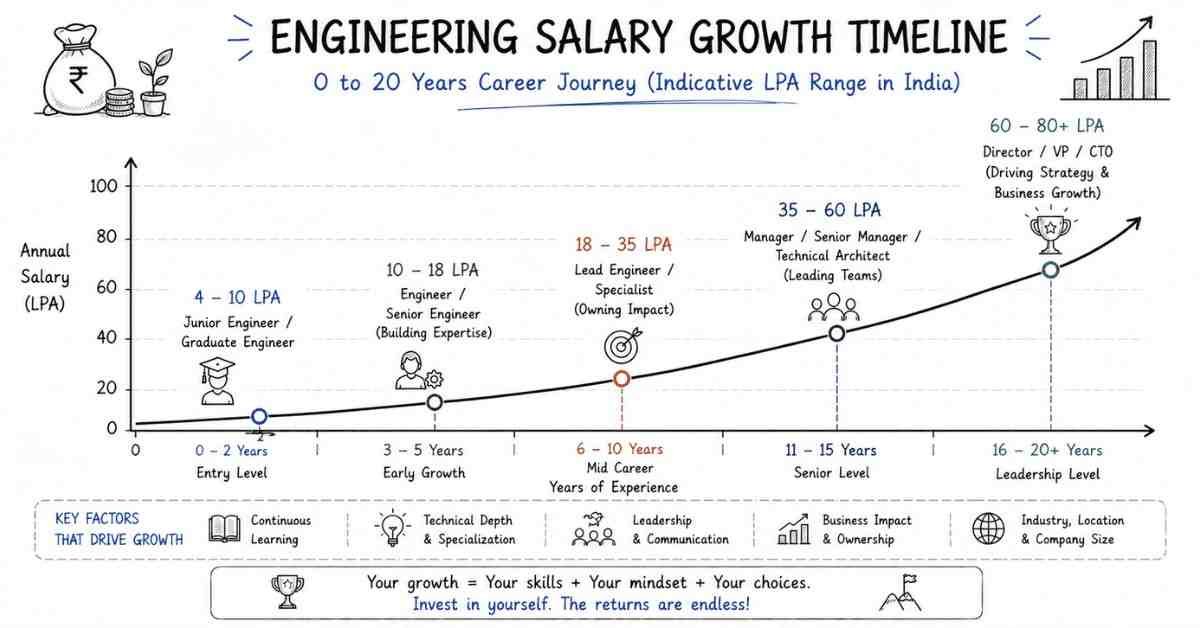
Typical Career Salary Arc (Rough Averages)
Years 0-3: ₹4-16 LPA
Years 3-7: ₹10-35 LPA
Years 7-12: ₹20-60 LPA
Years 12-18: ₹35-90 LPA
Years 18+: ₹50 LPA – 2 Cr+ (wide variance)
Factors Creating Variance:
- Industry (semiconductor > manufacturing generally)
- Company type (MNC/well-funded startup > traditional)
- Specialization (EV battery, 5G, automation premium currently)
- Location (Bangalore/Pune > tier-2 cities)
- Demand-supply for your skills
- Individual negotiation and performance
Reality Check: These are broad ranges. Your specific trajectory depends on choices, performance, luck, and market conditions.
Making the Right Choice for You
Self-Assessment Questions
For Technical vs Management:
- What energizes me more: solving a complex technical problem or seeing my team succeed?
- Do I enjoy mentoring and developing others?
- Am I comfortable with organizational politics?
- Do I want to stay hands-on technically long-term?
- Can I handle people conflicts and difficult conversations?
- Do I seek impact through technical innovation or through organizational leadership?
For Career Moves:
- Am I learning and growing in current role?
- Is there clear path forward here?
- Do I respect leadership and direction of company?
- Am I fairly compensated for my contribution?
- Does company/role align with long-term goals?
No Universal Right Answer: Your career is unique to your goals, strengths, and circumstances
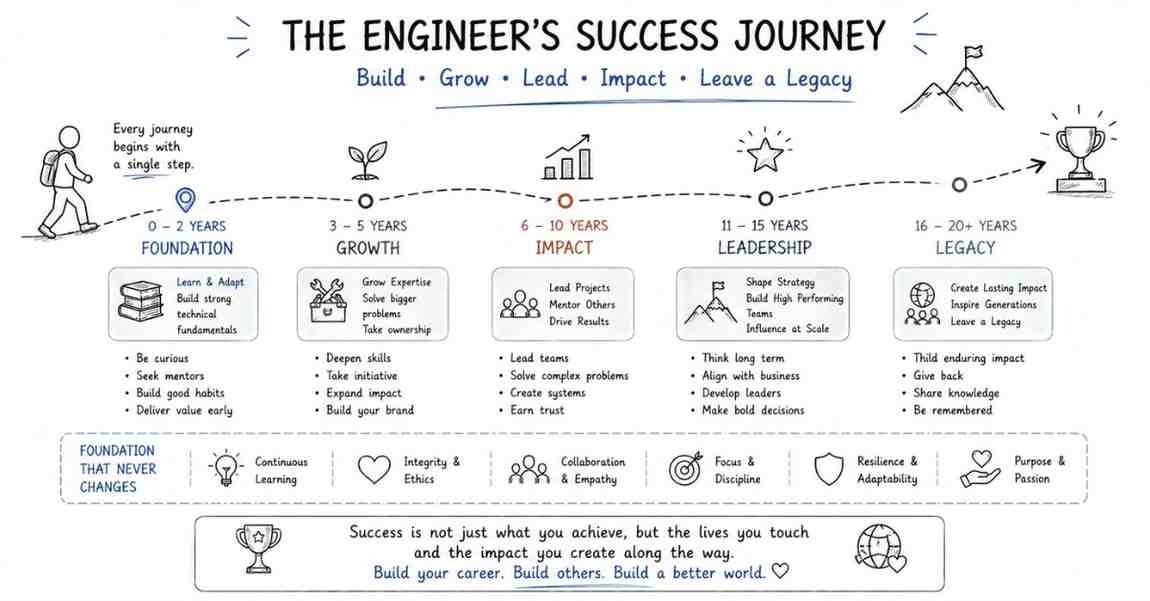
Conclusion: Building Your Engineering Legacy
Your electrical engineering career is a marathon, not a sprint. The choices you make in the first 5-7 years how deeply you learn, how strategically you specialize, how effectively you communicate, how well you position yourself compound over decades.
The senior engineer who earns ₹80 LPA at year 15 and the one who plateaus at ₹20 LPA often don’t differ dramatically in raw intelligence or college rank. They differ in strategic career decisions, continuous learning, building visibility, developing both technical and interpersonal skills.
Whether you aspire to be a Distinguished Technical Fellow solving humanity’s toughest engineering challenges, an Engineering VP leading thousand-engineer organizations, an entrepreneur building the next unicorn, or a successful consultant advising on critical projects the foundation is the same: deep competence, continuous growth, clear communication, strong relationships, and strategic positioning.
Your first job is just the opening chapter of a long, potentially remarkable career story. What you do in the next 5, 10, 15 years writes the rest of that story.
Stay curious. Keep learning. Build deep expertise. Communicate effectively. Position strategically. Lead with integrity. And remember that career success isn’t just title and compensation it’s solving meaningful problems, growing continuously, and building something you’re proud
Forty years from now, when you reflect on your engineering career, may you look back with satisfaction at the systems you built, the problems you solved, the people you mentored, and the impact you created.
Your electrical engineering career is what you make of it. Now go make it extraordinary.