
How to Introduce Yourself When Changing Careers

Table of Contents
The Career Changer's Dilemma: Explaining Your Pivot Without Apology

Ritu had spent 5 years as a software developer. Good salary, stable job. But her heart wasn’t in it anymore. She’d discovered a passion for content strategy and digital marketing through freelance projects on weekends. When she finally landed an interview for a marketing role, the interviewer asked, “Tell me about yourself.
Her first instinct? Start apologizing. “I know I don’t have traditional marketing experience, but…”
That’s exactly where most career changers go wrong.
Here’s the truth about career transitions: the person who apologizes for changing careers never gets the job. The person who confidently bridges their past to their future does.
Career changers face a unique challenge in self-introductions. You can’t ignore your previous career—it’s right there on your resume. But you also can’t let it overshadow why you’re qualified for this new direction. Your introduction needs to tell a story that makes your transition feel inevitable, strategic, and exciting—not desperate or random.

The Bridge Framework: Connecting Two Career Chapters
The most effective career change introductions follow what I call the Bridge Framework: Past → Bridge → Future. The “bridge” is where the magic happens—it’s where you connect your previous experience to your new direction in a way that makes sense.
Part 1: Acknowledge Your Past with Pride (15 seconds)
Start by owning your previous career confidently. Don’t minimize it or sound embarrassed. That experience is valuable—you just need to frame it right.
Weak opening:
“I used to be in IT, but I didn’t really like it, so I’m trying marketing now.”
Strong opening:
“I’m Ritu, and I spent 5 years as a software developer, where I built strong analytical thinking and problem-solving skills. Working in tech taught me how to understand user behavior through data—skills that are directly relevant to digital marketing.
See the difference? The second version treats your past career as an asset, not something to apologize for.
Part 2: Build the Bridge with Transferable Skills (25 seconds)
This is the most critical part of your introduction. You need to explicitly connect your previous experience to your new field using transferable skills.
The Bridge Statement Formula:
“What drew me to [new field] was [specific realization]. I realized that [transferable skill from old career] is actually crucial for [new career goal]. For example, [specific example of how you’ve already applied this].
Example:
“What drew me to marketing was realizing that my technical background gives me a unique advantage. In tech, I learned to analyze user data to improve product features. In marketing, that same analytical approach helps identify what content resonates with audiences. I’ve already been applying this—I started a freelance blog where I used SEO analytics to grow traffic from zero to 10,000 monthly visitors in 6 months. That project confirmed that combining data skills with creative strategy is exactly what I want to do professionally.
The bridge isn’t just saying “I have transferable skills.” It’s showing exactly how those skills apply and proving you’ve already started using them in your new direction.
Part 3: Demonstrate Commitment to the New Path (20 seconds)
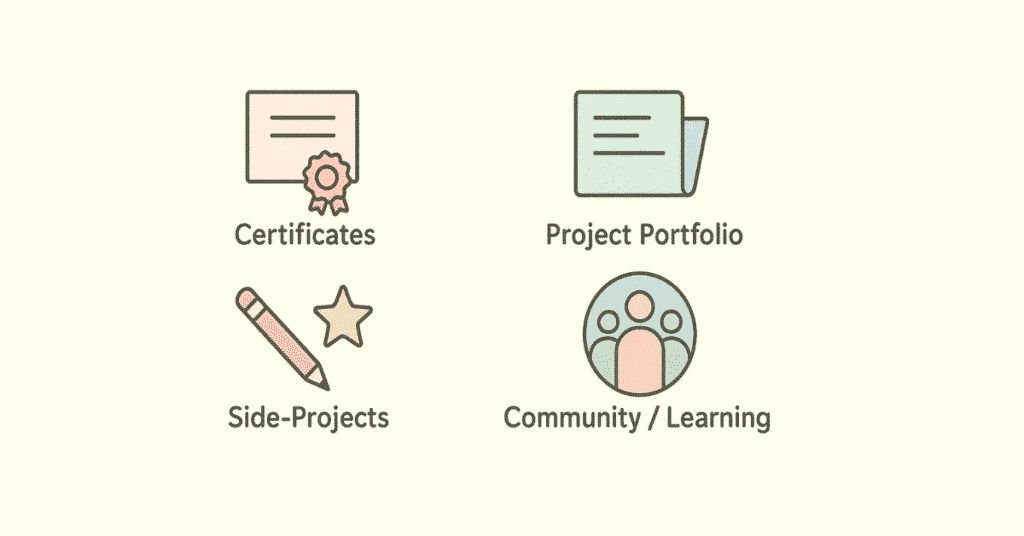
Now you need to show this isn’t a whim. List concrete actions you’ve taken to prepare for this transition.
Include:
- Relevant courses or certifications completed
- Freelance work or side projects in the new field
- Networking or mentorship you’ve pursued
- Industry events or communities you’ve joinedhirist
Example:
“To make this transition, I’ve completed Google’s Digital Marketing Certificate, taken on 5 freelance content strategy projects, and I’m an active member of the Hyderabad Content Creators community. I’ve invested both time and money into building real skills, not just thinking about changing careers.
This shows you’re serious. You’re not someone who woke up one morning and randomly decided to switch fields.
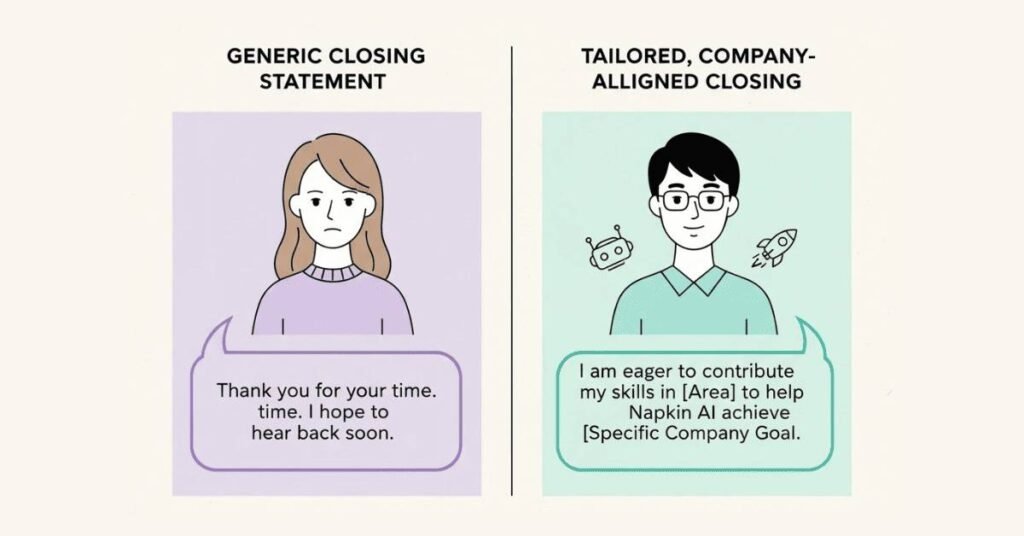
Part 4: Connect to This Specific Opportunity (10 seconds)
End by showing why this particular role aligns with your transition goals.
“I’m particularly excited about this Content Strategist role at your company because it combines analytical thinking with creative storytelling—exactly the intersection where my technical background and newfound passion meet.
Total time: 70-80 seconds
Real Career Change Introduction Examples
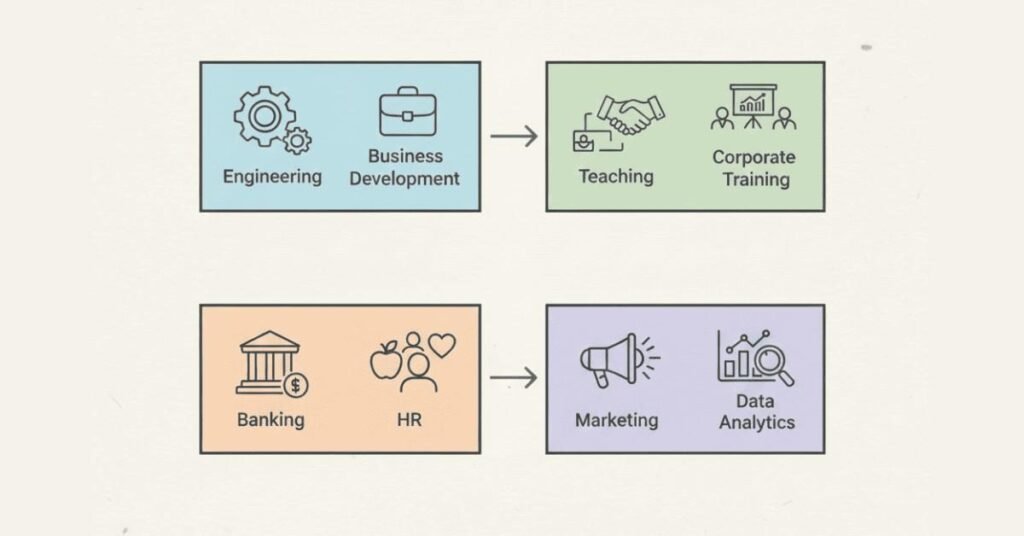
Let me show you complete introductions for common career transitions in India.
Example 1: Engineering to Business Development
“Hello, I’m Arjun, and I spent 4 years as a mechanical engineer designing manufacturing systems. While I enjoyed the technical problem-solving, I discovered my real strength was in client interactions—I was consistently chosen to present solutions to stakeholders because I could explain complex technical concepts in business terms. That’s what drew me to business development. I realized that my engineering background helps me understand products deeply, ask the right technical questions, and build credibility with clients who have technical concerns. Over the past year, I’ve transitioned by completing an MBA in Marketing, taking on a sales role part-time at a manufacturing firm, and successfully closing 3 deals worth ₹15 lakhs combined. I’m now looking for a full-time business development role in the manufacturing sector where my technical expertise becomes a competitive advantage, not a limitation.
What this does well:
- Shows clear reason for transition (strength in client interaction)
- Positions engineering as an advantage, not baggage
- Proves commitment with MBA and part-time sales experience
- Provides specific results (3 deals, ₹15 lakhs)
- Targets roles where both backgrounds add valuehirist
Example 2: Teaching to Corporate Training
“Hi, I’m Kavitha, a former high school teacher with 6 years of experience teaching Mathematics to students aged 14-18. While I loved teaching, I realized my passion was in adult learning and professional development. As a teacher, I designed curriculum, adapted to different learning styles, and tracked student progress—all skills that directly translate to corporate training. The difference is scale and impact. Last year, I started freelancing as a soft skills trainer, conducting communication workshops for 3 companies in Hyderabad. One client reported a 30% improvement in their team’s presentation confidence scores after my 2-day workshop. I’ve also completed a certification in instructional design and learning management systems. I’m now seeking a corporate trainer role where I can help working professionals develop skills that accelerate their careers.
What this does well:
- Frames teaching experience as directly relevant
- Shows understanding of the difference (adult learning vs. children)
- Provides proof through freelance work and results
- Added relevant certification
- Clear about what type of role she wantshirist
Example 3: Banking to Human Resources
“Good morning, I’m Prakash, with 7 years in retail banking as a branch operations manager. My role involved managing a team of 15 people—hiring, training, performance management, and resolving employee concerns. What I discovered was that I enjoyed the people management aspect far more than the operational side. I was consistently achieving the highest employee satisfaction scores in my region and reducing attrition from 25% to 12% through better onboarding and mentorship programs. That’s when I realized my strength lies in HR, not banking. I’ve since completed an HR certification from XLRI, shadowed an HR manager for 3 months to understand corporate HR functions, and I’m actively involved in HR forums and events. I’m now looking to transition into an HR generalist role where my experience managing diverse teams and my fresh perspective on employee engagement can add immediate value.
What this does well:
- Identifies the specific aspect of previous role that connects to new field
- Provides concrete evidence (satisfaction scores, attrition reduction)
- Shows systematic preparation (certification, shadowing, networking)
- Positions himself for entry-level HR role despite senior banking position
Example 4: Marketing to Data Analytics
“Hello, I’m Neha, currently working in digital marketing for 4 years. Throughout my marketing career, I’ve always been drawn to the data side—analyzing campaign performance, A/B testing, customer segmentation. I realized I was spending more time in Google Analytics and Excel than actually creating campaigns, and I loved it. That analytical work gave me clarity on where I wanted to take my career. Over the past 18 months, I’ve completed courses in Python, SQL, and data visualization through Coursera and applied for data analytics. I built a portfolio analyzing e-commerce trends using real datasets, which helped me understand customer purchase patterns. My marketing background gives me business context that pure data professionals sometimes lack—I understand what metrics actually matter to business growth. I’m now ready to transition into a junior data analyst role where I can combine my business understanding with technical analytics skills.
What this does well:
- Shows natural evolution from one field to another
- Demonstrates self-awareness (spending more time on data)
- Lists specific technical skills acquired
- Created portfolio to prove capability
Positions marketing knowledge as added value, not irrelevant background
Addressing Common Career Change Concerns in Your Introduction
Concern #1: “Won’t I Have to Take a Pay Cut?”
You probably will, especially initially. Address it proactively if it comes up, but don’t mention it in your introduction. Focus on long-term trajectory, not short-term salary.
If asked directly:
“I understand that transitioning means starting at a level that reflects my experience in this field rather than my previous career. I’m prepared for that because I’m investing in long-term career satisfaction and growth potential.
Concern #2: “What About My Experience Gap?”
Bridge it with concrete actions you’ve taken: courses, projects, freelance work, volunteer work.
In your introduction:
“While I’m new to this field professionally, I’ve been actively building skills through [specific courses], [projects], and [practical experience]. I’ve invested [time/money] to ensure I’m not just interested—I’m prepared.
Concern #3: “Am I Too Old to Change Careers?”
Age brings advantages: maturity, work ethic, professional networks, business understanding. Frame it that way.
In your introduction:
“My years in [previous field] taught me how to manage stakeholders, meet deadlines, and deliver under pressure—skills that transcend industries and will help me ramp up quickly in this new role.
The 7 Deadly Mistakes Career Changers Make
Mistake #1: Apologizing for Your Past
Never say: “I know my background isn’t traditional, but…” or “I’m sorry I don’t have direct experience…
Your past is an asset. Treat it that way.
Mistake #2: Not Explaining Why You’re Changing
If you don’t explain your motivation, interviewers will assume the worst: you got fired, you’re desperate, you’re flaky.
Always include a clear, positive reason for your transition.
Mistake #3: Sounding Uncertain
Words like “trying,” “hoping,” “thinking about” signal lack of commitment.
Use confident language: “transitioning to,” “specializing in,” “applying my skills to.
Mistake #4: Ignoring Your Previous Career Completely
Trying to pretend your previous 5-10 years don’t exist looks dishonest. Own your journey.
Mistake #5: Not Providing Proof of Preparation
“I’m interested in marketing” means nothing. “I’ve completed 3 certifications and managed 5 freelance campaigns” means everything.
Mistake #6: Applying for Senior Roles in Your New Field
You may have been a senior engineer, but you’re a junior marketer. Be realistic about where you enter the new field.
Mistake #7: Not Researching What the New Field Actually Requires
If you say you want to move into data science but don’t mention Python, SQL, or statistics, you’re not ready. Do your homework.
Your Career Change Preparation Checklist

Before your interview, make sure you can confidently answer:
✅ Why are you changing careers? (Be specific and positive)
✅ What transferable skills do you bring? (With examples)
✅ What have you done to prepare? (Courses, projects, experience)
✅ What do you understand about this new field? (Show knowledge)
✅ Why this company specifically? (Research and customization)
✅ Are you prepared for entry-level responsibilities? (Manage expectations)
✅ How will you add unique value? (What makes you different from traditional candidates)
The 10-Day Career Change Introduction Preparation Plan
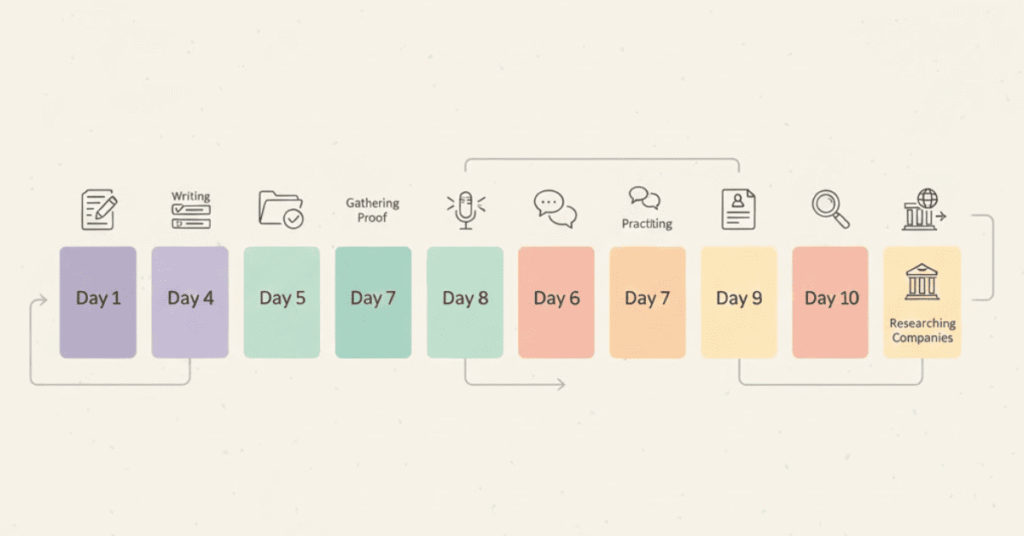
Days 1-3: Write Your Story
- List all transferable skills from your previous career
- Identify 3-5 concrete actions you’ve taken toward your new field
- Write out your complete introduction using the Bridge Framework
Days 4-5: Gather Proof
- Document your projects, certifications, freelance work
- Prepare specific numbers and results
- Create a portfolio if relevant to your new field
Days 6-7: Practice and Refine
- Record yourself delivering your introduction
- Ask a friend in your target industry for feedback
- Refine based on what sounds natural vs. rehearsed.
Days 8-9: Research and Customize
- Research 3-5 companies you’re targeting
- Customize your introduction’s ending for each
- Prepare answers for likely follow-up questions.
Day 10: Final Polish
- Practice once more focusing on confident delivery
- Prepare for the question: “Why should we hire someone without direct experience?”
- Visualize success—confidence matters as much as content.
The Hidden Advantage of Career Changers
Here’s what many career changers don’t realize: you’re not starting from zero—you’re starting from a different angle.
While traditional candidates bring direct experience, you bring:
- Fresh perspectives from another industry
- Diverse problem-solving approaches learned elsewhere
- Cross-functional thinking that comes from bridging fields
- Proven ability to learn demonstrated by your successful transition
- Unique value that others in the field simply don’t have
Companies that hire career changers often find they bring innovation precisely because they don’t think like everyone else in the room.
Your introduction should make this clear: you’re not asking them to overlook your different background—you’re asking them to recognize it as your competitive advantage.
Your Career Change Is Your Story—Tell It Well
The most successful career changers are those who own their narrative. They don’t apologize, don’t minimize, don’t sound uncertain. They tell a compelling story about growth, courage, and strategic reinvention.
Your self-introduction is the opening chapter of that story. Make it one that makes interviewers think, “This person knows exactly what they want and has done the work to get there. That’s someone we want on our team.
Write your bridge story this week. Practice it until it feels natural. Then walk into that interview and show them that your career change isn’t a liability—it’s exactly what makes you the right person for the job.
