
ADVERTISING & BRAND CONTENT CREATION
Table of Contents
Introduction
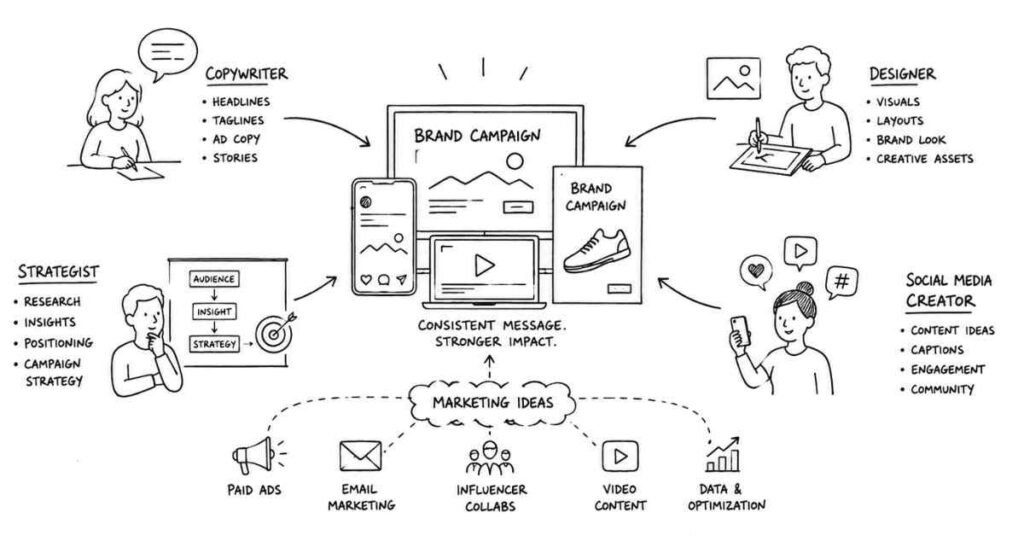
Advertising and brand content sit at the intersection of creativity, psychology, and business. Every viral campaign, emotional TVC, witty Instagram post, or long-term brand story is shaped by teams of strategists, writers, designers, filmmakers, media planners, and creators working behind the scenes. For students who enjoy ideas, storytelling, consumer insight, and digital platforms, this is one of the most dynamic career arenas in media and communication.
Unlike many traditional media careers, advertising has fully embraced digital transformation. Classic agency roles (account management, copy, art, media) now coexist with performance marketers, SEO specialists, influencer managers, social media strategists, and content creators. The same skills you use daily—scrolling, swiping, sharing, reacting—can become professional strengths when refined into strategic, measurable work for brands.
This subtopic gives a structured, career-focused view of advertising and brand content creation in India: core roles, skills, career paths, realistic pay ranges, and how students can start building a portfolio even before landing their first job.
The Advertising & Brand Content Ecosystem
Where the Work Happens
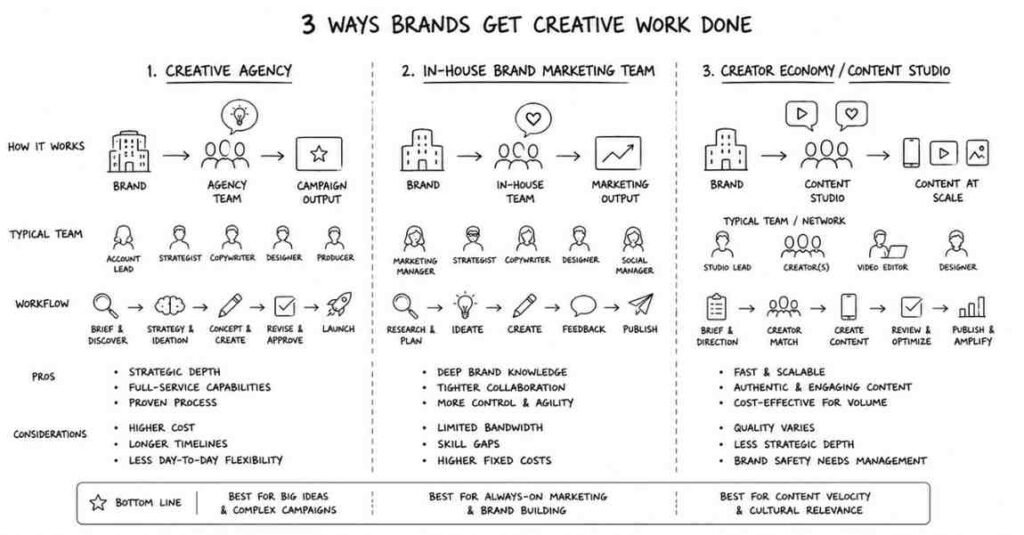
You’ll typically find advertising and brand content roles in four broad environments:
- Creative agencies
Traditional full-service agencies (Ogilvy, Lowe Lintas, McCann, Leo Burnett, Dentsu, TBWA, etc.) and digital-first shops (Schbang, The Glitch, Kinnect, FoxyMoron, Socheers, etc.).
They handle strategy, creative, media, production, and in many cases, influencer and social media under one roof. - Specialist digital & performance agencies
Focused on SEO, social ads, performance marketing, analytics, and growth—often working closely with product and growth teams. - In-house brand teams
Larger brands (FMCG, D2C, e-commerce, edtech, fintech, OTT, SaaS) build their own marketing departments with content, design, media buying, and analytics. - Creator economy & production studios
Content studios, YouTube-first companies, influencer marketing platforms, and independent creators’ teams (writers, editors, thumbnail designers, brand deal managers).
Core Creative Roles
1. Copywriter
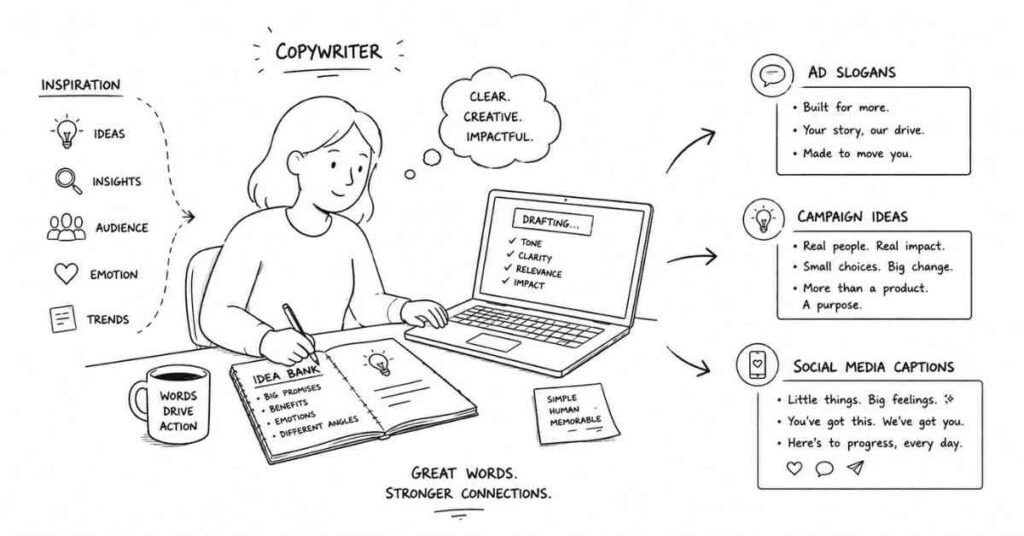
What you do
- Write ad copy for print, digital banners, social media, websites, scripts for video and radio.
- Develop campaign ideas with art directors: taglines, brand lines, and concepts.
- Adapt the same core idea for multiple formats: 6-second bumper, 15-second reel, 30-second TVC, carousel, landing page, etc.
- Maintain tone of voice across channels while following brand guidelines.
Skills
- Strong writing in at least one language (English/Hindi/regional).
- Understanding of consumer psychology and basic marketing.
- Ability to think in “campaign ideas” not just isolated posts.
- Brevity and clarity; sensitivity to cultural references and trends.
Career path
Intern / Trainee copy → Junior copywriter → Copywriter → Senior copywriter → Group Head → Creative Director → Executive Creative Director.
2. Art Director / Visual Designer
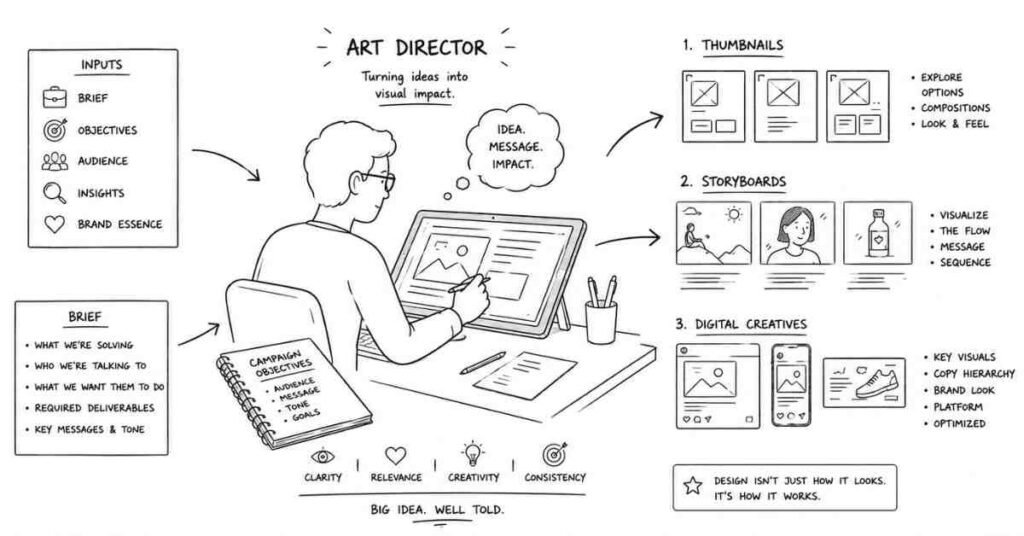
What you do
- Translate ideas into visuals: layouts, key visuals, storyboards, social posts, thumbnails.
- Work with copywriters to create campaigns, sometimes leading visual direction.
- Collaborate with illustrators, photographers, editors, and production houses.
- Maintain visual consistency across campaigns and platforms.
Skills
- Strong grasp of design fundamentals: typography, hierarchy, color, composition.
- Proficiency in tools like Figma, Photoshop, Illustrator; basic motion design is a plus.
- Understanding of platform-specific requirements (stories vs reels vs banners).
- Ability to interpret briefs and convert them into multiple creative options.
Career path
- Design intern → Junior designer → Art director → Senior art director → Design/Creative Lead → Head of Design / Creative Director.
3. Creative Strategist / Brand Planner
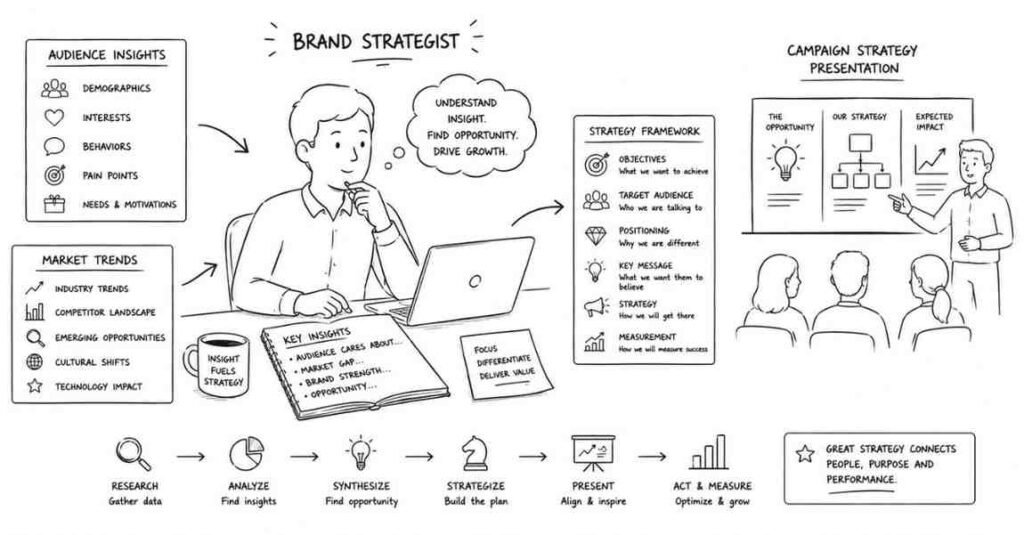
What you do
- Turn business problems into sharp briefs for creative teams.
- Use consumer insight, competition study, category understanding, and culture to frame strategy.
- Define brand positioning, personality, and long-term communication territories.
- Evaluate ideas not only for creativity but also for fit with strategy and business goals.
Skills
- Curiosity about people, culture, trends, and markets.
- Strong analytical and presentation skills.
- Comfort with qualitative and quantitative research.
- Ability to simplify complex information into sharp, inspiring briefs.
Career path
- Strategy intern → Junior planner / strategist → Brand planner → Senior strategist → Strategy Head / Planning Director / CSO (Chief Strategy Officer).
Digital-First & Content Roles
4. Social Media & Content Manager
What you do
- Own brand presence across platforms: Instagram, YouTube, LinkedIn, X, etc.
- Plan content calendars, coordinate with creative and design teams, and post/publish.
- Track metrics: reach, engagement, saves, clicks, follower growth.
- Respond to comments, manage communities, and protect brand tone in real time.
Skills
- Platform knowledge (formats, trends, algo basics).
- Content planning and scripting; basic visual sense.
- Analytical mindset for reading insights and optimizing.
- Community empathy and calm crisis handling.
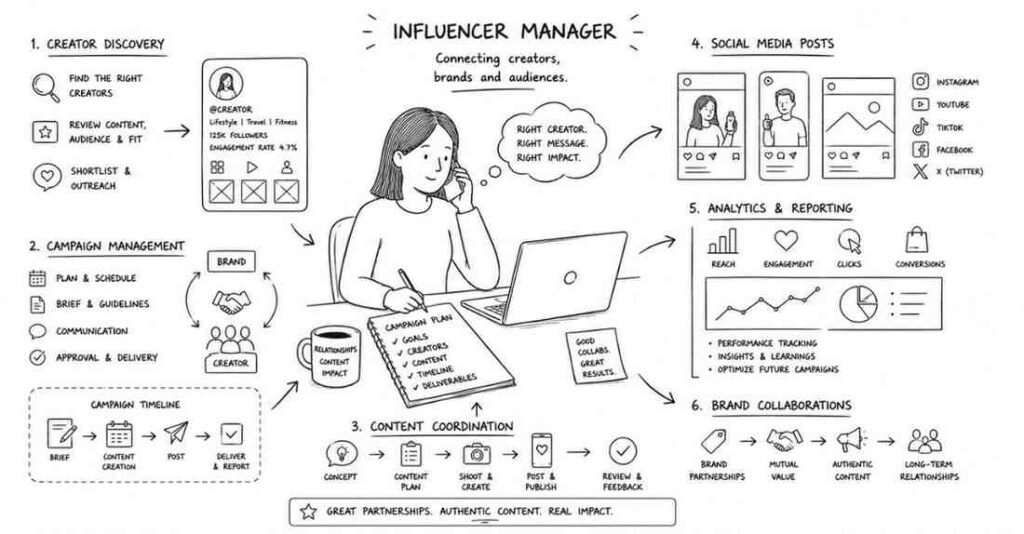
5. Influencer & Creator Manager
What you do
- Identify relevant creators for brand campaigns.
- Negotiate deliverables, timelines, and pricing with creators/MCNs.
- Coordinate briefs, review content for brand compliance, and track performance.
- Maintain long-term creator relationships; build “always-on” creator pools.
Skills
- Understanding of creator platforms and audience profiles.
- Negotiation and relationship-building.
- Basic knowledge of contracts, usage rights, and legal do’s/don’ts.
Comfort with metrics: views, engagement, CPM, conversions.
6. Branded Content Producer
What you do
- Develop content formats that balance “value to viewer” with “brand value”.
- Plan and produce web series, mini-docs, long-form YouTube content, branded podcasts, etc.
- Work with writers, directors, editors, and sometimes influencers.
- Ensure deliverables meet brand objectives without feeling like traditional ads.
Skills
- Strong storytelling sense and understanding of narrative formats.
- Production basics: budgets, timelines, crew coordination.
- Ability to “sell” content ideas to both brand and audience.
- Understanding of platform algorithms and viewer behavior for long-form.
Business, Account & Media Roles
7. Account Manager (Client Servicing)
What you do
- Act as bridge between client and agency.
- Understand client business goals and translate them into briefs.
- Coordinate internal teams to deliver on time and within budget.
- Manage feedback loops, presentations, and long-term client relationships.
Skills
- Project management and multitasking.
- Presentation and communication skills.
- Basic knowledge of creative, media, and production processes.
Emotional resilience and diplomacy.
8. Media Planner / Performance Marketer
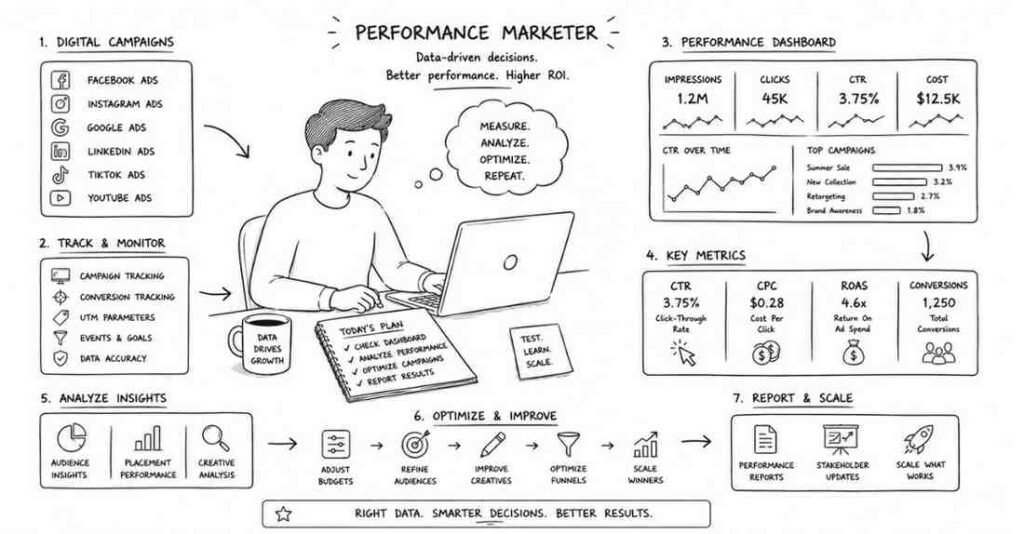
What you do
- Decide how and where to spend ad budgets: TV, OOH, social, search, display, influencers.
- For performance marketing: set up and optimize campaigns on Meta, Google, YouTube, etc.
- Monitor CAC, ROAS, CTR, CPM, conversion rates, and LTV.
- Work closely with creative teams to test creatives and headlines.
Skills
- Strong quantitative and analytical ability.
- Comfort with dashboards, analytics tools, Ads Manager, and Excel/Sheets.
- Experimentation mindset and clear hypothesis-building.
- Understanding of attribution and measurement.
Emerging Roles in Brand Content
- Short-form video specialist (Reels/Shorts) – Writes and produces vertical, fast-paced content optimized for retention and shareability.
- Scriptwriter for digital video – Writes ad films, web films, UGC-style scripts, and narrative ads for YouTube, OTT, and social.
- Creative technologist – Experiments with AR filters, interactive experiences, chatbots, AI content, and web experiences for brands.
- Content analytics & insights specialist – Uses social/listening and analytics tools to feedback insights into creative and content planning.
Skills & Tools to Build While Studying
Core Mindset & Soft Skills
- Curiosity about people, brands, culture, and platforms.
- Ability to observe and decode why certain campaigns work.
- Comfort with feedback, iteration, and rejection.
- Collaboration—most work happens in squads, not solo.
Practical Skills
- Writing: hooks, headlines, captions, scripts, long-form blogs, landing pages.
- Design basics: Canva → Figma/Adobe; understanding layout and hierarchy.
- Editing: basic video editing for shorts and long-form (CapCut, VN, Premiere).
- Analytics: reading basic dashboards (Meta, YouTube, Google Analytics, etc.).
Salary Ranges (Indicative, India – early career focus)
These are typical ranges for 0–5 years of experience; exact numbers vary by city, agency vs brand, and performance:
- Copywriter / Content writer:
Fresher: ₹3–5 LPA; 3–5 yrs: ₹6–10 LPA+ - Designer / Art:
Fresher: ₹3–5 LPA; 3–5 yrs: ₹7–12 LPA - Social Media Manager:
Fresher: ₹3–5 LPA; 3–5 yrs: ₹6–12 LPA - Performance Marketer:
Fresher: ₹4–6 LPA; 3–5 yrs: ₹8–15 LPA+ - Brand / Creative Strategist (early roles):
Entry: ₹5–8 LPA; mid-level: ₹10–18 LPA - Influencer / Creator Manager:
Entry: ₹3.5–6 LPA; 3–5 yrs: ₹7–15 LPA - Branded Content Producer:
Entry: ₹4–7 LPA; 3–5 yrs: ₹8–18 LPA
Top-tier agencies, MNC brands, and high-growth startups often sit at the upper end; boutique agencies and smaller cities at the lower end.
How Students Can Start Early (Even in College)
1. Build a Public Portfolio
- Create a Behance / personal site / Notion page with:
- Sample ad campaigns (brief + idea + main creatives).
- Rewritten ads (your version vs actual; explain your thinking).
- Social media content calendars and sample posts.
- Sample ad campaigns (brief + idea + main creatives).
- Rewrite famous taglines or campaigns in your own way (as an exercise).
- Show “before → after” thinking: how you’d fix a weak ad or landing page.
2. Work on Real or Semi-Real Projects
- Volunteer to handle social media or content for:
- College clubs, fests, NGOs, local businesses.
- College clubs, fests, NGOs, local businesses.
- Do small freelance projects:
- Logo + brand kit + social posts for a local café, gym, tuition center, etc.
- Logo + brand kit + social posts for a local café, gym, tuition center, etc.
- Participate in:
- Ad/marketing hackathons, case competitions, and Young Lions-style contests.
- Ad/marketing hackathons, case competitions, and Young Lions-style contests.
3. Build Platform Fluency Practically
- Run a small Instagram/Twitter/YouTube side project:
- Niche memes, student life, productivity, book summaries—anything.
- Niche memes, student life, productivity, book summaries—anything.
- Experiment with:
- Hooks, carousels, reels, thumbnails, CTAs.
- Hooks, carousels, reels, thumbnails, CTAs.
- Track what works; note patterns and share these insights in interviews.
4. Learn from the Best Work
Treat this as a practical “curriculum”:
- Follow top Indian and global agencies on social platforms.
- Save campaigns that impressed you; write 2–3 lines on:
- What was the insight?
- Why did this execution work?
- What was the insight?
- Subscribe to newsletters / LinkedIn accounts that decode campaigns.
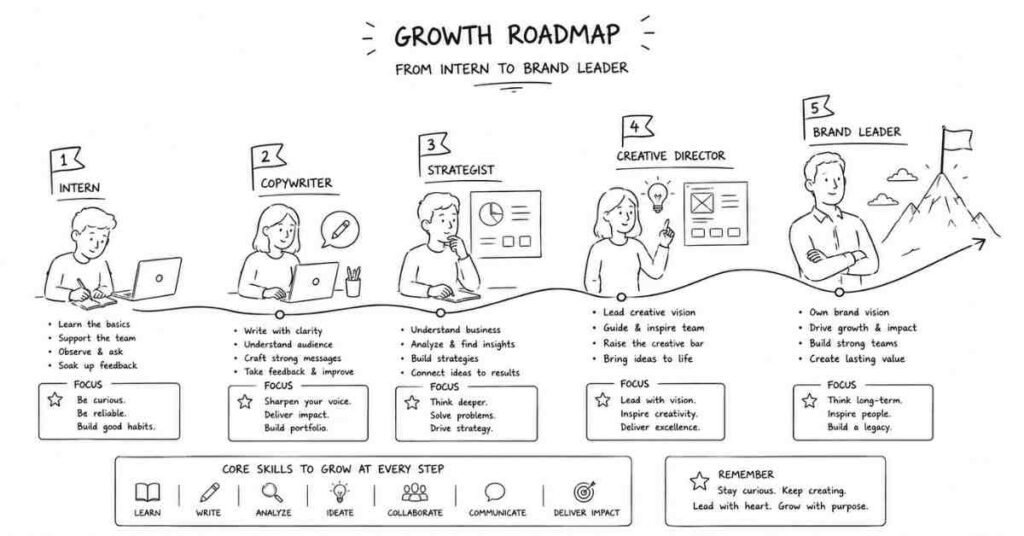
Typical Career Growth Routes
Classic Creative Route
- Intern → Junior Copy / Art → Mid-level → Group Head → Creative Director.
- Later options: independent consultant, starting your own creative shop, or moving in-house as Head of Creative/Brand.
Digital-Performance Route
- Intern → Social Media / PPC executive → Performance marketer → Growth lead.
- Later options: growth lead at product/startup, or your own performance agency.
Strategy & Brand Route
- Junior planner → Brand strategist → Senior strategist → Strategy/Brand head.
- Often moves closer to business leadership, product, and P&L roles.
Creator-Economy Route
- Start as creator/ghostwriter/editor → Build audience and case studies →
Move into brand-side content lead, creator partnerships, or run your own micro-agency.
Challenges & Realities
- Pace & pressure: Deadlines are tight; last-minute changes are common.
- Subjectivity: Creative work is evaluated by multiple stakeholders; “best idea” doesn’t always win.
- Burnout risk: Especially in high-pressure agency environments.
- Client dependence: Sometimes you must execute ideas you don’t fully believe in—learning when to push back vs. when to adapt is key.
But for the right person, the upsides are big: constant creative problem-solving, work that’s visible in the real world, opportunities across sectors and geographies, and a career that stays interesting because platforms, formats, and culture keep evolving.